

American Analysis of Japanese Expansion and U.S. Military Response in the Pacific Theater
- 1939
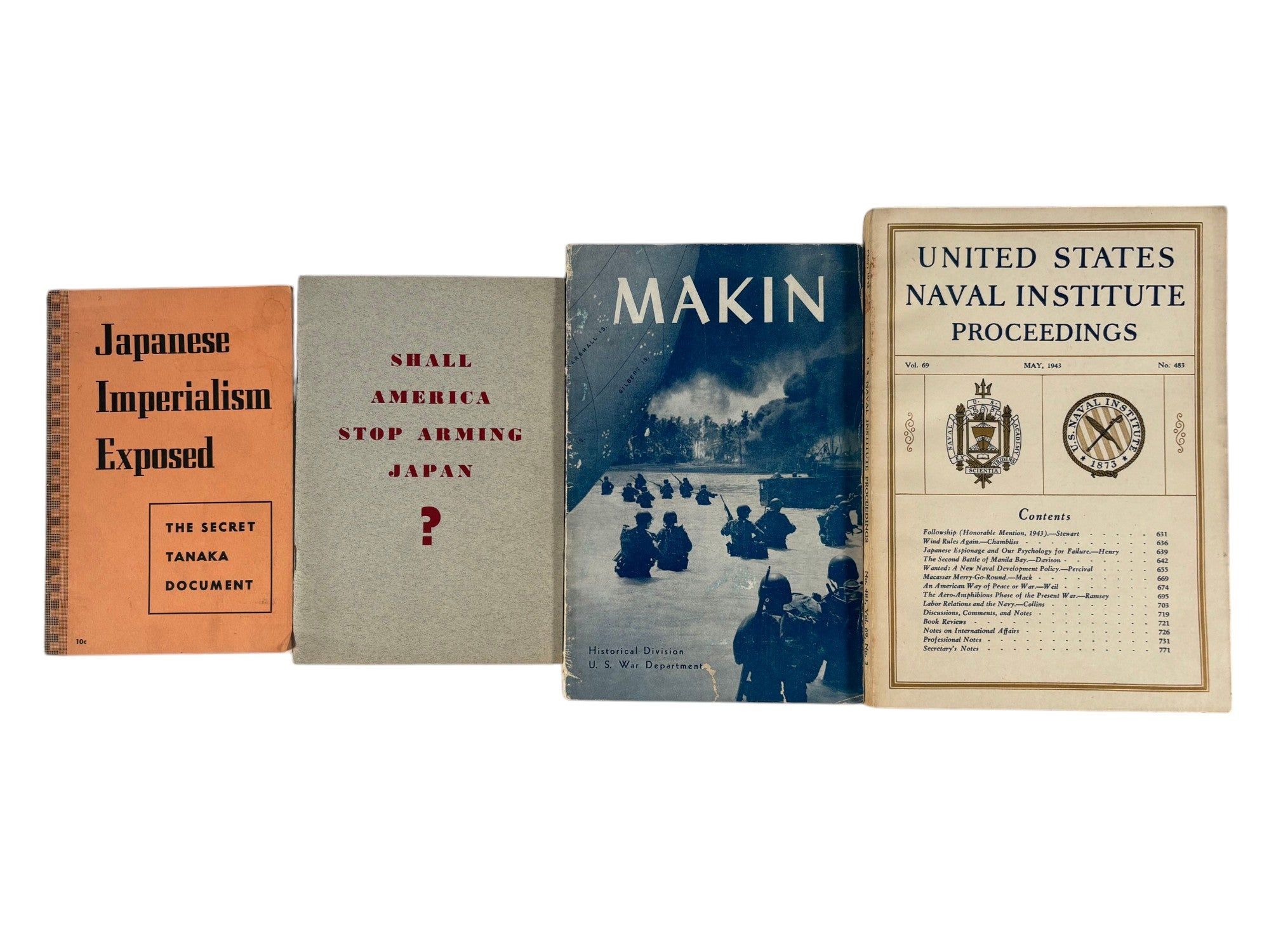
1939. Various authors and issuers, group of wartime pamphlets and periodicals, 1939-1945, documenting American interpretations of Japanese expansionism, prewar economic policy debates, and U.S. military operations in the Pacific Theater. The material operates in Cultural/Representational Mode, illustrating how military, governmental, and institutional publications framed Japanese imperial strategy and justified American military response, while also presenting technical and battlefield analysis intended for both military and informed civilian audiences. These works collectively offer insight into wartime messaging, strategic interpretation, and the evolving American understanding of Pacific conflict from prewar trade tensions through active combat operations.
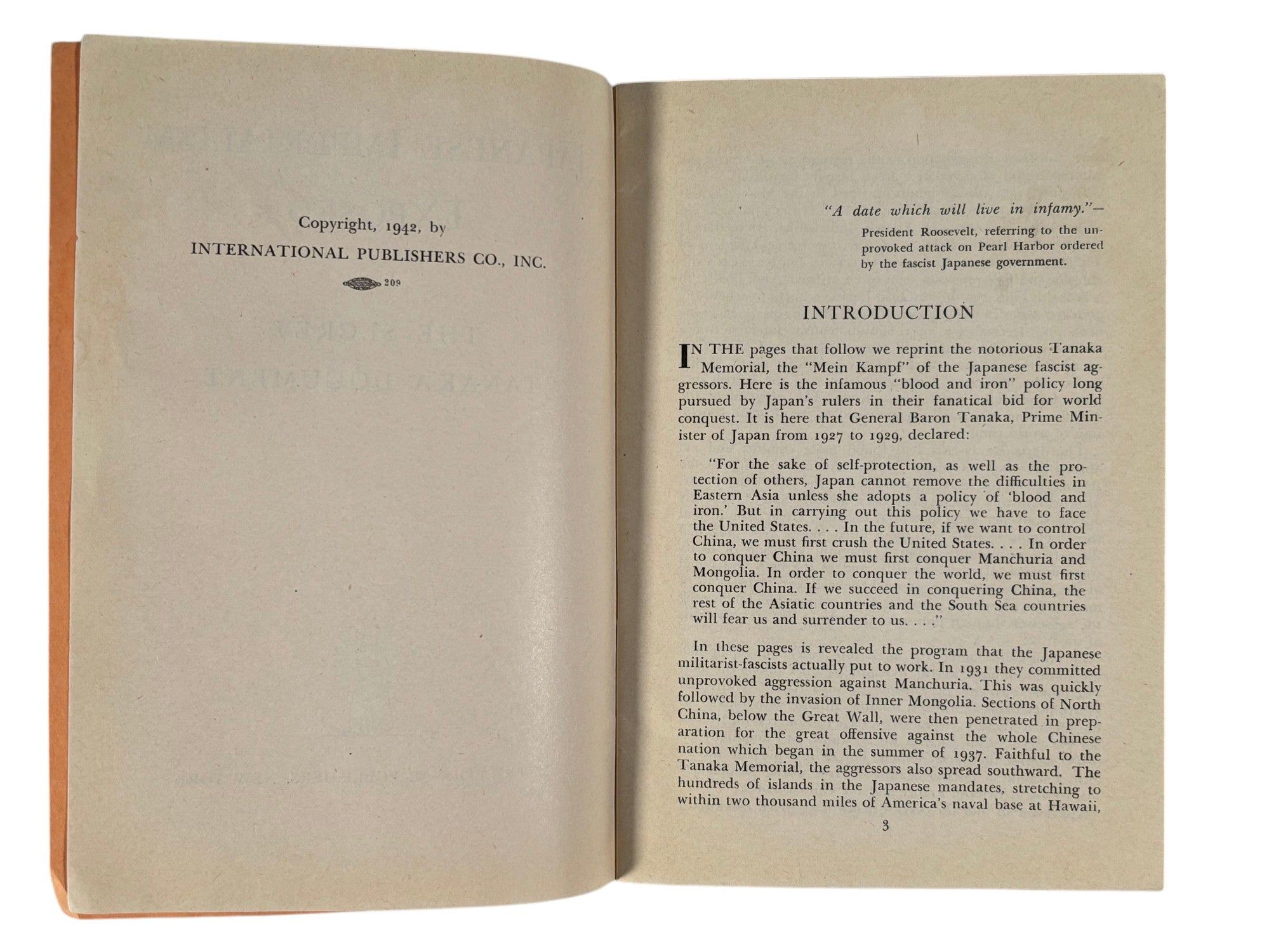
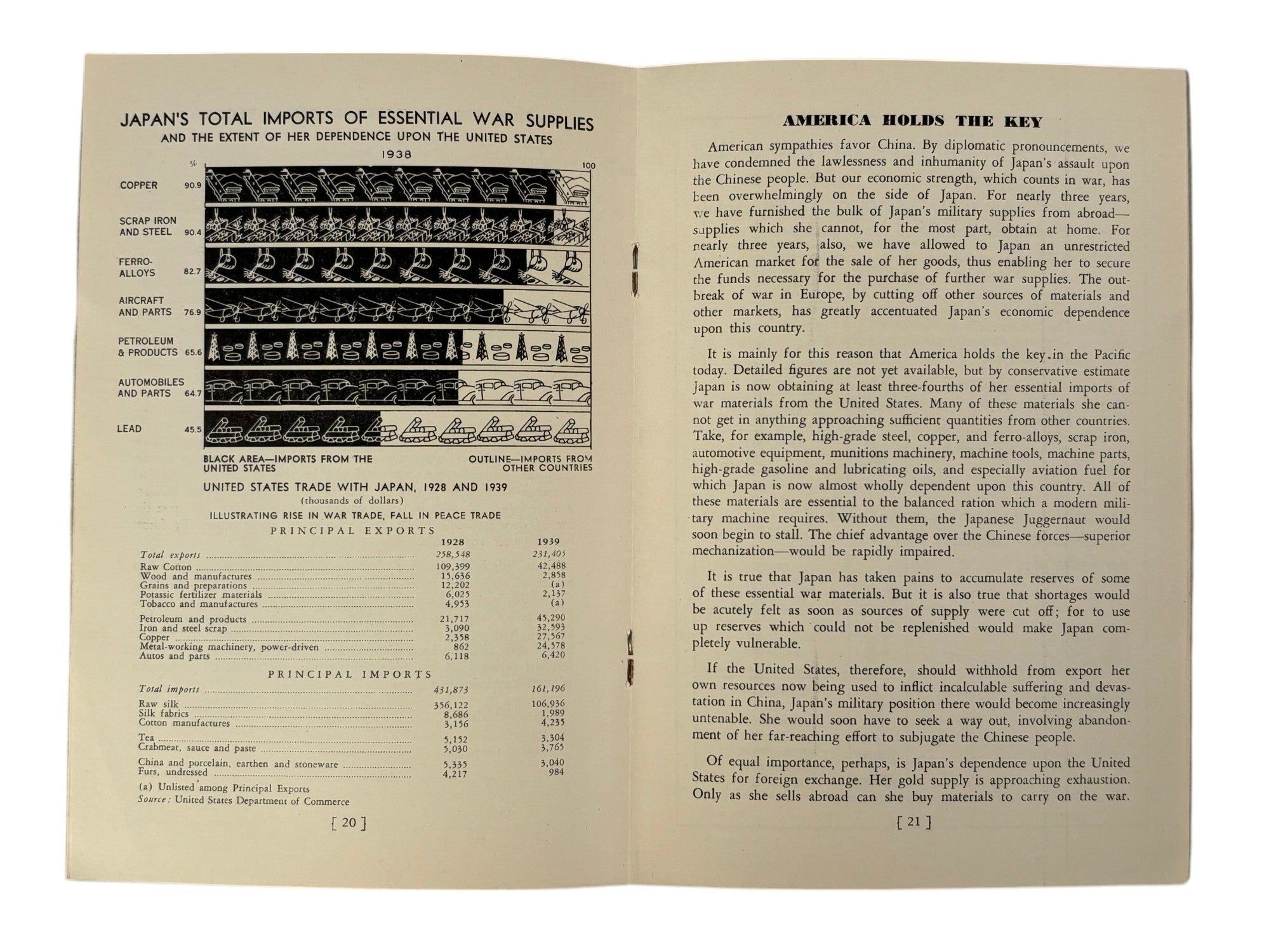
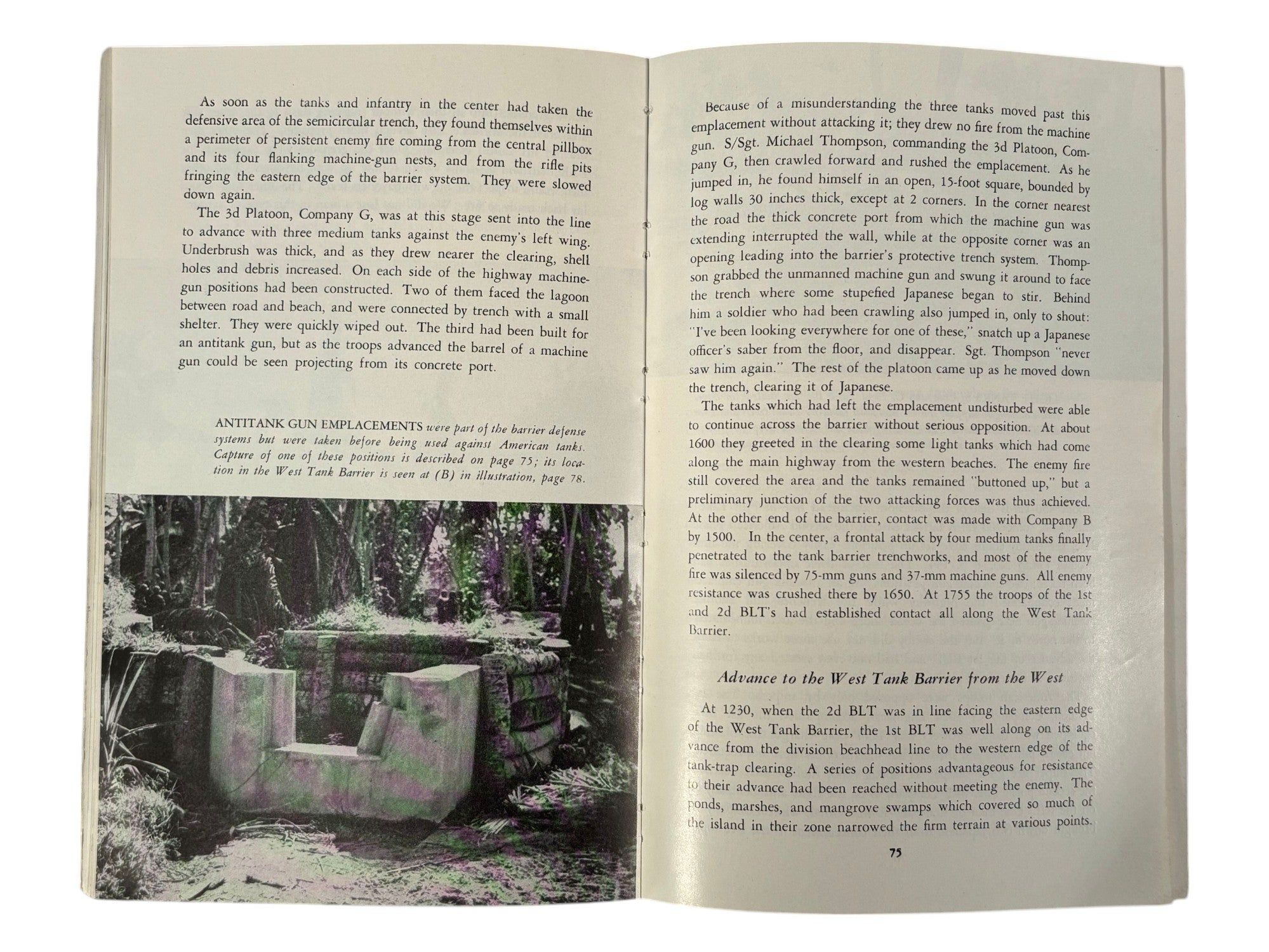
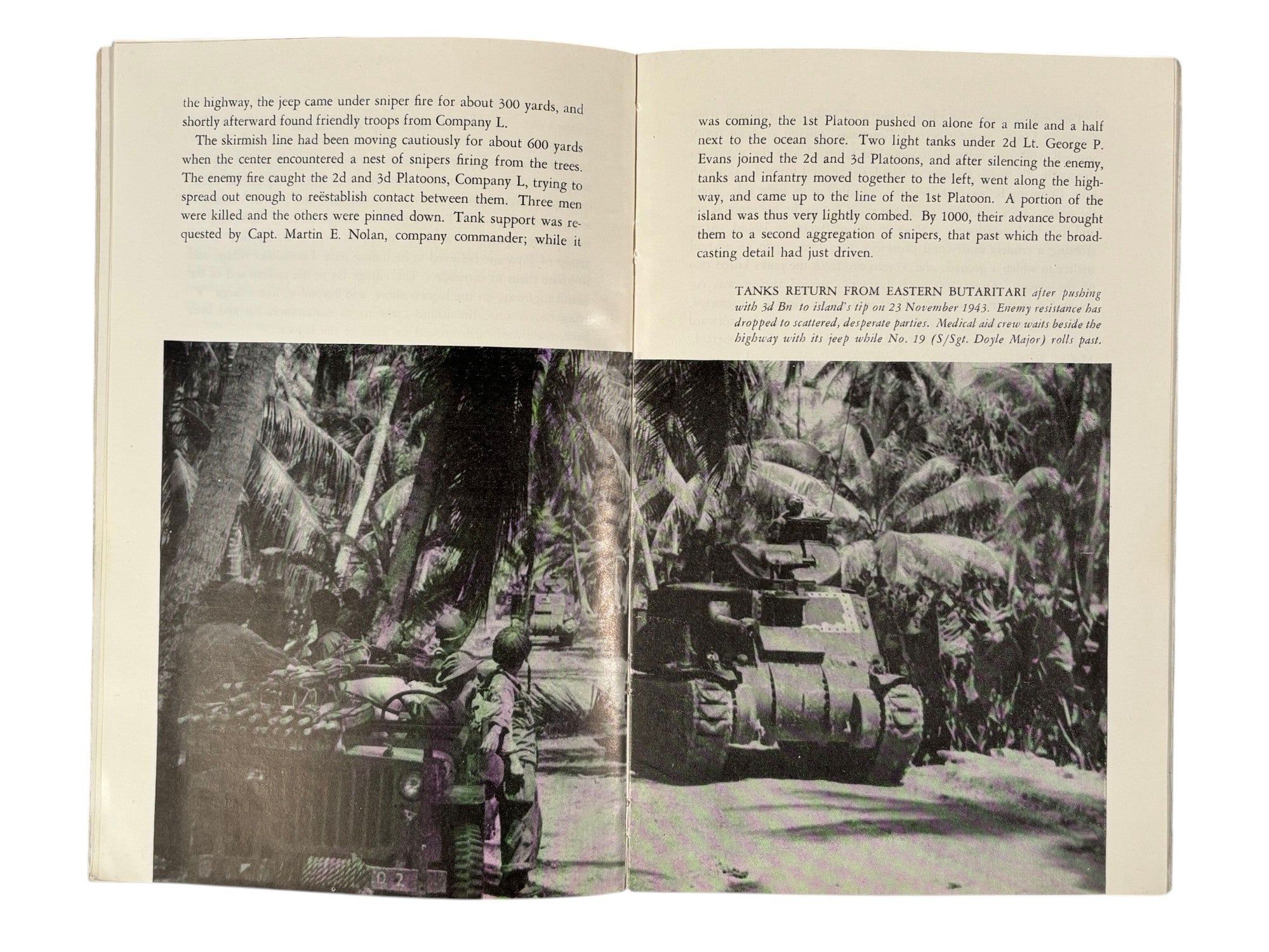
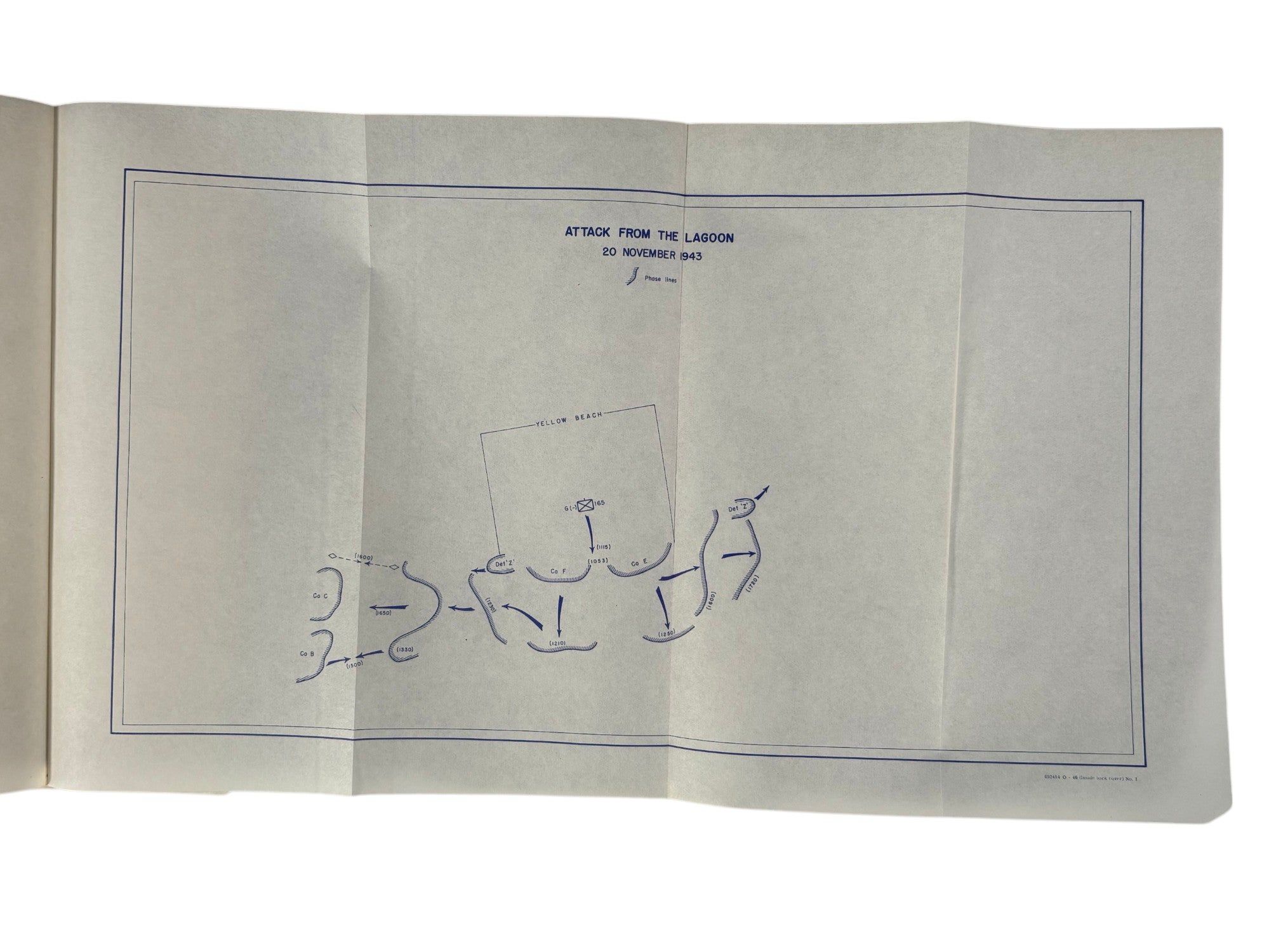
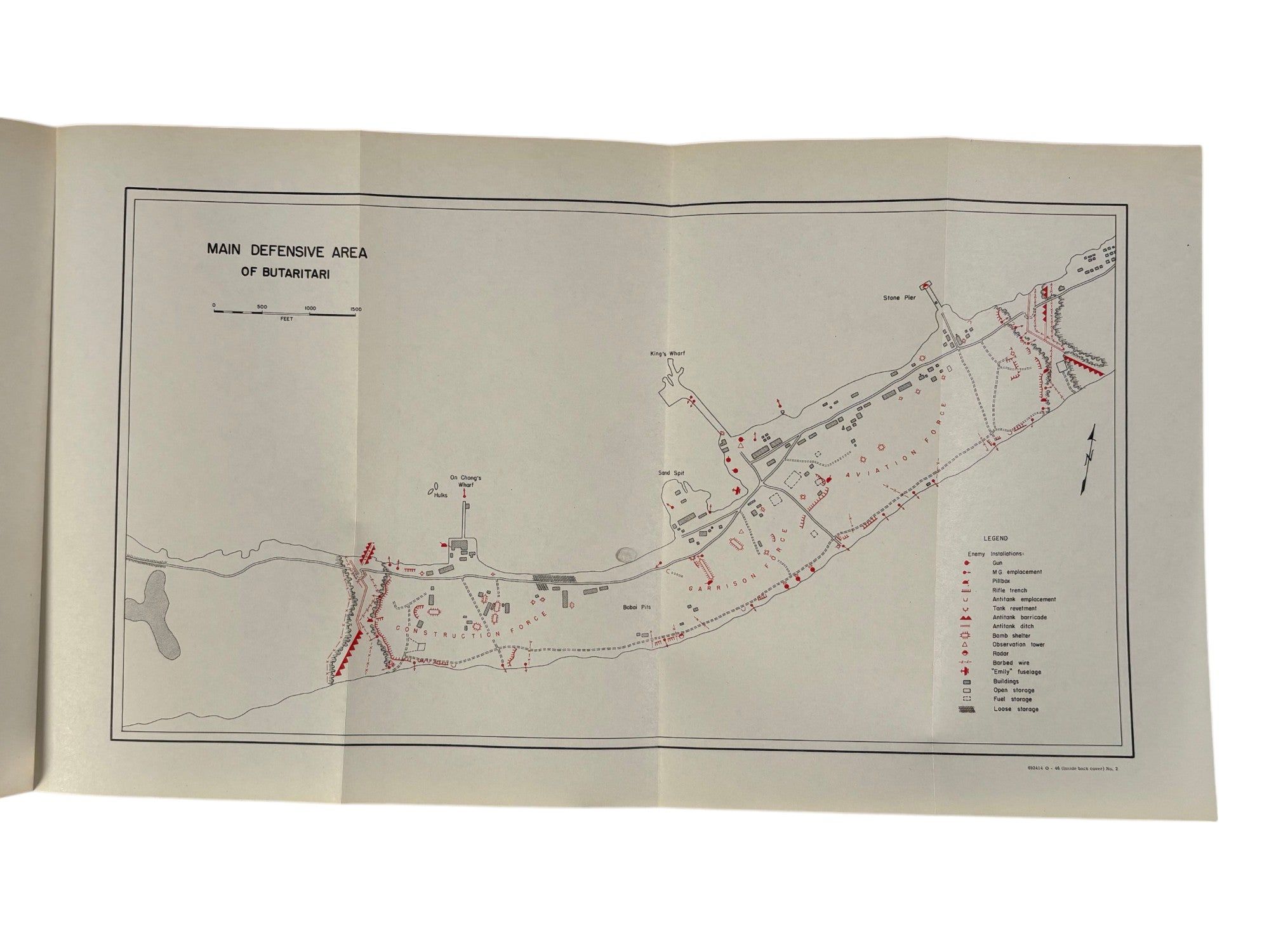
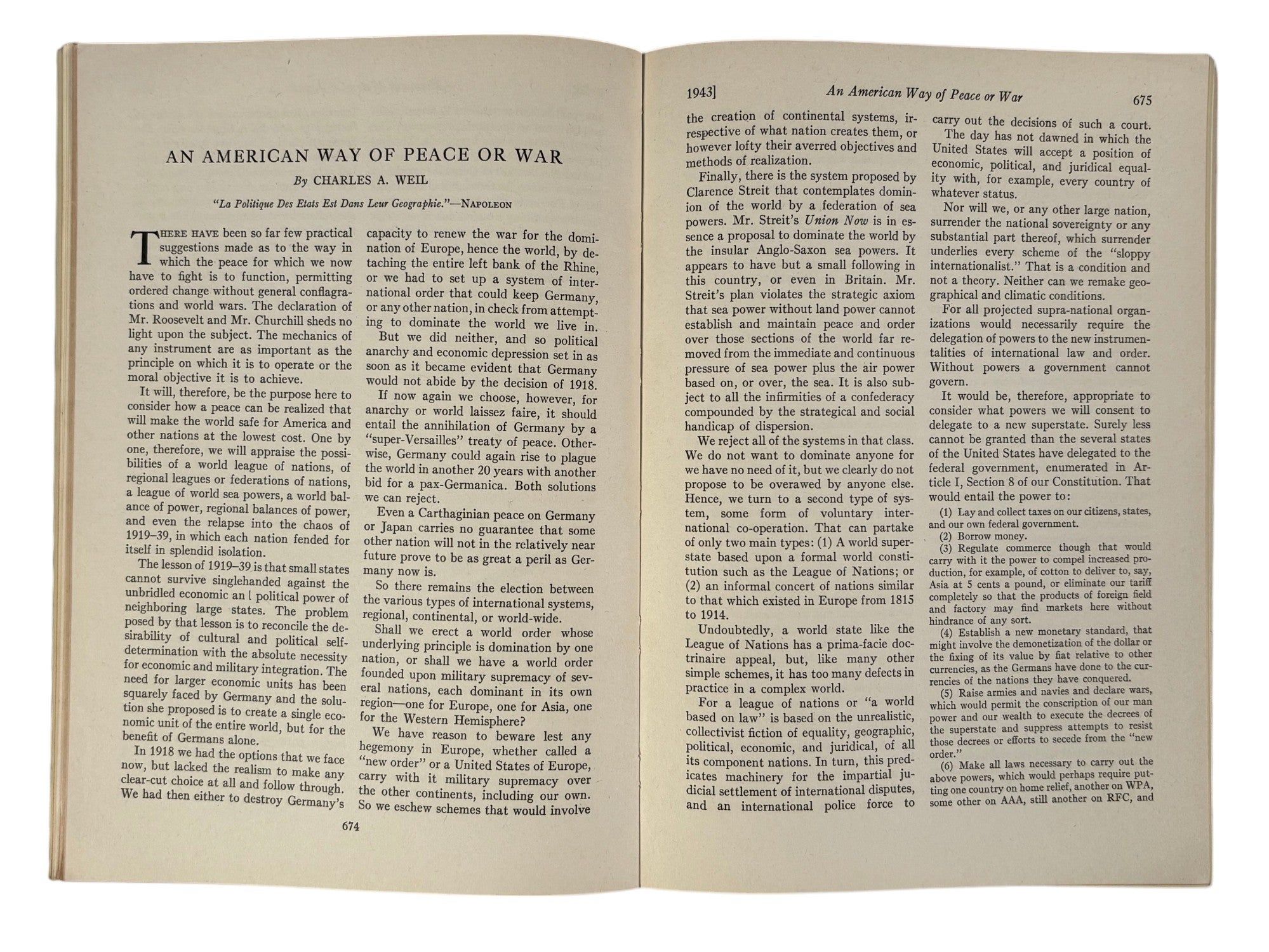
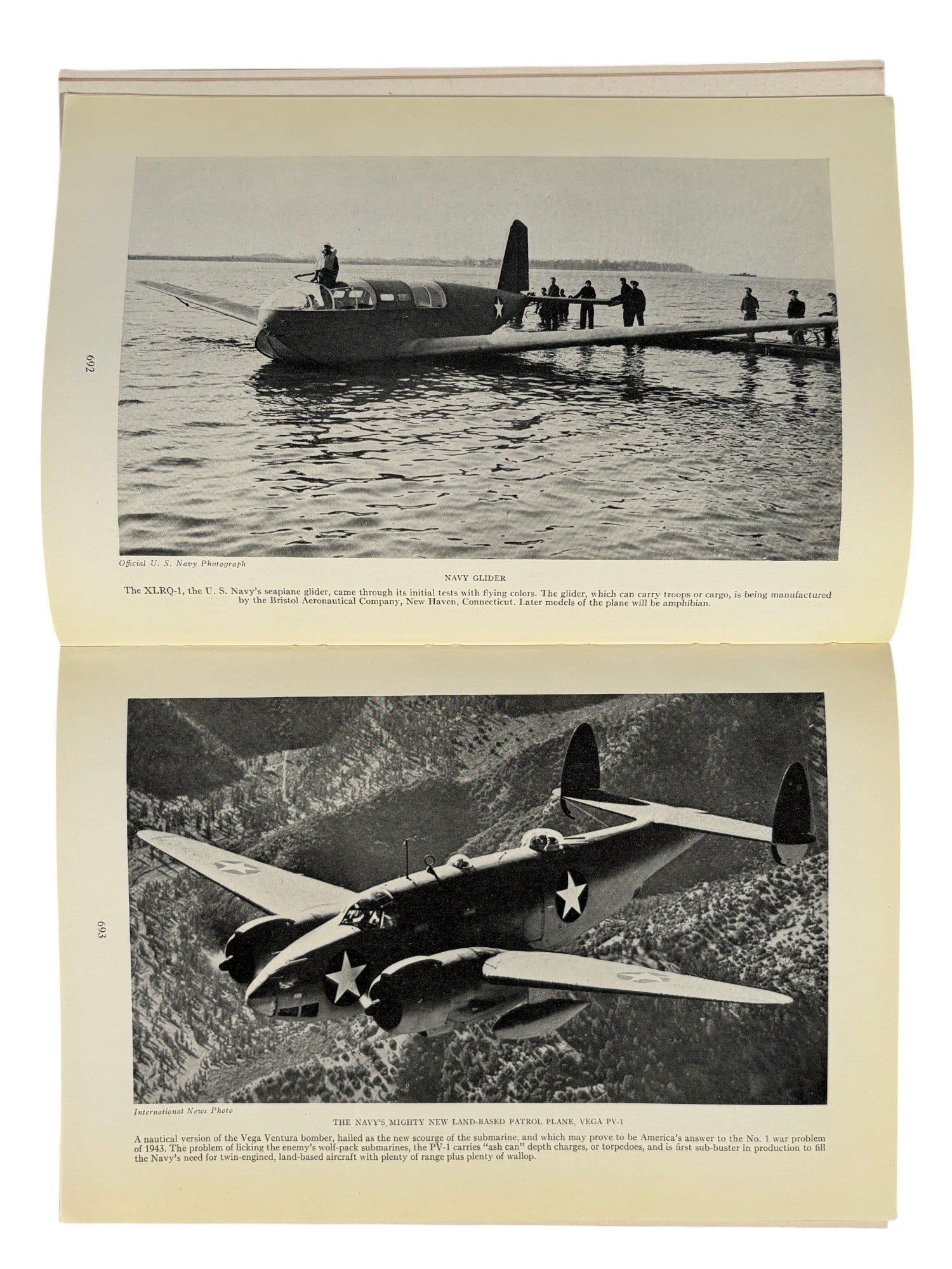
Four printed works issued between 1939 and 1945, including Shall America Stop Arming Japan? (1939); Japanese Imperialism Exposed: The Secret Tanaka Document (1942); United States Naval Institute Proceedings, Vol. 69, No. 485 (May 1943); and Makin (U.S. War Department, 1944). Staple-bound and softcover formats, illustrated with photographs, maps, charts, and technical diagrams. Shall America Stop Arming Japan? presents statistical charts detailing American exports of strategic materials, noting that Japan sourced significant percentages of copper, scrap iron, and petroleum from the United States, accompanied by arguments advocating embargo. Japanese Imperialism Exposed reproduces the controversial Tanaka Memorial, describing a proposed sequence of territorial conquest beginning with China and extending across Asia and the Pacific. Makin, issued by the War Department's Historical Division, provides a detailed narrative of the U.S. Marine assault on Makin Atoll, with photographs of tanks, infantry movement, and captured terrain, alongside fold-out maps showing defensive positions and invasion routes. United States Naval Institute Proceedings includes articles analyzing naval aviation, logistics, and strategic doctrine, with photographic illustrations of aircraft such as the XLRQ-1 seaplane glider and PV-1 Ventura patrol plane, as well as discussions of wartime and postwar naval policy.
Together, these publications trace the progression of American engagement with Japan from economic and diplomatic tension to full-scale military conflict, combining advocacy, intelligence interpretation, and operational reporting. The juxtaposition of prewar policy argument with wartime combat analysis and technical discussion demonstrates the range of printed materials used to inform, persuade, and document during the Pacific War. These works support research into wartime propaganda, military strategy, and the informational frameworks through which the United States understood and prosecuted the war against Japan. Light wear to spines and edges, with minor toning to pages; overall very good condition. A cohesive grouping illustrating the intersection of policy debate, ideological framing, and battlefield documentation in World War II print culture.
Four printed works issued between 1939 and 1945, including Shall America Stop Arming Japan? (1939); Japanese Imperialism Exposed: The Secret Tanaka Document (1942); United States Naval Institute Proceedings, Vol. 69, No. 485 (May 1943); and Makin (U.S. War Department, 1944). Staple-bound and softcover formats, illustrated with photographs, maps, charts, and technical diagrams. Shall America Stop Arming Japan? presents statistical charts detailing American exports of strategic materials, noting that Japan sourced significant percentages of copper, scrap iron, and petroleum from the United States, accompanied by arguments advocating embargo. Japanese Imperialism Exposed reproduces the controversial Tanaka Memorial, describing a proposed sequence of territorial conquest beginning with China and extending across Asia and the Pacific. Makin, issued by the War Department's Historical Division, provides a detailed narrative of the U.S. Marine assault on Makin Atoll, with photographs of tanks, infantry movement, and captured terrain, alongside fold-out maps showing defensive positions and invasion routes. United States Naval Institute Proceedings includes articles analyzing naval aviation, logistics, and strategic doctrine, with photographic illustrations of aircraft such as the XLRQ-1 seaplane glider and PV-1 Ventura patrol plane, as well as discussions of wartime and postwar naval policy.
Together, these publications trace the progression of American engagement with Japan from economic and diplomatic tension to full-scale military conflict, combining advocacy, intelligence interpretation, and operational reporting. The juxtaposition of prewar policy argument with wartime combat analysis and technical discussion demonstrates the range of printed materials used to inform, persuade, and document during the Pacific War. These works support research into wartime propaganda, military strategy, and the informational frameworks through which the United States understood and prosecuted the war against Japan. Light wear to spines and edges, with minor toning to pages; overall very good condition. A cohesive grouping illustrating the intersection of policy debate, ideological framing, and battlefield documentation in World War II print culture.
Details
Title
American Analysis of Japanese Expansion and U.S. Military Response in the Pacific Theater
Author
World War II Pacific War
Condition
Unknown
Date
1939