

SOME TECHNICAL ASPECTS OF THE COMMERCIAL AIRSHIP
- (London): (Lloyd's Register of Shipping), 1926
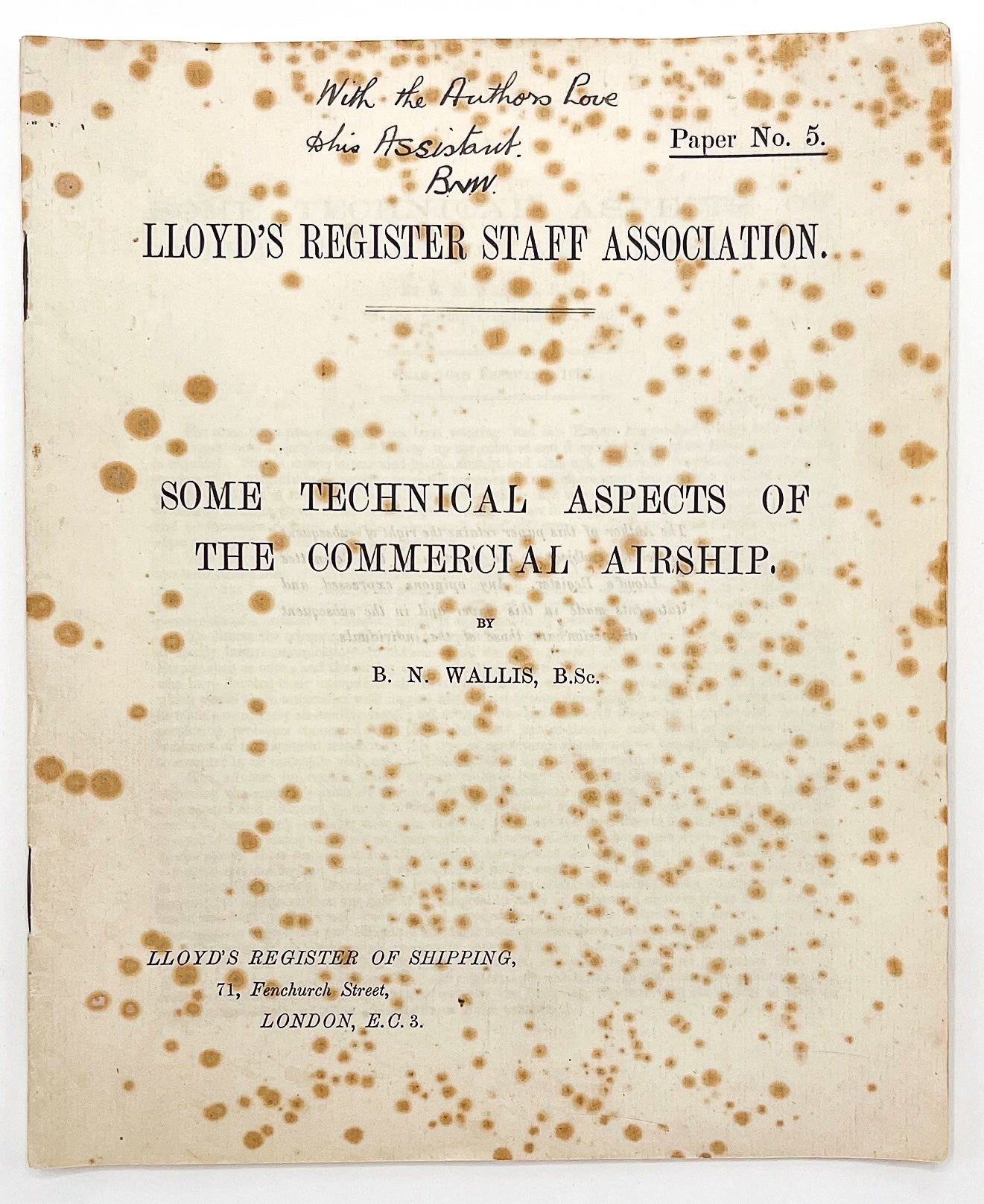
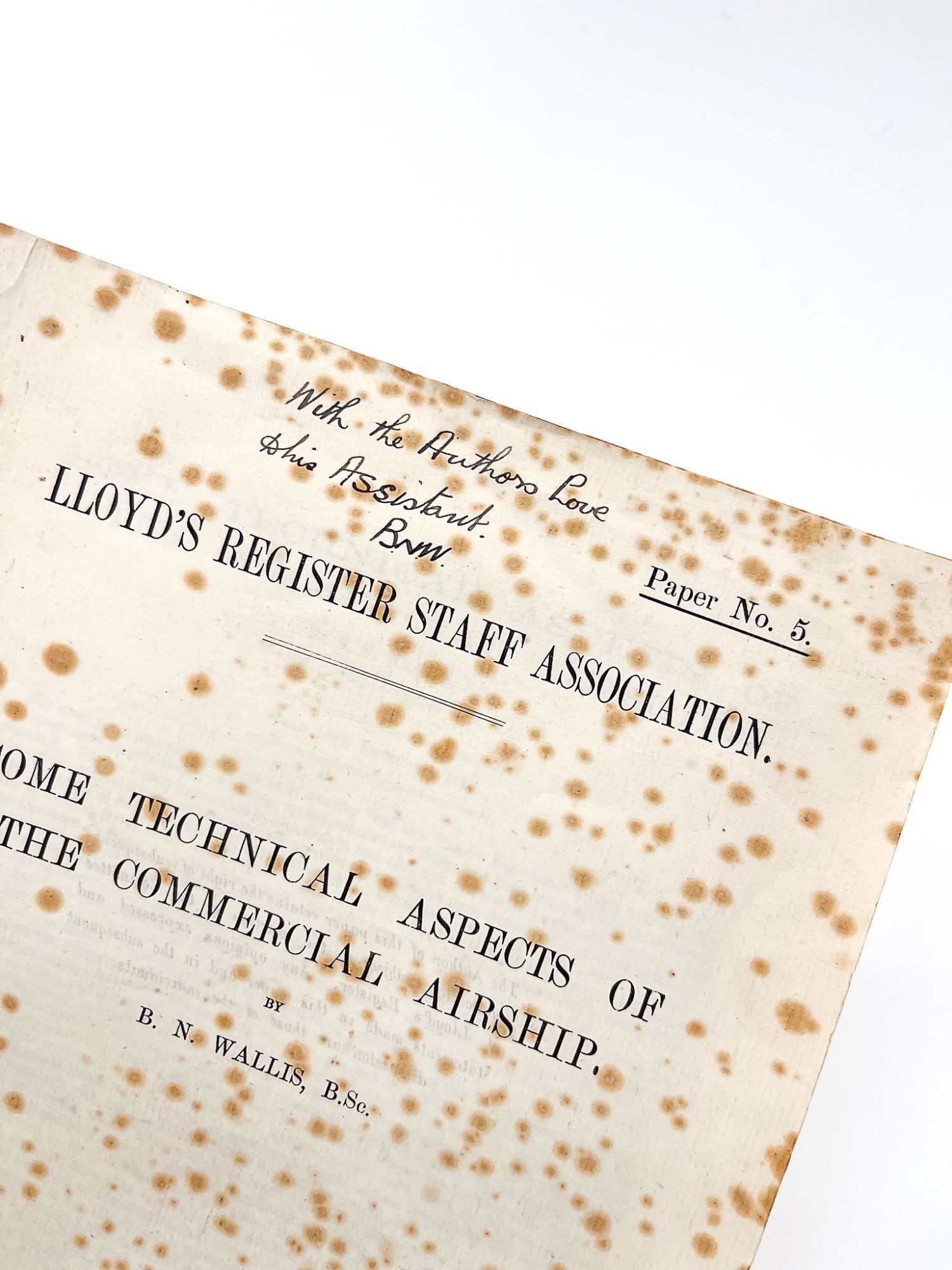
(London): (Lloyd's Register of Shipping), 1926. Very good plus.. Rare presentation copy of this paper by the renowned airship engineer and inventor of the bouncing bomb, signed "with the Author's Love to his Assistant" - his wife and longtime airship confidante Mary (Bloxham) Wallis. Though later generations know him best for inventing the "bouncing bomb" used against German dams in World War II, in the 1920s Barnes Wallis's heart still belonged to Rigid Airships. When he was not designing them for the Airship Guarantee Company as part of the Imperial Airship Scheme (for purposes discussed in this paper), he was describing them to his beloved future wife, Mary (Molly) Bloxham, whom he met in 1922 and married in 1925. As Bloxham had just begun medical studies at University College London when they met and Wallis was twice her age, Bloxham's father wisely forbade him to write to her about anything but mathematics. Airships entered their correspondence almost immediately and offer a reliable index of both parties' moods and growing affections: "You see all my heart is in Airships," Wallis explained, and later, "I'm in a way rather depressed about Airships." Bloxham replied faithfully: "I am so sorry about the Airships, Barnes," and on better days, "Barnes, I am so awfully glad about the airships." Wallis constantly praised and encouraged Bloxham's progress in math and engineering ("you ARE most awfully brainy"), in large part because the more she learned, the more conversations they could have about airships: "I think when we have done enough trig. I shall have to start writing you a book on Airships, so that I can talk to you about them freely."
Both in his private correspondence and in this paper, Wallis was firmly optimistic about the safety of airships and the advantages of hydrogen over helium: "In a modern suitably designed airship the possibility of its catching fire is so small as to be almost negligible," he explains; "we are definitely of the opinion that hydrogen is no longer a source of danger in an airship." While Wallis was designing His Majesty's Airship R100 for the Airship Guarantee Company, a sister ship, the R101, was simultaneously in development by a separate design team at the Royal Airship Works. The latter embarked on its first overseas flight in 1930 and promptly crashed and exploded. Wallis, a practical man despite his faith in airships, moved on to designing aircraft fuselage and eventually bombs, which also explode, but on purpose.
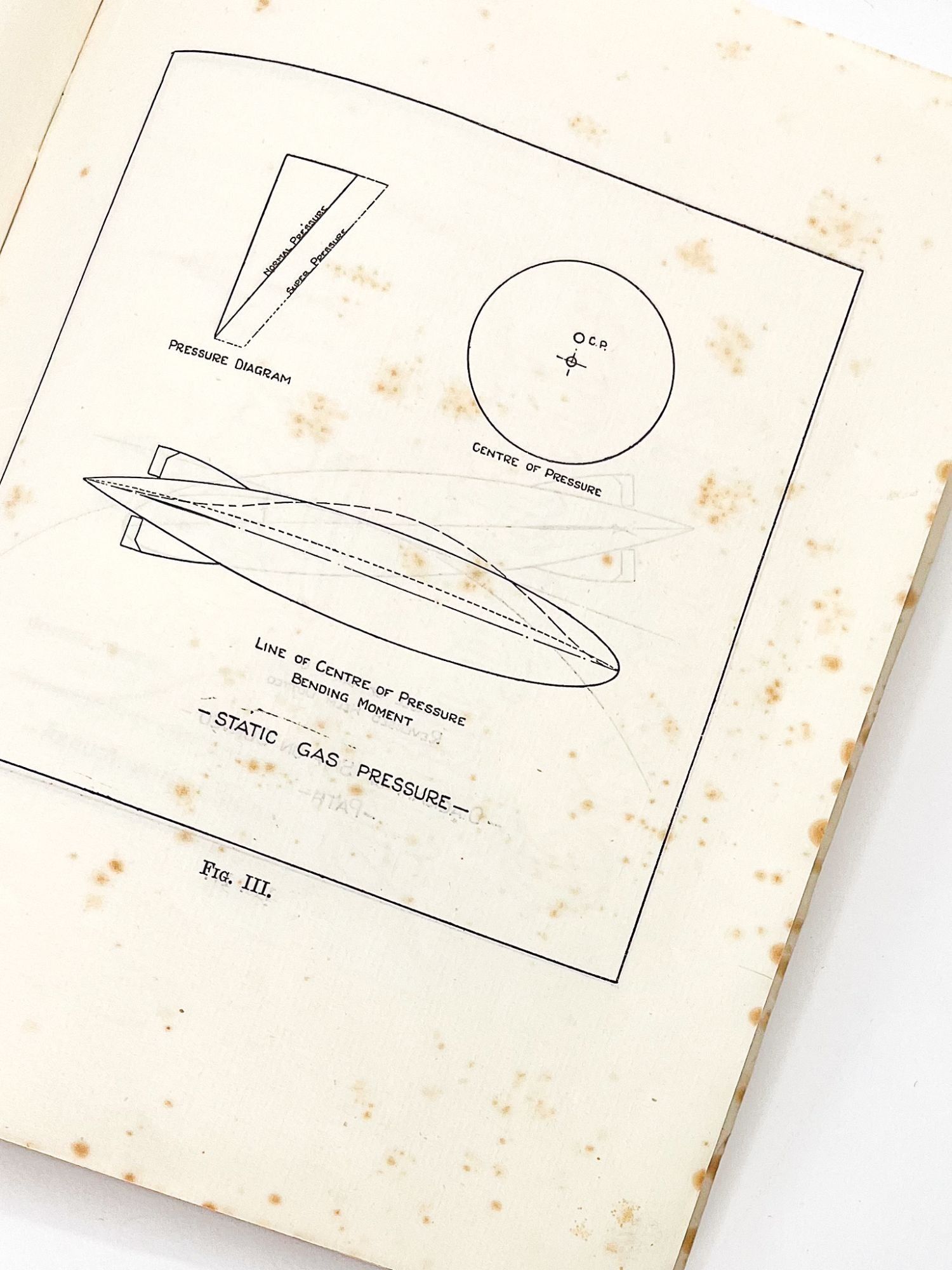
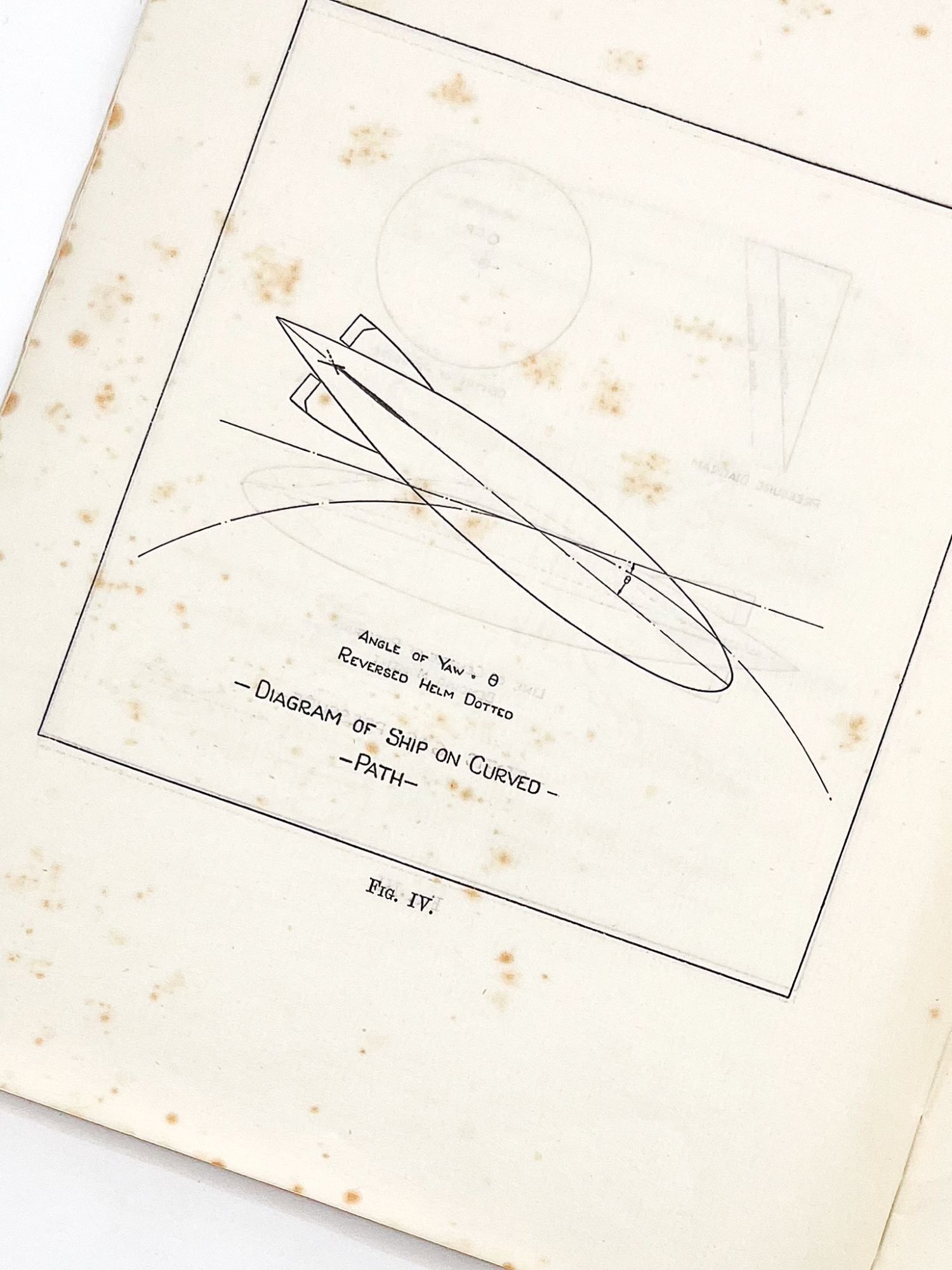
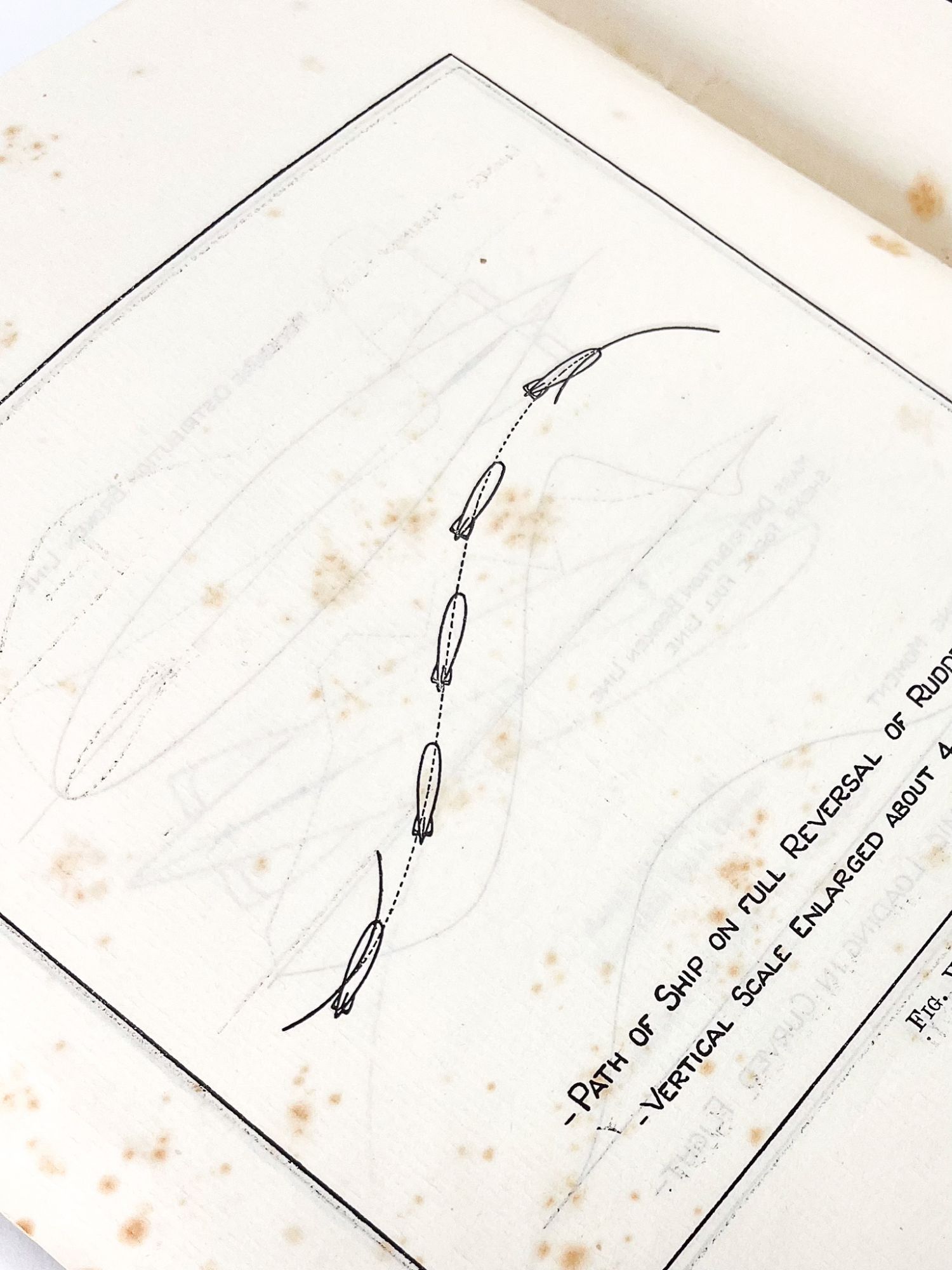
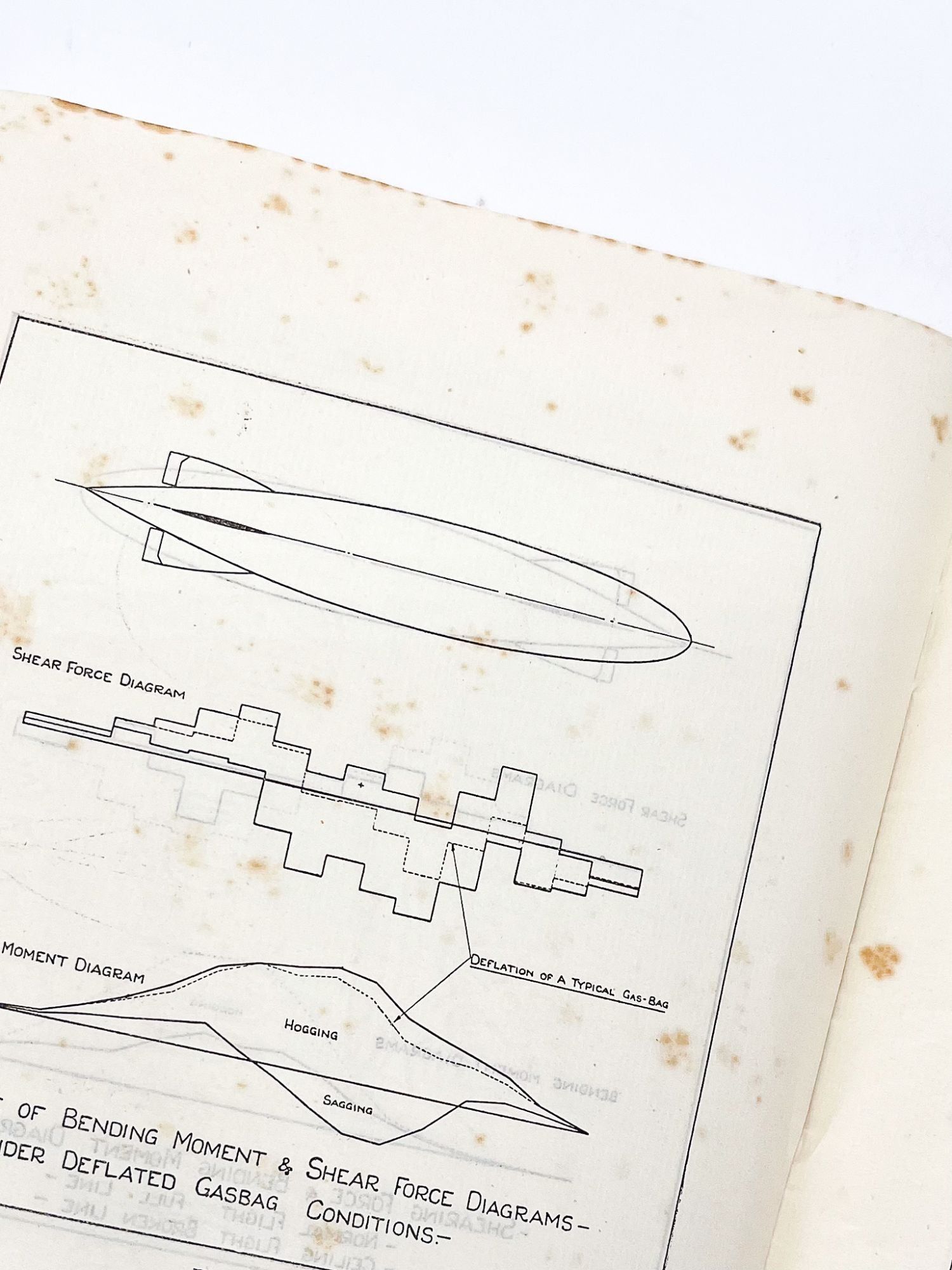
A unique association copy of a rare publication in aeronautical history. 9.5'' x 7.75''. Original saddle-stapled printed wrappers. 13, [1] pages followed by 9 black-and-white airship diagrams. Inscribed by Wallis on front wrapper: "With the Authors Love / to his Assistant. / BNW." Moderate foxing to wrappers and scattered throughout.
Both in his private correspondence and in this paper, Wallis was firmly optimistic about the safety of airships and the advantages of hydrogen over helium: "In a modern suitably designed airship the possibility of its catching fire is so small as to be almost negligible," he explains; "we are definitely of the opinion that hydrogen is no longer a source of danger in an airship." While Wallis was designing His Majesty's Airship R100 for the Airship Guarantee Company, a sister ship, the R101, was simultaneously in development by a separate design team at the Royal Airship Works. The latter embarked on its first overseas flight in 1930 and promptly crashed and exploded. Wallis, a practical man despite his faith in airships, moved on to designing aircraft fuselage and eventually bombs, which also explode, but on purpose.
A unique association copy of a rare publication in aeronautical history. 9.5'' x 7.75''. Original saddle-stapled printed wrappers. 13, [1] pages followed by 9 black-and-white airship diagrams. Inscribed by Wallis on front wrapper: "With the Authors Love / to his Assistant. / BNW." Moderate foxing to wrappers and scattered throughout.
Details
Title
SOME TECHNICAL ASPECTS OF THE COMMERCIAL AIRSHIP
Author
Wallis, B.N. [Barnes Wallis]
Condition
Very Good
Publisher
(Lloyd's Register of Shipping): (London)
Date
1926