

Queen Mab
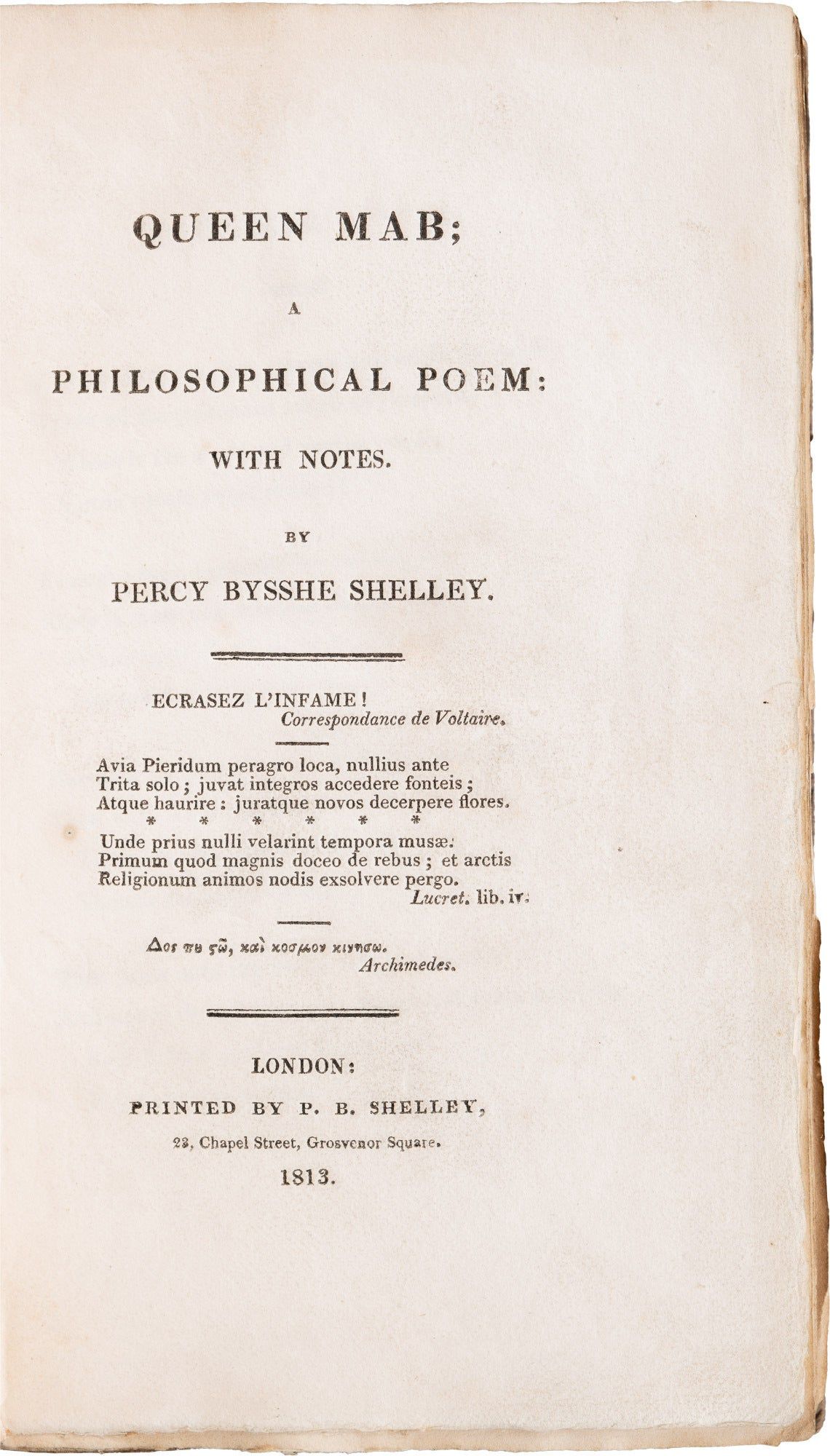
- London: P.B. Shelley, 23, Chapel Street, Grosvenor Square, 1813
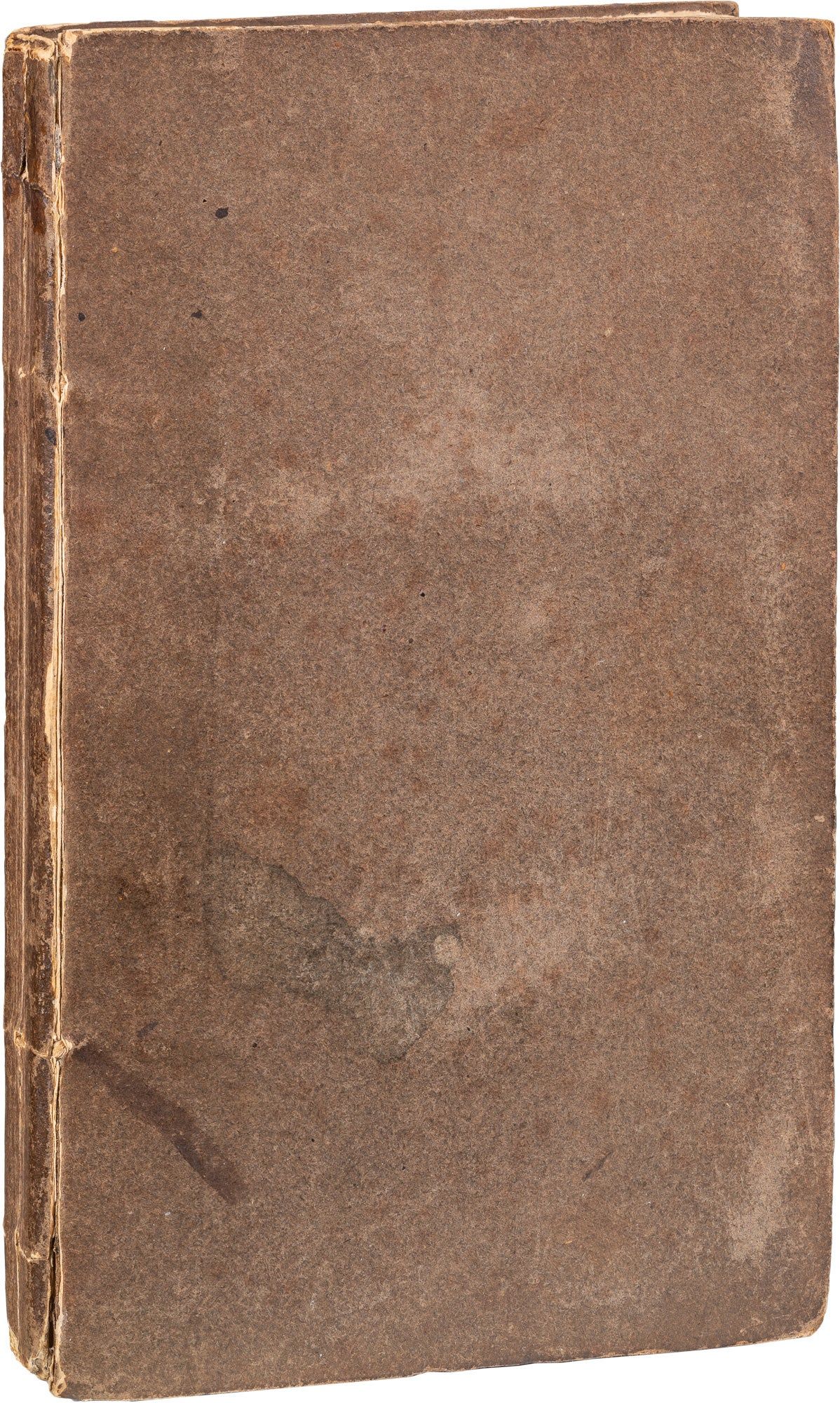
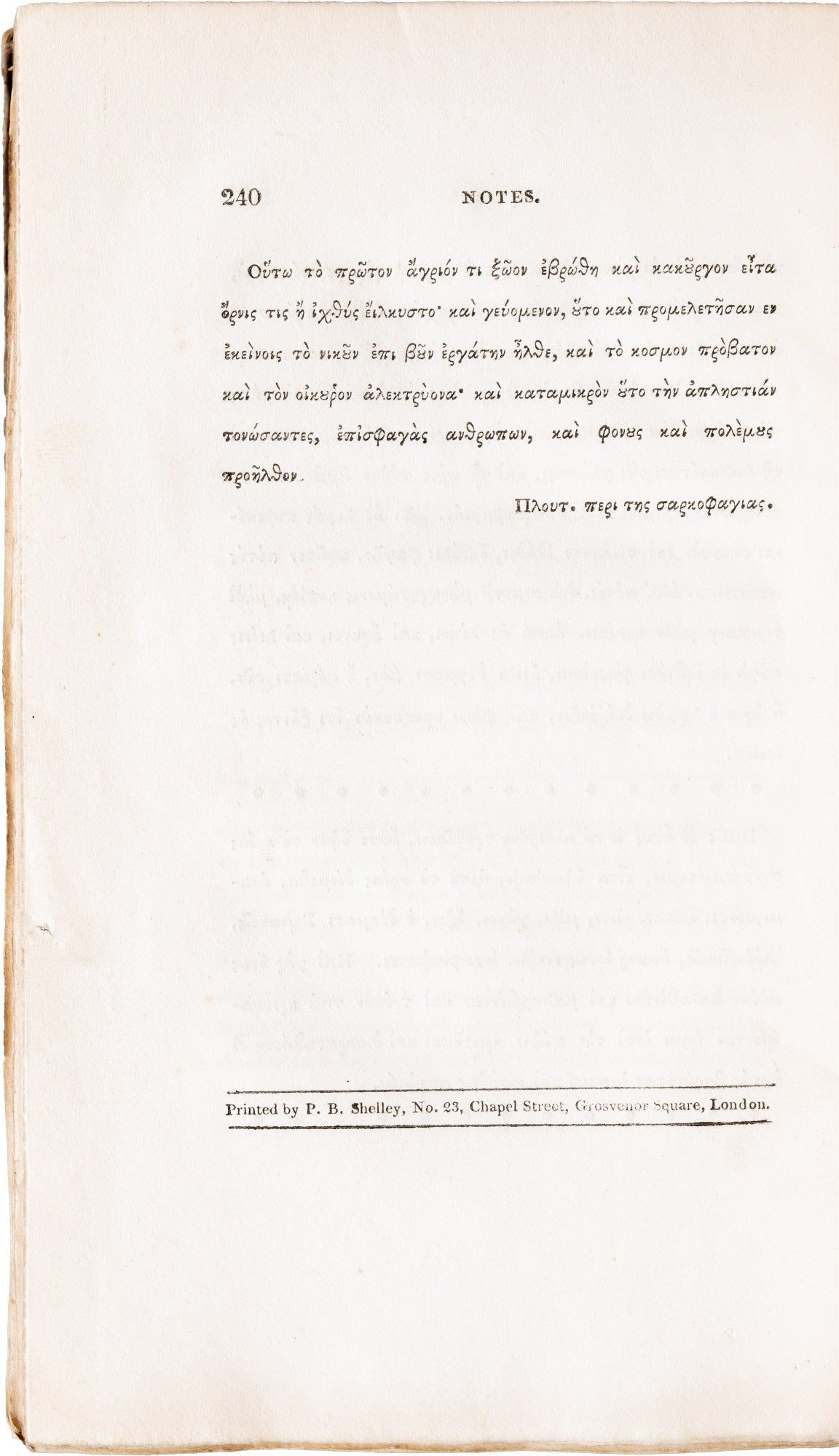
London: P.B. Shelley, 23, Chapel Street, Grosvenor Square, 1813. First Edition. 8vo (200 x 124mm), pp. [6], 240, [2]. Shelley’s first major poem. Original boards, joints cracked but holding, the interior is intact (many copies have Shelley’s name and the printer’s imprint cut out as the book was being hunted by moralists and royalists). A virgin and unmutilated copy, with the title page, dedication and final leaf intact. One of only 250 copies printed for private distribution, rare unrepaired and in anything approaching this condition. Morocco case. The poem is written in the form of a fairy tale that presents a future vision of a utopia on earth, consisting of nine cantos and seventeen notes. Queen Mab, a fairy (the name from one referred to in Shakespeare’s play Romeo and Juliet) descends in a chariot to a dwelling where Ianthe is sleeping on a couch. Queen Mab detaches Ianthe’s spirit or soul from her sleeping body and transports it on a celestial tour to Queen Mab’s palace at the edge of the universe. Queen Mab interprets, analyses, and explains Ianthe’s dreams. She shows her visions of the past, present, and the future. The past and present are characterized by oppression, injustice, misery, and suffering caused by monarchies, commerce, and religion. In the future, however, the condition of man will be improved, and a utopia will emerge. Two key points are emphasized: 1) death is not to be feared; and, 2) the future offers the possibility of perfectibility of man by moral means. Humanity and nature can be reconciled and work in unison and harmony, not against each other. While Ianthe is asleep on the couch, Henry waits to kiss her. He never does. Queen Mab returns Ianthe’s spirit or soul to her body.
Ianthe then awakens with a “gentle start.” Of the seventeen notes, six deal with the issues of atheism, vegetarianism, free love, the role of necessity in the physical and spiritual realm, and the relationship of Christ and the precepts of Christianity. From a critical standpoint, in this early poem Shelley forced together his youthful opinions into a scheme of dogmatic materialism. His objective was to show that reform and improvement in the lot of mankind were possible.
In her notes to the work, Mary Shelley explained the author’s goals: He was animated to greater zeal by compassion for his fellow-creatures. His sympathy was excited by the misery with which the world is bursting. He witnessed the sufferings of the poor, and was aware of the evils of ignorance. He desired to induce every rich man to despoil himself of superfluity, and to create a brotherhood of property and service, and was ready to be the first to lay down the advantages of his birth. He was of too uncompromising a disposition to join any party. He did not in his youth look forward to gradual improvement: nay, in those days of intolerance, now almost forgotten, it seemed as easy to look forward to the sort of millennium of freedom and brotherhood, which he thought the proper state of mankind, as to the present reign of moderation and improvement. Ill health made him believe that his race would soon be run; that a year or two was all he had of life. He desired that these years should be useful and illustrious. He saw, in a fervent call on his fellow-creatures to share alike the blessings of the creation, to love and serve each other, the noblest work that life and time permitted him. In this spirit he composed Queen Mab.
Ianthe then awakens with a “gentle start.” Of the seventeen notes, six deal with the issues of atheism, vegetarianism, free love, the role of necessity in the physical and spiritual realm, and the relationship of Christ and the precepts of Christianity. From a critical standpoint, in this early poem Shelley forced together his youthful opinions into a scheme of dogmatic materialism. His objective was to show that reform and improvement in the lot of mankind were possible.
In her notes to the work, Mary Shelley explained the author’s goals: He was animated to greater zeal by compassion for his fellow-creatures. His sympathy was excited by the misery with which the world is bursting. He witnessed the sufferings of the poor, and was aware of the evils of ignorance. He desired to induce every rich man to despoil himself of superfluity, and to create a brotherhood of property and service, and was ready to be the first to lay down the advantages of his birth. He was of too uncompromising a disposition to join any party. He did not in his youth look forward to gradual improvement: nay, in those days of intolerance, now almost forgotten, it seemed as easy to look forward to the sort of millennium of freedom and brotherhood, which he thought the proper state of mankind, as to the present reign of moderation and improvement. Ill health made him believe that his race would soon be run; that a year or two was all he had of life. He desired that these years should be useful and illustrious. He saw, in a fervent call on his fellow-creatures to share alike the blessings of the creation, to love and serve each other, the noblest work that life and time permitted him. In this spirit he composed Queen Mab.
Details
Title
Queen Mab
Author
Shelley, Percy
Condition
Unknown
Publisher
P.B. Shelley, 23, Chapel Street, Grosvenor Square: London
Date
1813
Edition
First Edition