

[JAPANESE POISON WOMAN / DOKUFU NOVEL]. Dokufu Benten Omura (The Poison Woman Benten Omura) 毒婦辨天お紫
![[JAPANESE POISON WOMAN / DOKUFU NOVEL]. Dokufu Ben](https://d3525k1ryd2155.cloudfront.net/h/680/197/1675197680.0.x.0.jpg)
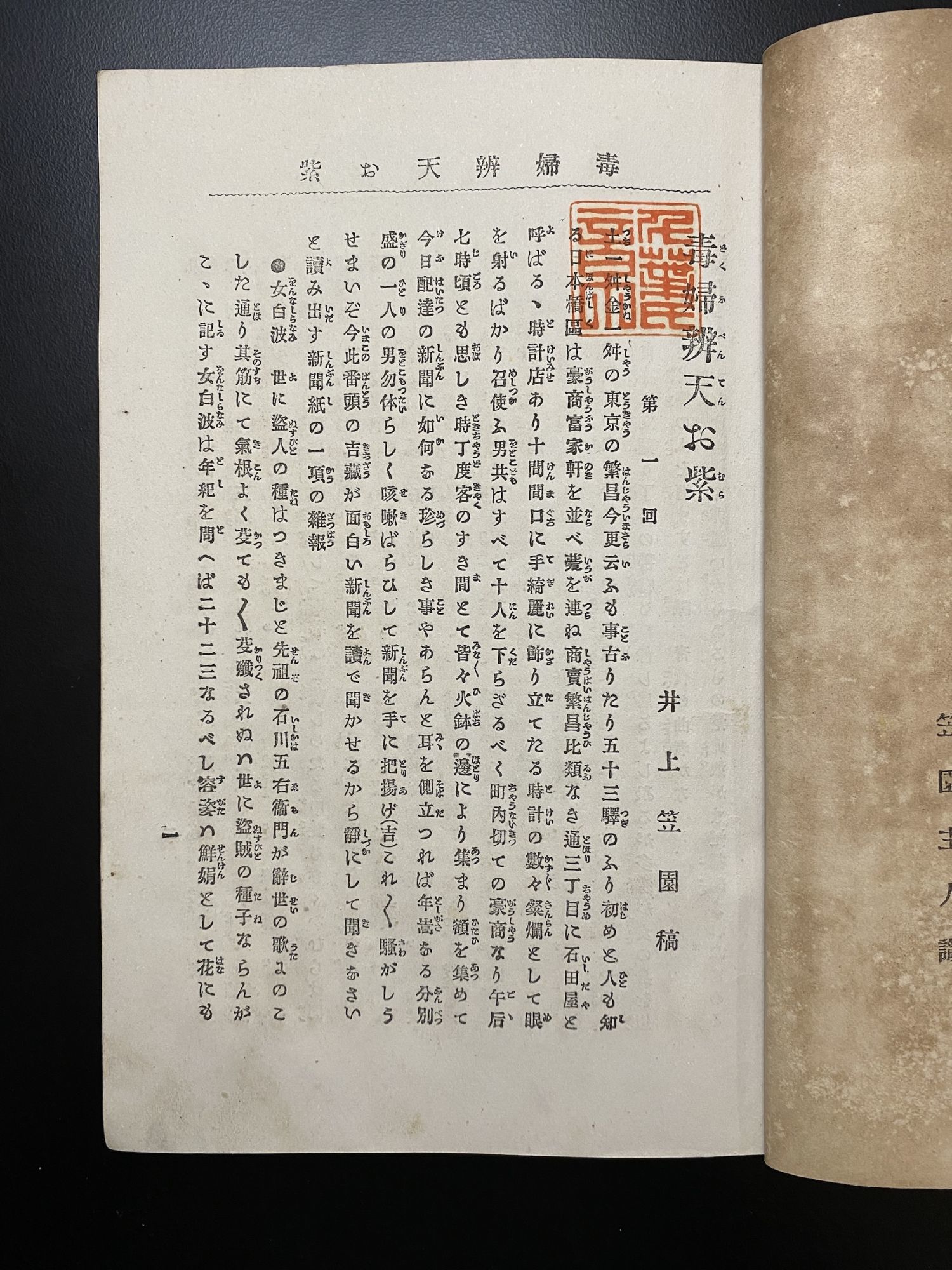
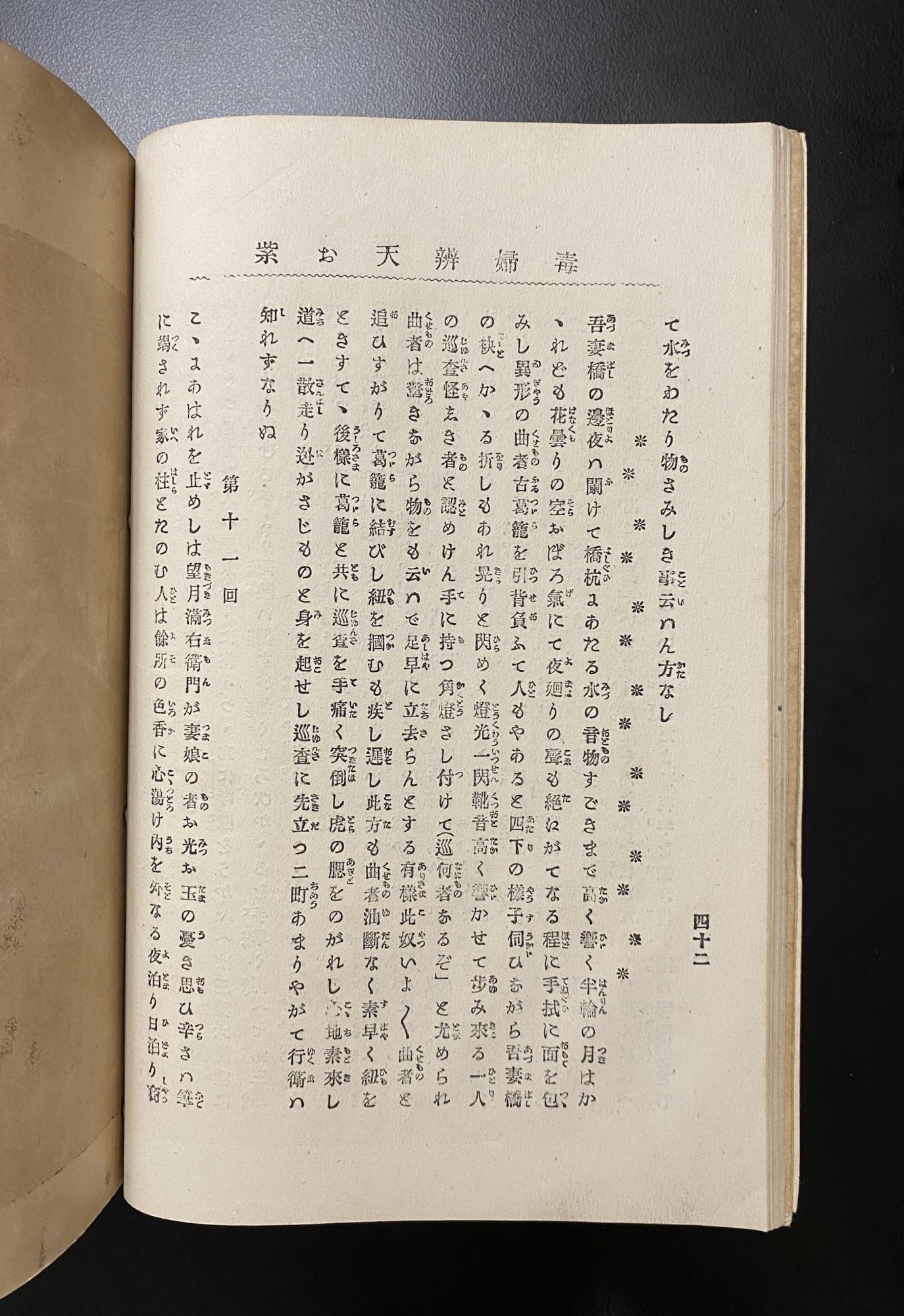
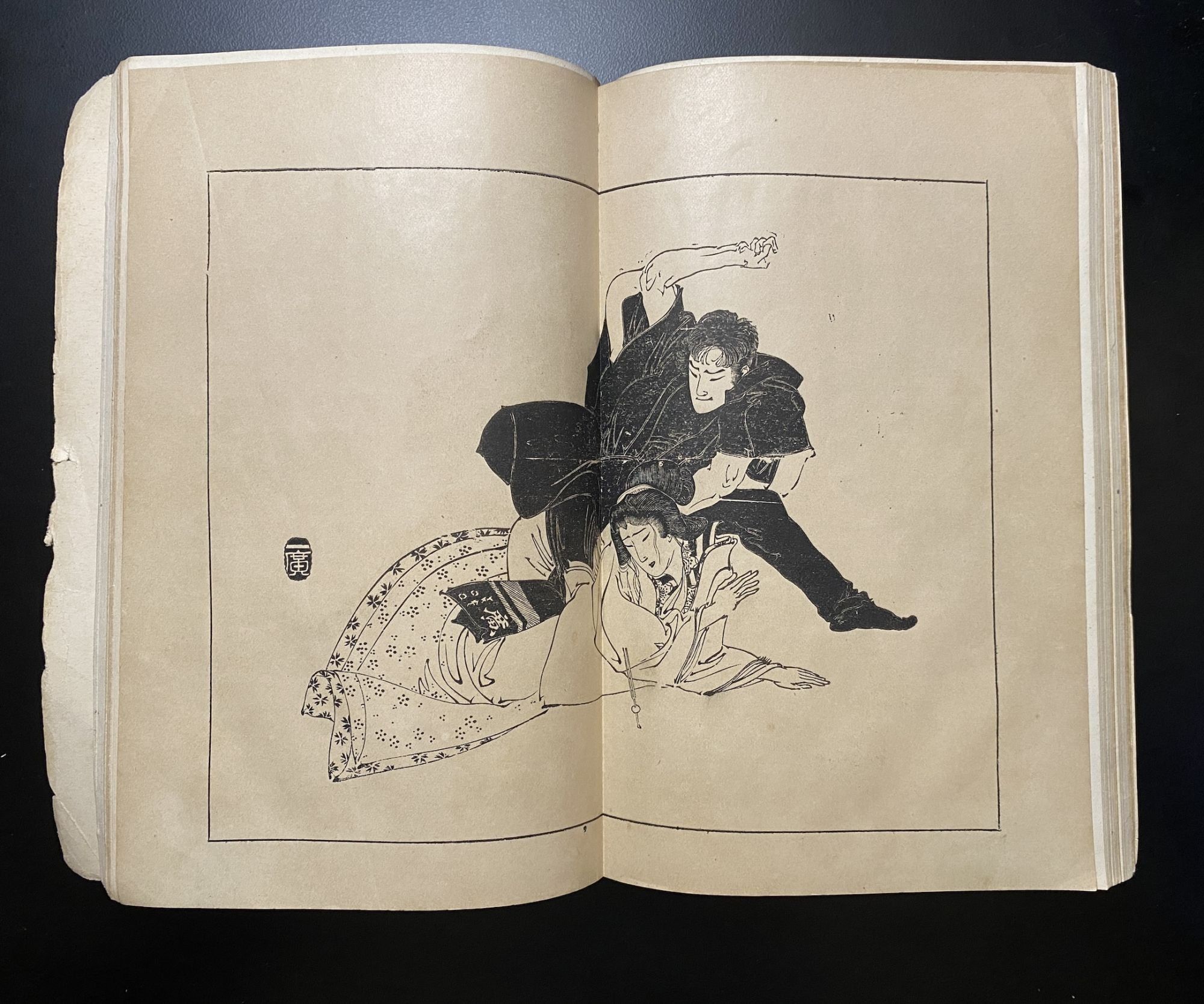
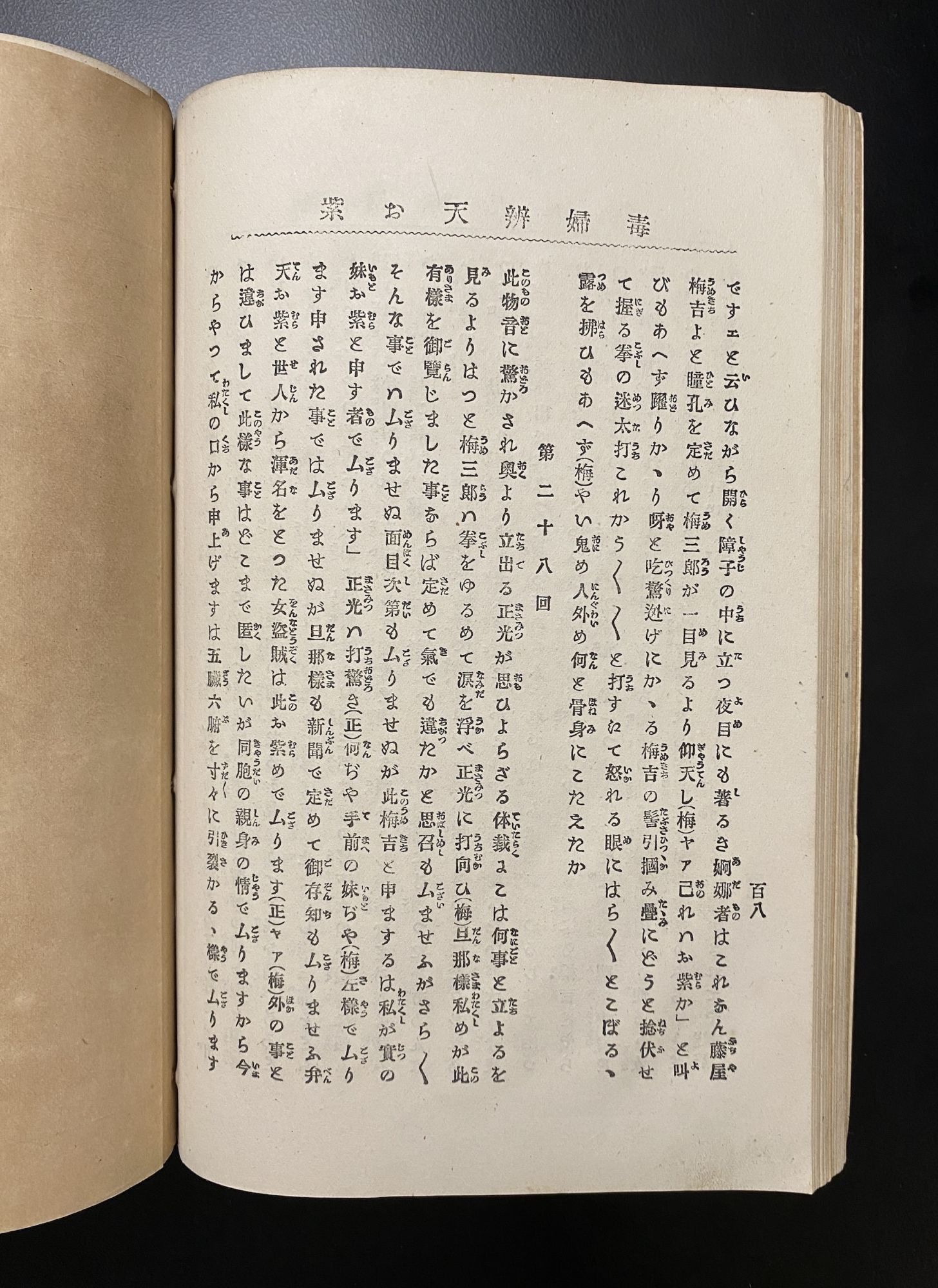
- Osaka, Japan: Sekizenkan, 1893
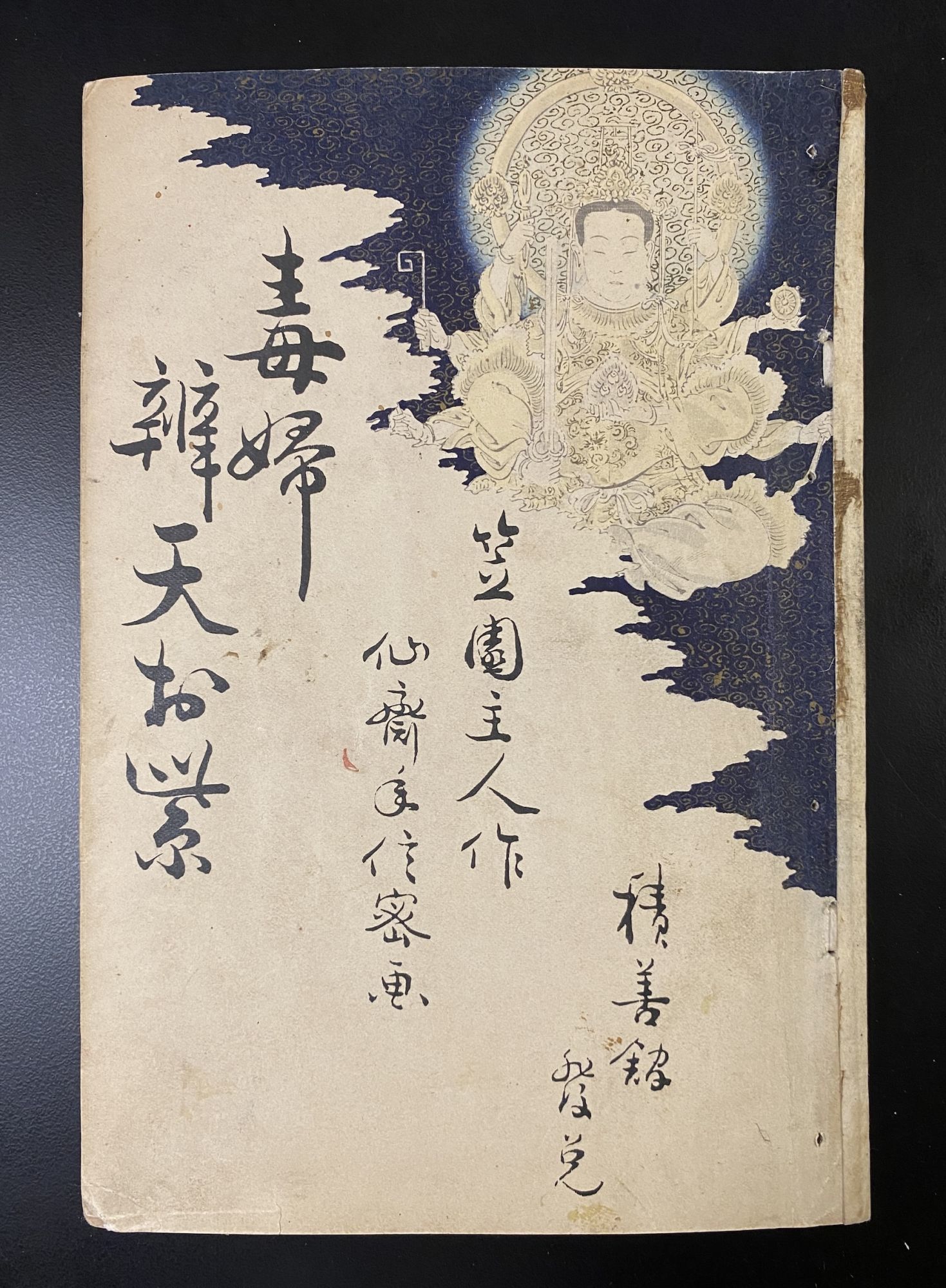
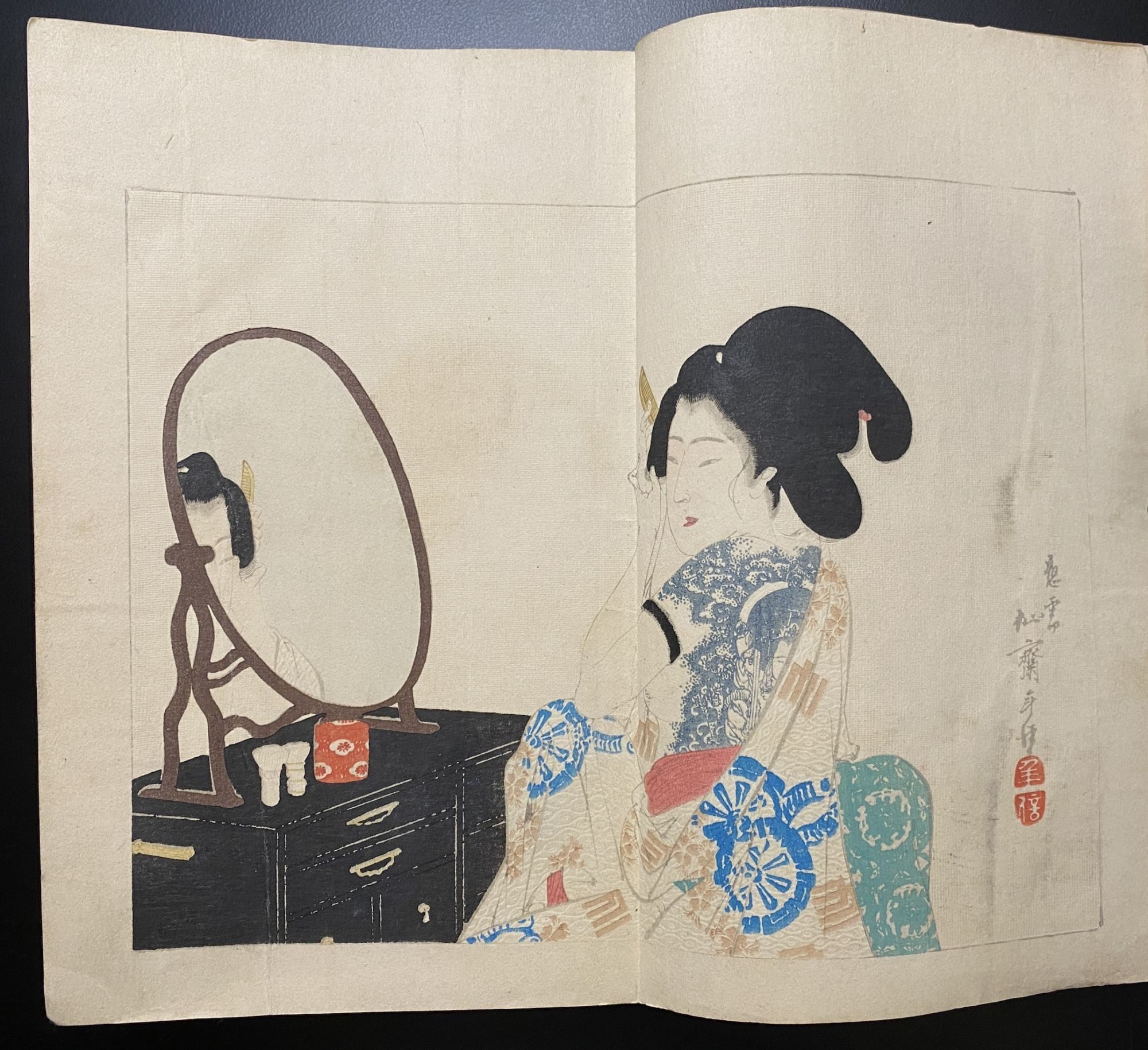
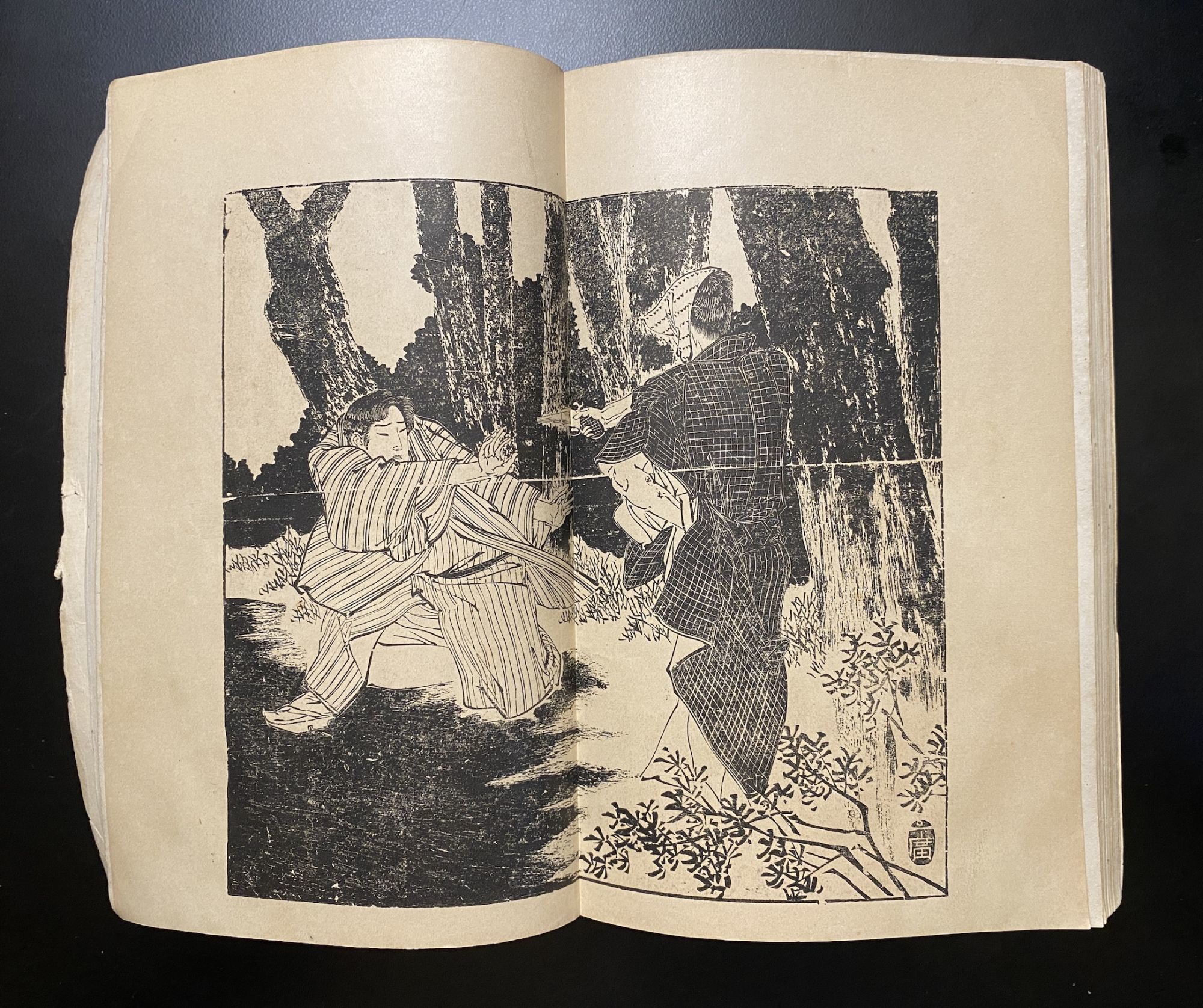
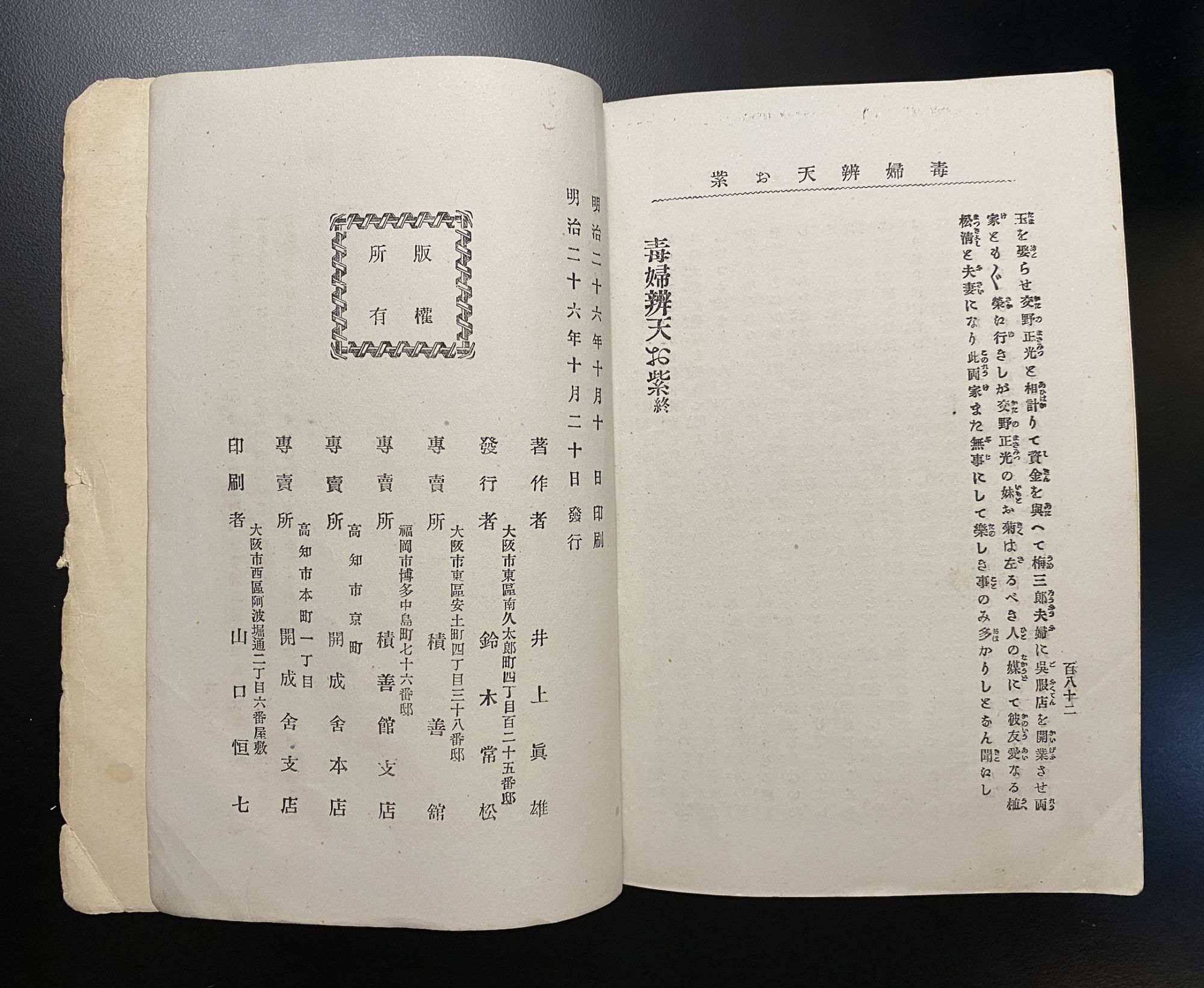
Osaka, Japan: Sekizenkan, 1893. First Edition. Very good. 8vo (220 x 150 mm). Double page colour woodblock frontispiece by Sensei Toshinobu (i.e Taguchi, or Toshinobu II, very finely embossed to convey different textures; three double page illustrations by Maeono Kazuhiro (versos browned as are some adjacent pages). Original color-printed wrappers, the front one achieved by one or more processes we have been unable to identify (chromolithograph?). Sewing threads removed and the textblock bound in the western manner (worn). NO COPY IN JAPANESE LIBRARIES (OR ELSEWHERE), THIS UNLOCATED "POISON WOMAN" (DOKUFU) NOVEL IS A TALE OF TWO EVIL GRIFTERS, THE PROTAGONIST BEING THE BLACK WIDOW OMURA WHO IS "SO BEAUTIFUL THAT EVEN THE MOON IS ASHAMED BEFORE HER." THE NOVEL IS WRITTEN IN AN UNUSUALLY FLORID STYLE WITH ALL THE PLOT TWISTS, MISDIRECTIONS, AND CLIFFHANGERS WE COULD WANT.
The Japanese trope of the dokufu was popularized in the early Meiji era and is often considered a direct parallel to the Western concept of the femme fatale. Most dokufu committed murder or robbery or both, but the most prominent aspect of the dokufu is her sexuality, which -- if unchecked -- "could cause disaster" for Japanese society (or so it was believed). She is an eroticized icon of female emancipation, unencumbered by ideological constraints. Interestingly, the rise of the dokufu genre closely corresponds to the rise of the new oligarchic Japanese government in the nineteenth century. In this period of dramatic social, cultural, and political change, the "poison woman" blossomed. Without dokufu there would be no MOGU (or "modern girls"), without whom there would be no modern Japan.
Our novel seems to have passed out of written record, save for a single advertisement in a January 1894 publication, which informs us that the author, "Inoue Ryūen, a reporter for the Osaka [daily newspaper] Mainichi shinbun, who is renowned for the charms of his brush, now wields it to depict the life of a poisonous woman. The theme is extraordinary and the writing is ornate. There is no end to the evil that the woman nicknamed Benten Omura commits as trickster and murderess. If you want to know just how compellingly her life has been depicted here, have a read."
Omura's full name is Natsusawa Mura. She grew up in a leaky-roofed house in downtown Shitaya Tokyo, with honest parents and a good brother, but at an early age something goes awry and she starts stealing and committing crimes, despite her parents' considerable efforts to make her reform. Omura falls in with a "very bad guy" named Tosaburo, and together they run off to Osaka. In order to evade police they return to Tokyo, and there the crime wave begins and ends: Omura uses her sexuality to bewitch a pawnshop owner, and in characteristic femme fatale fashion, she has Tosaburo strangle him. The crime wave continues as the pair extort money from the victim's wife and daughter. The crooks try to escape but are thwarted by waiting police who have been tipped off. Notably, our Poison Woman is incarcerated (in Ishikawajima Prison) while her evil counterpart Tosaburo flees to Hakone.
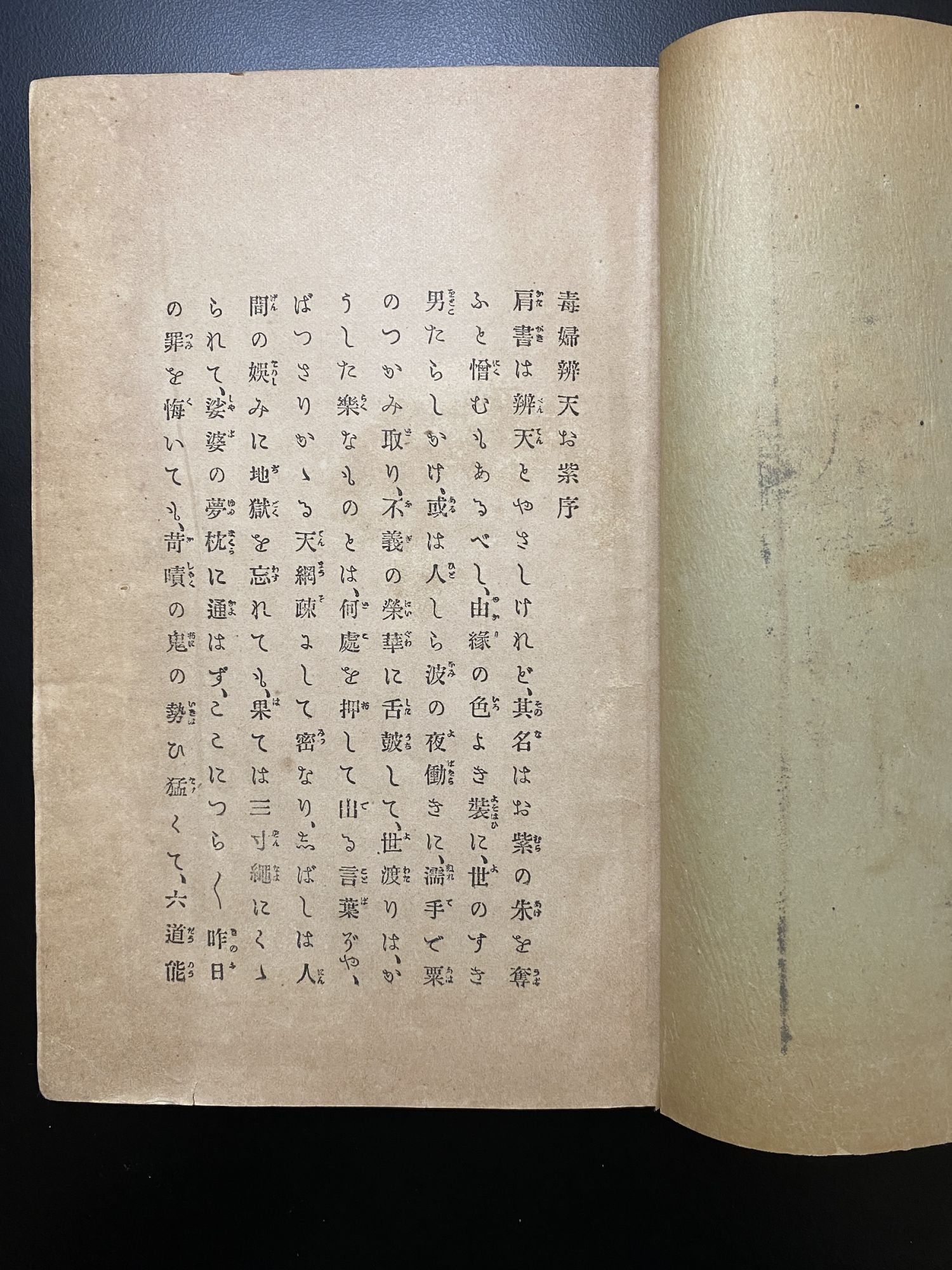
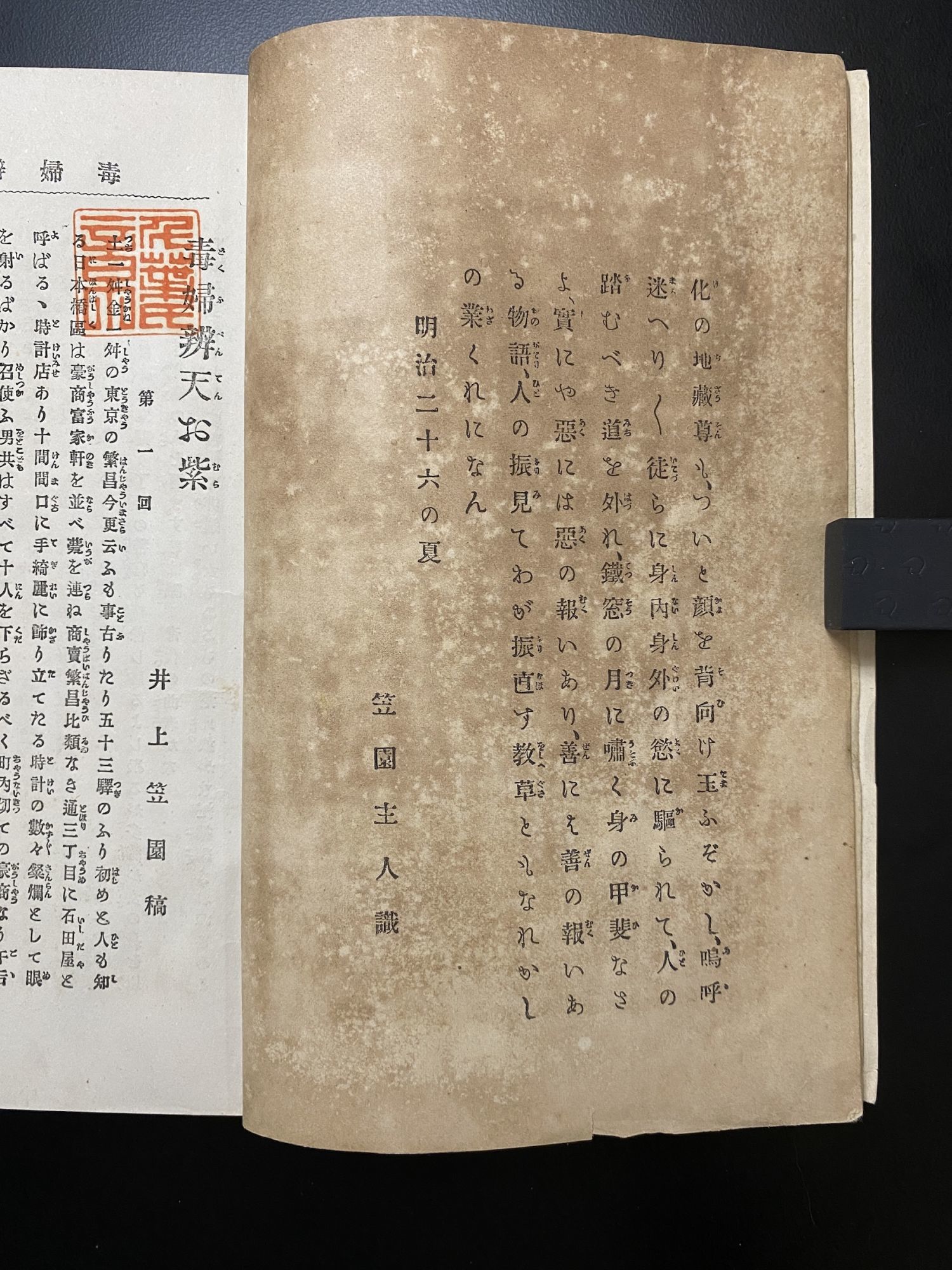
The novel is told in 48 installments (or chapters). Incorporated into the narrative itself are poetic references and texts from newspaper articles and even letters.
We have seen an oblique reference to a theatrical adaptation of the novel, which was performed on the kabuki stage in Osaka in July 1900. Nothing more of "Dokufu Benten Omura" has been seen or heard since, and her story -- and all that she symbolized -- merits academic attention. We are grateful to Matthew Fraleigh for sharing with us his thorough notes concerning this intriguing but otherwise unknown novel.
For further information (in English) about dokufu, see especially Christine L. Marran, Poison Woman: Figuring Female Transgression in Modern Japanese Culture (Univ. Minnesota Press, 2007).
The Japanese trope of the dokufu was popularized in the early Meiji era and is often considered a direct parallel to the Western concept of the femme fatale. Most dokufu committed murder or robbery or both, but the most prominent aspect of the dokufu is her sexuality, which -- if unchecked -- "could cause disaster" for Japanese society (or so it was believed). She is an eroticized icon of female emancipation, unencumbered by ideological constraints. Interestingly, the rise of the dokufu genre closely corresponds to the rise of the new oligarchic Japanese government in the nineteenth century. In this period of dramatic social, cultural, and political change, the "poison woman" blossomed. Without dokufu there would be no MOGU (or "modern girls"), without whom there would be no modern Japan.
Our novel seems to have passed out of written record, save for a single advertisement in a January 1894 publication, which informs us that the author, "Inoue Ryūen, a reporter for the Osaka [daily newspaper] Mainichi shinbun, who is renowned for the charms of his brush, now wields it to depict the life of a poisonous woman. The theme is extraordinary and the writing is ornate. There is no end to the evil that the woman nicknamed Benten Omura commits as trickster and murderess. If you want to know just how compellingly her life has been depicted here, have a read."
Omura's full name is Natsusawa Mura. She grew up in a leaky-roofed house in downtown Shitaya Tokyo, with honest parents and a good brother, but at an early age something goes awry and she starts stealing and committing crimes, despite her parents' considerable efforts to make her reform. Omura falls in with a "very bad guy" named Tosaburo, and together they run off to Osaka. In order to evade police they return to Tokyo, and there the crime wave begins and ends: Omura uses her sexuality to bewitch a pawnshop owner, and in characteristic femme fatale fashion, she has Tosaburo strangle him. The crime wave continues as the pair extort money from the victim's wife and daughter. The crooks try to escape but are thwarted by waiting police who have been tipped off. Notably, our Poison Woman is incarcerated (in Ishikawajima Prison) while her evil counterpart Tosaburo flees to Hakone.
The novel is told in 48 installments (or chapters). Incorporated into the narrative itself are poetic references and texts from newspaper articles and even letters.
We have seen an oblique reference to a theatrical adaptation of the novel, which was performed on the kabuki stage in Osaka in July 1900. Nothing more of "Dokufu Benten Omura" has been seen or heard since, and her story -- and all that she symbolized -- merits academic attention. We are grateful to Matthew Fraleigh for sharing with us his thorough notes concerning this intriguing but otherwise unknown novel.
For further information (in English) about dokufu, see especially Christine L. Marran, Poison Woman: Figuring Female Transgression in Modern Japanese Culture (Univ. Minnesota Press, 2007).
Details
Title
[JAPANESE POISON WOMAN / DOKUFU NOVEL]. Dokufu Benten Omura (The Poison Woman Benten Omura) 毒婦辨天お紫
Author
Inoue Masao [aka Kasaen]
Condition
Very Good
Publisher
Sekizenkan: Osaka, Japan
Date
1893
Edition
First Edition