

Woodblock Triptych
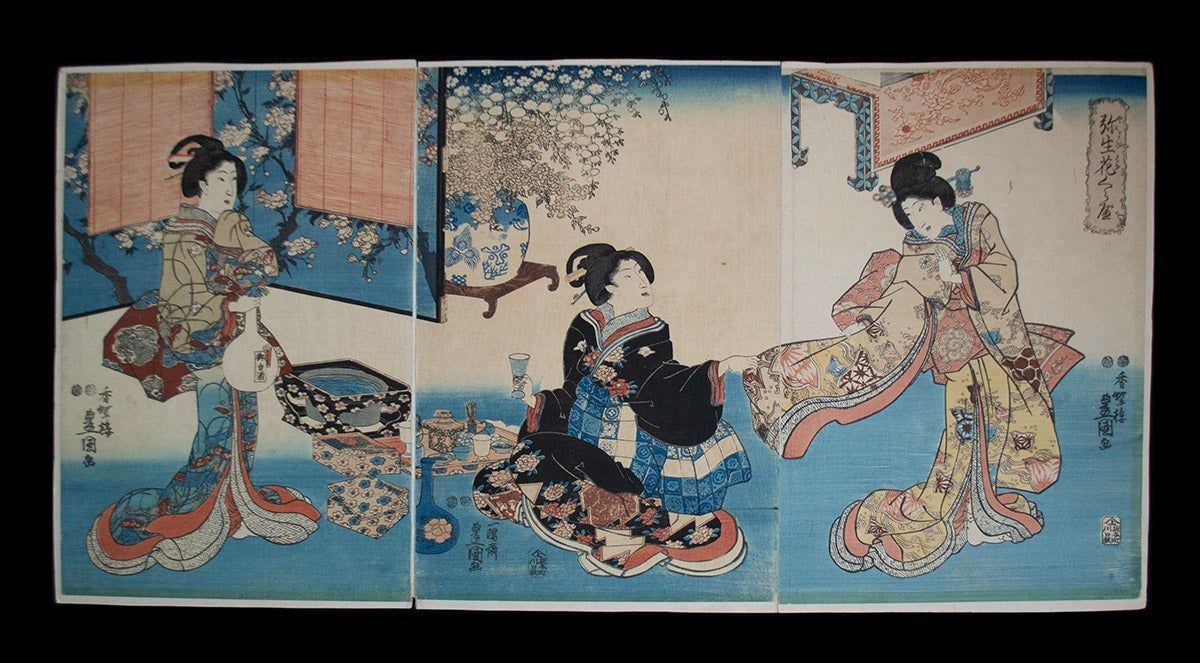
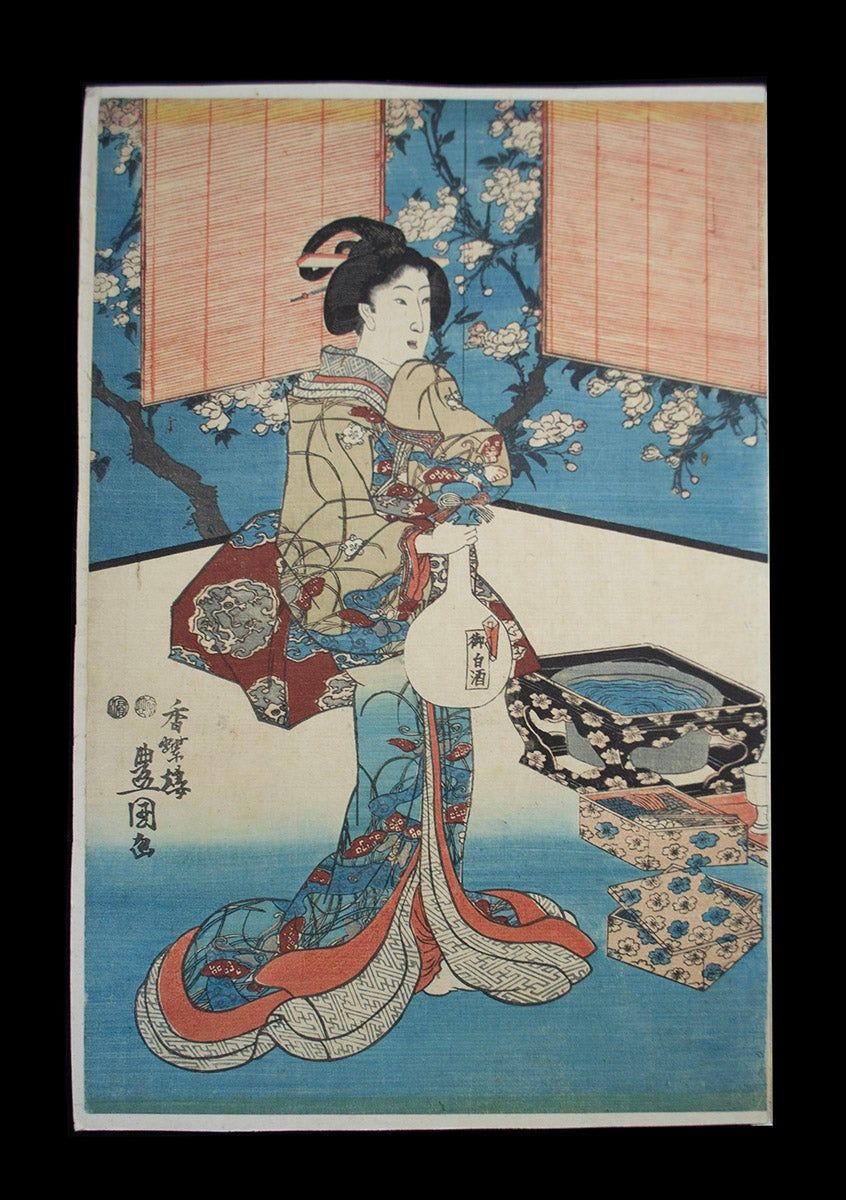
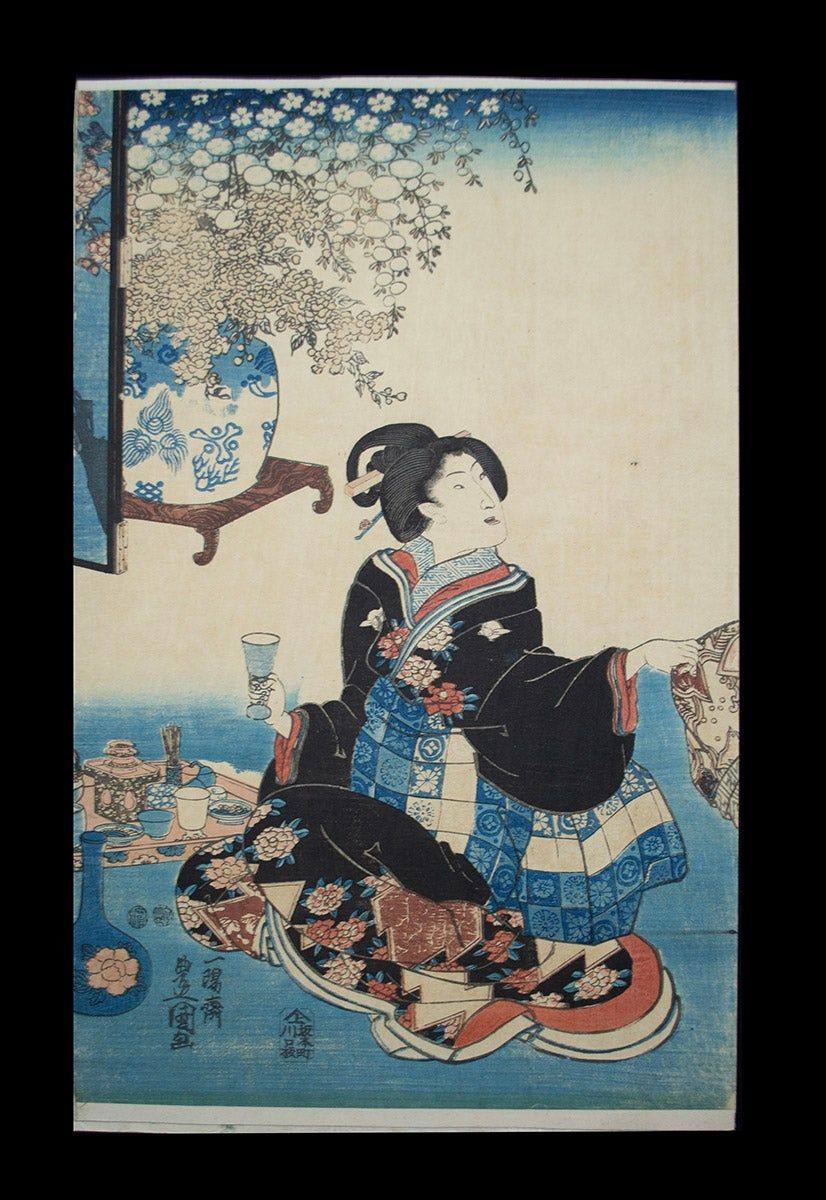
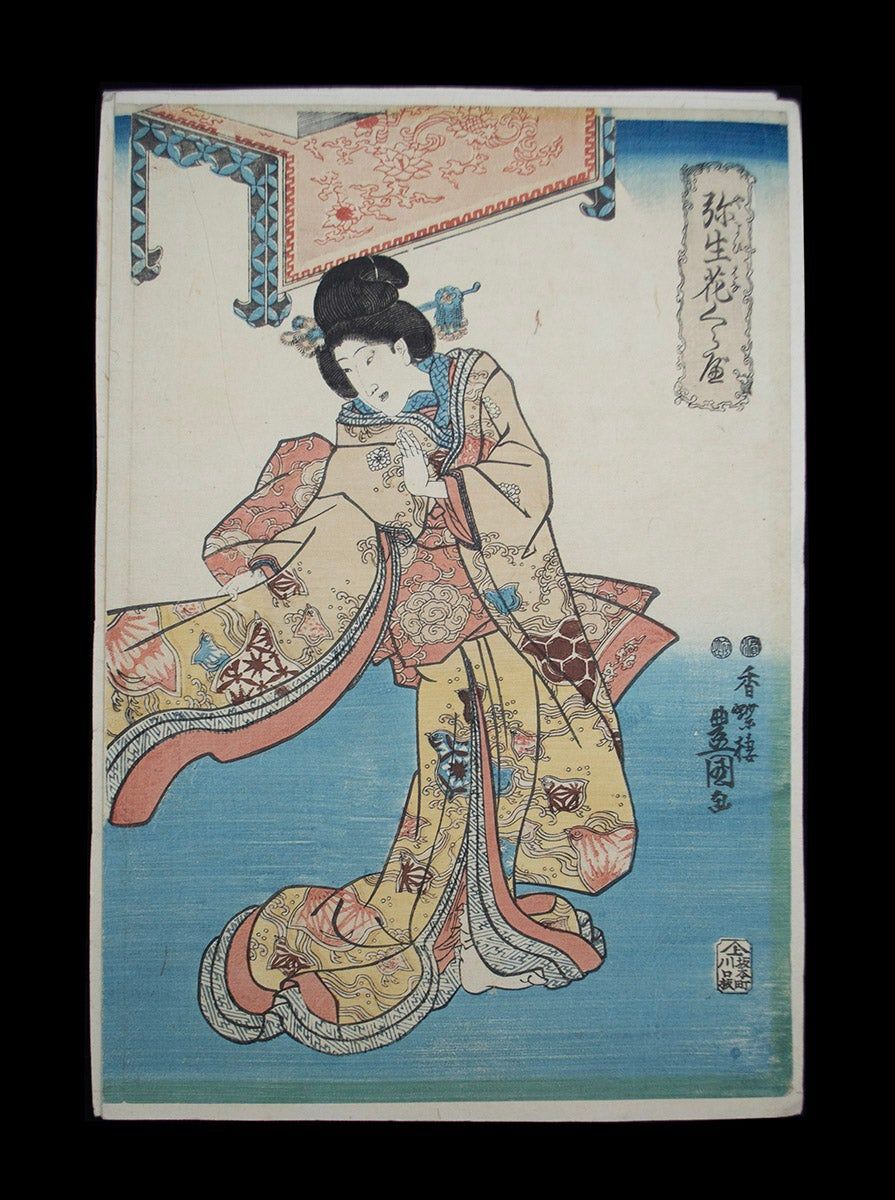
- SIGNED
- Japan: Kawaguchi-ya Uhei, 1850
Japan: Kawaguchi-ya Uhei, 1850. JAPANESE ALBUM. Kochoro Toyokuni (Utagawa Toyokuni IV)?] Woodblock Triptych. [no place, no date, ca Japan: Kawaguchi-ya Uhei, 1850].
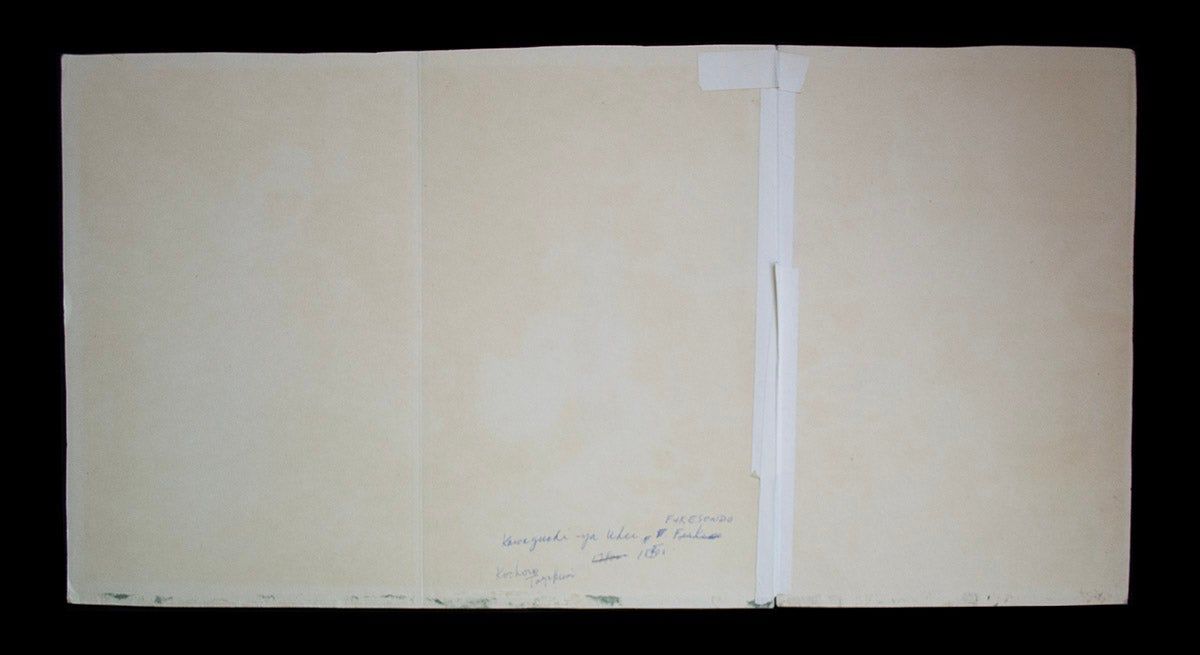
Color triptych woodblock print on paper. Three separate pieces, mounted on thick paper. Some minor creases and light wear. Tape along verso of one seam. The colors still remain vibrant. Each panel size (14 1/4 x 9 5/8 inches; 362 x 245 mm). Folded out size (29 x 9 5/8 inches; 730 x 245 mm)
Triptych depicts three women in traditional Japanese robes, with a tea set. On the back in newer blue ink is inscribed "Kochoro Toyokuni" and "Kawaguchi-ya Uhei Fukesendo. 1850s"
Kawaguchiya Uhei "Edo print publisher. Started in the first decade of the nineteenth century and closed in VI/1852. Artists published by this house include Eisen, Eizan, Hiroshige, Kuniaki, Kunimitsu, as both Kunisada and Toyokuni III, Kuniyasu, Kuniyoshi, Sadahide, Sadamasa, Sadatsuna, Shun'ei, Shunk?, Shunk? II, Shunsen, Toyokuni I, Toyokuni II, Yoshimune and Yoshiyuki. Kawaguchiya Uhei started his business in the 1800s. He established a very good relationship with the young artist Kunisada and, in 1808, seems to have been the first who issued his actor prints. Shortly in 1812 Kawaguchiya served as an official censor of prints." (Lyon Collection Japanese Woodblock Prints).
Toyokuni III, also known as Kunisada, was born in the Honjo district of Edo as Kunisada Tsunoda. Kunisada's family owned a small hereditary ferryboat service. Though his father, an amateur poet, died when Kunisada was a child, the family business provided some financial security. During his childhood, he showed considerable promise in painting and drawing. Due to strong familial ties with literary and theatrical circles, he spent time studying actor portraits. At age 14, he was admitted to study under Toyokuni, head of the Utagawa school. Kunisada's ukiyo-e woodblock prints embody the characteristics of the Utagawa school, focusing on traditional subjects such as kabuki, bijin (beautiful women), shunga (erotic prints), and historical prints. Kunisada's first known woodblock print dates to 1807, his first illustrated book to 1808. His career took off from the beginning. Many of his works became overnight successes and he was considered the "star attraction" of the Utagawa school. He signed his works "Kunisada," sometimes with the studio names of Gototei and Kochoro affixed. In 1844, he adopted the name of his teacher and became Toyokuni III. Kunisada passed away in 1864 in the same neighborhood that he was born. He was 70 years old. Kunisada was a highly popular, and the most active, Japanese ukiyo-e artist of the 19th century. In his time, his reputation surpassed those of his contemporaries Hiroshige and Kuniyoshi." (Ronin Gallery).
"Utagawa school and inherited art-names. It was a Japanese custom for successful apprentices to take the names of their masters.[2] In the main Utagawa school, there was a hierarchy of g? (art-names), from the most senior to junior. As each senior person died, the others would move up a step. The head of the school generally used the g? (and signed his prints) as Toyokuni. When Kunisada I proclaimed himself head of the school (c. 1842), he started signing as Toyokuni, and the next most senior member, Kochoro (a name also previously used by Kunisada I, but not as his chief g?), started signing as Kunisada (Kunisada II, in this case). The next most senior member after him, in turn, began signing as Kunimasa (Kunimasa IV, in this case), which had been Kochoro's g? before he became Kunisada II. (The original Kunimasa I had been a student of Toyokuni I.)" (Wikipedia).
HBS 69343.
$1,000.
Color triptych woodblock print on paper. Three separate pieces, mounted on thick paper. Some minor creases and light wear. Tape along verso of one seam. The colors still remain vibrant. Each panel size (14 1/4 x 9 5/8 inches; 362 x 245 mm). Folded out size (29 x 9 5/8 inches; 730 x 245 mm)
Triptych depicts three women in traditional Japanese robes, with a tea set. On the back in newer blue ink is inscribed "Kochoro Toyokuni" and "Kawaguchi-ya Uhei Fukesendo. 1850s"
Kawaguchiya Uhei "Edo print publisher. Started in the first decade of the nineteenth century and closed in VI/1852. Artists published by this house include Eisen, Eizan, Hiroshige, Kuniaki, Kunimitsu, as both Kunisada and Toyokuni III, Kuniyasu, Kuniyoshi, Sadahide, Sadamasa, Sadatsuna, Shun'ei, Shunk?, Shunk? II, Shunsen, Toyokuni I, Toyokuni II, Yoshimune and Yoshiyuki. Kawaguchiya Uhei started his business in the 1800s. He established a very good relationship with the young artist Kunisada and, in 1808, seems to have been the first who issued his actor prints. Shortly in 1812 Kawaguchiya served as an official censor of prints." (Lyon Collection Japanese Woodblock Prints).
Toyokuni III, also known as Kunisada, was born in the Honjo district of Edo as Kunisada Tsunoda. Kunisada's family owned a small hereditary ferryboat service. Though his father, an amateur poet, died when Kunisada was a child, the family business provided some financial security. During his childhood, he showed considerable promise in painting and drawing. Due to strong familial ties with literary and theatrical circles, he spent time studying actor portraits. At age 14, he was admitted to study under Toyokuni, head of the Utagawa school. Kunisada's ukiyo-e woodblock prints embody the characteristics of the Utagawa school, focusing on traditional subjects such as kabuki, bijin (beautiful women), shunga (erotic prints), and historical prints. Kunisada's first known woodblock print dates to 1807, his first illustrated book to 1808. His career took off from the beginning. Many of his works became overnight successes and he was considered the "star attraction" of the Utagawa school. He signed his works "Kunisada," sometimes with the studio names of Gototei and Kochoro affixed. In 1844, he adopted the name of his teacher and became Toyokuni III. Kunisada passed away in 1864 in the same neighborhood that he was born. He was 70 years old. Kunisada was a highly popular, and the most active, Japanese ukiyo-e artist of the 19th century. In his time, his reputation surpassed those of his contemporaries Hiroshige and Kuniyoshi." (Ronin Gallery).
"Utagawa school and inherited art-names. It was a Japanese custom for successful apprentices to take the names of their masters.[2] In the main Utagawa school, there was a hierarchy of g? (art-names), from the most senior to junior. As each senior person died, the others would move up a step. The head of the school generally used the g? (and signed his prints) as Toyokuni. When Kunisada I proclaimed himself head of the school (c. 1842), he started signing as Toyokuni, and the next most senior member, Kochoro (a name also previously used by Kunisada I, but not as his chief g?), started signing as Kunisada (Kunisada II, in this case). The next most senior member after him, in turn, began signing as Kunimasa (Kunimasa IV, in this case), which had been Kochoro's g? before he became Kunisada II. (The original Kunimasa I had been a student of Toyokuni I.)" (Wikipedia).
HBS 69343.
$1,000.
Details
Title
Woodblock Triptych
Author
JAPANESE ALBUM
Condition
Unknown
Publisher
Kawaguchi-ya Uhei: Japan
Date
1850