

The Expression of the Emotions in Man and Animals
- Hardcover
- New York: D. Appleton and Company, 1873
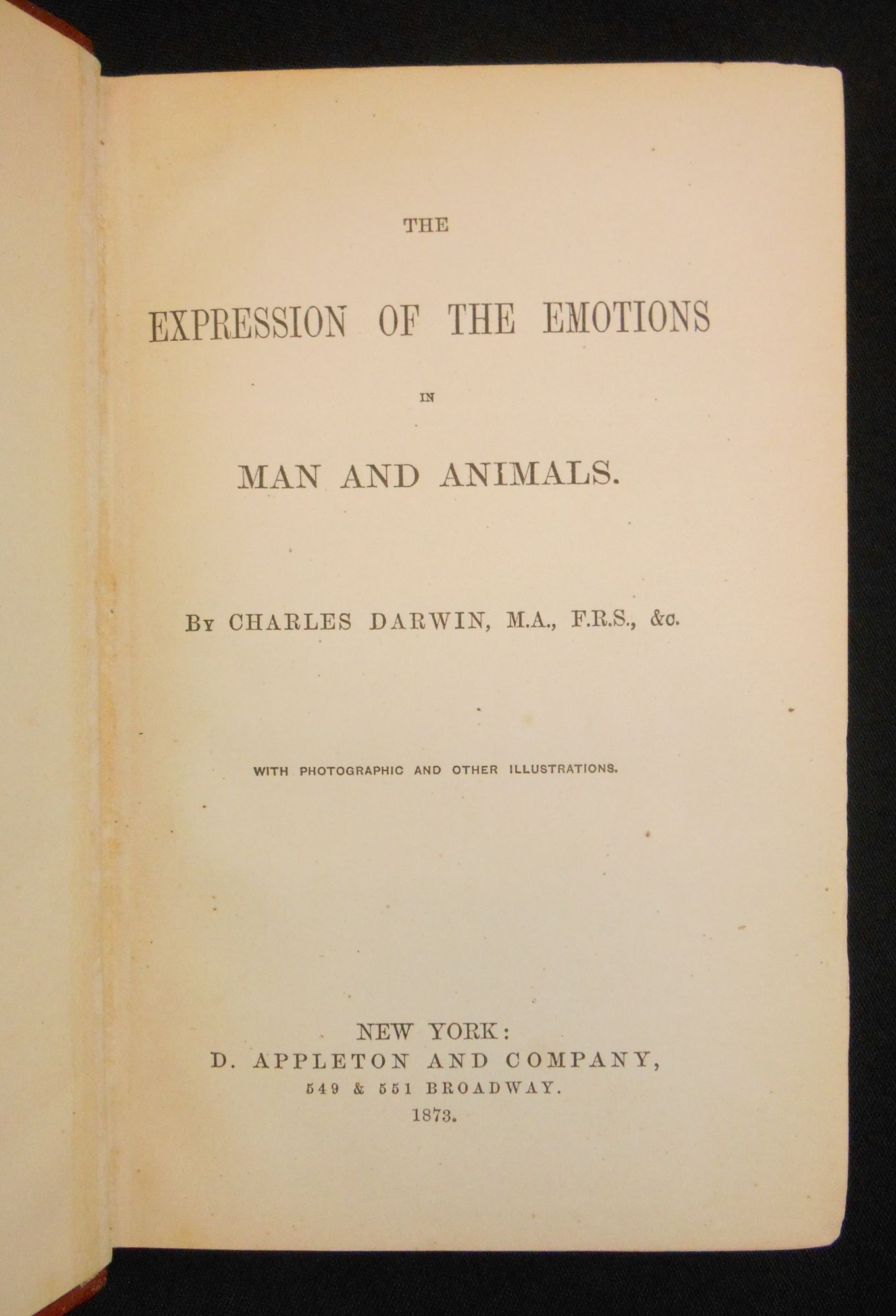
New York: D. Appleton and Company, 1873. First Edition. Hardcover. Near fine. First US edition, octavo size, 396 pp. Charles Robert Darwin (1809-1882) was interested in the origins of life from a young age, and when the "Beagle" had an opening for a naturalist, his interest and reputation for "collecting, observing, & noting any thing worthy to be noted in Natural History" earned him the post on this voyage which would last for five years, and which would become duly famous. It would become 'the key formative event in Darwin's life" and the many species he observed, both living and extinct, would foster "an intellectual ferment and fortif[y] him to re-evaluate all of natural history" (n.b., quote from the online Oxford Dictionary of National Biography).
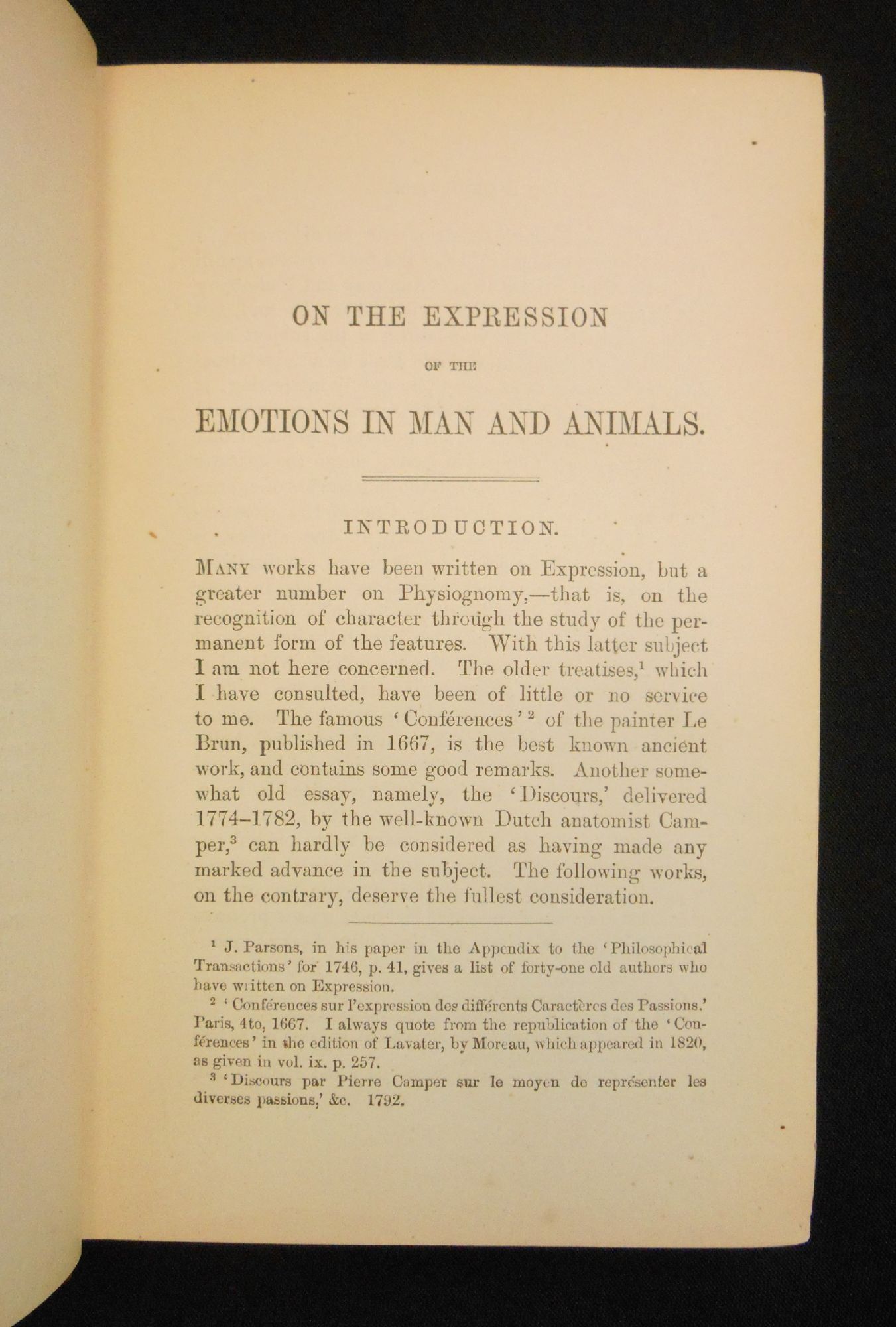
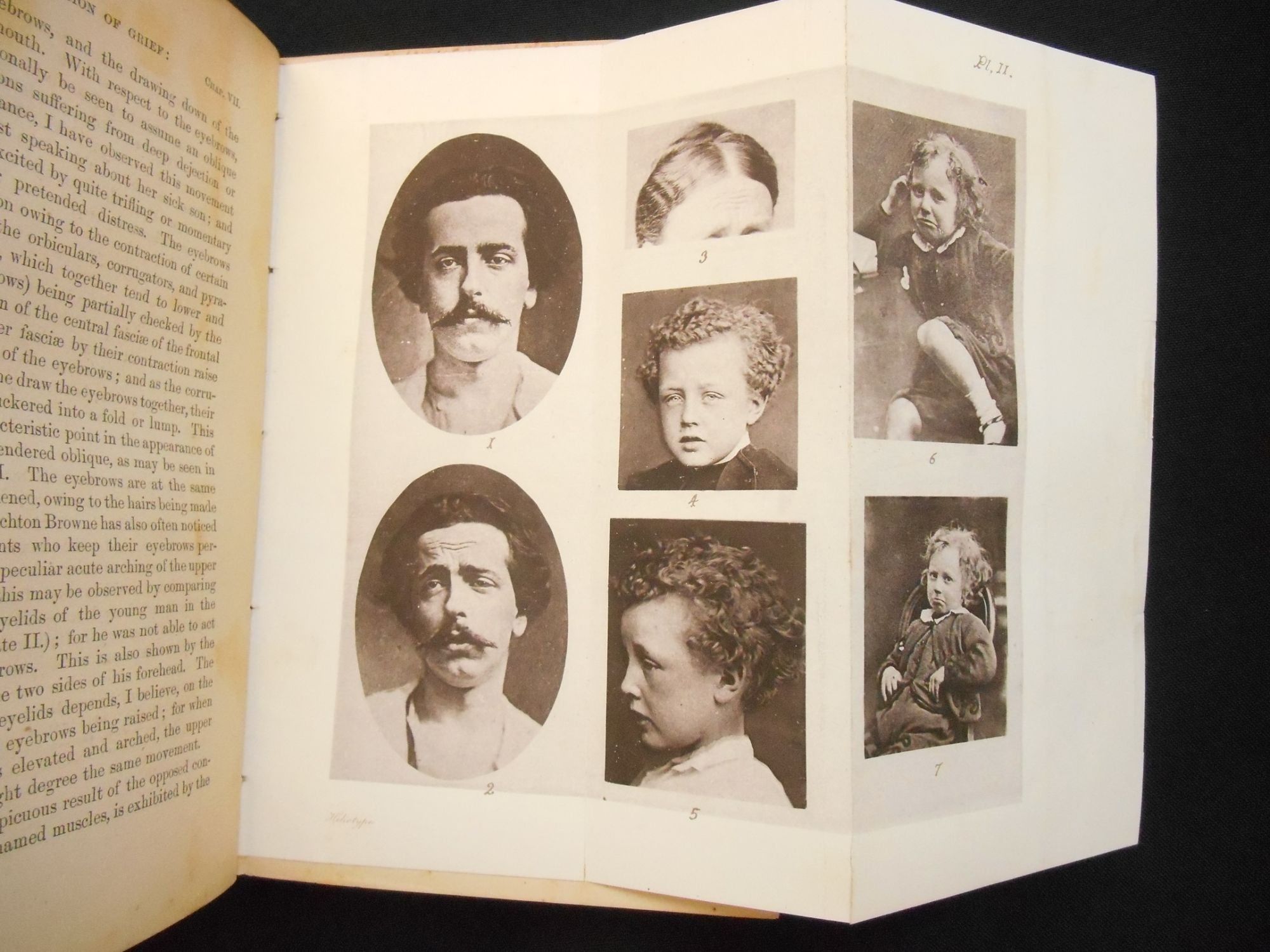
This work, "The Expression of the Emotions in Man and Animals", is "Charles Darwin's third major work of evolutionary theory, following 'On the Origin of Species' (1859) and 'The Descent of Man, and Selection in Relation to Sex' (1871). Initially intended as a chapter in Descent of Man, Expression grew in length and was published separately in 1872. Darwin explores the biological aspects of emotional behaviour and the animal origins of human characteristics like smiling and frowning, shrugging shoulders, lifting eyebrows in surprise, and baring teeth in an angry sneer" (n.b., quote from Wiki). He "examined the causes, physiological and psychological, of all the fundamental emotions in man and animals. He concluded that 'the chief expressive actions exhibited by man and by the lower animals are now innate or inherited', and that most of the movements of expression must have been gradually acquired. This is the only book by Darwin illustrated with photographs" (n.b., quote from the online History of Medicine and the Life Sciences).
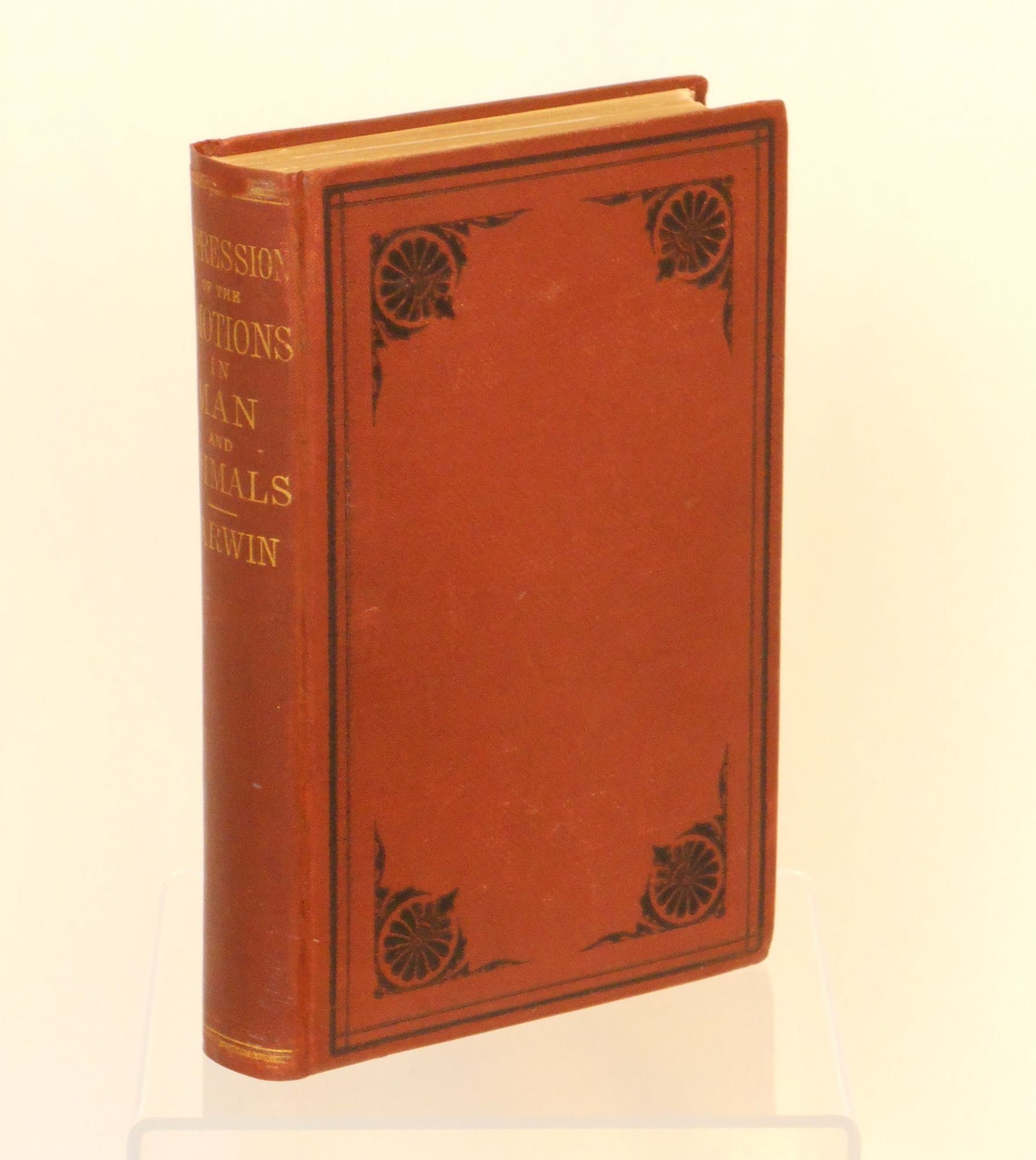
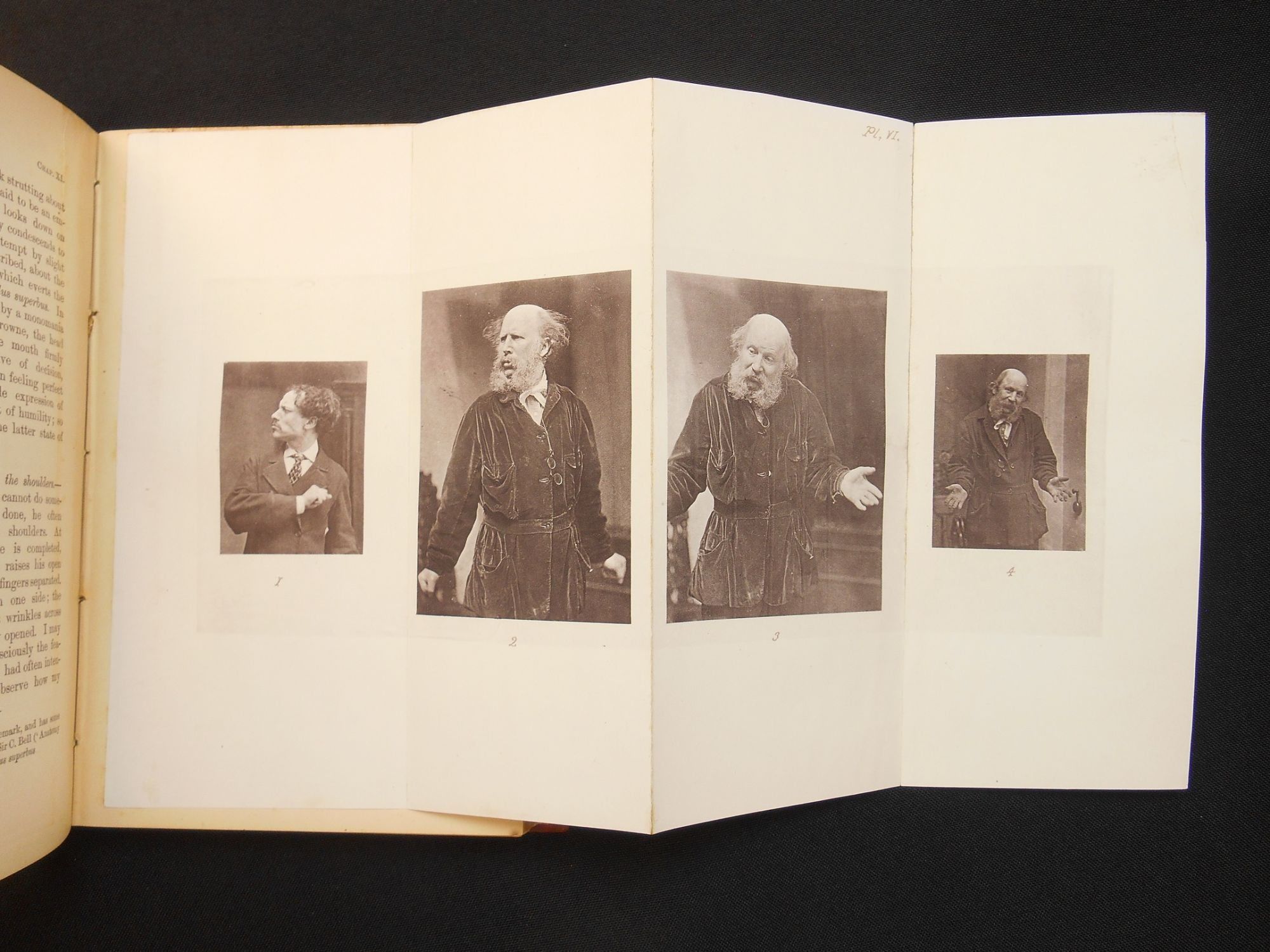
___DESCRIPTION: Bound in full rust-coloured cloth over boards, both boards with ruled borders and decorations in black, the spine with gilt ruled borders and lettering, light yellow coated endpapers, with twenty-one in-text illustrations and seven Heliotype plates, the plate facing p. 264 being a four-panel foldout, fourteen pages of publisher's ads at the rear; octavo size (8" by 5 1/4"), pagination: [i-iii] iv-viii [1] 2-374 [14-page publisher's catalogue at rear].
___CONDITION: Volume now near fine, we had a professional (name available upon request) restore the joints, head and tail of the spine; the boards clean, straight corners without rubbing, a strong, square text block with solid hinges, the interior is clean, and the sole prior owner marking we see a short gift inscription, in pencil on the front free endpaper ("from [name] to Prof Lakoff"); some overall light toning to the paper, the four-panel fold-out illustration with a shallow crease at the top right margin and the fold between the third and fourth panels apparently having been neatly mended with glue at some point.
___CITATION: Freeman, no. 1143; Garrison & Morton, no. 4975.
___POSTAGE: International customers, please note that additional postage may apply as the standard does not always cover costs; please inquire for details.
___Swan's Fine Books is pleased to be a member of the ABAA, ILAB, and IOBA and we stand behind every book we sell. Please contact us with any questions you may have, we are here to help.
This work, "The Expression of the Emotions in Man and Animals", is "Charles Darwin's third major work of evolutionary theory, following 'On the Origin of Species' (1859) and 'The Descent of Man, and Selection in Relation to Sex' (1871). Initially intended as a chapter in Descent of Man, Expression grew in length and was published separately in 1872. Darwin explores the biological aspects of emotional behaviour and the animal origins of human characteristics like smiling and frowning, shrugging shoulders, lifting eyebrows in surprise, and baring teeth in an angry sneer" (n.b., quote from Wiki). He "examined the causes, physiological and psychological, of all the fundamental emotions in man and animals. He concluded that 'the chief expressive actions exhibited by man and by the lower animals are now innate or inherited', and that most of the movements of expression must have been gradually acquired. This is the only book by Darwin illustrated with photographs" (n.b., quote from the online History of Medicine and the Life Sciences).
___DESCRIPTION: Bound in full rust-coloured cloth over boards, both boards with ruled borders and decorations in black, the spine with gilt ruled borders and lettering, light yellow coated endpapers, with twenty-one in-text illustrations and seven Heliotype plates, the plate facing p. 264 being a four-panel foldout, fourteen pages of publisher's ads at the rear; octavo size (8" by 5 1/4"), pagination: [i-iii] iv-viii [1] 2-374 [14-page publisher's catalogue at rear].
___CONDITION: Volume now near fine, we had a professional (name available upon request) restore the joints, head and tail of the spine; the boards clean, straight corners without rubbing, a strong, square text block with solid hinges, the interior is clean, and the sole prior owner marking we see a short gift inscription, in pencil on the front free endpaper ("from [name] to Prof Lakoff"); some overall light toning to the paper, the four-panel fold-out illustration with a shallow crease at the top right margin and the fold between the third and fourth panels apparently having been neatly mended with glue at some point.
___CITATION: Freeman, no. 1143; Garrison & Morton, no. 4975.
___POSTAGE: International customers, please note that additional postage may apply as the standard does not always cover costs; please inquire for details.
___Swan's Fine Books is pleased to be a member of the ABAA, ILAB, and IOBA and we stand behind every book we sell. Please contact us with any questions you may have, we are here to help.
Details
Title
The Expression of the Emotions in Man and Animals
Author
Darwin, Charles
Binding
Hardcover
Condition
Near Fine
Publisher
D. Appleton and Company: New York
Date
1873
Edition
First Edition