

Ein Hungerkünstler
- Berlin: Verlag die Schmiede, 1924
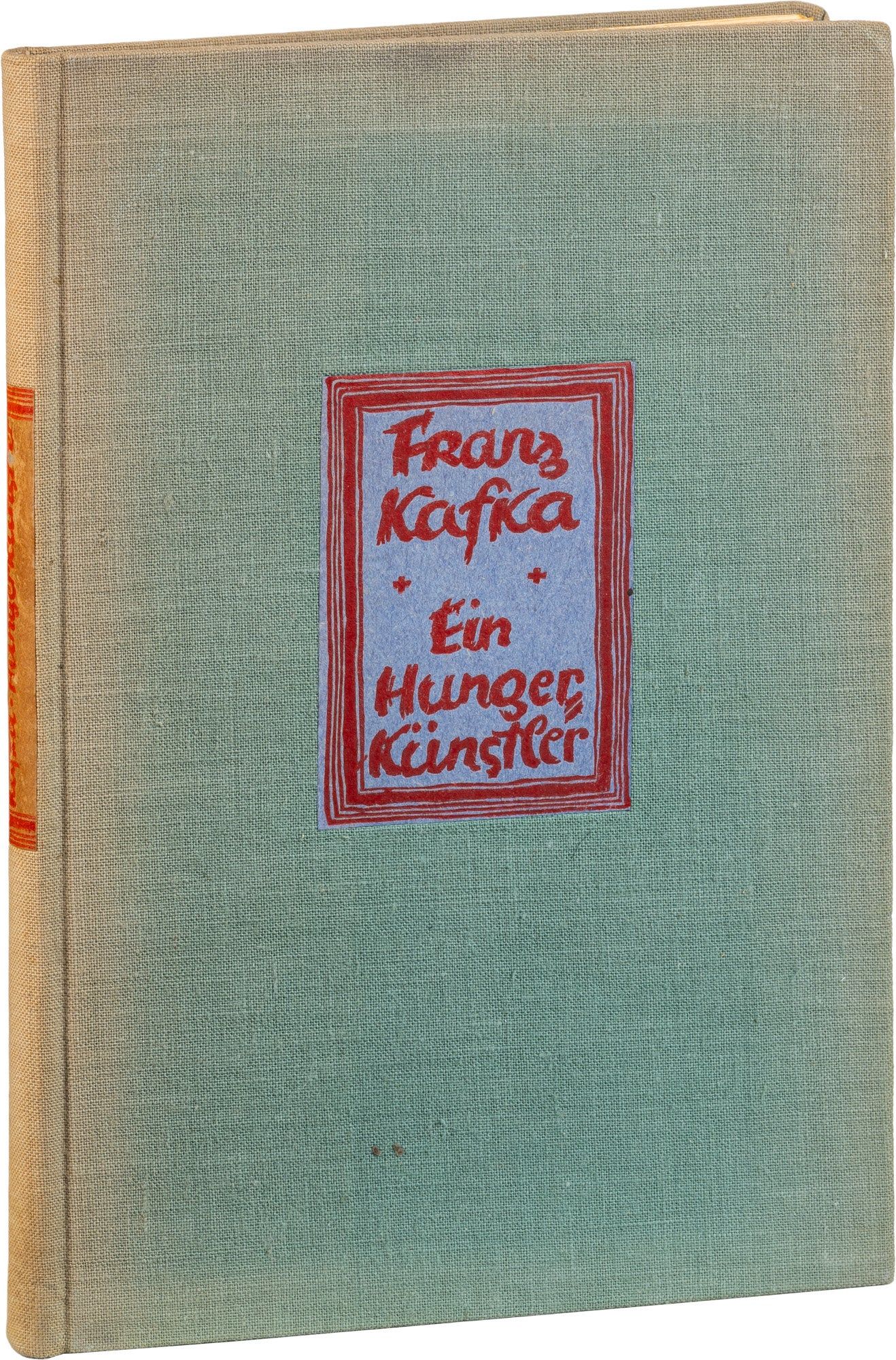
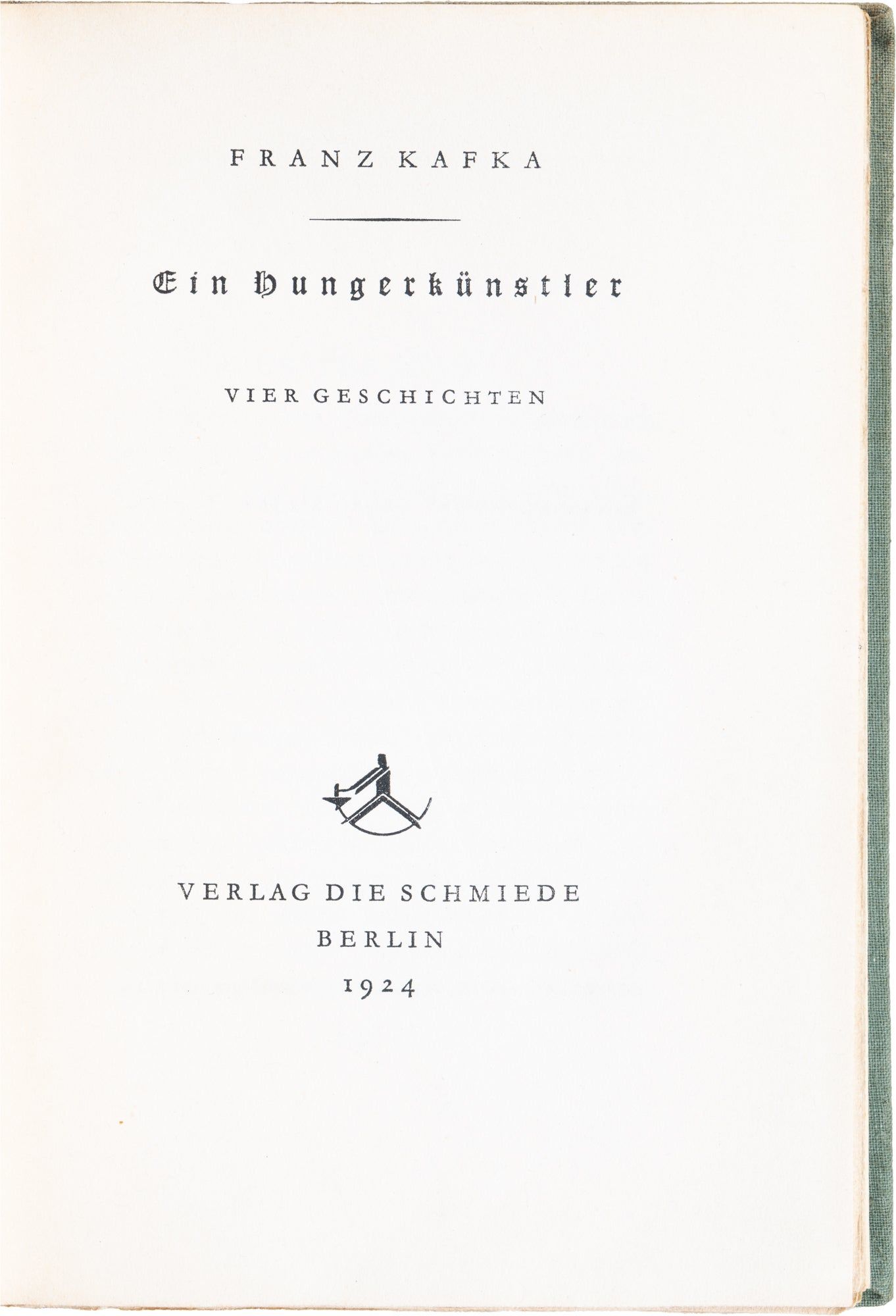
Berlin: Verlag die Schmiede, 1924. First Edition. (in German) The last collection of short stories to be finished before Kafka’s death, though it was published posthumously. Original green cloth (it was also published in paper boards), spine and extremities faded, front hinge starting, but holding strong, near fine. The title story was published 2 years earlier in Die Neue Rundschau magazine, the other three appeared for the first time in this book. The four stories comprising Kafka's final collection, "Ein Hungerkünstler," are a culmination of his literary preoccupations with artistic alienation and the futility of human endeavor. Reading these stories it is easy to see how they form a cohesive thematic quartet despite their disparate subjects, each examining the relationship between the exceptional individual and an indifferent community. In "Josefine, die Sängerin oder Das Volk der Mäuse," perhaps the most enigmatic of the four tales, Kafka constructs a complex allegory of artistic exceptionalism through the figure of Josephine, a mouse whose singing—which the narrator suggests may be nothing more than ordinary squeaking—commands unusual attention from her mouse community. The narrative's persistent ambiguity regarding the actual quality of Josephine's art creates a tension between the performer's self-perception and the community's response, foregrounding questions about the social function of art. Unlike the hunger artist whose talent is measurable (through his capacity to endure prolonged fasting), Josephine's artistry remains fundamentally unverifiable, existing primarily through collective acknowledgment rather than objective criteria. This unstable ontological status of the artistic performance destabilizes conventional hierarchies between artist and audience, suggesting that artistic value emerges not from inherent qualities but from the complex social negotiations between performer and community. The story's final movement, documenting Josephine's disappearance and rapid forgetting by her community, offers Kafka's most poignant commentary on artistic legacy—the once-celebrated performer vanishes "like a legend dissolving into the ordinary," leaving no trace of her supposedly transformative art.
Details
Title
Ein Hungerkünstler
Author
Kafka, Franz
Condition
Unknown
Publisher
Verlag die Schmiede: Berlin
Date
1924
Edition
First Edition