

Physiologie Pathologique ou Recherces Cliniques, Experimentales et Microscopiques, sur l'Inflammation, la Tuberculasation, les Tumerus, la Formation du Cal, Etc. [Pathologic Physiology or Clinical Research, Experimental and Microscopic, on Inflammation, Tuberculosis, Tumors, Formation of Calcification, Etc.]
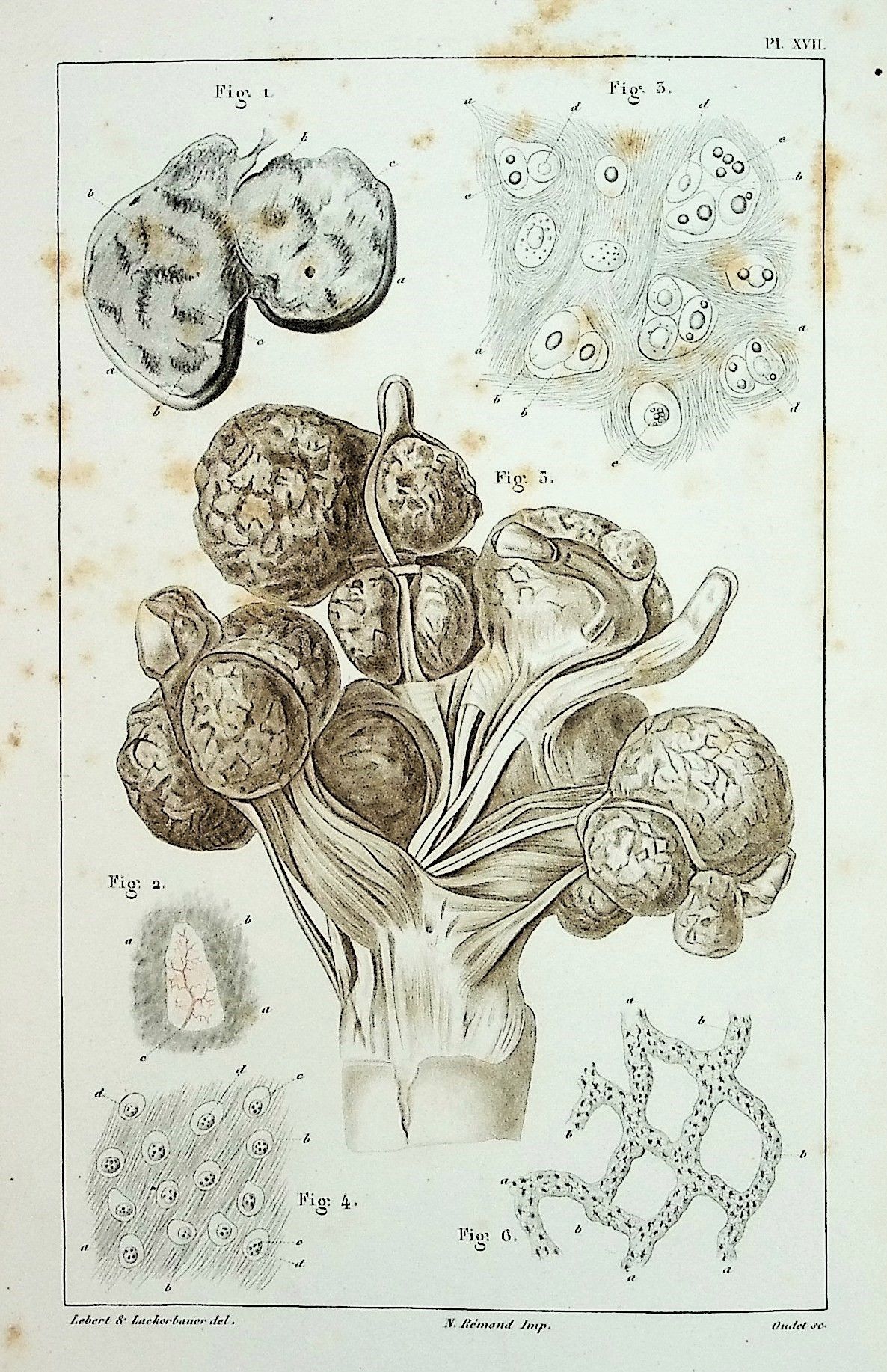
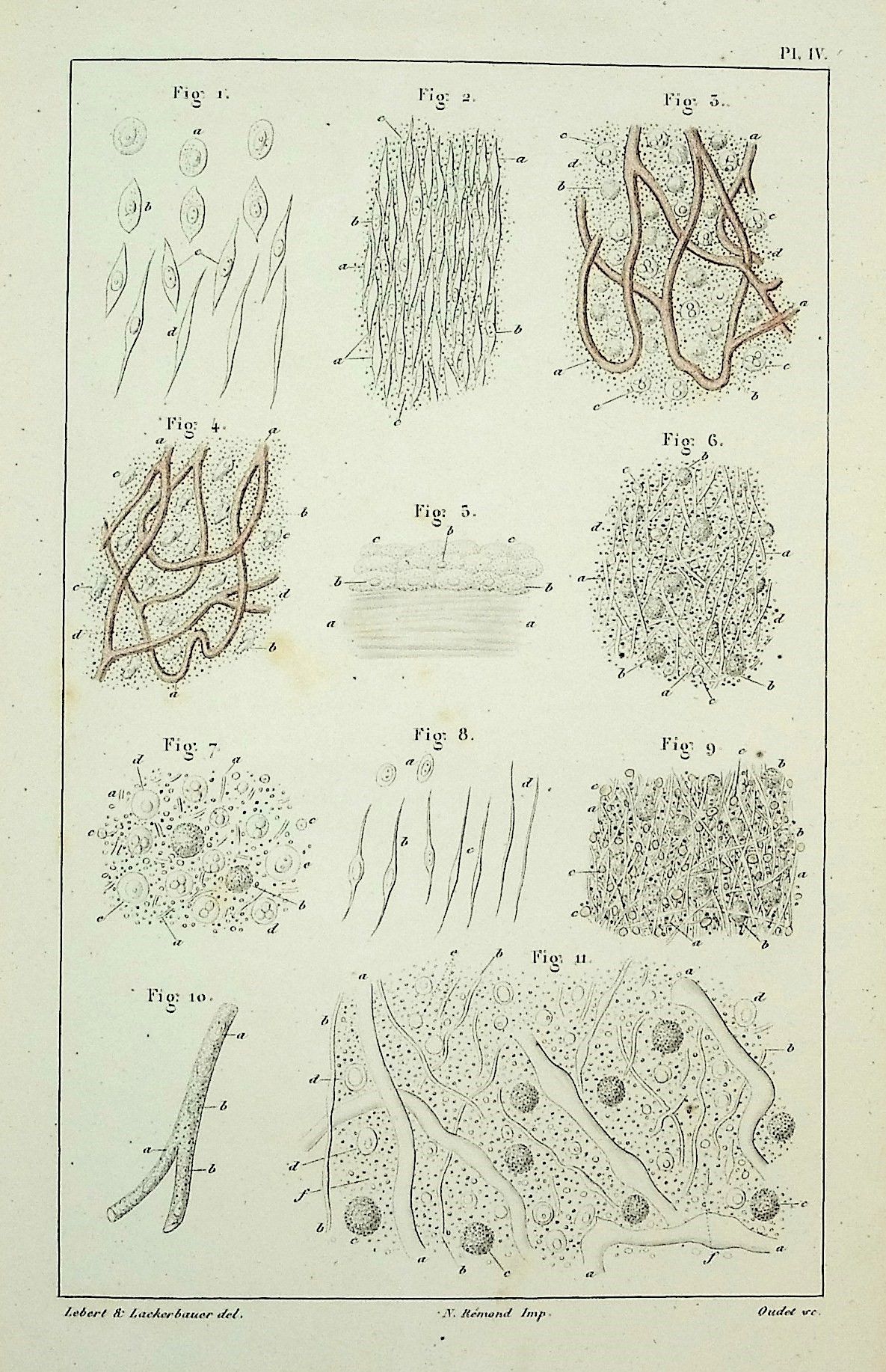
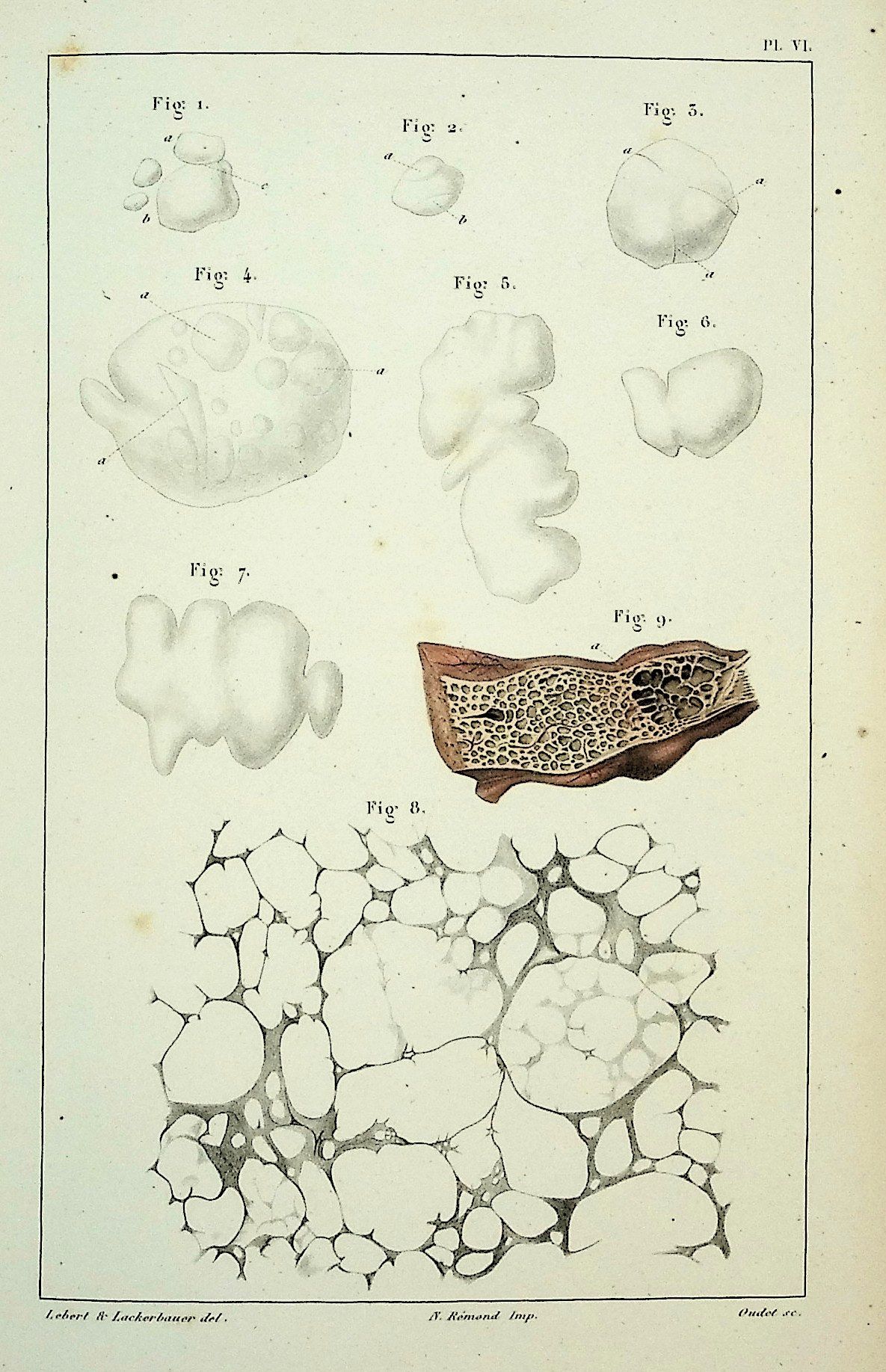
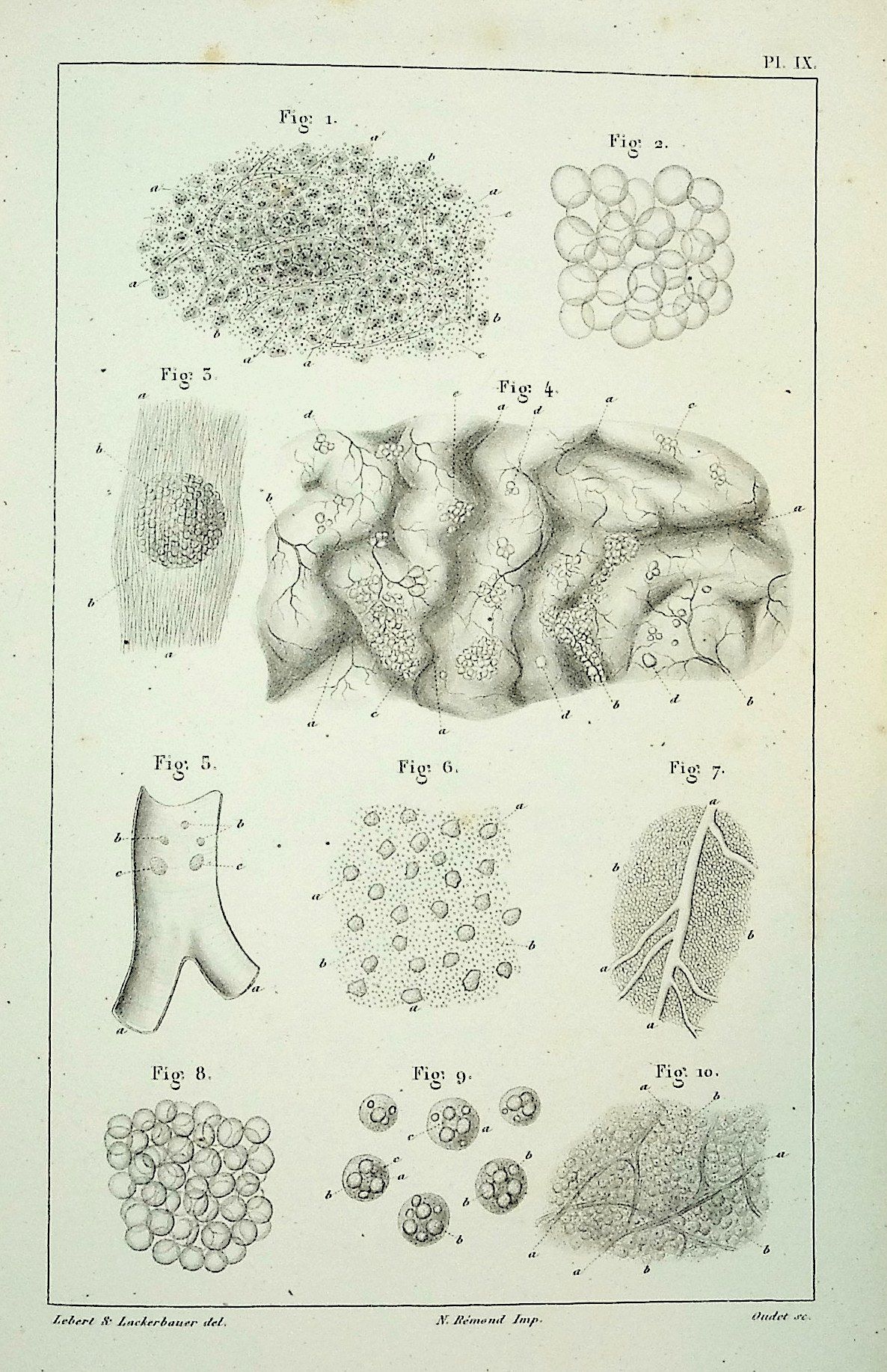
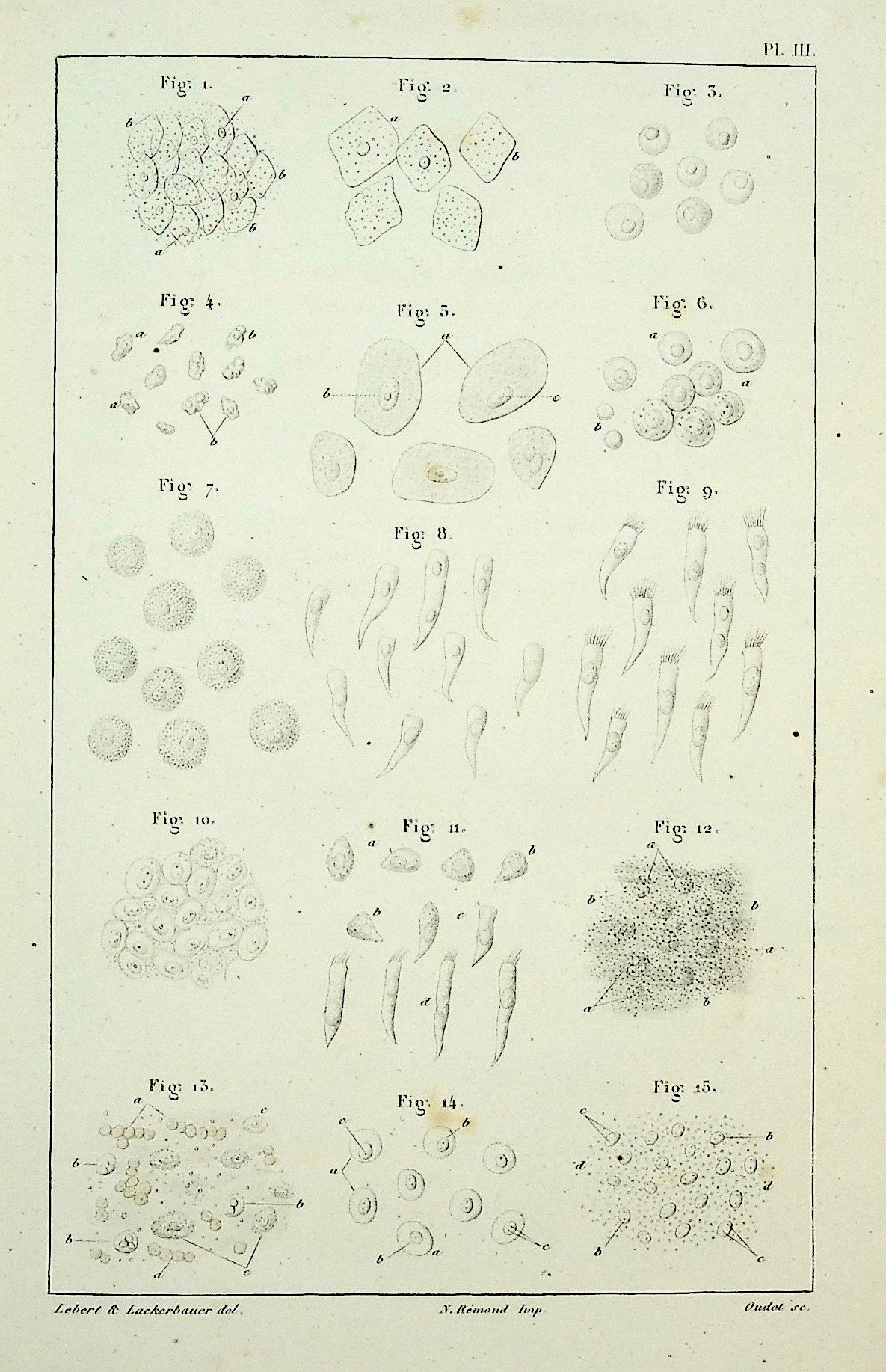
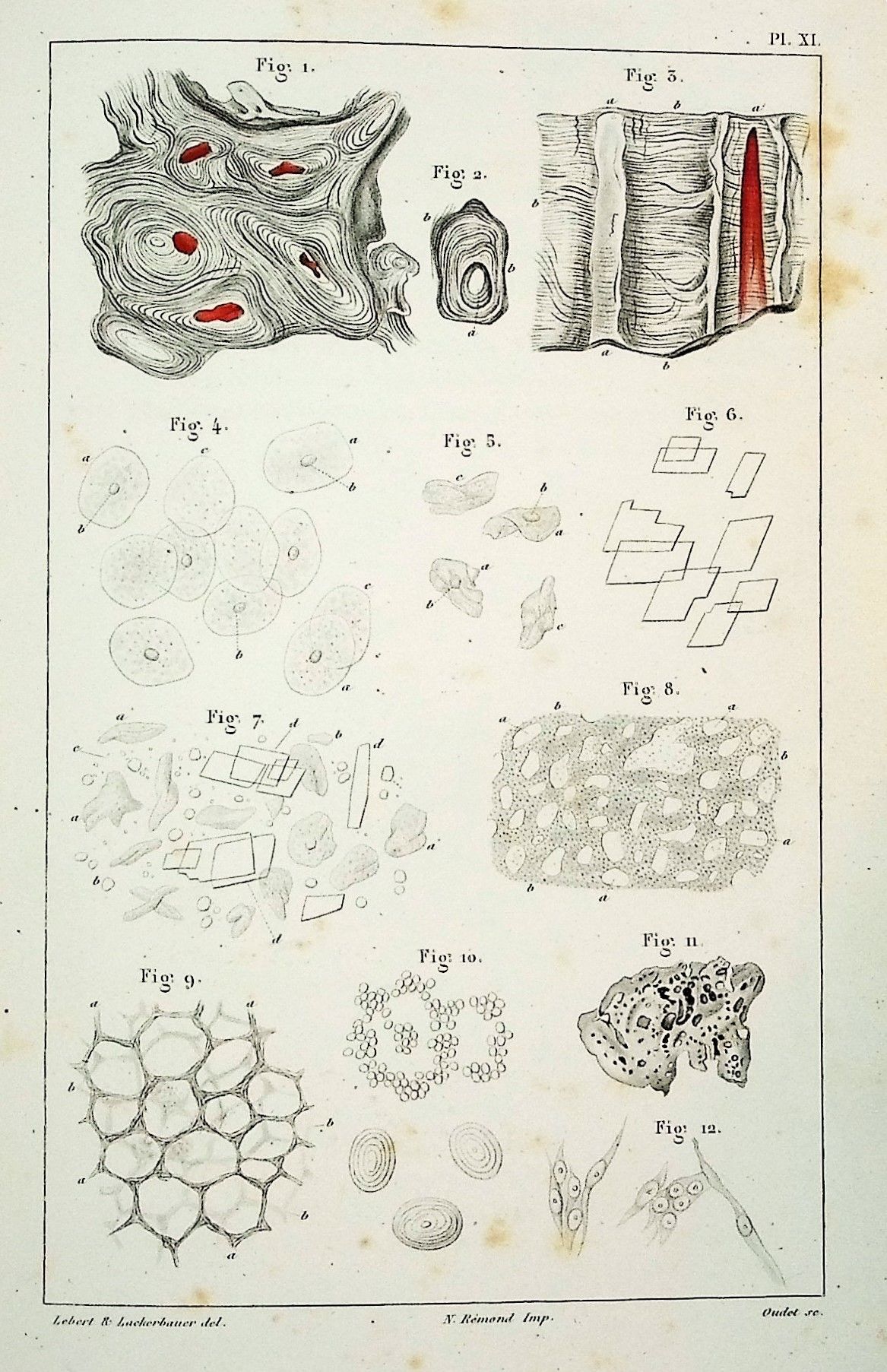
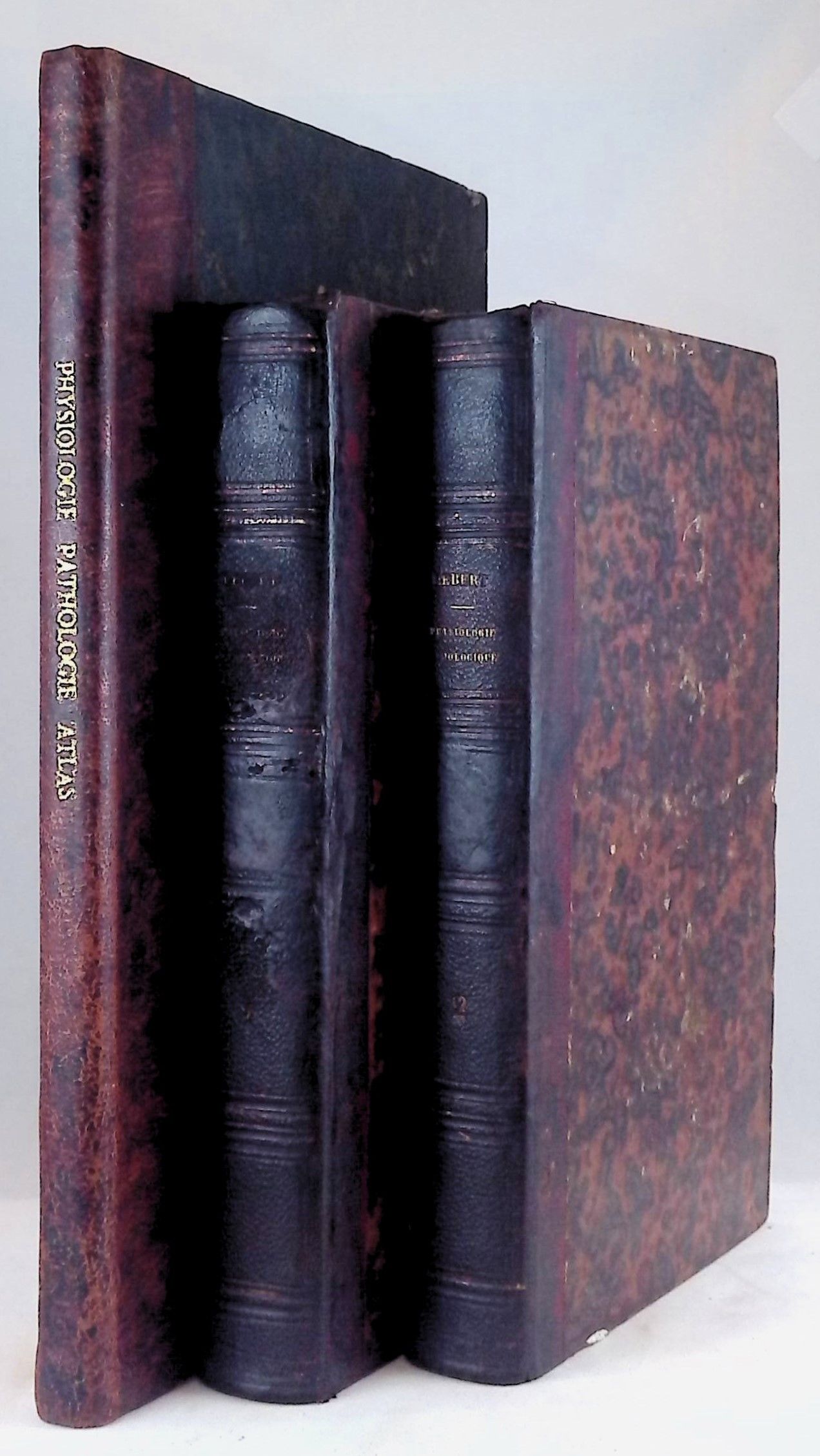
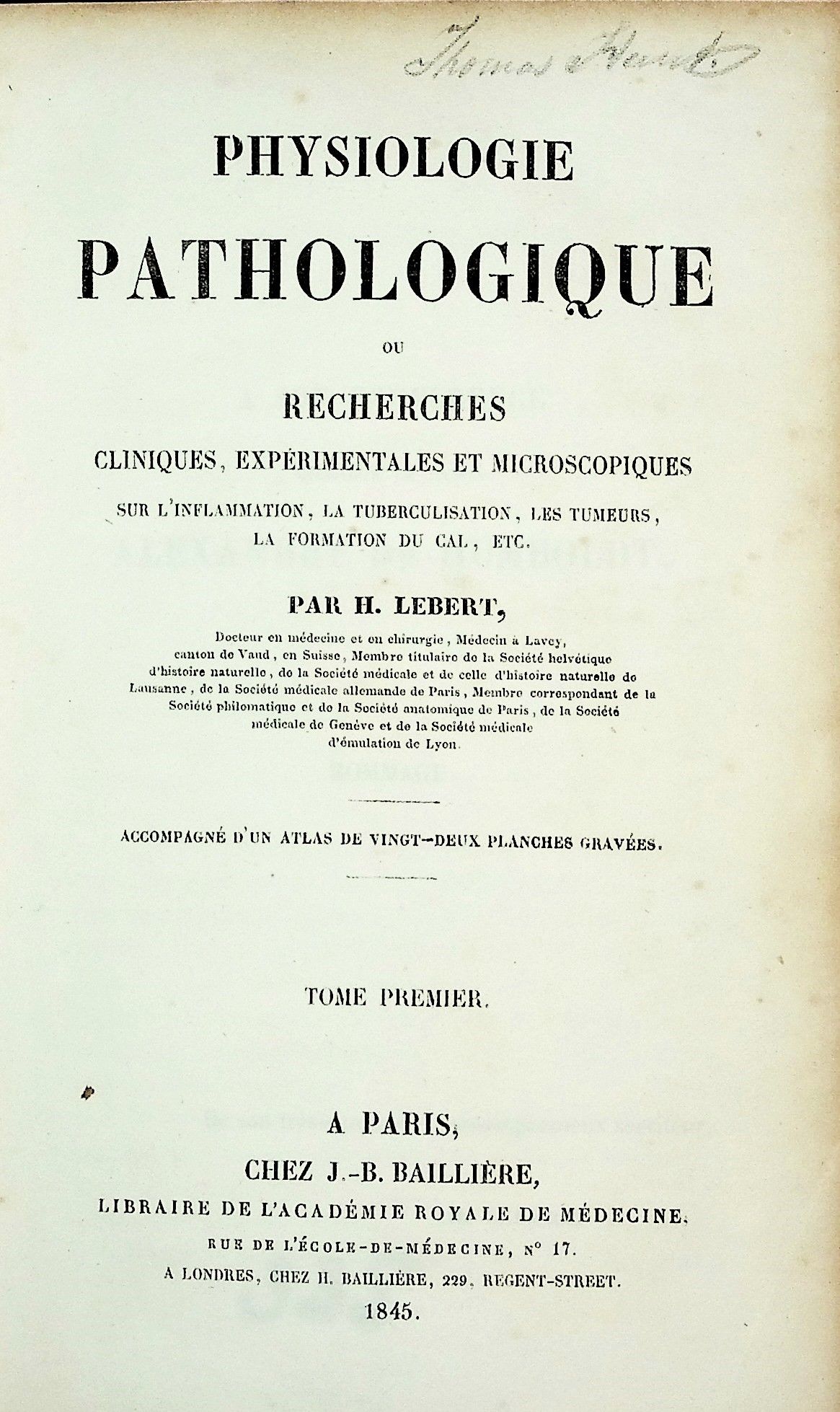
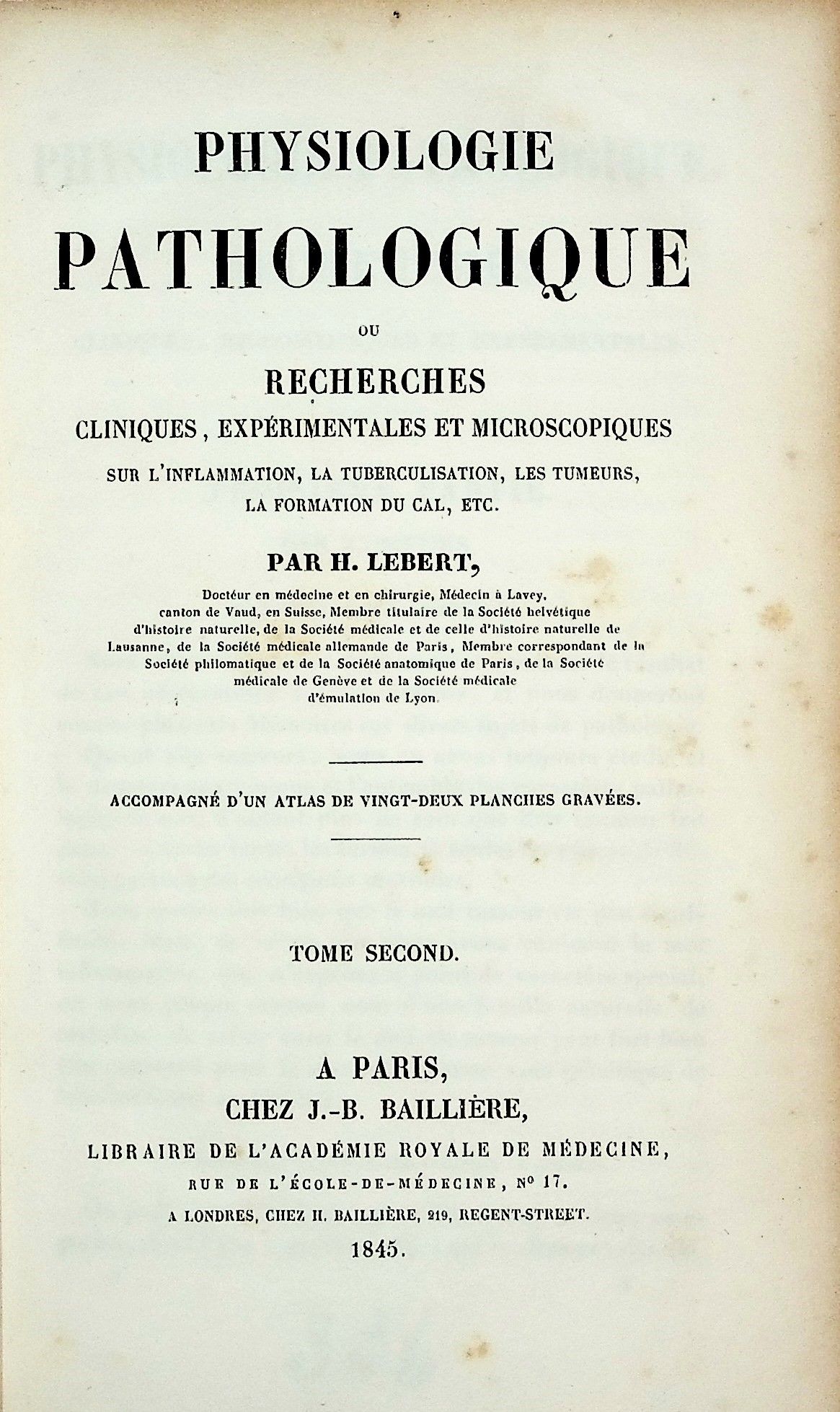
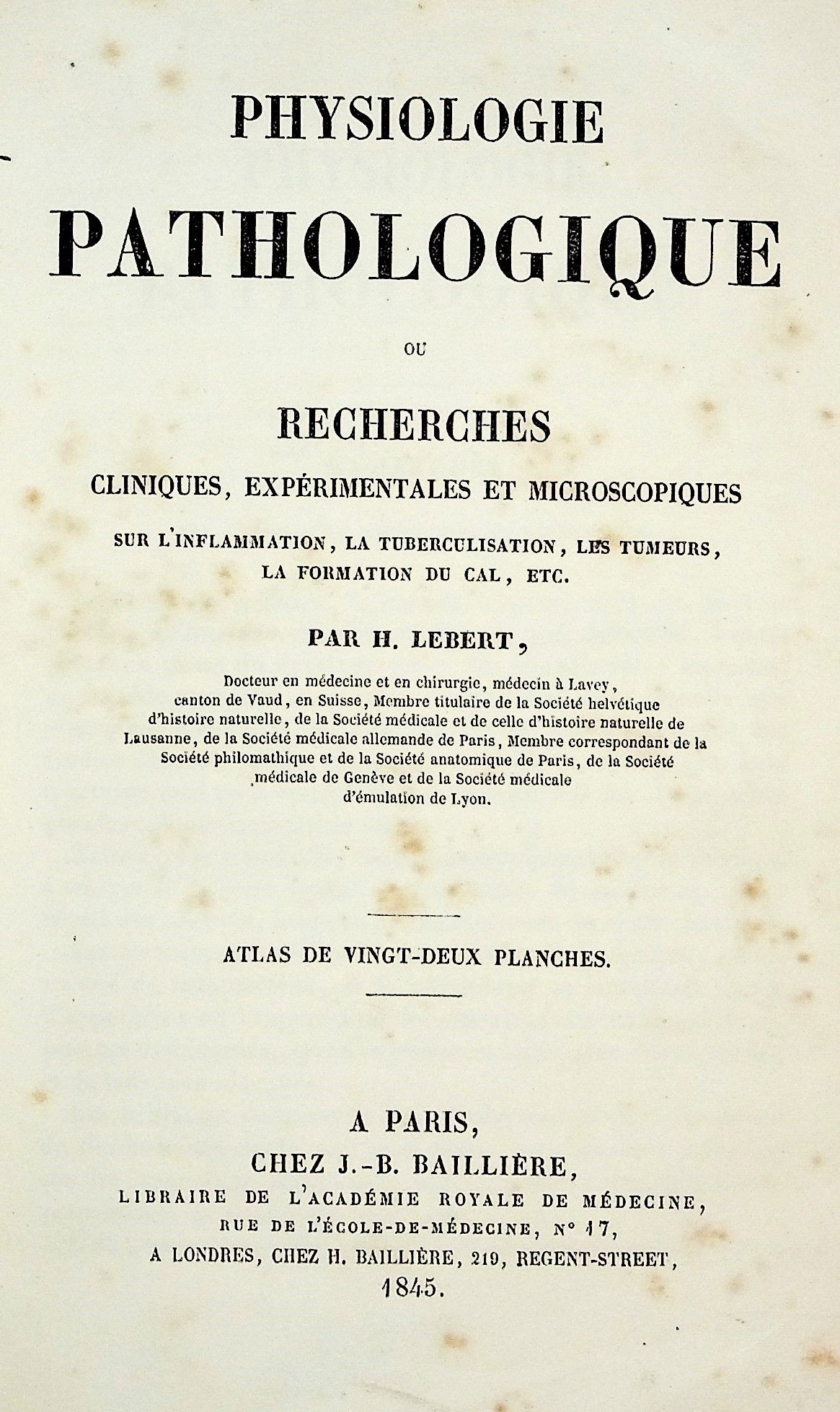
- Leather spine, marbled paper-covered boards
- Paris: J.-B. Bailliere, 1845
Paris: J.-B. Bailliere, 1845. First edition.
1845 ATLAS OF CELLULAR PATHOLOGY BEFORE VIRCHOW.
Three hardcover volumes, marbled paper-covered boards, leather spine with gilt title, marbled endpapers with institutional library bookplate to front paste-down: two text volumes 13 x 21 cm and atlas 16.5 x 25.5 cm. Vol. I, i-xii, 544 pp; Vol. II, [3], 515 pp; Atlas, rebacked with new leather spine, 56 pp and 22 partially colored engraved plates from drawings by Lackerbauer. Light wear to covers, browning to page edges, foxing to text pages, minimally affecting plate images. Very good minus in custom archival mylar covers.
GARRISON-MORTON No. 543.1
One of the earliest atlases of pathological histology. Lebert's work played an important role in introducing the cellular idea of pathology, laying the groundwork for Virchow's theories.
HERMANN LEBERT (1813 – 1878) was a German physician and naturalist. After he received his medical doctorate (Zürich, 1834), he traveled throughout Switzerland, studying botany. For the next year and a half he studied in Paris, particularly under Baron Guillaume Dupuytren and Pierre Charles Alexandre Louis. In 1838 he settled in Bex, later changing between Bex and Paris. From 1842 to 1845 he worked mainly in comparative anatomy. In 1853 he accepted an invitation to become professor of clinical medicine in Zürich, and six years later he moved on to Breslau, where he held the same job. In 1862, he was elected as a member of the American Philosophical Society. In 1874 he returned to Bex, Switzerland, where he spent the rest of his life. Lebert was among the first to use the microscope in pathological anatomy, and thus contributed importantly to both pathology and clinical medicine. "In Physiologie Pathologique, Leber combines clinical observation, animal experiments, and microscopic observations as well as biochemistry. The first volume deals with inflammatory disorders. The second volume deals exclusively with tumors. Lebert expresses his theory of the characteristics of malignant cells for the first time in this work; this would become very controversial later. By means of uncolored cytological preparations, he described the morphological features of neoplastic cells, which are still valid today, such as those pertaining to the nucleolus."--Pickel. Virchows Arch (2009) 455:301–305.
PETER LACKERBAUER (1823-1872). a prolific scientific illustrator of Swiss origin, who worked with Louis Pasteur, Claude Bernard and other scientists. More than twenty books have plates credited to Lackerbauer. For Pasteur he drew images of cells as seen in the field of a microscope. He also produced illustrations, including subtly varied tubes of wine under different conditions, for Pasteur's "Études sur le vin" (1866), and delicate color images of the life cycle of silkworms for another major publication, "Études sur la maladie des vers à soie" (1870).
Details
Title
Physiologie Pathologique ou Recherces Cliniques, Experimentales et Microscopiques, sur l'Inflammation, la Tuberculasation, les Tumerus, la Formation du Cal, Etc. [Pathologic Physiology or Clinical Research, Experimental and Microscopic, on Inflammation, Tuberculosis, Tumors, Formation of Calcification, Etc.]
Author
Lebert, Hermann
Binding
Leather spine, marbled paper-covered boards
Condition
Unknown
Publisher
J.-B. Bailliere: Paris
Date
1845
Edition
First edition