

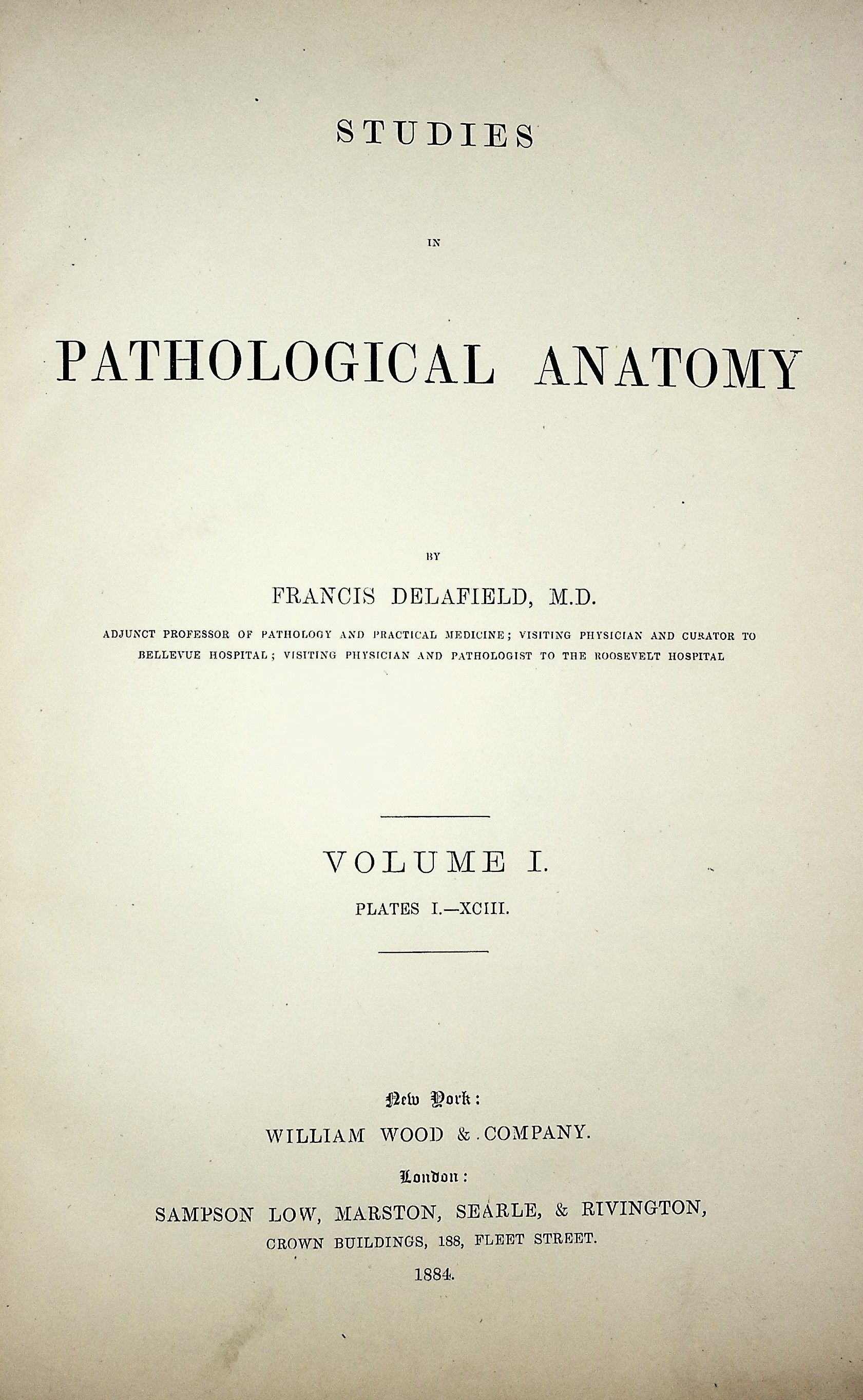
Studies in Pathological Anatomy
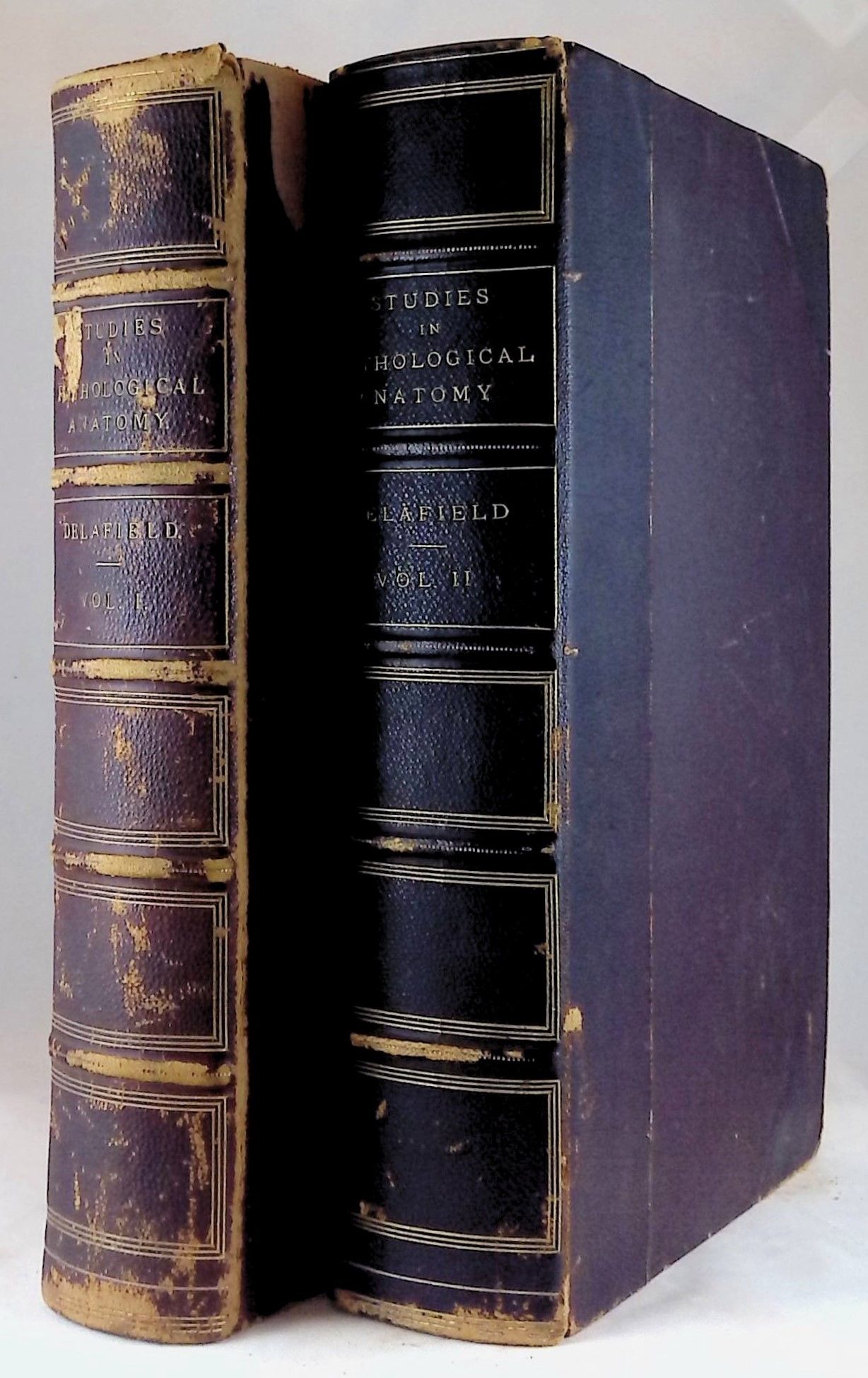
- cloth binding
- New York: William Wood & Co., 1882, 1891
New York: William Wood & Co., 1882, 1891. First editions.
MAGNIFICENT ATLAS OF MICROSCOPIC PATHOLOGY: ENGRAVINGS, LITHOGRAPHS, COLLOTYPES, PHOTOGRAVURES.
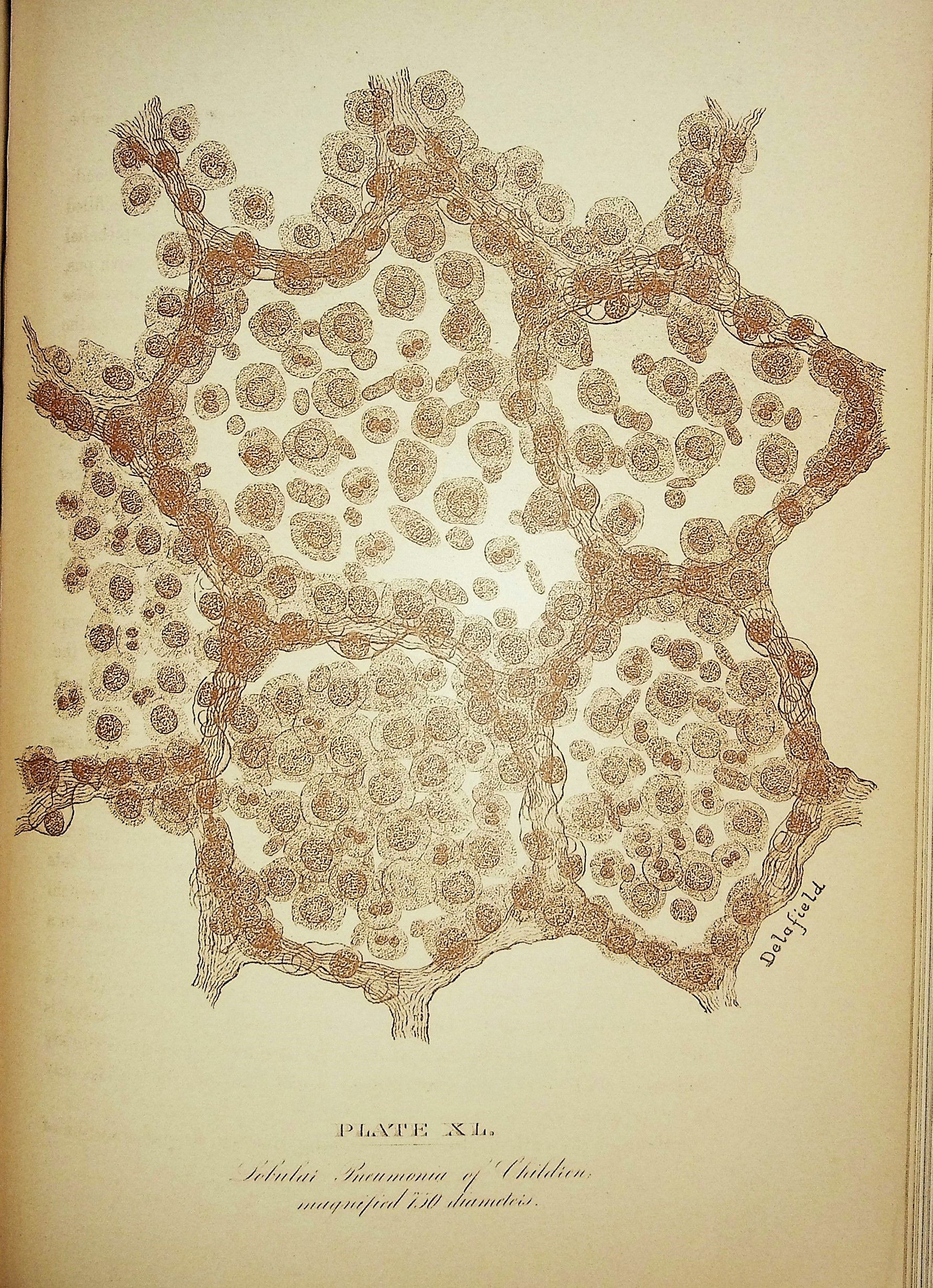
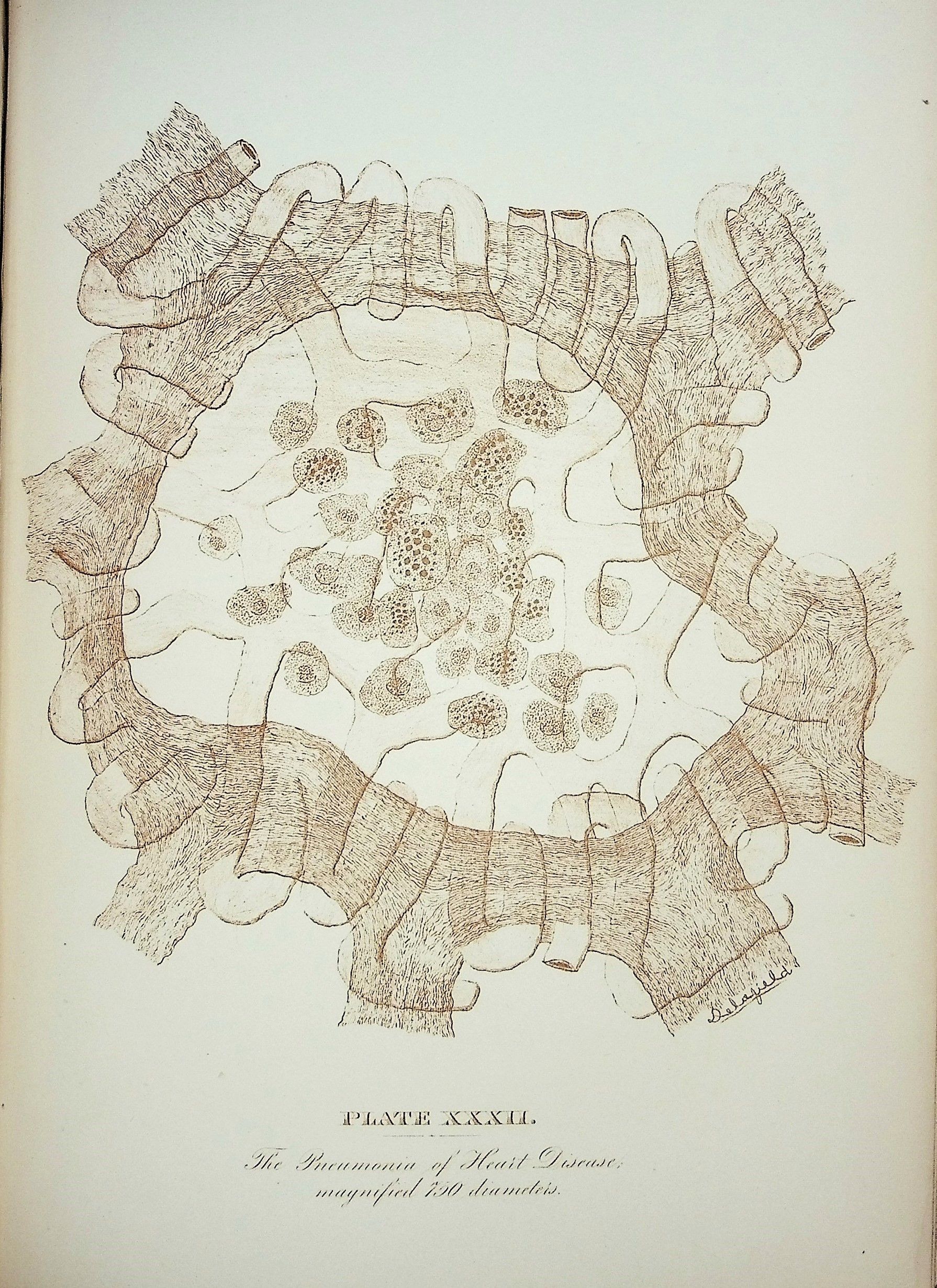
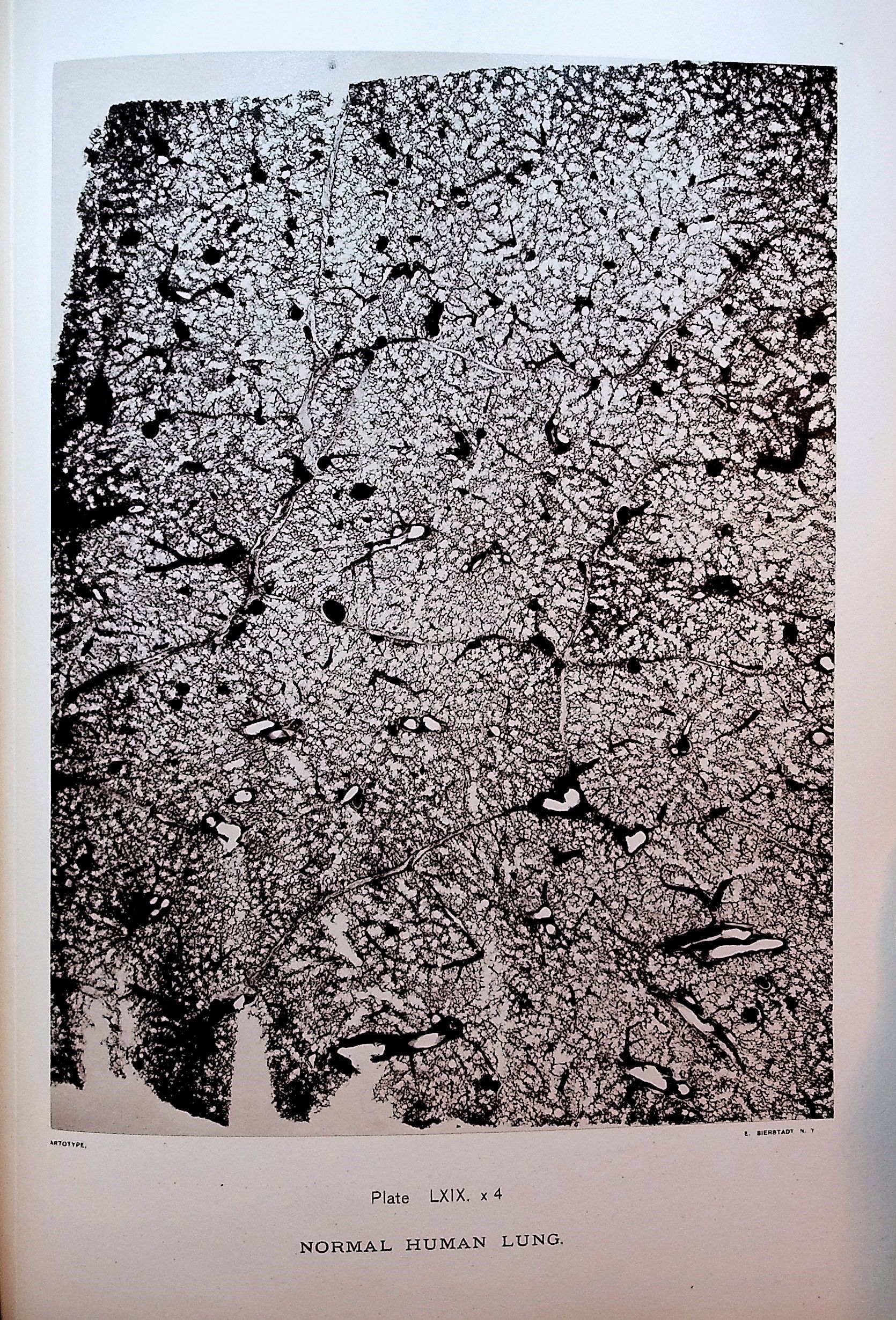
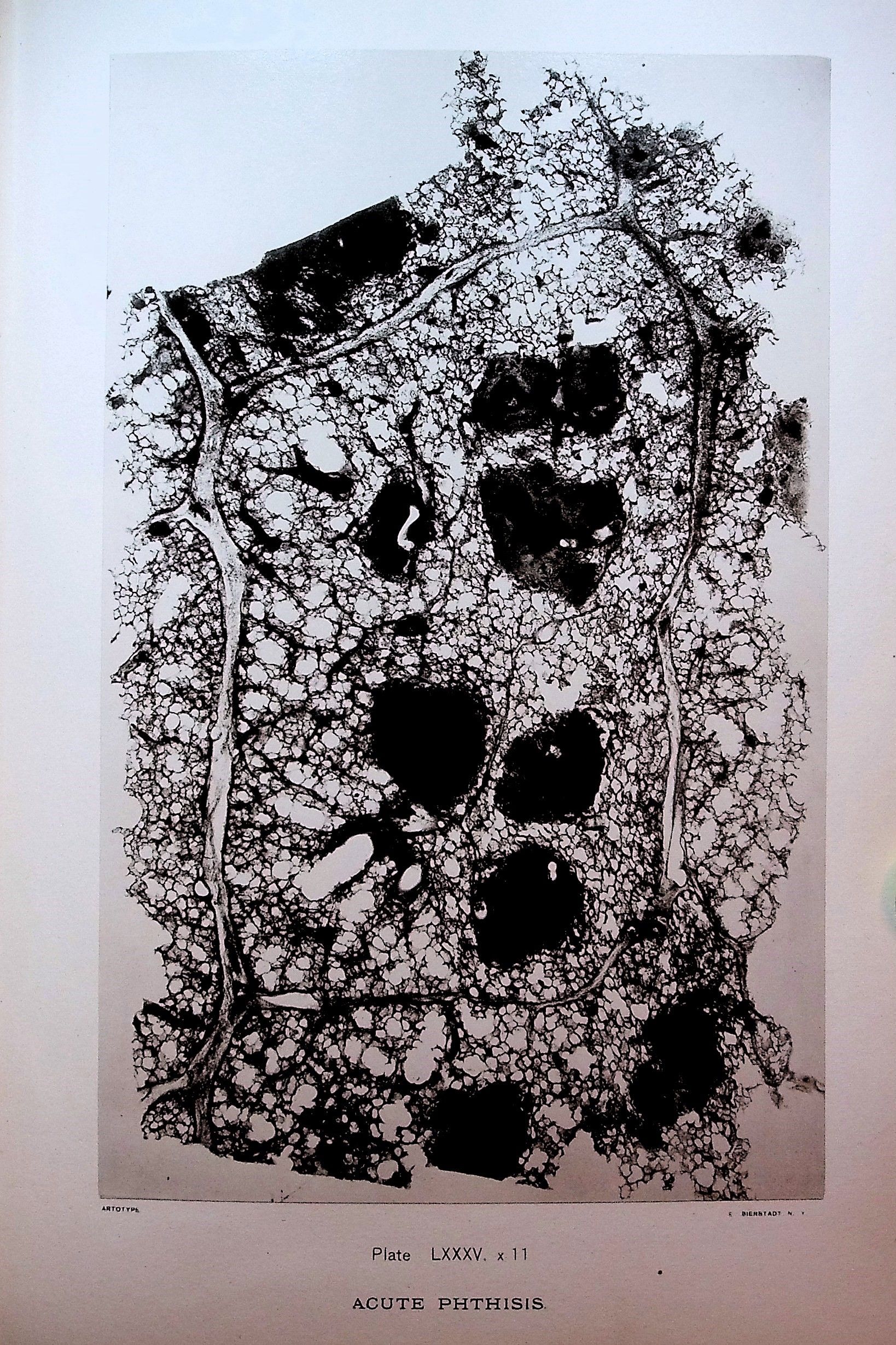
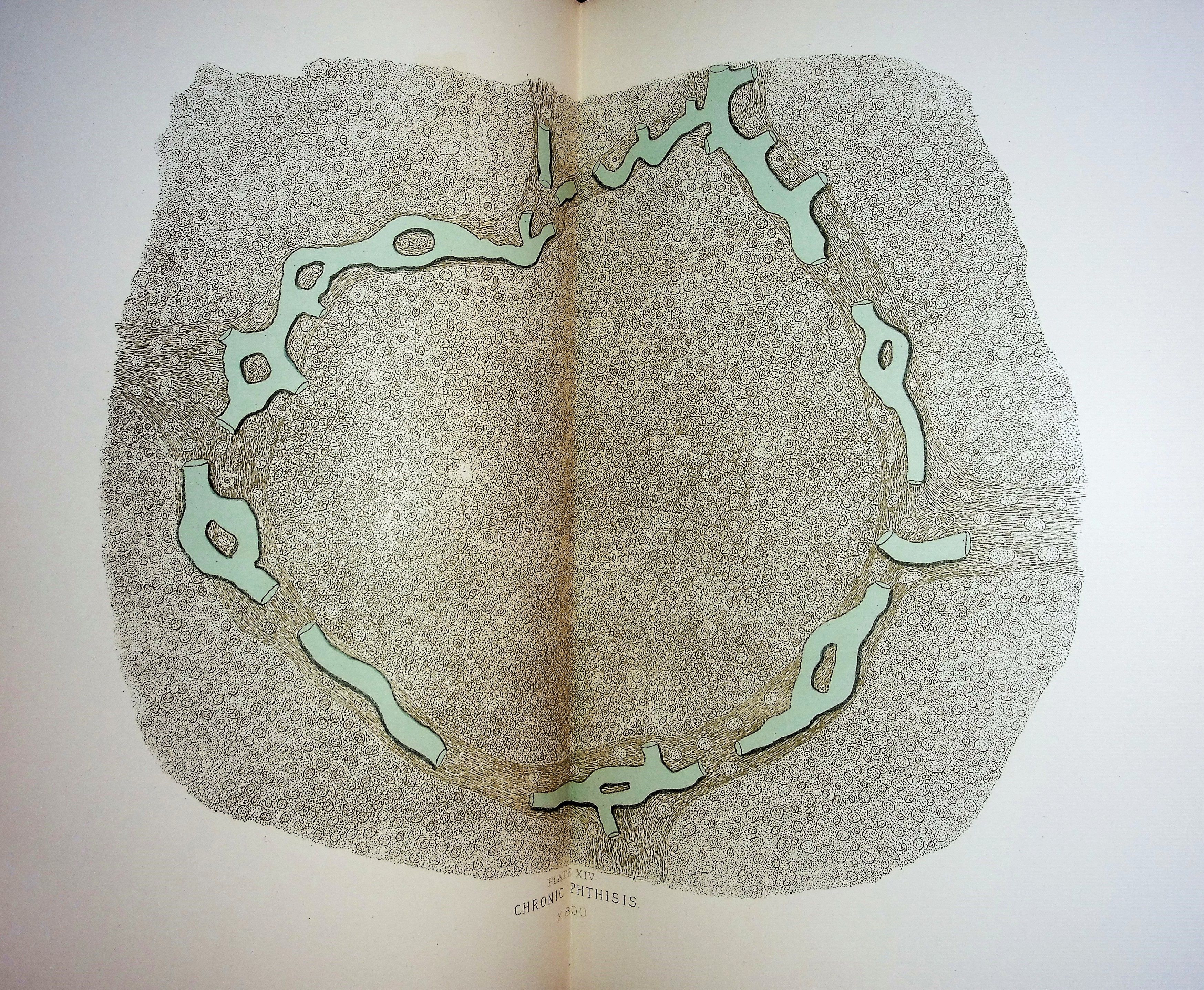
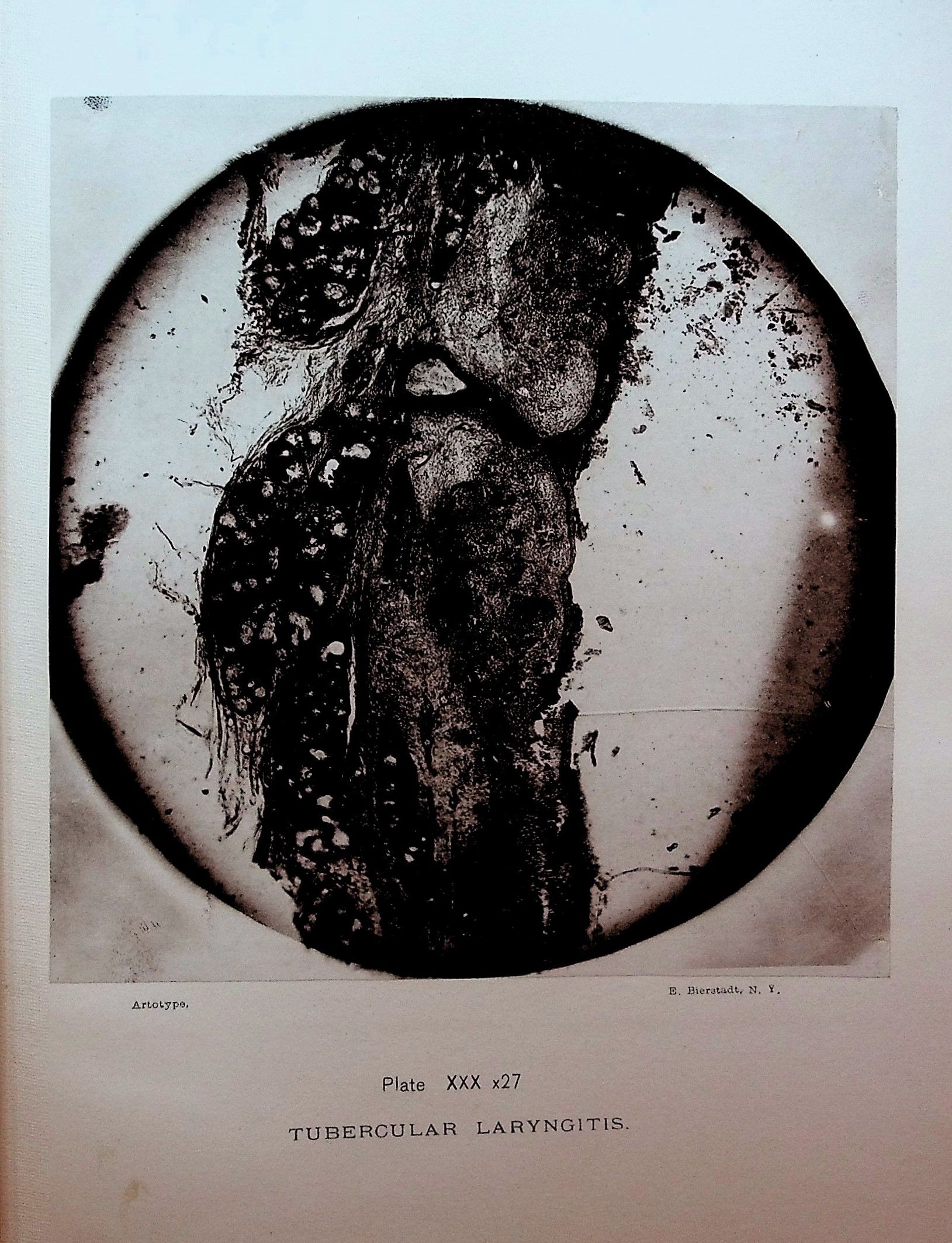
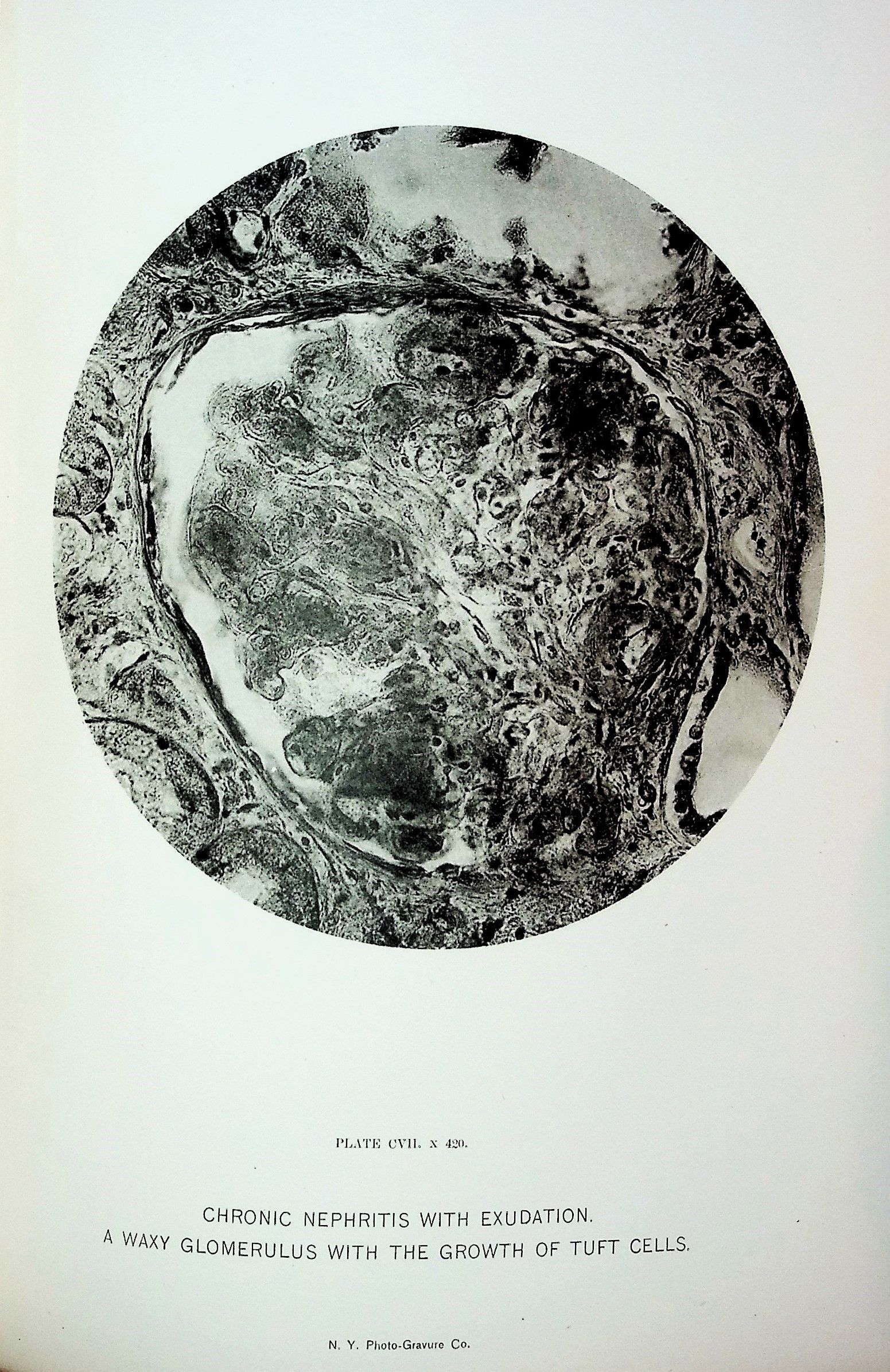
Two hardcover volumes, 3/4 leather binding, brown cloth-covered boards, spines with raised bands, gilt title, top edge gilt, marbled endpapers, ink signature and handstamp of Henry Guze, handstamp of Vivian Severman Guze, to front free endpaper. Vol. I, i-iv, 126 pp, [1], 93 plates (including 11 mounted collotype photographs); Vol. II, 90 pp, 133 plates (including 13 mounted photographs). Covers are worn, with abrasion to the leather corners and spines. However, the bindings are secure, and the text pages and plates are unmarked and bright with minimal edge browning. An excellent copy of this scarce testament to a master microscopist during a pivotal period in the advancement of photographic techniques, in custom archival mylar covers. From the PREFACE. "It has not been my intention to write a treatise on Pathological Anatomy, nor to give an account of the labors of others in the same field. My object has been a much more restricted one: to describe and figure the minute lesions of disease from the material which has fallen under my own observation. In doing this I have attempted to follow the purely objective method to see and to describe whatever could be made out in the different post-mortem lesions of disease. Such a plan of study involves following Nature wherever she may lead, and gives rise to apparent contradictions, which cannot always be reconciled. In such a descriptive work the drawings are of importance. It would, of course, be preferable to reproduce all the specimens by photography, but this plan seems to be only available for low magnifying powers. In this way I have employed the process for topographical purposes. For high magnifying powers it is necessary to make drawings with the camera lucida, and these drawings should be of the actual size of the specimens. The plates must, therefore, be of large size, and must be drawn directly on wood, stone, or copper, or reproduced by one of the photographic processes."--Francis Delafield. There are 5 techniques used in generating the plates for these volumes, a testament to the rapid transition of scientific illustration at the end of the 19th century. 1) Lithography. The drawing is made directly on stone, that is then treated chemcally to retain ink only on the lines and shading drawn; 2) Photolithography. A copy of a negative of the drawing was exposed onto a lithograph stone coated with a light-sensitive bichromated gelatin. However, this technique lacked the ability to produce half-tones; 3) Artotype was a proprietary collotype process in which a gelatin-based photographic printing process is used to print images in a wide variety of tones without the need for halftone screens; 4) Photograph (Artotype) of a specimen was affixed to the page. At the time, this could only be used to reproduce low-power images of the microscope slide. 5) Photogravure is a photo-mechanical process whereby a copper plate is grained (adding a pattern to the plate) and then coated with a light-sensitive gelatin tissue which had been exposed to a film positive, and then etched, resulting in a high quality intaglio plate that can reproduce detailed continuous tones of a photograph. Studies in Pathological Anatomy was Delafield's magnum opus, published over a 10 year period ( vol. I originally issued in 4 fasicules complete by 1882) and as a consequence it is most difficult to find complete copies of the set. It contains some striking examples of photomicrographs printed as ' Artotypes' by Bierstadt. By the time the second volume was published the lithographs had been replaced by a newer technology: high quality photogravures. The contents include connective tissue (pleura, peritoneum), pneumonia, tuberculosis, and acute and chronic kidney disease.
FRANCIS DELAFIELD (1841 - 1915) was an American physician, born in New York City. After earning his MD from the College of Physicians and Surgeons, Columbia University and further study abroad, he returned to New York and was appointed to the staff of Bellevue Hospital and to the chair of pathology at the College of Physicians and Surgeons. He served also as pathologist and attending physician to Roosevelt Hospital and as surgeon to the New York Eye and Ear Infirmary. He was the primary physician who was consulted following the shooting of United States President William McKinley in September 1901. He held membership in the New York Academy of Medicine, the Pathological Society, and the Association of American Physicians, becoming the first president of the latter organization in 1886. In 1948, in recognition for his career in medicine, the Francis Delafield Hospital opened as a cancer research center for Columbia-Presbyterian Medical Center. EDWARD BIERSTADT (1824 – 1906) was a photographer of portraits and landscapes as well as an engraver and a pioneer of color photography in the United States. He founded the Photo-Plate Printing Company in 1870, which produced collotype prints for several significant book illustrations. The company was considered one of the best printers in the United States. Bierstadt's work in color photography also extended to microscopic photography. In collaboration with Dr. Edward Leaming at Columbia College, he produced color photographs of microscopic specimens in 1895 and 1896.
PROVENANCE: HENRY GUZE (1919-1970) a psychoanalyst and adjunct professor of anthropology at Drew University, was a founder of The American Academy of Psychotherapists. Vivian Segerman Guze (1924-2020), his wife, was a long-standing member of the American Academy of Psychotherapists, Every room of her three-story, six-bedroom house had floor-to-ceiling bookshelves packed with volumes on anatomy, psychotherapy, medicine, art, sociology and neurology, arranged by subject.
Details
Title
Studies in Pathological Anatomy
Author
Delafield, Francis
Binding
cloth binding
Condition
Unknown
Publisher
William Wood & Co.: New York
Date
1882, 1891
Edition
First editions