

Scientific Papers from the Department of Physical Chemistry, Harvard Medical School, 1925-1955
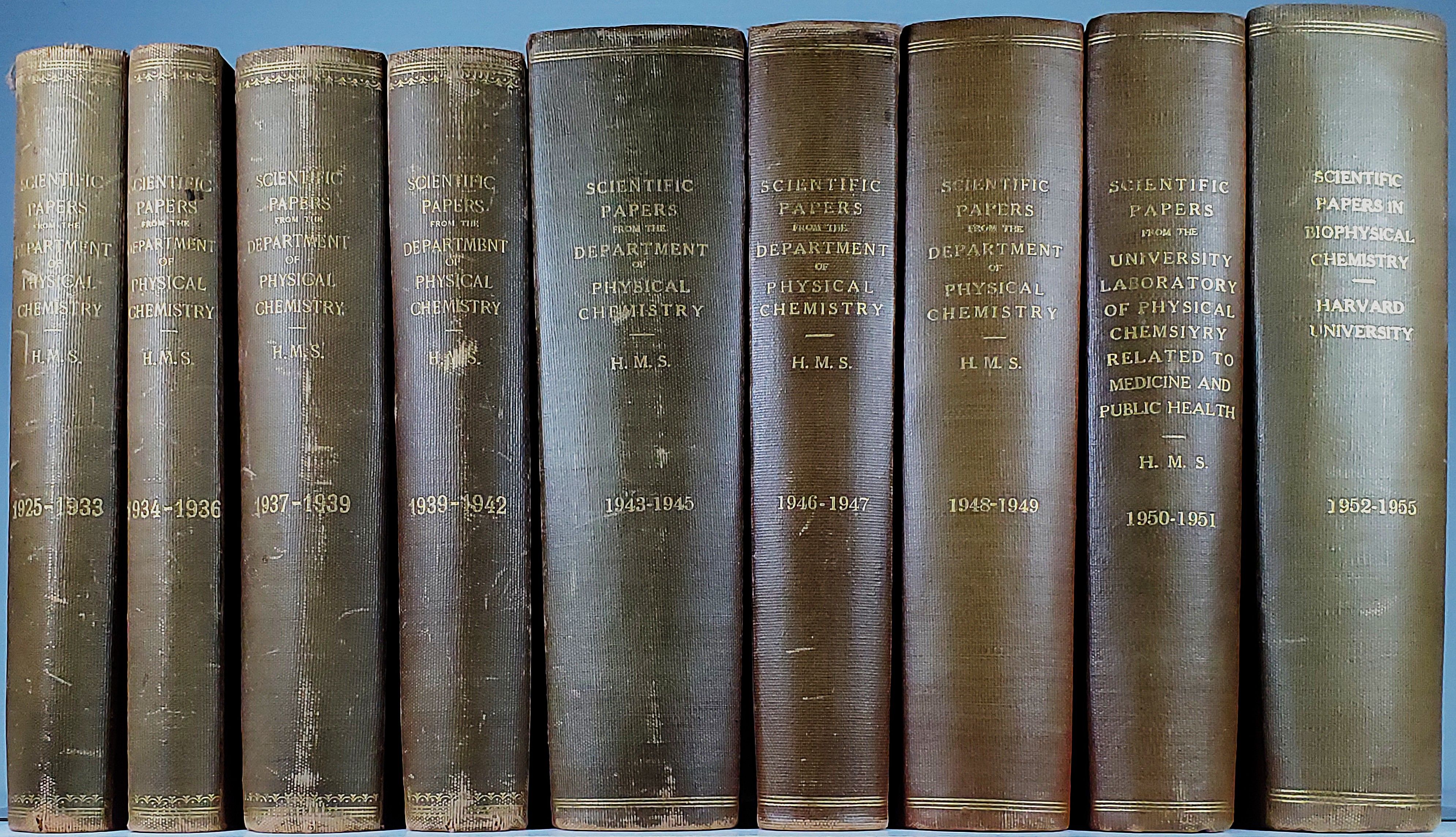
- SIGNED cloth binding
- 1925-1955
1925-1955. First editions.
1925-1955 UNIQUE ARCHIVE OF 450 OFFPRINTS FROM LEGENDARY HARVARD PHYSICAL CHEMISTRY LAB CONTAINING MANY LANDMARK PAPERS.
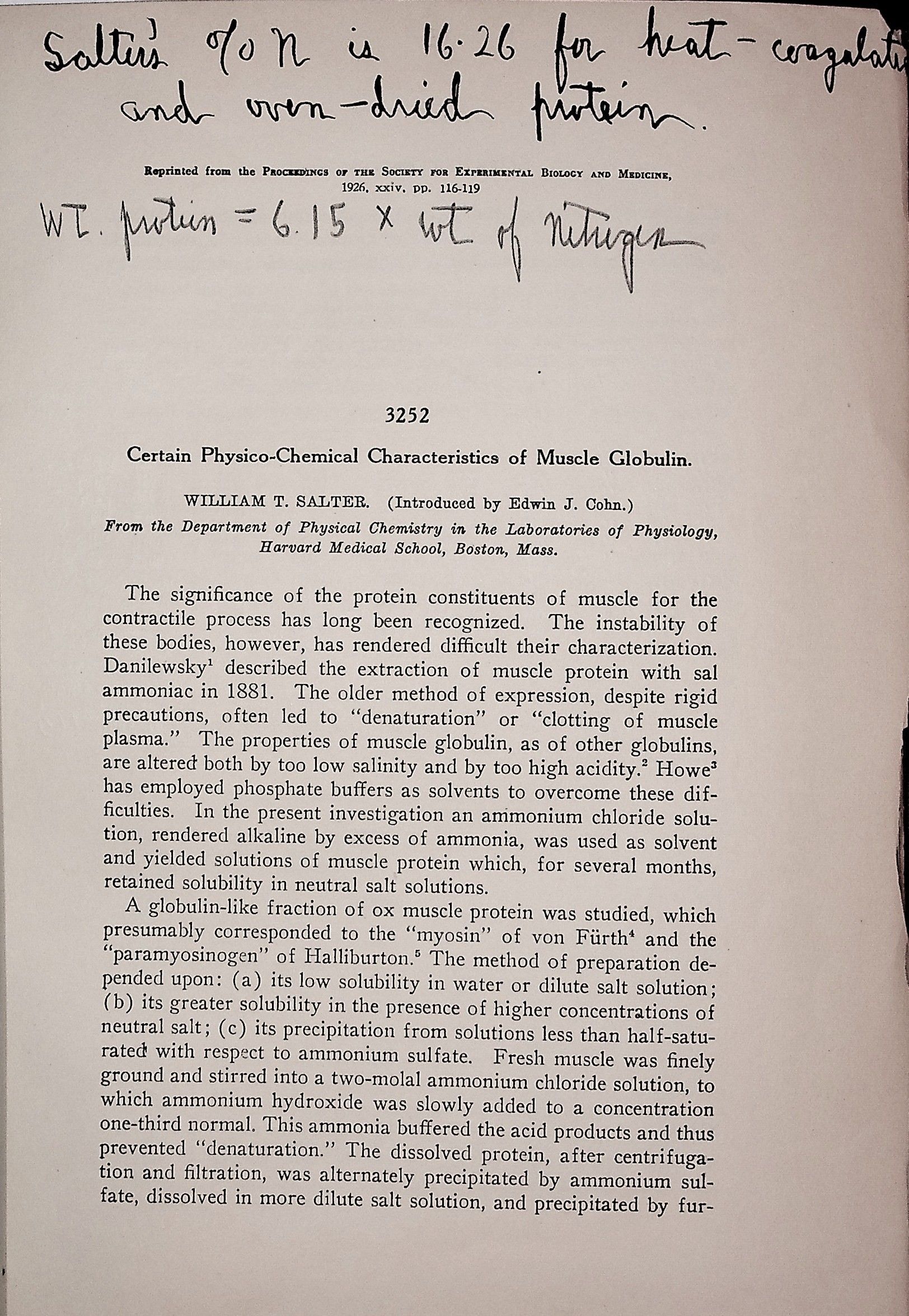
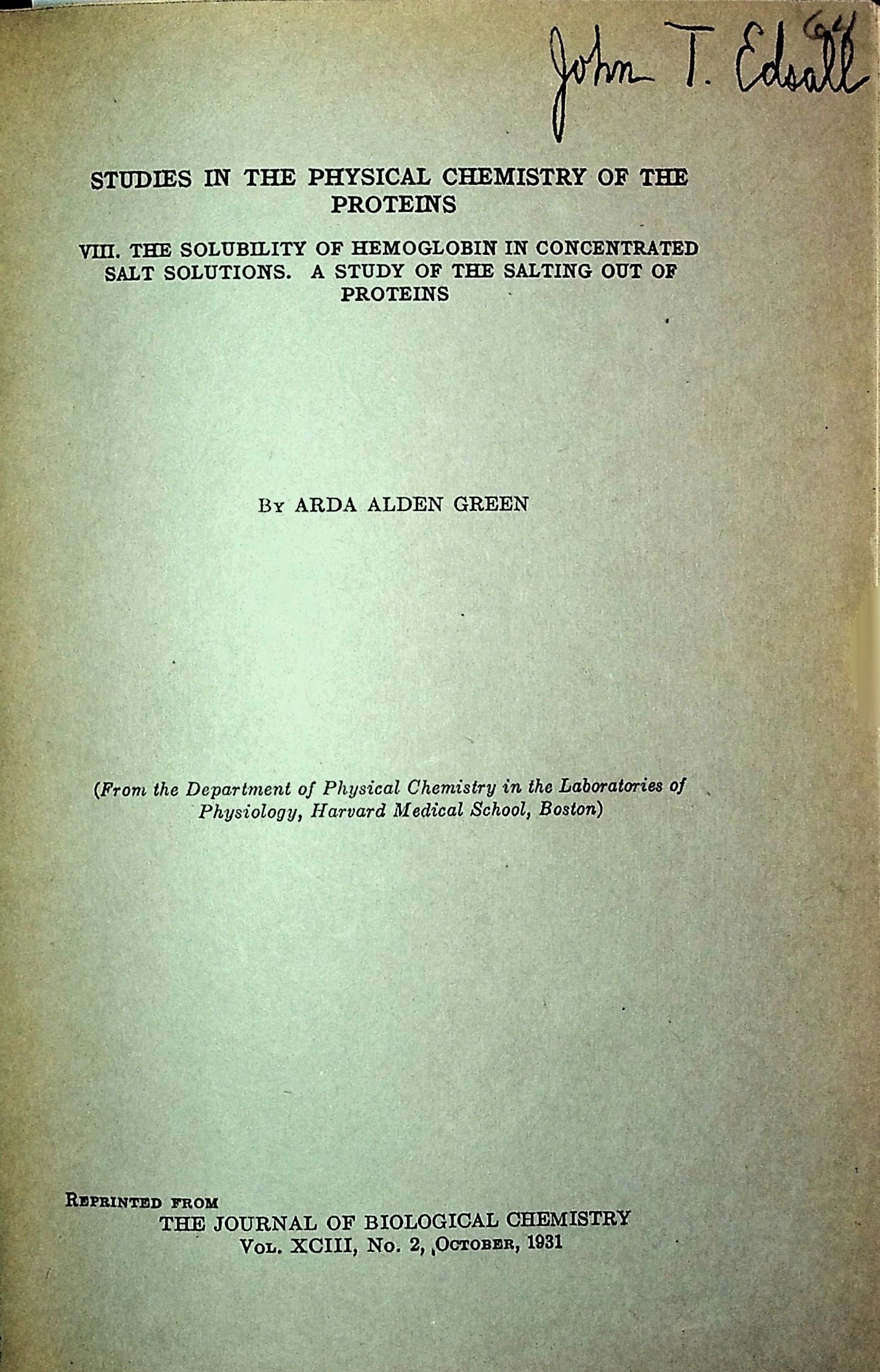
This archive of research conducted and published by the faculty of Harvard Medical School's physical chemists between 1925 and 1955 is from the library of John T. Edsall. Along with his colleague Edwin J. Cohn, both leaders of the research laboratory during this period, he authored many of the papers, with his signature on a number of the individual offprints as well as on the flyleaf of 4 of the volumes.
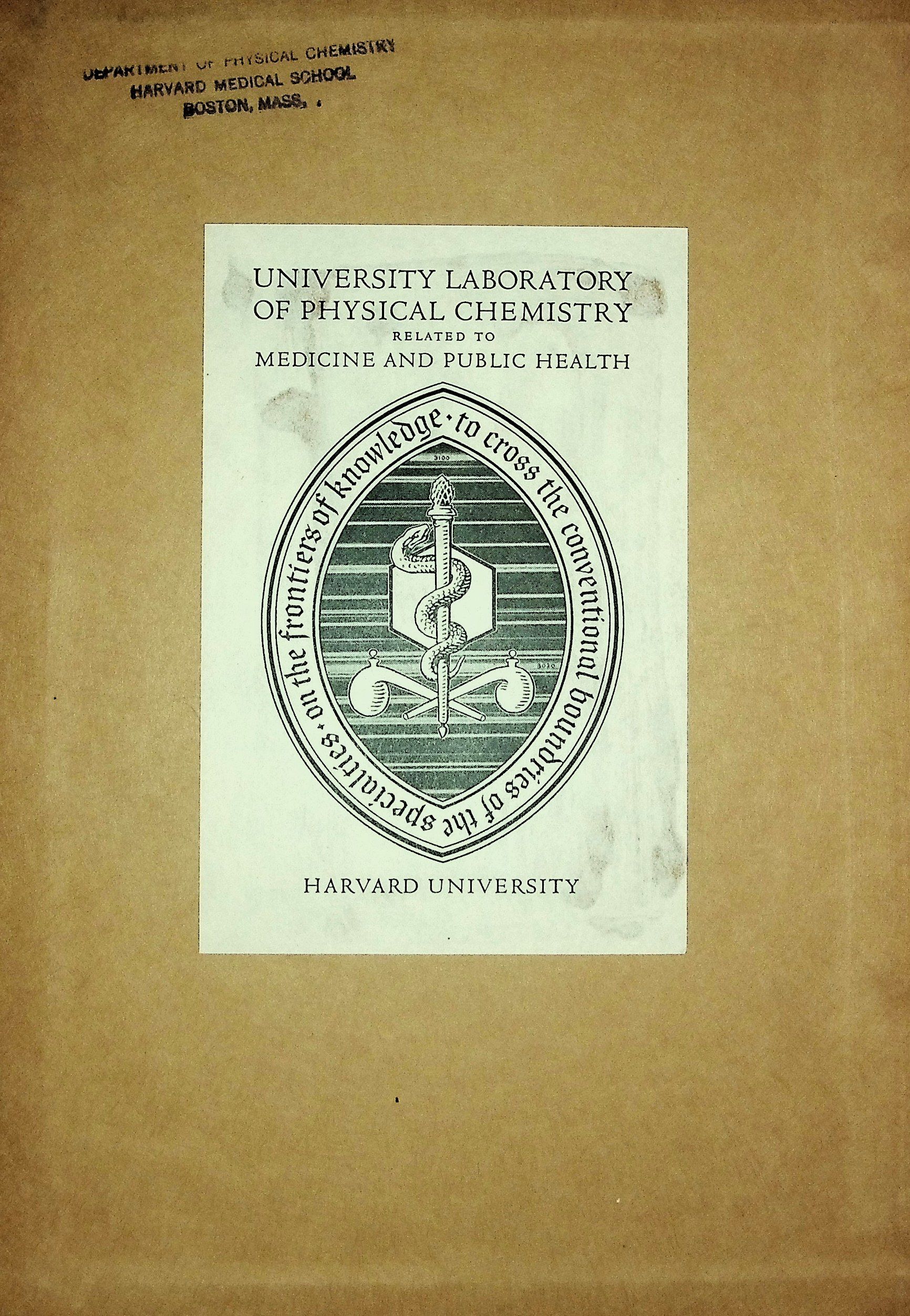
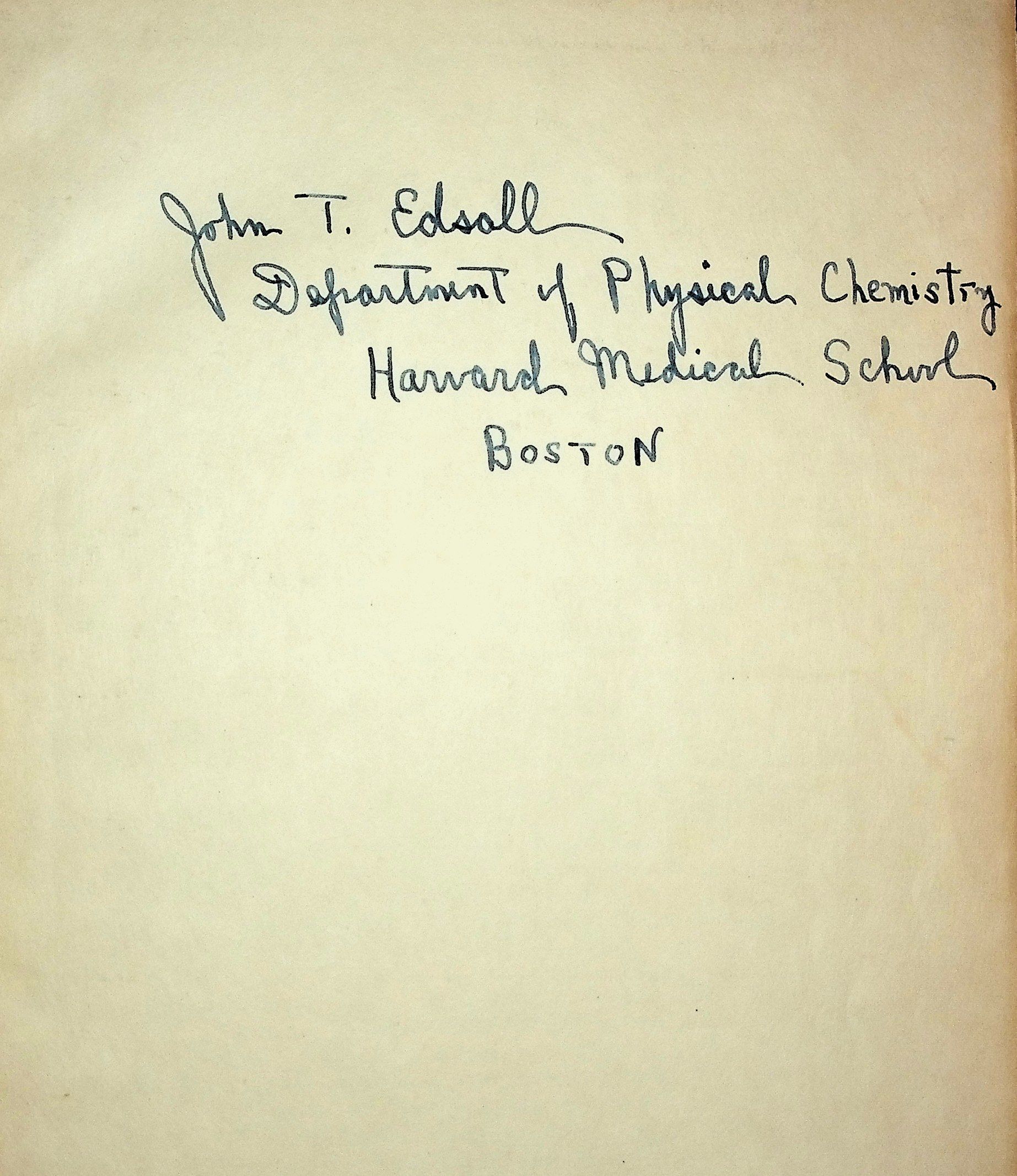
Offered are nine hardcover volumes, containing a total of 450 offprints, each 10 1/4 inches tall, brown buckram cloth binding, gilt title to spines. Vols. I-IV front paste-down with bookplate and handstamp of University Laboratory of Physical Chemistry related to Public Health, Harvard University Medical School, back paste-down with library pocket containing blank library card. Vols. V-VIII with ink inscription, "John T. Edsall/ Department of Physical Chemistry/ Harvard Medical School/ Boston," front free endpaper.
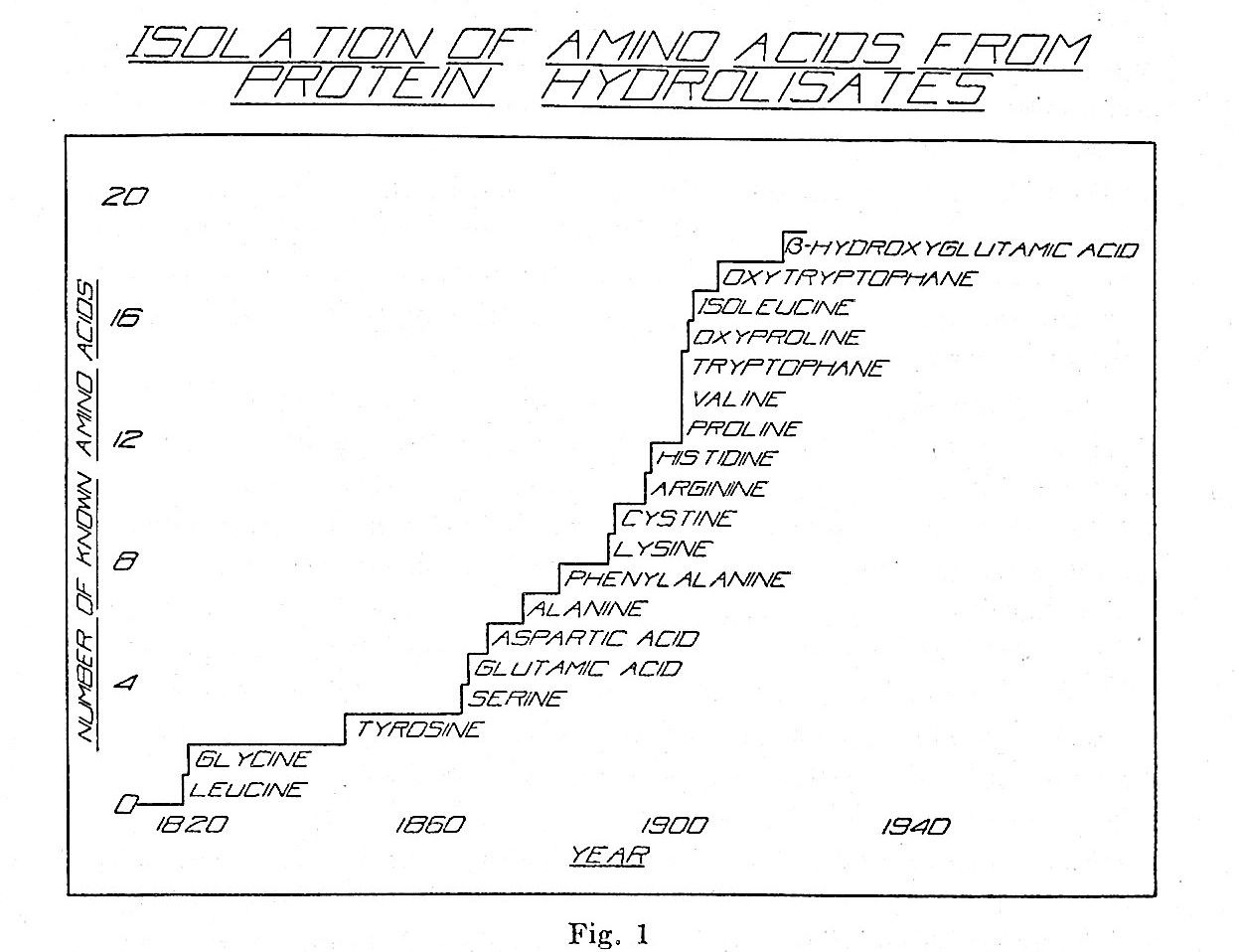
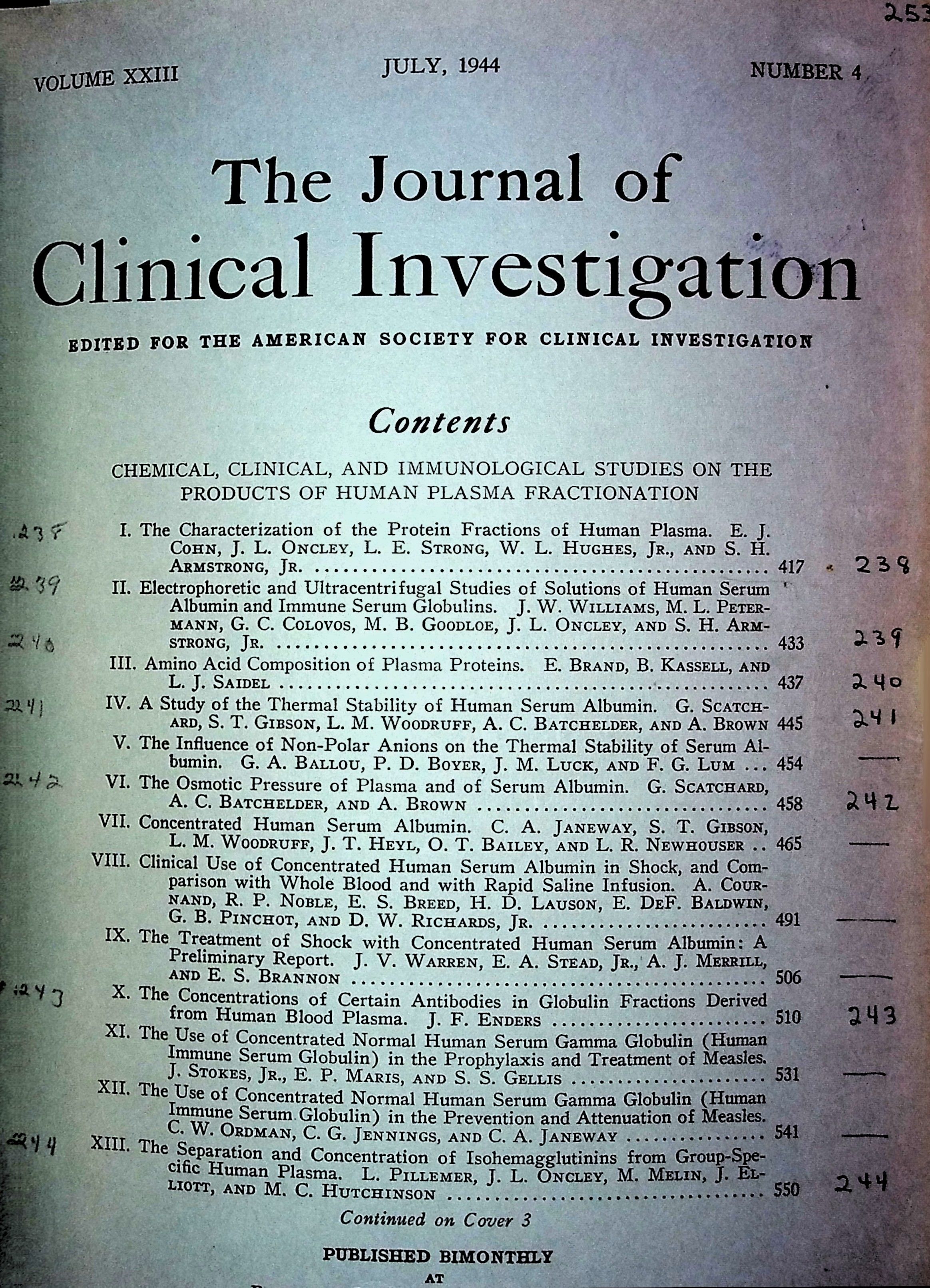
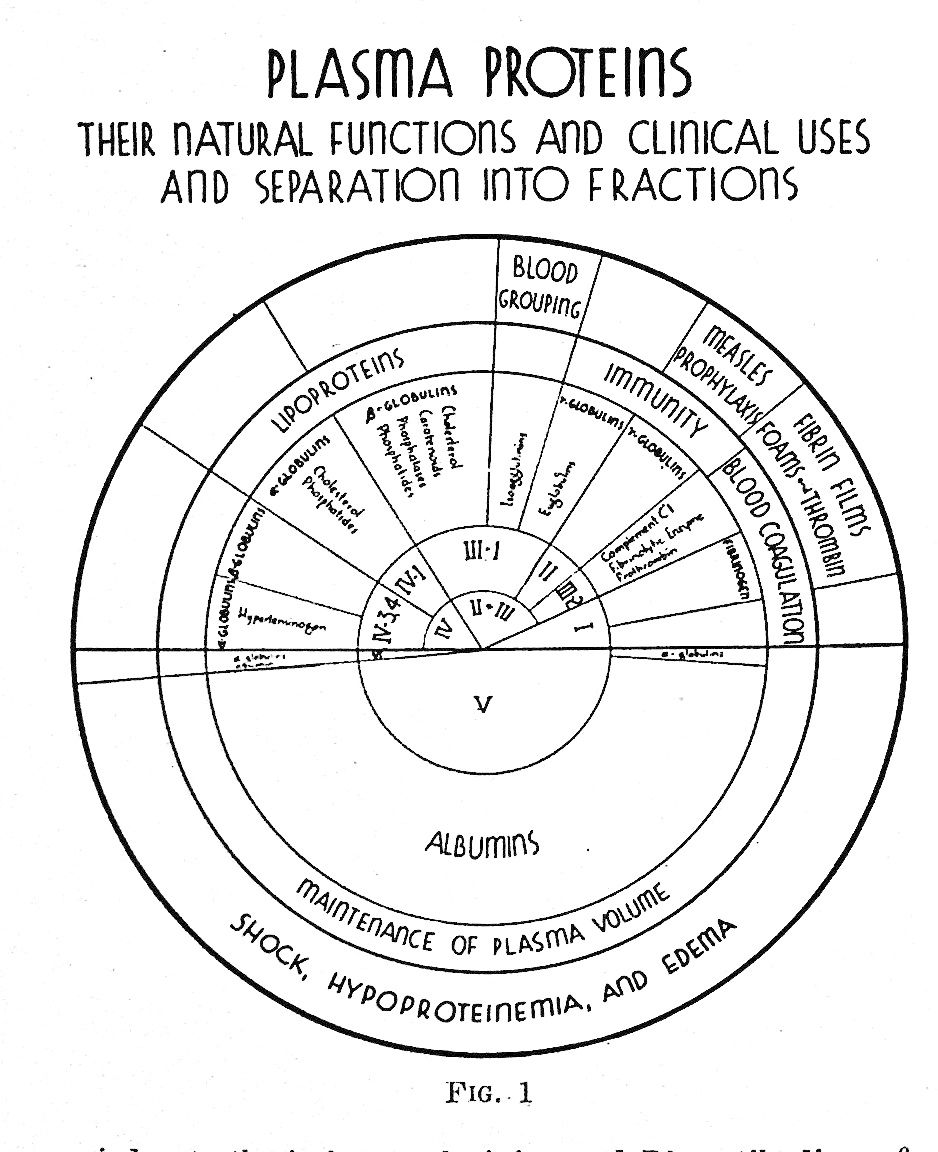
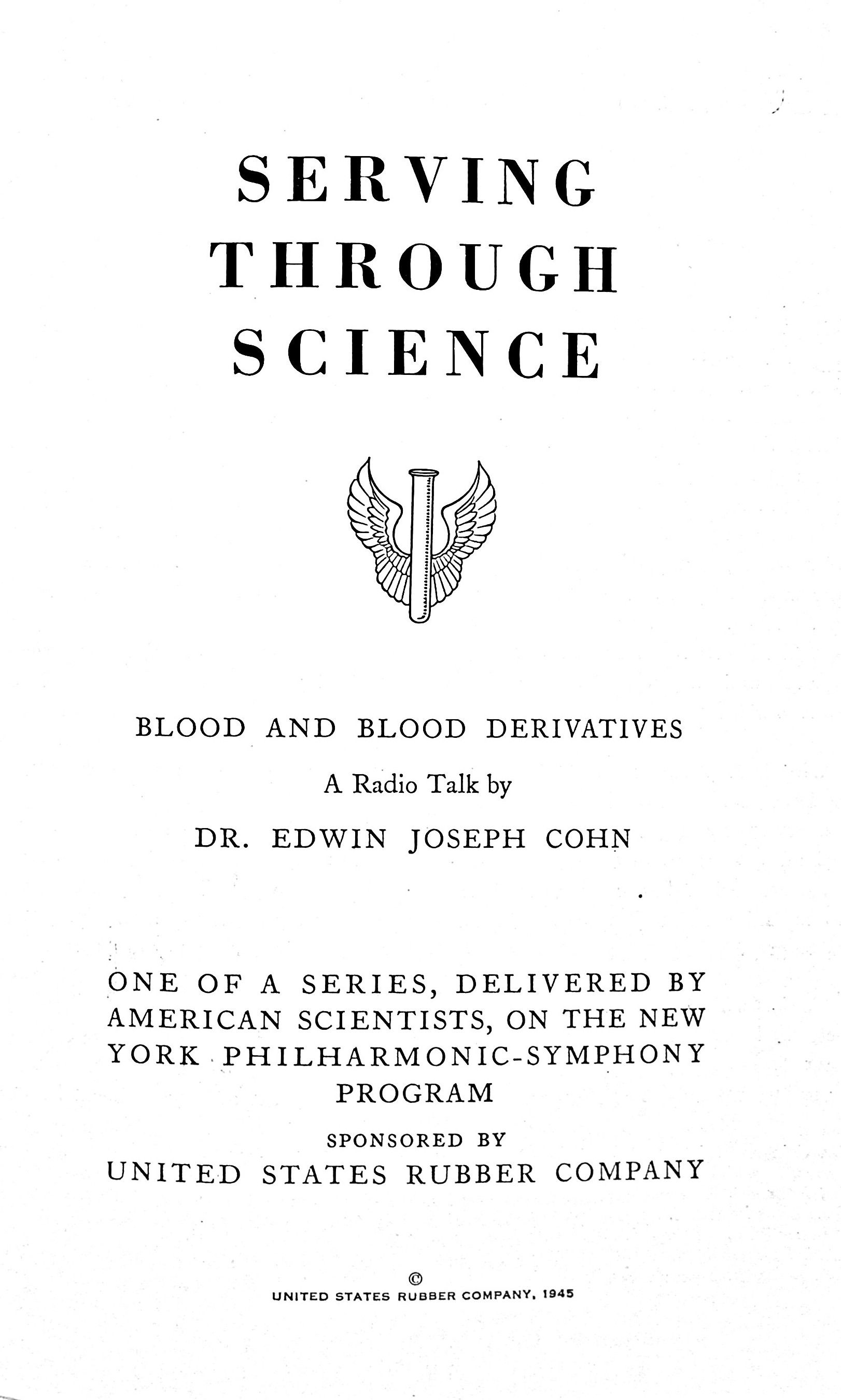
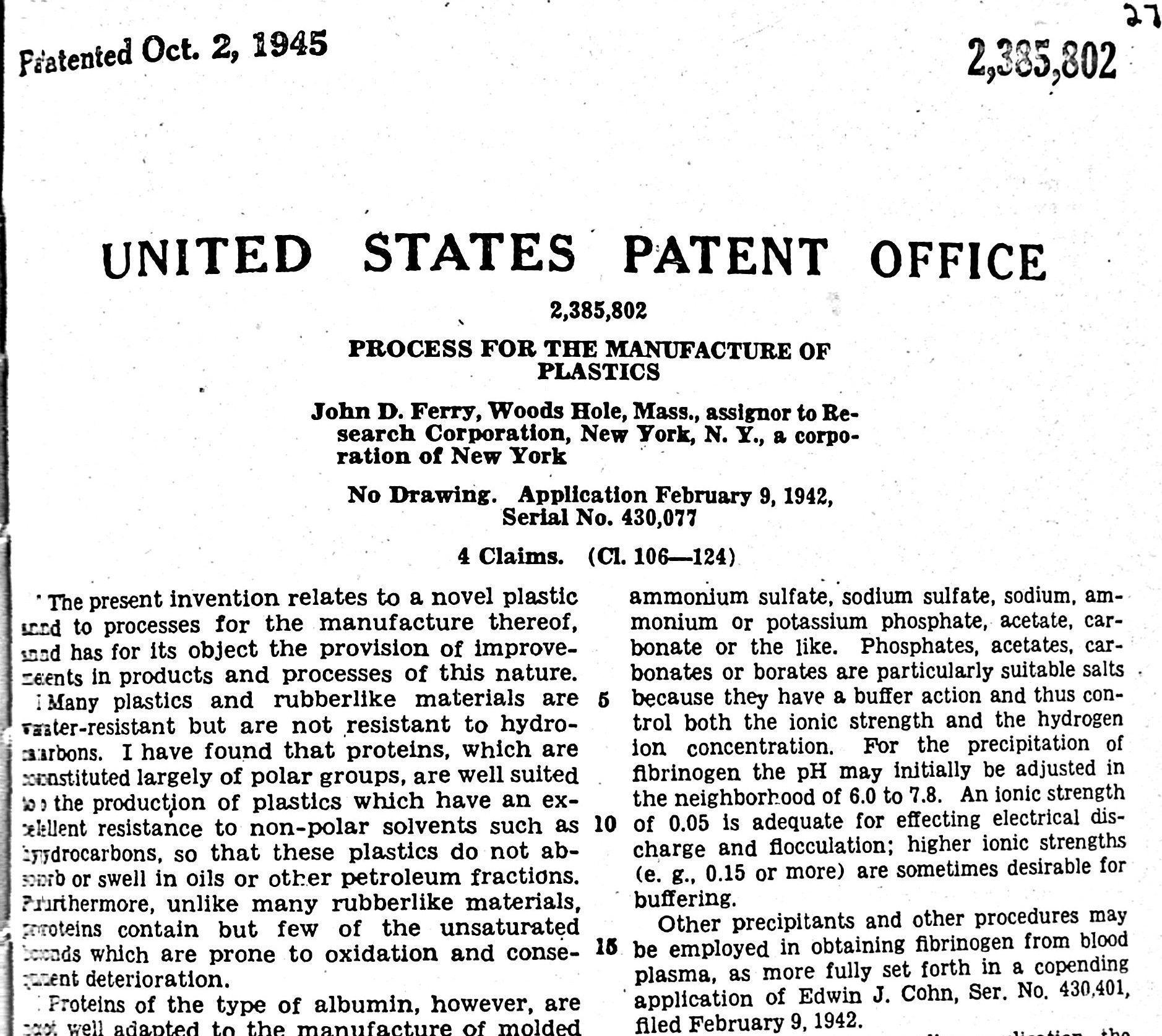
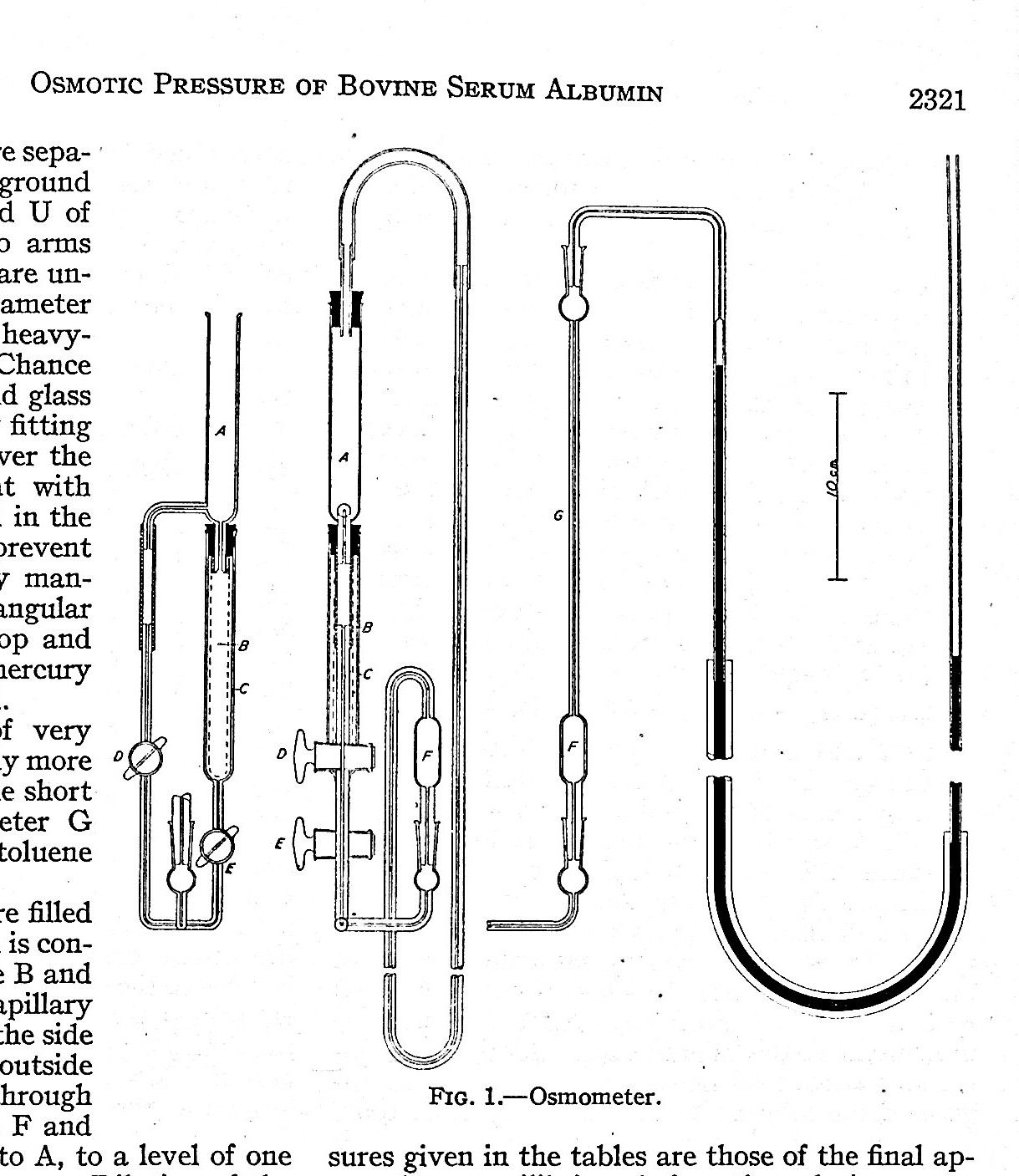
Typescript table of contents and author index to each volume. Vol. I, 1925-1933, 24 offprints, several signed by John T. Edsall with his marginal ink notes; Vol. II, 1934-1936, 37 offprints, Vol. III, 1937-1939, 50 offprints; Vol. IV, 1939-1942, 43 offprints; Vol. V, 1943-1945, 76 offprints, containing: entire issue of J Clin Invest, July 1944 (with 3 Garrison-Morton titles), French language Belgian review of blood transfusion includes paper by EJ Cohn, clinical use of products of human blood fractionation by Charles A. Janeway (albumin in shock, gamma globulin in measles), immunity in mumps by John F. Enders (JEM 1945), wartime radio talk on blood and blood derivatives by EJ Cohn, US Patent 2,385,802 for process for manufacture of plastics, obituary of David L. Edsall, Dean of Harvard Medical School and father of JT Edsall; Vol. VI, 1946-1947, 48 offprints, including: CA Janeway on blood derivatives, "a new public health field," LK Diamond on anti-Rh isoagglutinin reagents, G Scatchard on osmotic pressure, FHL Taylor on the coagulation defect in hemophilia, J Stokes on gamma globulin in mumps and hepatitis, George Minot on anti-hemophilic globulin, review by EJ Cohn on history of medical research; Vol. VII, 1948-1949, 43 offprints, including: Irving S. Wright transactions of first blood clotting conference (New York 1948), JT Edsell, preservation of formed elements and proteins of the blood, JT Edsall unclassified manuscript on large asymmetrical molecules distributed to US government and military laboratories (100 copies); Vol. VIII, 1950-1951, 63 offprints including Lewis Barness on nephrotic syndrome, historical sketch of the Department of Physical Chemistry, Harvard Medical School 1920-1950; Vol. IX, 1952-1955, 66 offprints including A discussion on the structure of proteins with contributions by WT Astbury, Robert Corey, Linus Pauling, John Randall, William Bragg, Max Perutz, John Bernal, John Edsall.
JOHN TILESTON EDSALL (1902 - 2002) was an early protein scientist, who contributed significantly to the understanding of the hydrophobic interaction. For more than half of the twentieth century John T. Edsall, class of 1923, was a guiding spirit and constant contributor to the rise of biochemistry at Harvard and in the world through his research, teaching, mentoring, writing, editing and moral influence. Following graduation from Harvard College he entered Harvard Medical School, but anticipating an academic career, he then spent two years studying biochemistry at Cambridge University before returning to Harvard for a MD degree in 1928. Edsall's devotion to teaching was extraordinary. In 1928 he became a Tutor in the newly formed concentration of Biochemical Sciences and continued in this role for forty years, serving as Head Tutor for more than twenty years. In 1954 he moved to the Biological Laboratories. While he found the last two years of medical school disappointing he compensated by joining Edwin J. Cohn's Department of Physical Chemistry where some of the earliest studies on protein physical chemistry were underway. Thus began a long research career devoted to proteins and their constituent amino acids. His early work contributed mightily to establishing proteins as uniquely structured large molecules deserving the same intense study that had become commonplace in the chemistry of small molecules. John's early studies dealt with the size and shape of the principal proteins in muscle and blood, their states of ionization, the role of constituent polar and hydrophobic amino acids in stabilizing protein structure and the vital role of ever-present water. He was the first to describe the phenomenon that is the central feature of hydrophobic interactions. No one contributed more than Edsall to the establishment of high standards and effective communication in protein science. In 1944 he co-founded Advances in Protein Chemistry, an annual cutting-edge review written by experts. He continued as editor for fifty years leaving a vast legacy of judicious selection and authoritative presentations. He further left his imprint on the scientific literature in biochemistry by editing the Journal of Biological Chemistry, the leading publication in the field, for a decade.
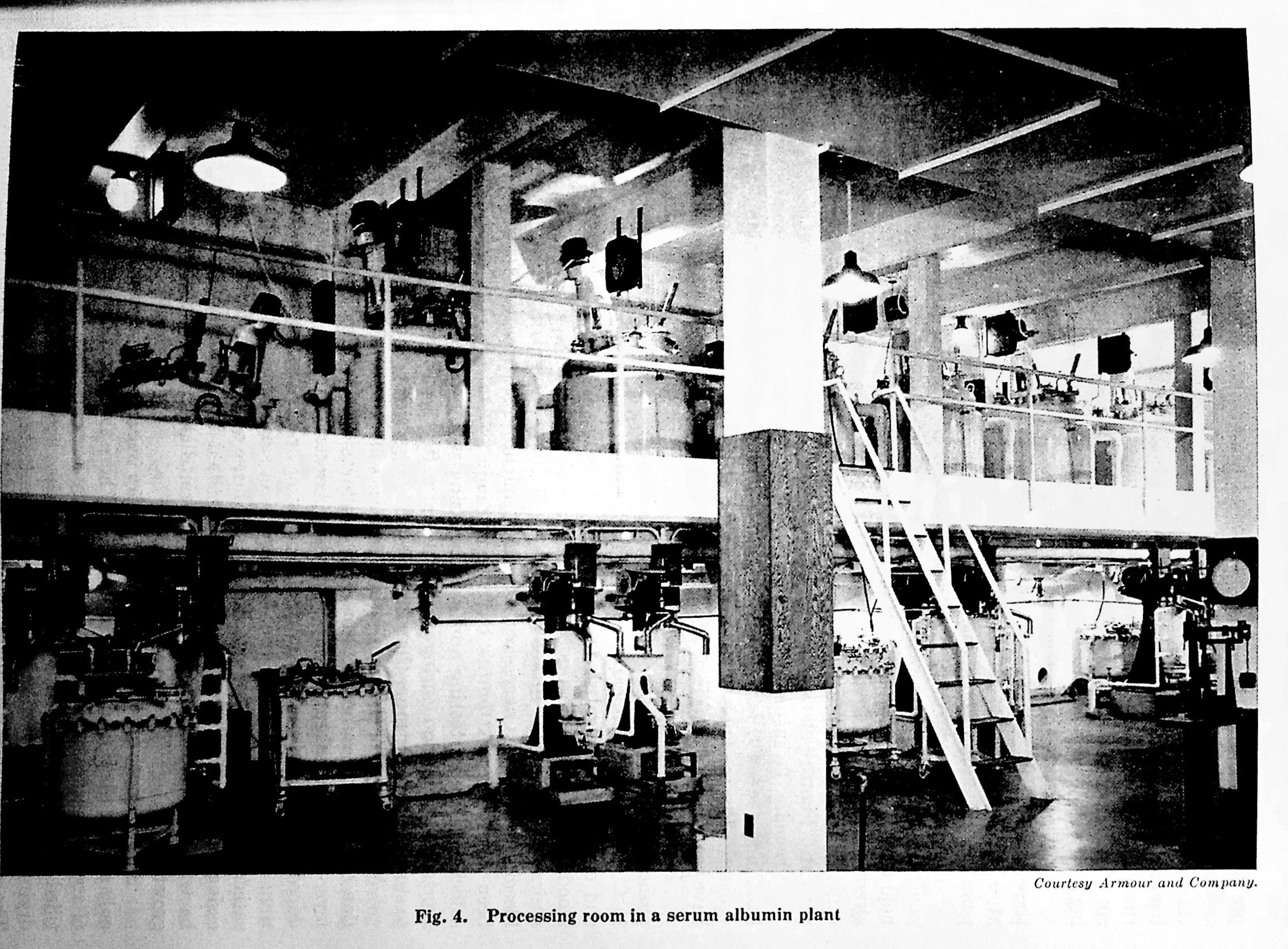
EDWIN JOSEPH COHN (1892-1953) was a protein scientist. A graduate of the University of Chicago [1914, PhD 1917], he made important advances in the physical chemistry of proteins. In 1928, as group leader at Harvard Medical School, Cohn was able to concentrate, by a factor of 50 to 100 times, the vital factor in raw liver juice which had been shown by Minot and Murphy to be the only known specific treatment for pernicious anemia. Cohn's contribution allowed practical treatment of this previously incurable and fatal illness, for the next 20 years. Cohn became famous for his work on blood fractionation during World War II. In particular, he worked out the techniques for isolating the serum albumin fraction of blood plasma, which is essential for maintaining the osmotic pressure in the blood vessels. Transfusions with purified albumin on the battlefield rescued thousands of soldiers from shock. After the war, Cohn worked to develop systems by which every component of donated blood would be used, so that nothing would be wasted.
Details
Title
Scientific Papers from the Department of Physical Chemistry, Harvard Medical School, 1925-1955
Author
Edsall, John T., Cohn, Edwin J., Bailey, Orville T., Ferry, John D., Greenstein, Jessie P., Gurd, Frank R. N. , Hughes, Walter L., Jr., Ingraham, Franc D., Janeway, Charles A., Low, Barbara W., Morrison, Peter R., Oncley, John L., Scatchard, George, Surge
Binding
cloth binding
Condition
Unknown
Date
1925-1955
Edition
First editions