

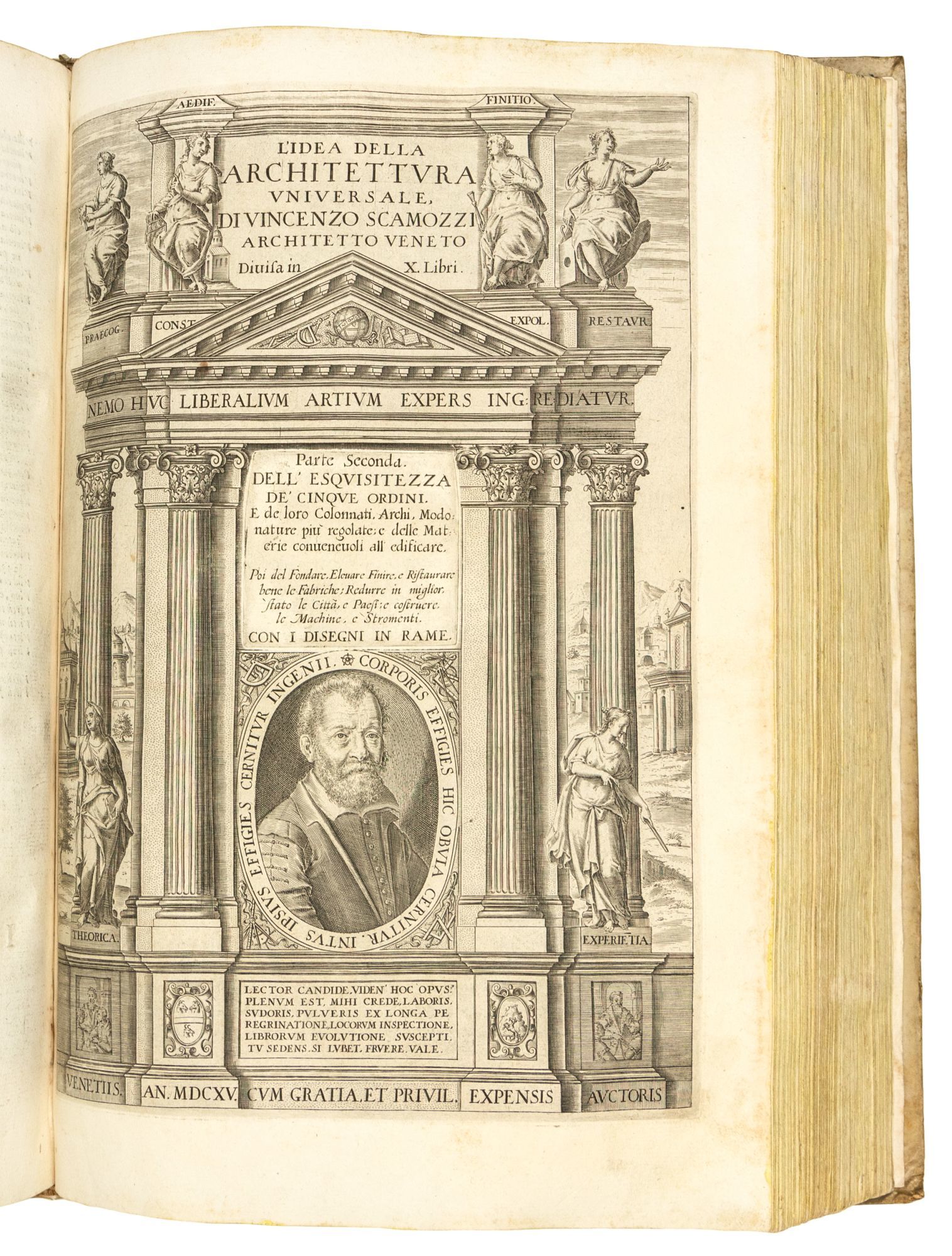
L'idea della architettura universale, di Vincenzo Scamozzi architetto veneto divisa in X. libri [...] Parte seconda Dell'esquisitezza de' cinque ordini ..
- Hardcover
- Venice: Giorgio Valentini, 1615
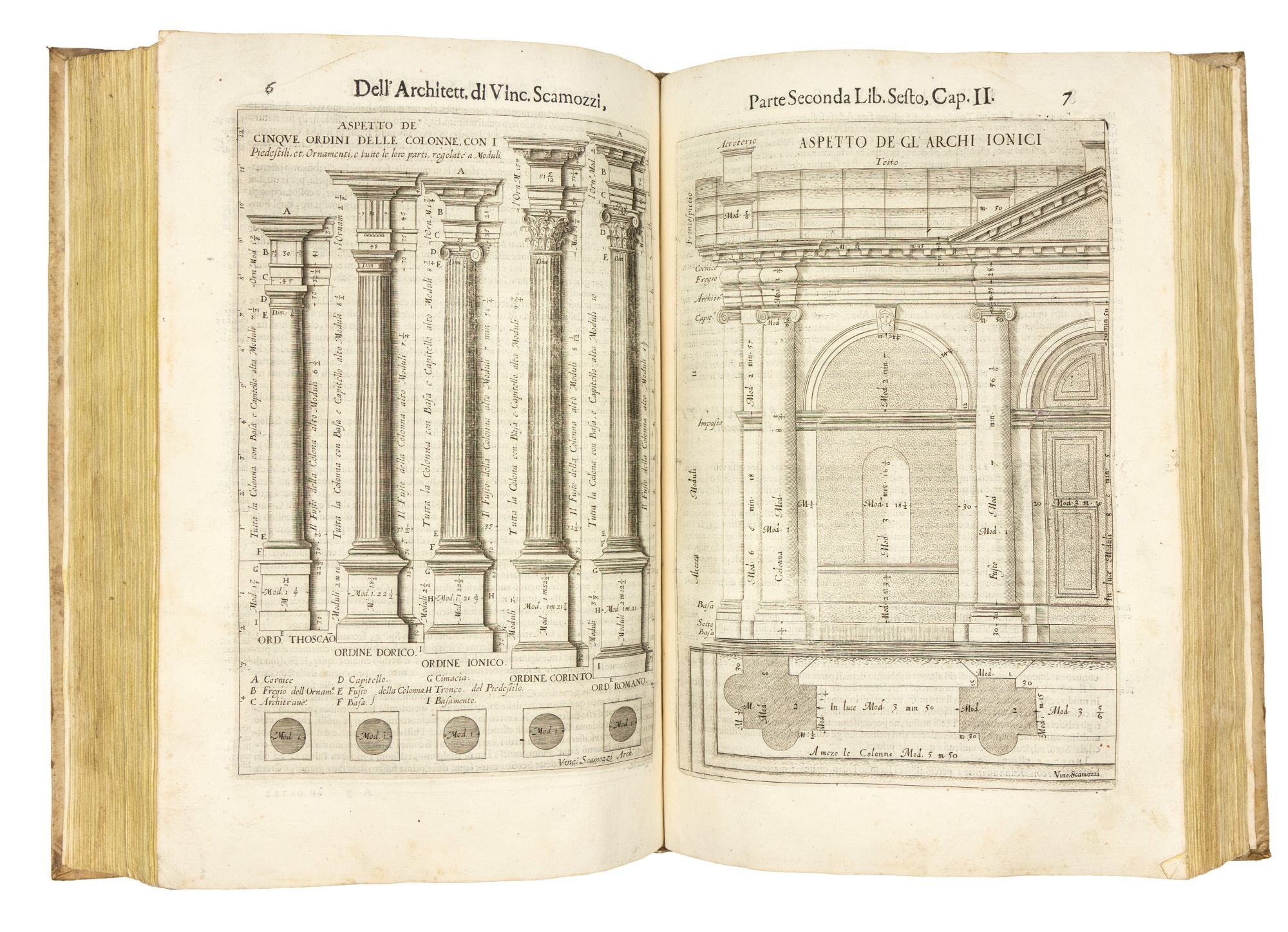
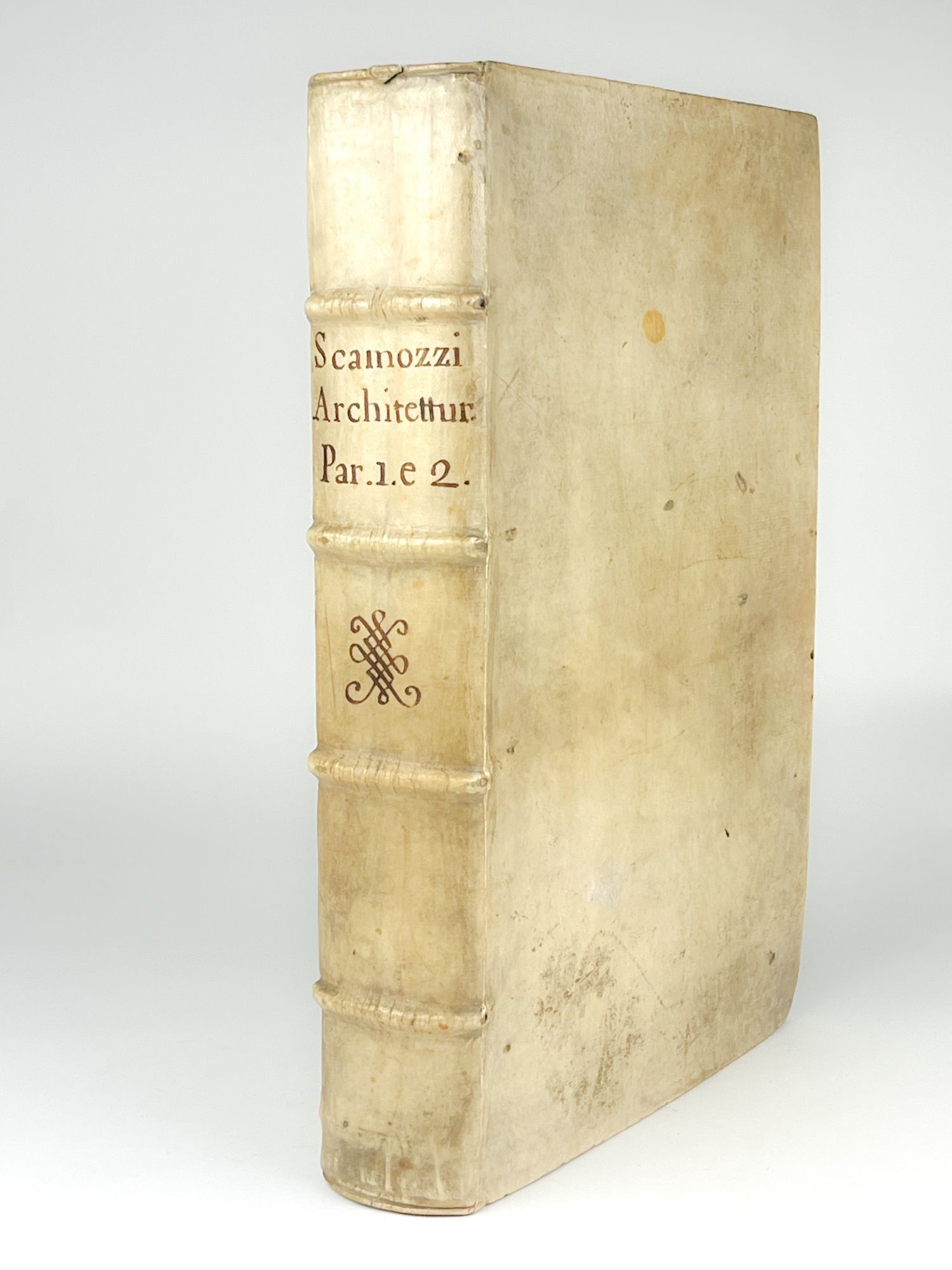
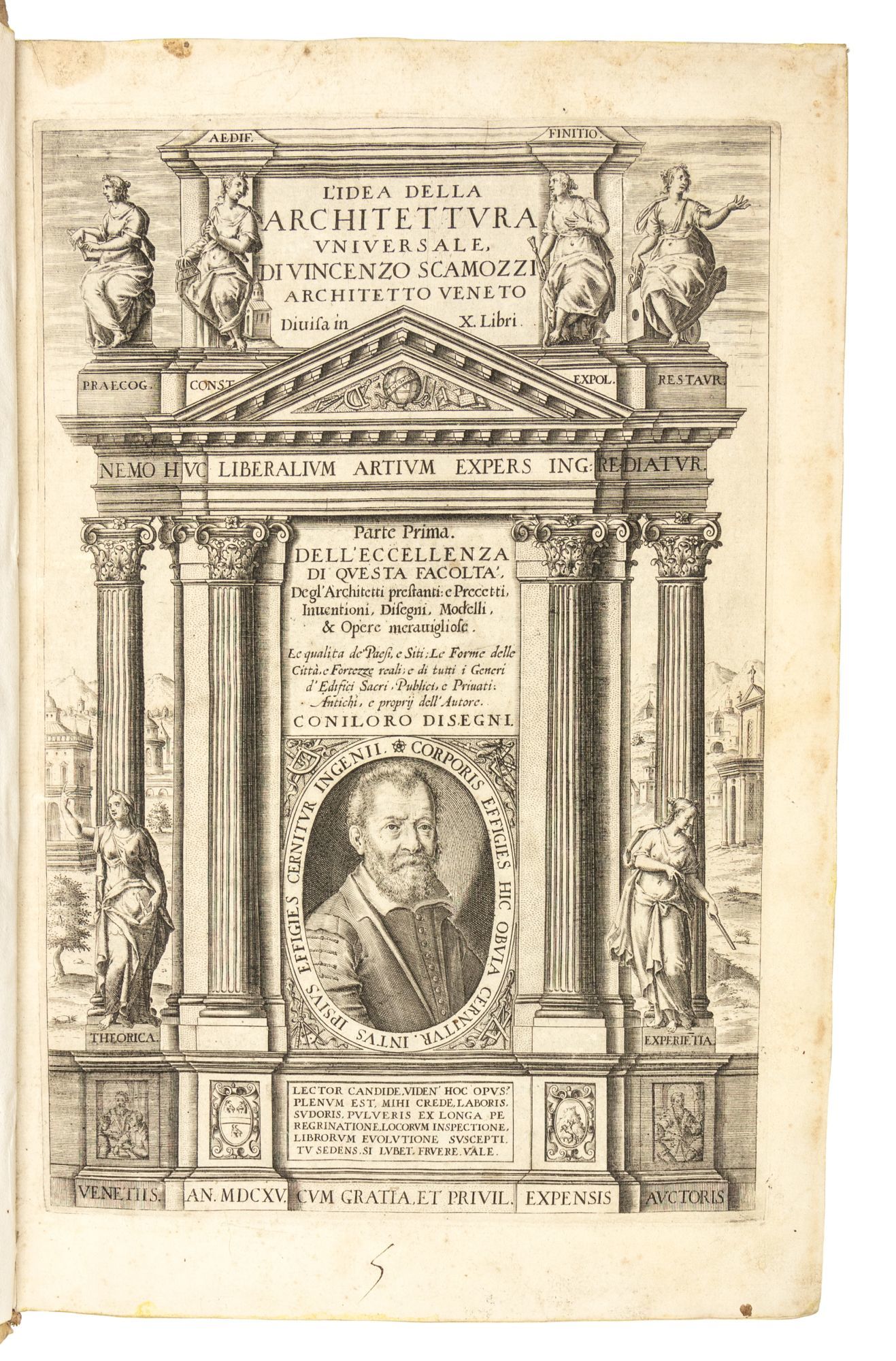
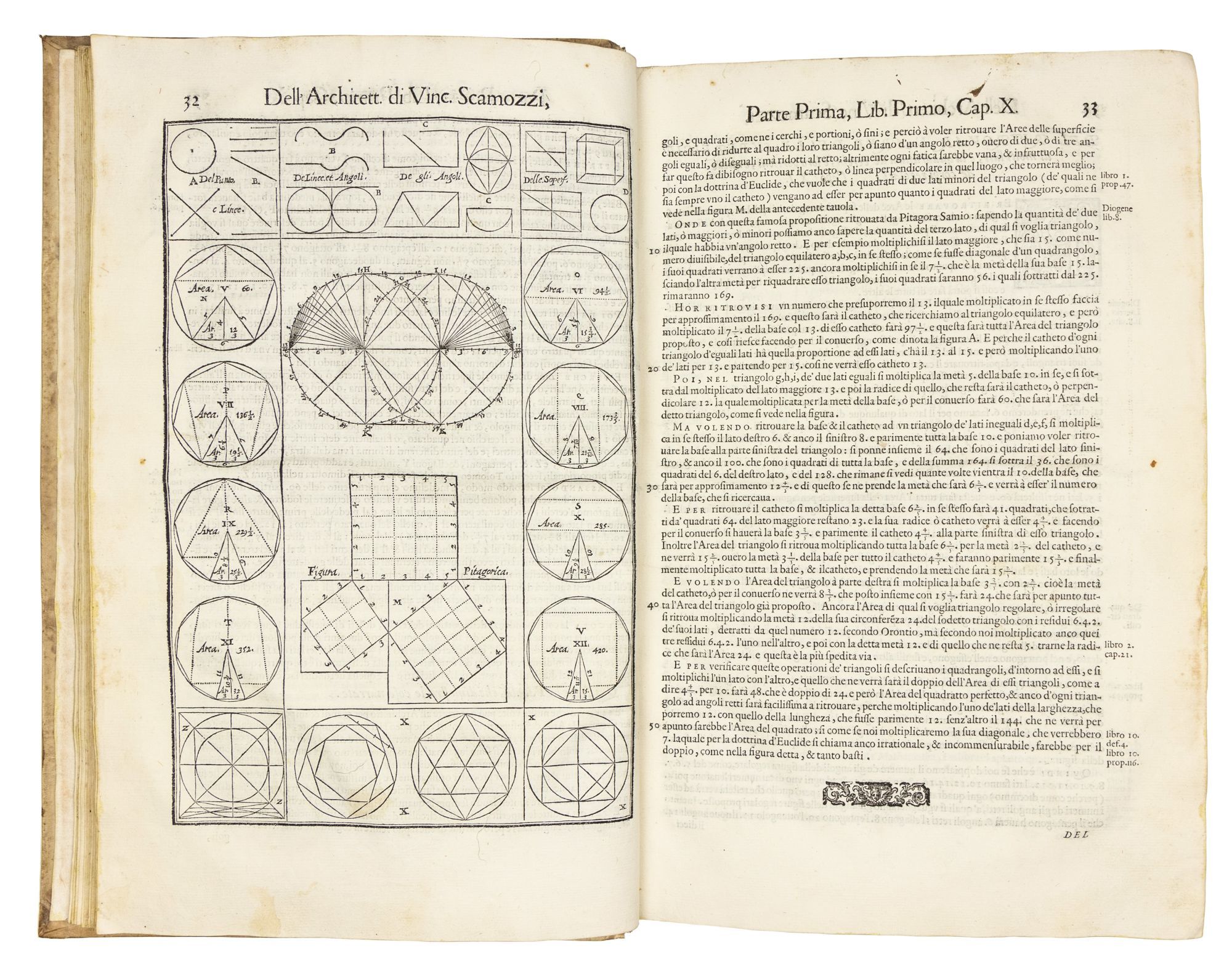
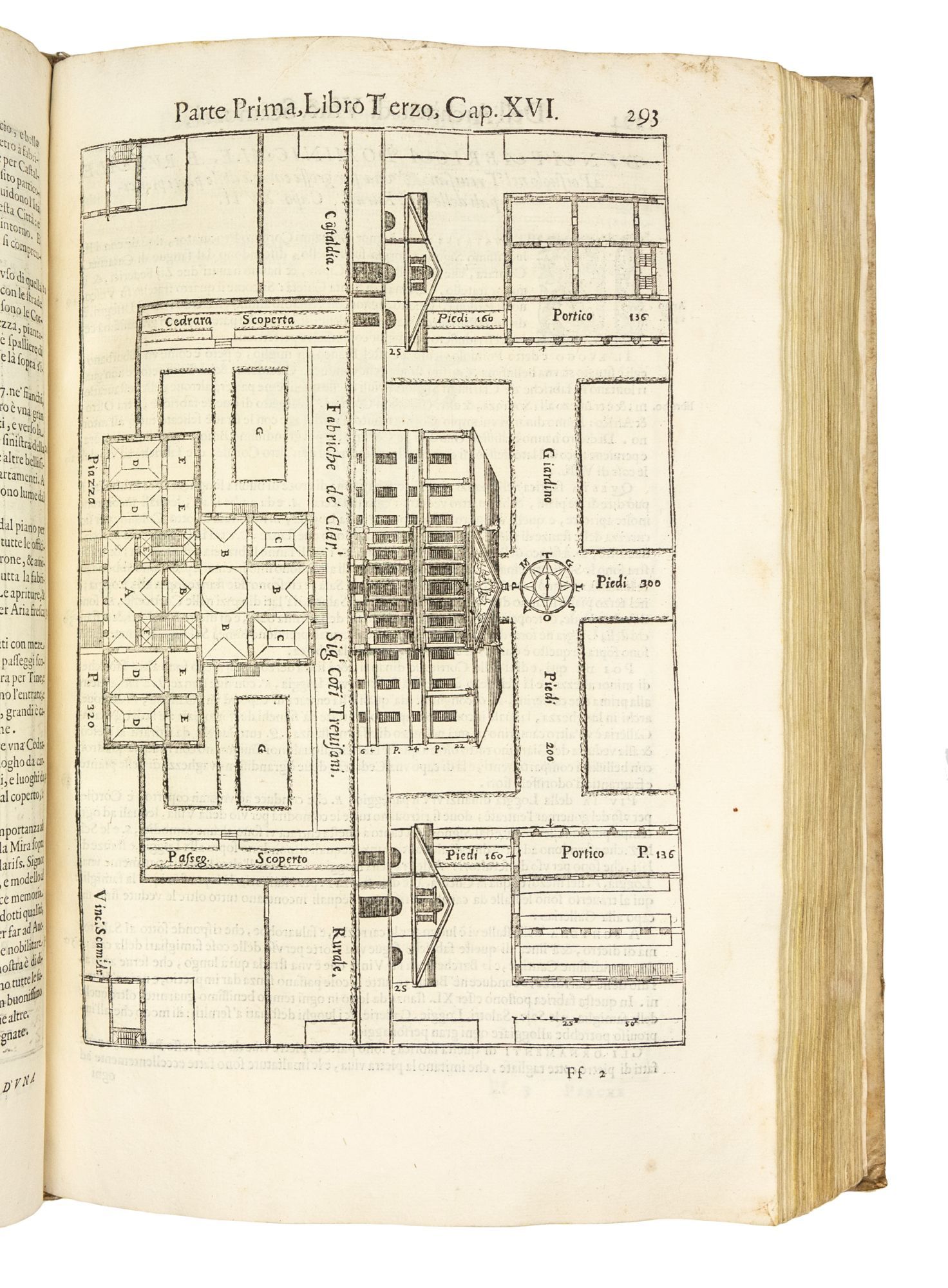
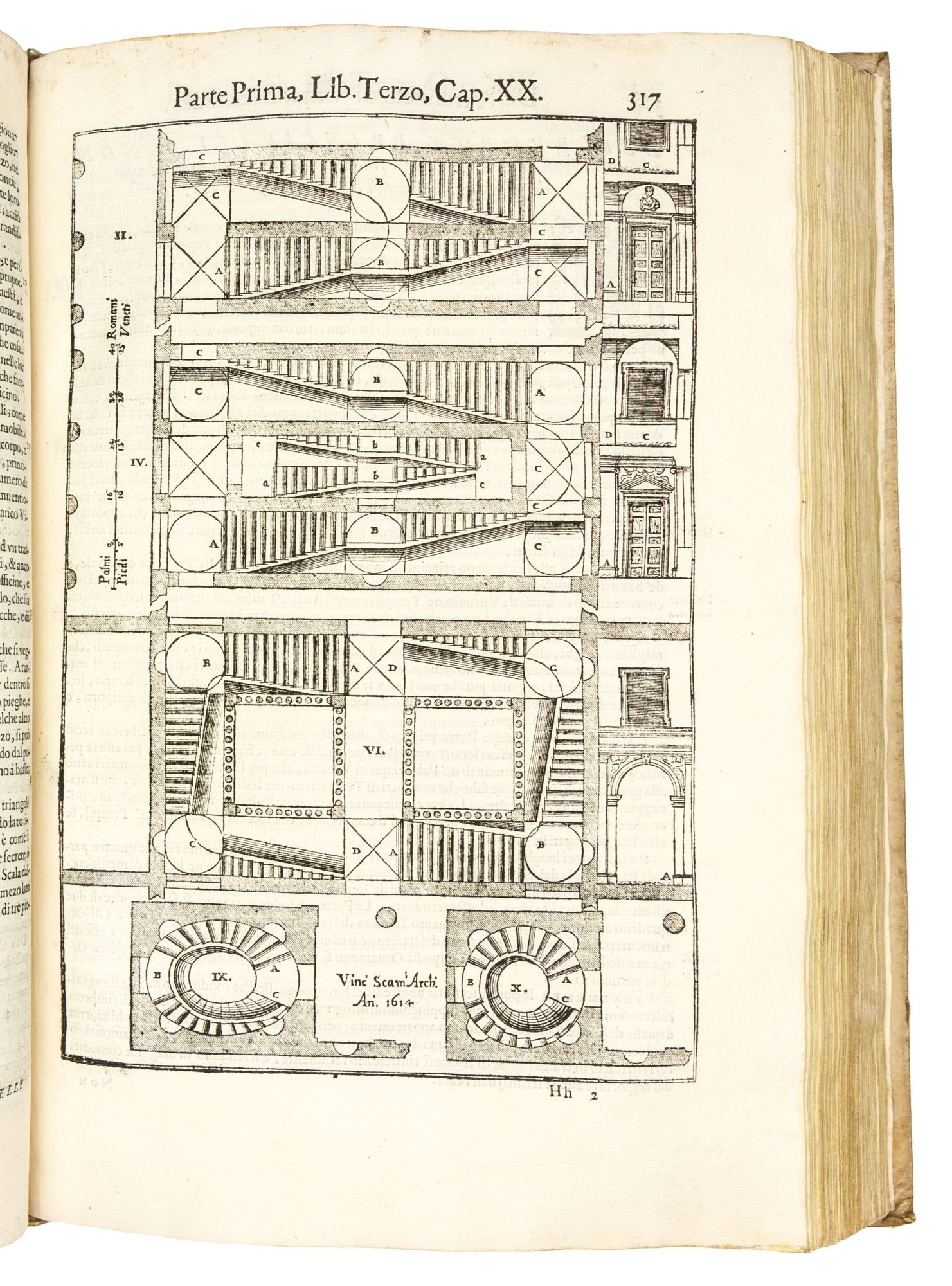
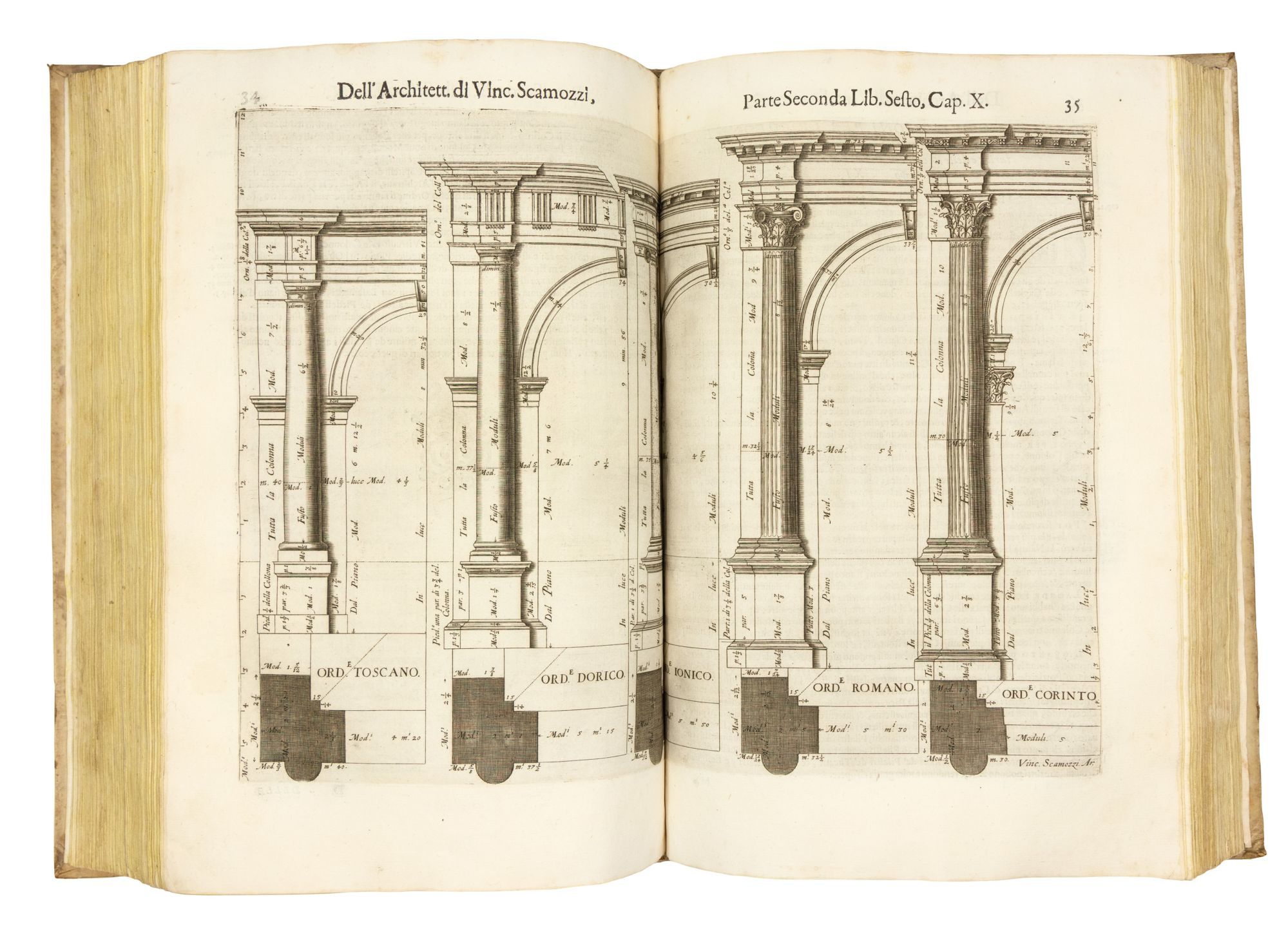
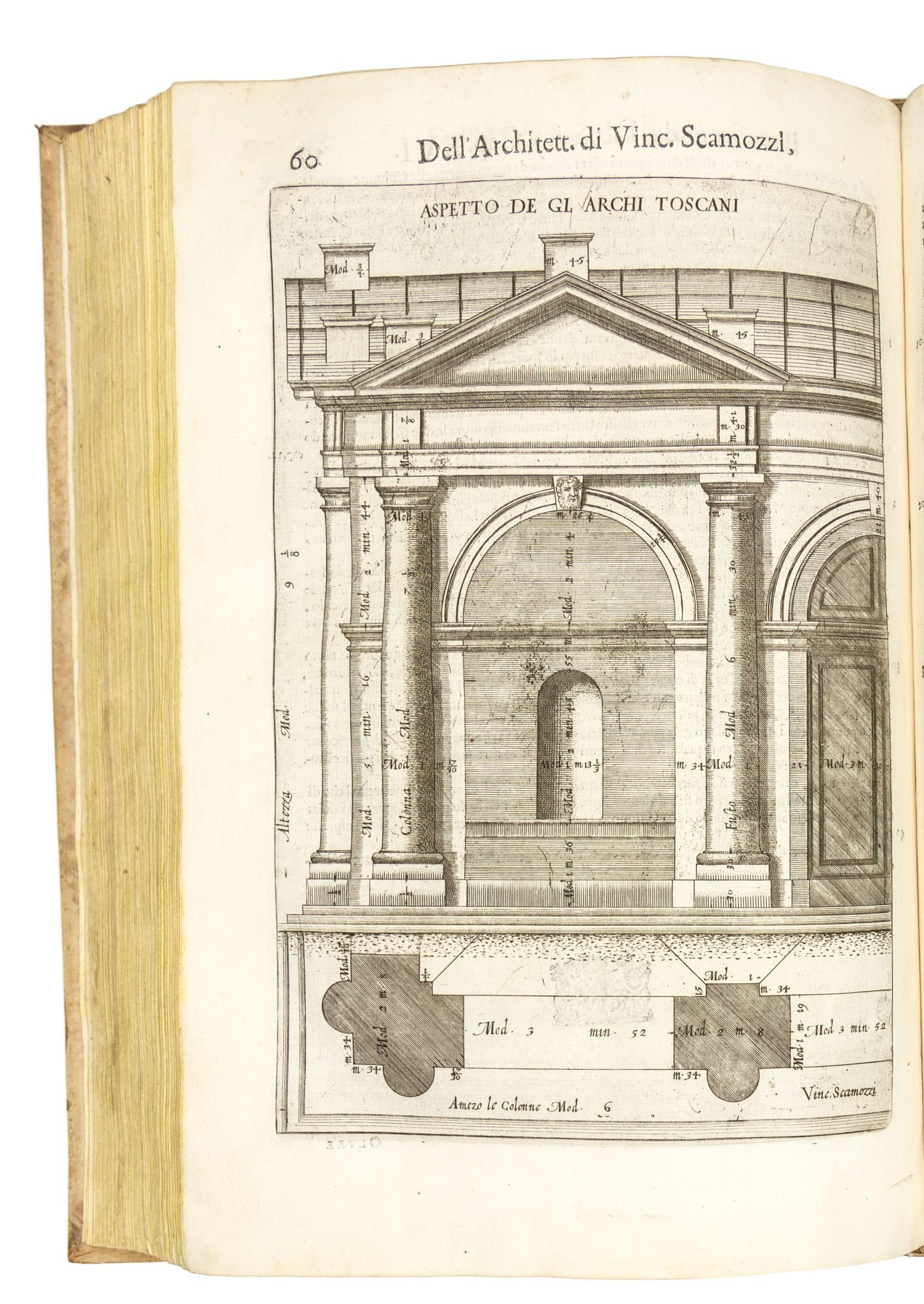
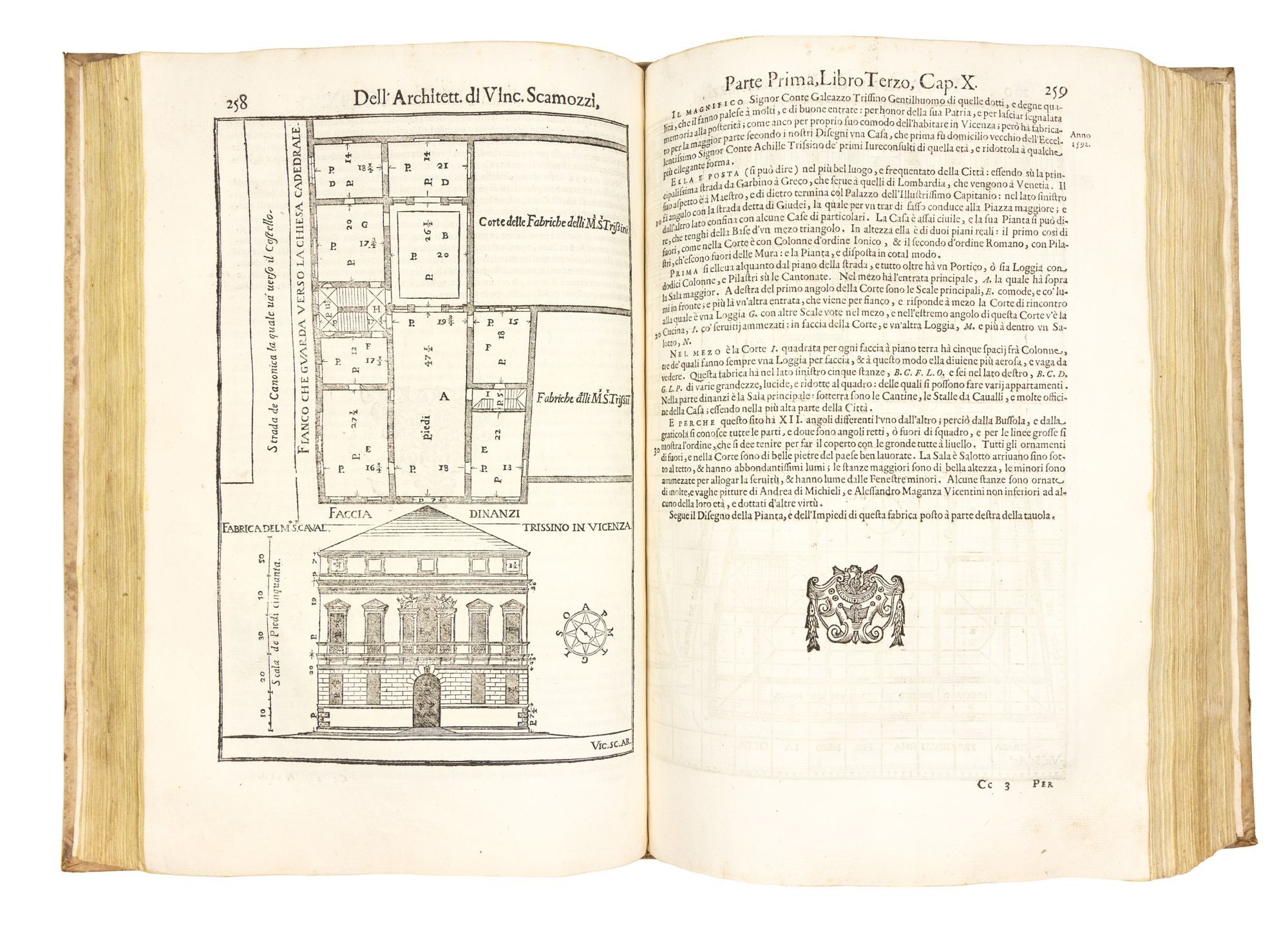
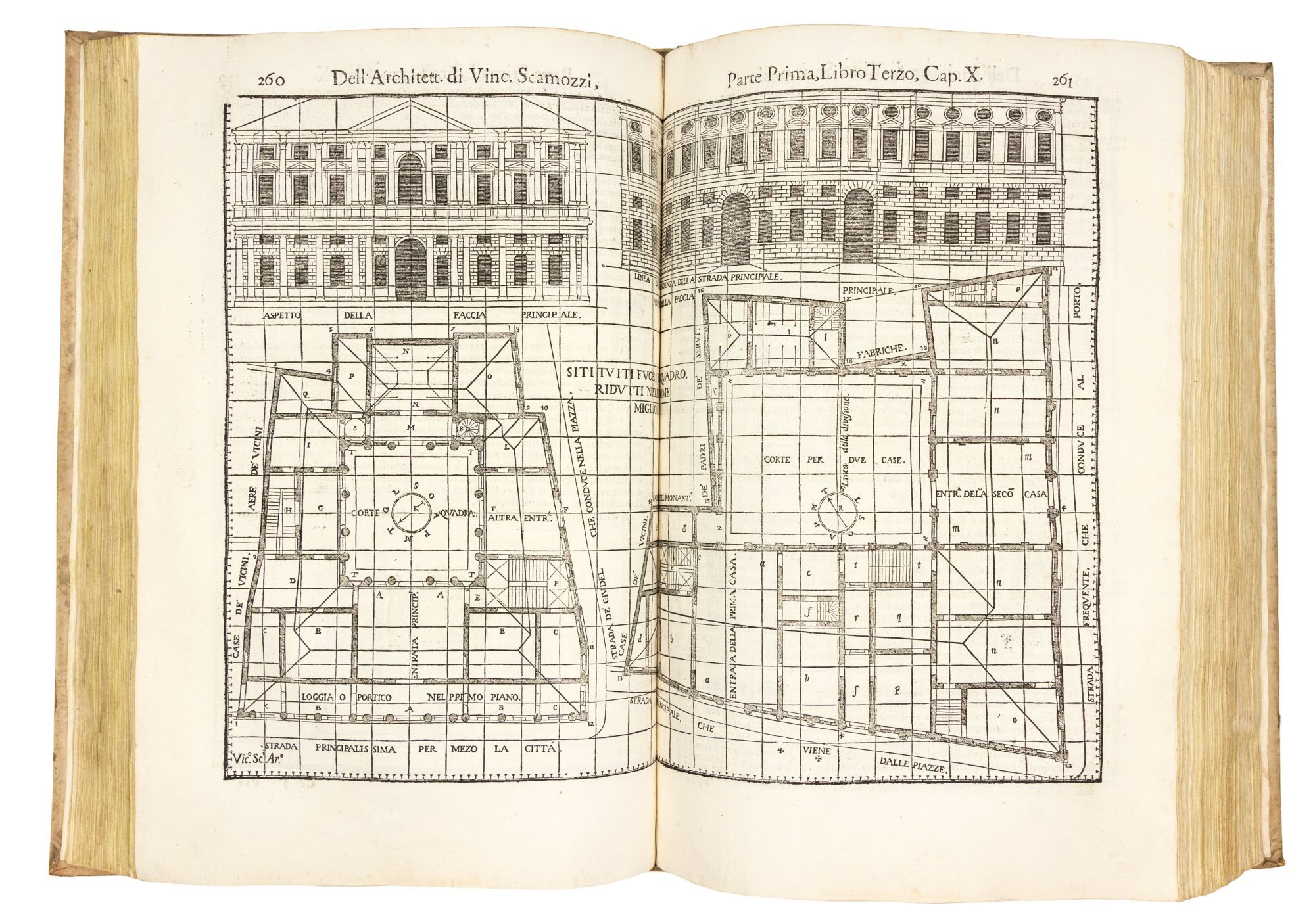
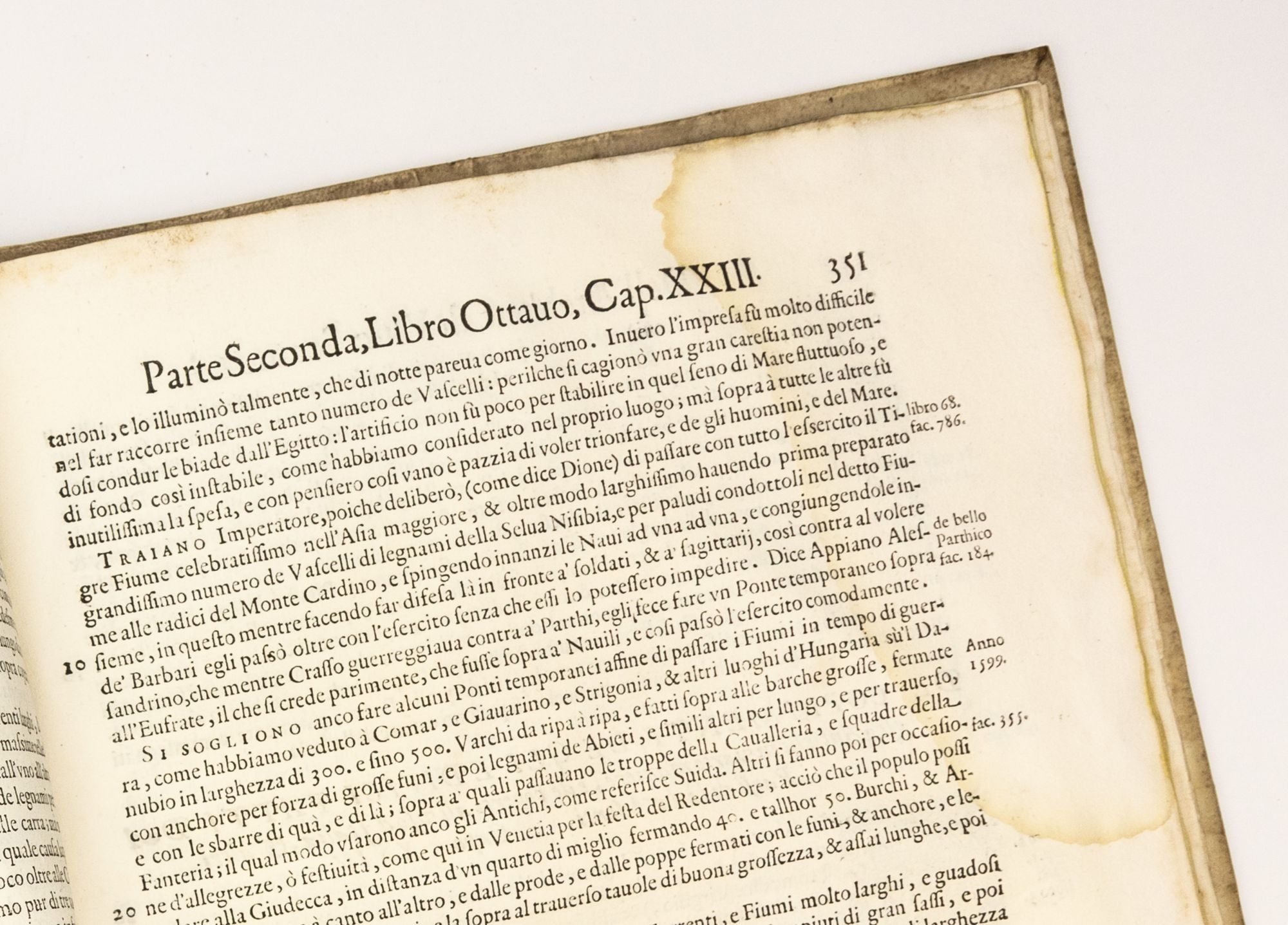
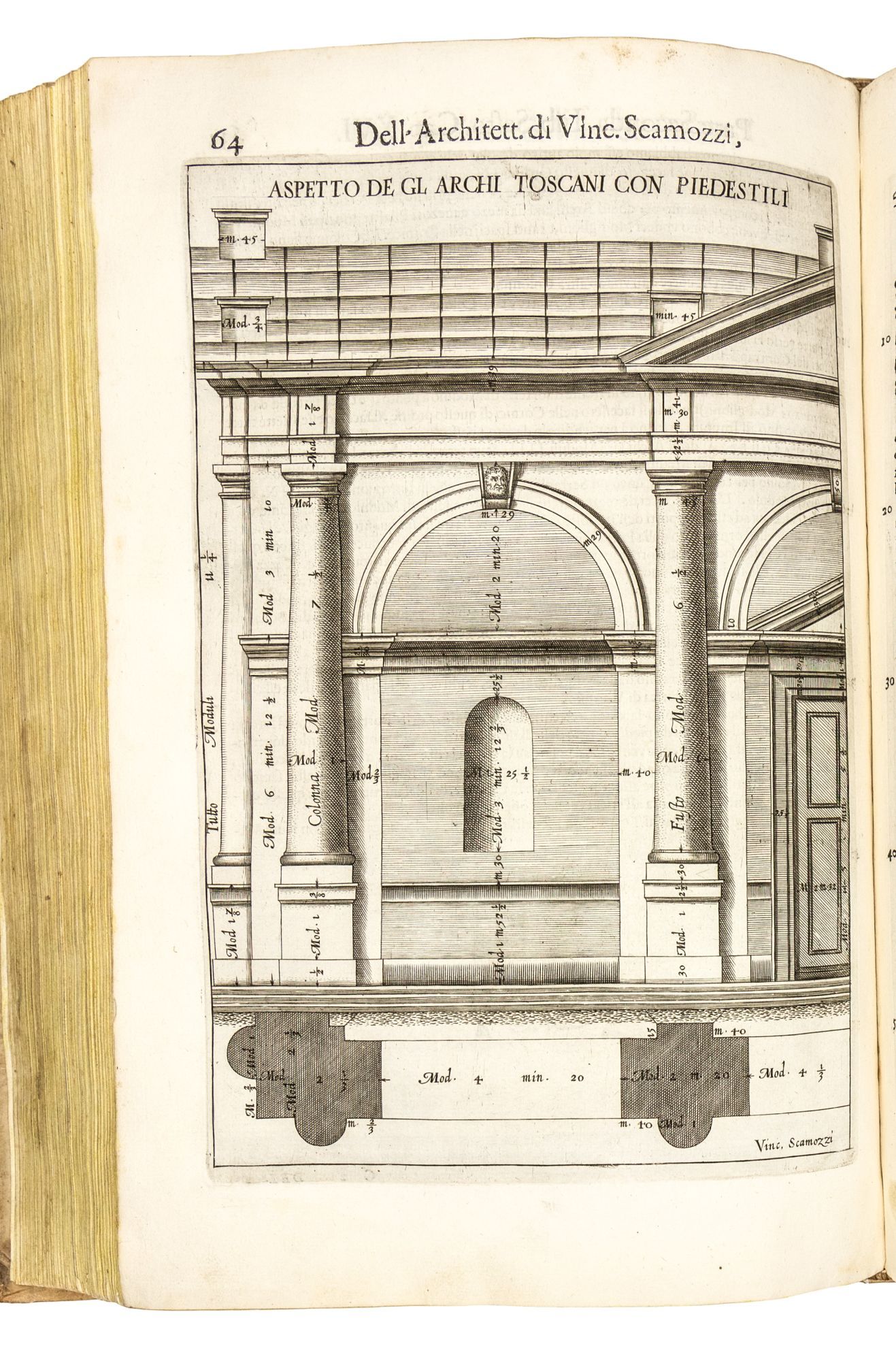
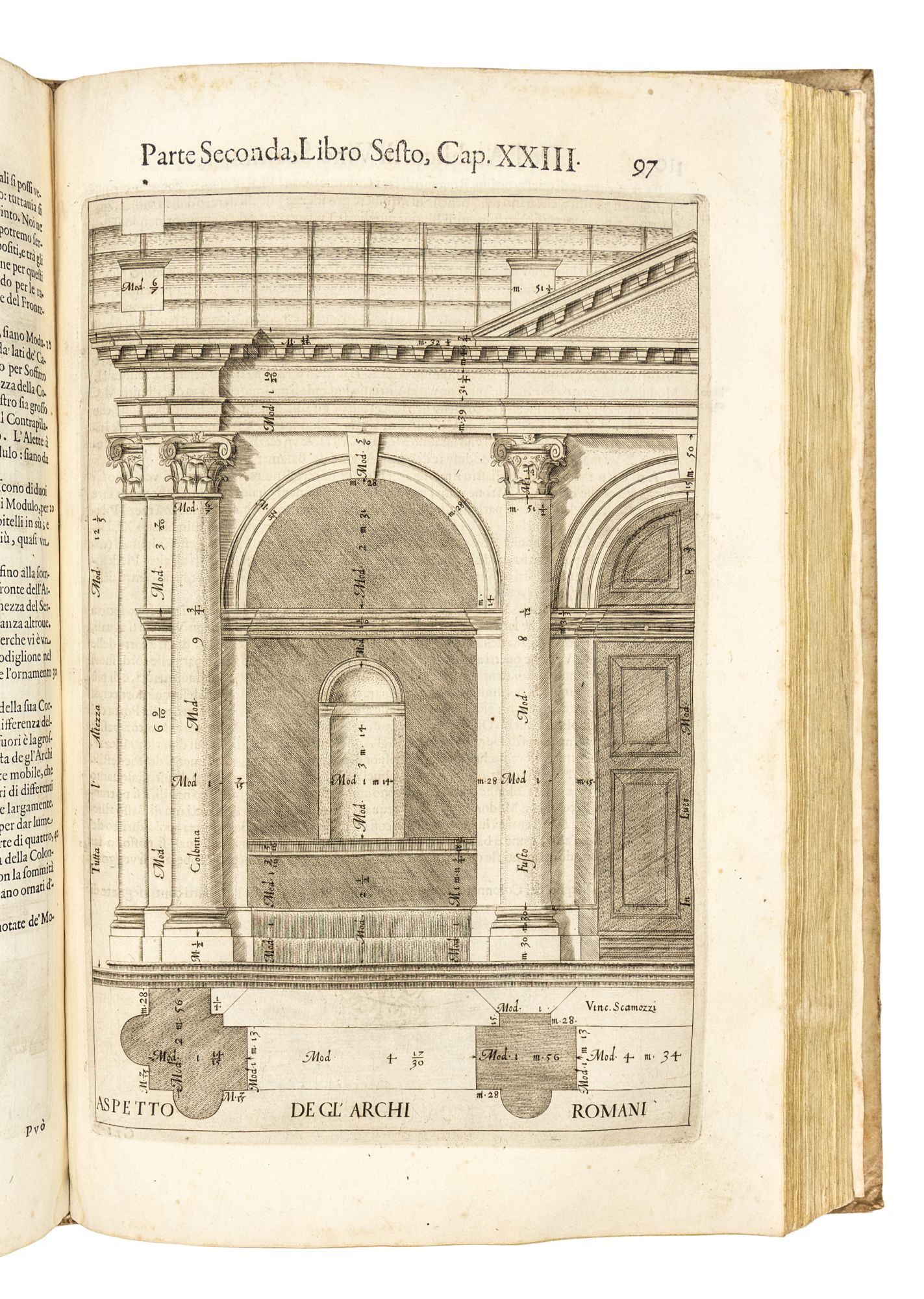
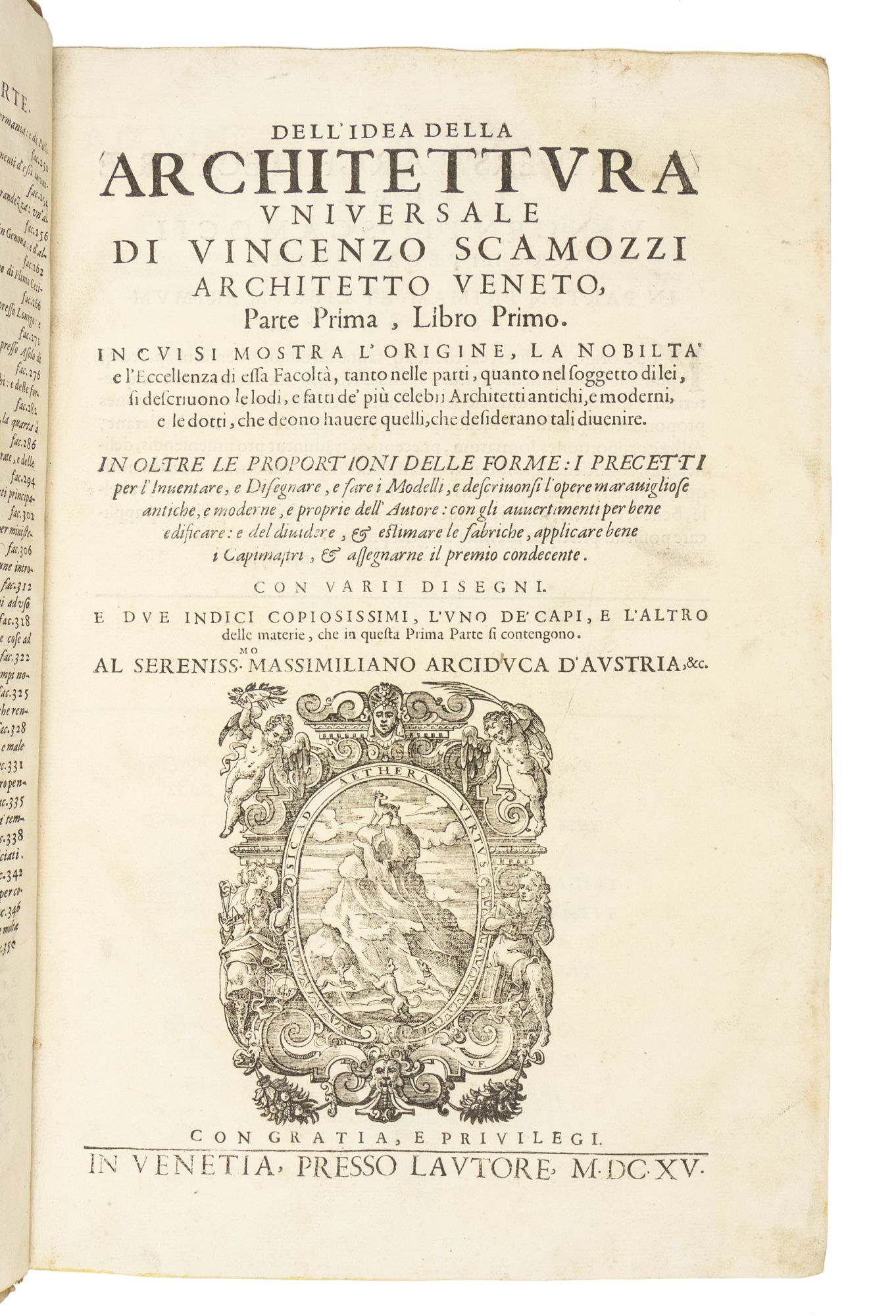
Venice: Giorgio Valentini, 1615. FIRST EDITION. Hardcover. Fine. Bound in contemporary vellum (soiled, with small stains and two small wormholes in the upper cover, tiny nick at head of spine, corners bumped.) A very nice copy, printed on high quality paper, with scattered marginal soiling, a few minor stains and marginal tears (lvs. H6 and N2 in Pt. II), and a damp-stain with a mild tide-line affecting the last five gatherings. The first title is soiled in the margins, leaf K3 in Pt. II has a light ink spatter in blank margin, leaves A3 and 4 in the final section have a pale stain. Illustrated with 2 engraved titles incorporating a portrait of the author, 42 full-page woodcut illustrations (3 double-page), and 44 full-page engraved illustrations (5 of them double-page). Text with ornamental initials and headpieces. The first edition of one of the last major architectural treatises of the Italian Renaissance, composed by the Italian architect Vincenzo Scamozzi (1548-1616). Conceived in 10 books, only books 1 to 3 of the first part and books 6 to 8 of the second part were published; the others remained unfinished at Scamozzi's death in 1616. "They cover the history and theory of architecture, fortification and town planning, palaces and villas, building materials, and methods of construction."(Millard Catalogue). All of the illustrations are the work of the author.
"Scamozzi, along with Sebastiano Serlio, Palladio, and Vignola, was one of the most distinguished theorists of the Renaissance... He is distinguished among 16th century Italian architectural theorists in having also produced a large body of surviving architectural works. These include the Procuratie Nuove in Venice and the design of the town of Sabbioneta... In his old age, Scamozzi 'enjoyed an undisputed international reputation and provided a direct link with Palladio for Bernini's generation' (Wittkower 1983, 26) and also connected 'the Palladian tradition to the greater inventions of his pupil Longhena'(Lewis 1977, 45). Scamozzi had been the student and assistant of Andrea Palladio, many of whose works he completed after 1580, including the Teatro Olimpico in Vicenza. He was highly cultivated and well traveled, spending time in Rome and Naples between 1578 and 1580, and joined the Venetian delegation sent to congratulate Sixtus V on his election as pope in 1585.... Scamozzi settled in Venice in 1581 after his extensive stay in Rome and Naples, where he excavated, measured and drew architectural ruins and studied mathematics."
"According to Horst de la Croix (1963,35), Scamozzi is the last Renaissance treatise writer to integrate both civic and military architecture in one study... For example, in book 2 of part i, Scamozzi's discussion of the urban building site includes the dimensions of great cities, the qualities of good ports, the layout of streets and principal buildings of a city, and the form and constituent elements of fortification. His instructions cover the entire range of urban considerations, including the width of streets (which should not be wider than the height of flanking buildings in order to maintain optimal temperatures), their pavement (which should not be of stone because it is too noisy), the design of the five proposed squares of the city, and the perimeter of the city (5 km long and surrounded by a military street).
"Contrary to Vitruvius who defines architecture as concerned with buildings, solar clocks, and machines (cats. 155-161), Scamozzi divides it into four aspects: architecture as humanist discipline, building, decoration, and preservation. In book one he elaborates on his axiom that architecture is a science and thus teachable. He is concerned with architectural ideas as the property of the architect and advises that one's designs and models should be kept close by, and that the architect should dispose of his drawings as he sees fit. In addition to the Vitruvian requirements for the architect's education, Scamozzi maintains the importance of the architect's honor and the patron's dignity and is among the first to recognize and 'formulate the political ambivalence' of the architect's position (Kruft 1994)."(Pollak, Millard Catalogue, Vol. IV, no. 122).
"Scamozzi, along with Sebastiano Serlio, Palladio, and Vignola, was one of the most distinguished theorists of the Renaissance... He is distinguished among 16th century Italian architectural theorists in having also produced a large body of surviving architectural works. These include the Procuratie Nuove in Venice and the design of the town of Sabbioneta... In his old age, Scamozzi 'enjoyed an undisputed international reputation and provided a direct link with Palladio for Bernini's generation' (Wittkower 1983, 26) and also connected 'the Palladian tradition to the greater inventions of his pupil Longhena'(Lewis 1977, 45). Scamozzi had been the student and assistant of Andrea Palladio, many of whose works he completed after 1580, including the Teatro Olimpico in Vicenza. He was highly cultivated and well traveled, spending time in Rome and Naples between 1578 and 1580, and joined the Venetian delegation sent to congratulate Sixtus V on his election as pope in 1585.... Scamozzi settled in Venice in 1581 after his extensive stay in Rome and Naples, where he excavated, measured and drew architectural ruins and studied mathematics."
"According to Horst de la Croix (1963,35), Scamozzi is the last Renaissance treatise writer to integrate both civic and military architecture in one study... For example, in book 2 of part i, Scamozzi's discussion of the urban building site includes the dimensions of great cities, the qualities of good ports, the layout of streets and principal buildings of a city, and the form and constituent elements of fortification. His instructions cover the entire range of urban considerations, including the width of streets (which should not be wider than the height of flanking buildings in order to maintain optimal temperatures), their pavement (which should not be of stone because it is too noisy), the design of the five proposed squares of the city, and the perimeter of the city (5 km long and surrounded by a military street).
"Contrary to Vitruvius who defines architecture as concerned with buildings, solar clocks, and machines (cats. 155-161), Scamozzi divides it into four aspects: architecture as humanist discipline, building, decoration, and preservation. In book one he elaborates on his axiom that architecture is a science and thus teachable. He is concerned with architectural ideas as the property of the architect and advises that one's designs and models should be kept close by, and that the architect should dispose of his drawings as he sees fit. In addition to the Vitruvian requirements for the architect's education, Scamozzi maintains the importance of the architect's honor and the patron's dignity and is among the first to recognize and 'formulate the political ambivalence' of the architect's position (Kruft 1994)."(Pollak, Millard Catalogue, Vol. IV, no. 122).
Details
Title
L'idea della architettura universale, di Vincenzo Scamozzi architetto veneto divisa in X. libri [...] Parte seconda Dell'esquisitezza de' cinque ordini ..
Author
Scamozzi, Vincenzo (1552-1616)
Binding
Hardcover
Condition
Fine
Publisher
Giorgio Valentini: Venice
Date
1615
Edition
FIRST EDITION