

SIGNED. The Natural History of Our Conduct
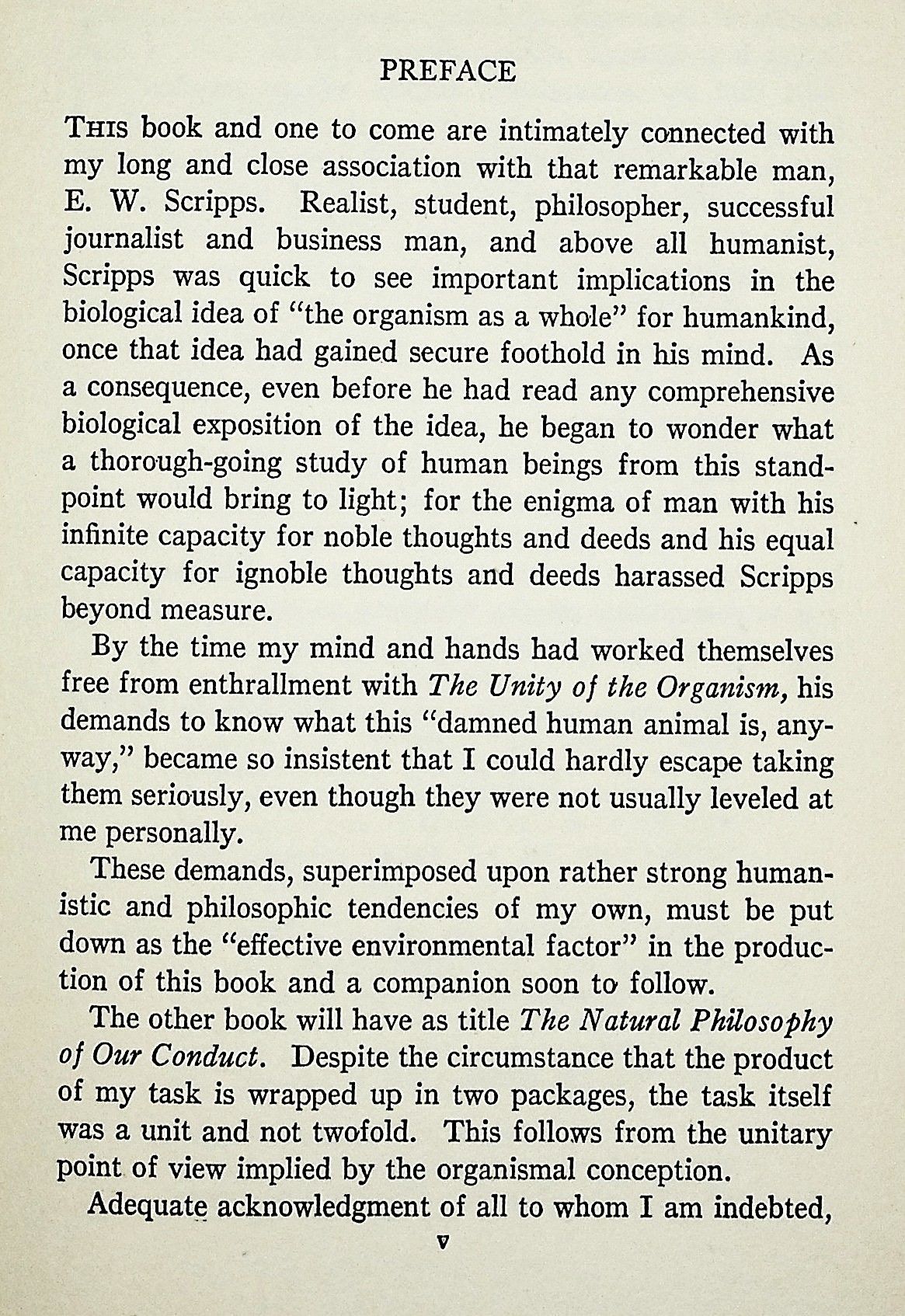
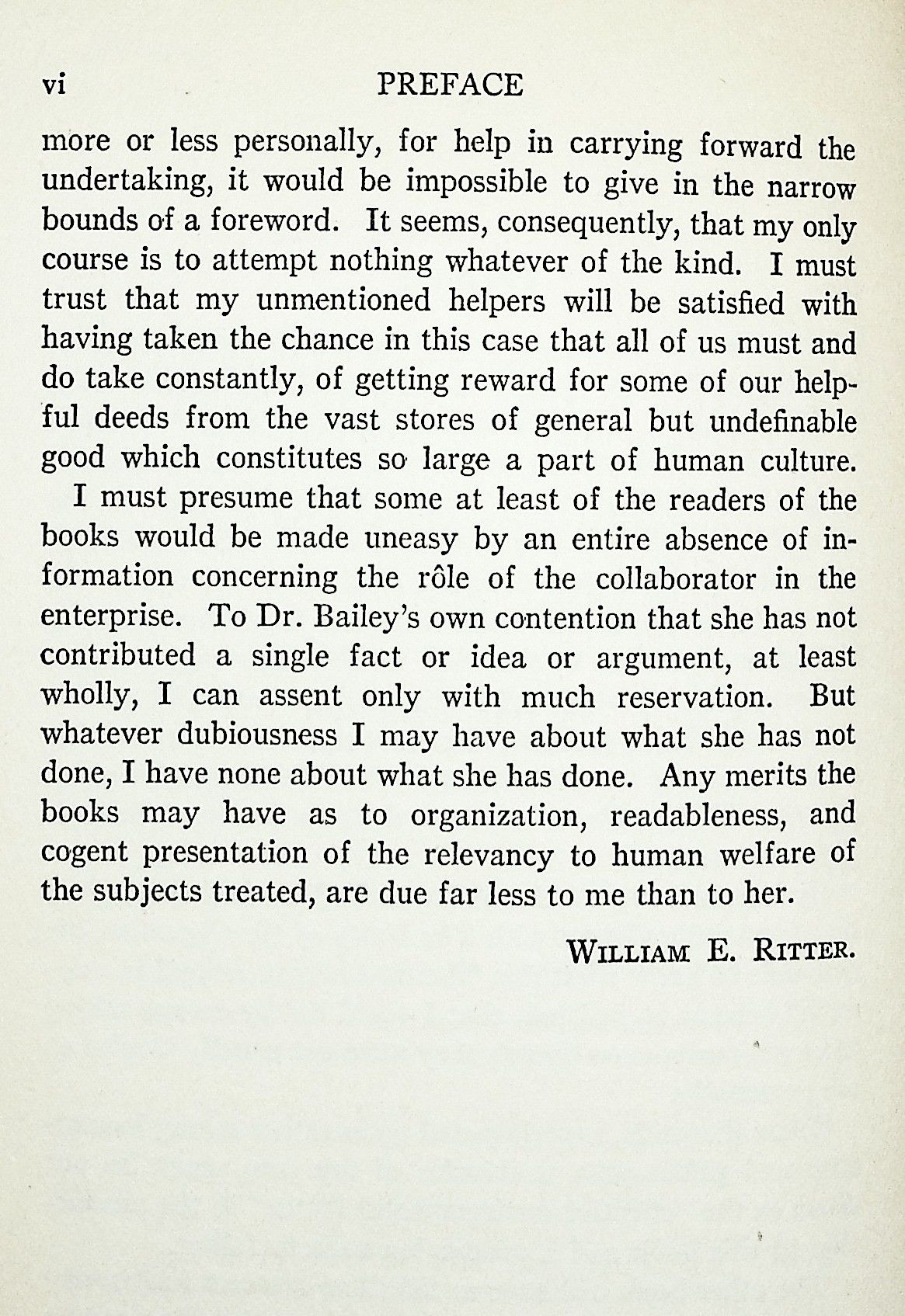
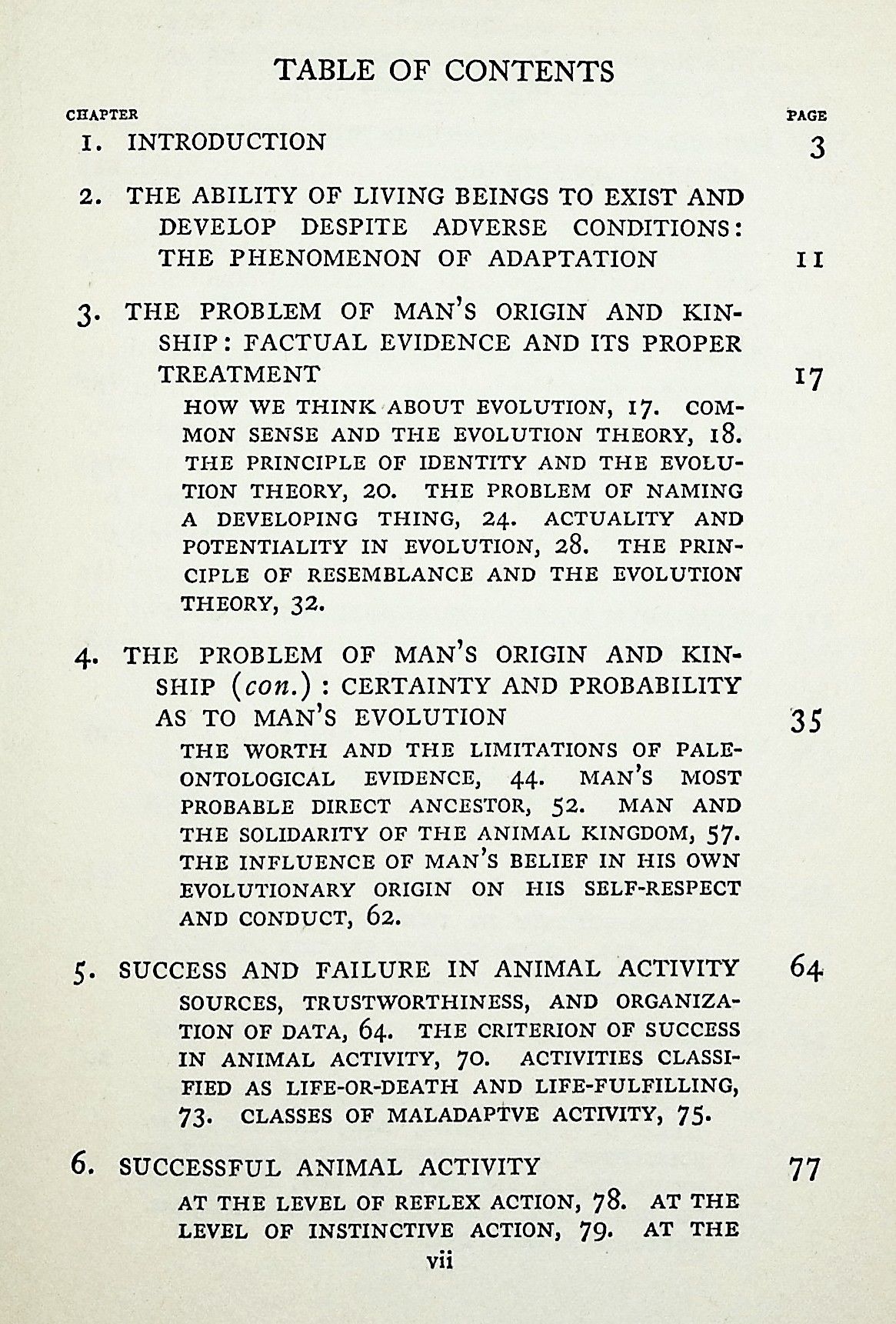
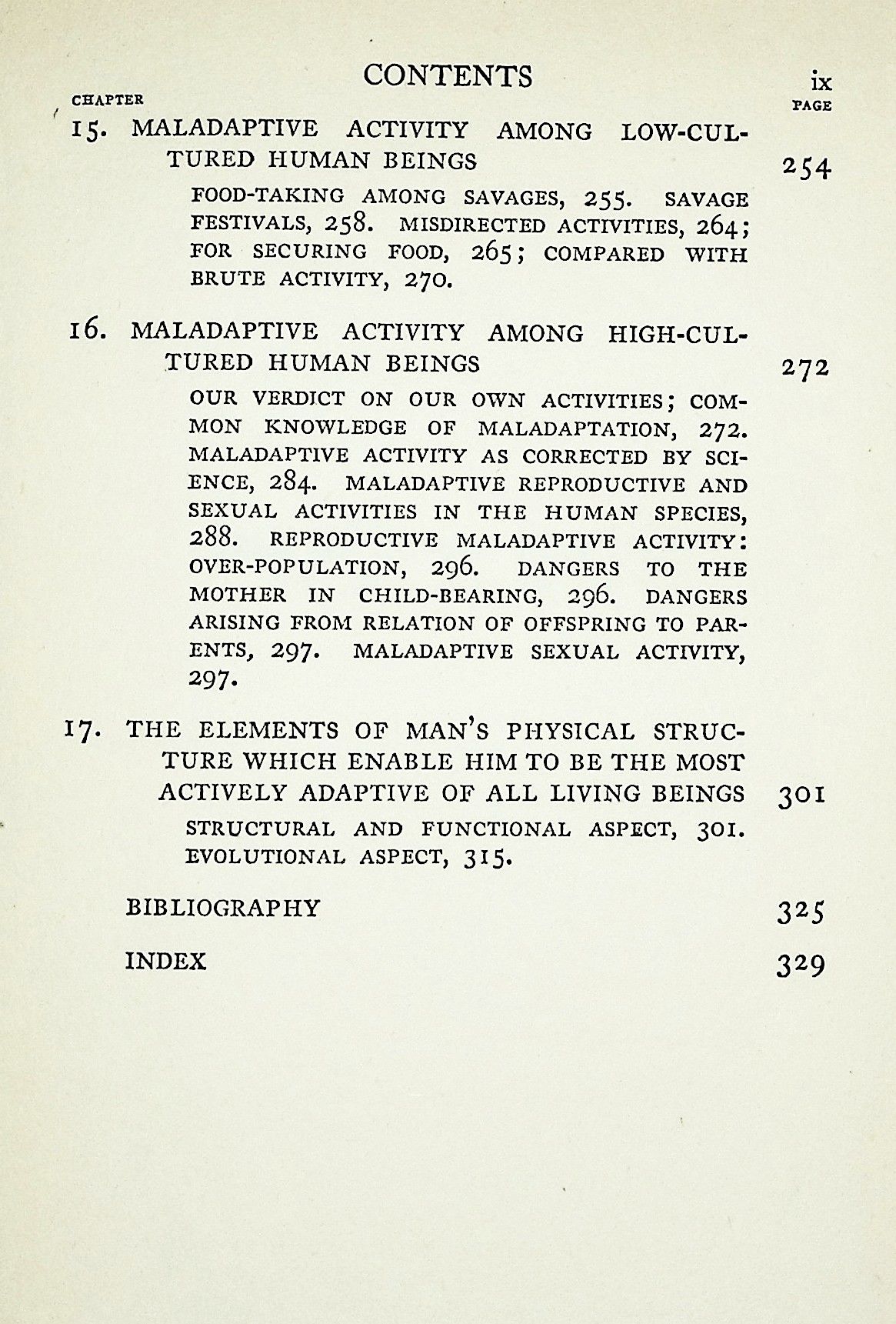
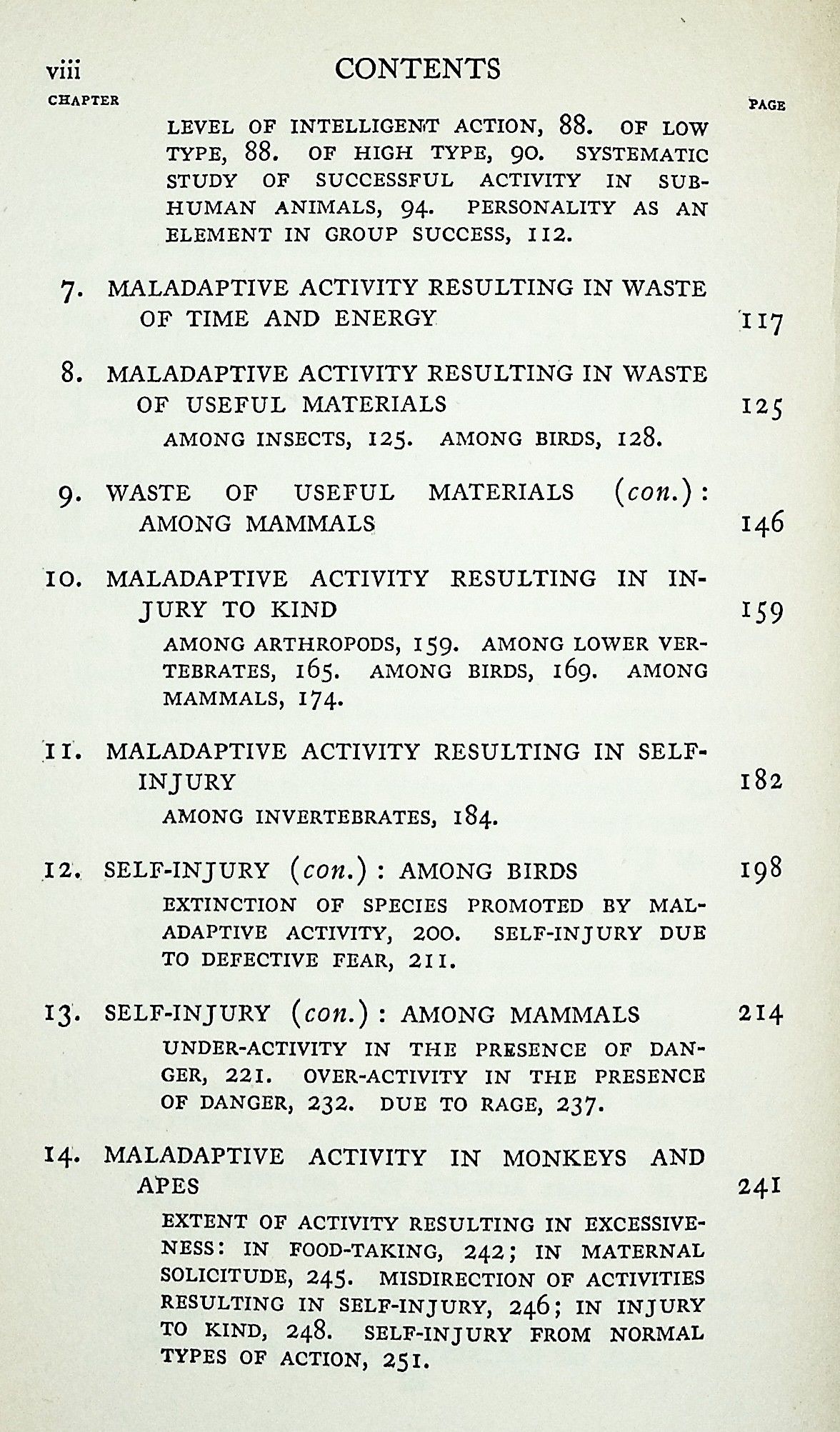
- SIGNED cloth binding
- New York: Harcourt, Brace & Co., 1927
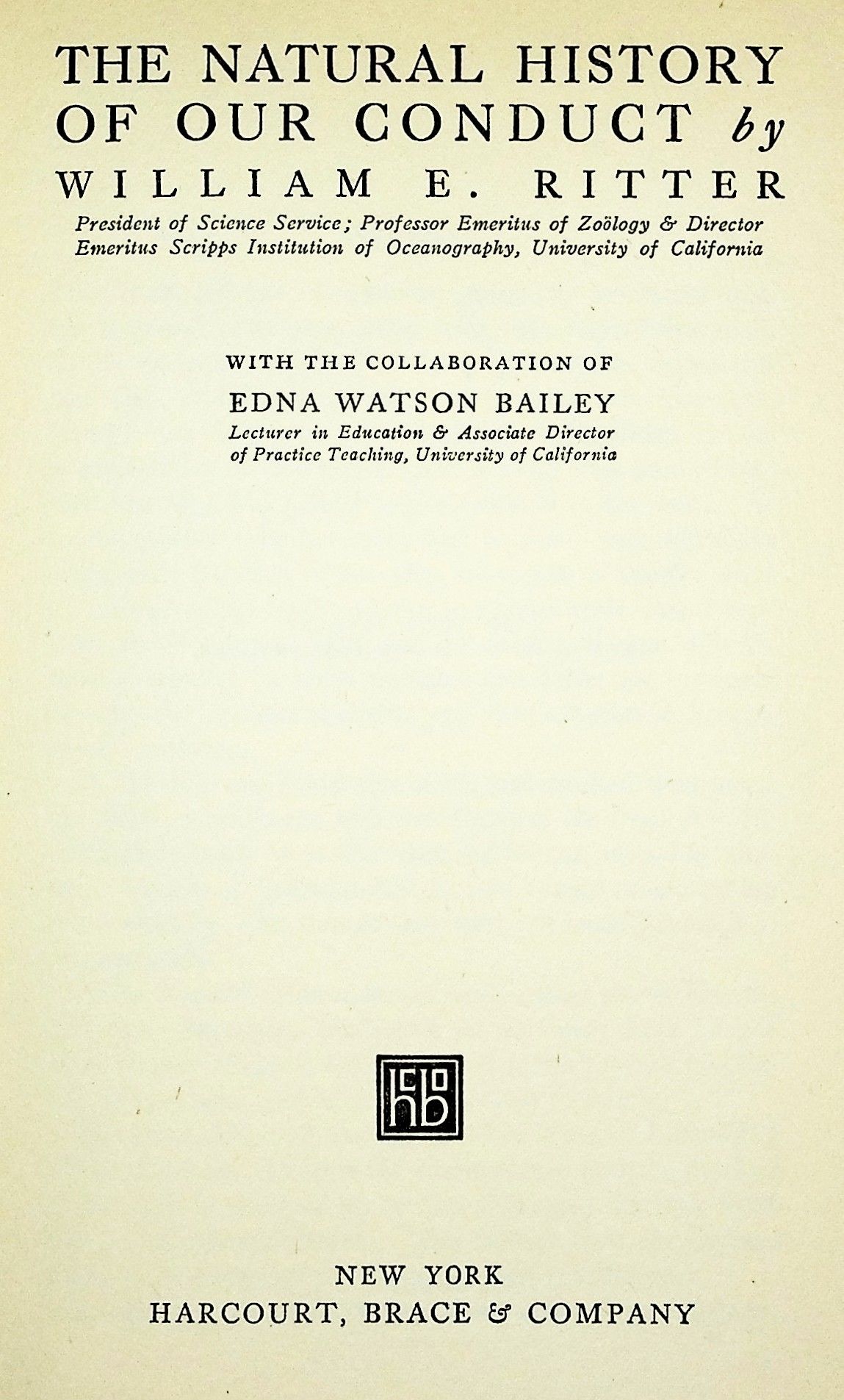
New York: Harcourt, Brace & Co., 1927. First edition. 1927
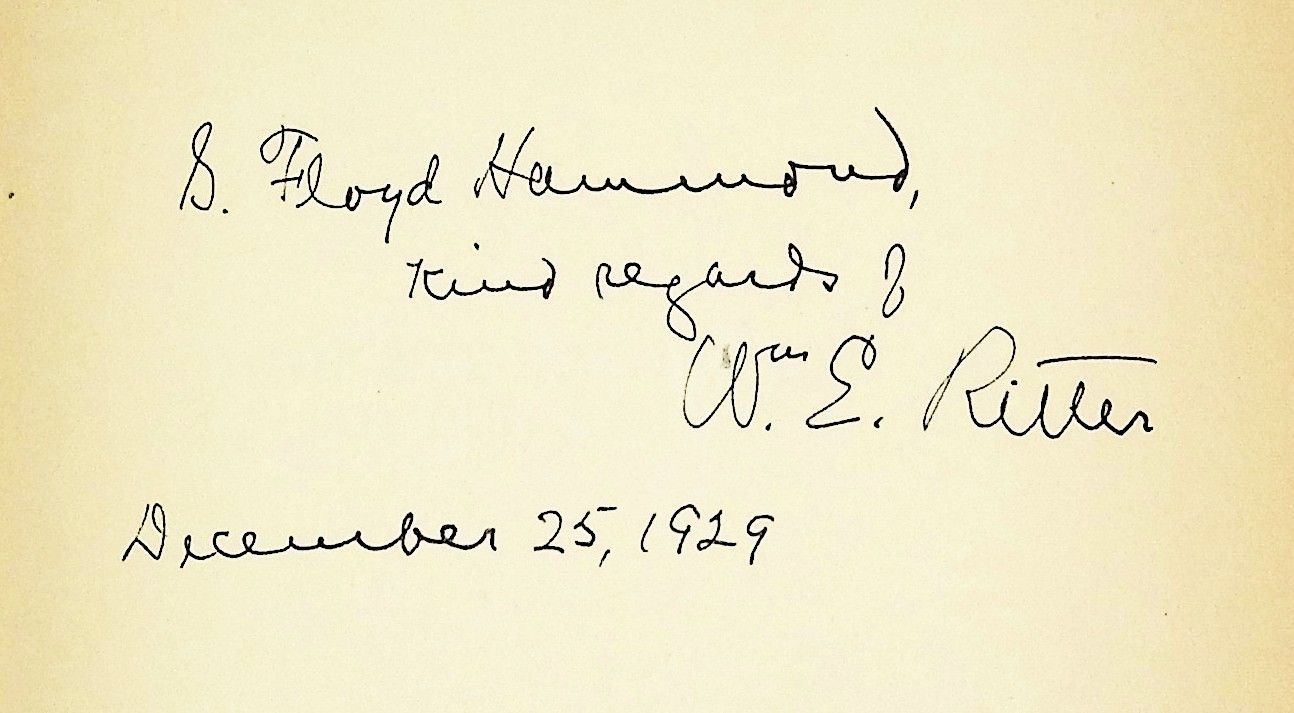
SIGNED PRESENTATION COPY WITH TLS OF "ORGANICIST" AMERICAN BIOLOGIST'S PIONEERING STUDY OF HUMAN BEHAVIOR.
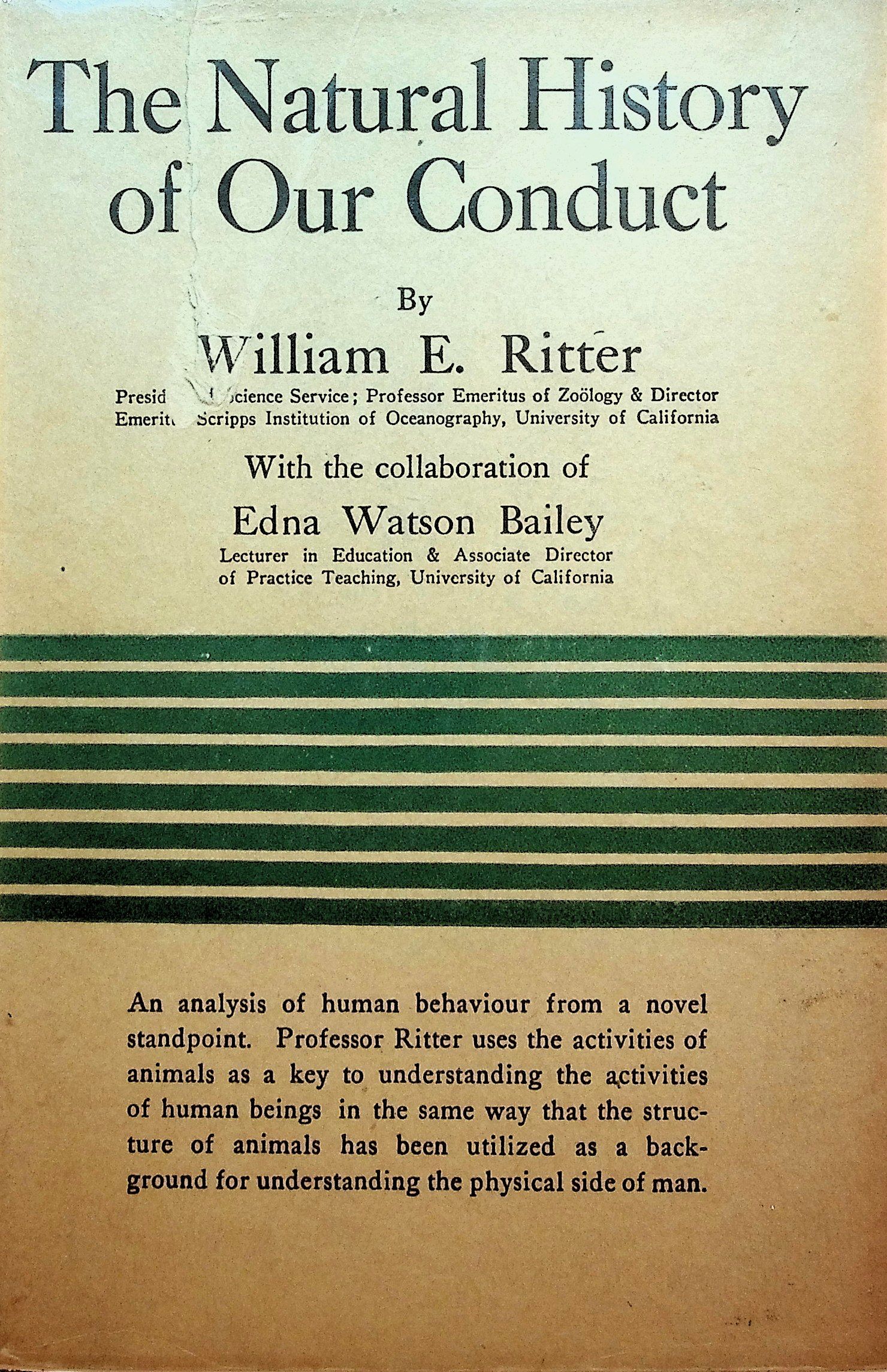
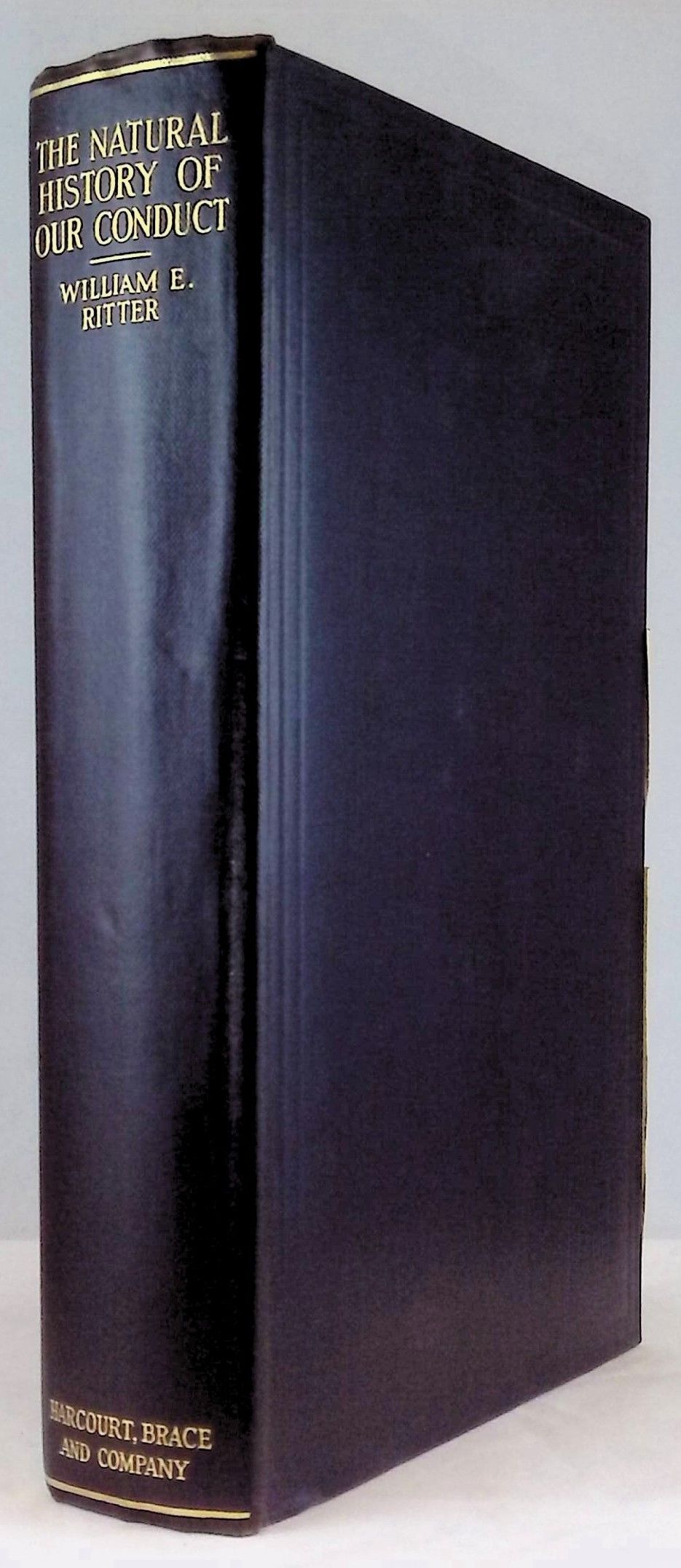
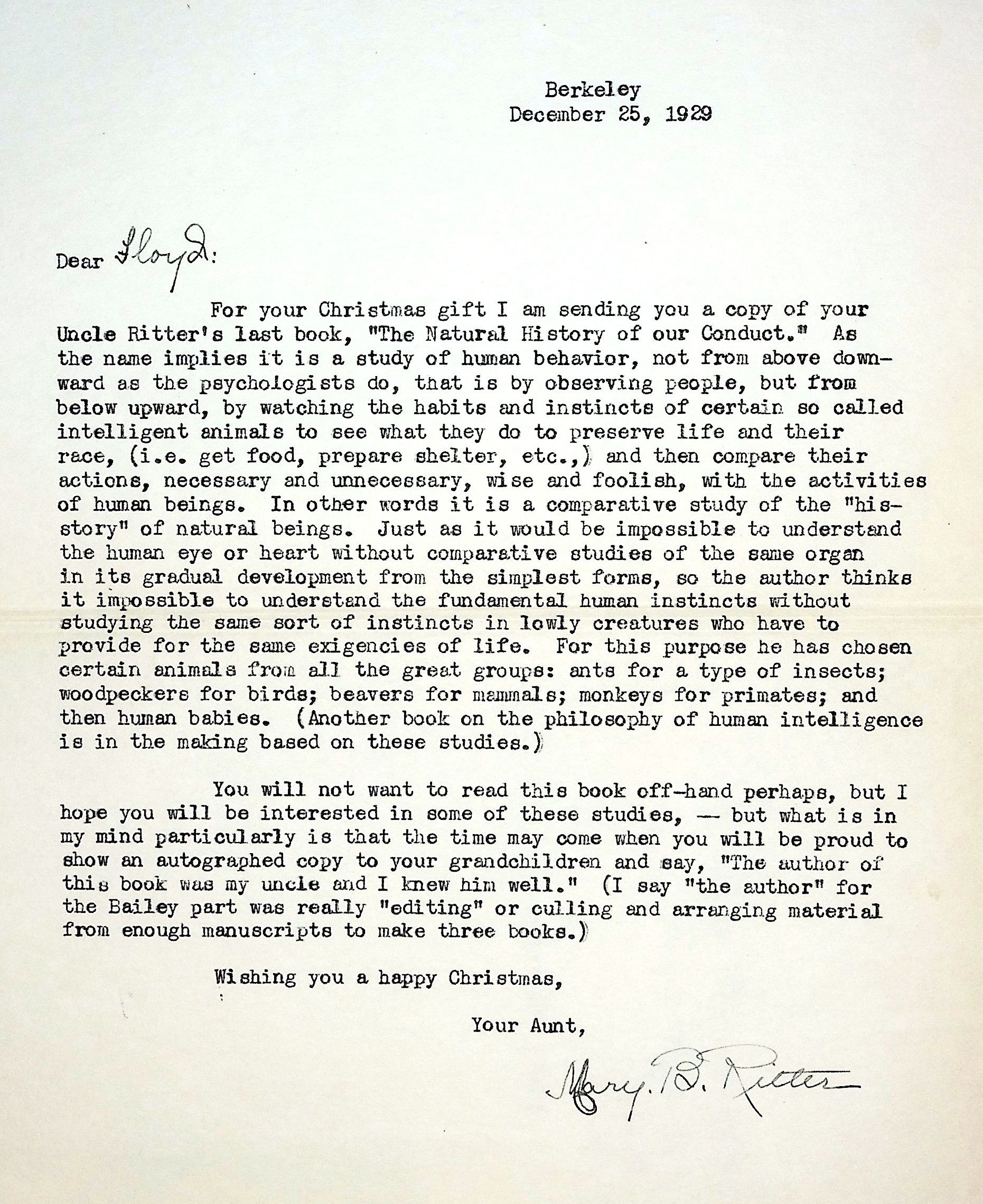
8 3/4 inches tall hardcover, brown cloth binding, blindstamped rulings and publisher's initials to front cover, gilt title to spine, inscribed on front free endpaper, "G. Floyd Hammond/ Kind regards of/ Wm E. Ritter/ December 25, 1929" i-ix, 339 pp. LAID IN, typed letter to Ritter's nephew from Mary B. Ritter explaining the content of the book, a Christmas gift. Very good in a good+ dust jacket with closed tear in top of cover, in protective mylar sleeve.
WILLIAM EMERSON RITTER (1856 – 1944) was an American biologist who founded the Marine Biological Association of San Diego (now Scripps Institution of Oceanography of UC San Diego). He was the first biologist to propose a theory of systems, and the originator of the term organicism for biological purposes. He spent a few summers at Marine Laboratories, and in 1891 was given a job teaching biology at the University of California in Berkeley. It was also in 1891 that he married a Berkeley physician, Mary Bennett. The couple spent part of their time on marine research, collecting blind goby fish in the ocean near Point Loma. In the fall of 1891, following the growing trend of science specialization, the science department was divided into four departments, and Ritter was appointed the chair of the new zoology department. He was familiar with the work being done at field research stations like the Marine Biological Laboratory at Woods Hole (1888), the Hopkins Marine Laboratory (1892), and the Puget Sound Biological Station, later known as the Friday Harbor Laboratories (1903). Ritter wanted to set up a permanent laboratory to study biology along the Pacific coast. In 1903, Ritter was introduced to newspaper magnate E.W. Scripps who, together with his half-sister, Ellen Browning Scripps, agreed to fund his work in San Diego. In early 1903, Ritter established a biological laboratory in the Hotel del Coronado's boathouse at Glorietta Bight. At the end of the year, the Marine Biological Association of San Diego was founded with Ritter as scientific director. In 1912, the Biological Association became a department within the University of California and was renamed The Scripps Institution for Biological Research, later the Scripps Institution of Oceanography. While the term "organicism" had been used before, Ritter was the first to use it for biological purposes and to create a theory of it. Organicism believed that life was an interrelationship between living things, living in a complex web. Today, organicism might be called systems theory. In 1918, Ritter wrote his organicist tome, The Unity of the Organism, and in 1927 he continued to explore human nature from a philosophically zoological point of view, in The Natural History of Our Conduct (offered here). This copy is inscribed to Ritter's nephew, G. Floyd Hammond, and as explained in the attached typed letter to Hammond by Ritter's wife Mary, a Christmas gift in 1929.
Details
Title
SIGNED. The Natural History of Our Conduct
Author
Ritter, William E. and Bailey, Edna Watson
Binding
cloth binding
Condition
Unknown
Publisher
Harcourt, Brace & Co.: New York
Date
1927
Edition
First edition