

William James and Phenomenology: A Study of "The Principles of Psychology
- Hardcover
- Bloomington, IN: Indiana University Press, 1968
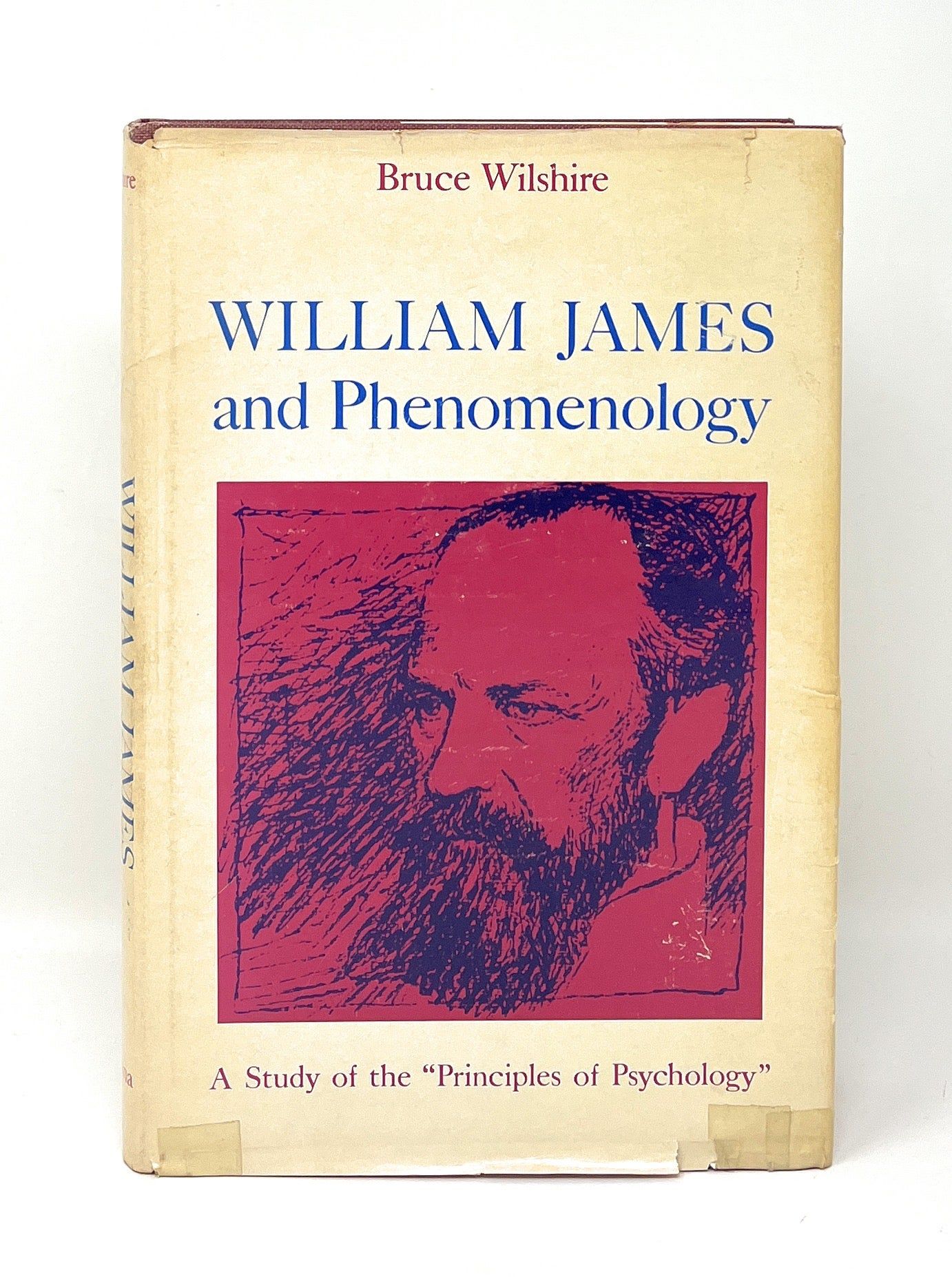
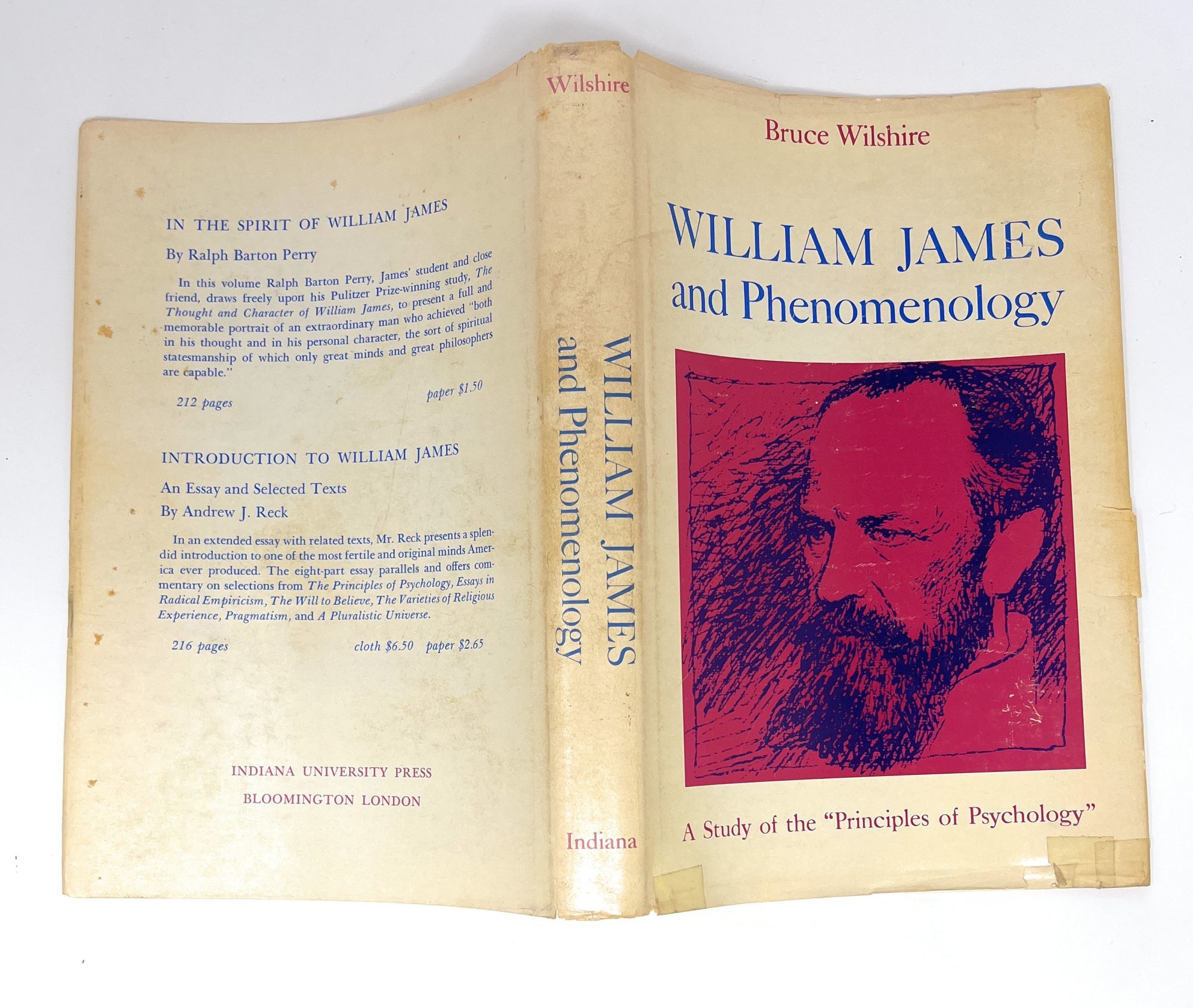
Bloomington, IN: Indiana University Press, 1968. Hardcover. Good +/Good. Hardcover. 9 1/2" X 6 1/2". xi, 251pp. This book is from the collection of Anders Ericsson, renowned Swedish Psychologist. Toning, creasing, and shelf wear to covers, corners, and edges of price-clipped dust jacket. There are several open and closed tears along the edges of jacket. Some are tape repaired. Toning, creasing, and chipping to jacket spine. Multiple tears to inside flaps. Toning to jacket interior. Bound in maroon cloth over boards with spine lettered in gilt. Mild rubbing to corners of boards. Gentle bumps to head and tail of spine. Dust-spotting to text block. Few instances of upper page creasing due to earmarking. A few instances of inked underlining and marks to margins of pages. Underlining does not obscure text. Binding is sound.
ABOUT THIS BOOK:
Wilshire argues that James, while not explicitly a phenomenologist, developed insights that foreshadowed the method and concerns of phenomenology, particularly concerning the nature of thought and its relation to the world. Wilshire contends that James's work in psychology, especially his "Principles of Psychology," reveals a move from a semi-behaviorist approach to a more phenomenological understanding of experience.
Wilshire's argument focuses on how James's initial attempt to correlate thoughts with brain states led him to recognize the importance of understanding the nature of thoughts themselves, which in turn pushed him towards a phenomenological analysis of thought's intentionality. James realized that thought cannot be understood in isolation from its object and that experience is structured by and for consciousness. This realization, Wilshire argues, challenged the mind-body dualism that James initially embraced and laid the groundwork for a more intentional, worldly understanding of thought.
Wilshire suggests that James's work anticipates key aspects of phenomenology, such as the primacy of perception, the intentional unity of experience, and the importance of understanding consciousness in terms of its lived experience. While James's work was not explicitly phenomenological, Wilshire argues that it provides a valuable historical link to the development of the phenomenological method. (Publisher).
ABOUT THIS BOOK:
Wilshire argues that James, while not explicitly a phenomenologist, developed insights that foreshadowed the method and concerns of phenomenology, particularly concerning the nature of thought and its relation to the world. Wilshire contends that James's work in psychology, especially his "Principles of Psychology," reveals a move from a semi-behaviorist approach to a more phenomenological understanding of experience.
Wilshire's argument focuses on how James's initial attempt to correlate thoughts with brain states led him to recognize the importance of understanding the nature of thoughts themselves, which in turn pushed him towards a phenomenological analysis of thought's intentionality. James realized that thought cannot be understood in isolation from its object and that experience is structured by and for consciousness. This realization, Wilshire argues, challenged the mind-body dualism that James initially embraced and laid the groundwork for a more intentional, worldly understanding of thought.
Wilshire suggests that James's work anticipates key aspects of phenomenology, such as the primacy of perception, the intentional unity of experience, and the importance of understanding consciousness in terms of its lived experience. While James's work was not explicitly phenomenological, Wilshire argues that it provides a valuable historical link to the development of the phenomenological method. (Publisher).
Details
Title
William James and Phenomenology: A Study of "The Principles of Psychology
Author
Wilshire, Bruce
Binding
Hardcover
Condition
Good
Publisher
Indiana University Press: Bloomington, IN
Date
1968