

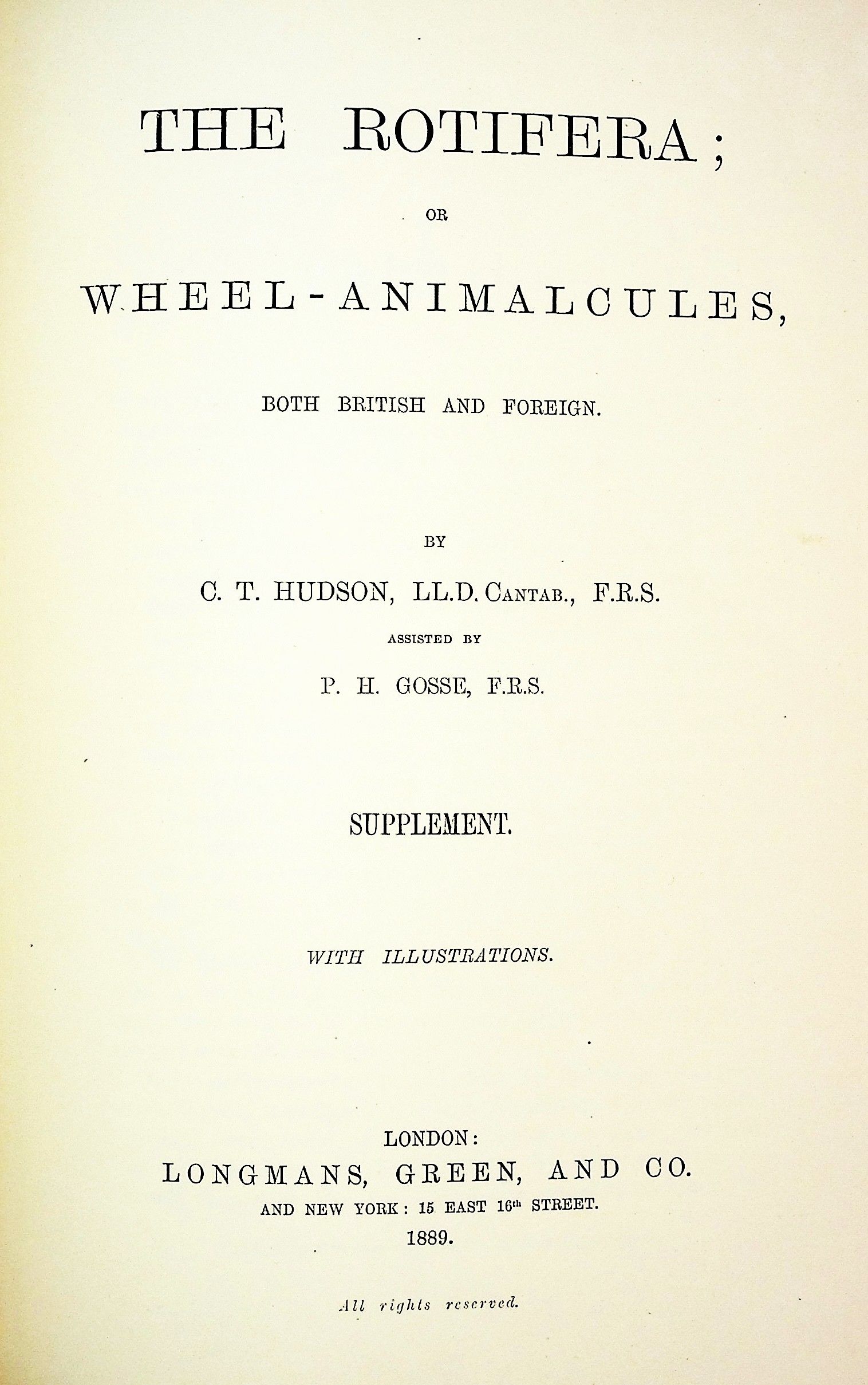
The Rotifera; or Wheel-Animalcules, both British and Foreign in Two Volumes with Supplement
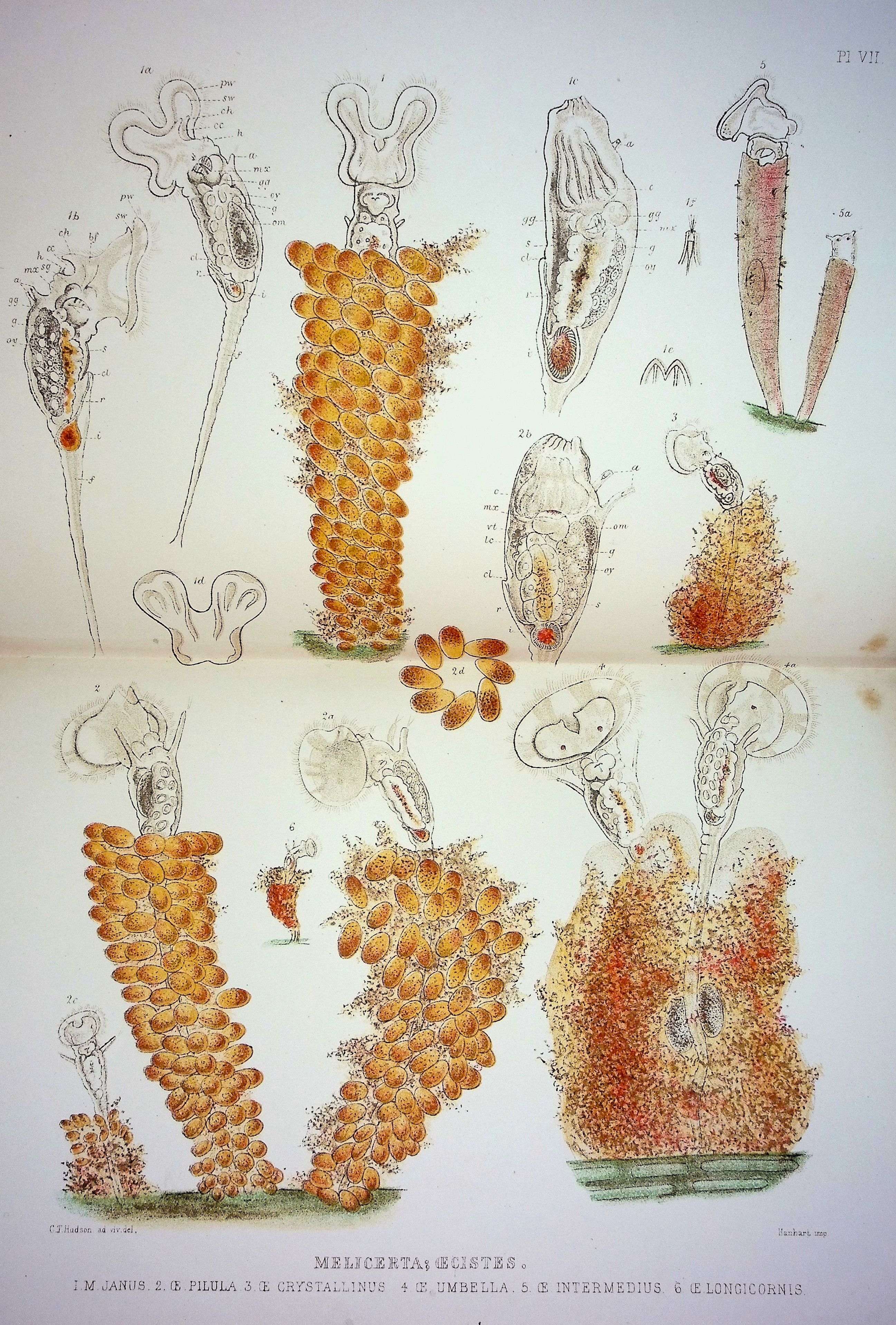
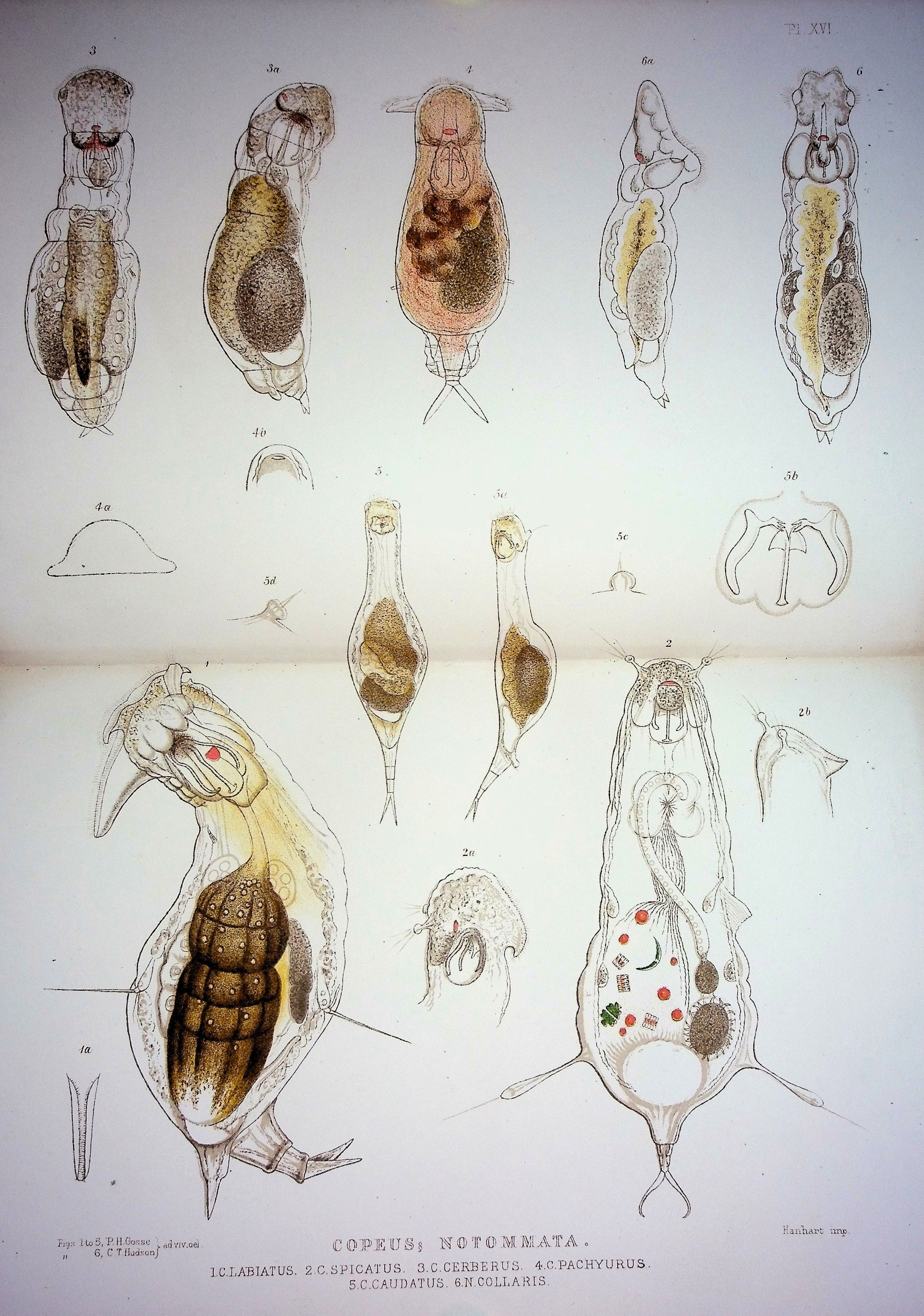
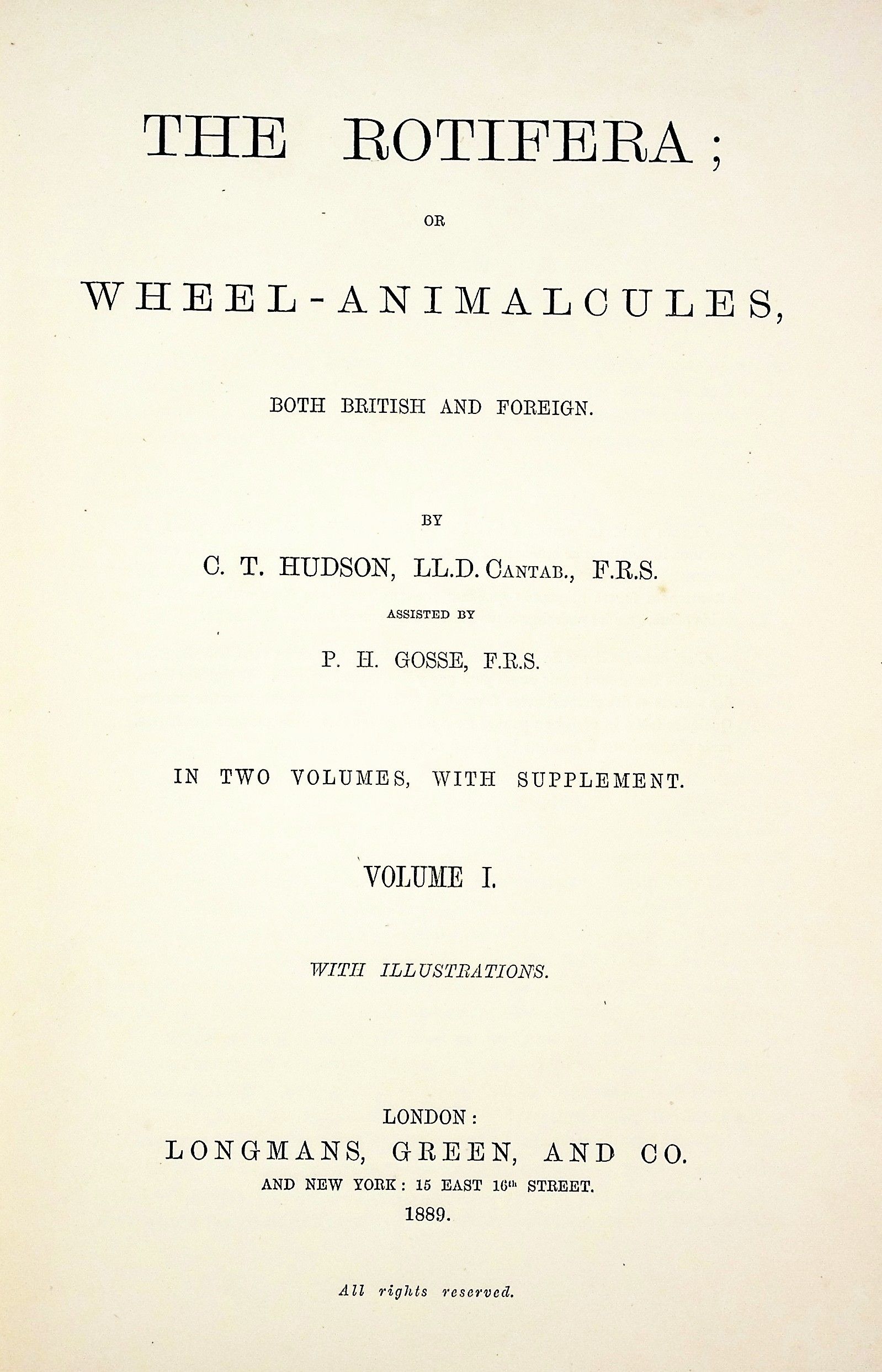
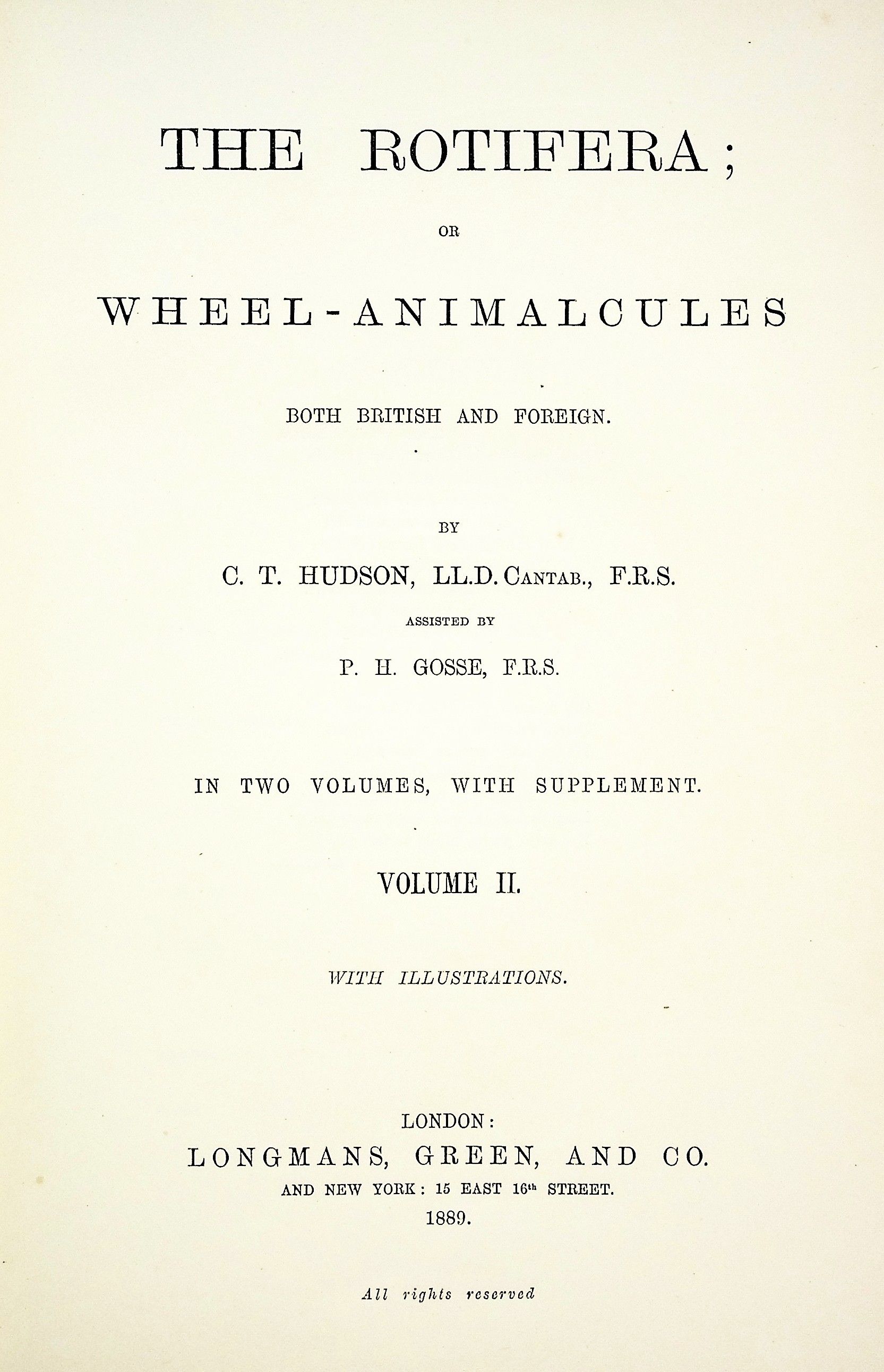
- cloth binding
- London: Longmans, Green and Co., 1889
London: Longmans, Green and Co., 1889. Second edition (expanded).
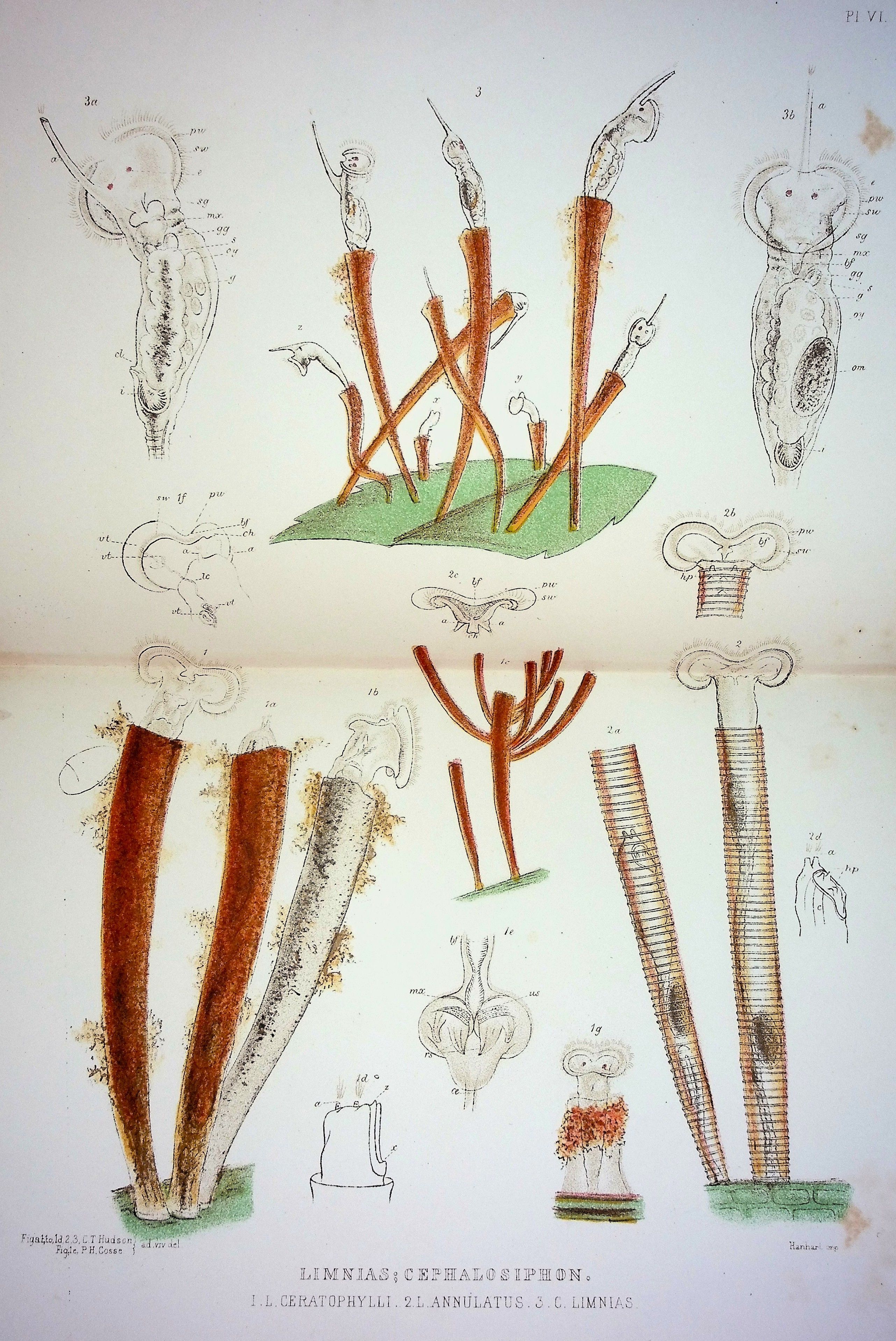
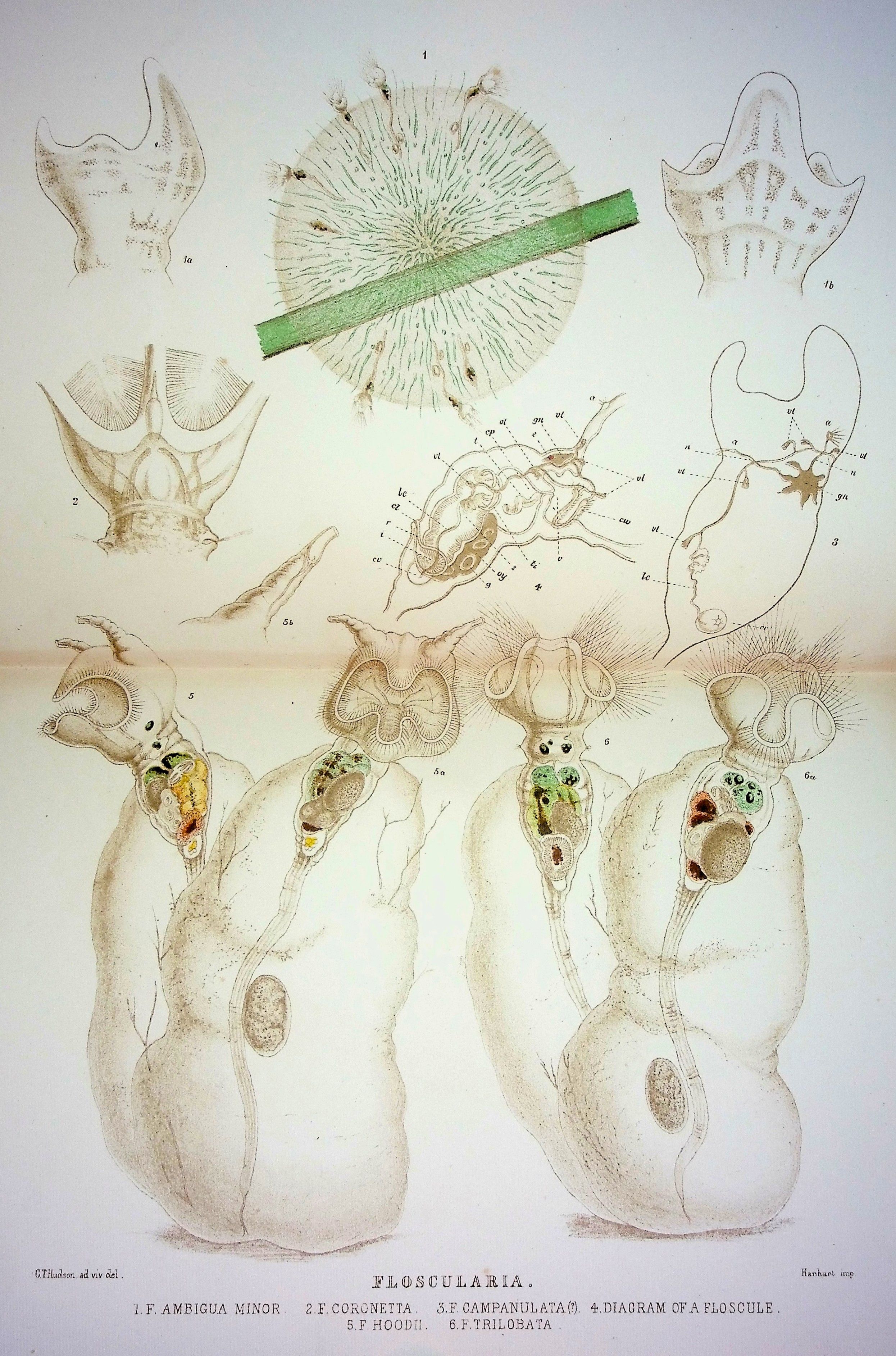
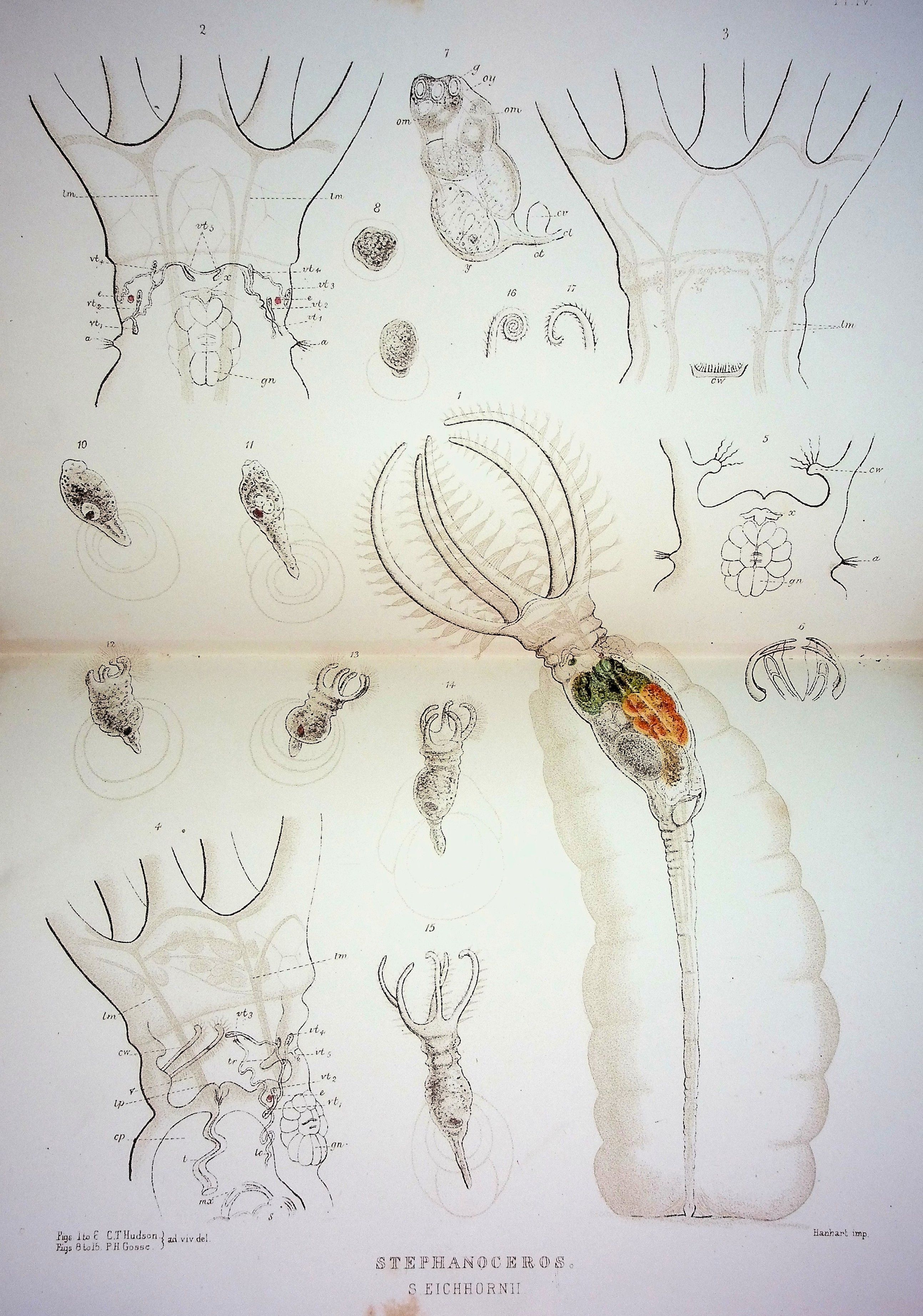
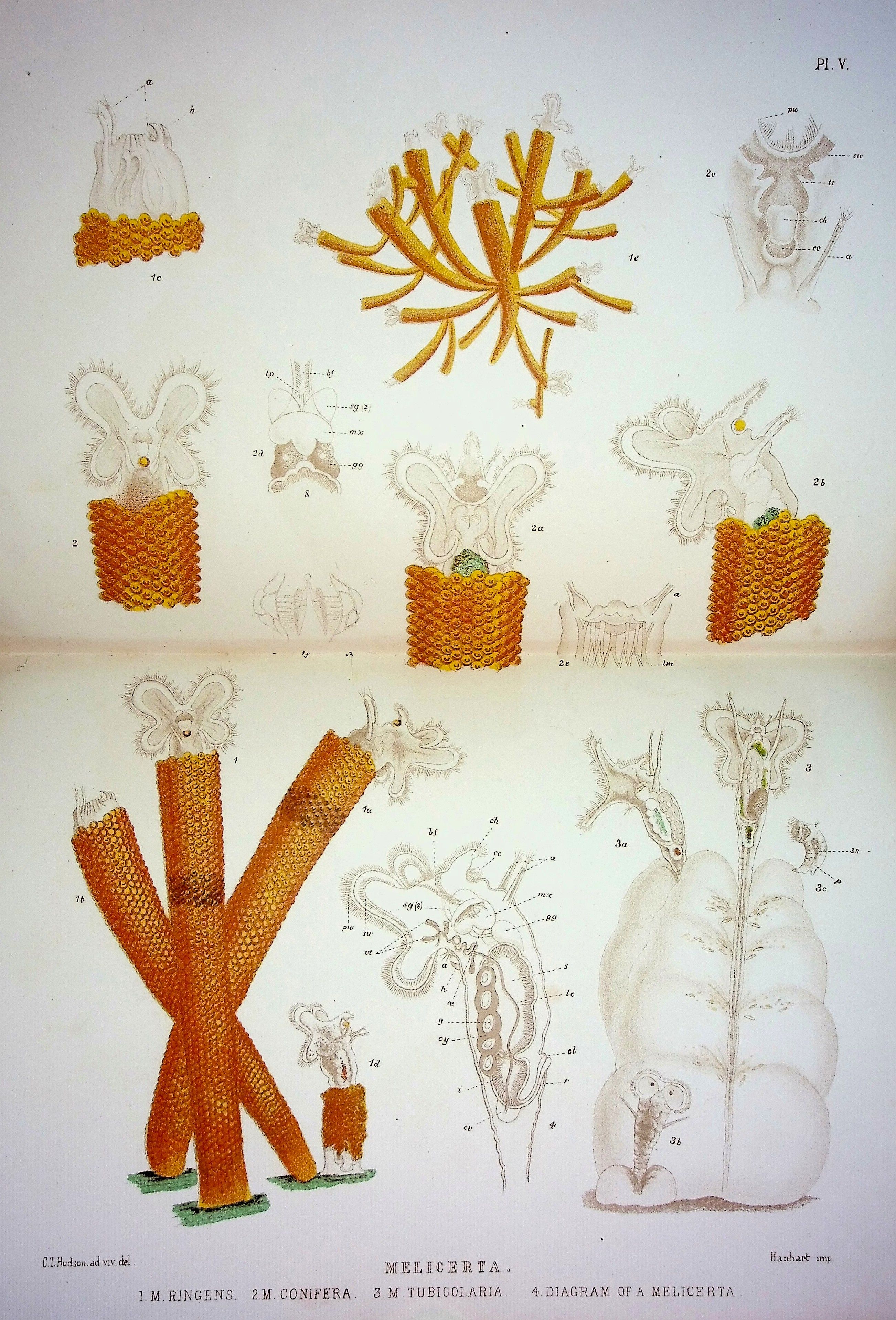
SCARCE LANDMARK ATLAS OF MICROSCOPIC ROTIFERA WITH COLOR PLATES OF "EXTREME MINUTENESS, ACCURACY, AND BEAUTY"
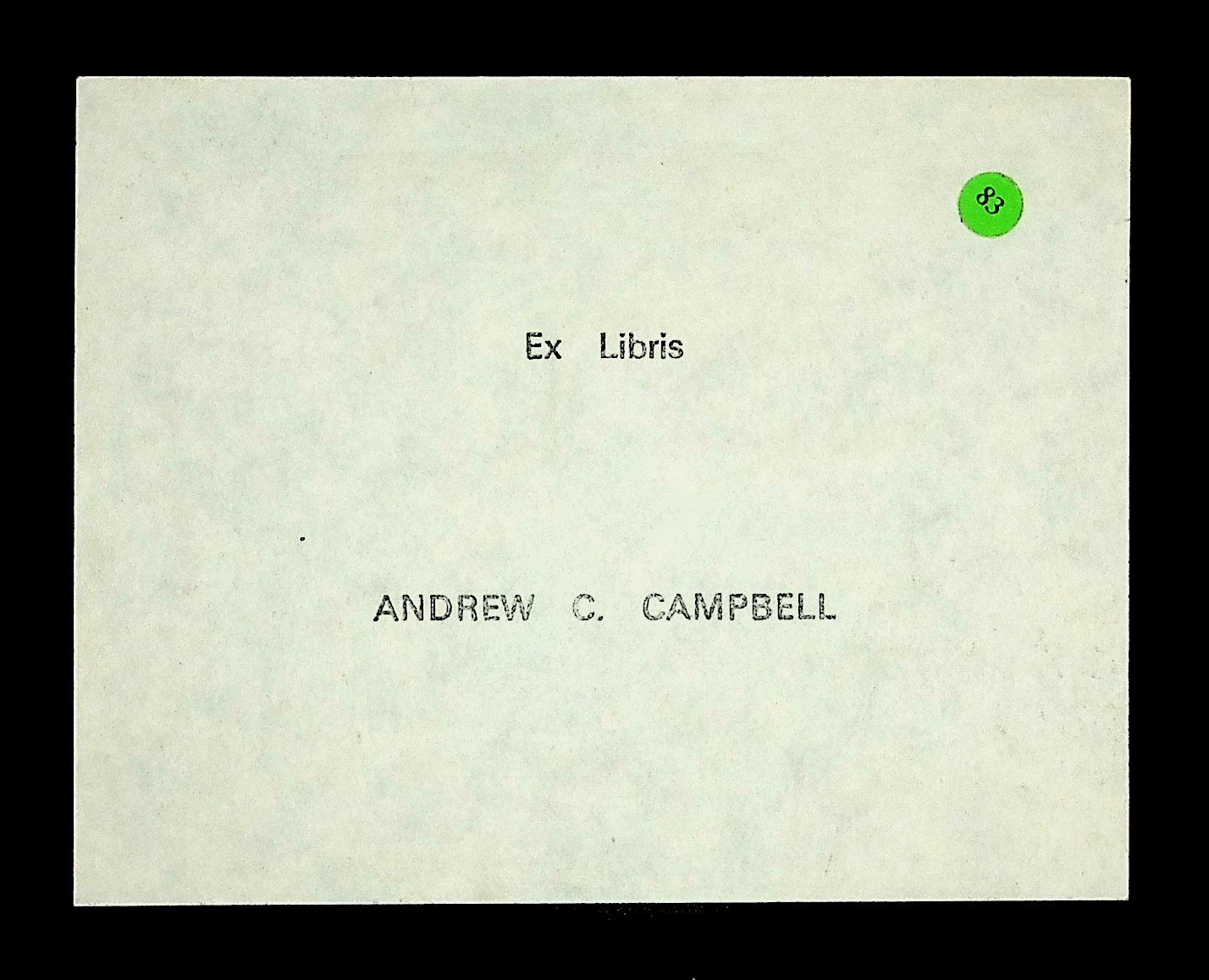
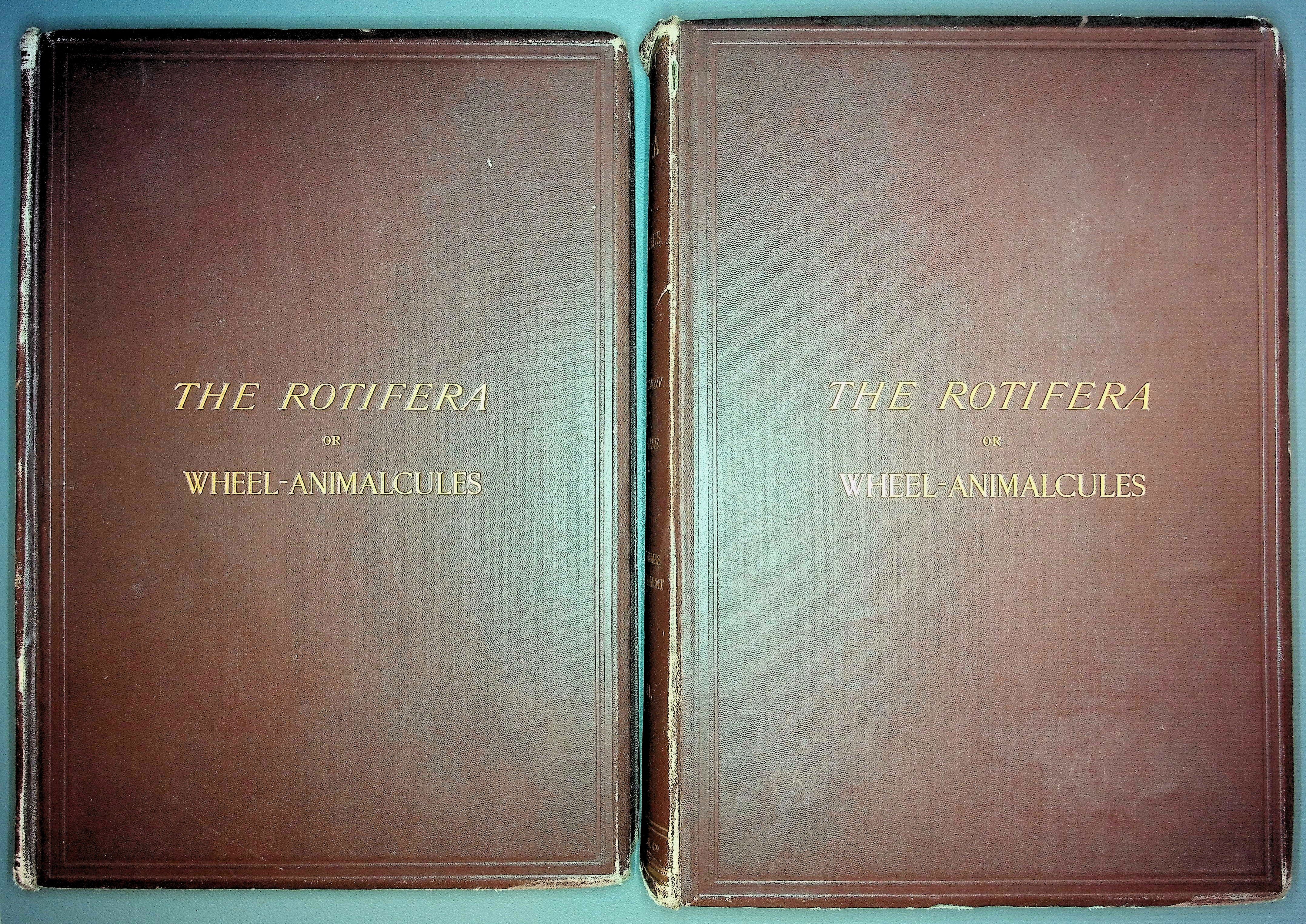
Two hardcover volumes11 1/4 inches tall, brown cloth binding, covers with blindstamped rulings and beveled edges, gilt title to covers and spines, bookplate of Andrew C. Campbell to front paste-down, Vol. I, i-vi, 128 pp, line drawing plates A, B; double-page chromolithographic plates with facing descriptive text, I-XV; Vol. II, [i-vi], 144 pp, double-page chromolithographic plates XVI-XXX; Supplement (bound in Vol II), i-vi, [1], 64 pp, double-page line drawing plates XXXI-XXXIV, 2 additional title pages. Wear to cover corners, spine ends frayed, gilt titles bright; Vol. I front hinge starting, light foxing to verso last 2 plates; Vol. II light foxing verso last plate. Very good with tight binding and bright color lithographs; an excellent copy of a landmark atlas in the history of study of a fascinating and widely distributed phylum of microscopic and near-microscopic animals.
The Rotifera were first described by Rev. John Harris in 1696, and other forms were described by Antonie van Leeuwenhoek in 1703. They are common in freshwater environments throughout the world with a few saltwater species. Rotifers are an important part of the freshwater zooplankton, being a major food source and with many species also contributing to the decomposition of soil organic matter. In The Rotifera offered here, 400 British and foreign species were included; by 1912, the total reached 607 species. About 2,200 species of rotifers have now been described.
CHARLES THOMAS HUDSON (1828 ? 1903) was an English naturalist, particularly interested in microscopical research, and in the microscopic animal rotifer. In 1848 he went to St John's College, Cambridge, where he graduated in 1852, proceeding M.A. in 1855 and LL.D. in 1866. After leaving Cambridge he became on 25 July 1852 second master of Bristol Grammar School, and on 30 March 1855 he was appointed headmaster. During his later years he often gave lectures, chiefly at public schools, on natural history, which he illustrated with colored transparencies of his own construction. Hudson devoted his leisure to microscopical research, and in particular to the study of the Rotifera. His earliest investigations on the microscopic animals dated to around 1854. He was elected fellow of the Royal Microscopical Society in 1872; he was president of the society from 1888 to 1890, and an honorary fellow from 1901 until his death. With Philip Henry Gosse he published in 1886 and 1889 the three-volume The Rotifera: or Wheel-Animalcules (offered here). In recognition of this, he was elected Fellow of the Royal Society in 1889. Lord Avebury (Pleasures of Life, ch. 9) quotes the charming introduction of this work as showing that the true naturalist was no mere dry collector. Hudson's natural gift for drawing found expression in the illustrations of The Rotifera.
PHILIP HENRY GOSSE (1810 ? 1888) was an English naturalist who invented the institutional aquarium. In 1827 Gosse became a clerk in a seal-fishery office at Carbonear, Newfoundland, where he spent much of his free time investigating natural history. After an unsuccessful interlude of farming in Canada he traveled in the United States, taught for some time in Alabama, and returned to England in 1839. While staying at St. Mary Church on the Devon coast (1852), he became interested in local marine life. Gosse created and stocked the world's first public marine aquarium at London Zoo in 1853, and coined the term "aquarium". Over thirty years later, Gosse co-authored The Rotifera, considered at the time "the most complete and exhaustive history of the Rotifera in any language", with drawings of "extreme minuteness, accuracy, and beauty" (Wertheimer, Philip Henry Gosse: A Biography, p.xix).
PROVENANCE: ANDREW C. CAMPBELL, Senior Lecturer, Queen Mary University of London, is an expert in marine invertebrate biology, and author of many research papers as well as books for the lay public, including Encyclopedia of Underwater Life., Oxford University Press.
Details
Title
The Rotifera; or Wheel-Animalcules, both British and Foreign in Two Volumes with Supplement
Author
Hudson, C. T. and Gosse, P.H.
Binding
cloth binding
Condition
Unknown
Publisher
Longmans, Green and Co.: London
Date
1889
Edition
Second edition (expanded)