

Bleak House
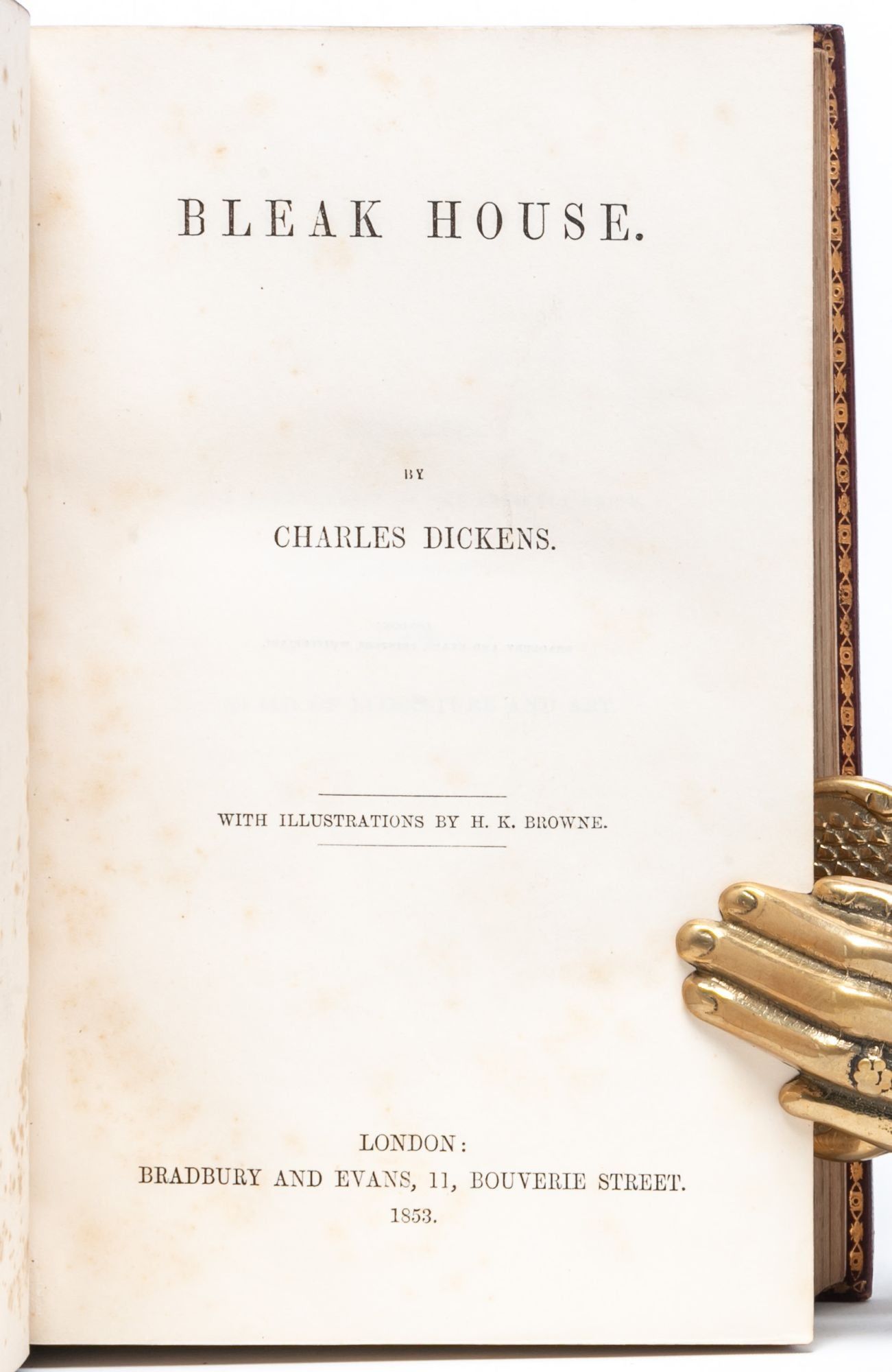
- London: Bradbury & Evans, 1853
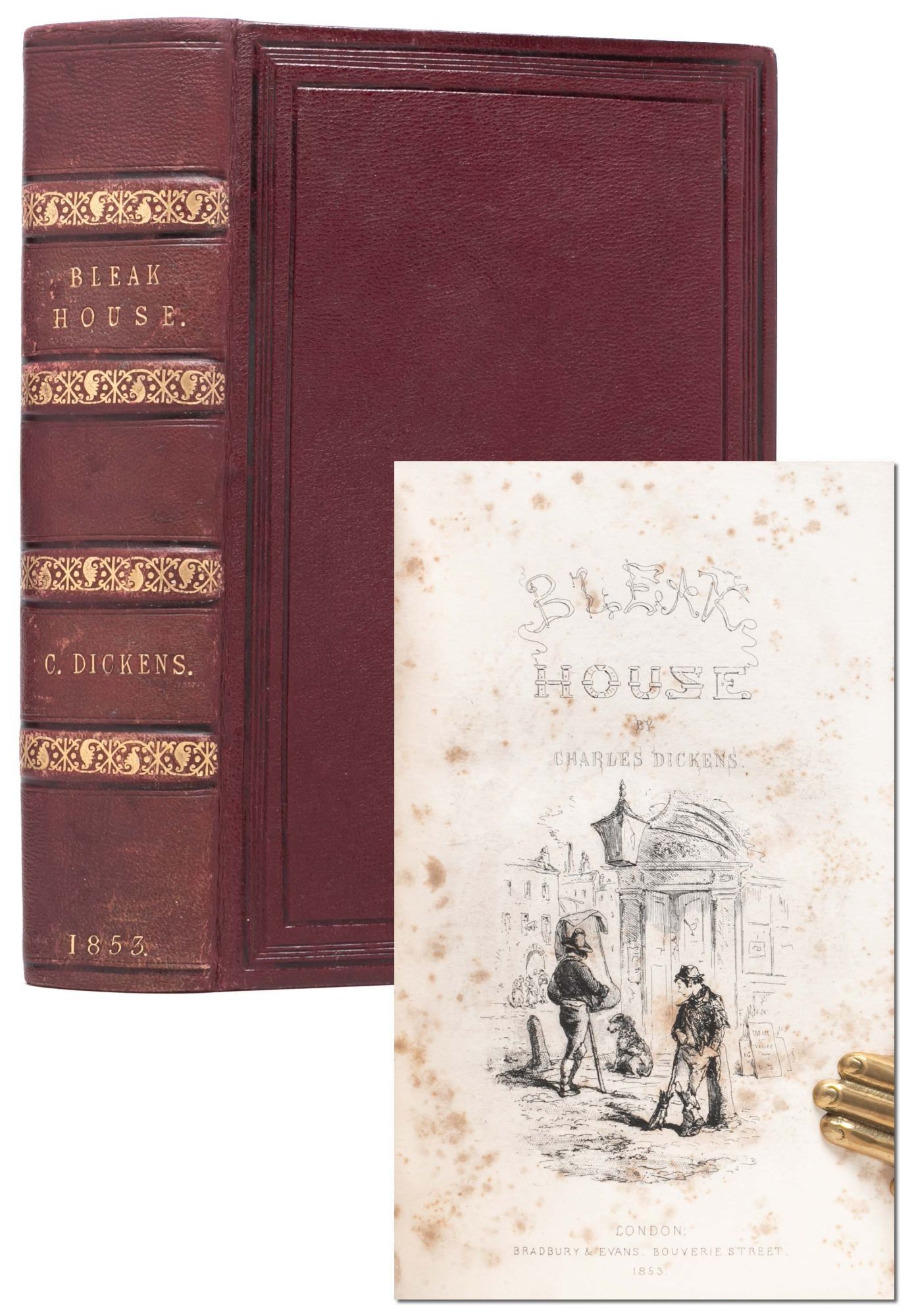
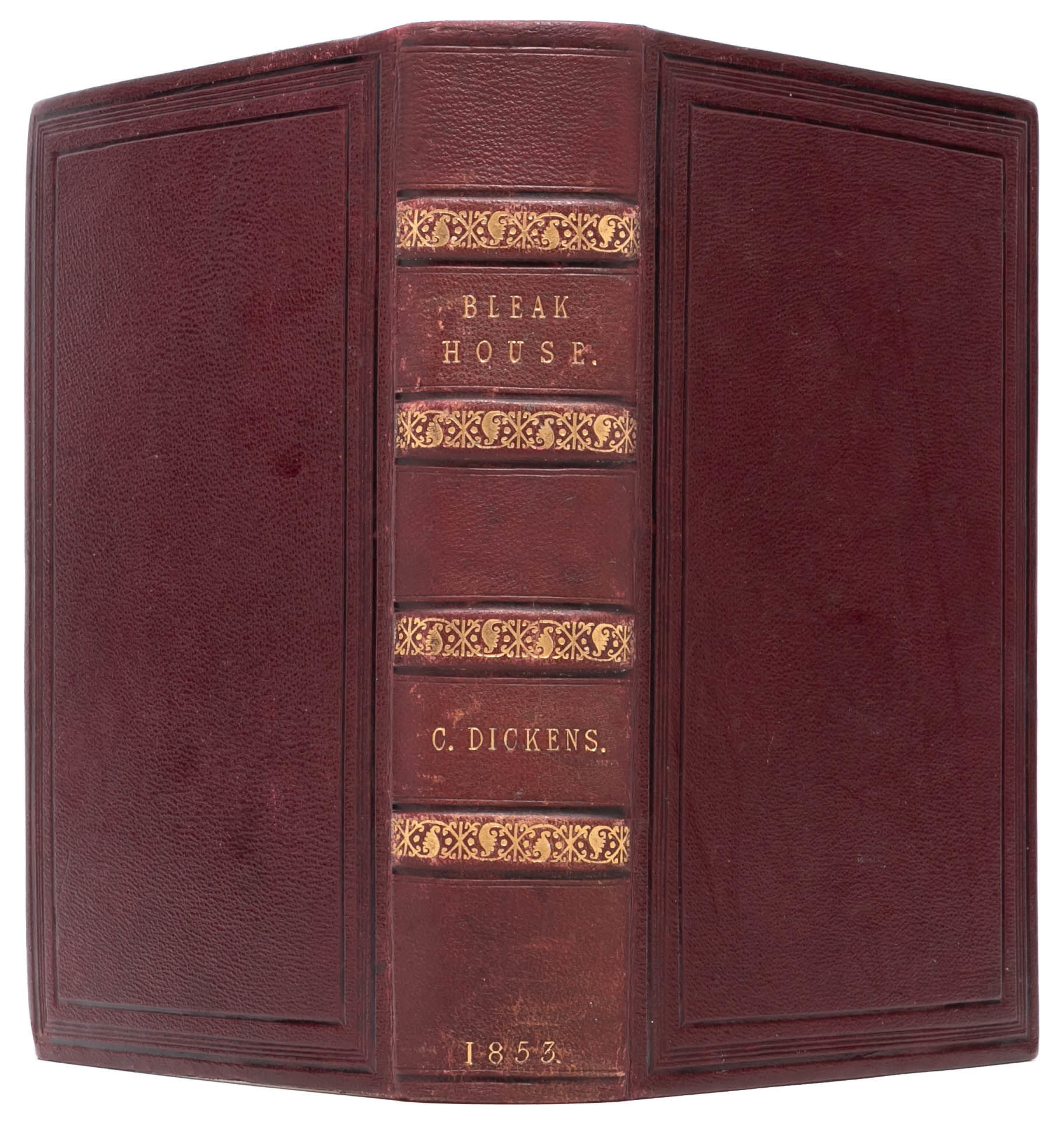
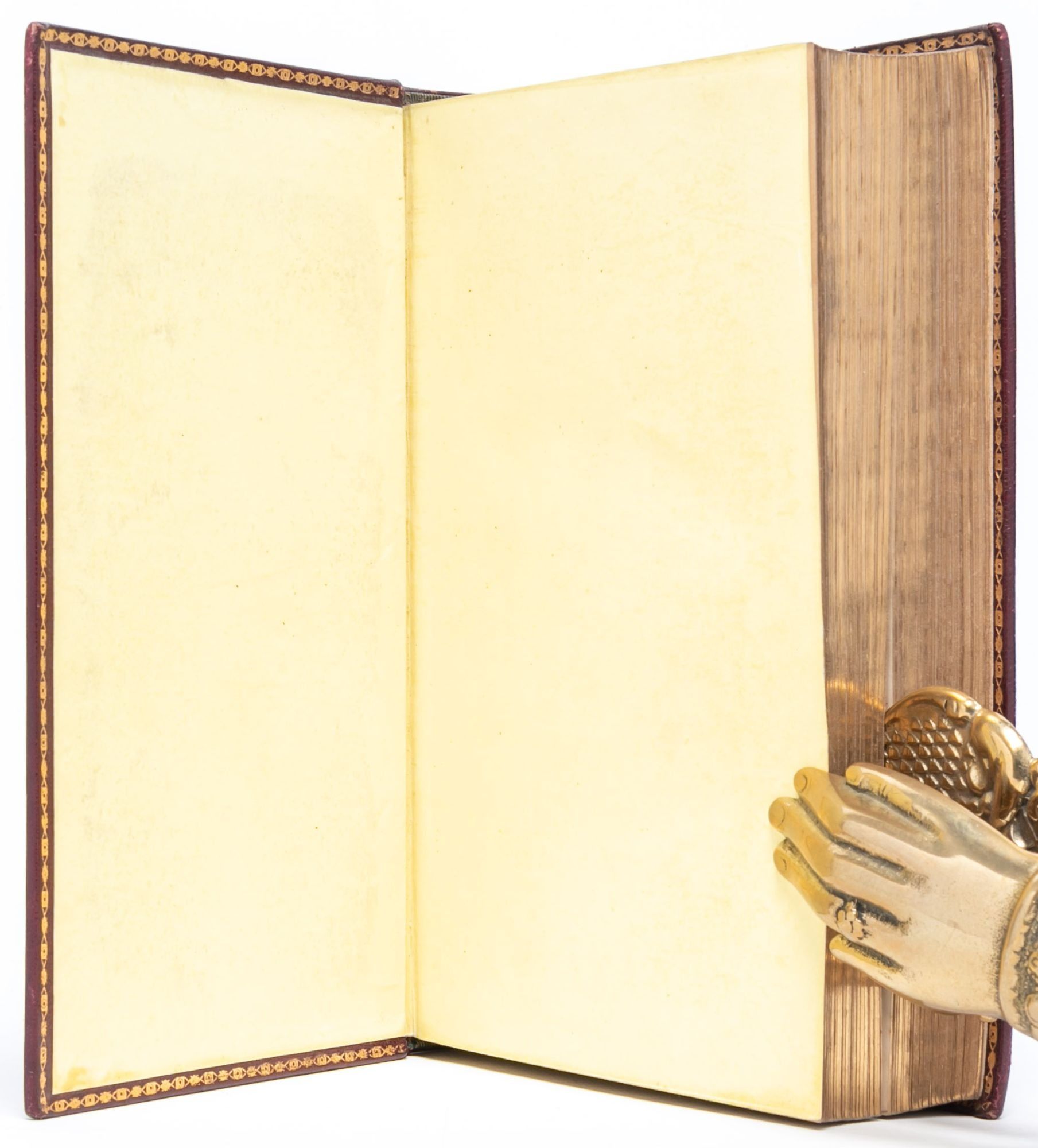
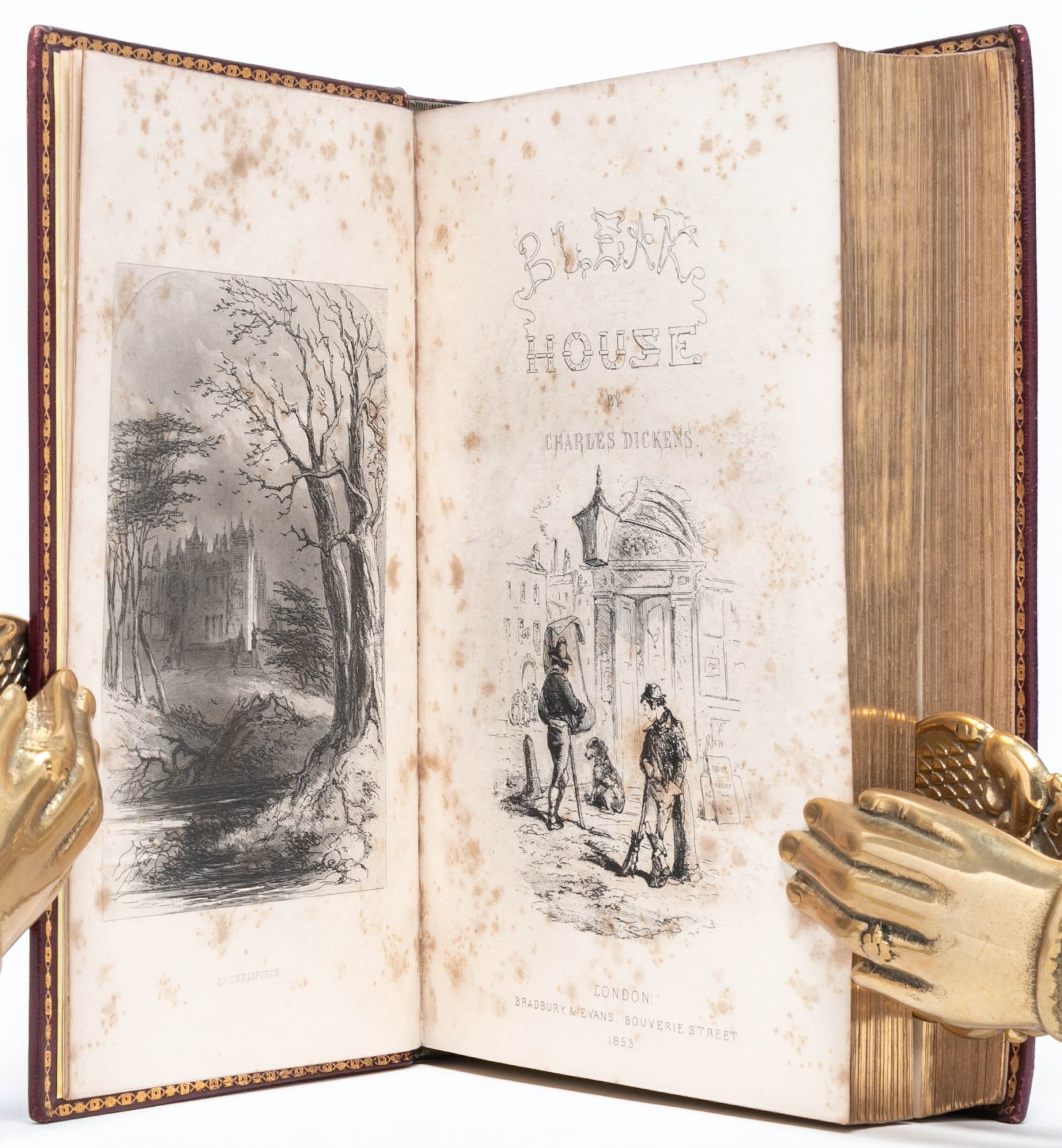
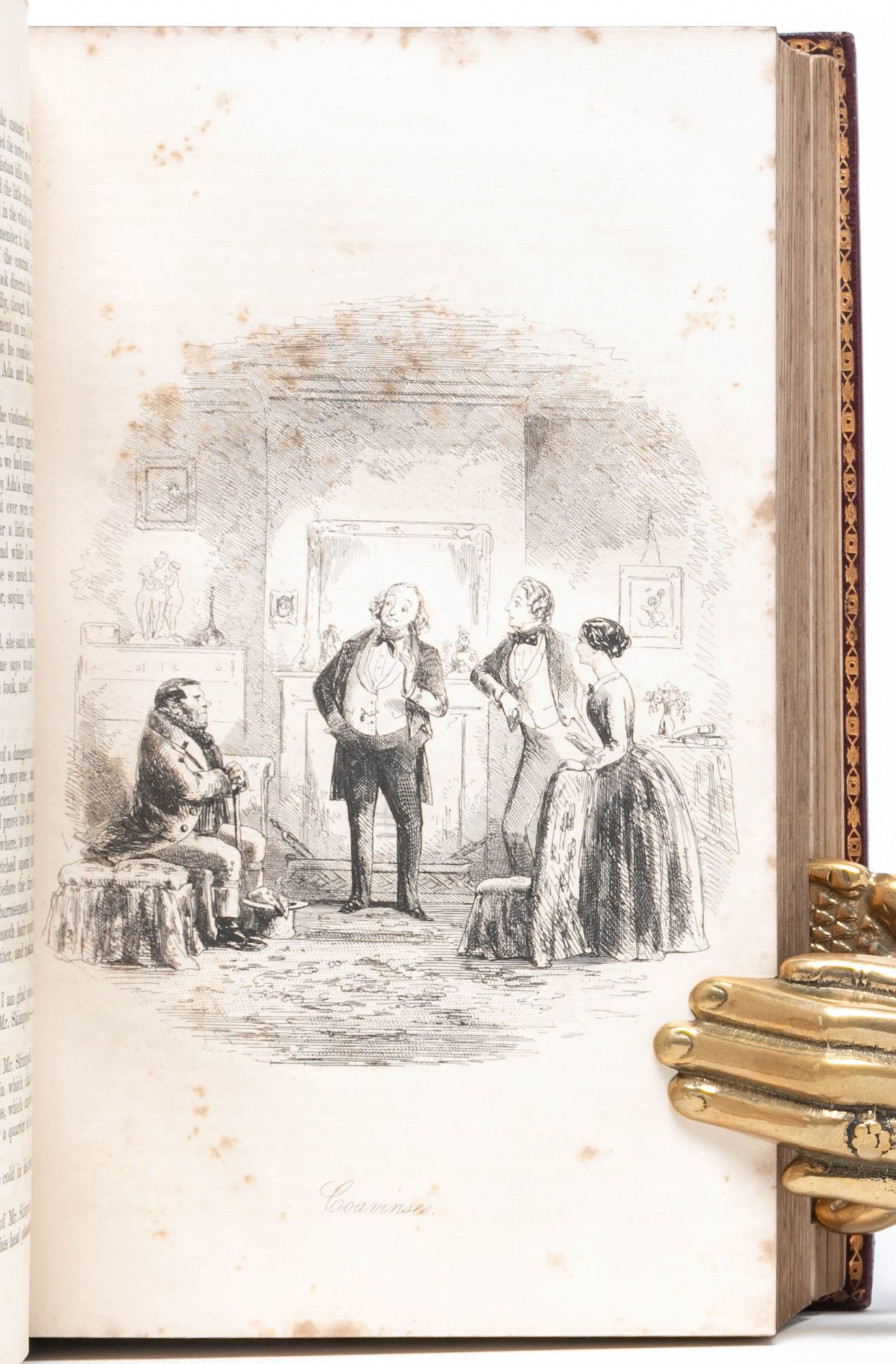
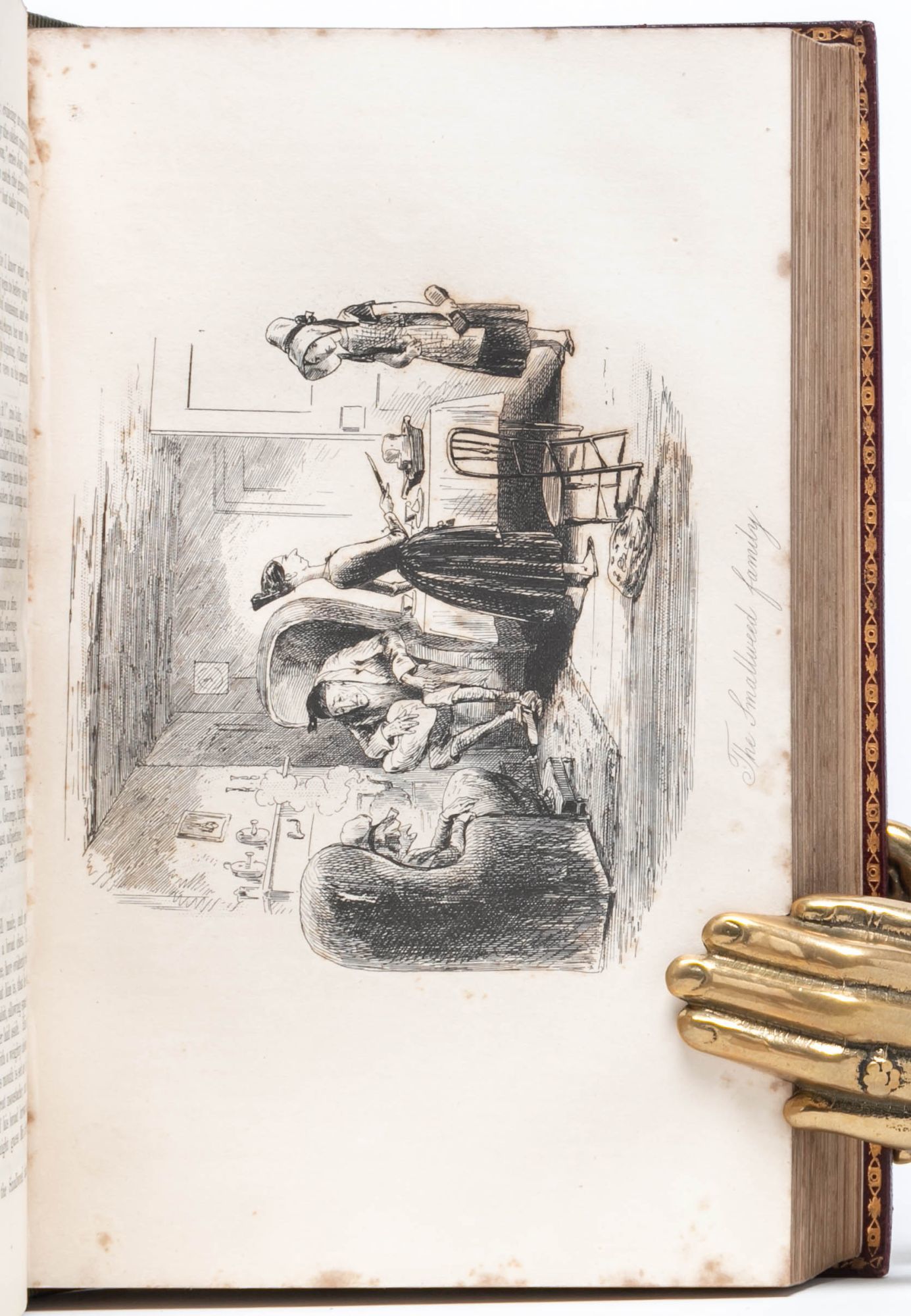
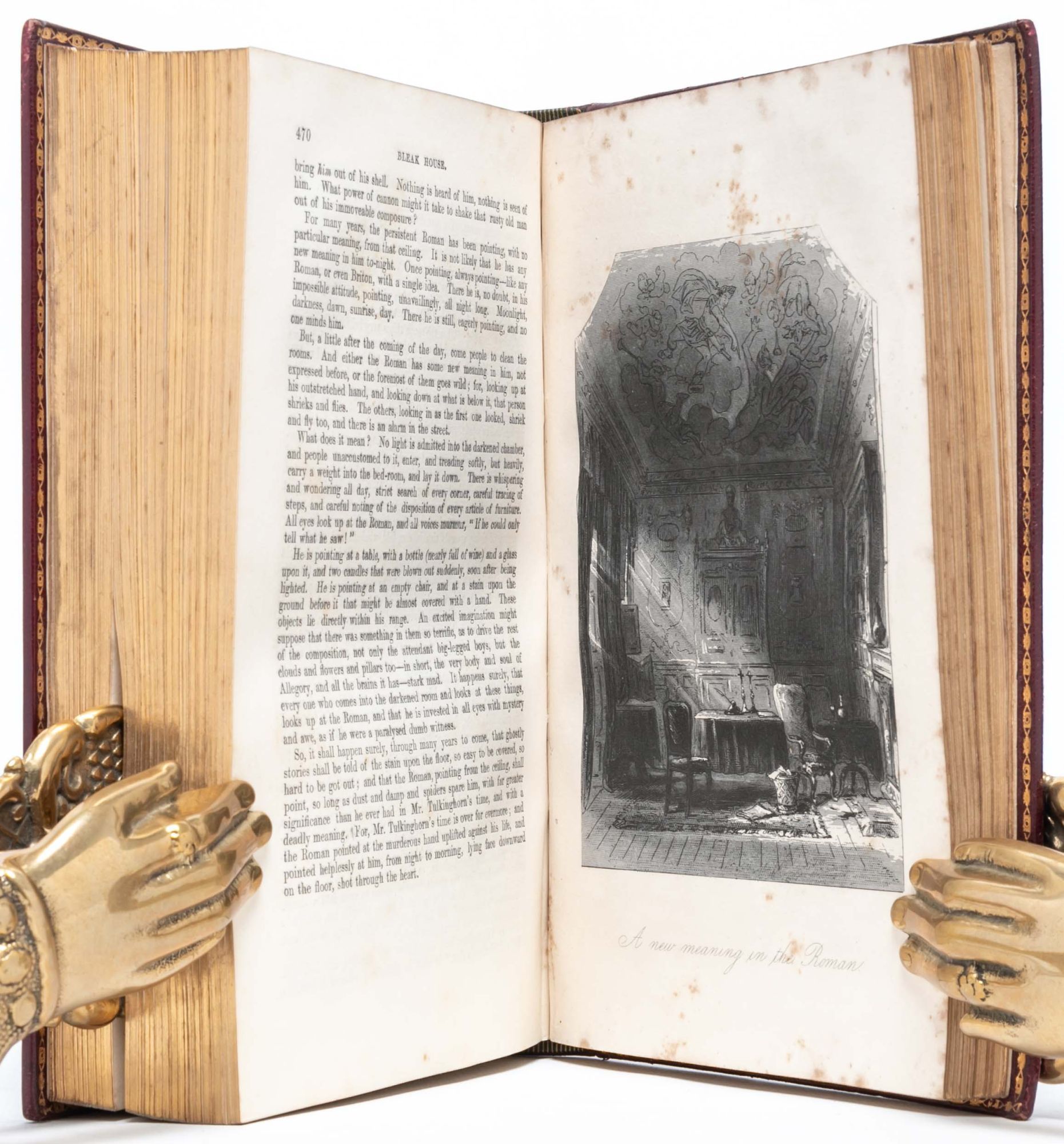
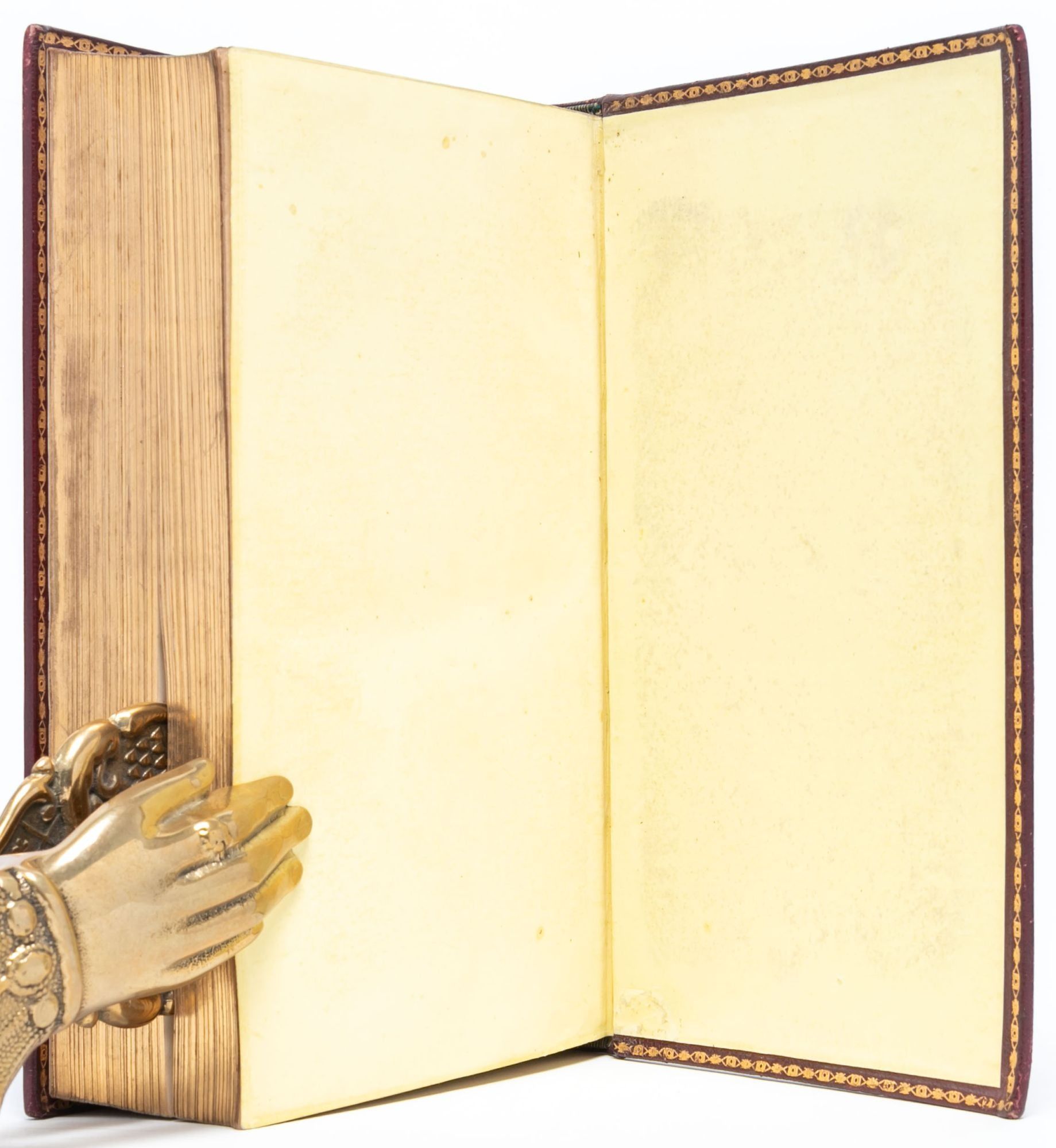
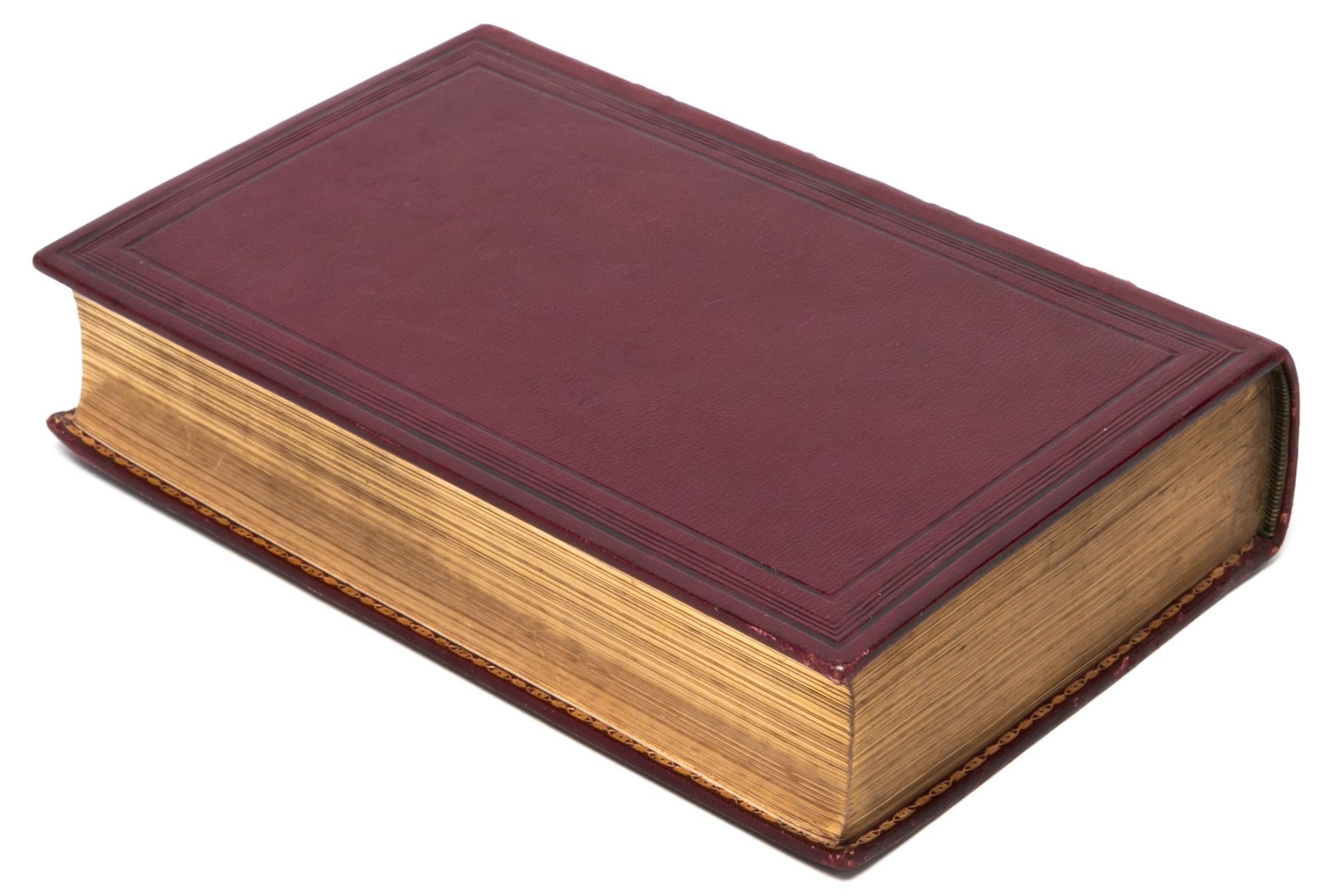
London: Bradbury & Evans, 1853. First edition. Near Fine. Complete with all forty plates, including the frontispiece, title-page and the ten "dark plates." Has all three typographical errors associated with the first edition, first issue: P.19, line 6: "elgble"; p. 209, line 23: "chair" instead of "hair"; and p. 275, line 22: "counsinship" instead of "cousinship." In a lovely example of the publisher's full purple morocco deluxe binding. All edges gilt, yellow-coated end papers. In Near Fine, unrestored condition with just light to moderate foxing throughout, but generally an exceptional survivor.
One of Dickens' finest novels, the action in Bleak House revolves around a never-ending set of related Chancery Court cases to resolve the inheritance of a considerable estate. Dickens turns his pen to a biting condemnation of the system and the need for reform (which shouldn't surprise the Dickens scholar). A complex novel and filled with subplots, it engages and titillates the reader from start to finish. Noted by some for Inspector Bucket's prominent role in investigating a murder, which earned it a spot on the Haycraft-Queen cornerstone list of detective fiction, the novel is also memorable for its complex representation of femininity: "There's more to Esther than simple good nature. As the book progresses she reveals a dark, angry wit. It is a wit that can still strike a chord today" (The Guardian). An important social commentary, and Dickens at his best. Near Fine.
One of Dickens' finest novels, the action in Bleak House revolves around a never-ending set of related Chancery Court cases to resolve the inheritance of a considerable estate. Dickens turns his pen to a biting condemnation of the system and the need for reform (which shouldn't surprise the Dickens scholar). A complex novel and filled with subplots, it engages and titillates the reader from start to finish. Noted by some for Inspector Bucket's prominent role in investigating a murder, which earned it a spot on the Haycraft-Queen cornerstone list of detective fiction, the novel is also memorable for its complex representation of femininity: "There's more to Esther than simple good nature. As the book progresses she reveals a dark, angry wit. It is a wit that can still strike a chord today" (The Guardian). An important social commentary, and Dickens at his best. Near Fine.
Details
Title
Bleak House
Author
Dickens, Charles
Condition
Near Fine
Publisher
Bradbury & Evans: London
Date
1853
Edition
First edition