

Minority Community Relations Manual [Cover title]
![Minority Community Relations Manual [Cover title]](https://d3525k1ryd2155.cloudfront.net/h/327/921/1690921327.0.x.jpg)
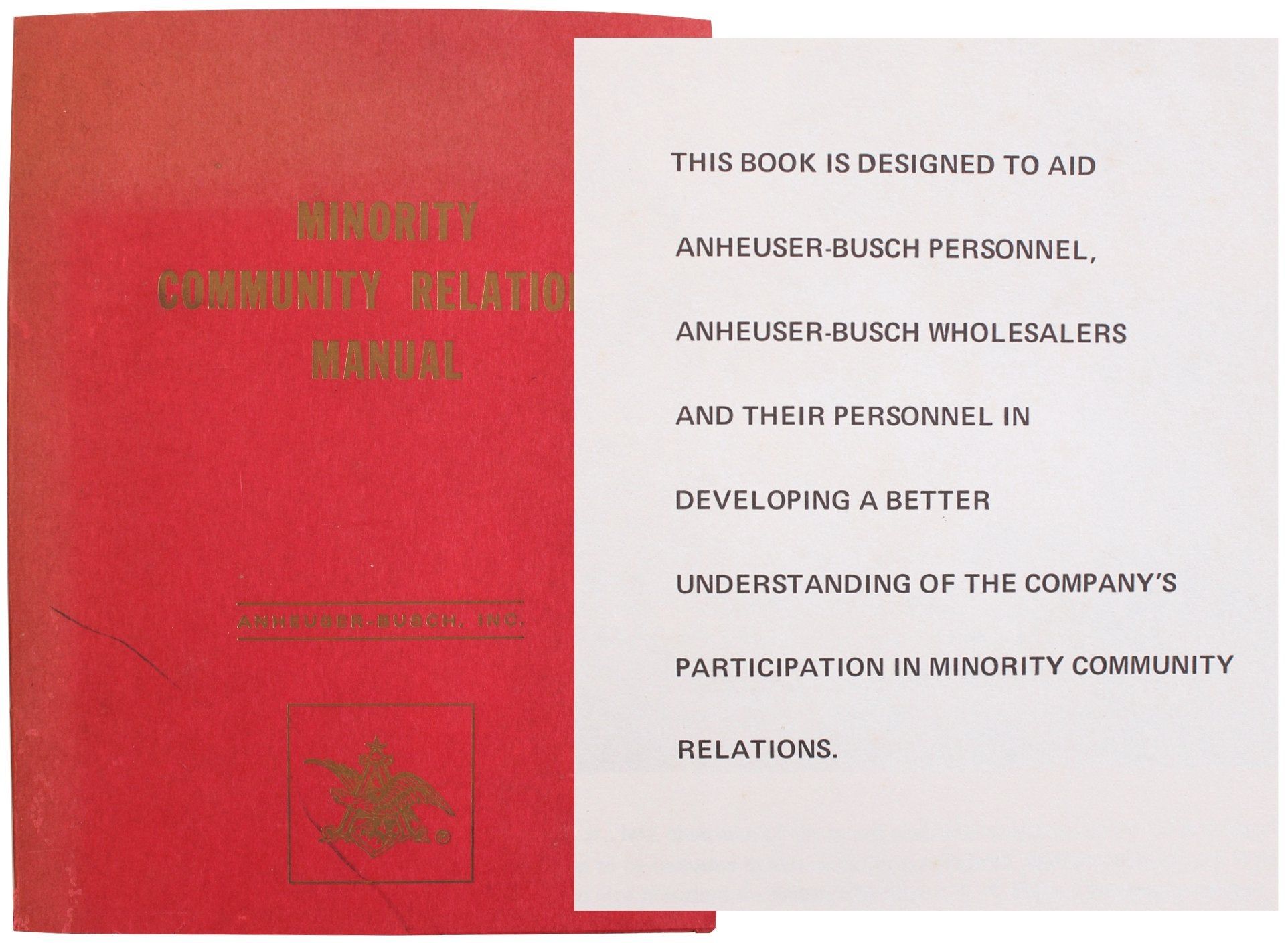
- [St. Louis, Missouri]: Anheuser-Busch, Inc, 1972
[St. Louis, Missouri]: Anheuser-Busch, Inc, 1972. Good. 11” x 8 3/8”. Red wrappers, title and emblem gilt. Pp. [289] + business card laid in. Good due to the fact that the book is separated into two nearly equally sized text blocks; otherwise wrappers moderately sunned, lightly foxed and scuffed; mild spotting to first page, and internally fresh with a touch of toning to edges.
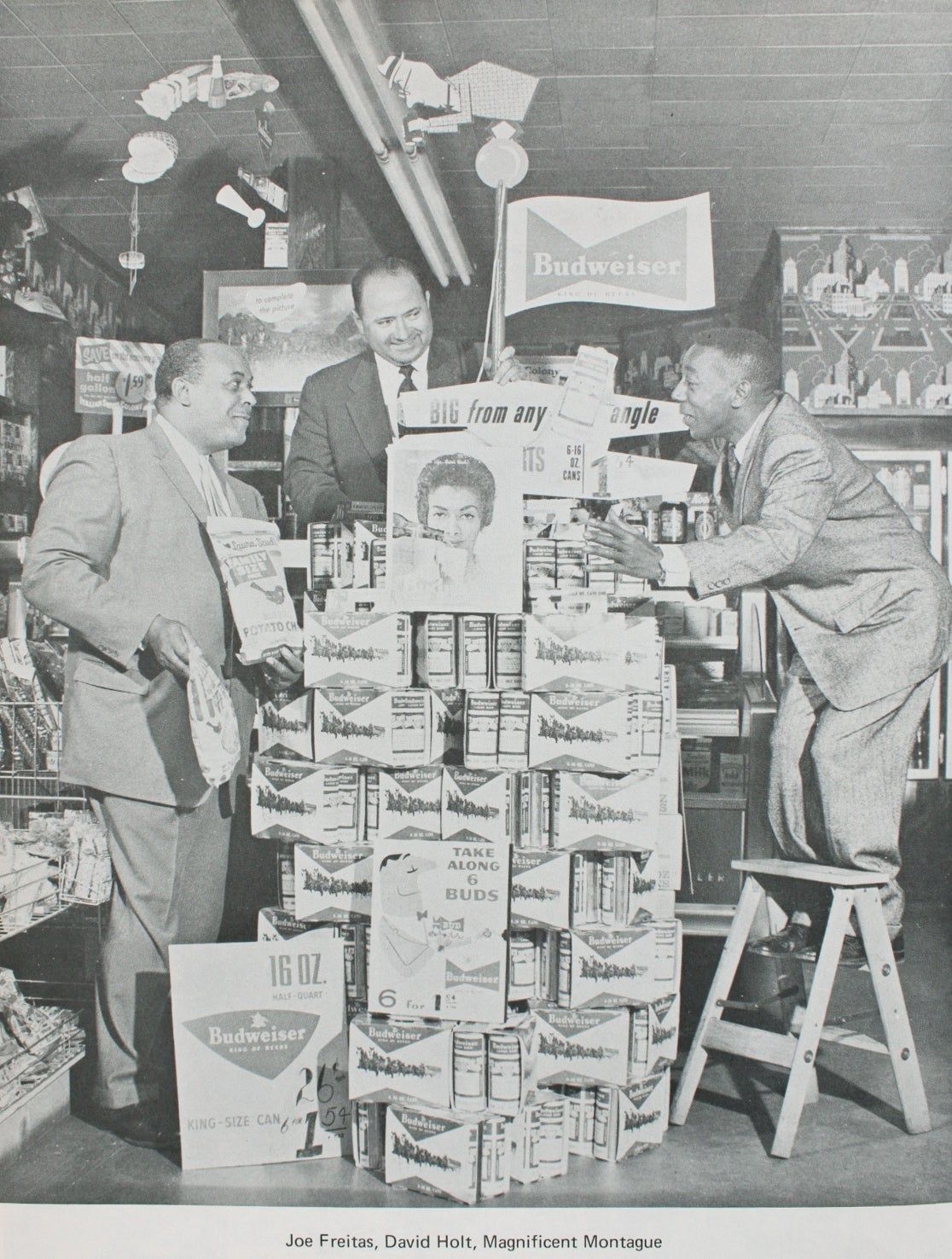
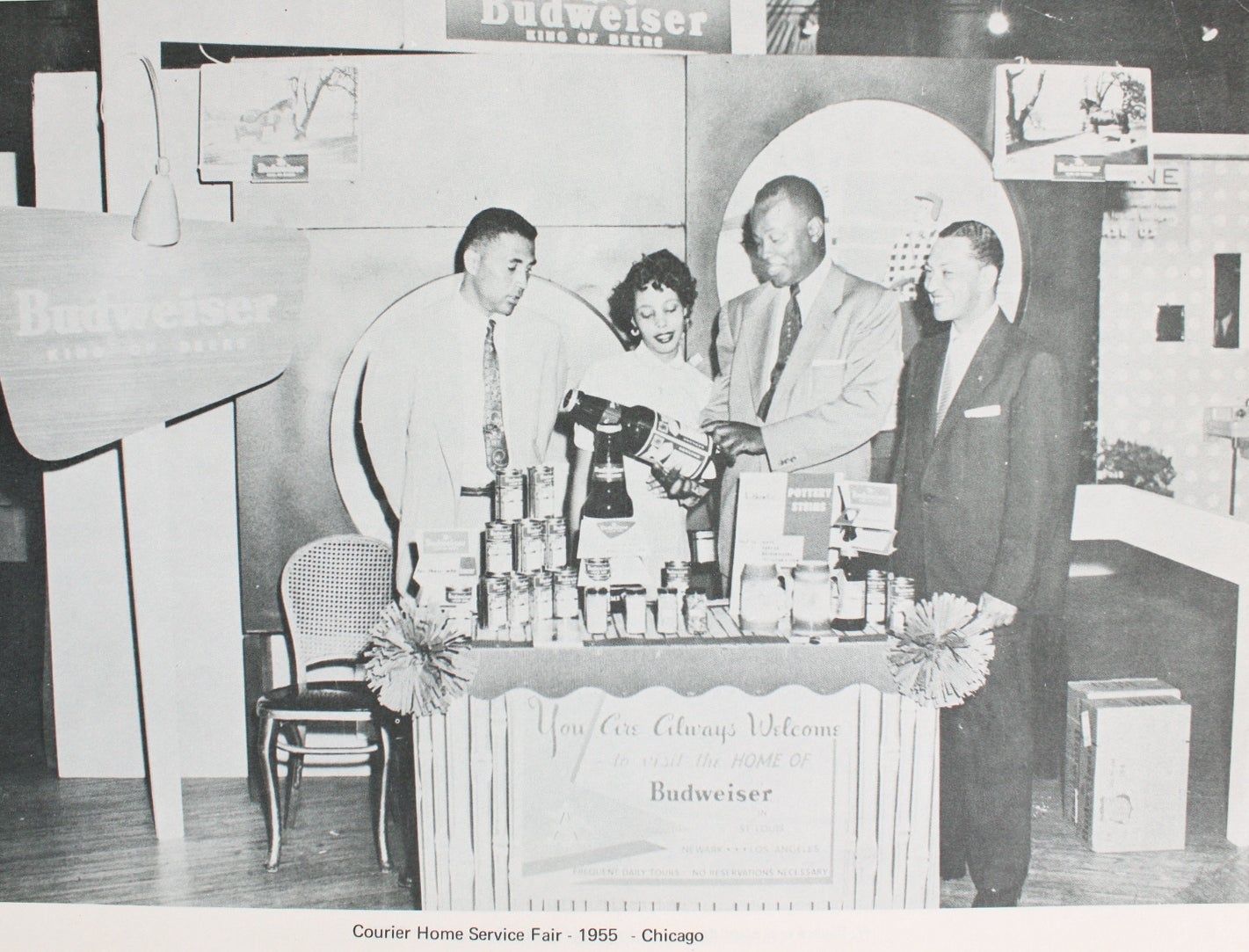
This is a monumental resource revealing the efforts of the Anheuser-Busch company (A-B) with regard to affirmative action, involvement with and marketing to the Black community. Overflowing with photographic images, copies of business plans and reports, newspaper articles and fantastic illustrated advertisements, the book illuminates the inroads with African Americans made by the brewing giant from 1955 through 1971. It also notably contains the business card of the first African American executive with the company, William G. Porter.
By 1957, August Anheuser Busch, Jr. had led A-B to its status as the largest brewery in the world. In 1955 he promoted Chicago regional sales representative William G. Porter to the role of executive assistant to the vice president of marketing, the then-highest rank for a Black employee. As demonstrated by the wealth of historical data in this book, corporate efforts to appeal to the African American community in earnest began right around the same time.
An introductory message revealed that “This book is designed to aid Anheuser-Busch personnel . . . in developing a better understanding of the company's participation in minority community relations.” The work was divided into ten sections, beginning with “Awards to Mr. A.A. Busch, Jr.” which featured a copied article, with image, of an honor presented by Roy Wilkins, national executive director of the NAACP, in February 1971. It also has press releases and images of the many awards A-B received in the “field of human relations and employment of minority groups.” An “Economic Development” section held copies of letters on A-B letterhead announcing the opening of accounts in “minority banks” in New York, Texas, Florida and Los Angeles, along with great photographic and newspaper coverage, and there is a substantial segment devoted to the A-B “Affirmative Action Program.” It shows memos and reports from 1962 to 1971, clippings lauding the latest program as “the most comprehensive of its kind . . . a model for the industry,” the full text of the 1969 policy and a 1964 “Newsletter to Anheuser-Busch People” noting the brand's participation in President Johnson's “Committee on Equal Employment Opportunity” and “Plan for Progress” programs.
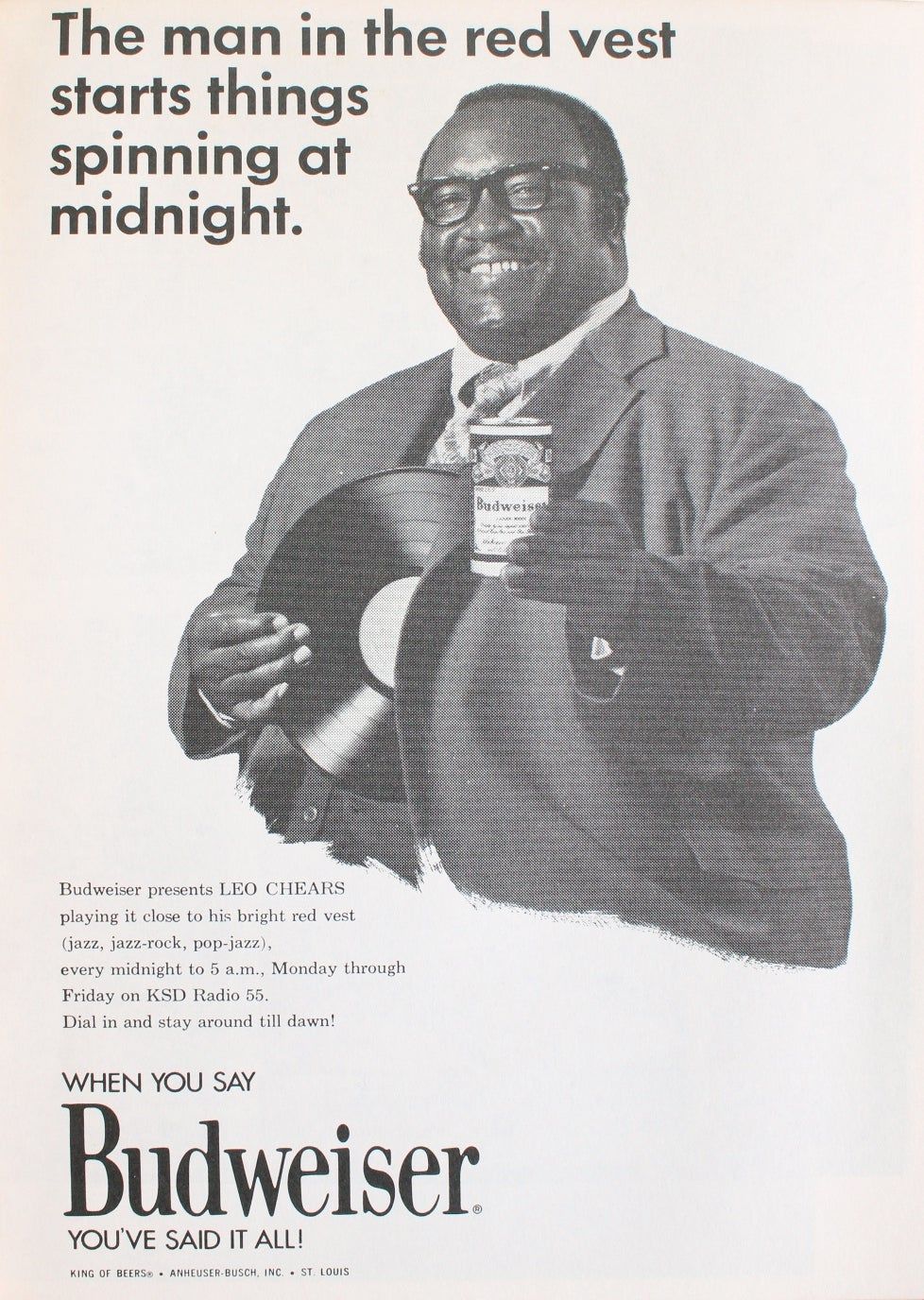
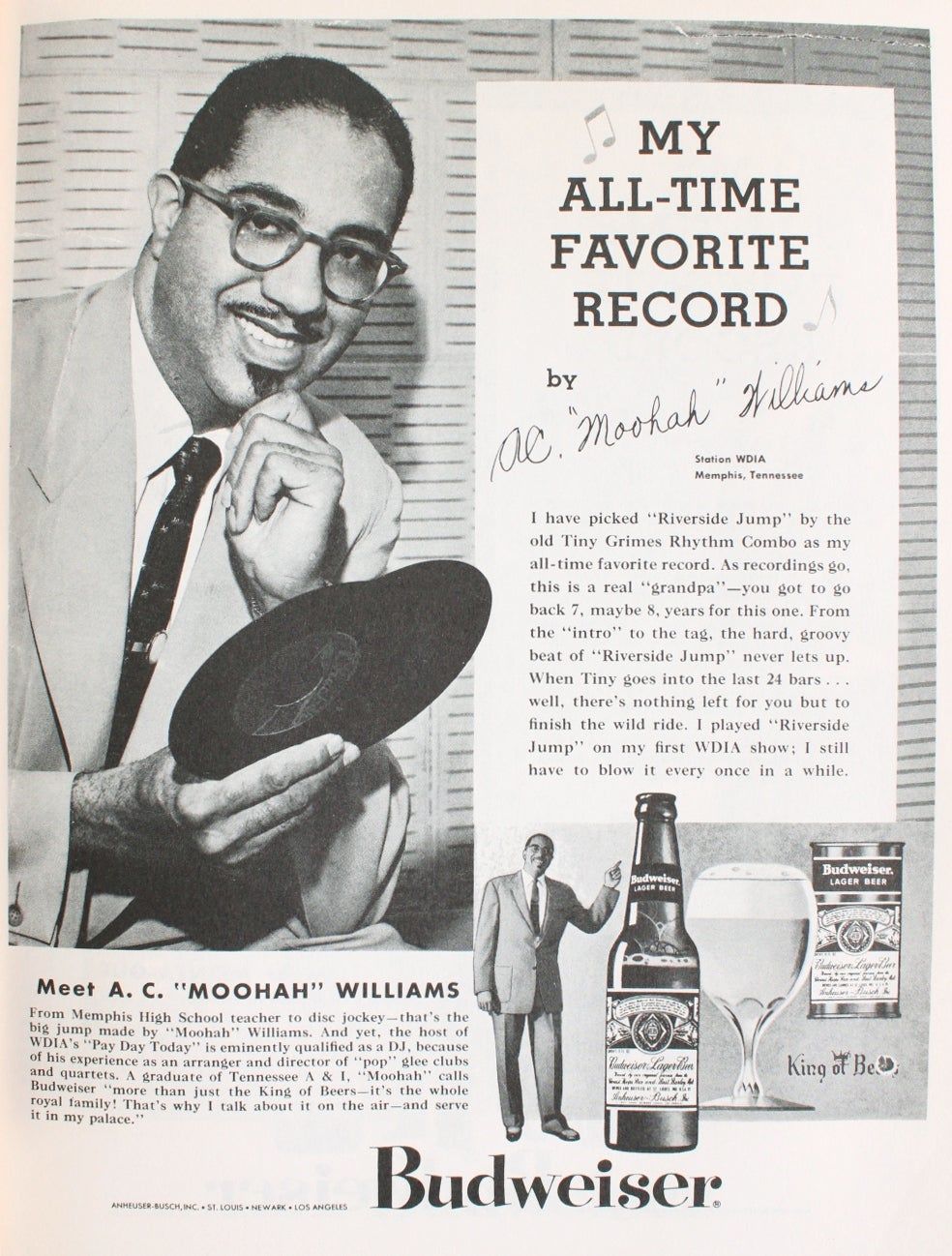
Throughout the book are hundreds of identified images of African American A-B employees, ranging from head shots to full-page, engaged in all manner of tasks such as clerical, carpentry, packing and shipping, lab work, engineering and more. It introduced us to the Black women who worked as “librarian in the control research library” for 12 years and “manicurist in the executive barbershop” for 18, as well as to Maxine Hunter, the African American “Supervisor of Guest Relations at Busch Gardens Houston.” There are countless copies of photographically illustrated newspaper articles and fantastic examples of advertisements featuring Black men and women enjoying a Bud, promoting radio DJs and a “Cap's Off to the Urban League on its 50th Anniversary of Service to the Community.”
As mentioned, this book holds the business card of William G. Porter, “Assistant to the Vice-President, Marketing Operations” and he is featured several times throughout the work. There are copies of his honors and award certificates as well as images, as he “hosted members of the National Bar Association” and the Zeta Phi Beta sorority, and presented a trophy to Marian Anderson at the 50th anniversary convention of the National Association of Negro Musicians.
A scarce and immense publication of corporate history in fair hiring and Black marketing. The book is undated, and the last date to appear in its contents is December 1971. OCLC shows eight holdings of a slightly longer, revised edition of 1973, but none of this printing.
This is a monumental resource revealing the efforts of the Anheuser-Busch company (A-B) with regard to affirmative action, involvement with and marketing to the Black community. Overflowing with photographic images, copies of business plans and reports, newspaper articles and fantastic illustrated advertisements, the book illuminates the inroads with African Americans made by the brewing giant from 1955 through 1971. It also notably contains the business card of the first African American executive with the company, William G. Porter.
By 1957, August Anheuser Busch, Jr. had led A-B to its status as the largest brewery in the world. In 1955 he promoted Chicago regional sales representative William G. Porter to the role of executive assistant to the vice president of marketing, the then-highest rank for a Black employee. As demonstrated by the wealth of historical data in this book, corporate efforts to appeal to the African American community in earnest began right around the same time.
An introductory message revealed that “This book is designed to aid Anheuser-Busch personnel . . . in developing a better understanding of the company's participation in minority community relations.” The work was divided into ten sections, beginning with “Awards to Mr. A.A. Busch, Jr.” which featured a copied article, with image, of an honor presented by Roy Wilkins, national executive director of the NAACP, in February 1971. It also has press releases and images of the many awards A-B received in the “field of human relations and employment of minority groups.” An “Economic Development” section held copies of letters on A-B letterhead announcing the opening of accounts in “minority banks” in New York, Texas, Florida and Los Angeles, along with great photographic and newspaper coverage, and there is a substantial segment devoted to the A-B “Affirmative Action Program.” It shows memos and reports from 1962 to 1971, clippings lauding the latest program as “the most comprehensive of its kind . . . a model for the industry,” the full text of the 1969 policy and a 1964 “Newsletter to Anheuser-Busch People” noting the brand's participation in President Johnson's “Committee on Equal Employment Opportunity” and “Plan for Progress” programs.
Throughout the book are hundreds of identified images of African American A-B employees, ranging from head shots to full-page, engaged in all manner of tasks such as clerical, carpentry, packing and shipping, lab work, engineering and more. It introduced us to the Black women who worked as “librarian in the control research library” for 12 years and “manicurist in the executive barbershop” for 18, as well as to Maxine Hunter, the African American “Supervisor of Guest Relations at Busch Gardens Houston.” There are countless copies of photographically illustrated newspaper articles and fantastic examples of advertisements featuring Black men and women enjoying a Bud, promoting radio DJs and a “Cap's Off to the Urban League on its 50th Anniversary of Service to the Community.”
As mentioned, this book holds the business card of William G. Porter, “Assistant to the Vice-President, Marketing Operations” and he is featured several times throughout the work. There are copies of his honors and award certificates as well as images, as he “hosted members of the National Bar Association” and the Zeta Phi Beta sorority, and presented a trophy to Marian Anderson at the 50th anniversary convention of the National Association of Negro Musicians.
A scarce and immense publication of corporate history in fair hiring and Black marketing. The book is undated, and the last date to appear in its contents is December 1971. OCLC shows eight holdings of a slightly longer, revised edition of 1973, but none of this printing.
Details
Title
Minority Community Relations Manual [Cover title]
Condition
Good
Publisher
Anheuser-Busch, Inc: [St. Louis, Missouri]
Date
1972