

Zhao shi yi guan 趙氏醫貫 [Mr. Zhao's Principles of Medicine]
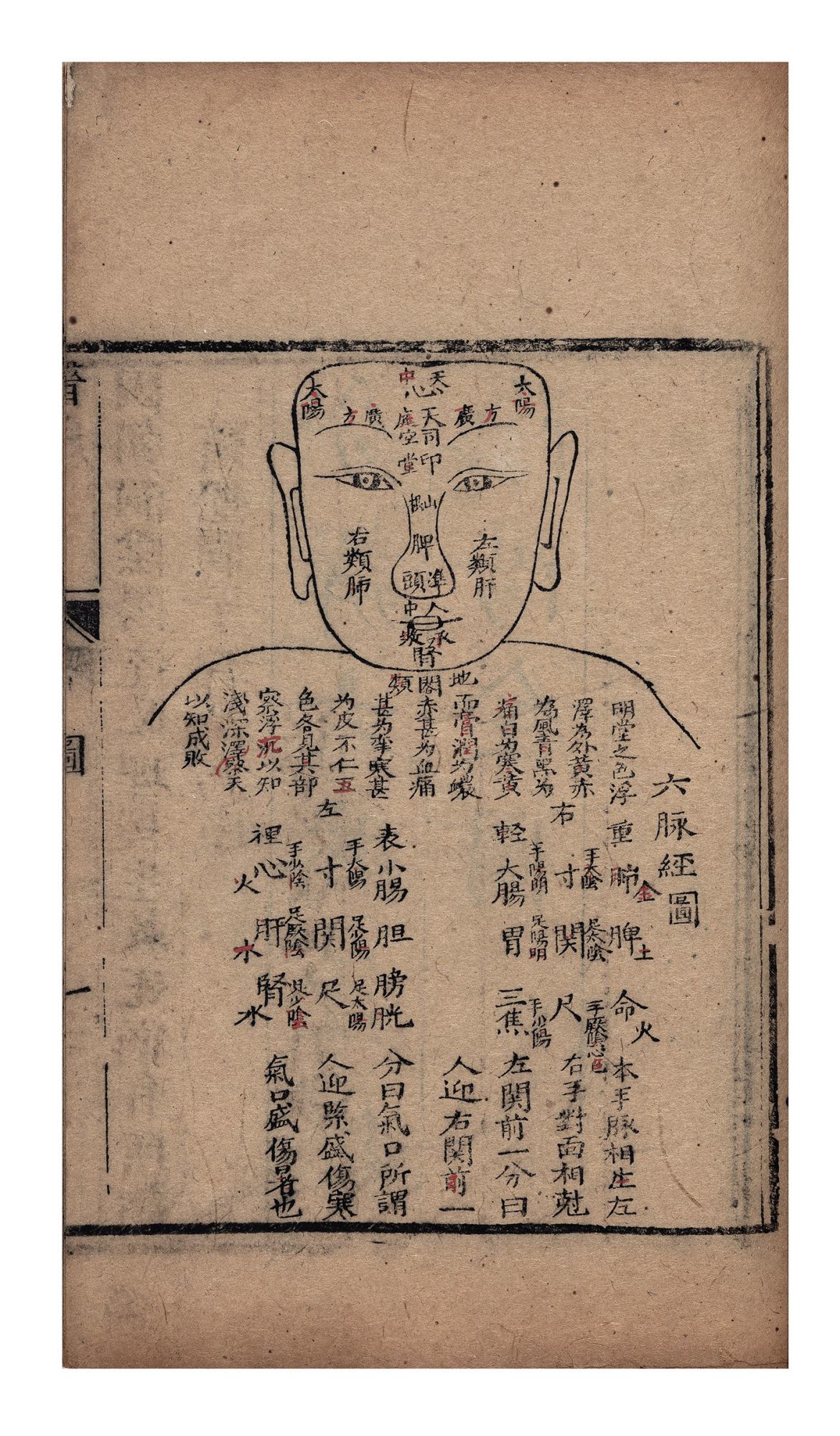
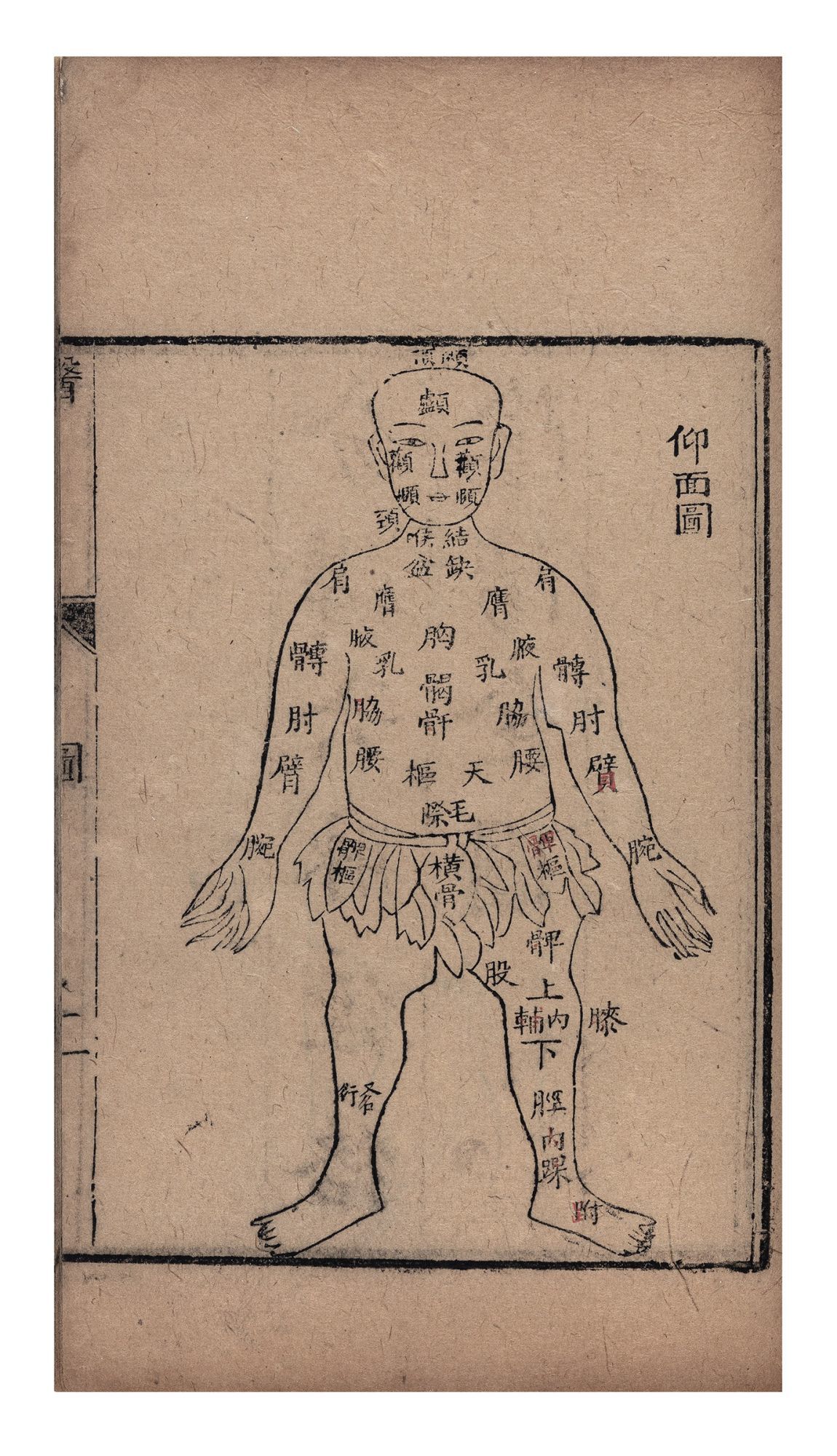
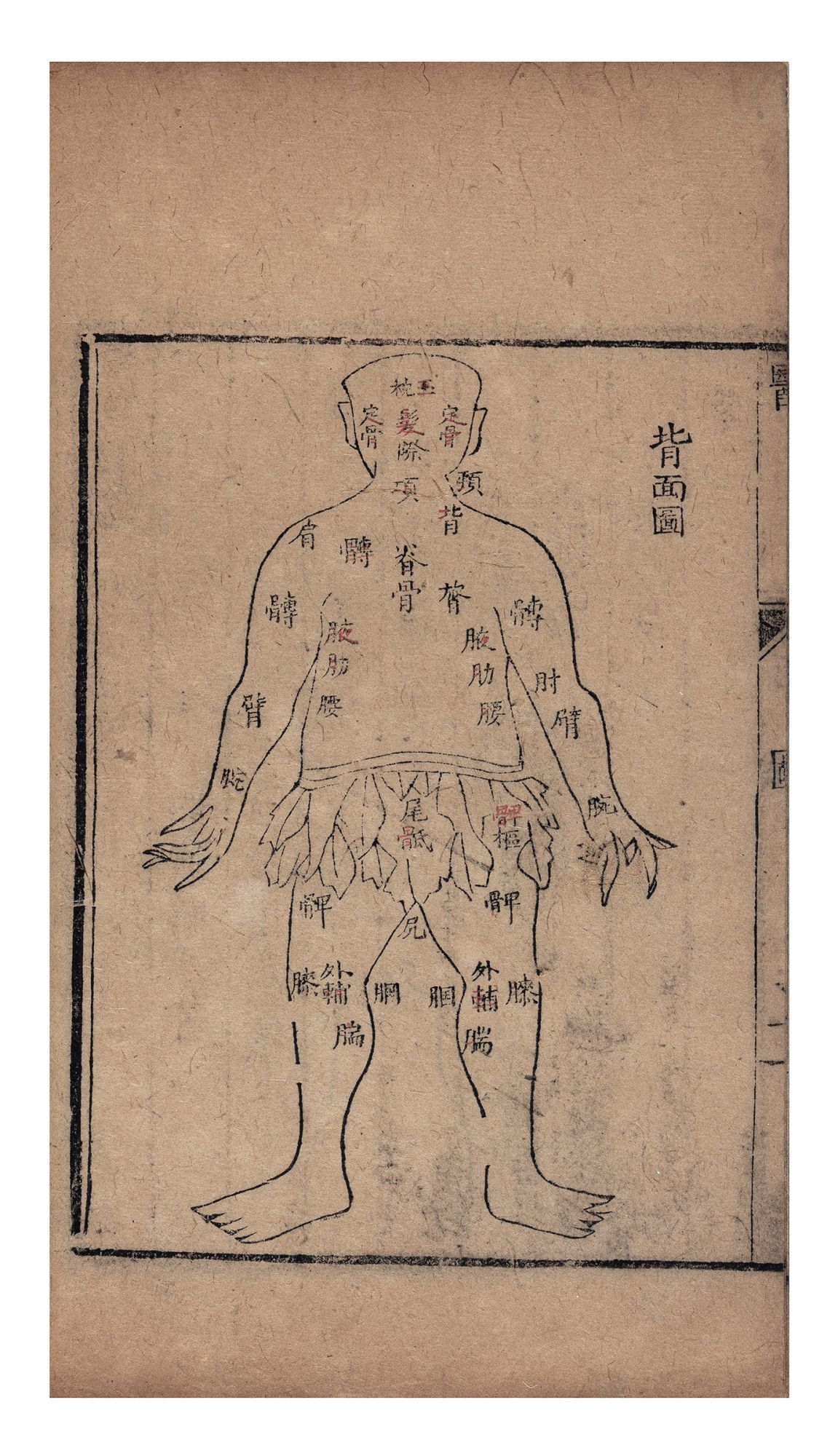
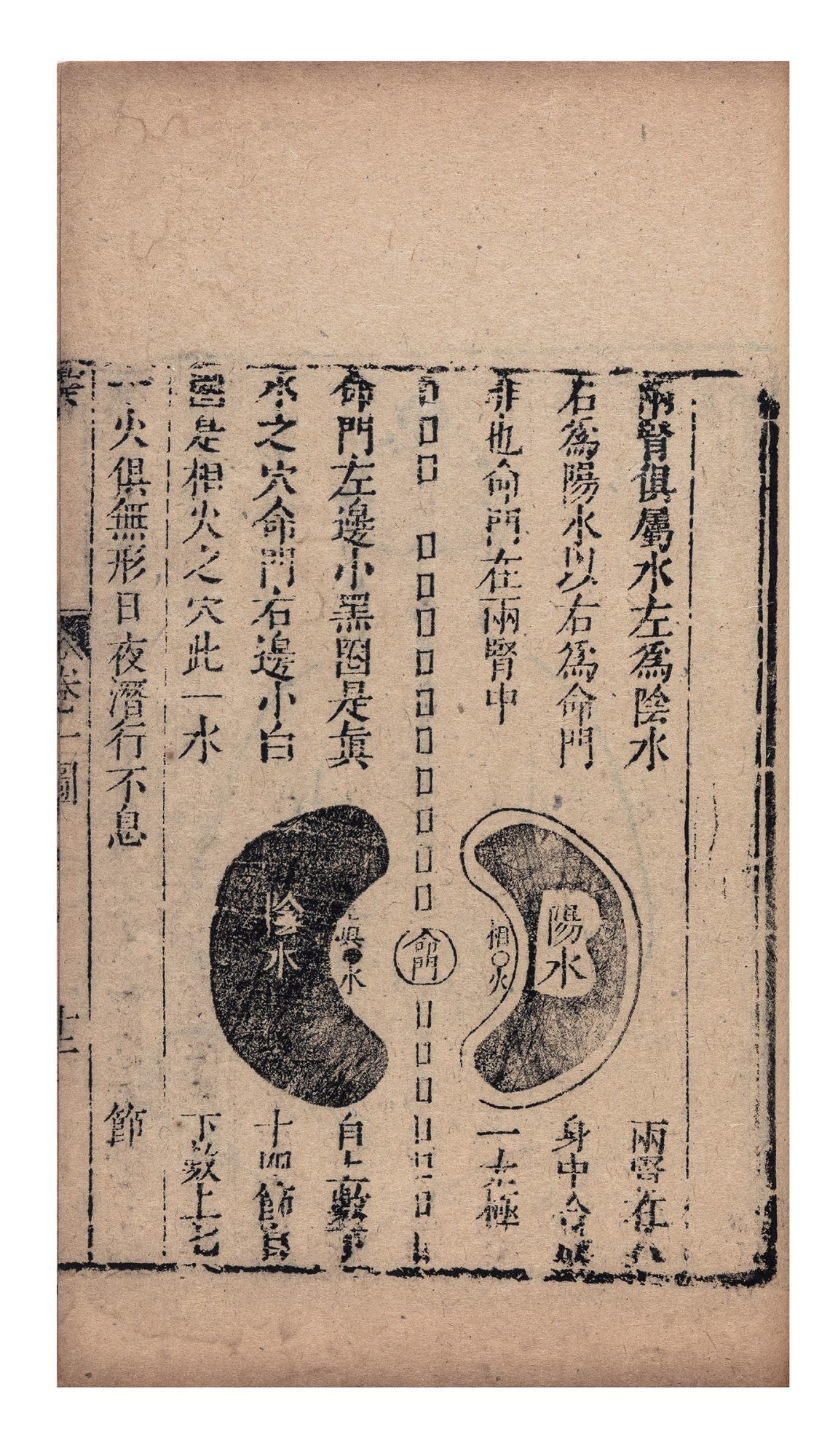
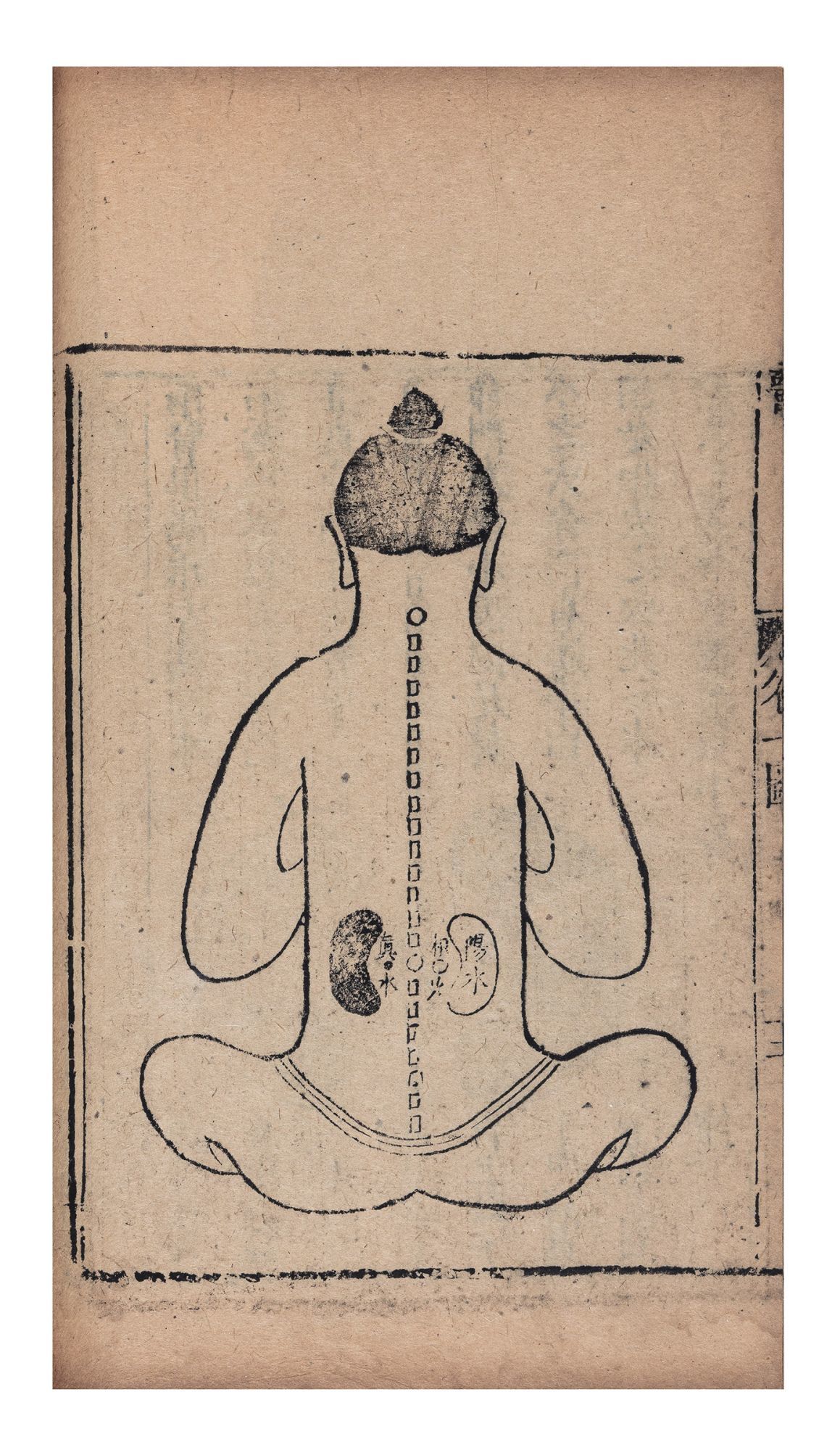
Four full-page woodcuts & two smaller woodcuts in the text depicting the kidneys. Six vols. 8vo, later wrappers, new stitching. [China]: Wenying tang, 1867.
A good edition of an important medical work that challenged many ideas of traditional Chinese medicine. "Zhao Xianke's emphasis on the importance of the Gate of Life challenged and subverted the Neo-Confucian tradition wherein the heart was supreme."-Chang Chia-feng, "Yijing and Medicine: Discussions of the Gate of Life in Late Imperial China," in The Other Yijing (Brill: 2021), p. 171.
Zhao (1573?-1664?), a native of Ningbo in Zhejiang province, "was an important physician of this coastal region in the lower reaches of the Yangzi river. He excelled in the study of medicine and the study of the Classic of Changes, he travelled extensively, authored several books, and he had a son who practised medicine as well...Although Zhao's ideas on the 'gate of life' as ruler of the body never became mainstream, he is still remembered as an important wenbu physician. The Pill with Six and the Pill with Eight Ingredients remain among the most popular formulas of Traditional Chinese Medicine."-Leslie de Vries, "The Dangers of 'Warming and Replenishing' (wenbu 溫補) during the Ming to Qing Epistemic Transition" in Asian Medicine (Brill: 2015), Vol. 10, Parts 1 & 2-(see this entire article for an excellent discussion of Zhao's complex medical theories and the ongoing controversies regarding them).
Zhao's "fundamental therapeutic principles were...that the continuation of human life is dependent on the intensity of the internal fire. A weakness, as well as an excessive intensity, of this fire, results in illness and, possibly, death. Treatment of such pathological conditions, however, can only be accomplished by means of the kidneys, which - associated with water - control the fire of the Gate of Life."-Paul U. Unschuld, Medicine in China. A History of Ideas (University of California: 2010), p. 201-(& see pp. 200-02).
Our edition includes two Prefaces. The first is by the Xue brothers, Xue Sanxing 薛三省 (1558-1634) and Xue Sancai 薛三才 (1555-1619), both high-ranking officials of the Ming who helped publish Zhao's work as the empire was collapsing under internal and external unrest. The second is by Lü Liuliang 呂留良 (1629-83), whose commented edition helped popularize Zhao's medical system beyond the Ningbo region.
The earliest printings of this work were not dated, likely for political reasons. The text was popular and reprinted many times during the Qing dynasty. Our copy is an 1867 reprint by the publisher Wenying tang. We find two other copies in North American collections, at Princeton and Columbia (WorldCat 960474081).
Fine set, preserved in a hantao. Wrappers of Vols. 1, 2, and 6 show minor wear, and the stitching is a little loose in all but Vol. 5. The woodblocks were showing wear (as is typical for commercial printings of popular texts), but the text is mostly legible. Otherwise in good condition. Lightly annotated in red and black ink. Unidentified red seal in Vol. 1.
A good edition of an important medical work that challenged many ideas of traditional Chinese medicine. "Zhao Xianke's emphasis on the importance of the Gate of Life challenged and subverted the Neo-Confucian tradition wherein the heart was supreme."-Chang Chia-feng, "Yijing and Medicine: Discussions of the Gate of Life in Late Imperial China," in The Other Yijing (Brill: 2021), p. 171.
Zhao (1573?-1664?), a native of Ningbo in Zhejiang province, "was an important physician of this coastal region in the lower reaches of the Yangzi river. He excelled in the study of medicine and the study of the Classic of Changes, he travelled extensively, authored several books, and he had a son who practised medicine as well...Although Zhao's ideas on the 'gate of life' as ruler of the body never became mainstream, he is still remembered as an important wenbu physician. The Pill with Six and the Pill with Eight Ingredients remain among the most popular formulas of Traditional Chinese Medicine."-Leslie de Vries, "The Dangers of 'Warming and Replenishing' (wenbu 溫補) during the Ming to Qing Epistemic Transition" in Asian Medicine (Brill: 2015), Vol. 10, Parts 1 & 2-(see this entire article for an excellent discussion of Zhao's complex medical theories and the ongoing controversies regarding them).
Zhao's "fundamental therapeutic principles were...that the continuation of human life is dependent on the intensity of the internal fire. A weakness, as well as an excessive intensity, of this fire, results in illness and, possibly, death. Treatment of such pathological conditions, however, can only be accomplished by means of the kidneys, which - associated with water - control the fire of the Gate of Life."-Paul U. Unschuld, Medicine in China. A History of Ideas (University of California: 2010), p. 201-(& see pp. 200-02).
Our edition includes two Prefaces. The first is by the Xue brothers, Xue Sanxing 薛三省 (1558-1634) and Xue Sancai 薛三才 (1555-1619), both high-ranking officials of the Ming who helped publish Zhao's work as the empire was collapsing under internal and external unrest. The second is by Lü Liuliang 呂留良 (1629-83), whose commented edition helped popularize Zhao's medical system beyond the Ningbo region.
The earliest printings of this work were not dated, likely for political reasons. The text was popular and reprinted many times during the Qing dynasty. Our copy is an 1867 reprint by the publisher Wenying tang. We find two other copies in North American collections, at Princeton and Columbia (WorldCat 960474081).
Fine set, preserved in a hantao. Wrappers of Vols. 1, 2, and 6 show minor wear, and the stitching is a little loose in all but Vol. 5. The woodblocks were showing wear (as is typical for commercial printings of popular texts), but the text is mostly legible. Otherwise in good condition. Lightly annotated in red and black ink. Unidentified red seal in Vol. 1.
Details
Title
Zhao shi yi guan 趙氏醫貫 [Mr. Zhao's Principles of Medicine]
Author
ZHAO, Xianke 趙獻可
Condition
Unknown