

(Cimarosa, Domenico {attributed}) Il Morbo Campana. (Italy. N.d. but last quarter of the 18th century. 52 leaves including 2 blanks. [Bound With:] (Abbot Sertor {attributed to Pietro Metastasio}). Il Conclave dell anno MDCCLXXIV. Dramma per Musica dei Recitarsi nel Teatro delle Dame Dedicato alle Istesse Dame. Roma presso il Caracas all’insegna del Silenzo, No date (Italy, after 1774). 38 leaves
- Italy , Late 18th Century
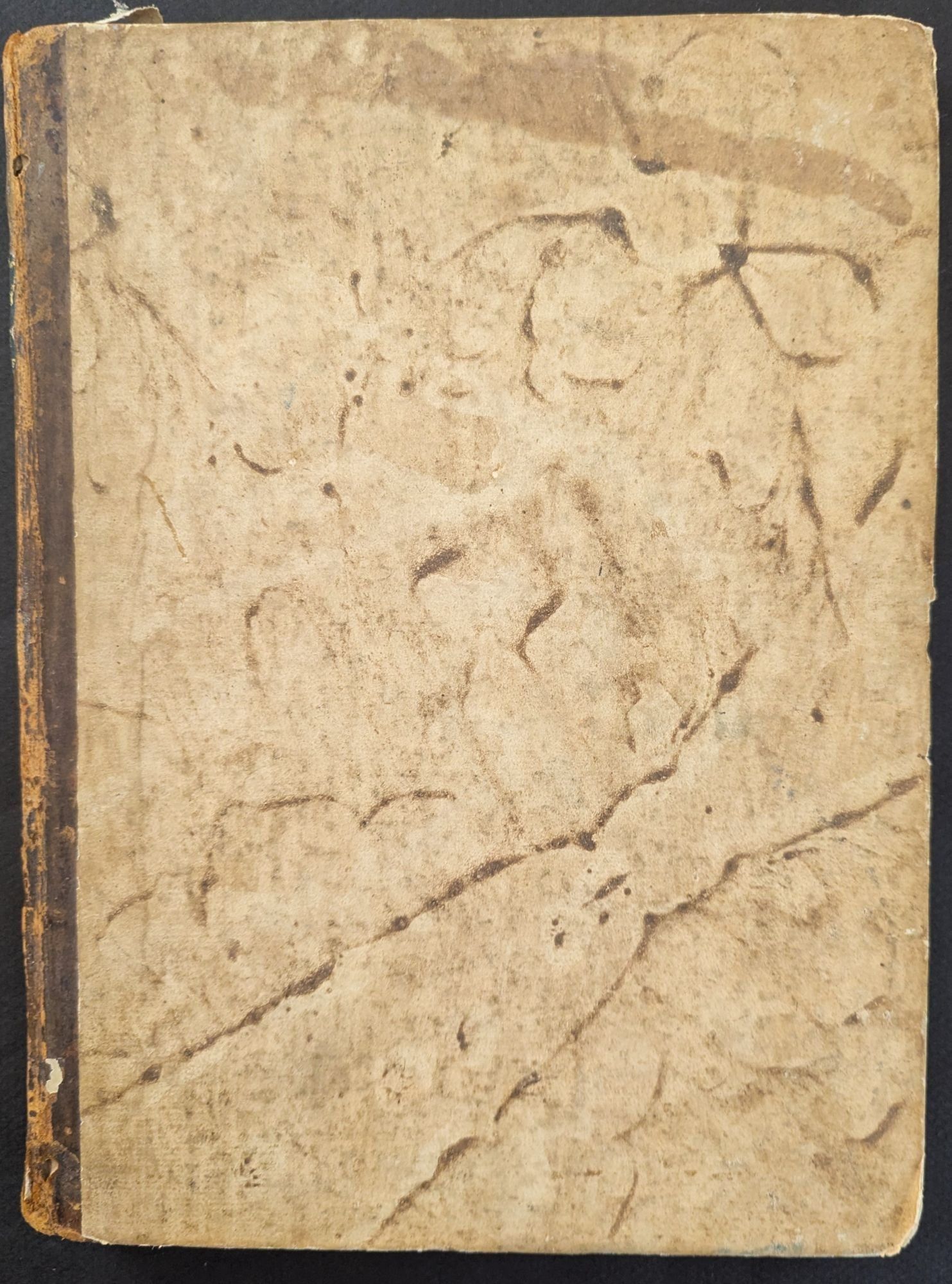
Two works bound together. 4to. 245 x 175 mm., [9 ½ x 7 inches]. Bound in contemporary half brown calf, spine a bit worn at the joints but sound; text block light brown with age. Both works are written in the same hand, single column in brown ink. Generally, very good condition and highly legible.
Two original satirical plays, loosely based on the printed works of Domenico Cimarosa and Pietro Metastasio. Although inspired by these authors, the satirical dramas are outrageous in their subject matter and their ribald language. Yet with the lyricism and cadence of the attributed writers missing, both these anonymous works reflect the language and rhythm of the bawdy tradition of late 18th century theater in Italy.
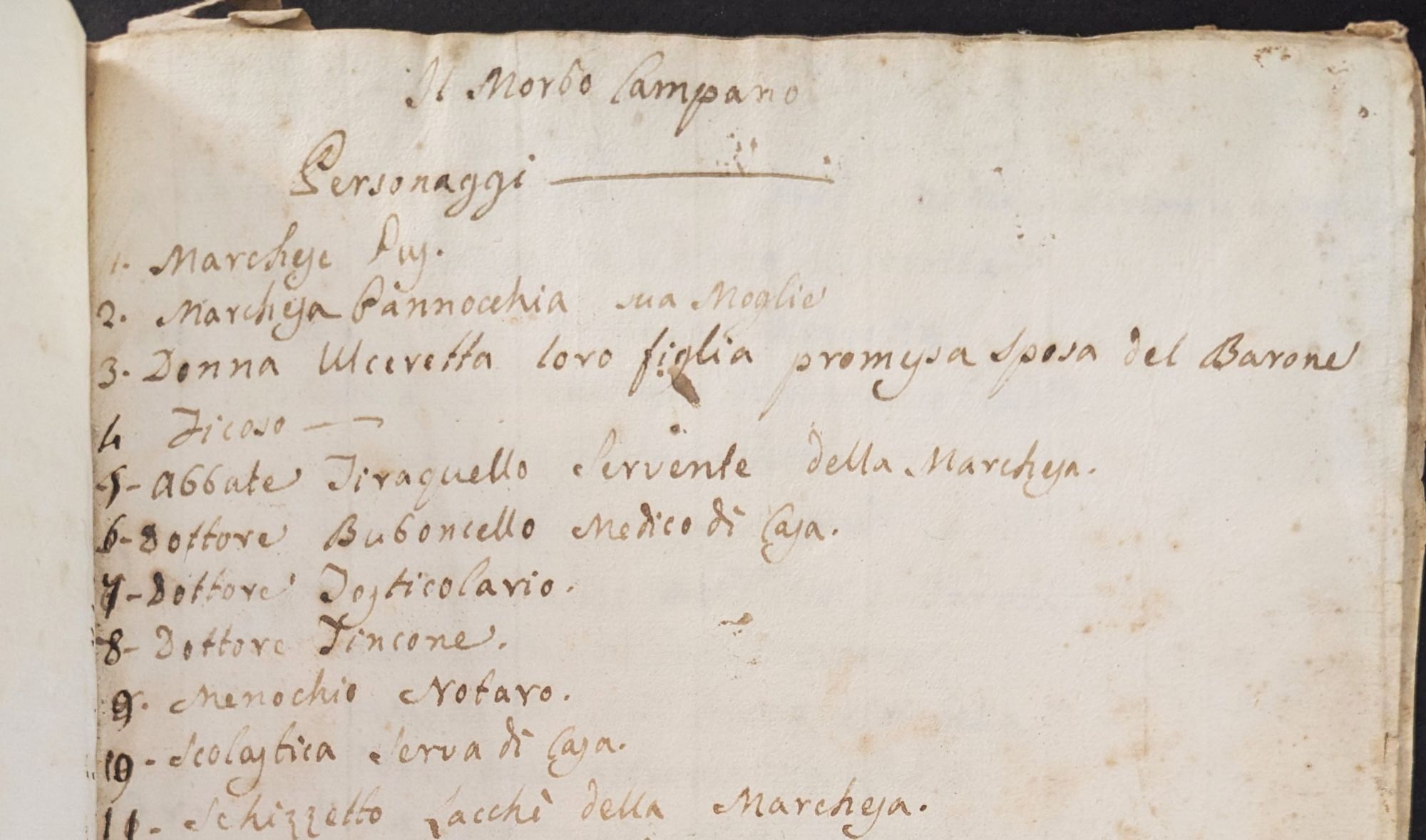
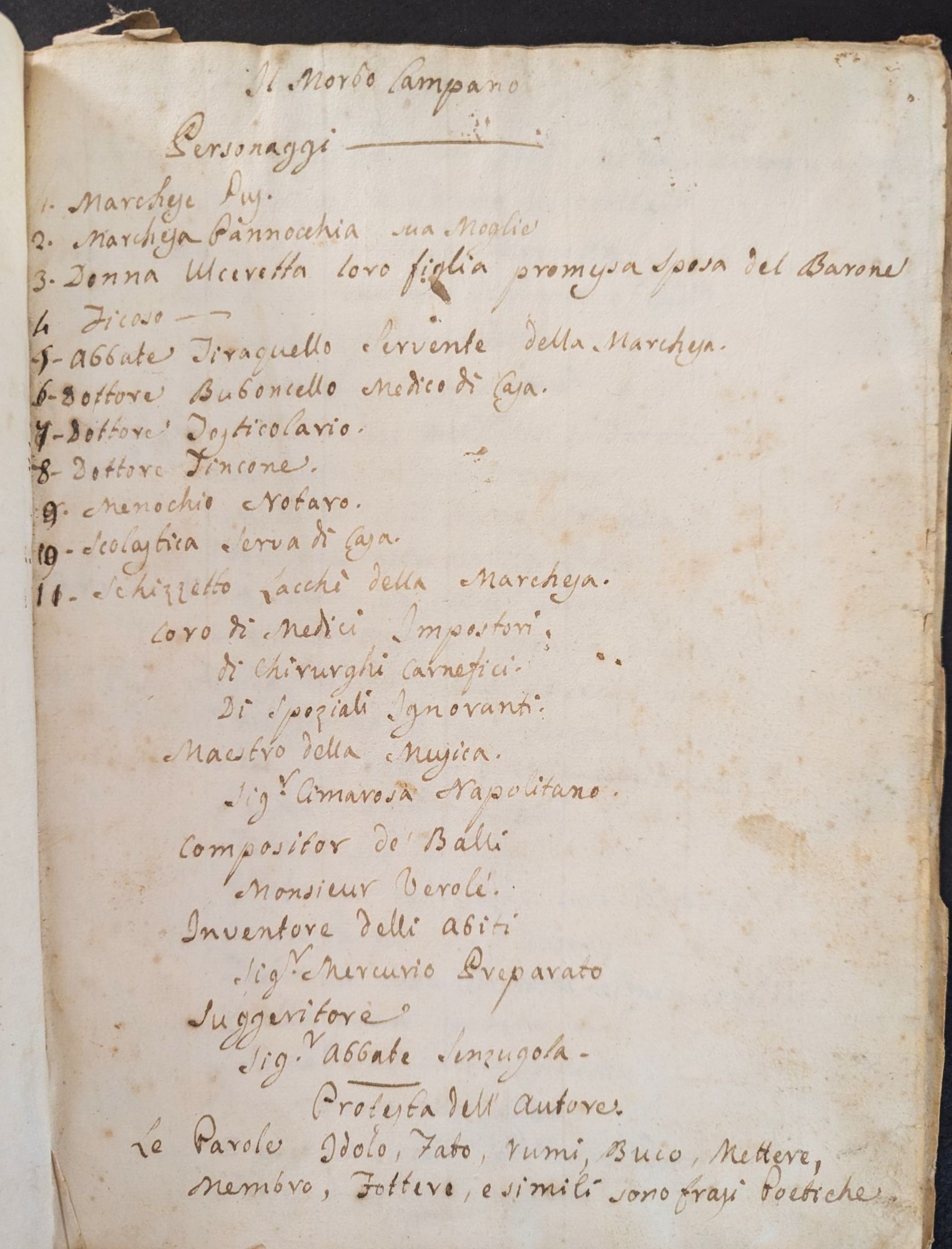
Il Morbo Campano (the Neapolitan Disease) is a satirical and comedic drama referencing the epidemic of syphilis that plagued the society of the time. Its premise the proposed marriage of the daughter of La Marchesa Pannocchia to the il Ficoso. The names of the characters make clear the “hidden” impact of the disease on particular parts of the body and the secrets concealed from the aloof fiancé. A few examples will suffice:
Marchese Pus, {no explanation required}.
Marchesa Pannocchia sua Moglie {Marchesa Corn Cob referring to the similarity of corn silk to a woman’s sacred bush.}
Donna Ulceretta loro Figlia, promessa sposa del Barone {Ulceretta, the promised bride to the Baron, her name referring to the wound caused by the disease.}
Il Barone Ficoso {Baron Figgy or Pussy)
Dottore Testicolario {Doctor Testicles}
The entire work is in rhyming verse and contains continuous puns and double meanings referring to illness and sex. It is clearly inspired by the opera of the same name, traditionally attributed to Domenico Cimarosa but this reference is unsubstantiated. More recently Raffaele Arauco has been identified as the author and the play under the same title was first printed in Chiavenna in 1782. Its debut was to take place in the Uccellopoli Theater, or the Cocktown Theater. Enough said.
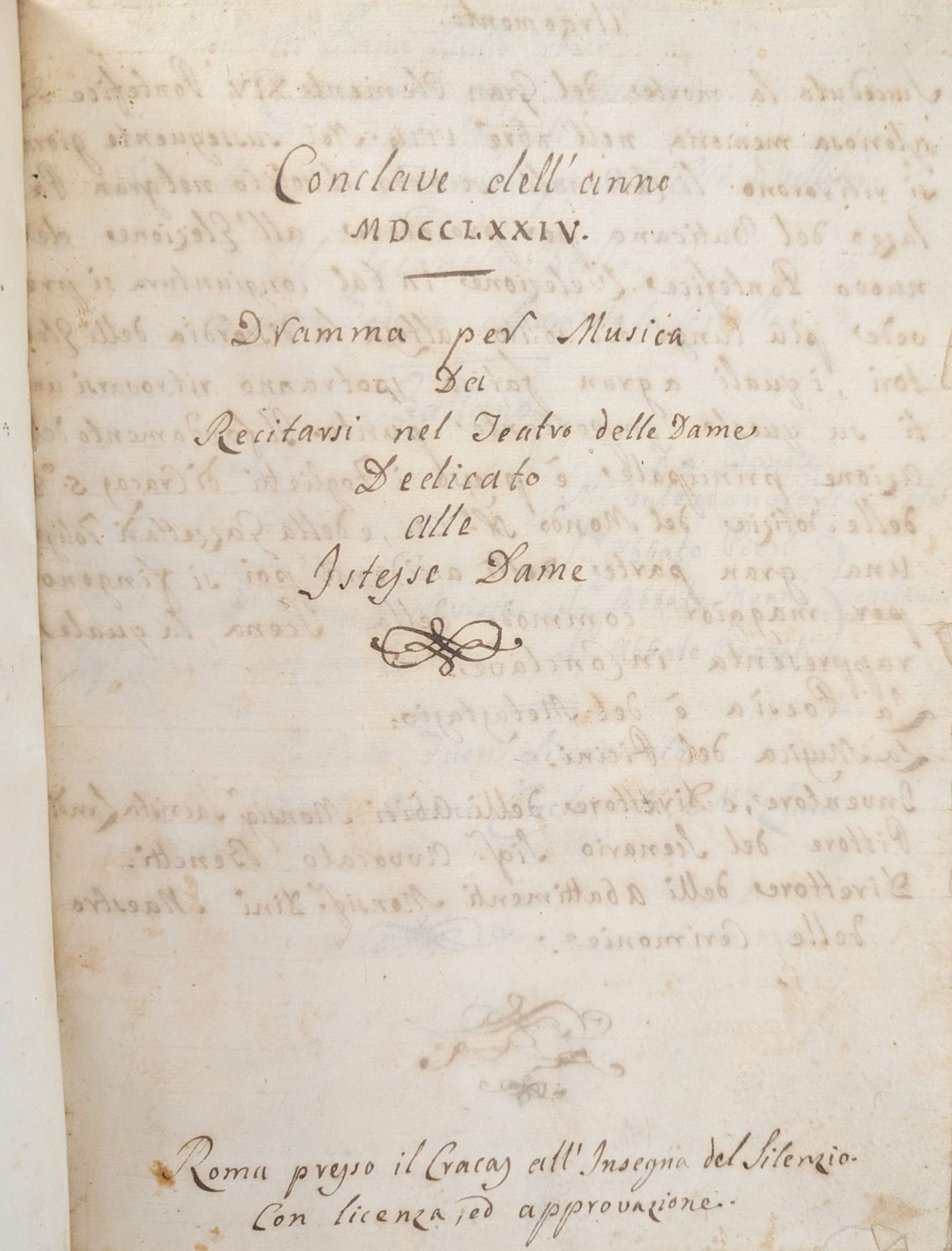
Bound with: Il Conclave dell anno MDCCLXXIV, is one of the many manuscript copies of this work that had been circulated mostly in handwritten form since the book was placed on the Index. The play revolves around the Conclave of 1774-75 where Giovanni Angleo Braschi was elected pope and he took the name Pius VI. The tension in the Conclave created two camps of vehement supports, one anti-Jesuit and the other supporting the Society. The author, taking the anti-Jesuit position was thought to be Abbott Gaetano Sertor who compiled the text of the libretto and after its’ release was promptly placed in the jails in one of the papal prisons.
“The death of a pope frequently presented an opportunity for the citizens of Rome to vent their anti-clerical feelings, often in the context of satires, sometimes salacious, directed at either the late pope or the cardinals. In 1774, the Governor of Rome had occasion to ban a drama entitled The Conclave for offending the "dignity, decorum, and venerable representation of the Sacred College, as well as other persons as subjects" [Pattenden].
On the verso of the title-page there is a note which states that the text is by Metastasio and music by Picini. The final leaf of this manuscript is missing and the previous owner, Luigi Vittori copied the missing text on two small pieces of paper, thus completing the play.
The original edition of the printed work appeared in Rome by Kracas in 1774 and this manuscript text is based on the printed edition. is a very rare book indeed. There is a copy in Palermo and one at the Fondazione Cini in Venice. No copy city in America and a copy from the collections at the Bayerische Staatsbibliothek has been digitized.
E. H. Wilkins. the History of Italian Literature, Harvard University Press 1954, pp. 300-303. Miles Pattenden. Electing the Pope in Early Modern Italy, Oxford University Press, 2017, pp. 14.
.
Details
Title
(Cimarosa, Domenico {attributed}) Il Morbo Campana. (Italy. N.d. but last quarter of the 18th century. 52 leaves including 2 blanks. [Bound With:] (Abbot Sertor {attributed to Pietro Metastasio}). Il Conclave dell anno MDCCLXXIV. Dramma per Musica dei Recitarsi nel Teatro delle Dame Dedicato alle Istesse Dame. Roma presso il Caracas all’insegna del Silenzo, No date (Italy, after 1774). 38 leaves
Condition
Unknown
Publisher
Italy
Date
Late 18th Century