

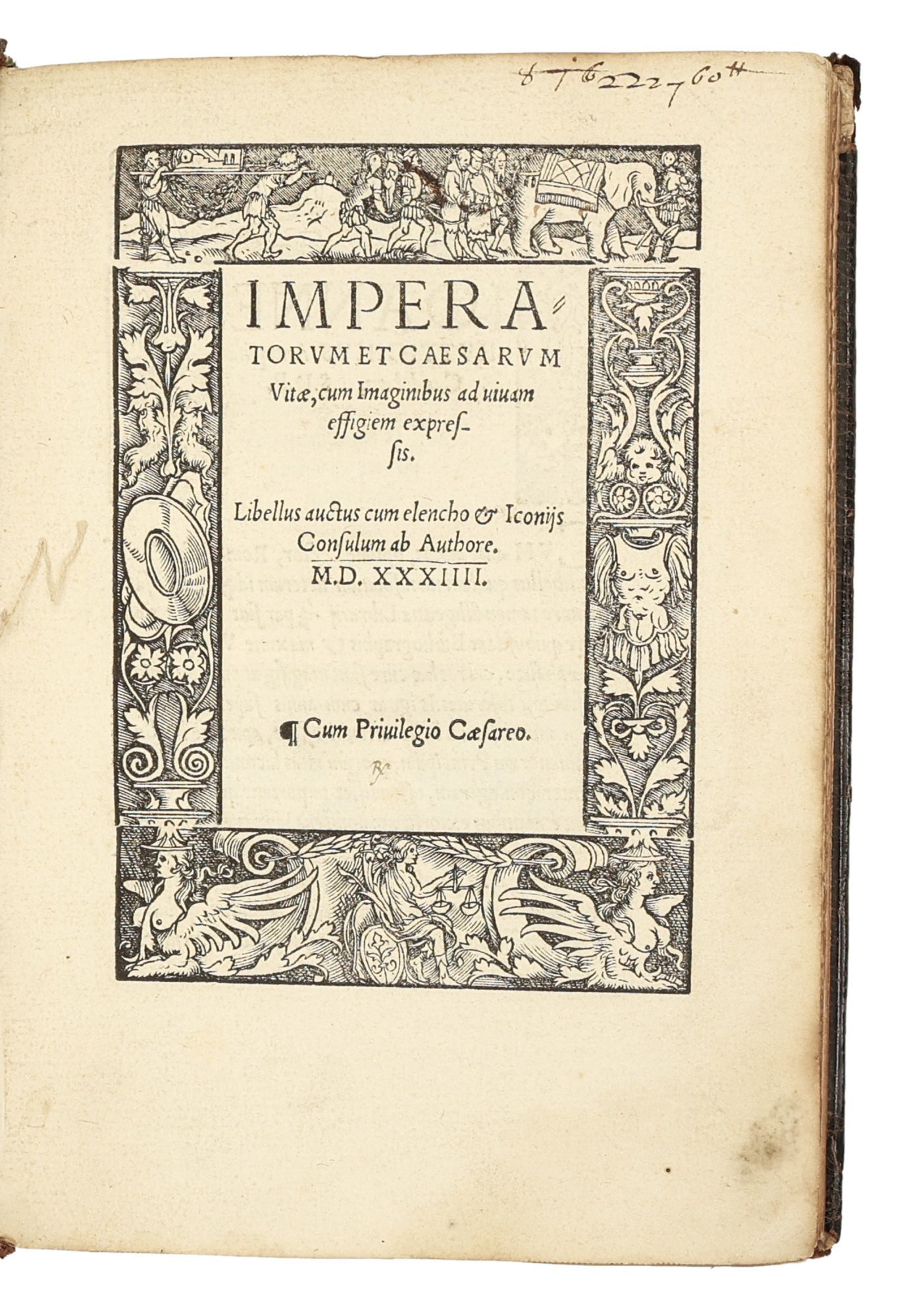
Imperatorum et Caesarum Vitae, cum Imaginibus ad vivam effigiem expressis. Libellus auctus cum elencho & Iconiis Consulum ab Authore. M.D. XXXIIII
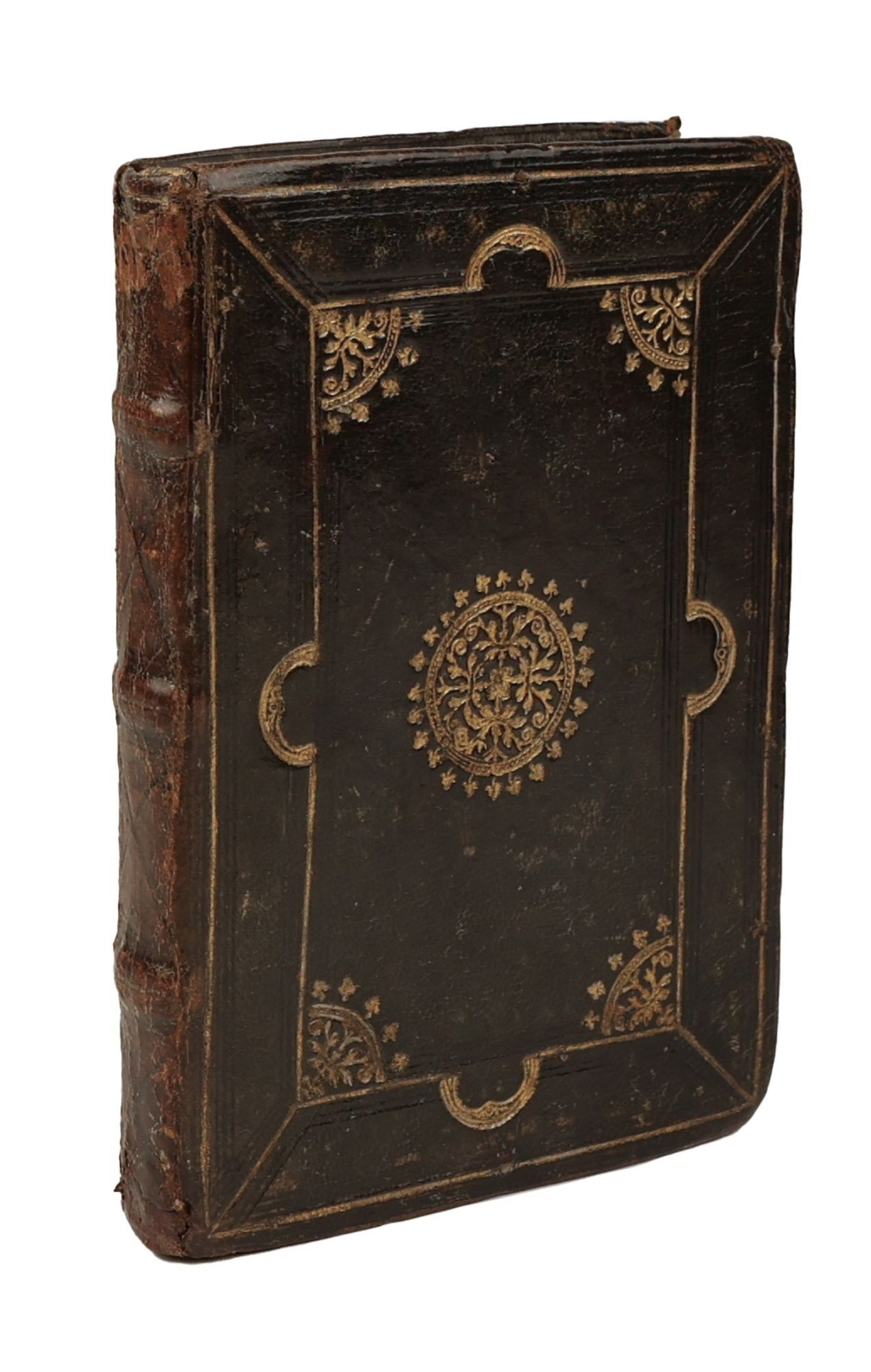
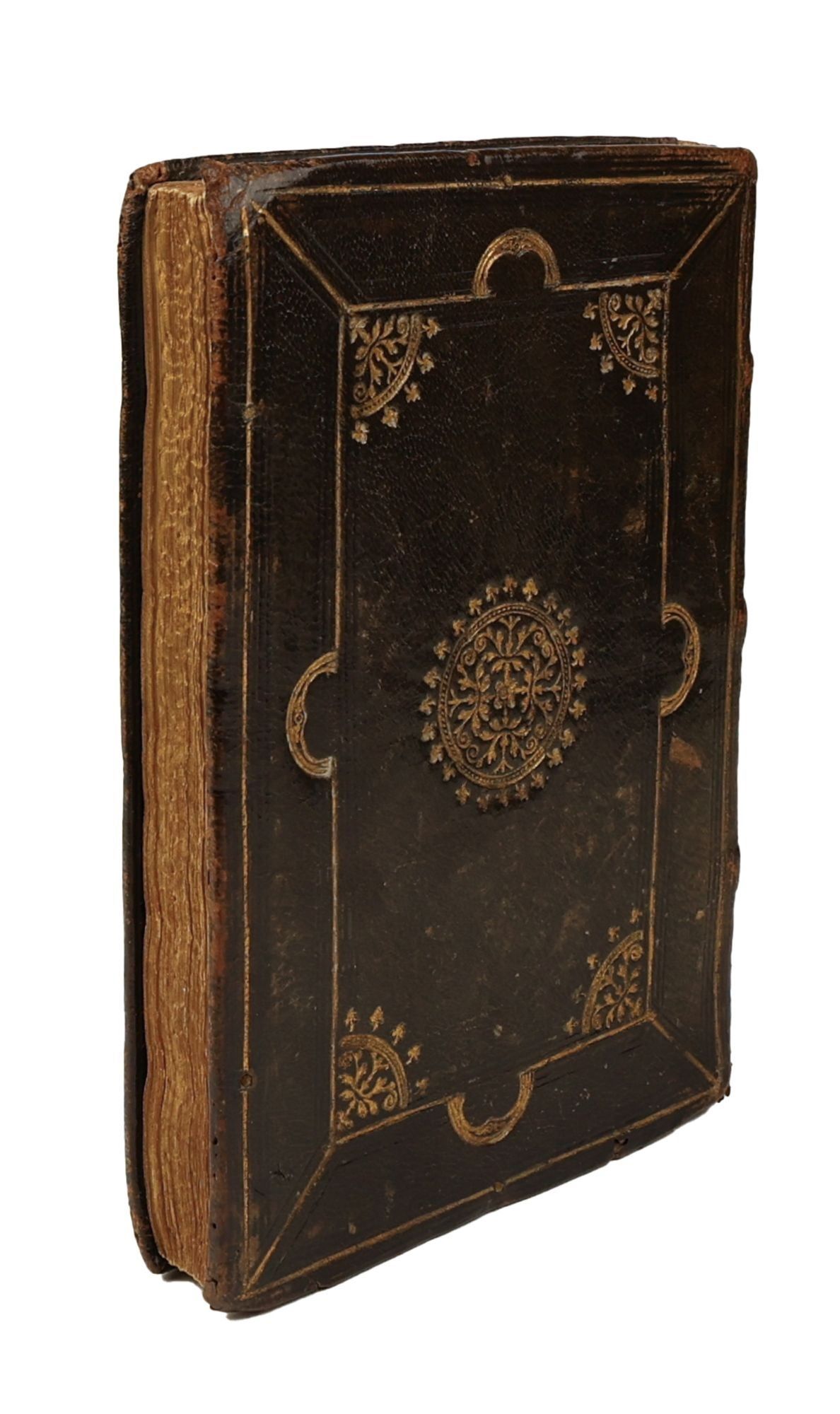
- Hardcover
- Strasbourg: Wolfgang Kopfel, 1534
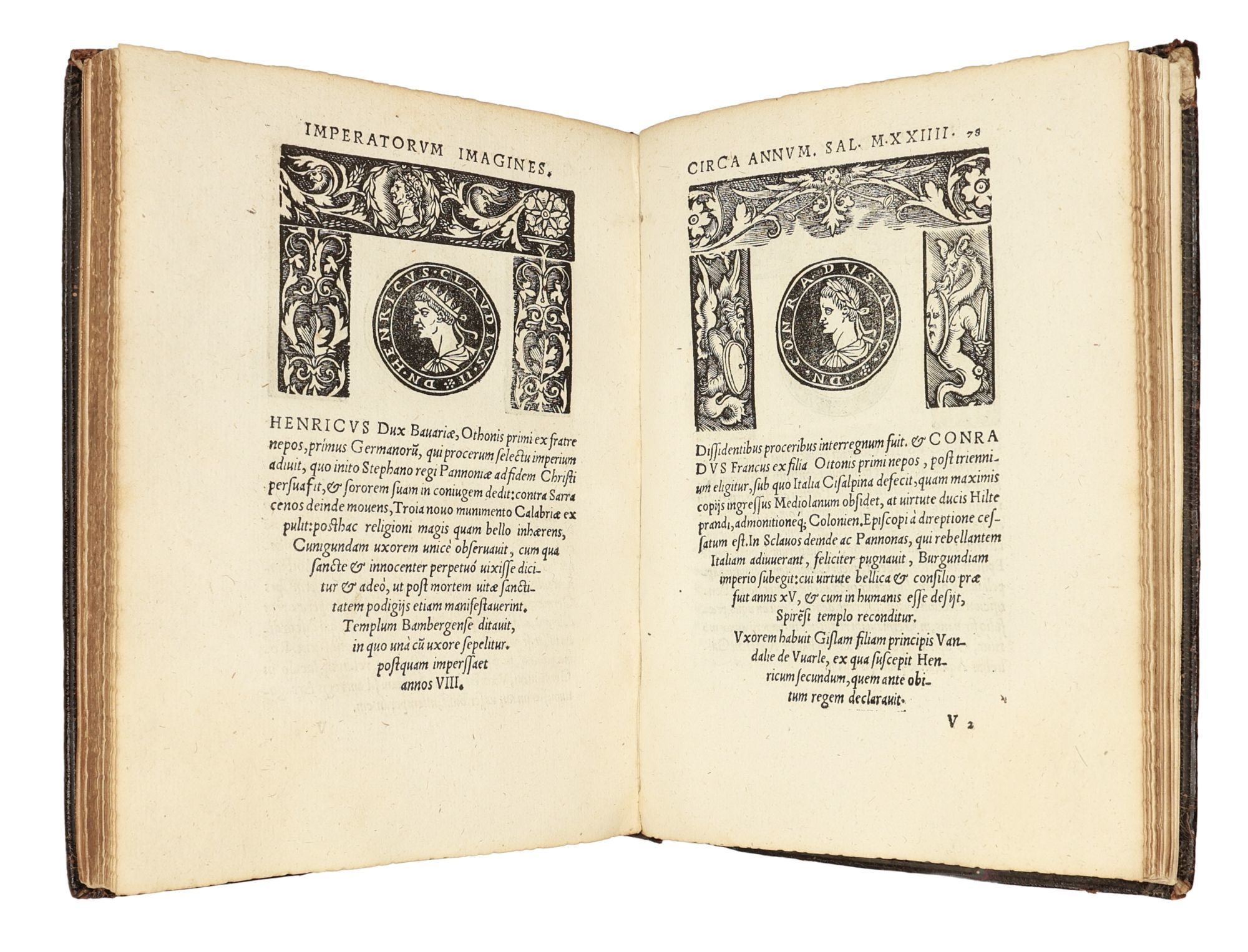
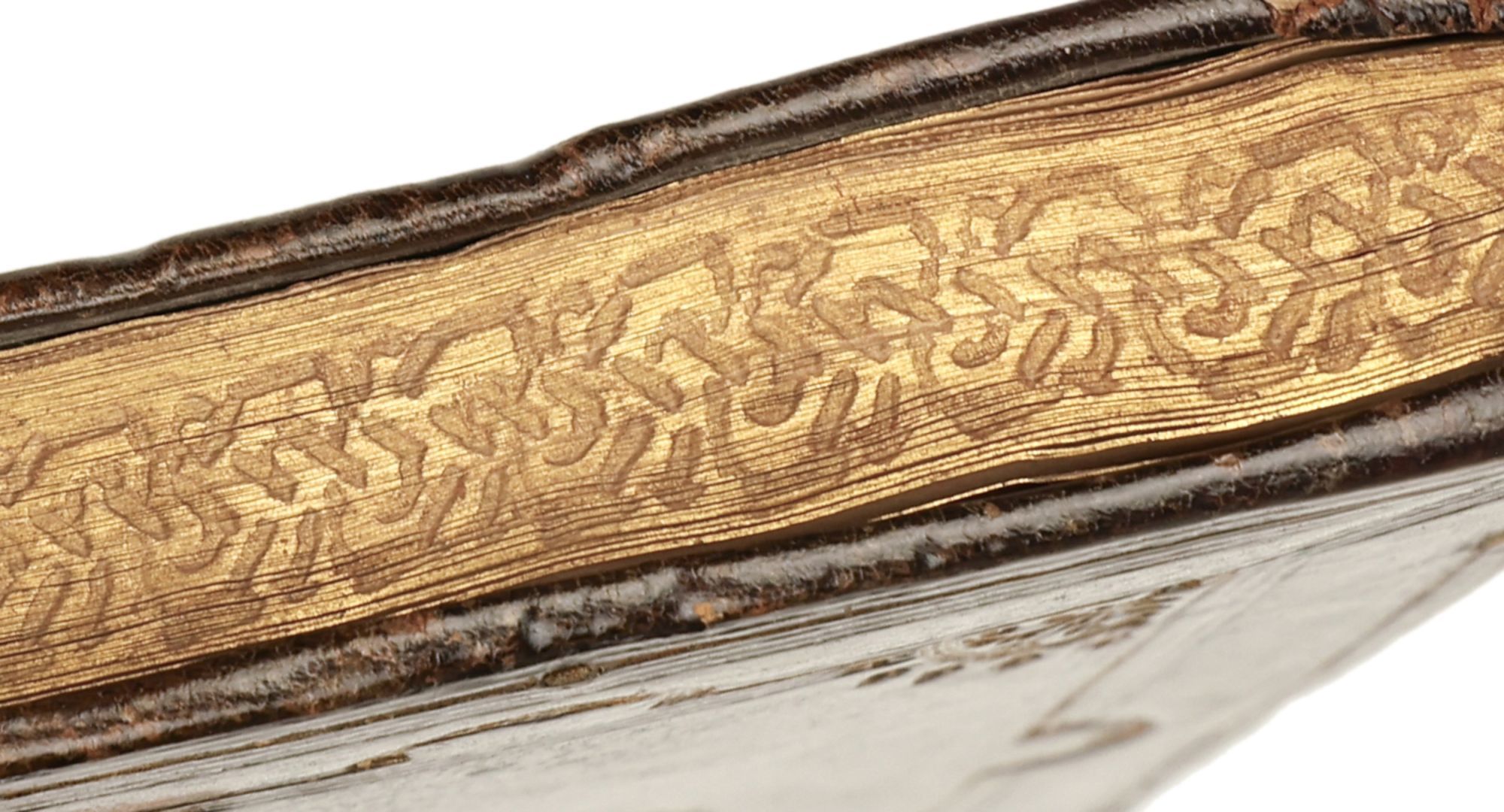
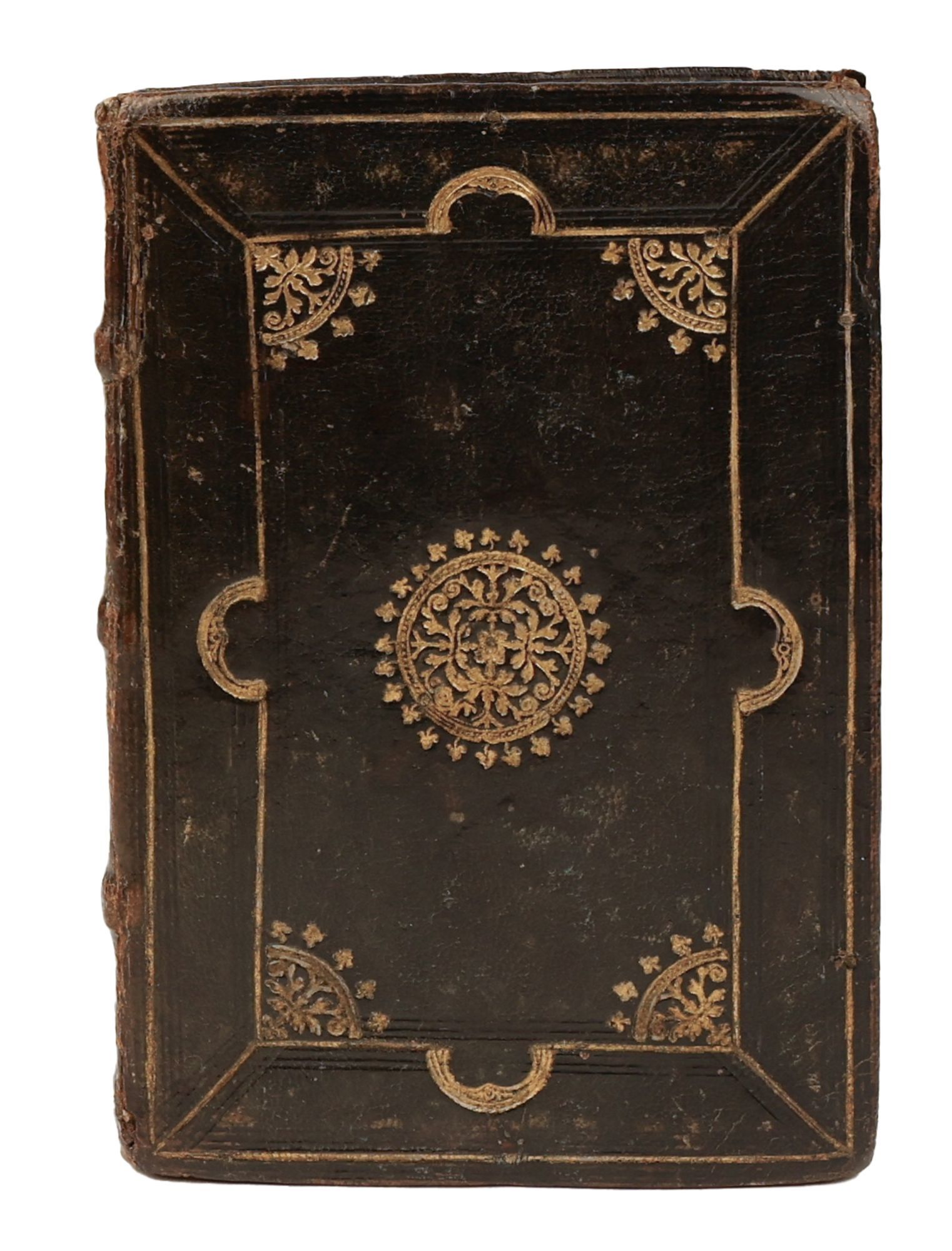
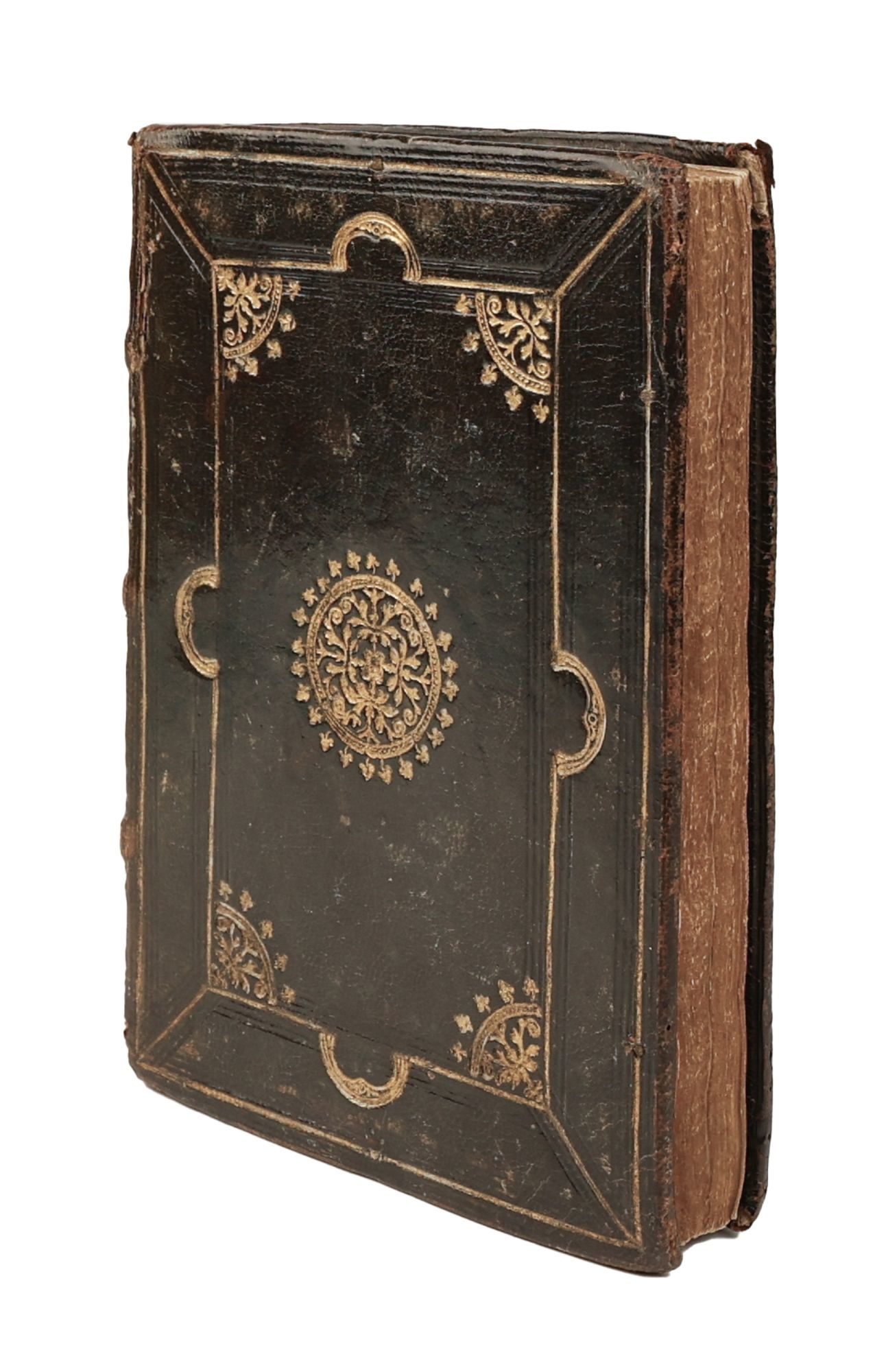
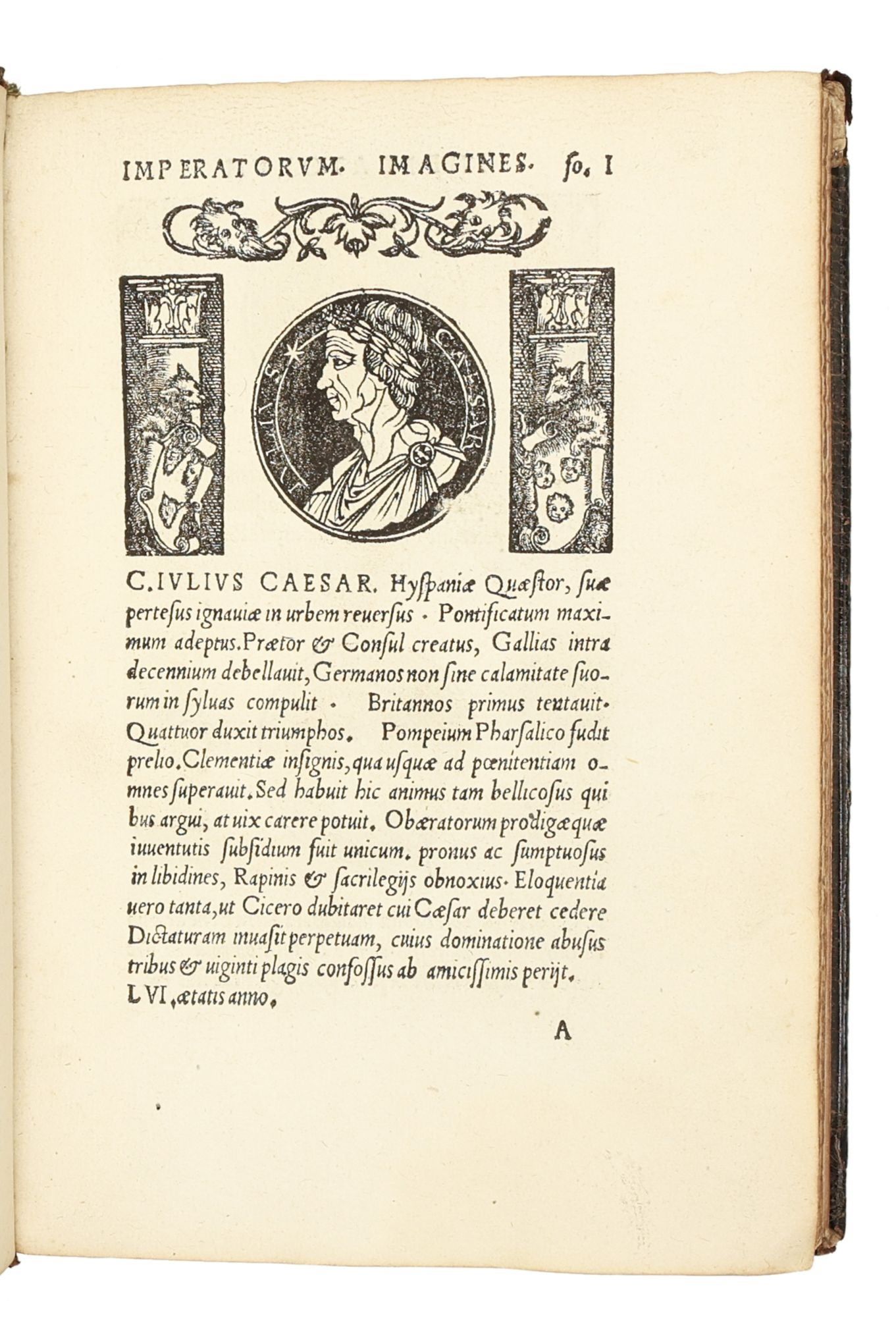
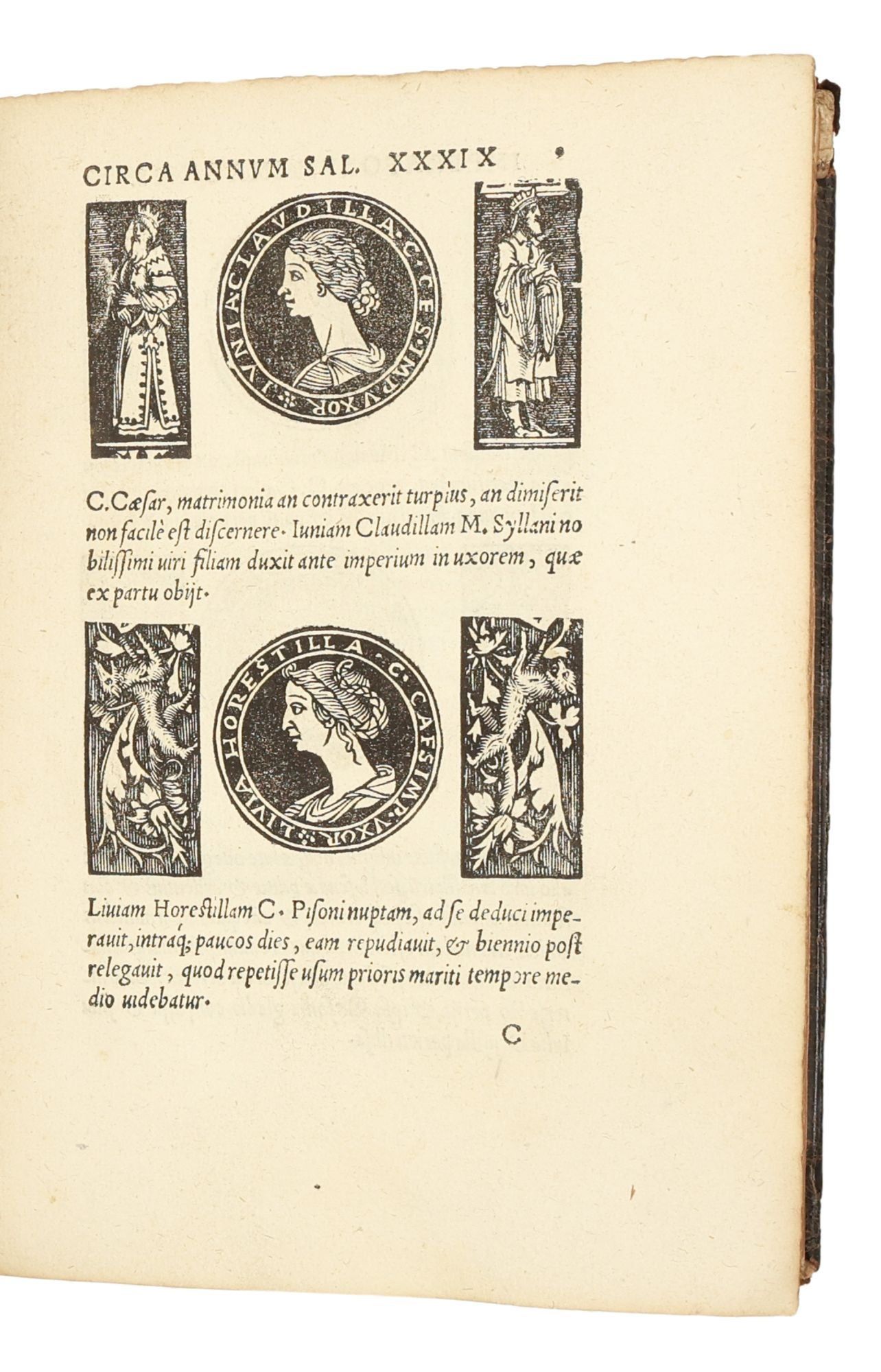
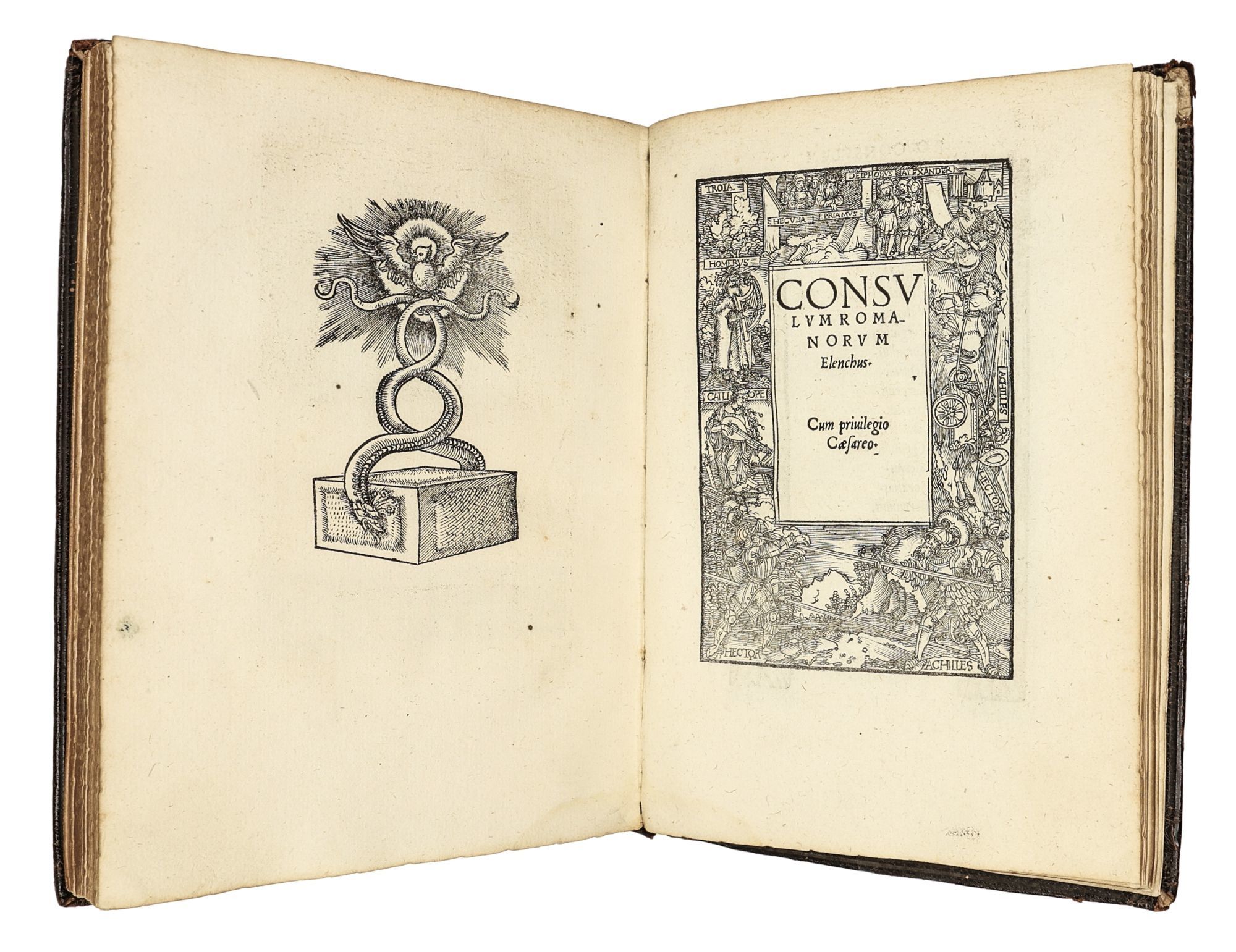
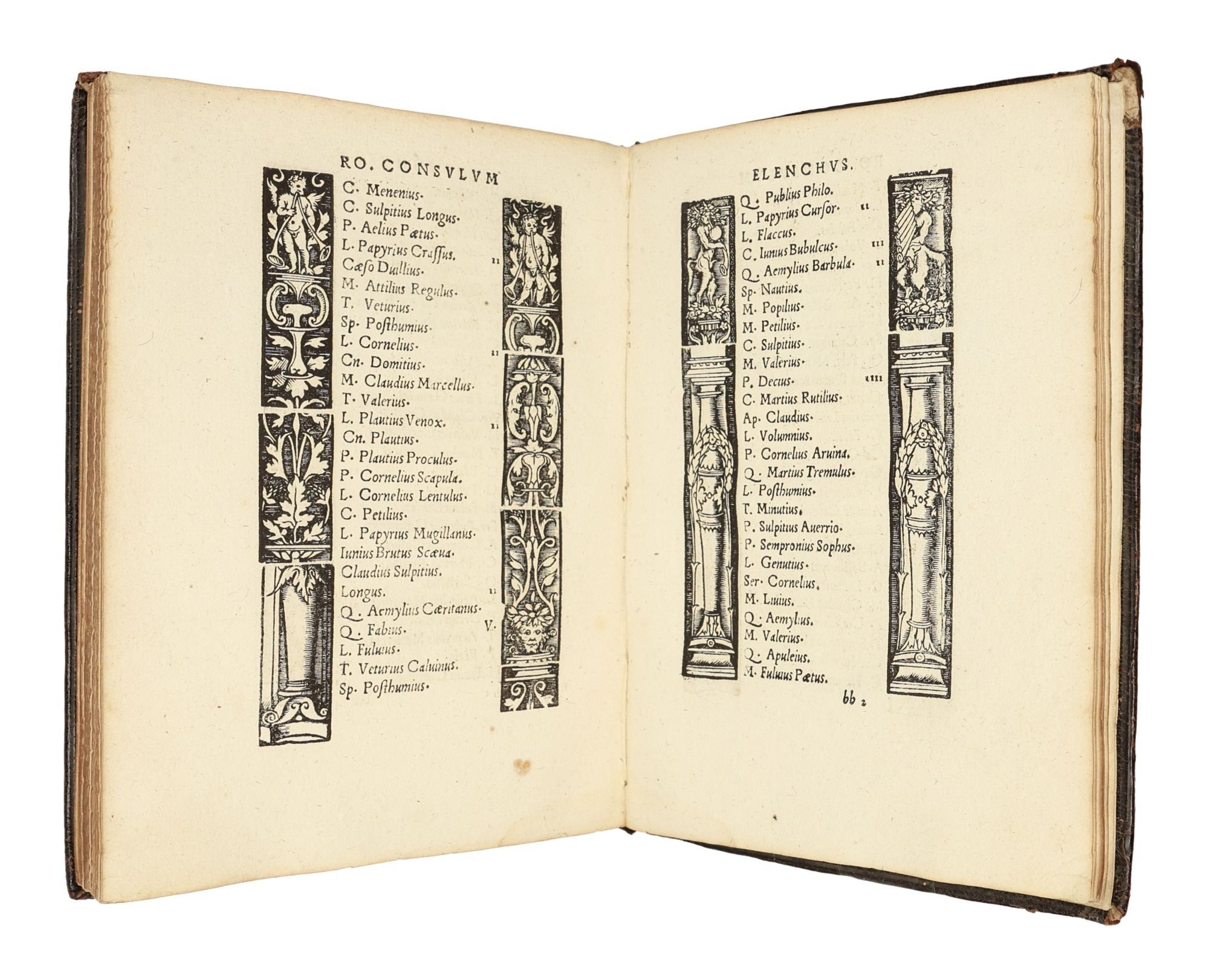
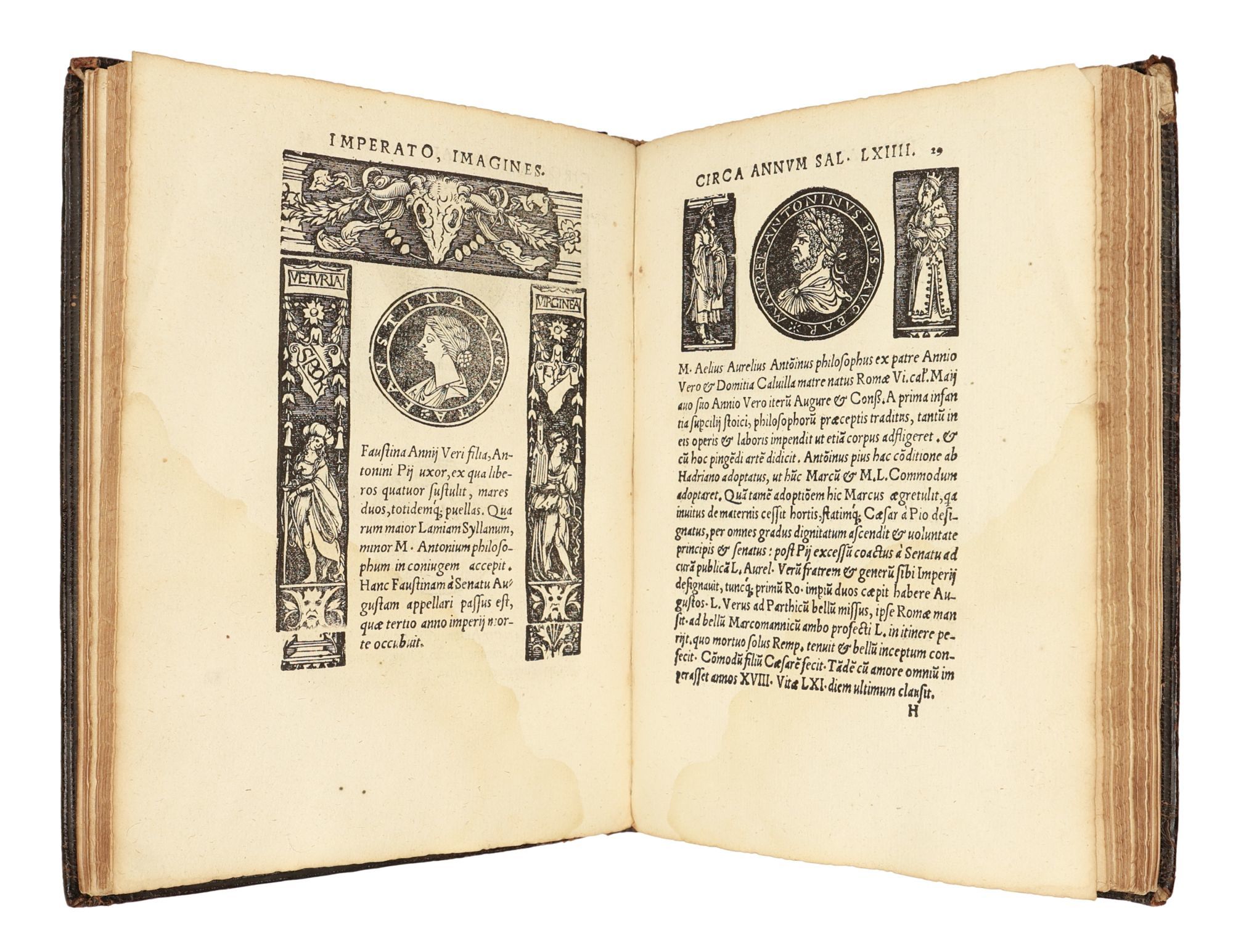
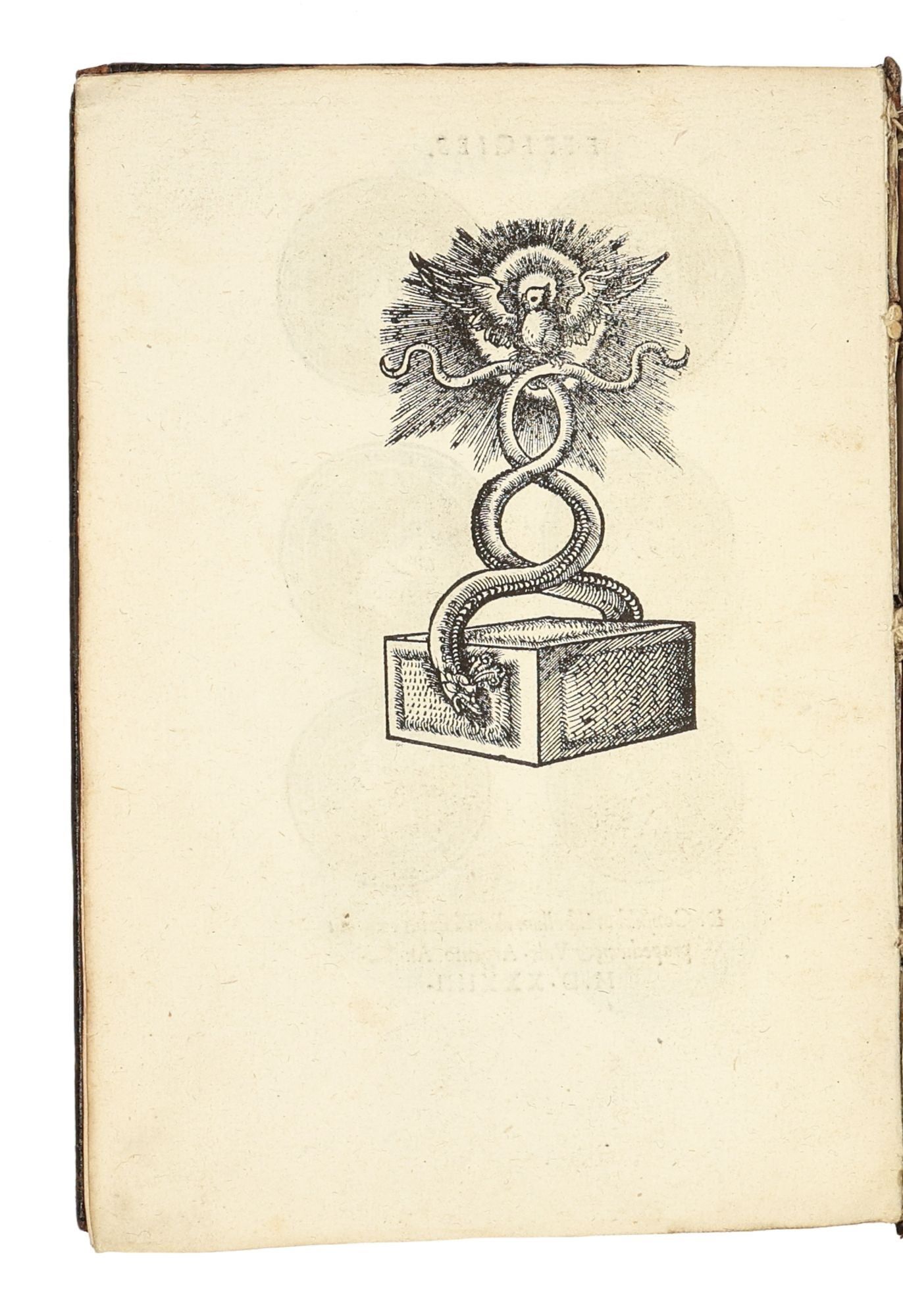
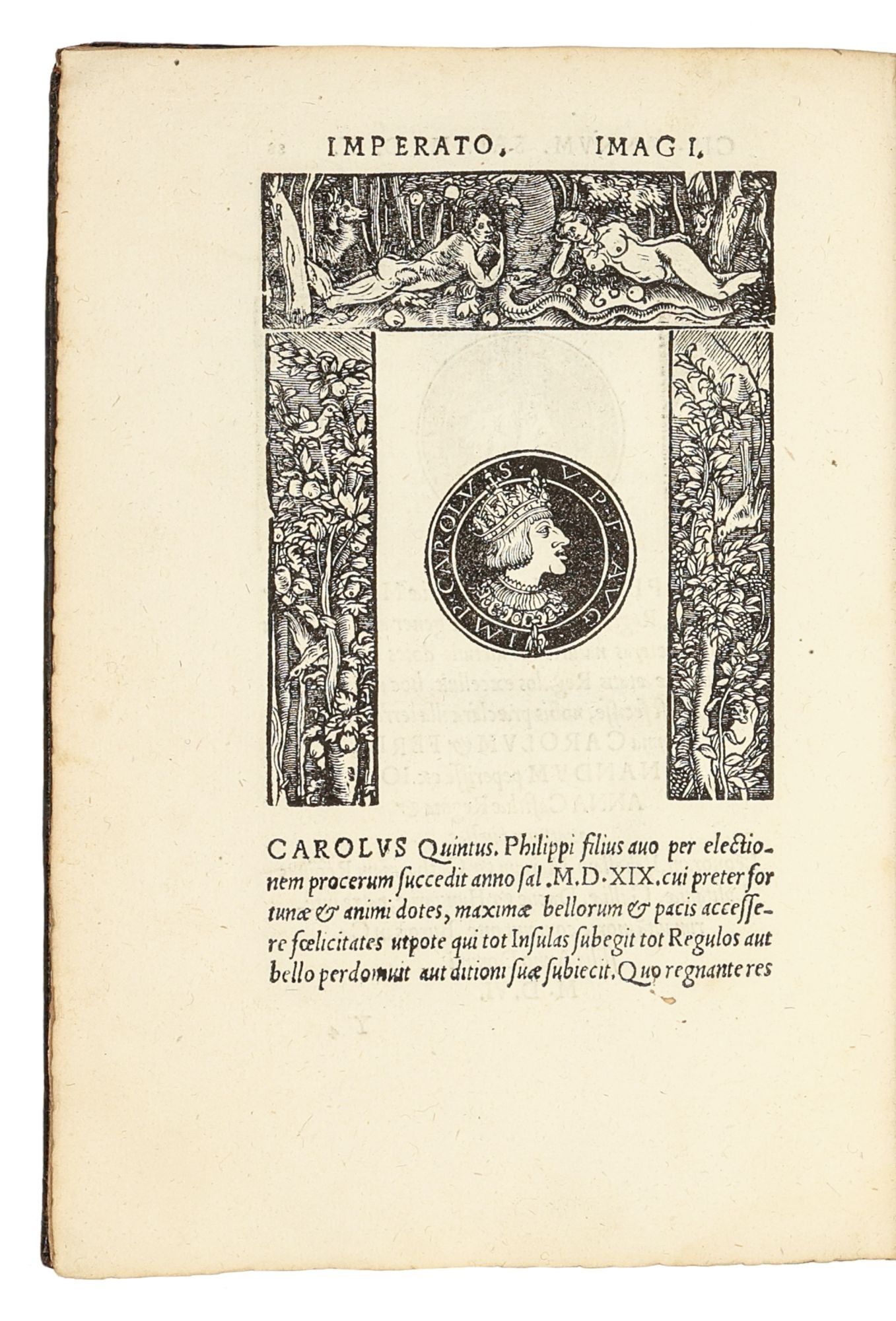
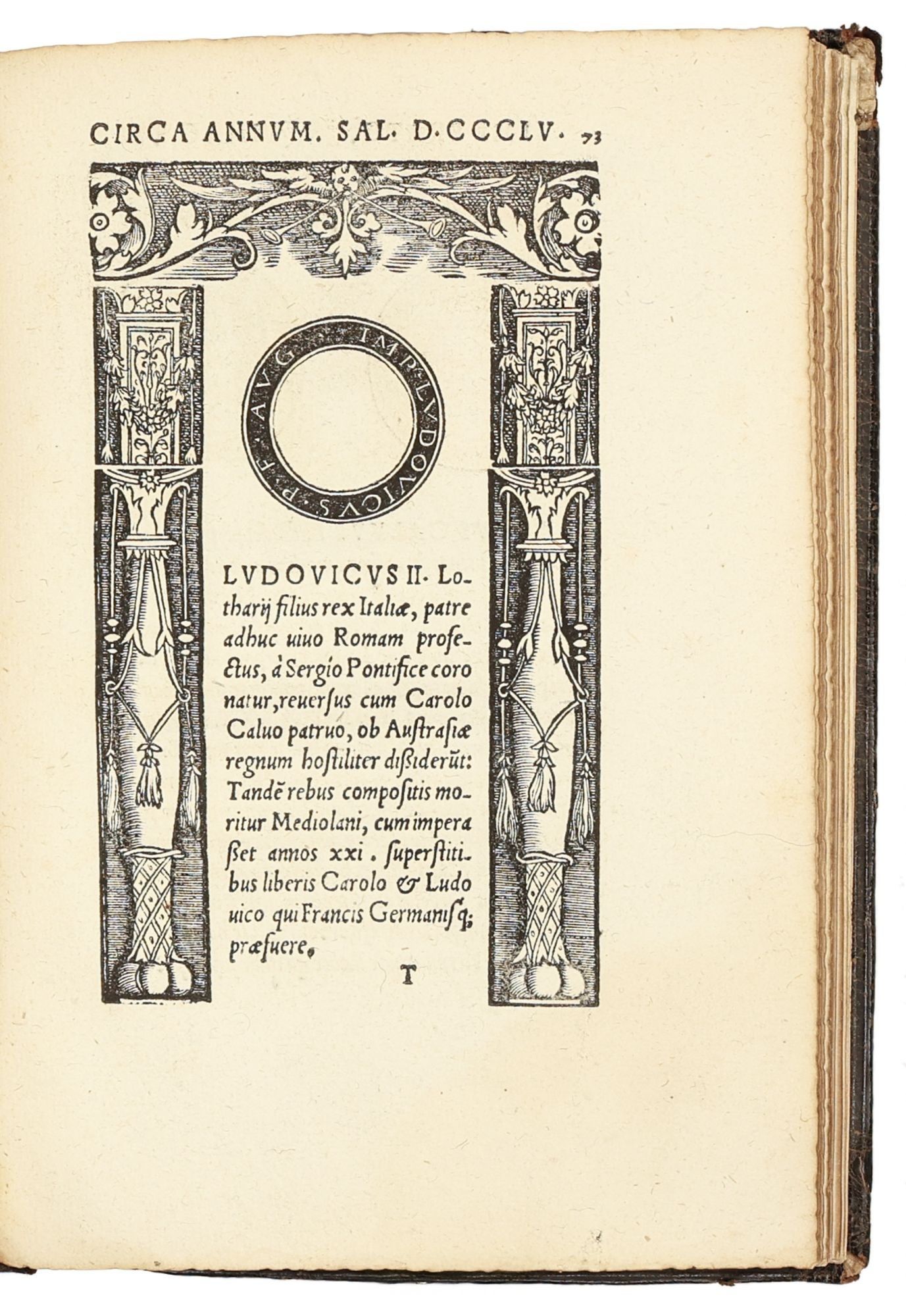
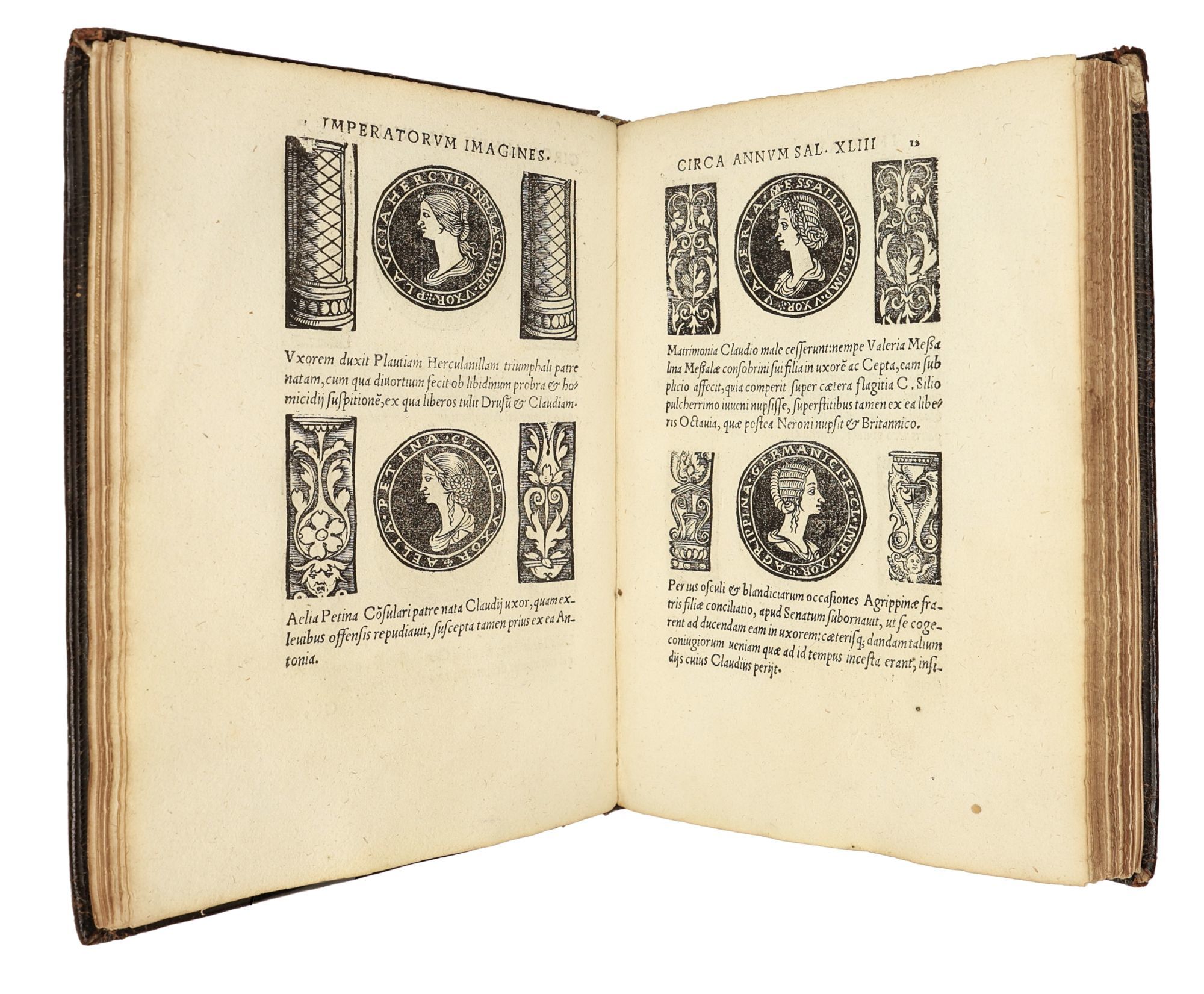
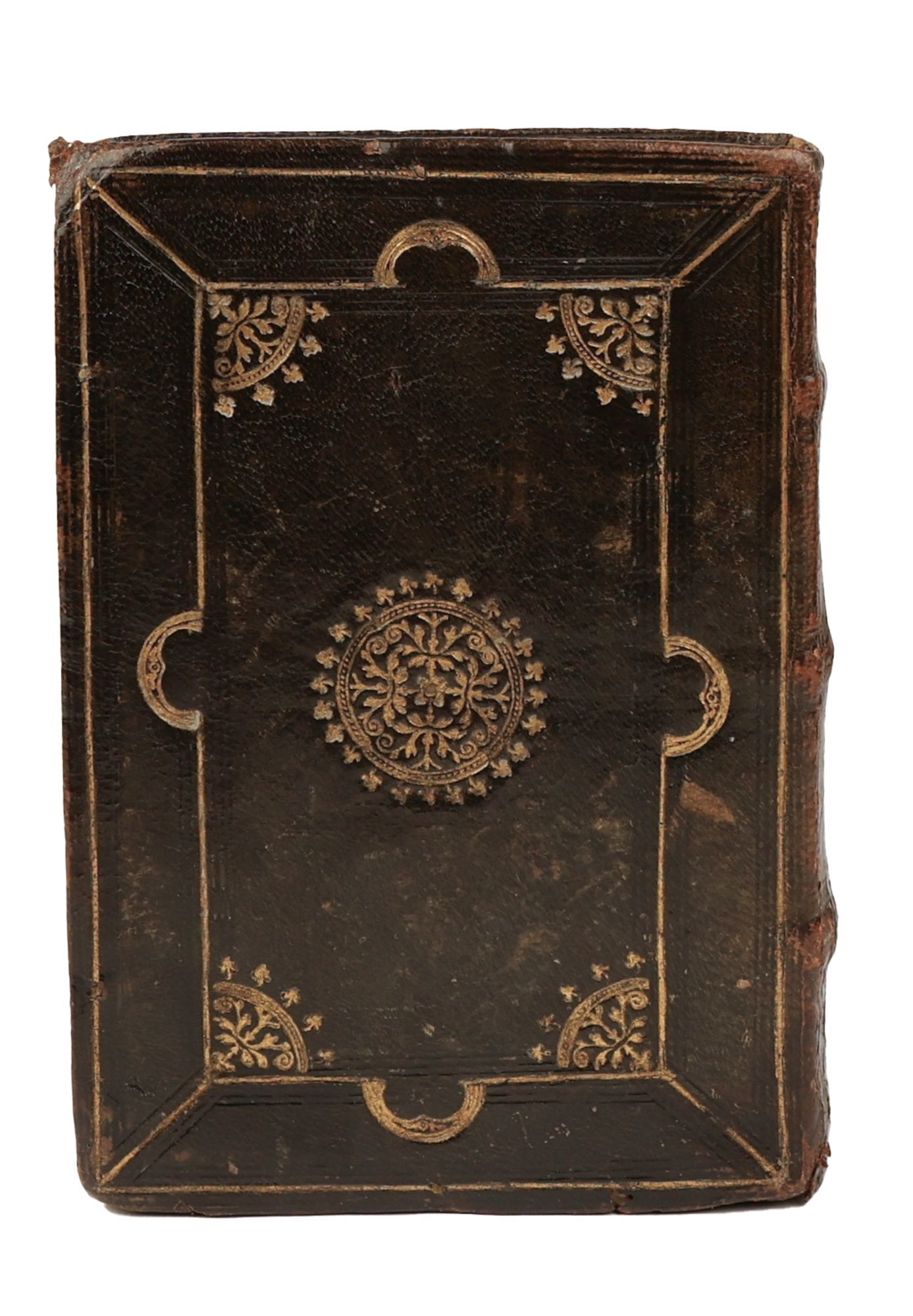
Strasbourg: Wolfgang Kopfel, 1534. FOURTH AND MOST COMPLETE EDITION. Hardcover. Fine. This is "the first with the ‘Elenchus’ and the first with this title." (Fairfax Murray) Bound in fine contemporary calf, elaborately tooled in gold, edges gauffered and gilded. While the binder is unknown, similar bindings were made in Bologna, Rome, and Venice in the 1520s. Minor wear to the binding, with small losses to the leather, at the upper corners and a small patch along the upper hinge. Head and foot of spine carefully restored. A tall copy with intermittent light damp-stains and light finger-soiling. This volume is profusely illustrated with 268 woodcut images, most of which are by Hans Weiditz. "The medallions of the emperors [and their families] commence with Julius Caesar and end with Frederick III, Maximilian I and his son Philip the Fair, Charles V and Ferdinand I. Most are enclosed in ornamental borders with fauns, cupids, Adam and Eve, Godfrey of Bouillon, Hercules etc." (Fairfax Murray) There are also two divisional woodcut title pages and two leaves bearing large printer’s devices.
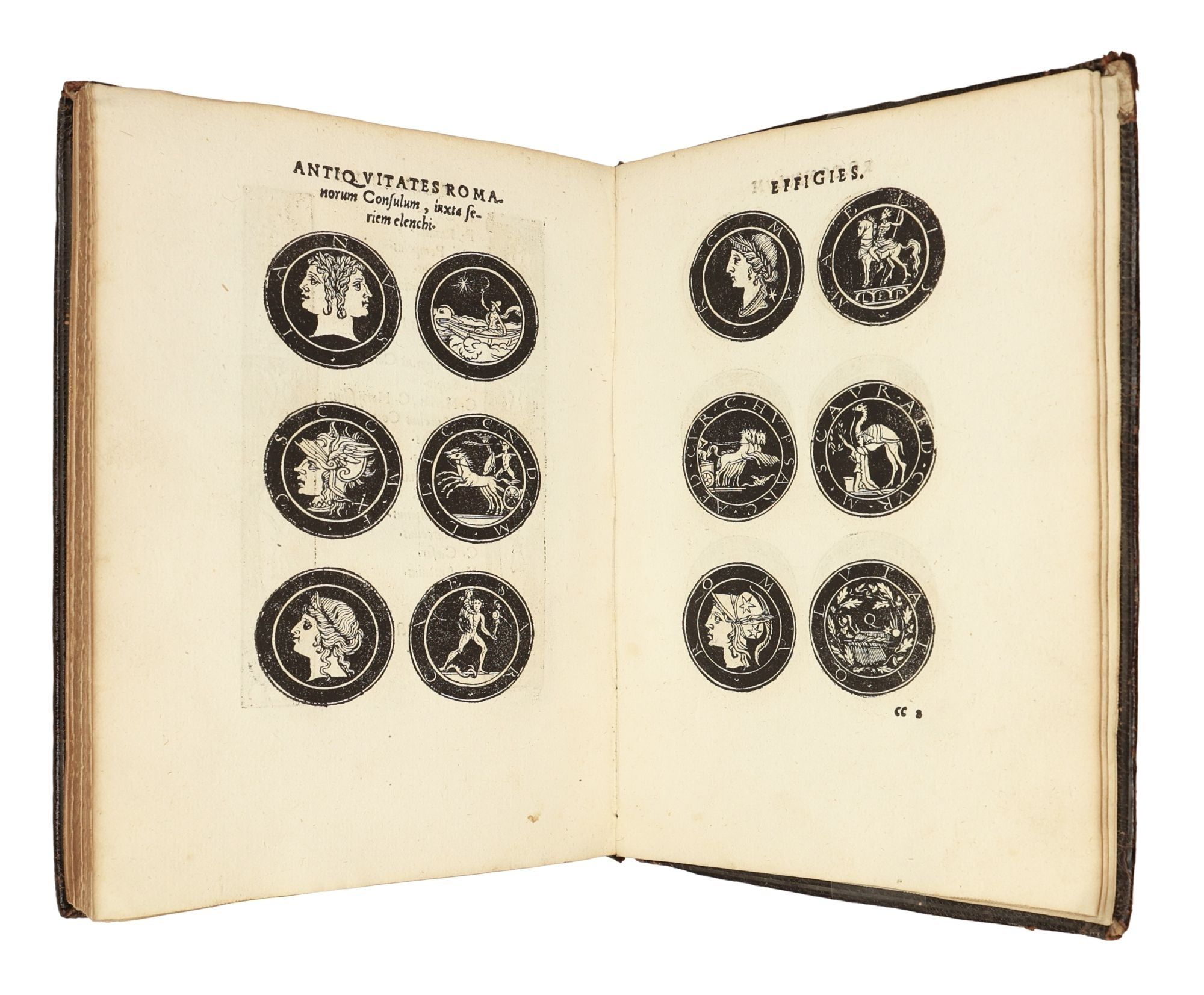
This edition includes a supplemental section: "Elenchus Consulum Romanorum" a chronological list of the consuls printed between decorative woodcut borders. This section concludes with a series of woodcut medallions. The ornate divisional title border shows scenes from the Iliad including Achilles dragging Hector around the walls of Troy. "Besides the borders, there are 84 medallions, obverse and reverse, in the same style as the preceding, apparently by Weiditz." (Fairfax Murray)
"A friend and correspondent of Erasmus (who dedicated his translation of Lucian's 'Convivium' to Huttich) and Ulrich von Hutten, Huttich studied at the University of Mainz when the city was a stronghold of the new antiquarian learning. While accompanying Frederick II on a diplomatic mission to Spain, Huttich collected pamphlets describing Spanish and Portuguese voyages to the Americas, later published as 'Novus Orbis' (1532).
"Huttich's work falls into the category of Bildnisvitenbücher, collections of portraits of famous men and women, accompanied by biographical sketches… The second edition of Vasari's 'Lives of the Artists' (1568), in which each biography is accompanied by a woodcut portrait elaborately framed, was clearly influenced by this type of popular literature. The Renaissance cult of the hero, of 'virtus' and 'fama', helps explain the widespread appeal of these works, in which the humanists, as Rave points out, sought to combine the two devices employed by the ancients to immortalize their great men, the 'vita' and the 'effigies'. The growing sense of national identity during this period also played a part in the production of volumes devoted to kings, legendary heroes, and literary lights of France and Germany, a motivation that explains much of the content in the numismatic books of Huttich and Rouille."(Cunnally, "Images of the Illustrious")
The first section covers the imperial families from Julius Caesar to Gallienus, the son of Valerian. This section is followed by "thirty tyrants", a group of third-century would-be usurpers and self-proclaimed Augusti and Caesares, and the emperors and Augusti from Aurelian to Theodosius II and Valentinian III. This section is followed by the emperors of the Eastern Empire based at Constantinople, beginning with Martian and concluding with Michael Cyropalates. The revival of the western imperial line begins with Charlemagne and concludes with the reigns of Charles V, Emperor of Germany and his brother Ferdinand I.
This edition includes a supplemental section: "Elenchus Consulum Romanorum" a chronological list of the consuls printed between decorative woodcut borders. This section concludes with a series of woodcut medallions. The ornate divisional title border shows scenes from the Iliad including Achilles dragging Hector around the walls of Troy. "Besides the borders, there are 84 medallions, obverse and reverse, in the same style as the preceding, apparently by Weiditz." (Fairfax Murray)
"A friend and correspondent of Erasmus (who dedicated his translation of Lucian's 'Convivium' to Huttich) and Ulrich von Hutten, Huttich studied at the University of Mainz when the city was a stronghold of the new antiquarian learning. While accompanying Frederick II on a diplomatic mission to Spain, Huttich collected pamphlets describing Spanish and Portuguese voyages to the Americas, later published as 'Novus Orbis' (1532).
"Huttich's work falls into the category of Bildnisvitenbücher, collections of portraits of famous men and women, accompanied by biographical sketches… The second edition of Vasari's 'Lives of the Artists' (1568), in which each biography is accompanied by a woodcut portrait elaborately framed, was clearly influenced by this type of popular literature. The Renaissance cult of the hero, of 'virtus' and 'fama', helps explain the widespread appeal of these works, in which the humanists, as Rave points out, sought to combine the two devices employed by the ancients to immortalize their great men, the 'vita' and the 'effigies'. The growing sense of national identity during this period also played a part in the production of volumes devoted to kings, legendary heroes, and literary lights of France and Germany, a motivation that explains much of the content in the numismatic books of Huttich and Rouille."(Cunnally, "Images of the Illustrious")
The first section covers the imperial families from Julius Caesar to Gallienus, the son of Valerian. This section is followed by "thirty tyrants", a group of third-century would-be usurpers and self-proclaimed Augusti and Caesares, and the emperors and Augusti from Aurelian to Theodosius II and Valentinian III. This section is followed by the emperors of the Eastern Empire based at Constantinople, beginning with Martian and concluding with Michael Cyropalates. The revival of the western imperial line begins with Charlemagne and concludes with the reigns of Charles V, Emperor of Germany and his brother Ferdinand I.
Details
Title
Imperatorum et Caesarum Vitae, cum Imaginibus ad vivam effigiem expressis. Libellus auctus cum elencho & Iconiis Consulum ab Authore. M.D. XXXIIII
Author
RENAISSANCE. NUMISMATICS. Huttich, Johann (ca. 1490-1544); Weiditz, Hans (ca. 1495- ca. 1536), artist
Binding
Hardcover
Condition
Fine
Publisher
Wolfgang Kopfel: Strasbourg
Date
1534
Edition
FOURTH AND MOST COMPLETE EDITION