

LGBTQ+ History Lesbian Feminist Periodical Hot Wire Documenting Women's Music and Cultural Activism in Chicago 1988 to 1994
- 1988
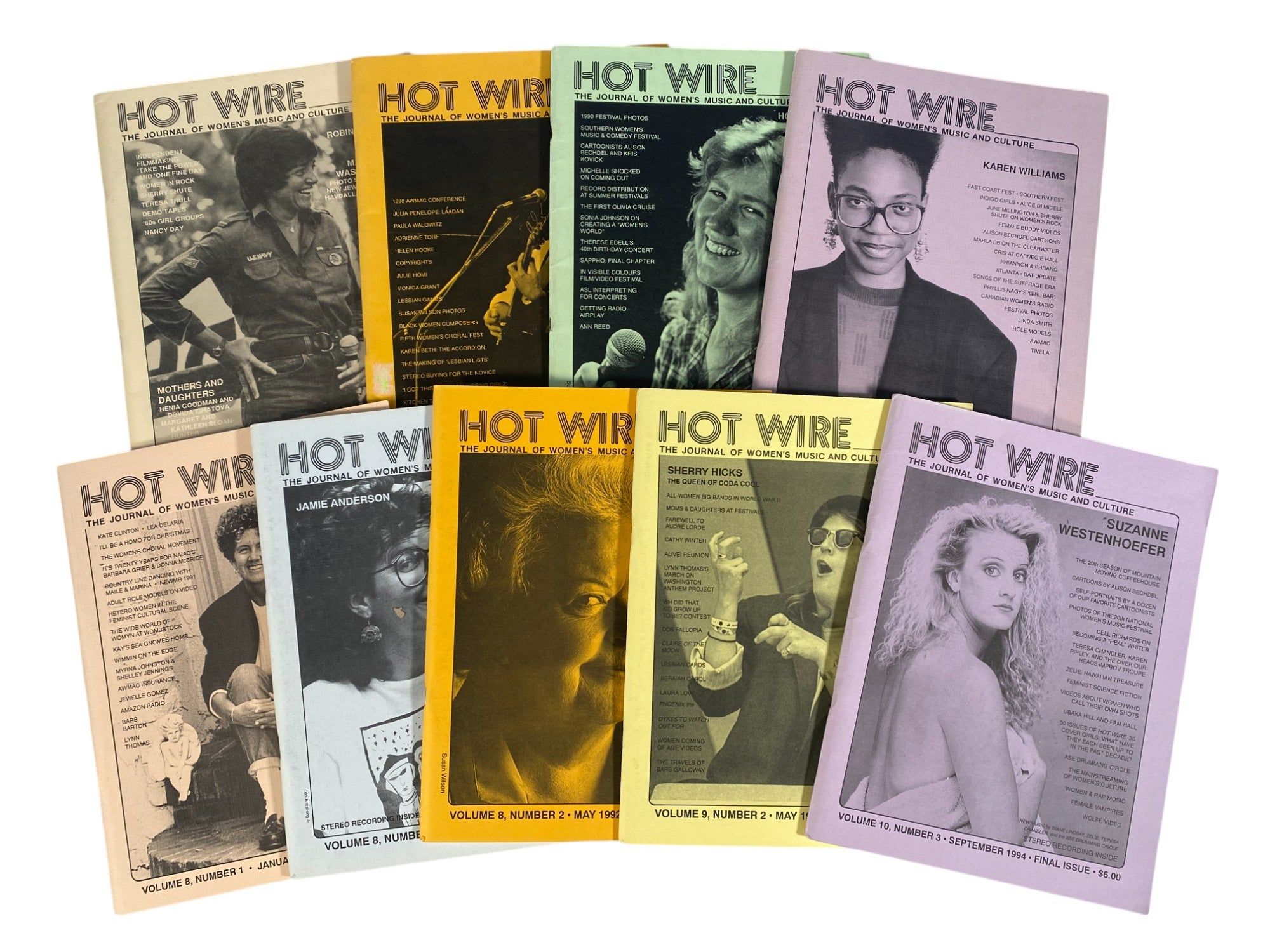
1988. Armstrong Jr., Toni L. (ed.). Hot Wire: The Journal of Women's Music and Culture (1988-1994) documents lesbian feminist cultural production through coverage of music, performance, publishing, and community organizing during the late twentieth century. Produced in Chicago, the periodical established a platform for lesbian artists, activists, and writers at a time when independent feminist media sustained networks of communication outside mainstream publishing. The journal includes interviews, essays, and reports on women's music festivals, lesbian performance, and feminist enterprises, supporting research into LGBTQ history, women's liberation, and the development of alternative media infrastructures.
Hot Wire: The Journal of Women's Music and Culture. Chicago: Hot Wire, 1988-1994. Archive of nine issues. Issues included are: [1] Volume 4, Number 2 (March 1988), featuring Robin Tyler and Cheryl Miller's "Lesbians of Color: Celebrating Common Bonds and Differences," with coverage of the 1987 March on Washington and Jorjet Harper's "Transistor Sisters"; [2] Volume 6, Number 2 (May 1990), including interviews with Heather Bishop and Laura Post and a profile of Barbara Smith and Kitchen Table Women of Color Press; [3] Volume 6, Number 3 (September 1990), with Holly Near, Michelle Shocked, and Rosetta Reitz alongside festival reports; [4] Volume 7, Number 3 (September 1991), featuring Karen Williams, Indigo Girls, and contributions by Alison Bechdel; [5] Volume 8, Number 1 (January 1992), including Margie Adam, Lisa Dietrich, and coverage of Michigan Womyn's Music Festival; [6] Volume 8, Number 2 (May 1992), focusing on women and humor with Ronnie Gilbert and Alison Bechdel; [7] Volume 8, Number 3 (September 1992), featuring Jamie Anderson, Cheryl Miller on Black lesbian filmmakers, and reports on Gulf Coast Women's Festival and OutWrite '92; [8] Volume 9, Number 2 (May 1993), including Laura Love and Seriah Carol on music and identity and retrospective protest music coverage; [9] Volume 10, Number 3 (September 1994), final issue, with Suzanne Westenhoefer and a retrospective on the publication's contributors. The issues include interviews, essays, reader correspondence, and festival documentation, with recurring sections such as "Soapbox" letters and artist features.
Published during a period when lesbian feminist media operated through independent print networks, Hot Wire documented the growth and challenges of women's music and cultural institutions across the United States. The inclusion of performers, writers, and organizers reflects the interconnected nature of artistic production and activism, while coverage of festivals and presses demonstrates the infrastructure supporting lesbian cultural expression. The final issue addresses the decline of some of these institutions in the 1990s, marking a shift in funding and community organization. Minor edge wear and rubbing to covers with occasional sticker residue and light pencil marks; interiors clean and unmarked; overall very good to near fine condition. This archive provides sustained documentation of lesbian feminist publishing and the women's music movement in late twentieth century America.
Hot Wire: The Journal of Women's Music and Culture. Chicago: Hot Wire, 1988-1994. Archive of nine issues. Issues included are: [1] Volume 4, Number 2 (March 1988), featuring Robin Tyler and Cheryl Miller's "Lesbians of Color: Celebrating Common Bonds and Differences," with coverage of the 1987 March on Washington and Jorjet Harper's "Transistor Sisters"; [2] Volume 6, Number 2 (May 1990), including interviews with Heather Bishop and Laura Post and a profile of Barbara Smith and Kitchen Table Women of Color Press; [3] Volume 6, Number 3 (September 1990), with Holly Near, Michelle Shocked, and Rosetta Reitz alongside festival reports; [4] Volume 7, Number 3 (September 1991), featuring Karen Williams, Indigo Girls, and contributions by Alison Bechdel; [5] Volume 8, Number 1 (January 1992), including Margie Adam, Lisa Dietrich, and coverage of Michigan Womyn's Music Festival; [6] Volume 8, Number 2 (May 1992), focusing on women and humor with Ronnie Gilbert and Alison Bechdel; [7] Volume 8, Number 3 (September 1992), featuring Jamie Anderson, Cheryl Miller on Black lesbian filmmakers, and reports on Gulf Coast Women's Festival and OutWrite '92; [8] Volume 9, Number 2 (May 1993), including Laura Love and Seriah Carol on music and identity and retrospective protest music coverage; [9] Volume 10, Number 3 (September 1994), final issue, with Suzanne Westenhoefer and a retrospective on the publication's contributors. The issues include interviews, essays, reader correspondence, and festival documentation, with recurring sections such as "Soapbox" letters and artist features.
Published during a period when lesbian feminist media operated through independent print networks, Hot Wire documented the growth and challenges of women's music and cultural institutions across the United States. The inclusion of performers, writers, and organizers reflects the interconnected nature of artistic production and activism, while coverage of festivals and presses demonstrates the infrastructure supporting lesbian cultural expression. The final issue addresses the decline of some of these institutions in the 1990s, marking a shift in funding and community organization. Minor edge wear and rubbing to covers with occasional sticker residue and light pencil marks; interiors clean and unmarked; overall very good to near fine condition. This archive provides sustained documentation of lesbian feminist publishing and the women's music movement in late twentieth century America.
Details
Title
LGBTQ+ History Lesbian Feminist Periodical Hot Wire Documenting Women's Music and Cultural Activism in Chicago 1988 to 1994
Author
Hot Wire
Condition
Unknown
Date
1988