

Science Fiction Zine Culture at MIT During the Late New Wave Era, 1974 to 1980
- 1974
1974. MIT Science Fiction Society, Twilight Zine archive, 1974 to 1980, documents collegiate science fiction culture at MIT during the late New Wave and early post-New Wave period, supporting research into fan publishing, student literary production, Cold War technological imagination, speculative criticism, and the social life of science fiction within technical universities. Founded in 1949, the MIT Science Fiction Society developed into a major student-run science fiction organization with a large open-shelf collection, making these zines part of a longer campus history in which reading, reviewing, parody, collecting, and society ritual shaped science fiction as both a literary field and a communal practice. The issues bring together criticism, original fiction, comics, humor, meeting records, convention reporting, and institutional satire, illustrating how MIT students used speculative fiction to test ideas about science, technology, fantasy, media, and social organization during a period when the genre was closely tied to computing, aerospace, space exploration, and Cold War futurity.
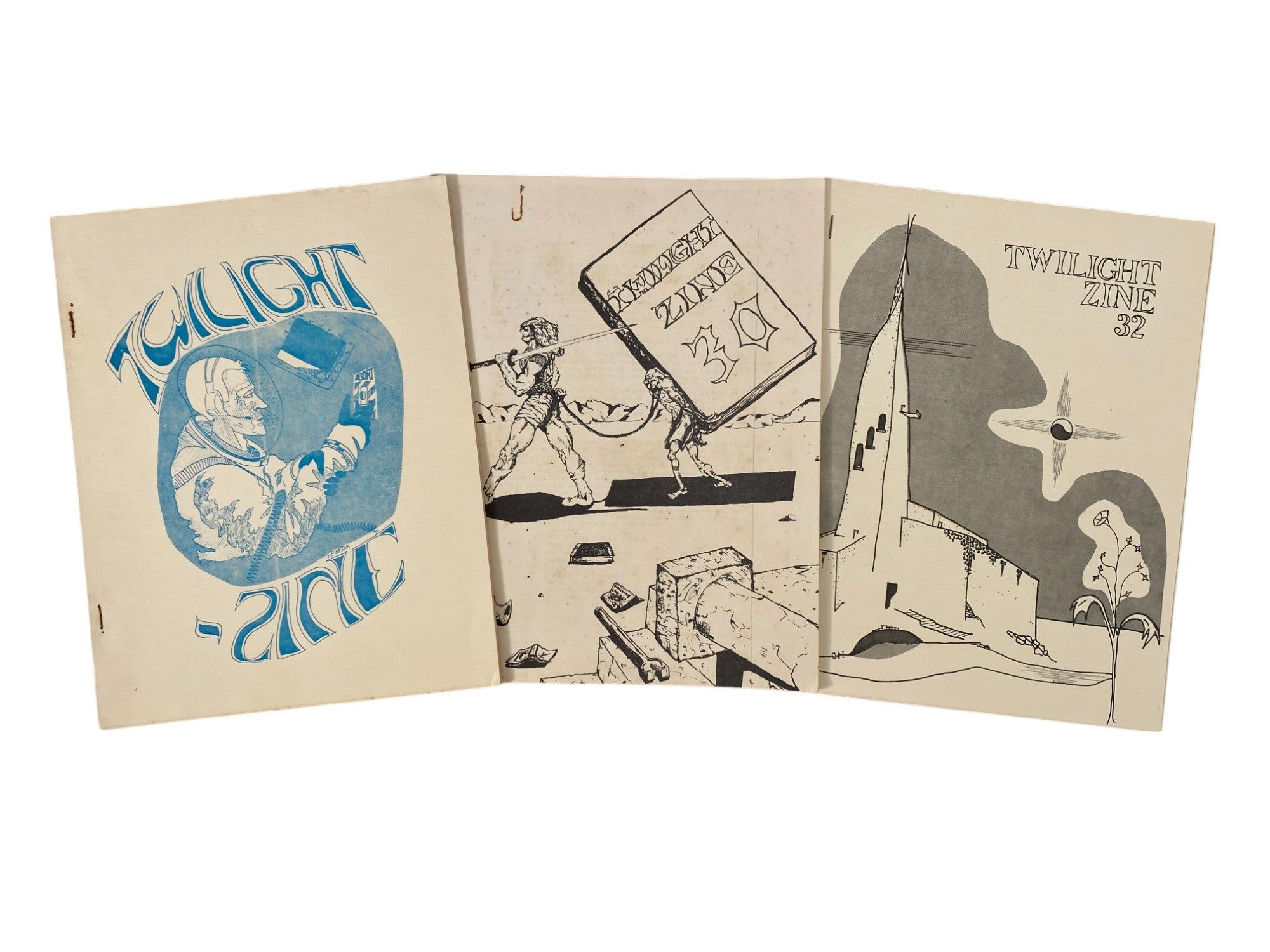
Twilight Zine. Cambridge, MA: MIT Science Fiction Society, 1974 to 1980. Three issues. Archive of three side-stapled issues in pictorial wrappers, mimeographed or photocopied from typescript, with illustrations, comics, reviews, fiction, editorial matter, and society documentation. The set includes issue No. 28 from 1974, issue No. 30 from 1979, and issue No. 32 from 1980. Contributors include Jack Stevens, Michael T. Timmreck, Ala Lapu Mimm, Guy Consolmagno, Irwin T. Lapeer, Jonathan Fox, Roger Silverstein, Chip Hitchcock, Jon Inouye, Gary Goldberg, Jordin Kare, Cheryl Wheeler, Diana Worthy, and Joseph Romm. Several contributors later became associated with scientific or public intellectual work: Guy Consolmagno became Director of the Vatican Observatory, Jordin Kare became a physicist and aerospace engineer known for laser propulsion research, and Joseph Romm became a climate and energy authMass Media & Popular Cultureor with a Ph.D. in physics from MIT.
MIT Science Fiction Society. Twilight Zine. No. 28. Cambridge, MA: MIT Science Fiction Society, 1974. Contents include editorial essays by Jack Stevens, Michael T. Timmreck, and Ala Lapu Mimm; Guy Consolmagno's report on Torcon 2; Irwin T. Lapeer's "Charley Tool and the Intertemporal Psi Spies"; Jonathan Fox's "Horror in the Cinema"; a parody section titled "Graphomics"; and illustrated contributions by Bjo, P. Pineda, and Mike Symes. The issue shows the zine's combination of fan criticism, convention culture, literary play, genre parody, and visual humor. [2] MIT Science Fiction Society. Twilight Zine. No. 30. Cambridge, MA: MIT Science Fiction Society, 1979. Includes reviews of The Sword of Shannara, The Shockwave Rider, and The Stone That Never Came Down, with commentary by Roger Silverstein and Chip Hitchcock, as well as original fiction by Jon Inouye, Gary Goldberg, and Jordin Kare. An editorial note attributes publication delay to a "conspiracy against the editor," while acknowledgment of support from the MIT Graduate Student Council places the zine within both informal fandom and recognized student institutional life. [3] Wheeler, Cheryl, ed. Twilight Zine. No. 32. Cambridge, MA: MIT Science Fiction Society, 1980. Edited by Cheryl Wheeler, with art direction and typesetting by Chip Hitchcock and Guy Consolmagno, and featuring Irwin T. Lapeer's "The Heroes," Diana Worthy's "Little Known Families of the Shire," Joseph Romm's "Clonemaker," reviews, and recorded minutes from MIT Science Fiction Society meetings. The issue is especially useful for documenting how fan writing, literary criticism, Tolkien-inflected parody, science-oriented fiction, design labor, and organizational recordkeeping coexisted in a student science fiction community. Minor age toning and staple oxidation throughout; interiors clean and legible, very good overall. Focused run of MIT student science fiction zines showing how 1970s campus fandom connected literary experimentation, technological imagination, humor, and community documentation within one of the most prominent university science fiction societies in the United States.
Twilight Zine. Cambridge, MA: MIT Science Fiction Society, 1974 to 1980. Three issues. Archive of three side-stapled issues in pictorial wrappers, mimeographed or photocopied from typescript, with illustrations, comics, reviews, fiction, editorial matter, and society documentation. The set includes issue No. 28 from 1974, issue No. 30 from 1979, and issue No. 32 from 1980. Contributors include Jack Stevens, Michael T. Timmreck, Ala Lapu Mimm, Guy Consolmagno, Irwin T. Lapeer, Jonathan Fox, Roger Silverstein, Chip Hitchcock, Jon Inouye, Gary Goldberg, Jordin Kare, Cheryl Wheeler, Diana Worthy, and Joseph Romm. Several contributors later became associated with scientific or public intellectual work: Guy Consolmagno became Director of the Vatican Observatory, Jordin Kare became a physicist and aerospace engineer known for laser propulsion research, and Joseph Romm became a climate and energy authMass Media & Popular Cultureor with a Ph.D. in physics from MIT.
MIT Science Fiction Society. Twilight Zine. No. 28. Cambridge, MA: MIT Science Fiction Society, 1974. Contents include editorial essays by Jack Stevens, Michael T. Timmreck, and Ala Lapu Mimm; Guy Consolmagno's report on Torcon 2; Irwin T. Lapeer's "Charley Tool and the Intertemporal Psi Spies"; Jonathan Fox's "Horror in the Cinema"; a parody section titled "Graphomics"; and illustrated contributions by Bjo, P. Pineda, and Mike Symes. The issue shows the zine's combination of fan criticism, convention culture, literary play, genre parody, and visual humor. [2] MIT Science Fiction Society. Twilight Zine. No. 30. Cambridge, MA: MIT Science Fiction Society, 1979. Includes reviews of The Sword of Shannara, The Shockwave Rider, and The Stone That Never Came Down, with commentary by Roger Silverstein and Chip Hitchcock, as well as original fiction by Jon Inouye, Gary Goldberg, and Jordin Kare. An editorial note attributes publication delay to a "conspiracy against the editor," while acknowledgment of support from the MIT Graduate Student Council places the zine within both informal fandom and recognized student institutional life. [3] Wheeler, Cheryl, ed. Twilight Zine. No. 32. Cambridge, MA: MIT Science Fiction Society, 1980. Edited by Cheryl Wheeler, with art direction and typesetting by Chip Hitchcock and Guy Consolmagno, and featuring Irwin T. Lapeer's "The Heroes," Diana Worthy's "Little Known Families of the Shire," Joseph Romm's "Clonemaker," reviews, and recorded minutes from MIT Science Fiction Society meetings. The issue is especially useful for documenting how fan writing, literary criticism, Tolkien-inflected parody, science-oriented fiction, design labor, and organizational recordkeeping coexisted in a student science fiction community. Minor age toning and staple oxidation throughout; interiors clean and legible, very good overall. Focused run of MIT student science fiction zines showing how 1970s campus fandom connected literary experimentation, technological imagination, humor, and community documentation within one of the most prominent university science fiction societies in the United States.
Details
Title
Science Fiction Zine Culture at MIT During the Late New Wave Era, 1974 to 1980
Author
Twilight Zine
Condition
Unknown
Date
1974