

[Photograph Album Documenting Refugees Constructing the Ledo Road]
- [Waziristan; Burma; India] , 1942
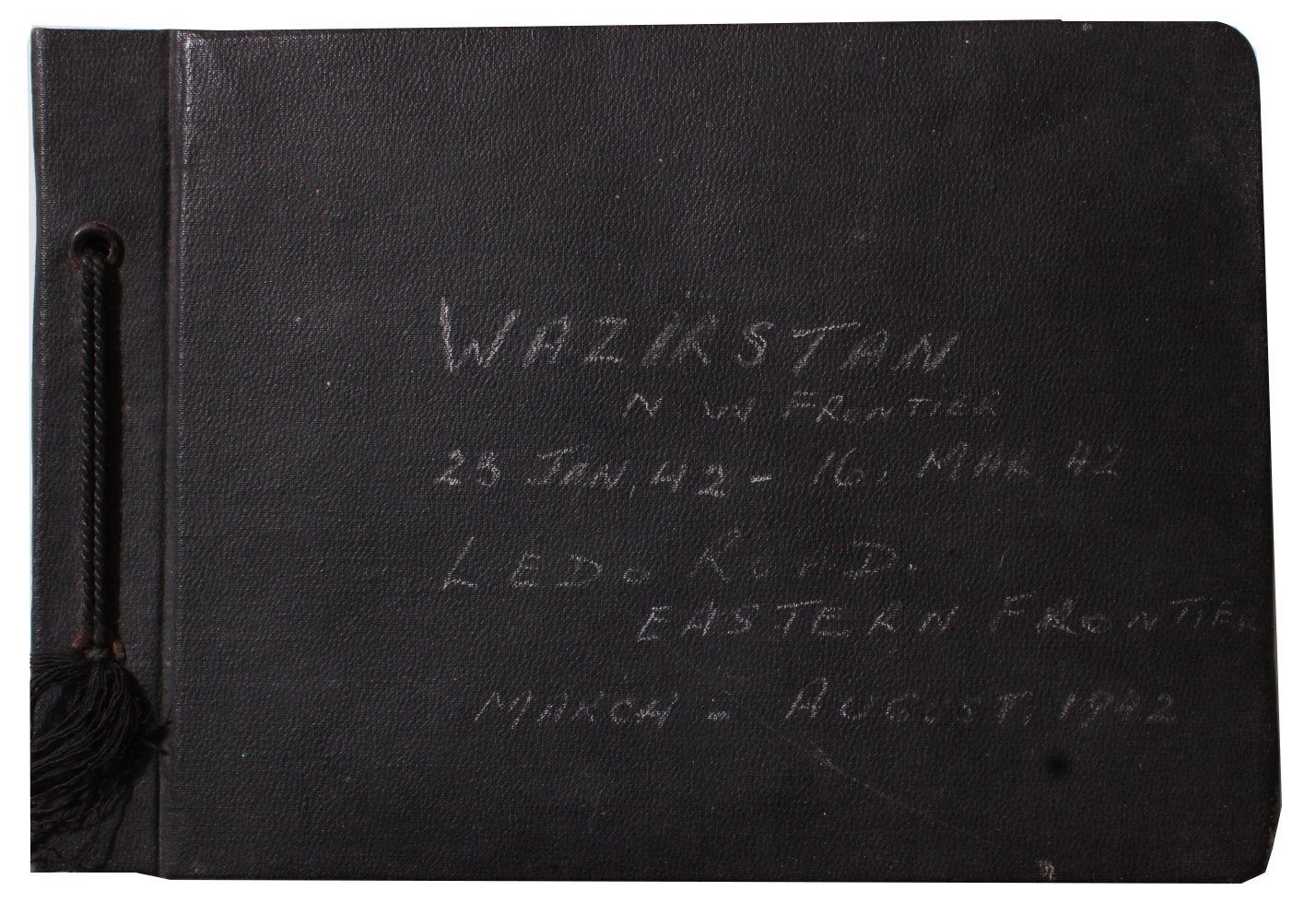
[Waziristan; Burma; India], 1942. Very good +. 5 ” x 8¼”. String-tied, bradbound album, leather over boards, thin card leaves. Pp. 48, interleaved with tissue, with 66 B&W photos adhesive mounted. Photos range from 1¾” x 2¼” to 3½” x 5½” and nearly all are captioned. Very good plus: album lightly scuffed and frayed at one corner; handwritten title note to front; edges of several leaves slightly wavy; the occasional spot or light crease to interleaf or photo.
This is an incredible photo album documenting a British and Indian expedition to evacuate refugees from war-torn Burma and build a new land route to aid China during World War II.
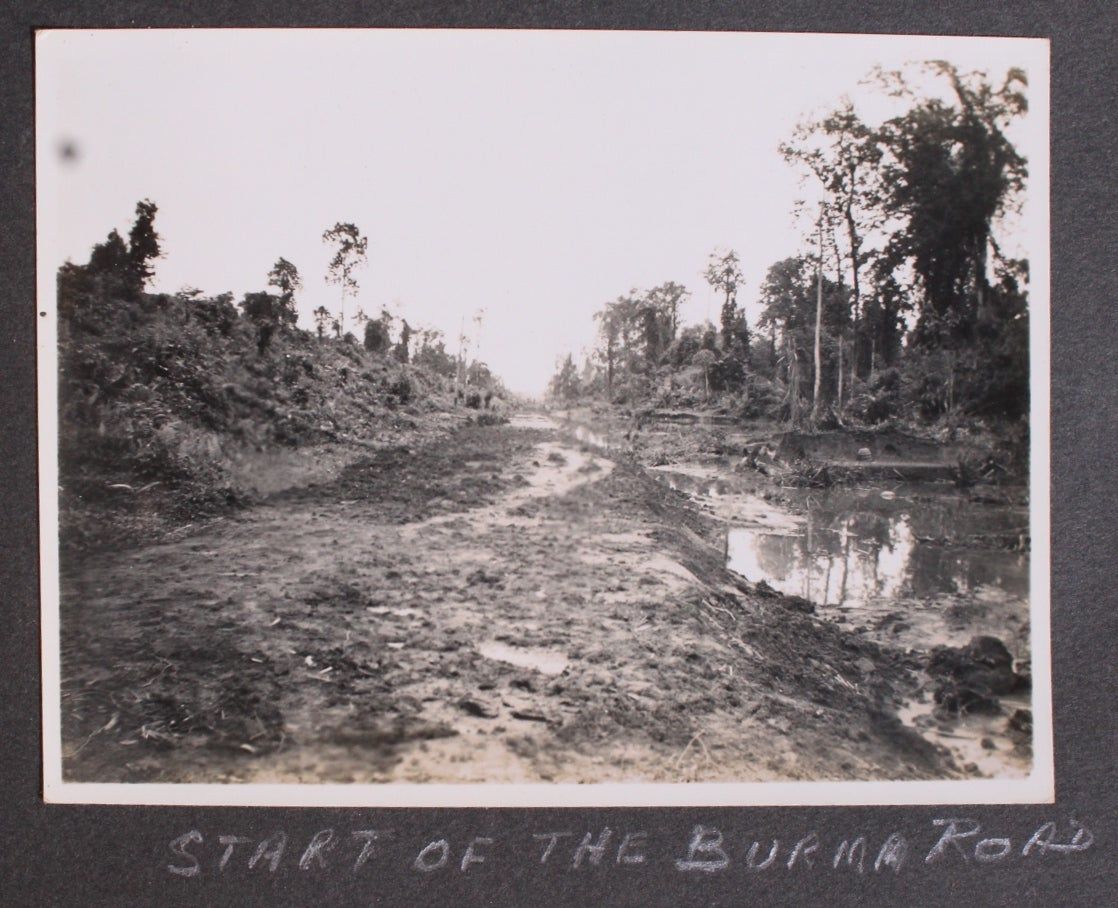
The China-Burma-India (CBI) Theater, where Allied forces fought against the Japanese, has been called the “Forgotten Theater of World War II.” It emerged in response to the Second Sino-Japanese War, known as “the Asian Holocaust” due to the extent of war crimes against Chinese civilians conducted by the Empire of Japan. When Japan occupied Burma in March 1942, the land route used by the Allies to move supplies to China was destroyed. A new route was planned from Ledo in Assam, through difficult terrain, and at the request of the Indian government, the Indian Tea Association (ITA) was called in. ITA was formed of British and Indian tea planters, who used their knowledge of the jungle to help British soldiers evacuate hundreds of thousands of displaced refugees and begin construction on the new, 1,079-mile Ledo Road. Aided by American forces under the command of General Joseph W. Stilwell, the road took three years to complete and earned the moniker of “A Man A Mile” for the more than 1,100 American soldiers and countless locals who died during its construction. It was renamed the Stilwell Road in 1945.
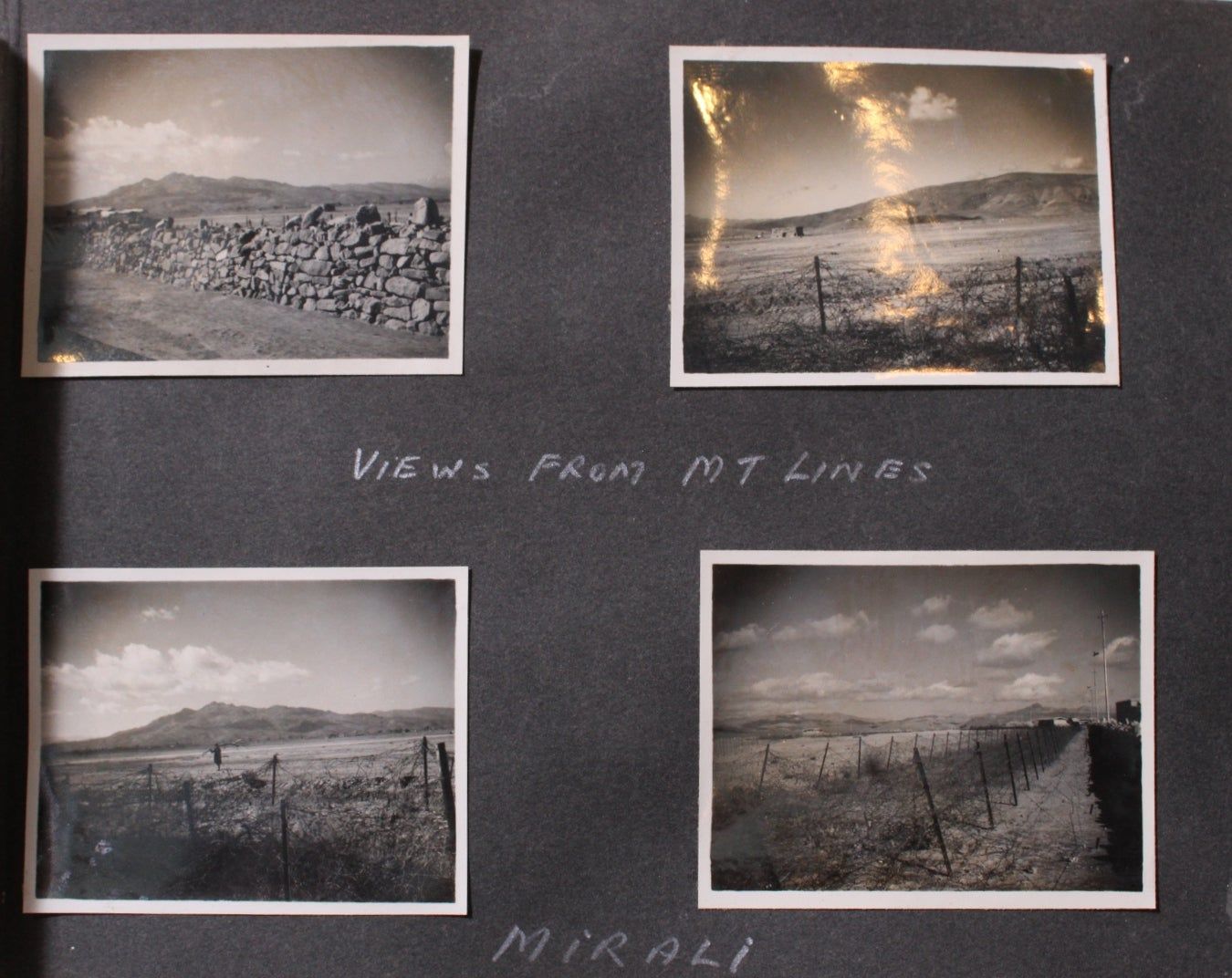
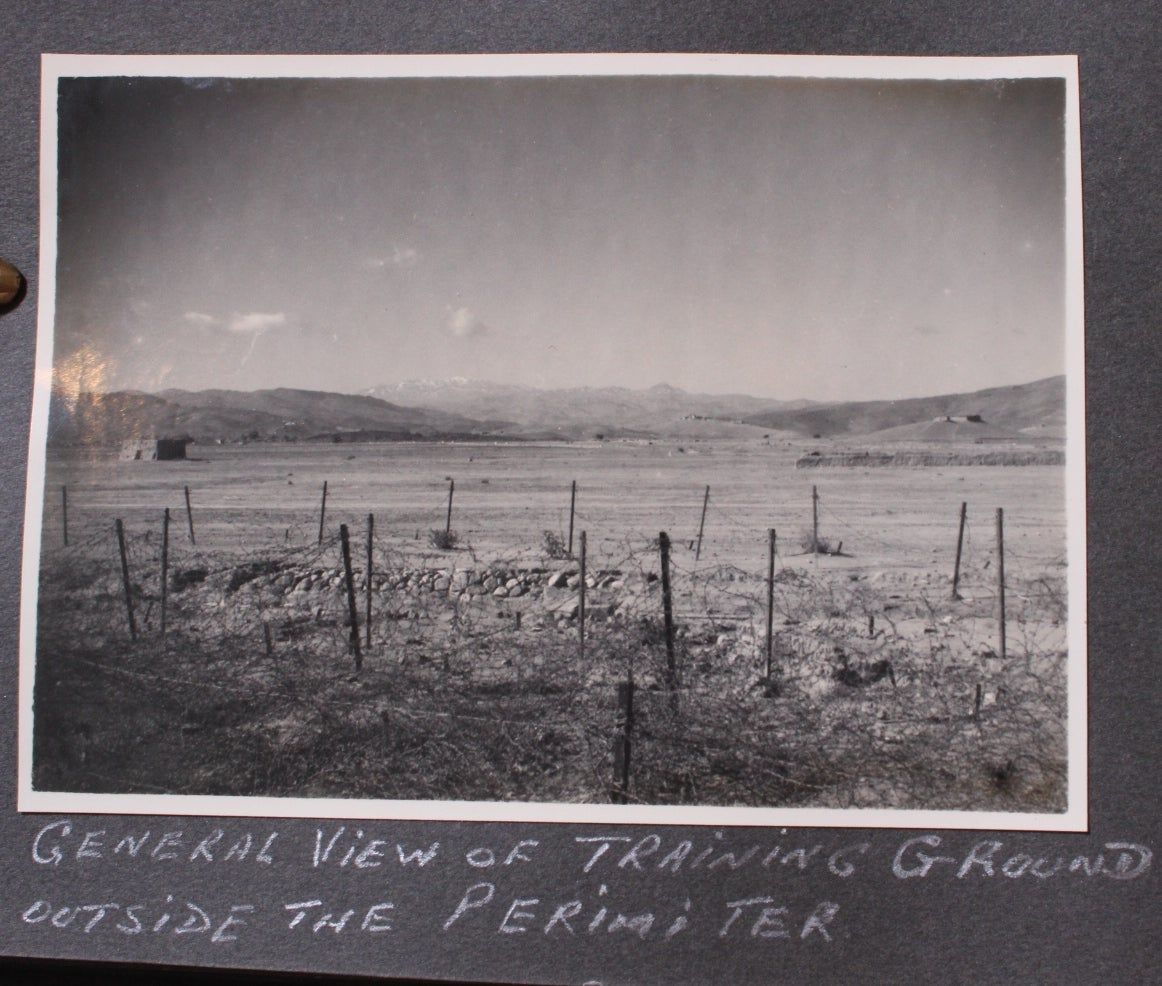
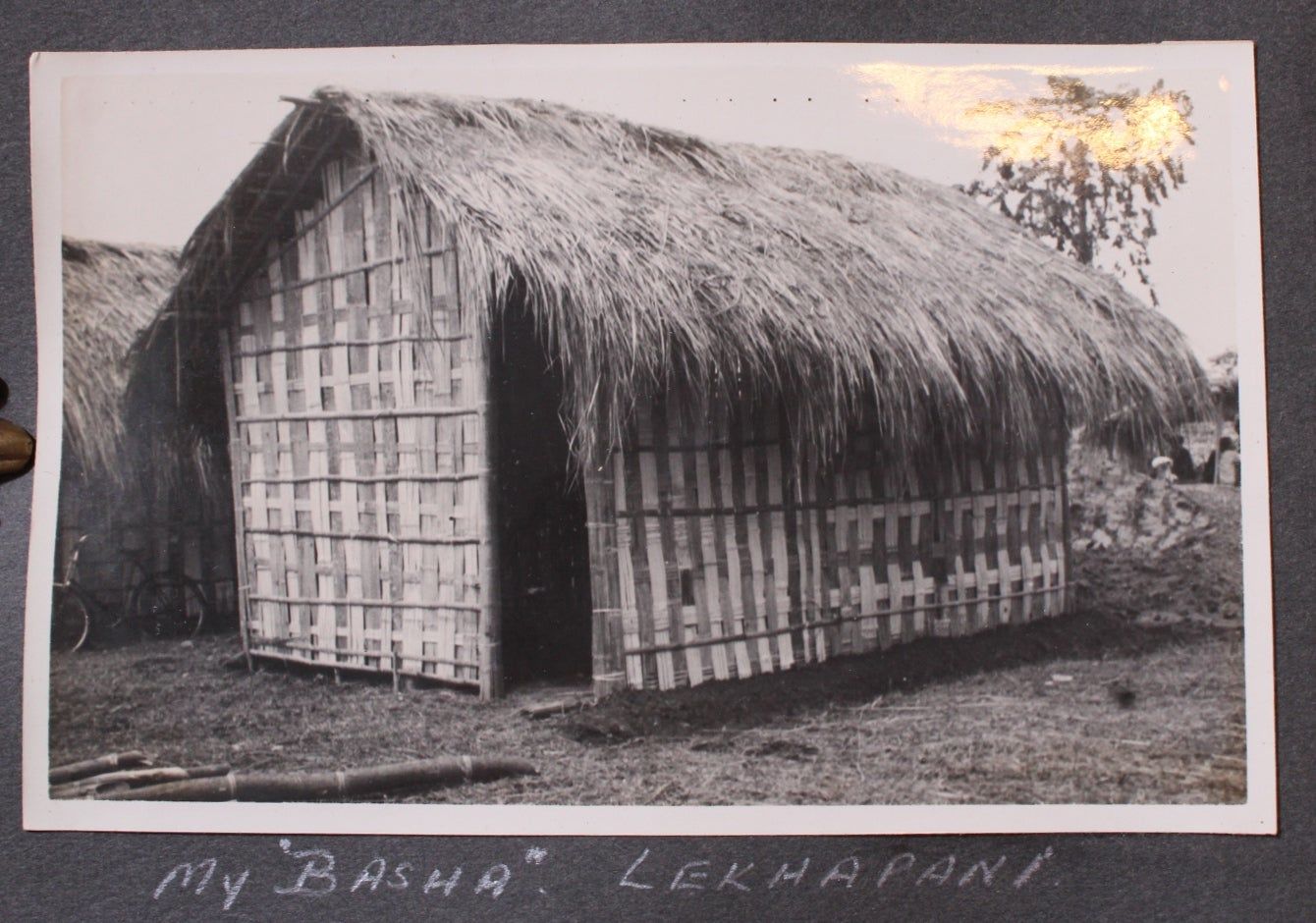
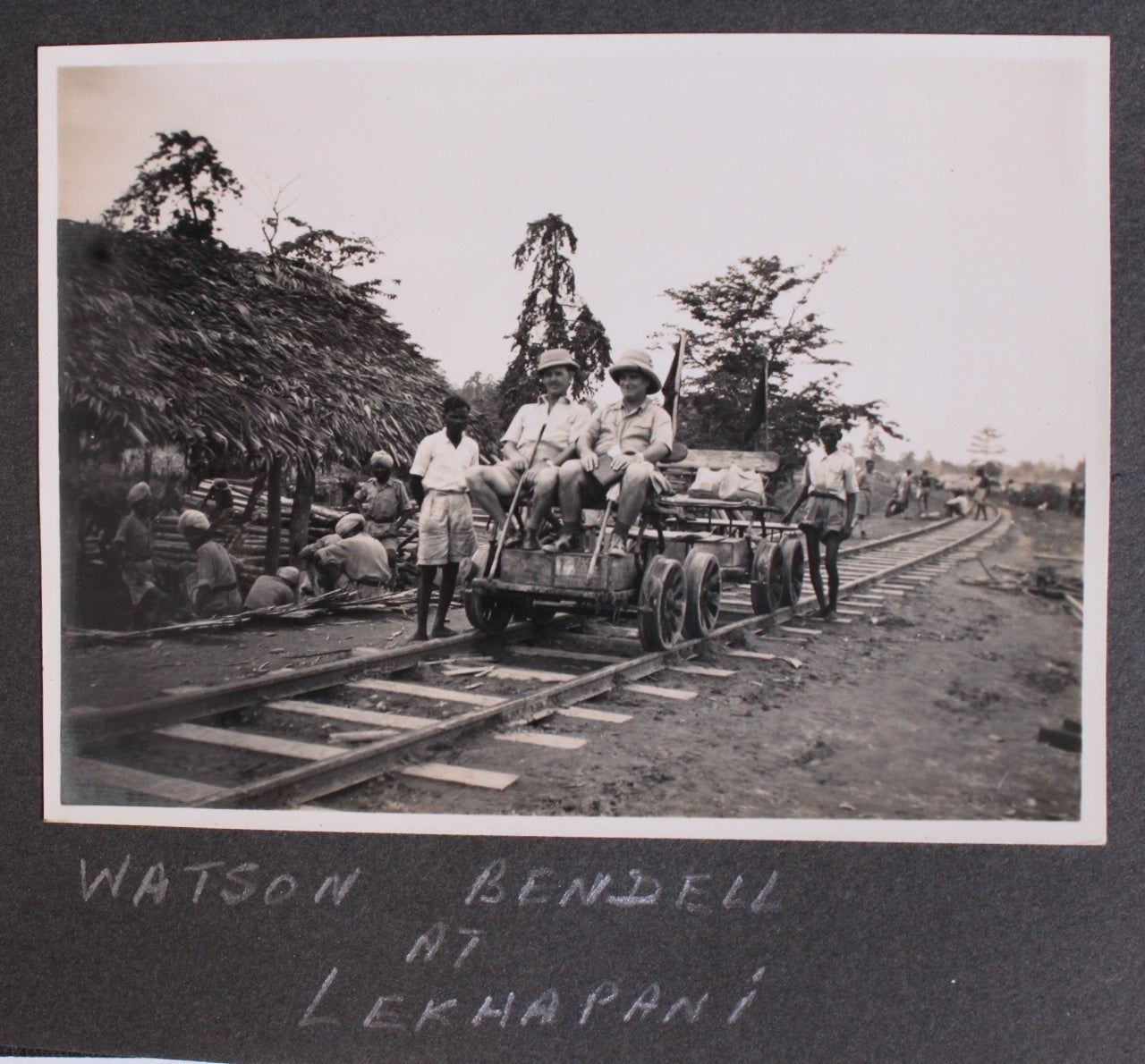
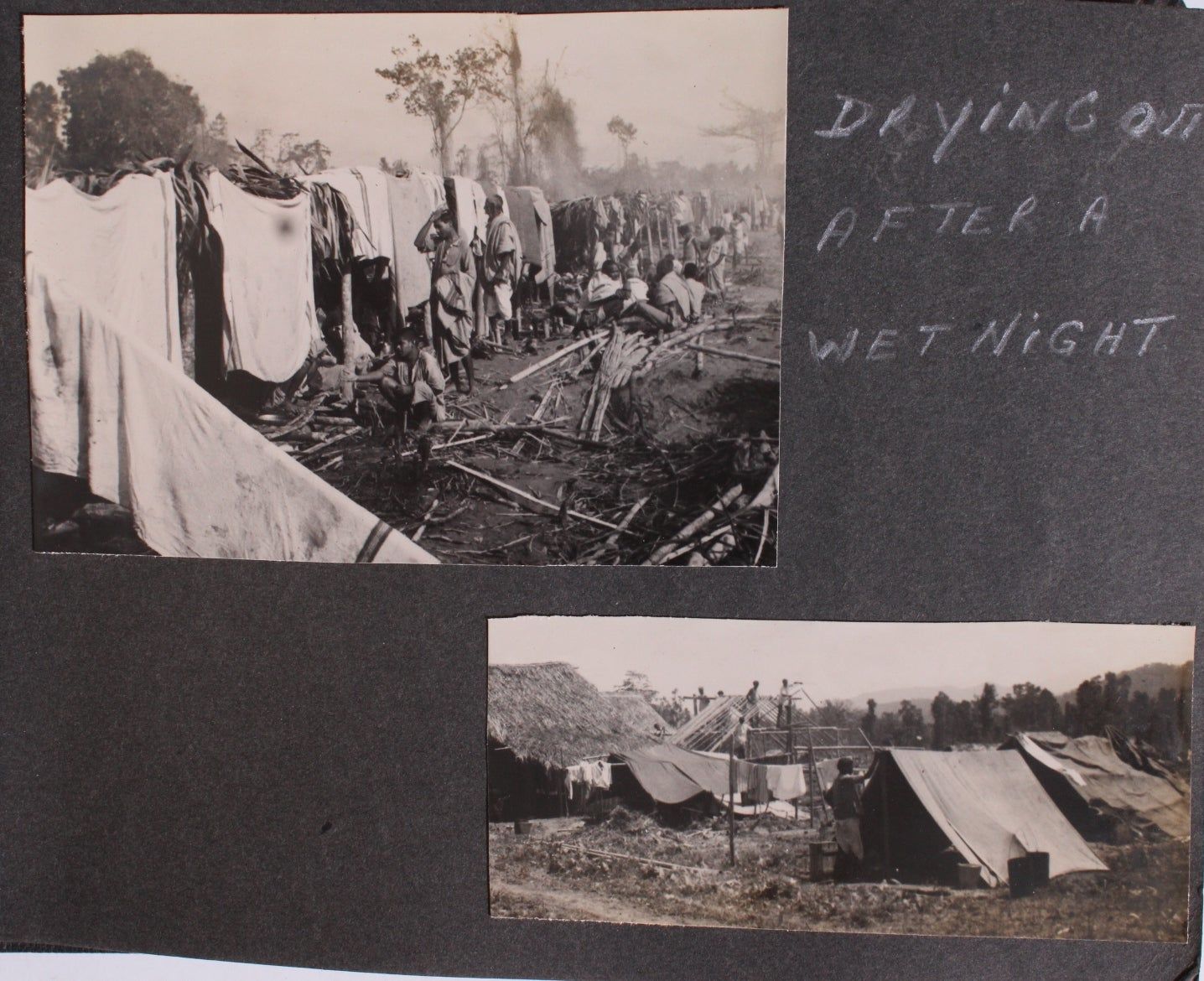
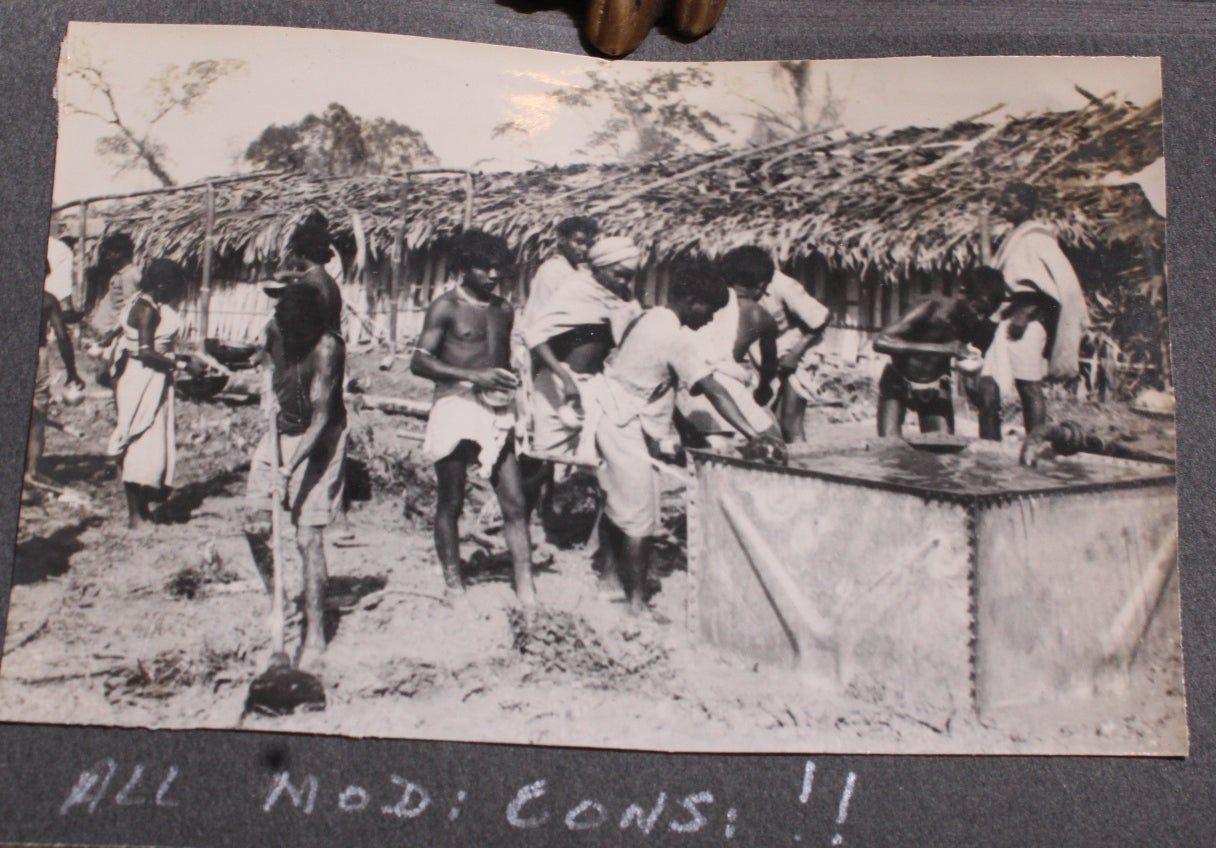
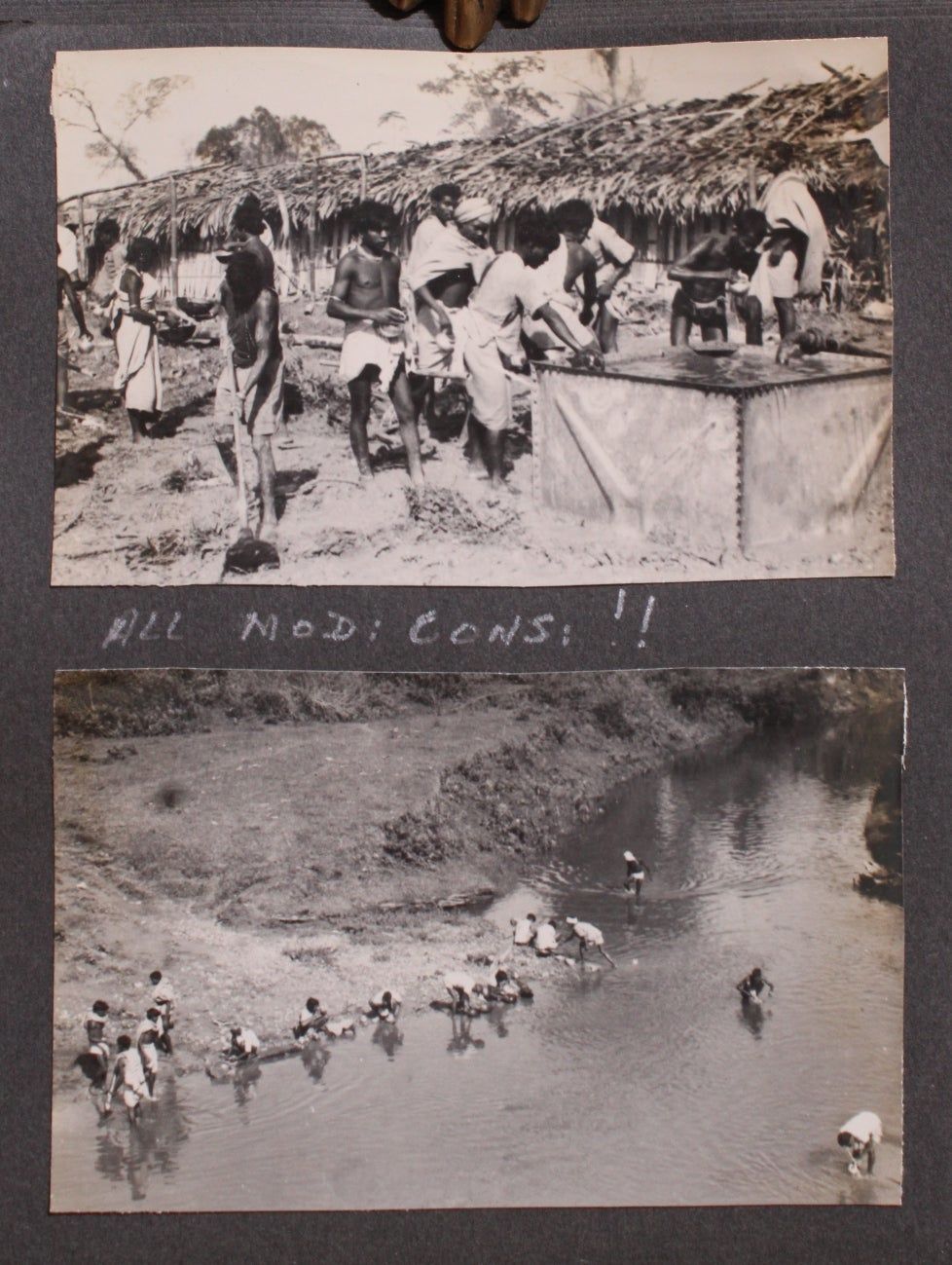
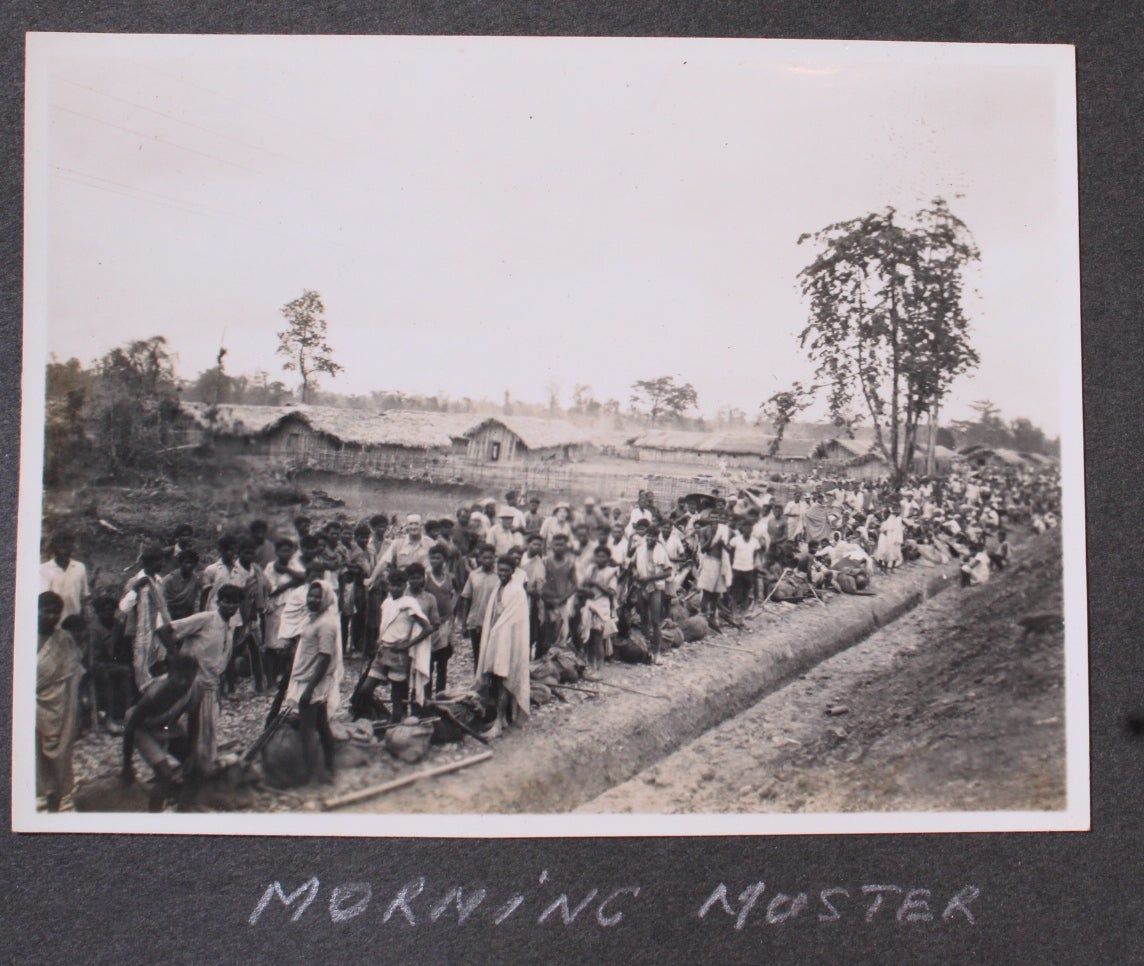
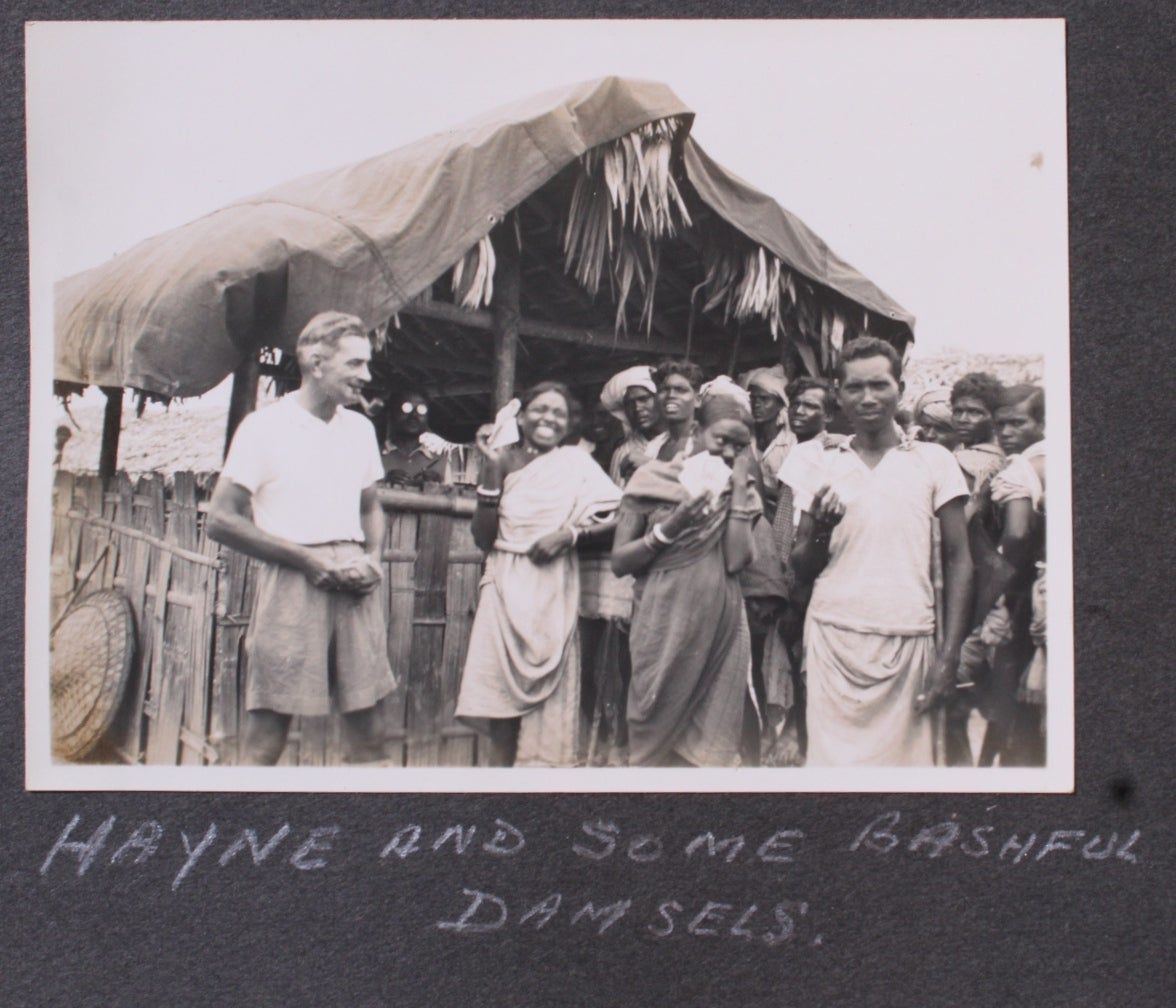
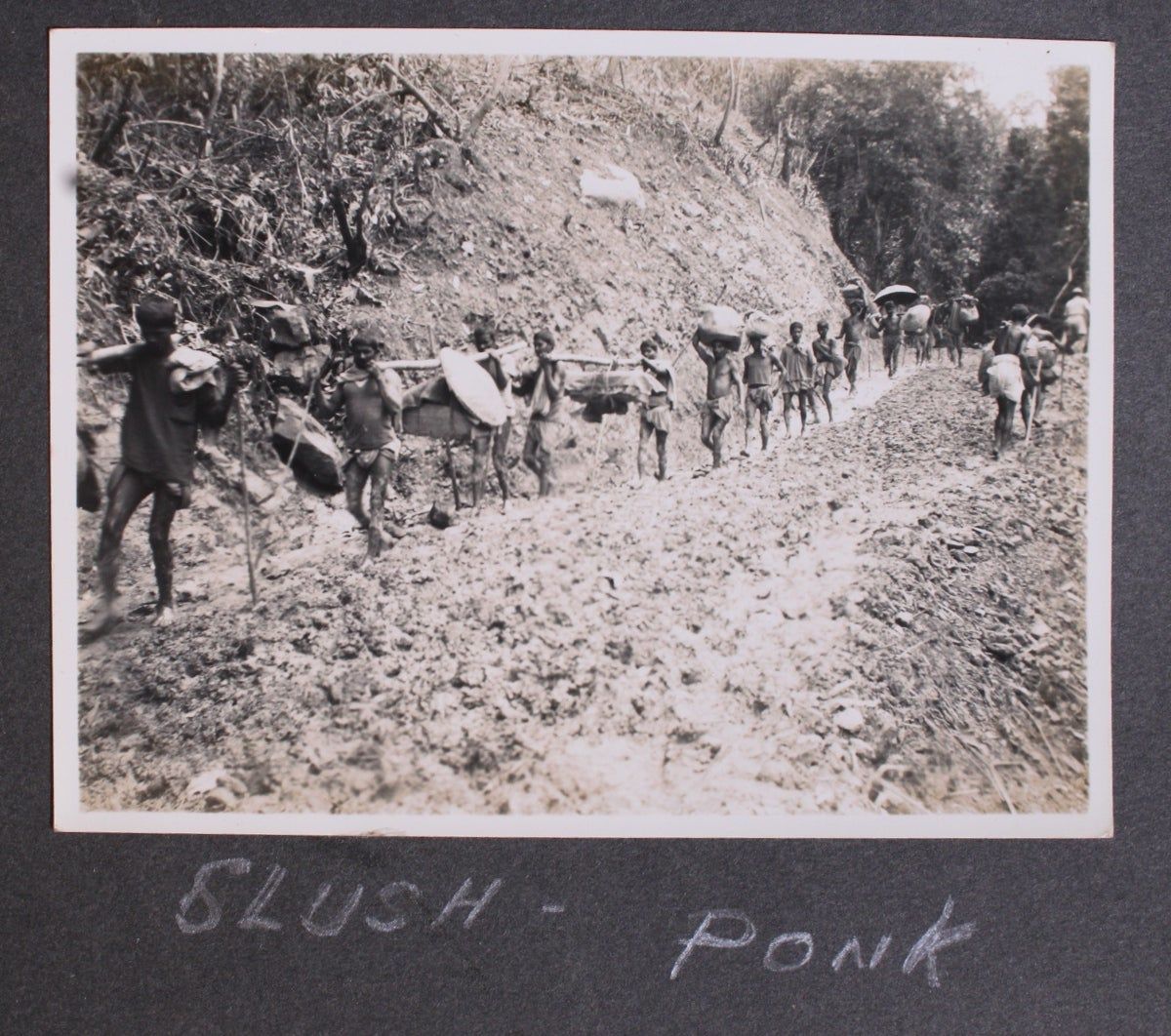
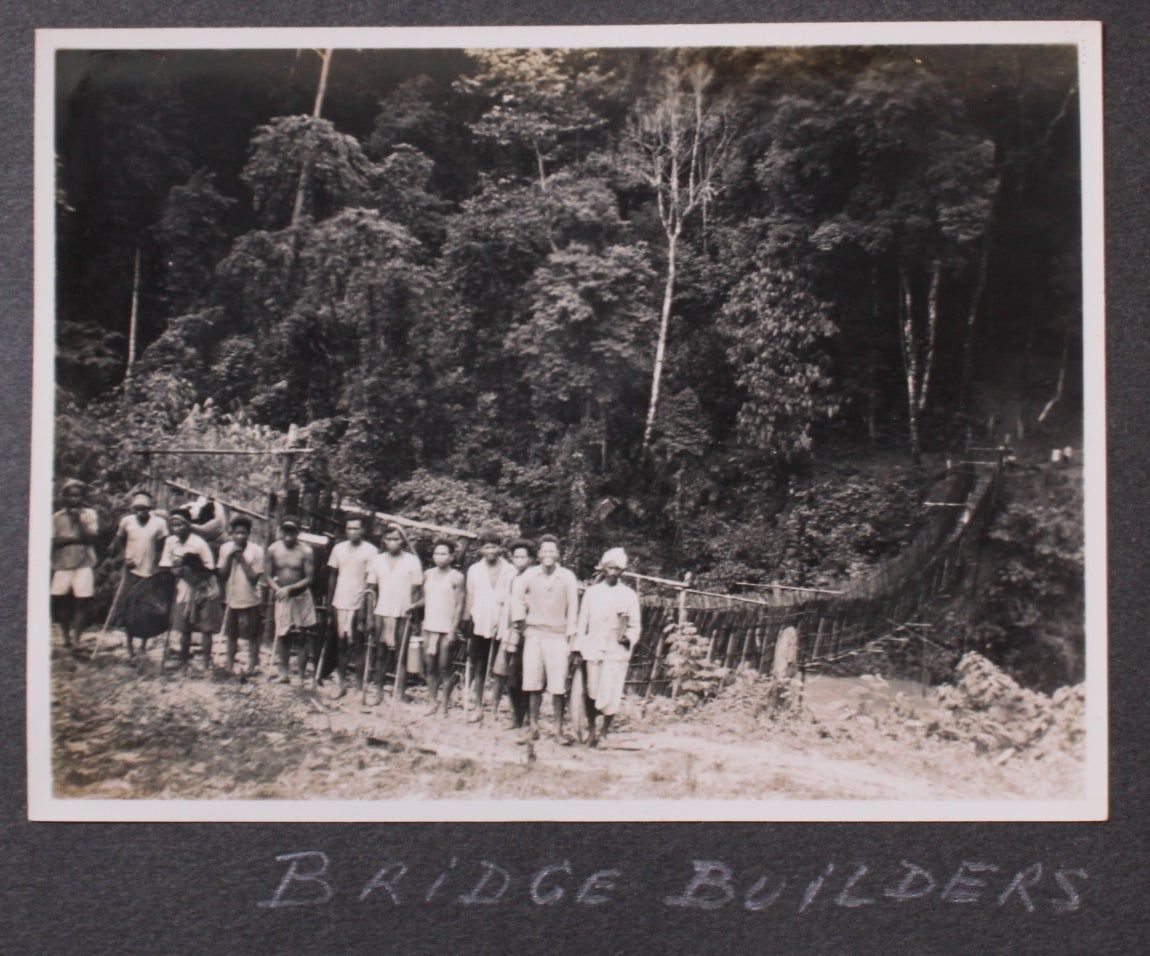
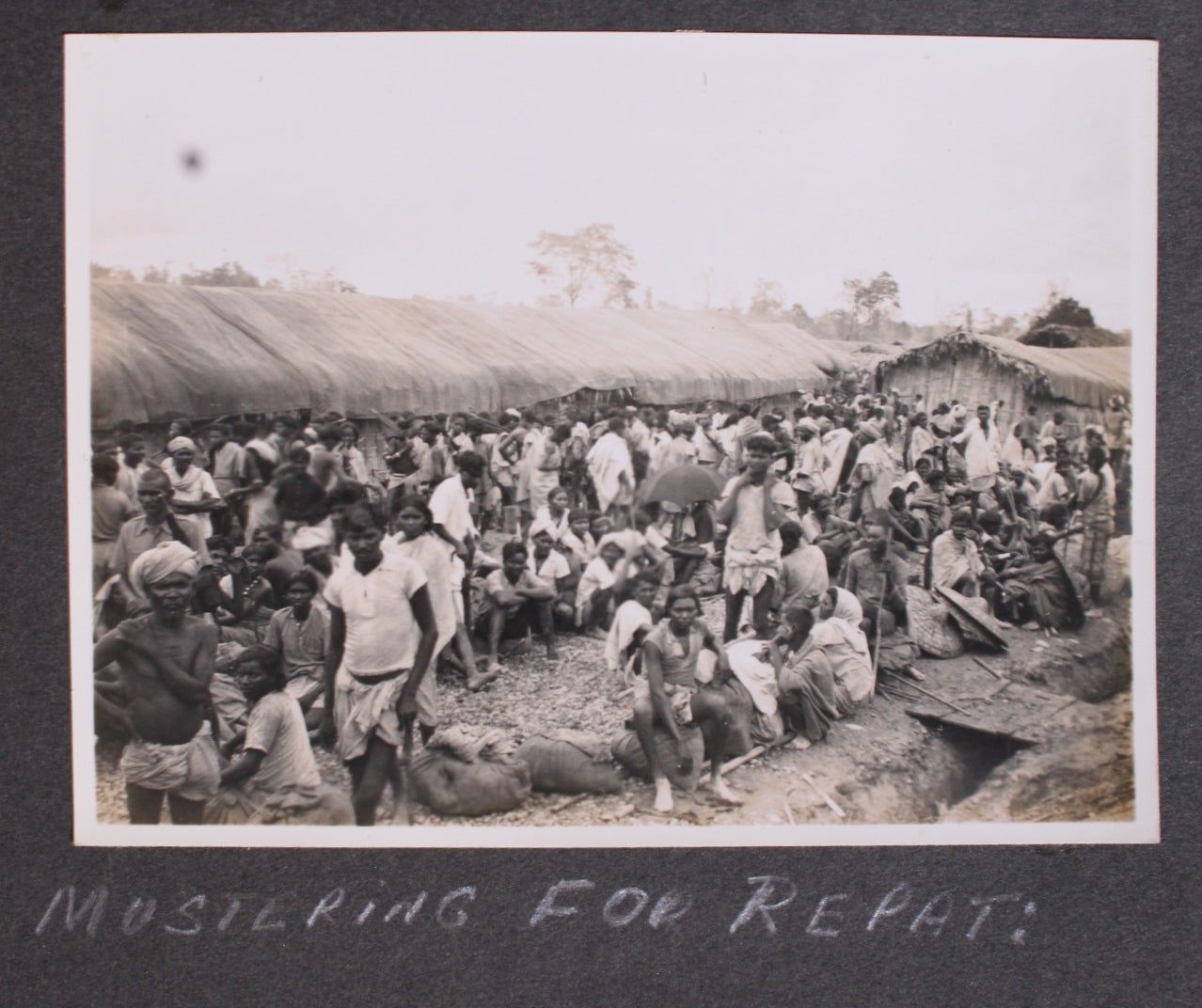
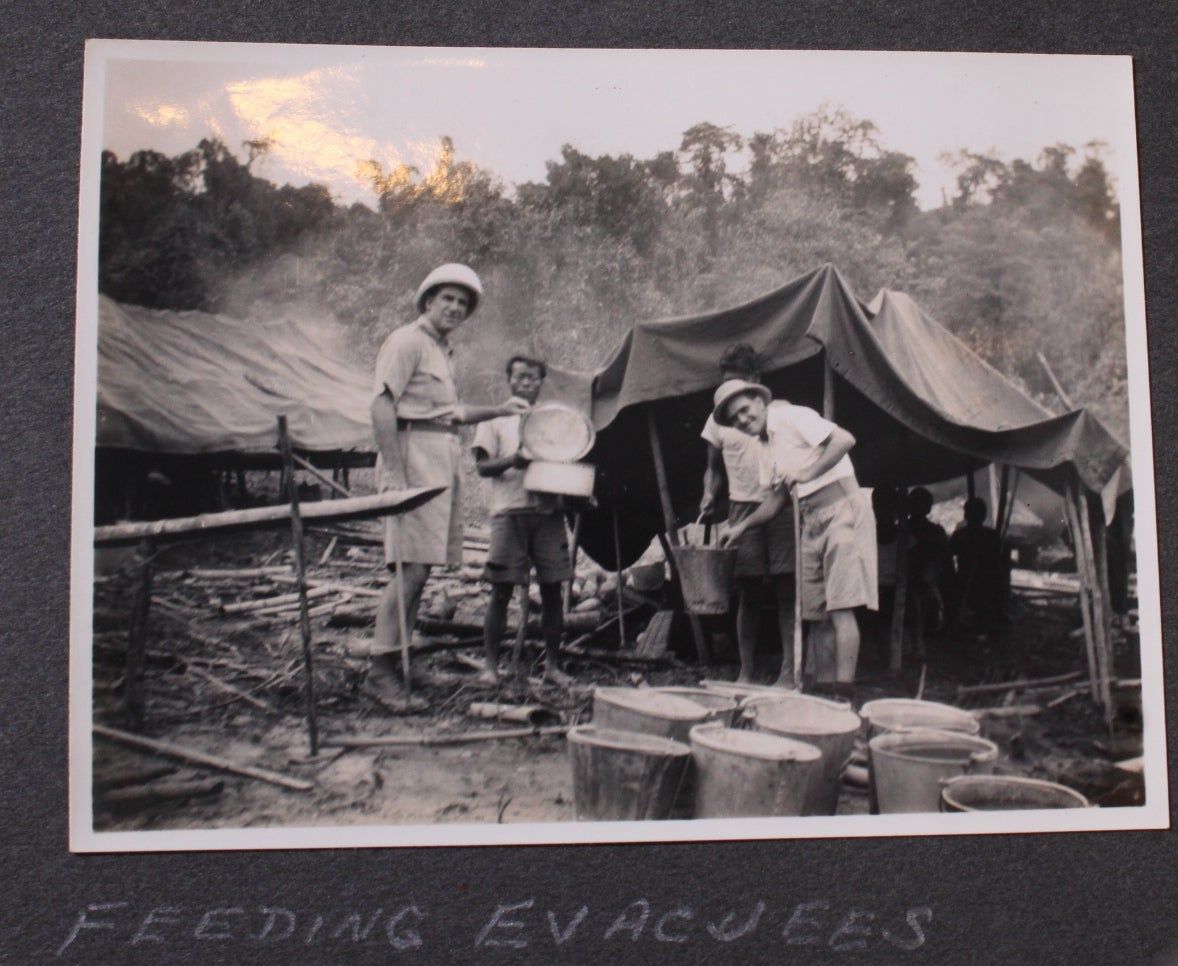
This album was compiled by a seen, but unnamed, British soldier. The first 15 pages document the military setup in Waziristan in the North-West Frontier region (now part of Pakistan) from January to March 1942. Shots reveal battle lines, a “Squad drill,” “Picket post” and a “General view of training ground outside the perimeter.” The album then quickly shifts gears, and the remaining two-thirds cover evacuation and construction efforts on Ledo Road from March to August 1942. There are shots of “My 'Basha',” other huts for “Officers' quarters” and tracks being laid down in Lekhapani; ITA used an old opium trade path to develop a route for refugees, starting it there. Nearly half of the photos depict Indian evacuees and workers – seven on their own and 23 alongside the British. Our compiler points out “Labour gangs on the road,” women and children at “Nodi” (river) construction, a large group of “Bridge builders,” “Morning muster” and the help of a few of “England's mules.” There are views of the “Refugee camp,” “Feeding evacuees” and a huge group of locals waiting for a “rail coach to Margherita” – “Where's that train?” There's also a shot of “Repatriated labor at Gauhati Depot” and a great view of “Monkey Island – Brahma Putra River – From Lightfoot's Bungalow.”
Fantastic photo documentation of Allied aid efforts in Burma during a lesser-known period of World War II.
This is an incredible photo album documenting a British and Indian expedition to evacuate refugees from war-torn Burma and build a new land route to aid China during World War II.
The China-Burma-India (CBI) Theater, where Allied forces fought against the Japanese, has been called the “Forgotten Theater of World War II.” It emerged in response to the Second Sino-Japanese War, known as “the Asian Holocaust” due to the extent of war crimes against Chinese civilians conducted by the Empire of Japan. When Japan occupied Burma in March 1942, the land route used by the Allies to move supplies to China was destroyed. A new route was planned from Ledo in Assam, through difficult terrain, and at the request of the Indian government, the Indian Tea Association (ITA) was called in. ITA was formed of British and Indian tea planters, who used their knowledge of the jungle to help British soldiers evacuate hundreds of thousands of displaced refugees and begin construction on the new, 1,079-mile Ledo Road. Aided by American forces under the command of General Joseph W. Stilwell, the road took three years to complete and earned the moniker of “A Man A Mile” for the more than 1,100 American soldiers and countless locals who died during its construction. It was renamed the Stilwell Road in 1945.
This album was compiled by a seen, but unnamed, British soldier. The first 15 pages document the military setup in Waziristan in the North-West Frontier region (now part of Pakistan) from January to March 1942. Shots reveal battle lines, a “Squad drill,” “Picket post” and a “General view of training ground outside the perimeter.” The album then quickly shifts gears, and the remaining two-thirds cover evacuation and construction efforts on Ledo Road from March to August 1942. There are shots of “My 'Basha',” other huts for “Officers' quarters” and tracks being laid down in Lekhapani; ITA used an old opium trade path to develop a route for refugees, starting it there. Nearly half of the photos depict Indian evacuees and workers – seven on their own and 23 alongside the British. Our compiler points out “Labour gangs on the road,” women and children at “Nodi” (river) construction, a large group of “Bridge builders,” “Morning muster” and the help of a few of “England's mules.” There are views of the “Refugee camp,” “Feeding evacuees” and a huge group of locals waiting for a “rail coach to Margherita” – “Where's that train?” There's also a shot of “Repatriated labor at Gauhati Depot” and a great view of “Monkey Island – Brahma Putra River – From Lightfoot's Bungalow.”
Fantastic photo documentation of Allied aid efforts in Burma during a lesser-known period of World War II.
Details
Title
[Photograph Album Documenting Refugees Constructing the Ledo Road]
Condition
Very Good
Publisher
[Waziristan; Burma; India]
Date
1942