

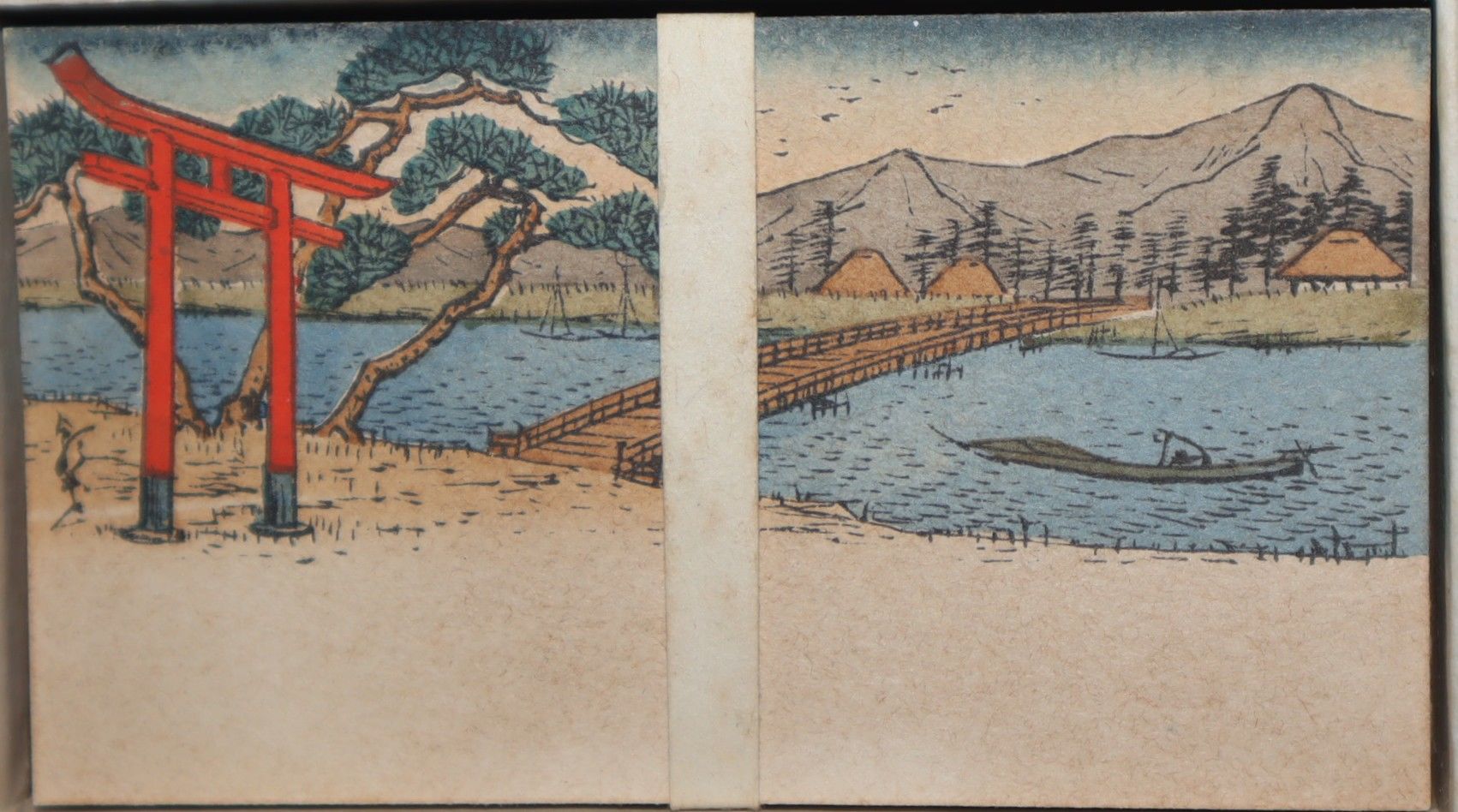
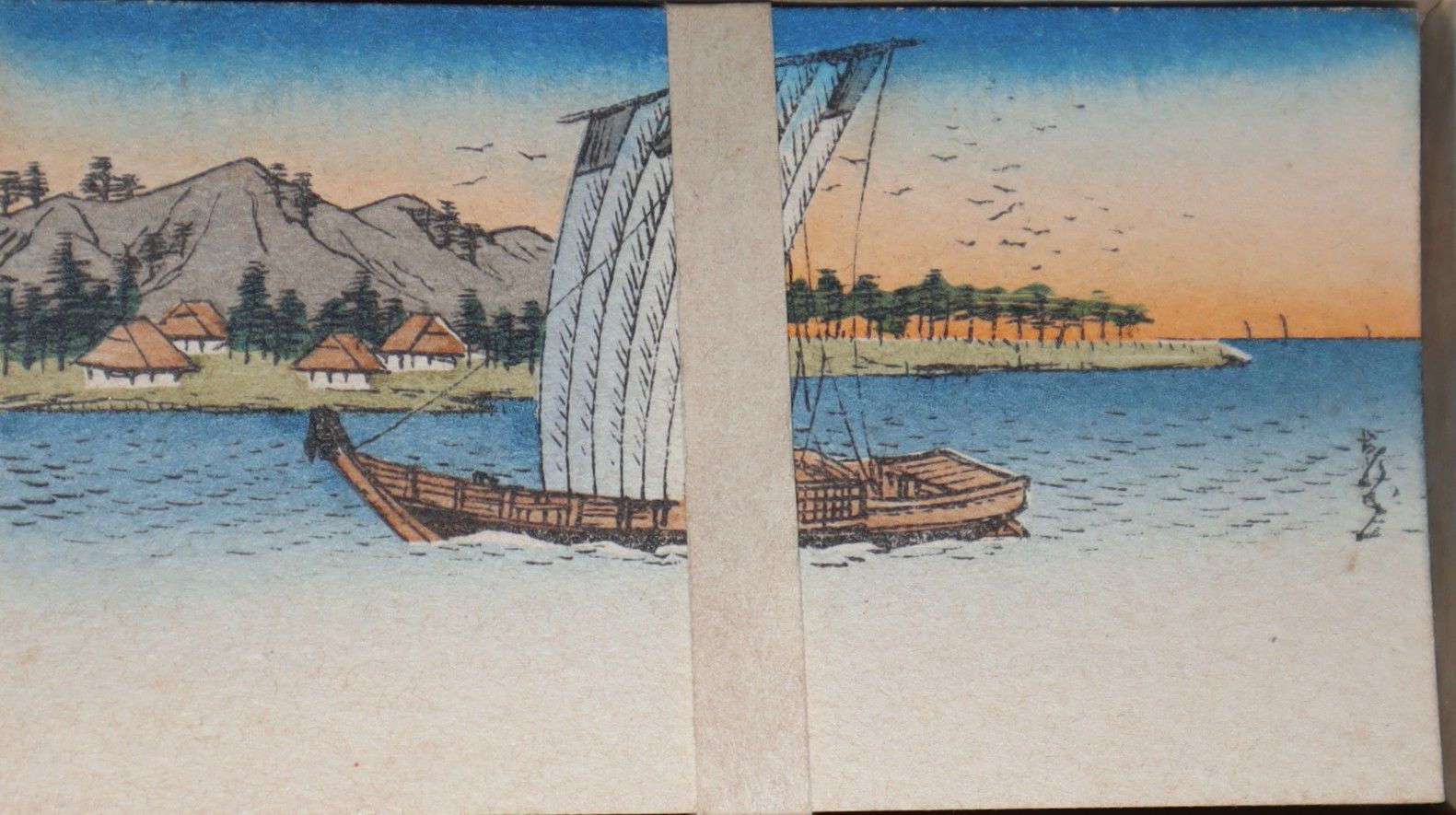
Box of Ninety Place Cards, with four different complete sets of twenty, each set with a small reproduction of a Hiroshiga woodblock scene on one side, the other side, blank for a name to be written, plus a bonus of ten additional cards of that represent an intermediate state of the woodblock printing process for four designs all different than the designs of the complete sets
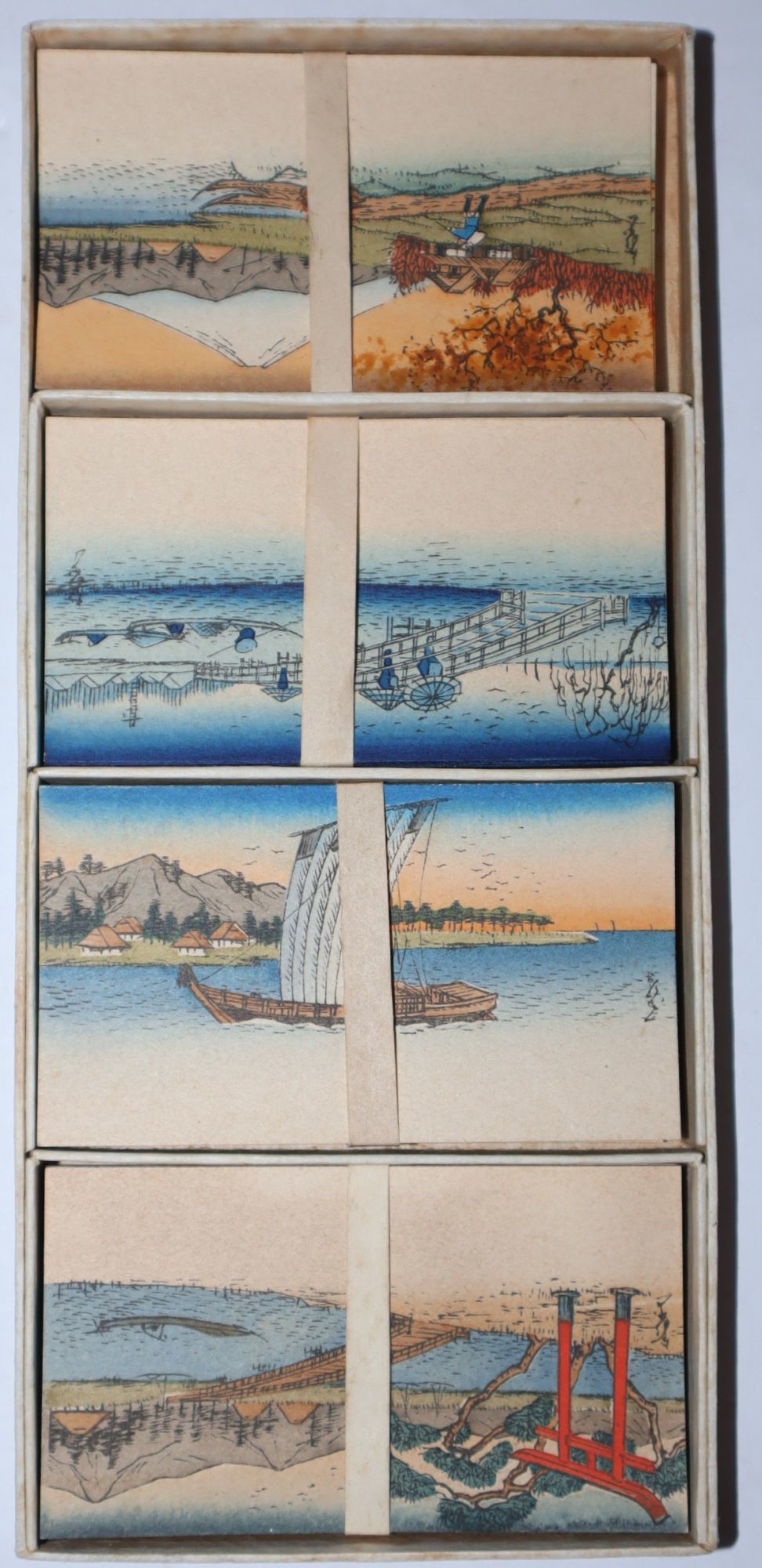
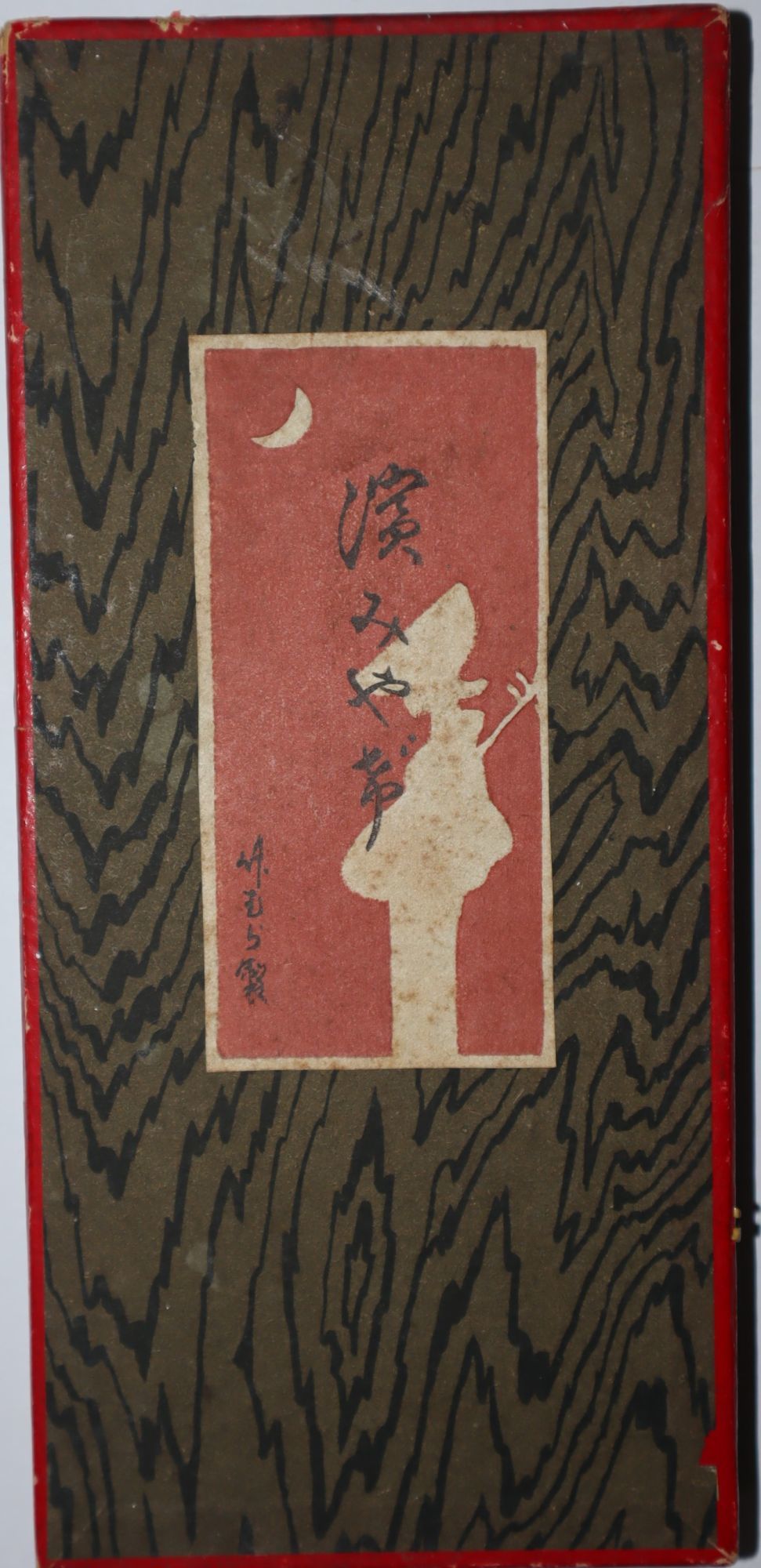
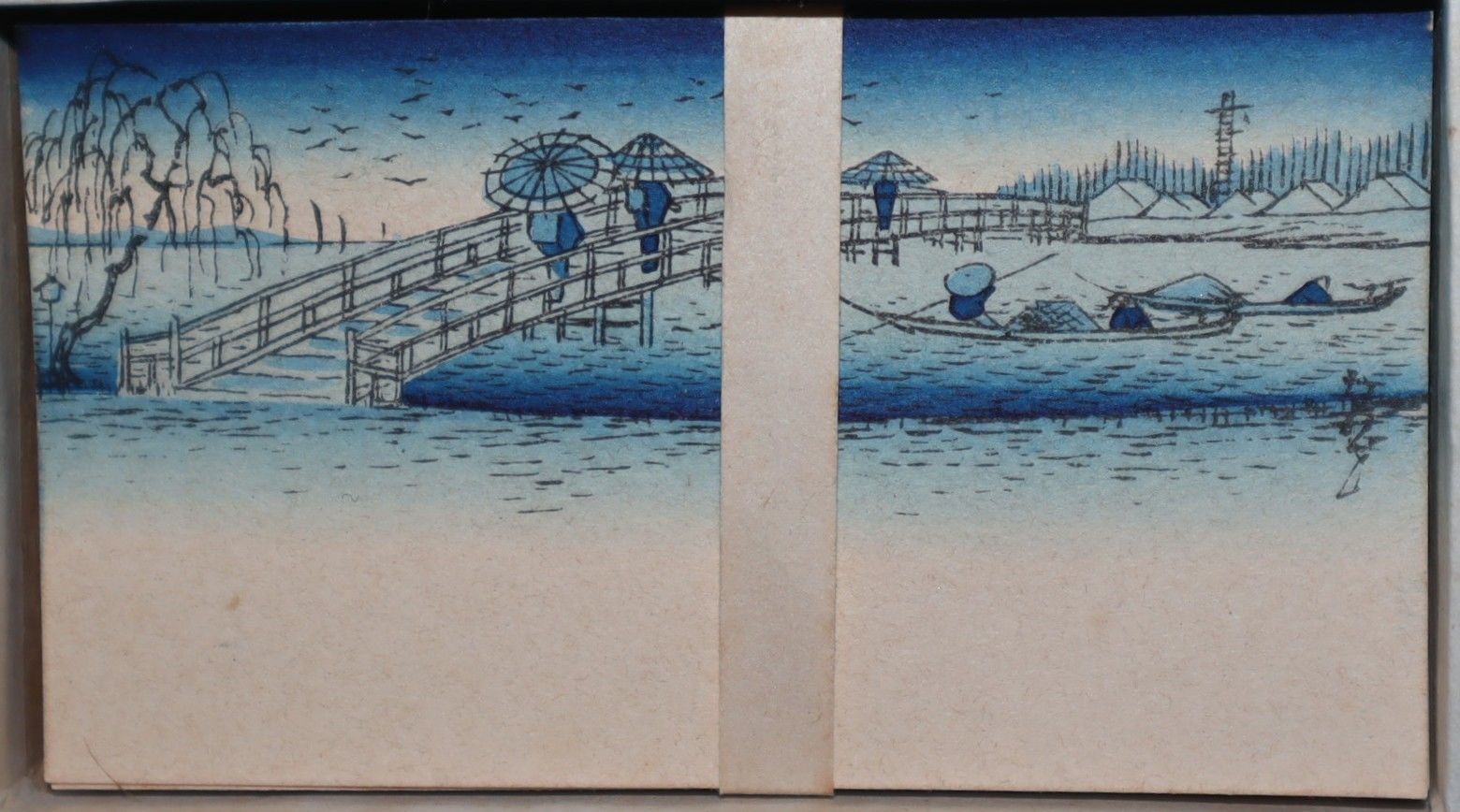
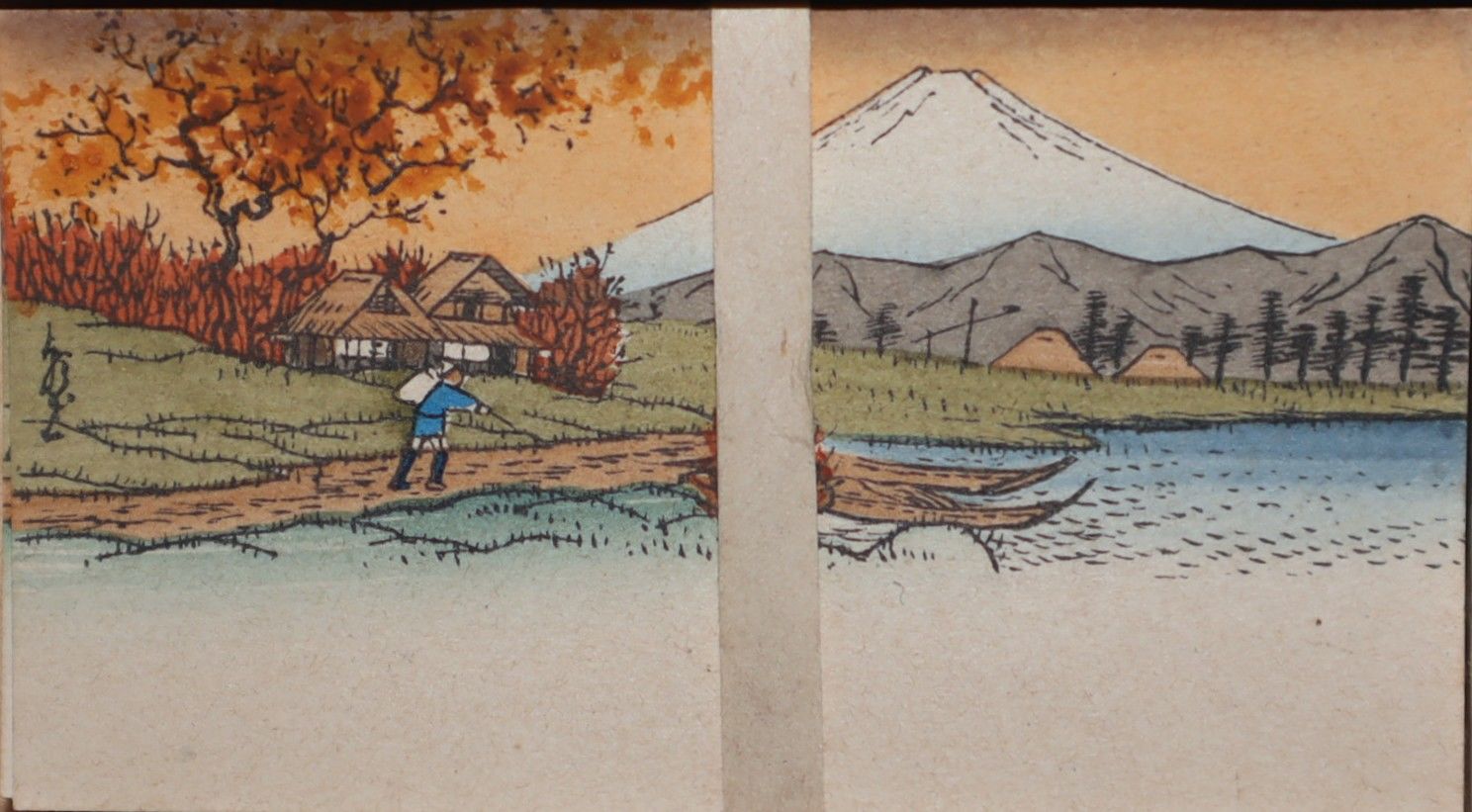
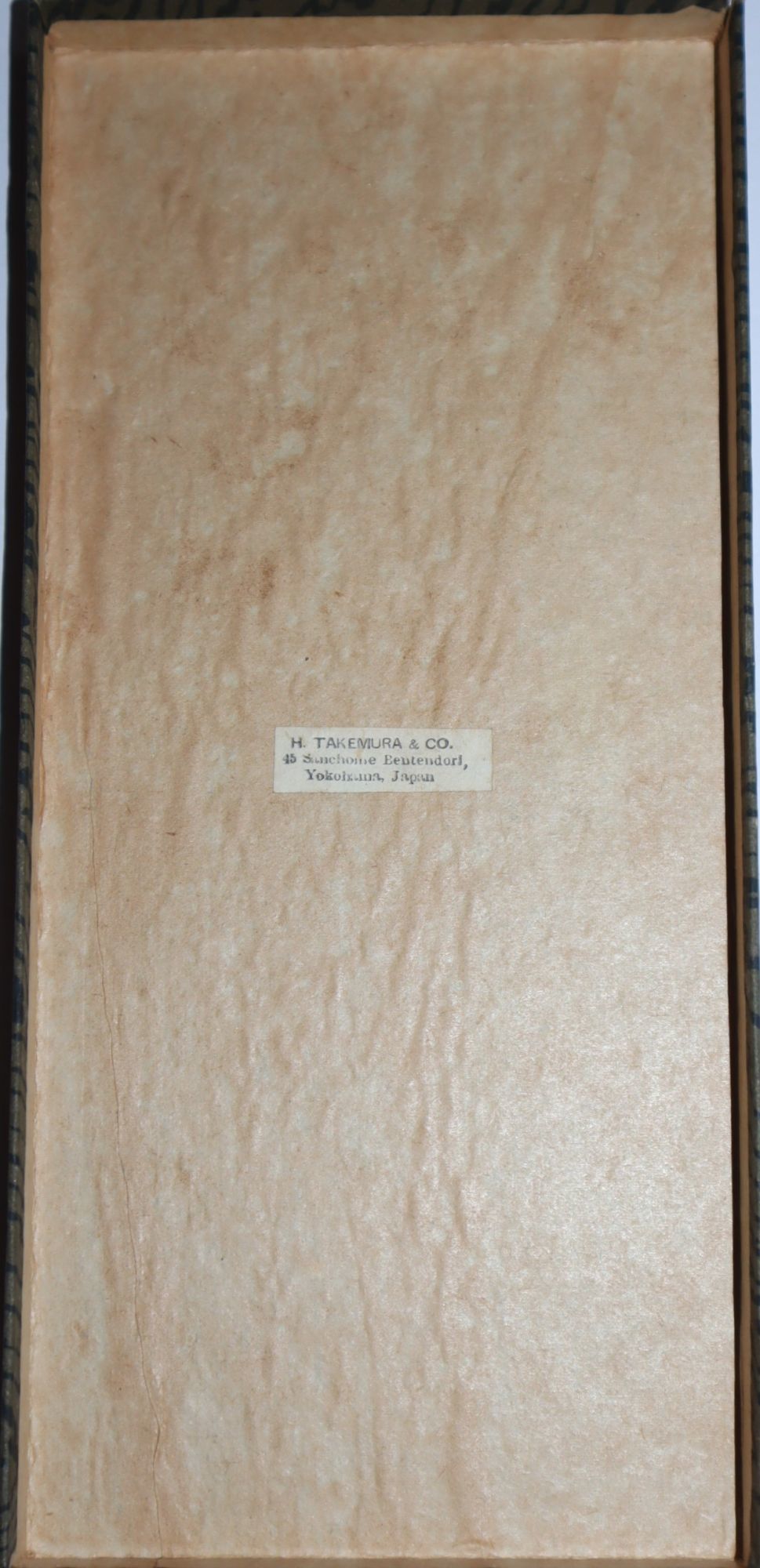
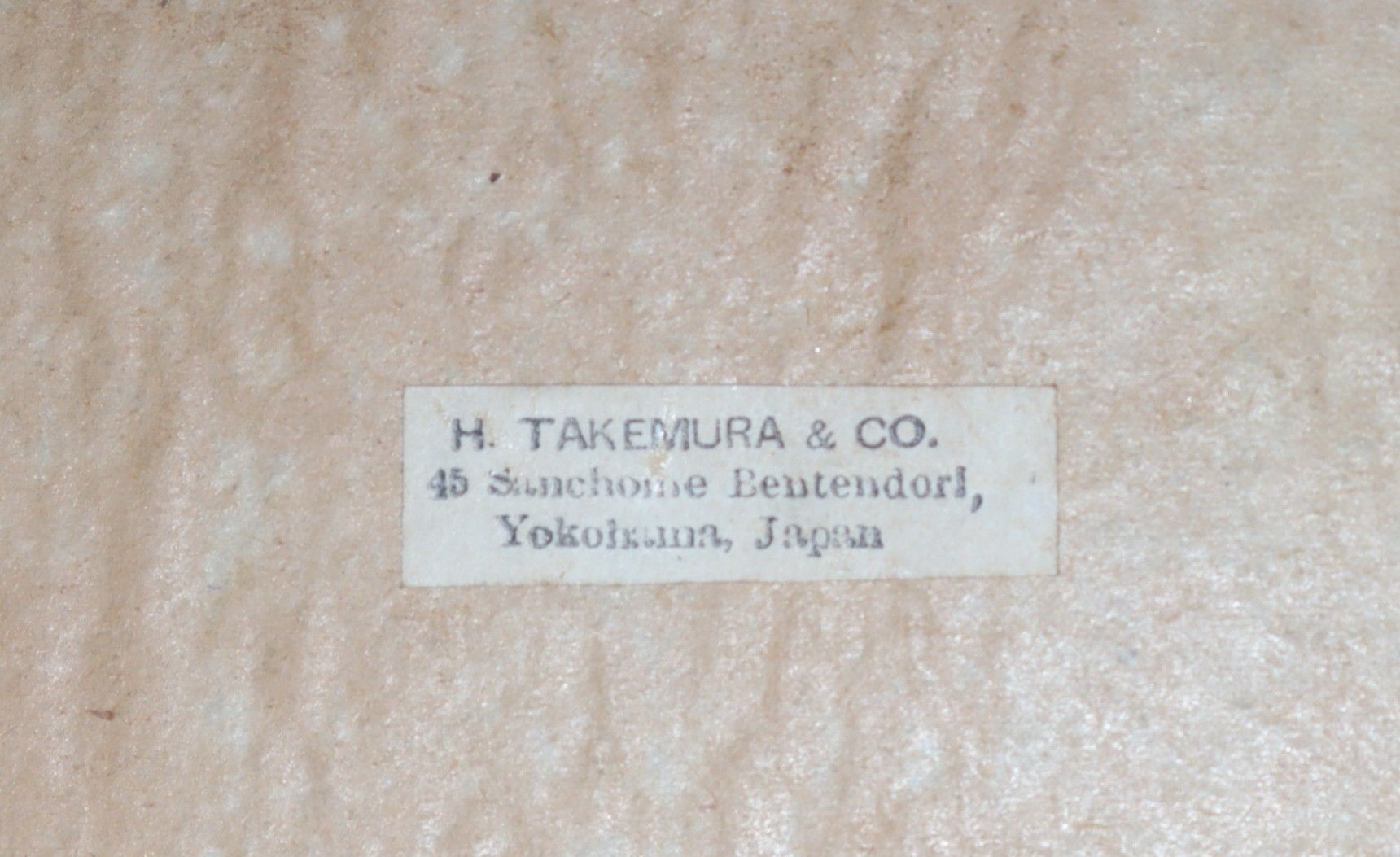
- Decorative Box. Each group of cards held together by paper band
- Yokohama: H. Takemura & Co. [Hideo Takemura], 1930
Yokohama: H. Takemura & Co. [Hideo Takemura], 1930. Decorative Box. Each group of cards held together by paper band. Fine. Hiroshiga. Stunning group of place cards that transcend the genre -- these place cards are exquisite miniature woodblocks based on Hiroshiga's immortal artwork. Plus there is the added interest of the extra ten cards (two of two designs, three, of the other two designs) that obviously aren't quite yet the finished version of their artwork, yet are lovely just the same. These extras have some similarities to the artwork in the four complete sets, but they are unequivocally different -- the placement and size of a tori, for instance, is distinguishable, etc. N.d., probably from the 1930s when this printer and publisher, Hideo Takemura, was active and such place cards would have had an enthusiastic pool of buyers among Western tourists. H. Takemura was known for his printing of woodblock prints, generally, of course, in a larger format. Place cards would have been a novelty offshoot of that, but in our view, they are more than just throwaway variant reproductions. Besides the charm of the small to some collectors, these cards have an intensity of color that is breathtaking; that intensity is undimmed even after a century. These cards -- and the card is thick and near unbendable -- are almost too nice to use for a party just to have tossed after. Even though Takemura printed his own artwork, one can understand the incentive to use Hiroshiga imagery for place cards because of their irresistible appeal to tourists wanting to take home a piece of quintessential Japan as they imagined it, and the traditional virtually always shapes their view of a foreign culture. Not to be slighted is the packaging of these cards. The box paper pastedown is itself a work of decorative art, with its faux wood grain design, a trompe d'oeil one could say, and a pattern that captures something of the evanescent notion that informs much Eastern art -- there is a sense of movement in the irregular rippling pattern. The paper label on top of the lid is has a silhouette design and some calligraphic characters. Condition: All the cards, including the bonus cards, are pristine. Whoever bought the cards when visiting Japan clearly never dipped into the box once home, as it is complete and virtually untouched. The box has minor wear and soiling, as boxes not kept in a vacuum inevitably undergo.
Details
Title
Box of Ninety Place Cards, with four different complete sets of twenty, each set with a small reproduction of a Hiroshiga woodblock scene on one side, the other side, blank for a name to be written, plus a bonus of ten additional cards of that represent an intermediate state of the woodblock printing process for four designs all different than the designs of the complete sets
Author
Takemura, H. [Hideo]
Binding
Decorative Box. Each group of cards held together by paper band
Condition
Fine
Publisher
H. Takemura & Co. [Hideo Takemura]: Yokohama
Date
1930