

Argumenta Satyrarum Iuuenalis per Antonium Mancinellum. Cum quattuor commentariis
- Hardcover
- Venice: Impressum per Ioannem de Cereto alias Tacuinum de Tridino, 10 December, 1501
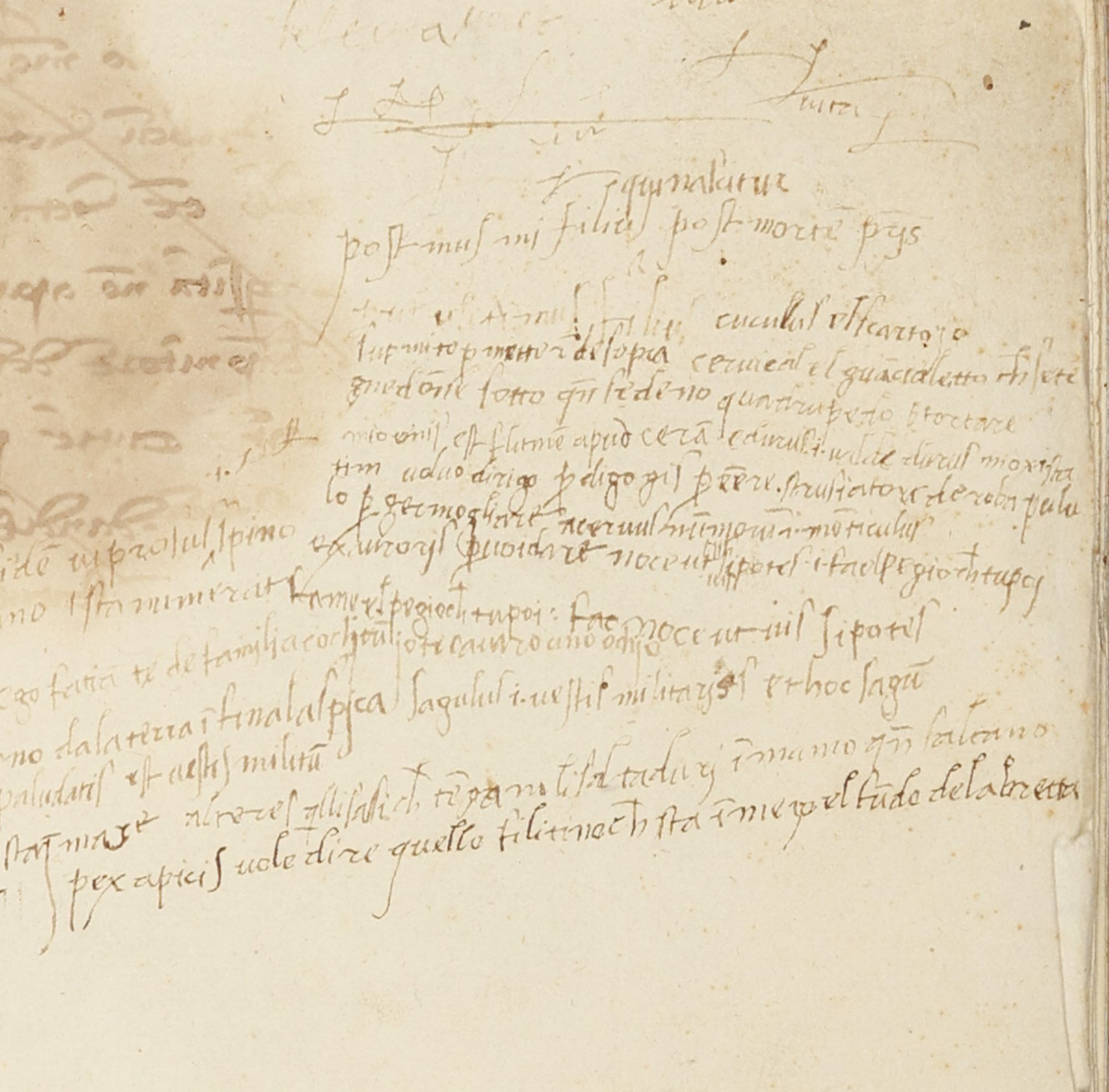
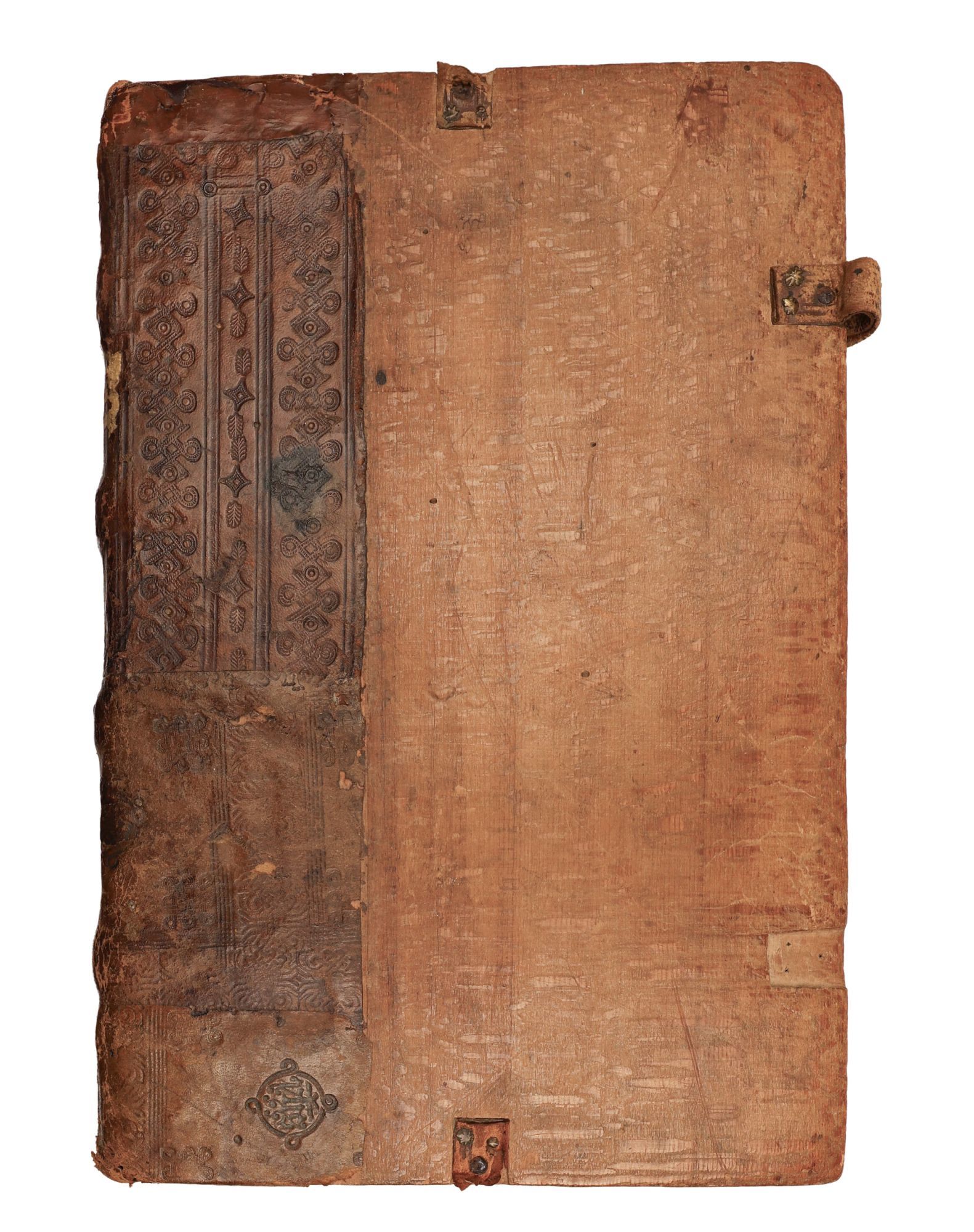
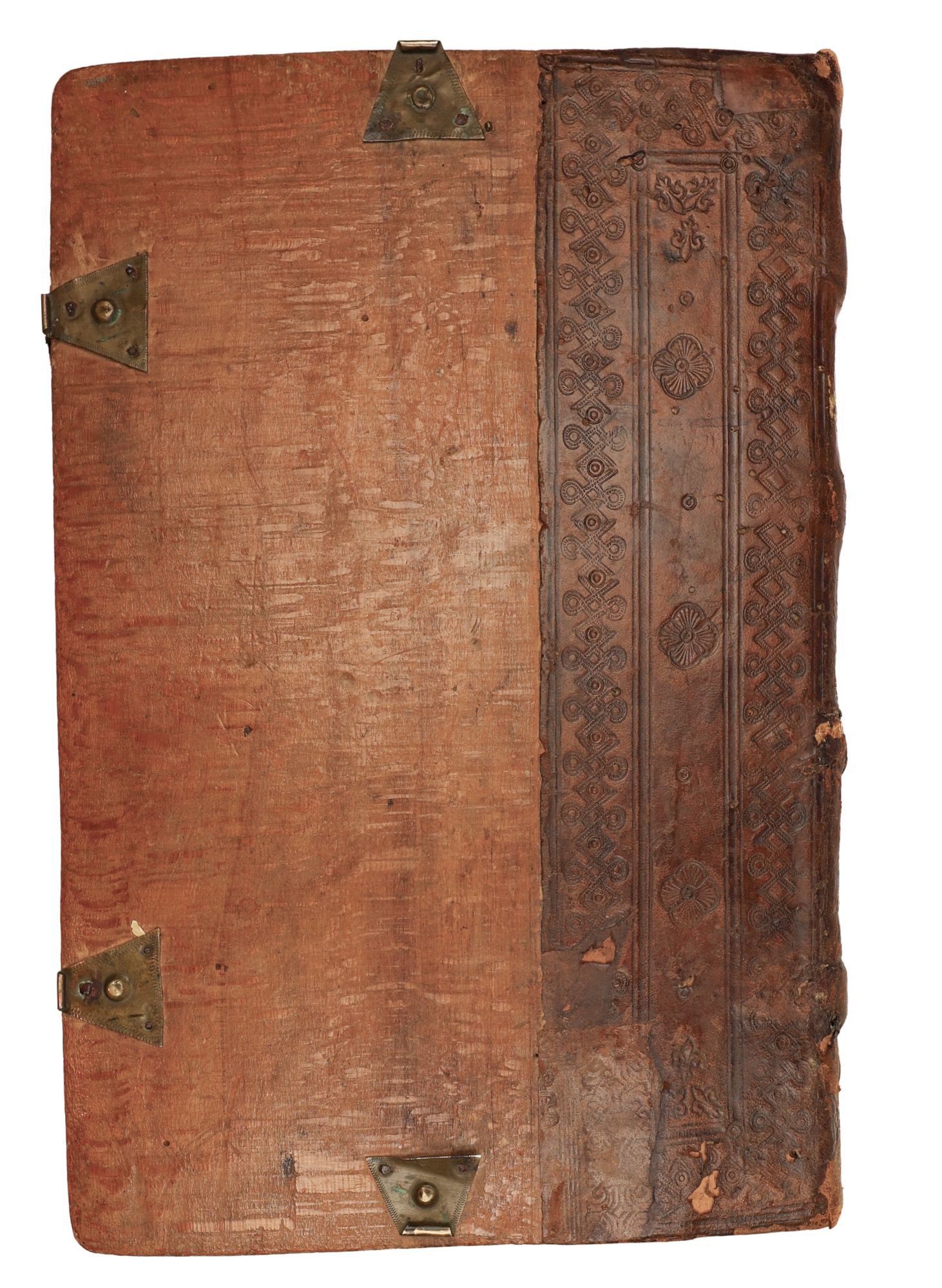
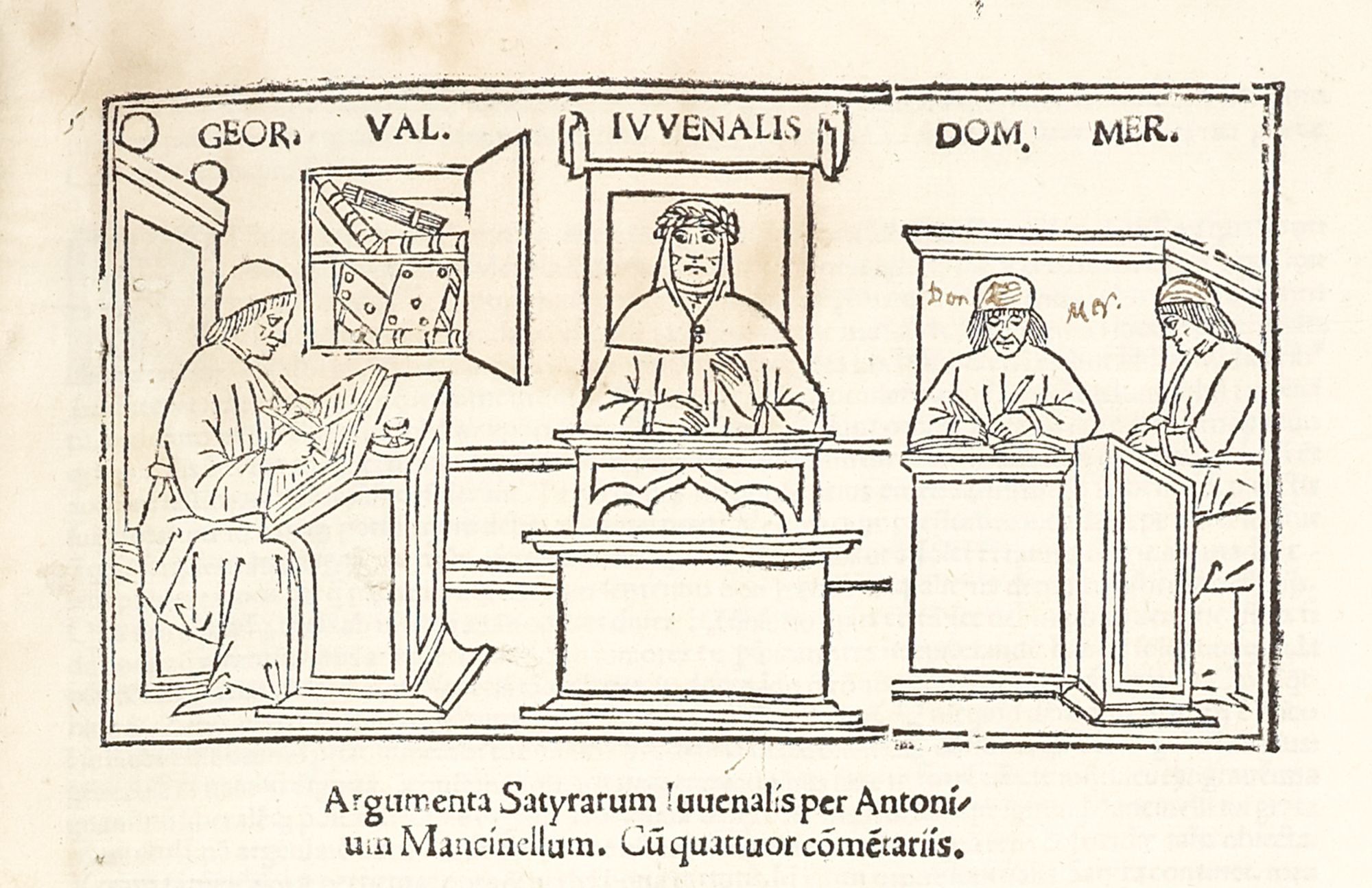
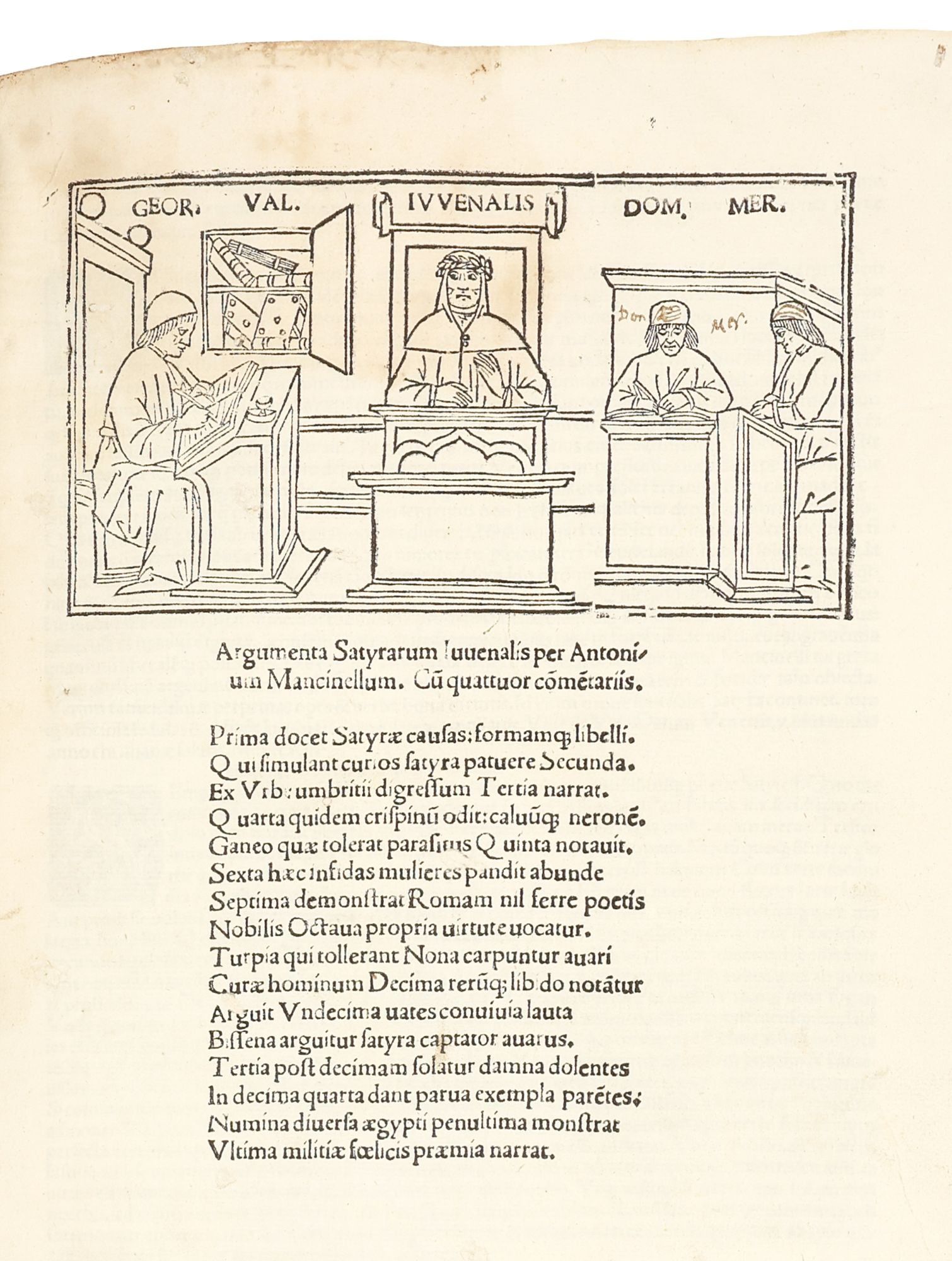
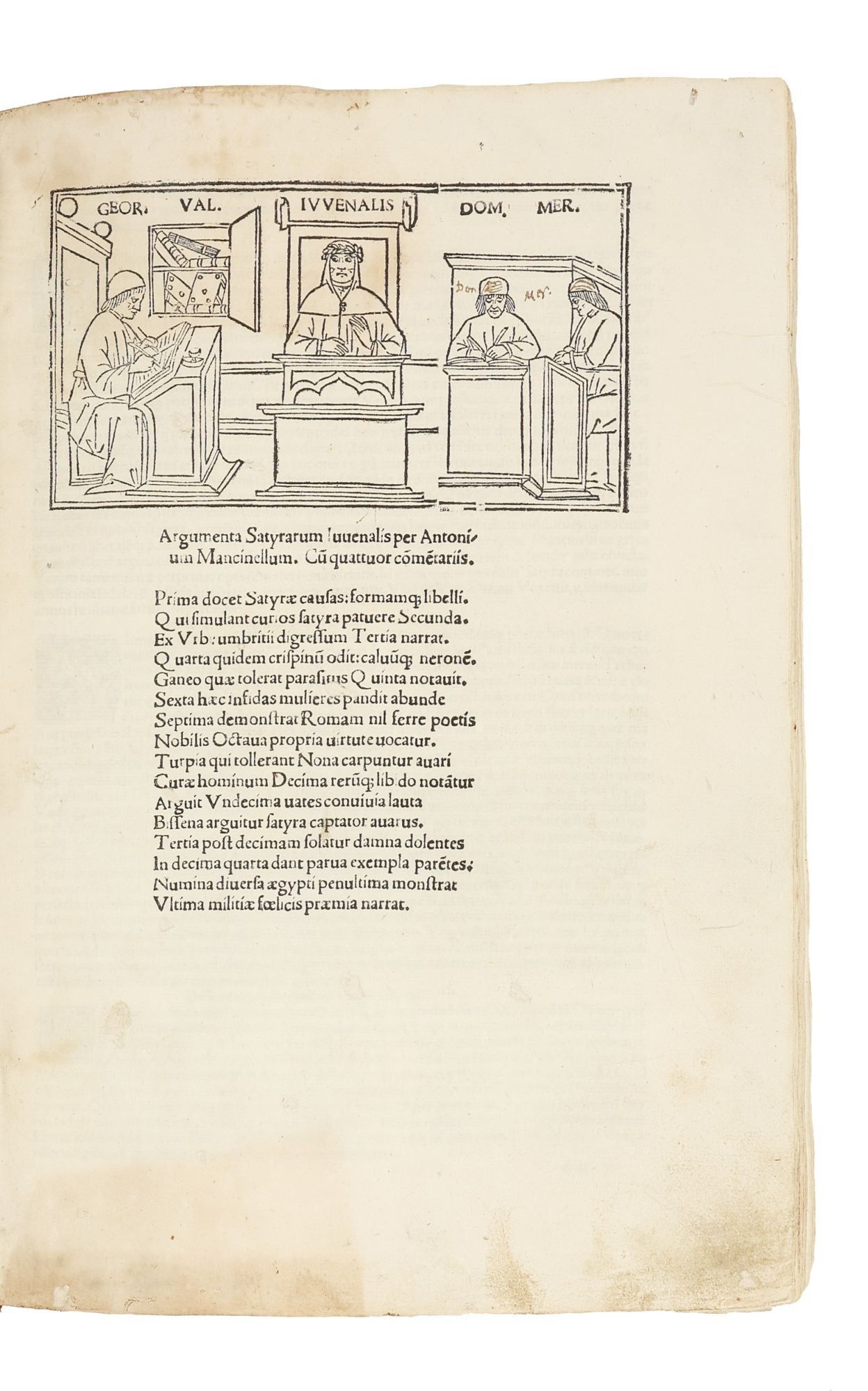
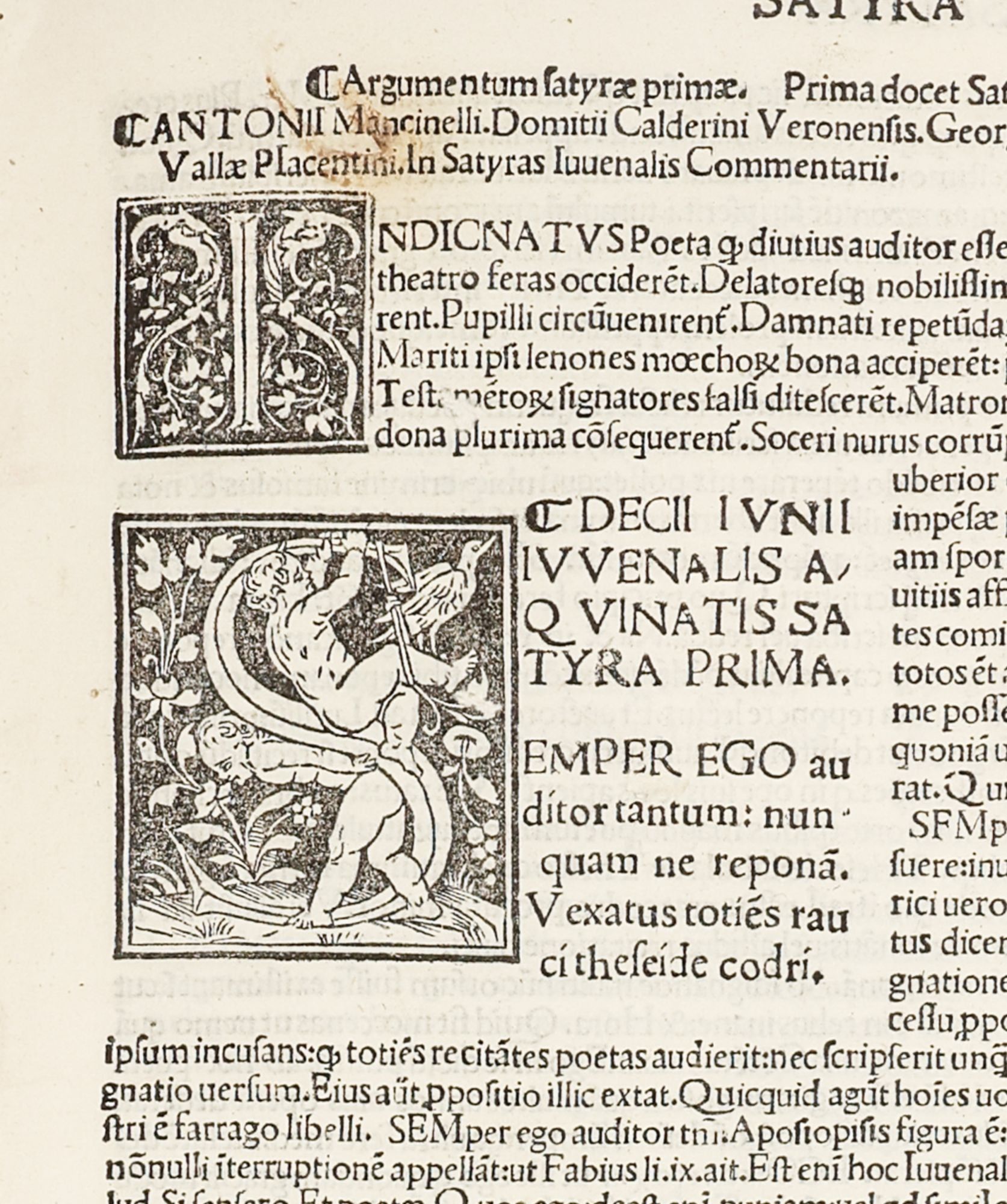
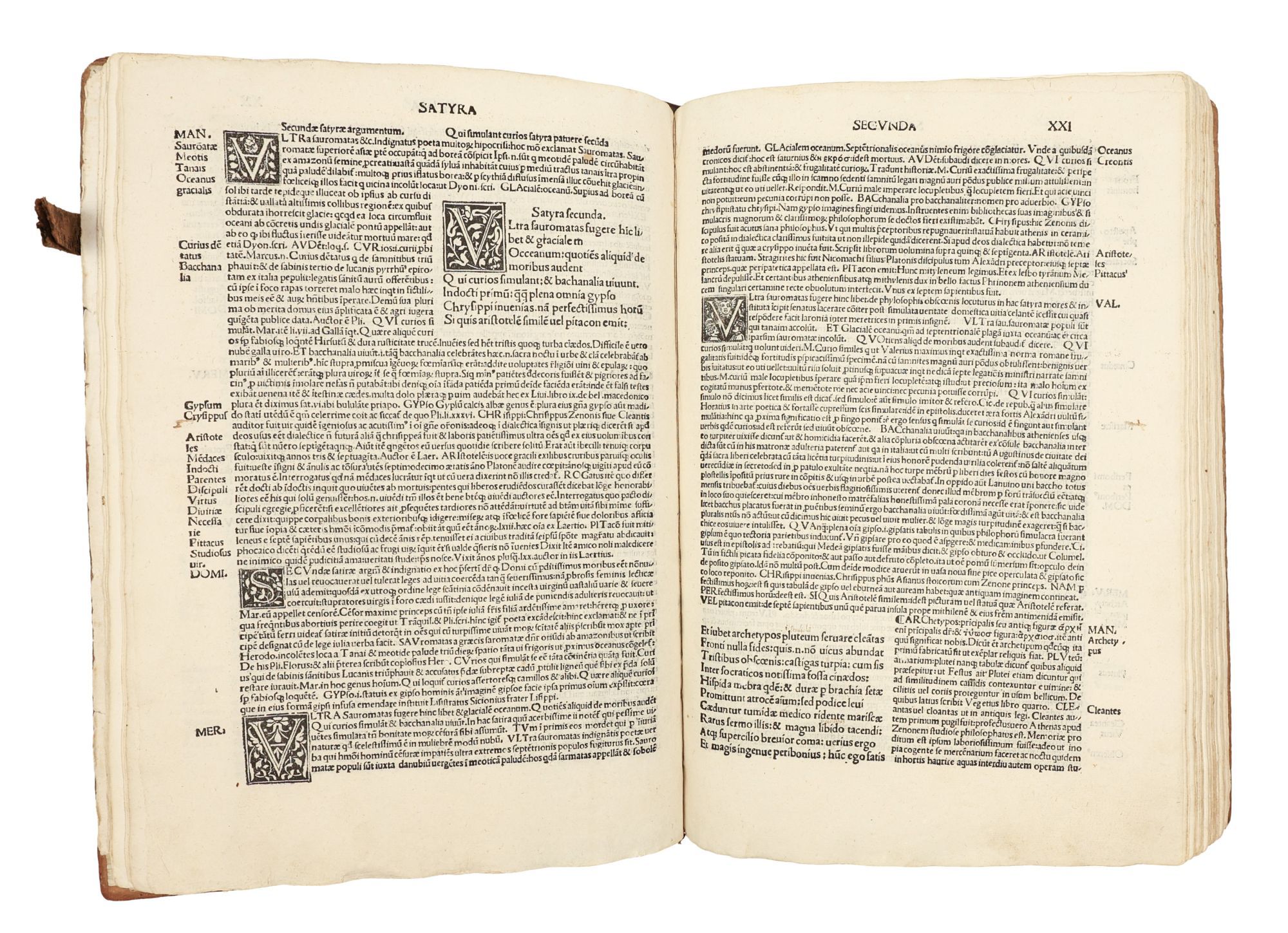
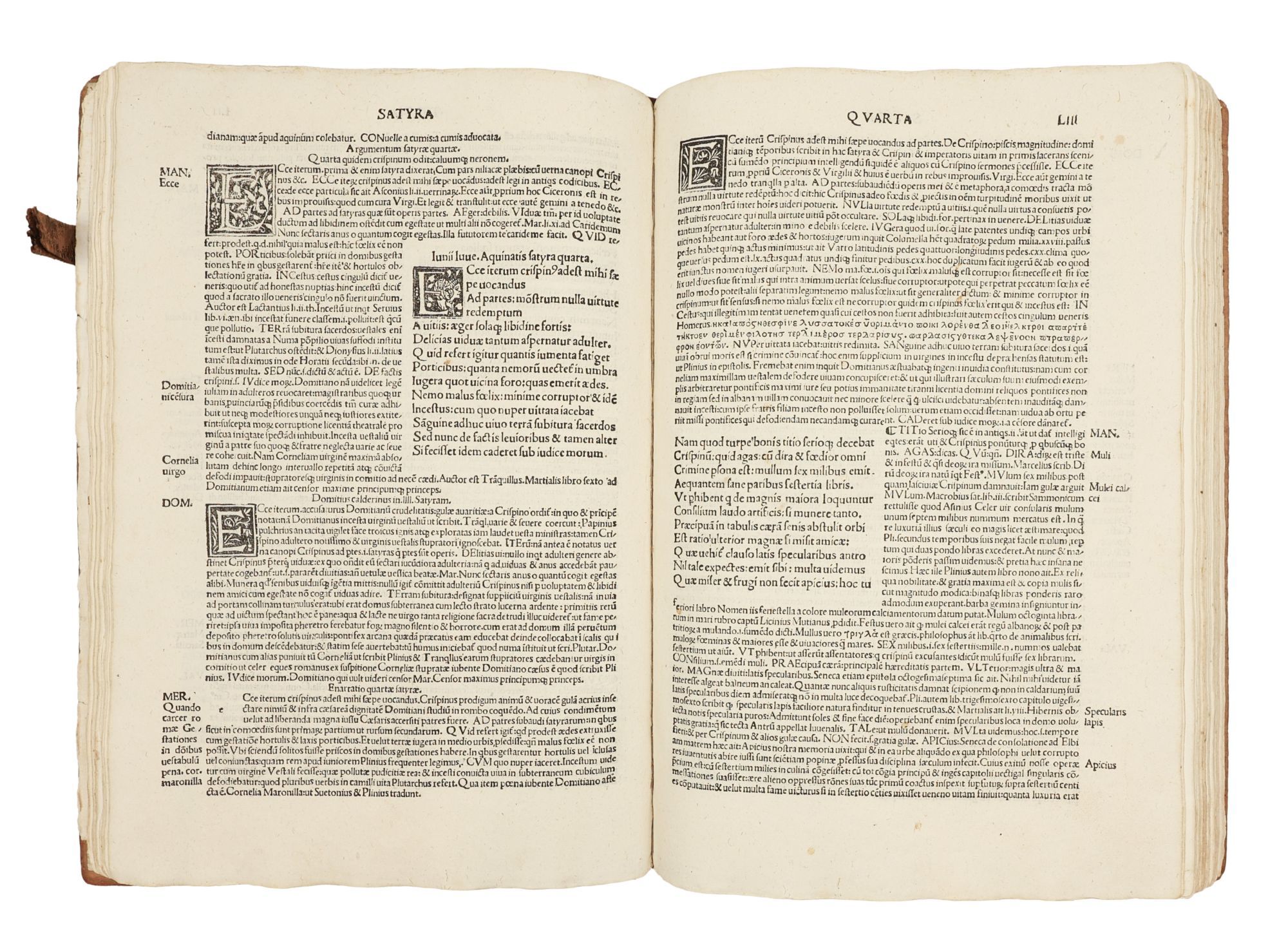
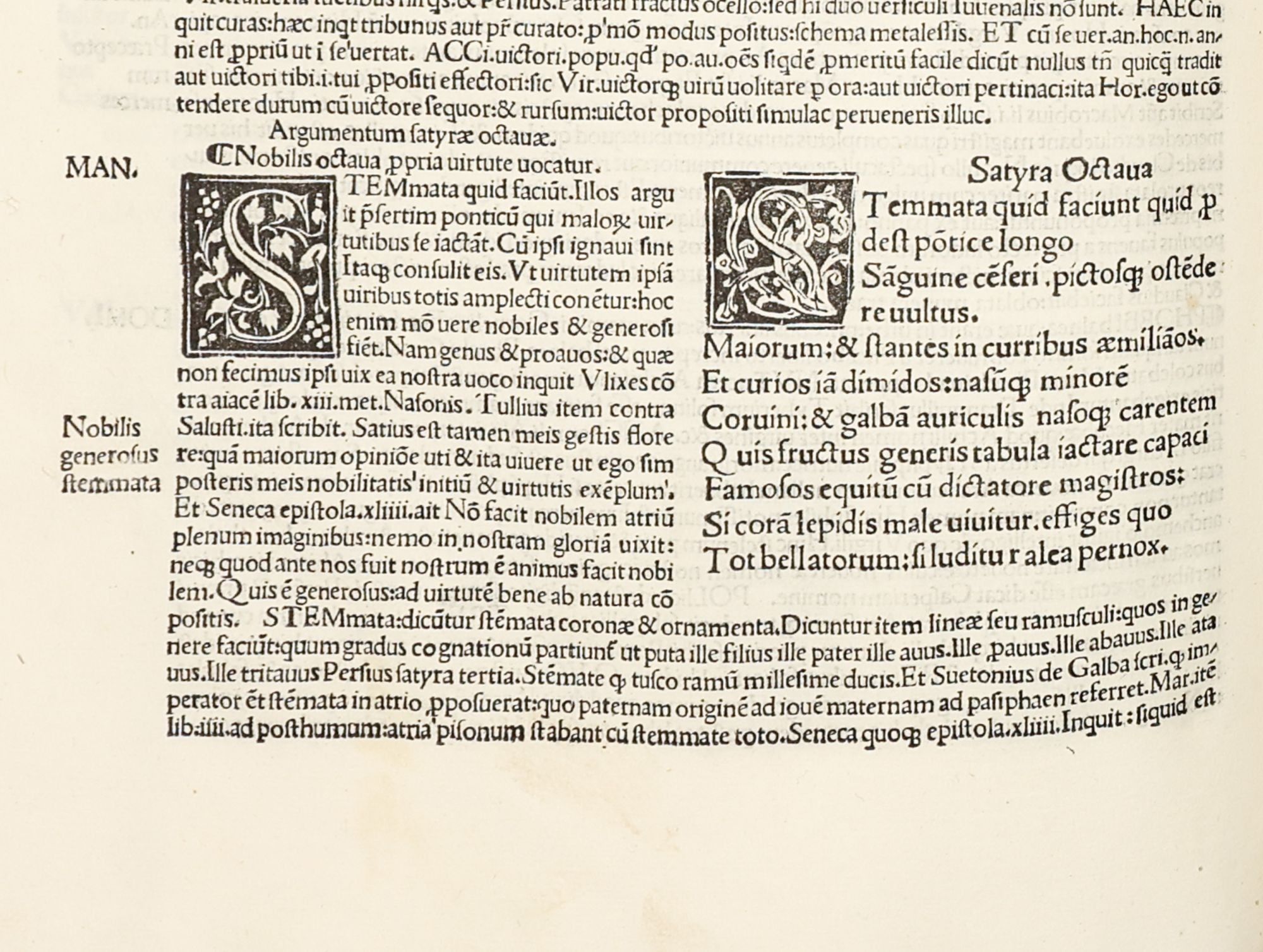
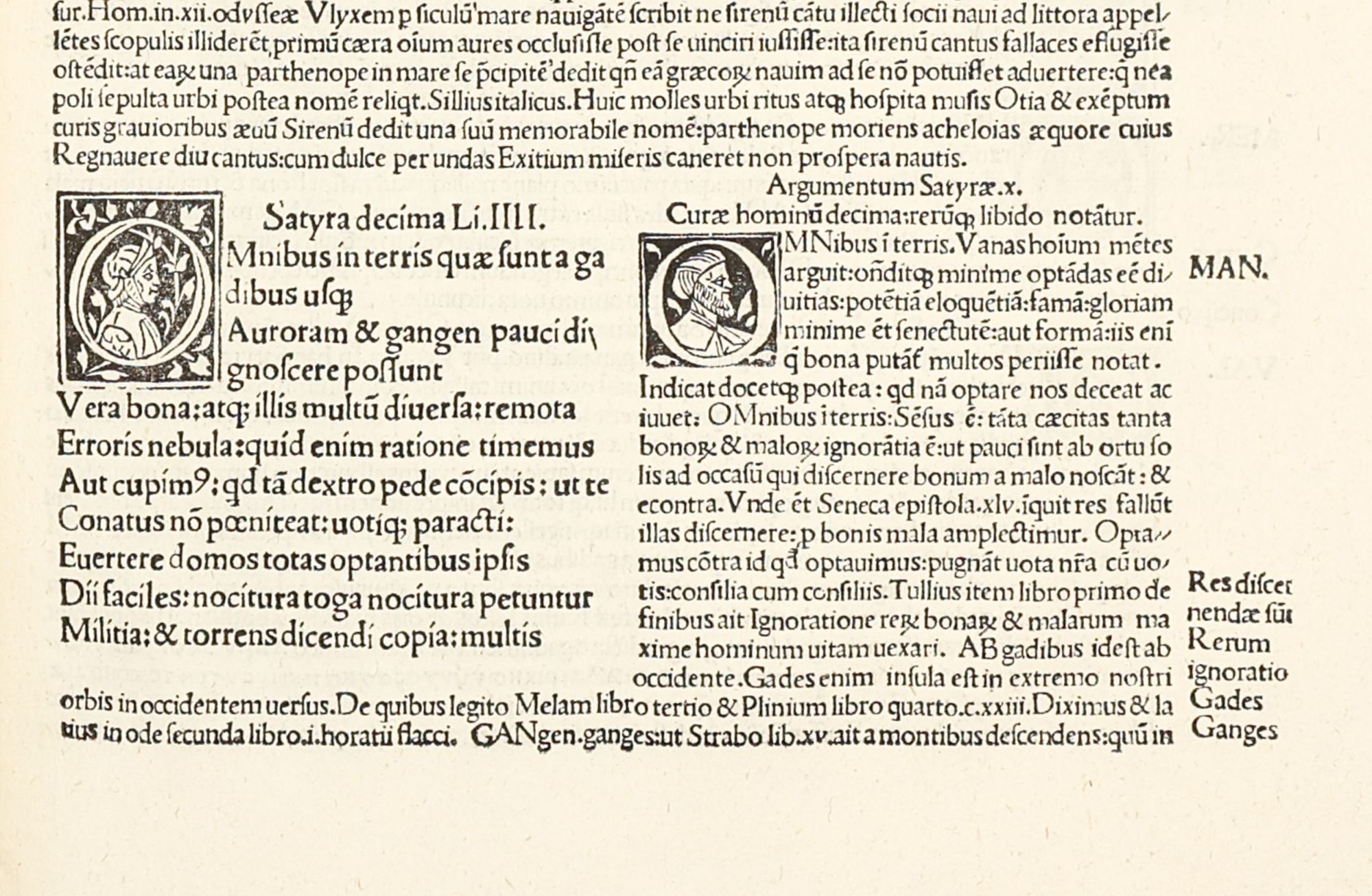
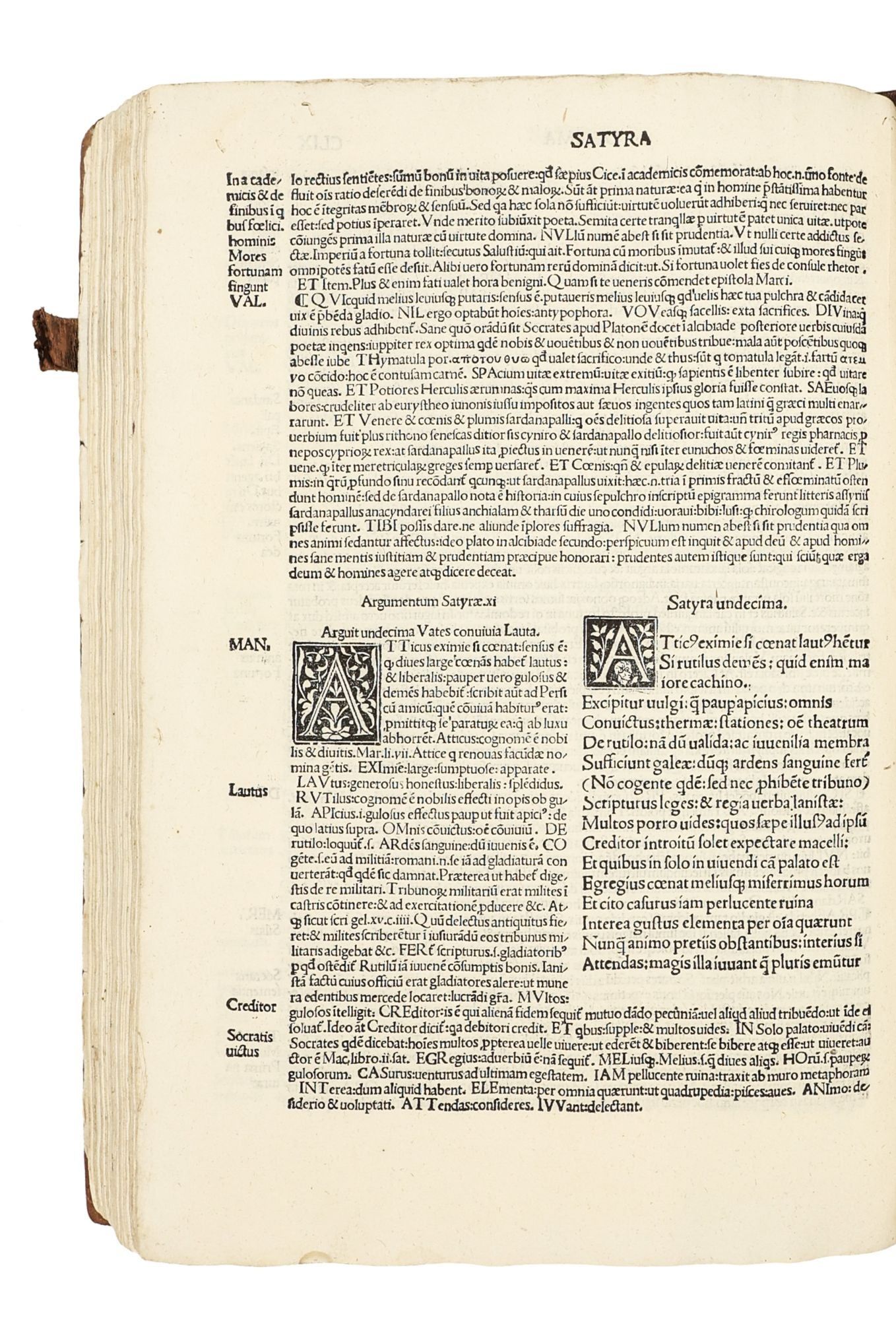
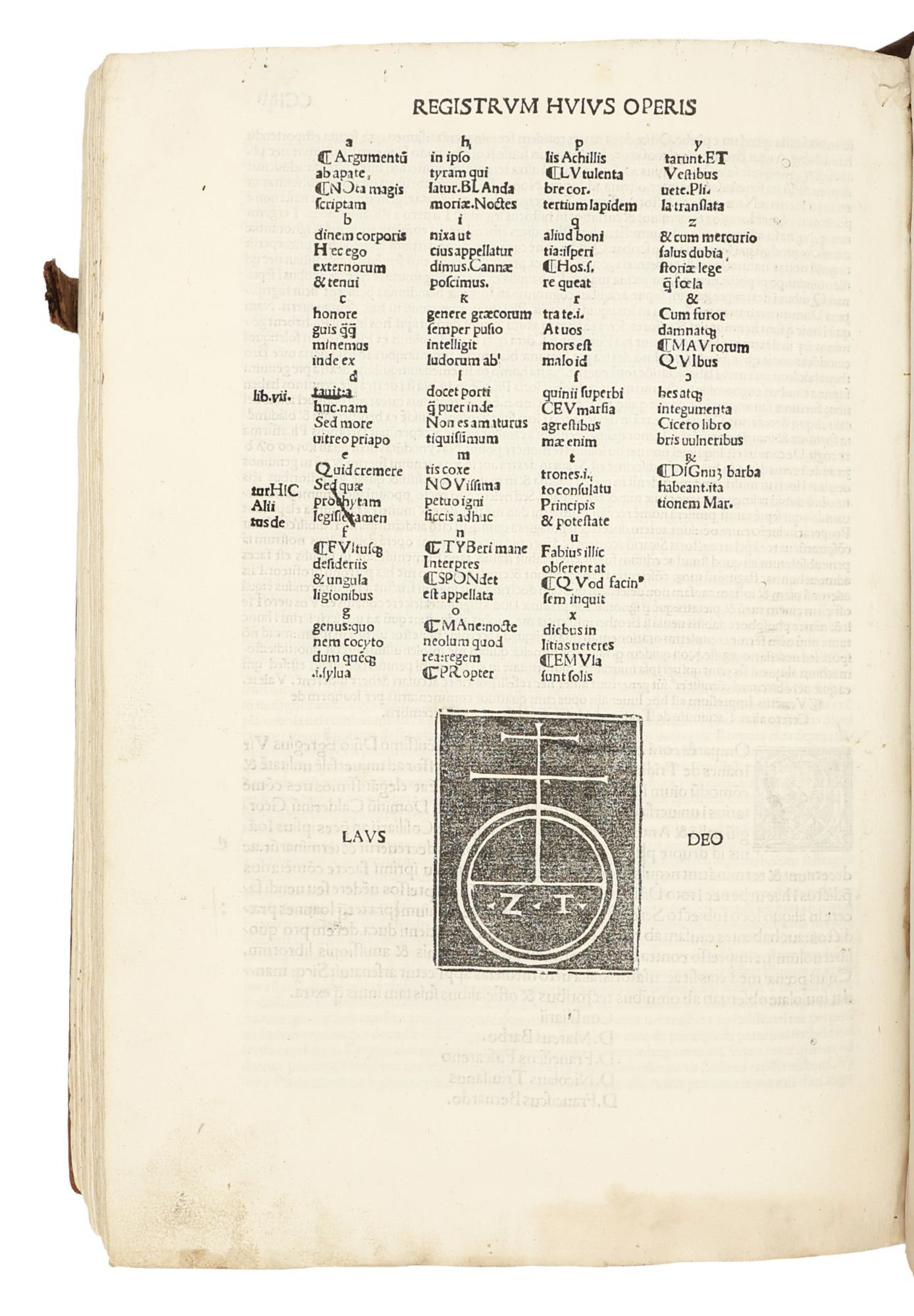
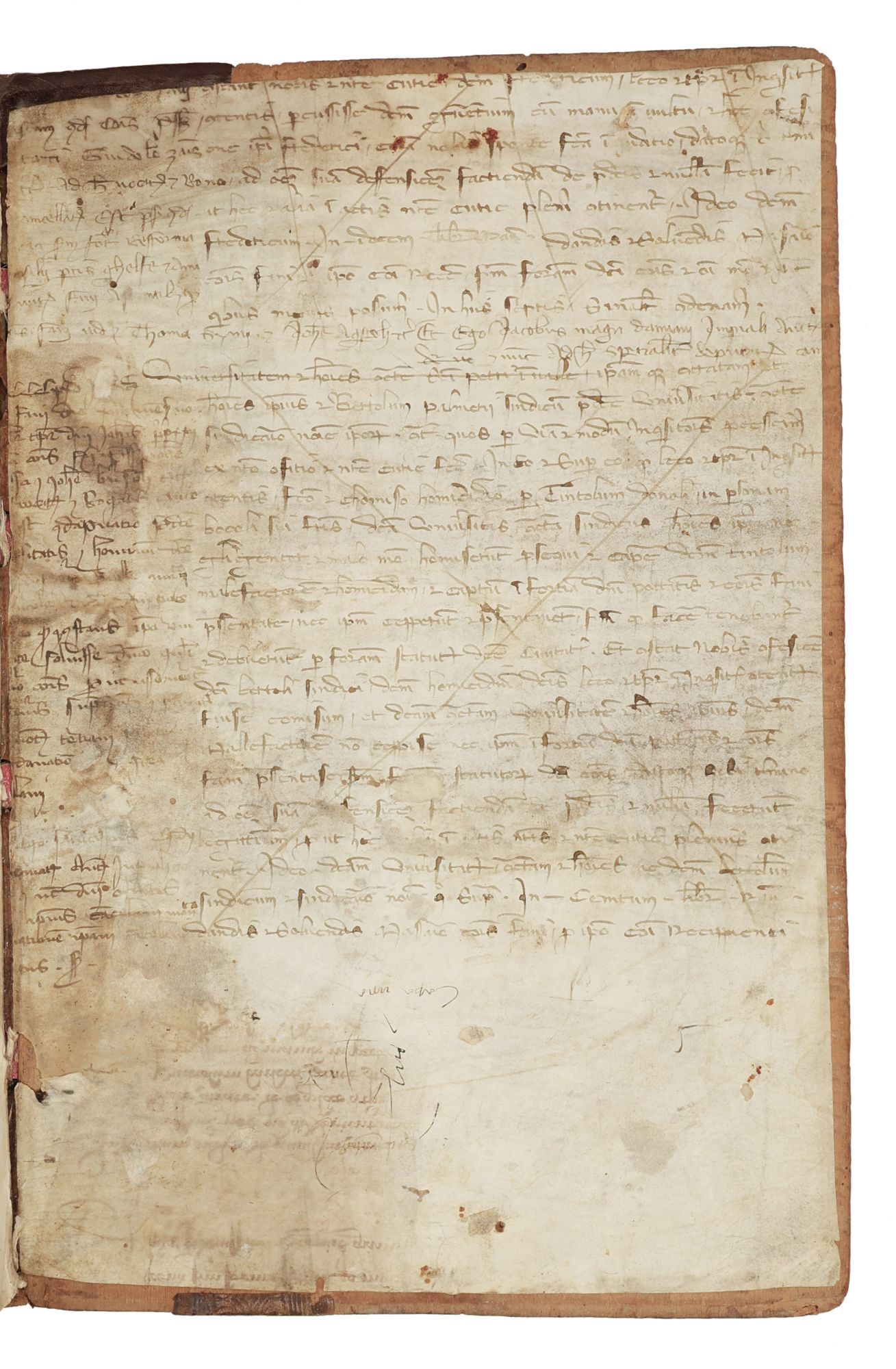
Venice: Impressum per Ioannem de Cereto alias Tacuinum de Tridino, 10 December, 1501. SECOND EDITION THUS. Hardcover. Fine. An attractive copy in a contemporary, blind-stamped Italian Renaissance binding of quarter calf and wooden boards (some worm-traces and defects to leather and boards, clasps and one fastener missing, metal catches preserved, straps perished). Fine and clean internally with the exception of some marginal soiling and trivial blemishes (soiling to lower margin of title, light damp-stain to upper margin of 4 lvs. in gathering n, corner of gathering q, and lower margin of the final gathering. Small ink stain to first leaf of Satires, light ink-stain to leaf i3, ink smear on leaf x3. Manuscript leaves used as paste-downs; 16th c. annotations on flyleaf. With a quarter-page woodcut of Juvenal, with a laurel crown, reciting his poetry while the humanists Lorenzo Valla, Domizio Calderini, and Giorgio Merula busily write their commentaries. A book cabinet is shown in the background of the studium. Woodcut initials throughout the text.
Juvenal’s “Satires”, edited by the humanist teacher and grammarian Antonio Mancinelli (1452-1505), with the commentaries of the important humanists Lorenzo Valla (1407-1457), Domizio Calderini (1446-1478), and Giorgio Merula (1430-1497).
Mancinelli was among the first humanists to oversee the printing of volumes containing not only his own commentaries but also those of other authors, and he gave the work a distinctly pedagogical orientation, directing it toward grammar teachers. He also added a verse summary of the Satires' themes, intended as a mnemonic for students, to the title page. The educational intent is also reflected in the significant woodcut on the recto of the first leaf, depicting Juvenal flanked by Calderini, Merula, and Valla, who, along with Mancinelli, had edited and produced commentaries on the text of the Satires. Mancinelli’s first edition was published by the same printer in 1492; the edition of 1498 added Giorgio Merula's commentary.
“The ‘Satires’ address two main themes: the corruption of society in the city of Rome and human brutality and folly. In the first Satire, Juvenal declares that vice, crime, and the misuse of wealth have reached such a peak that it is impossible not to write satire.”(EB)
"Rancor towards society -and hidden resentment at not belonging to it- are important elements in the indignant satire of Juvenal, who represents the Italian middle class that in the daily life of the Empire’s cosmopolitan capital witnessed the constant subversion of the moral and political values of the national, republican tradition. Lacking an ethical-political awareness that could explain this turbulent development, the variety and mutability of the social picture, Juvenal looks upon this confused spectacle (which relegates him to the edges of the scene) as a tragedy performed in grotesque masks, and he does not even have the bitter satisfaction of invective.
"Juvenal transforms profoundly the formal principles of the satiric genre, breaking the traditional link with comedy and bringing satire near to tragedy, on the level of content and style, which is similarly ‘sublime.’ A familiar technique in Juvenal is the employment of epic-tragic language precisely in connection with the coarsest, most vulgar content; his purpose is to bring out the lowness of the material by contrasting it with the loftiness of the form of the expression. His realism, which richly documents for us the habits and usages of daily life at the time, strongly tends to distortion, of course, because he is dealing with figures and scenes of such coarseness that the indignant moralist’s biliousness vents itself on them."(Conte)
“Juvenal’s 16 satiric poems were first published at intervals in five separate books. Book One, containing Satires 1–5, was issued c. 100–110; Book Two, with Satire 6, c. 115; Book Three, which comprises Satires 7–9, contains what must be a reference to Hadrian, who ruled from 117 to 138; Book Four, made up of Satires 10–12, contains no datable allusion; and Book Five, containing Satires 13–16, has two references to the year 127.”(Britannica).
Juvenal’s “Satires”, edited by the humanist teacher and grammarian Antonio Mancinelli (1452-1505), with the commentaries of the important humanists Lorenzo Valla (1407-1457), Domizio Calderini (1446-1478), and Giorgio Merula (1430-1497).
Mancinelli was among the first humanists to oversee the printing of volumes containing not only his own commentaries but also those of other authors, and he gave the work a distinctly pedagogical orientation, directing it toward grammar teachers. He also added a verse summary of the Satires' themes, intended as a mnemonic for students, to the title page. The educational intent is also reflected in the significant woodcut on the recto of the first leaf, depicting Juvenal flanked by Calderini, Merula, and Valla, who, along with Mancinelli, had edited and produced commentaries on the text of the Satires. Mancinelli’s first edition was published by the same printer in 1492; the edition of 1498 added Giorgio Merula's commentary.
“The ‘Satires’ address two main themes: the corruption of society in the city of Rome and human brutality and folly. In the first Satire, Juvenal declares that vice, crime, and the misuse of wealth have reached such a peak that it is impossible not to write satire.”(EB)
"Rancor towards society -and hidden resentment at not belonging to it- are important elements in the indignant satire of Juvenal, who represents the Italian middle class that in the daily life of the Empire’s cosmopolitan capital witnessed the constant subversion of the moral and political values of the national, republican tradition. Lacking an ethical-political awareness that could explain this turbulent development, the variety and mutability of the social picture, Juvenal looks upon this confused spectacle (which relegates him to the edges of the scene) as a tragedy performed in grotesque masks, and he does not even have the bitter satisfaction of invective.
"Juvenal transforms profoundly the formal principles of the satiric genre, breaking the traditional link with comedy and bringing satire near to tragedy, on the level of content and style, which is similarly ‘sublime.’ A familiar technique in Juvenal is the employment of epic-tragic language precisely in connection with the coarsest, most vulgar content; his purpose is to bring out the lowness of the material by contrasting it with the loftiness of the form of the expression. His realism, which richly documents for us the habits and usages of daily life at the time, strongly tends to distortion, of course, because he is dealing with figures and scenes of such coarseness that the indignant moralist’s biliousness vents itself on them."(Conte)
“Juvenal’s 16 satiric poems were first published at intervals in five separate books. Book One, containing Satires 1–5, was issued c. 100–110; Book Two, with Satire 6, c. 115; Book Three, which comprises Satires 7–9, contains what must be a reference to Hadrian, who ruled from 117 to 138; Book Four, made up of Satires 10–12, contains no datable allusion; and Book Five, containing Satires 13–16, has two references to the year 127.”(Britannica).
Details
Title
Argumenta Satyrarum Iuuenalis per Antonium Mancinellum. Cum quattuor commentariis
Author
Juvenal [Decimus Junius Juvenalis] (C.E. 60-130)
Binding
Hardcover
Condition
Fine
Publisher
Impressum per Ioannem de Cereto alias Tacuinum de Tridino, 10 December: Venice
Date
1501
Edition
SECOND EDITION THUS