

Parafrasis Comentado Sobre el Pentateuco

- Hardcover
- Amsterdam: Estampado en caza de Iaacob de Cordova, 5441
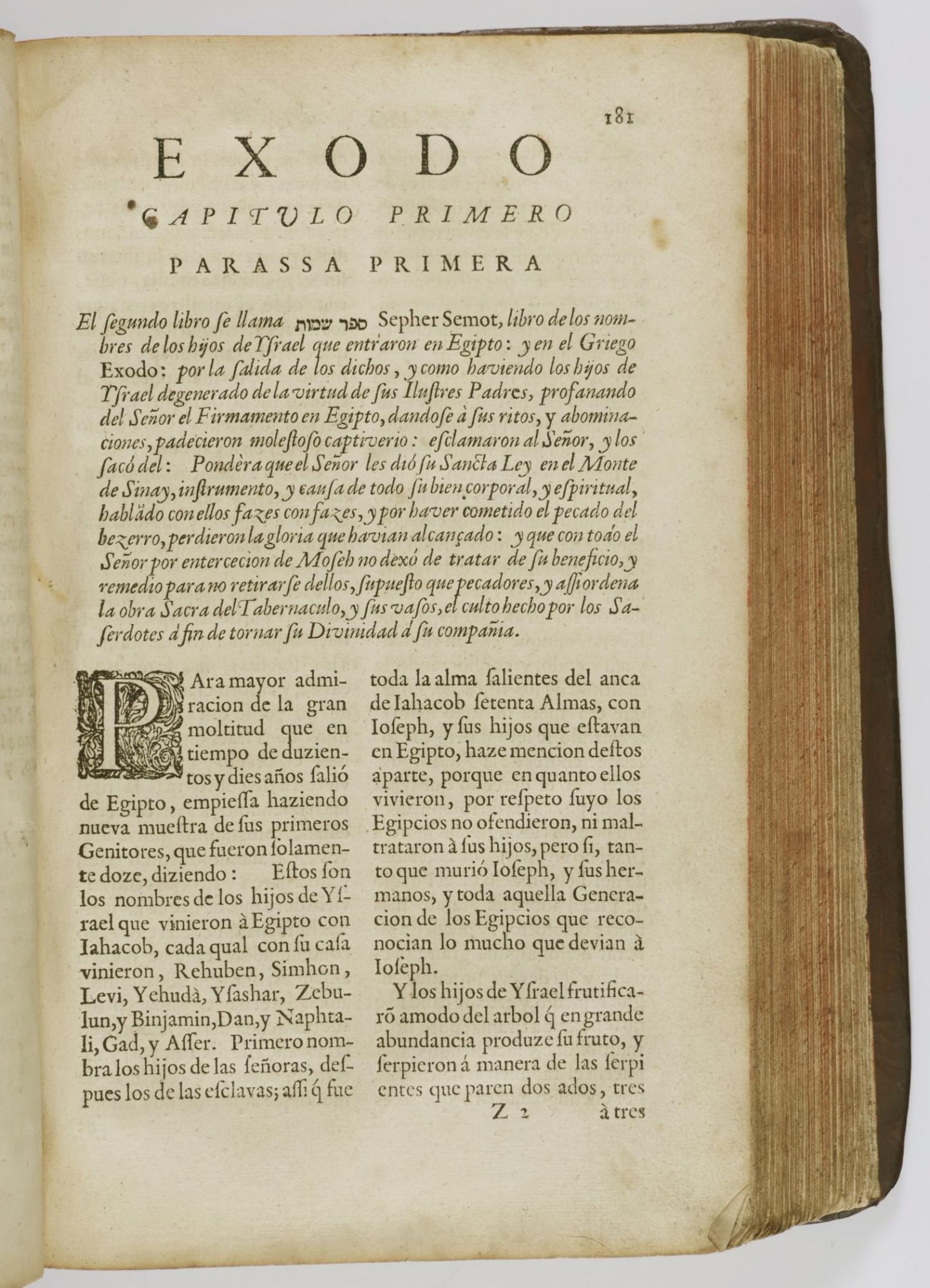
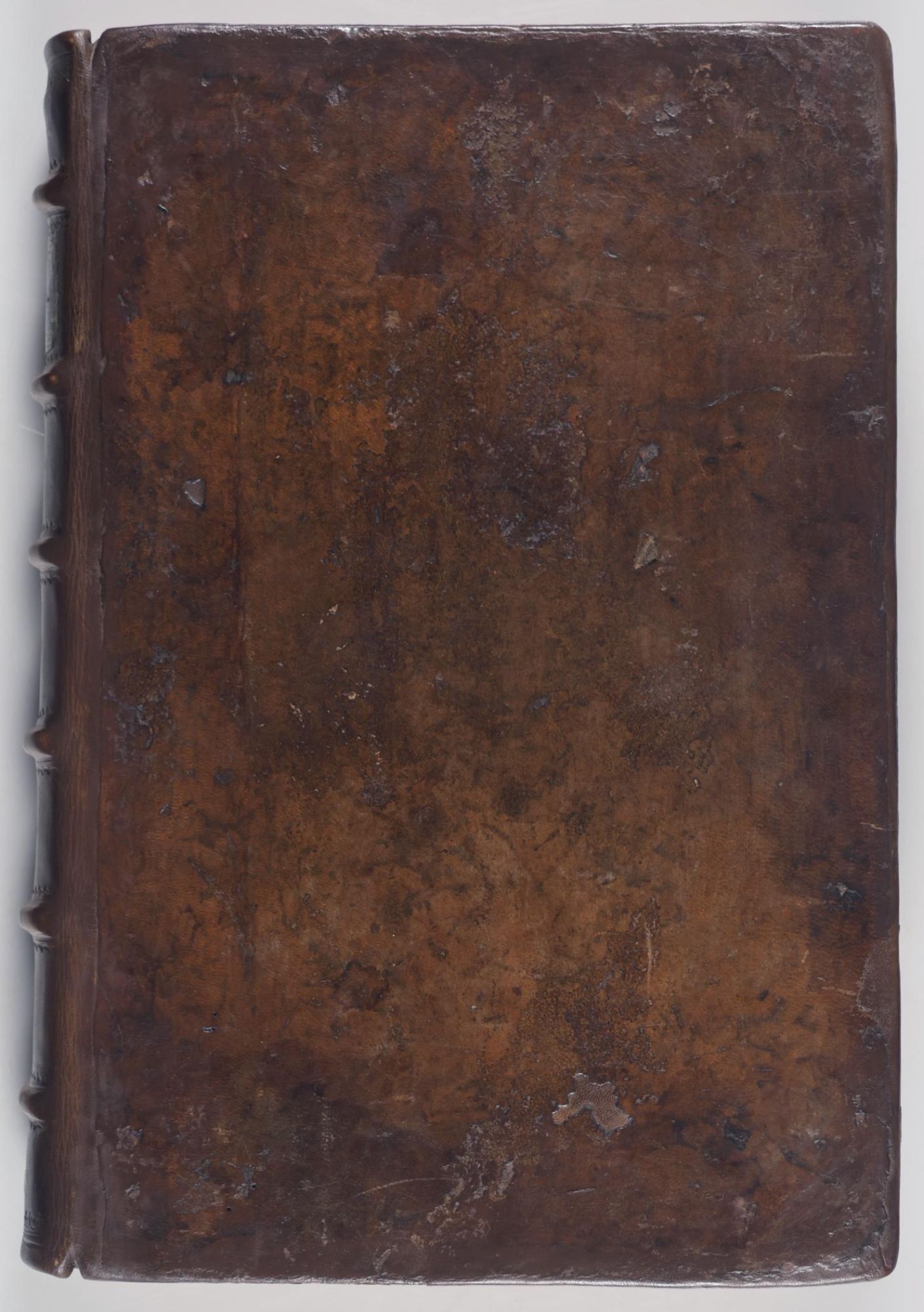
Amsterdam: Estampado en caza de Iaacob de Cordova, 5441. First edition. Hardcover. g+ to vg-. Large quarto. [5] 634pp. Re-backed in modern spine with raised bands, blind-stamped tooling and the original gilt-stamped leather label pasted on. Retains original leather boards. Edges of the book block in red. Engraved title page. Text throughout printed in a two-column format with decorative woodcut initials and tailpieces.
This work is a paraphrased translation of the Pentateuch (the Five Books of Moses) into Spanish, by Rabbi Isaac Aboab da Fonseca (1605-1693), seamlessly incorporating and utilizing past rabbinic commentary and midrash into the text. The previous commentaries referenced by Aboab throughout are usually attributed to the views of "sages" or "theologians" without specifically citing the individual source. The book was important for the ex-converso Sephardic Jewish community of Amsterdam as many of these Jews, who had in more recent years reconnected with there Jewish heritage after a period of more than one hundred years living as Catholics on the Iberian peninsula, could not read Hebrew. This publication is one of a large number of works of Judaica (including bibles and prayer books) published from the 16th - early 18th centuries which catered to that community. The author, a respected scholar and prominent member of the Sephardic community, was himself from a Portuguese Jewish family which had previously been forcibly converted to Christianity. The work is considered to be Aboab's magnum opus, and was the standard by which all other similar works of the period were judged.
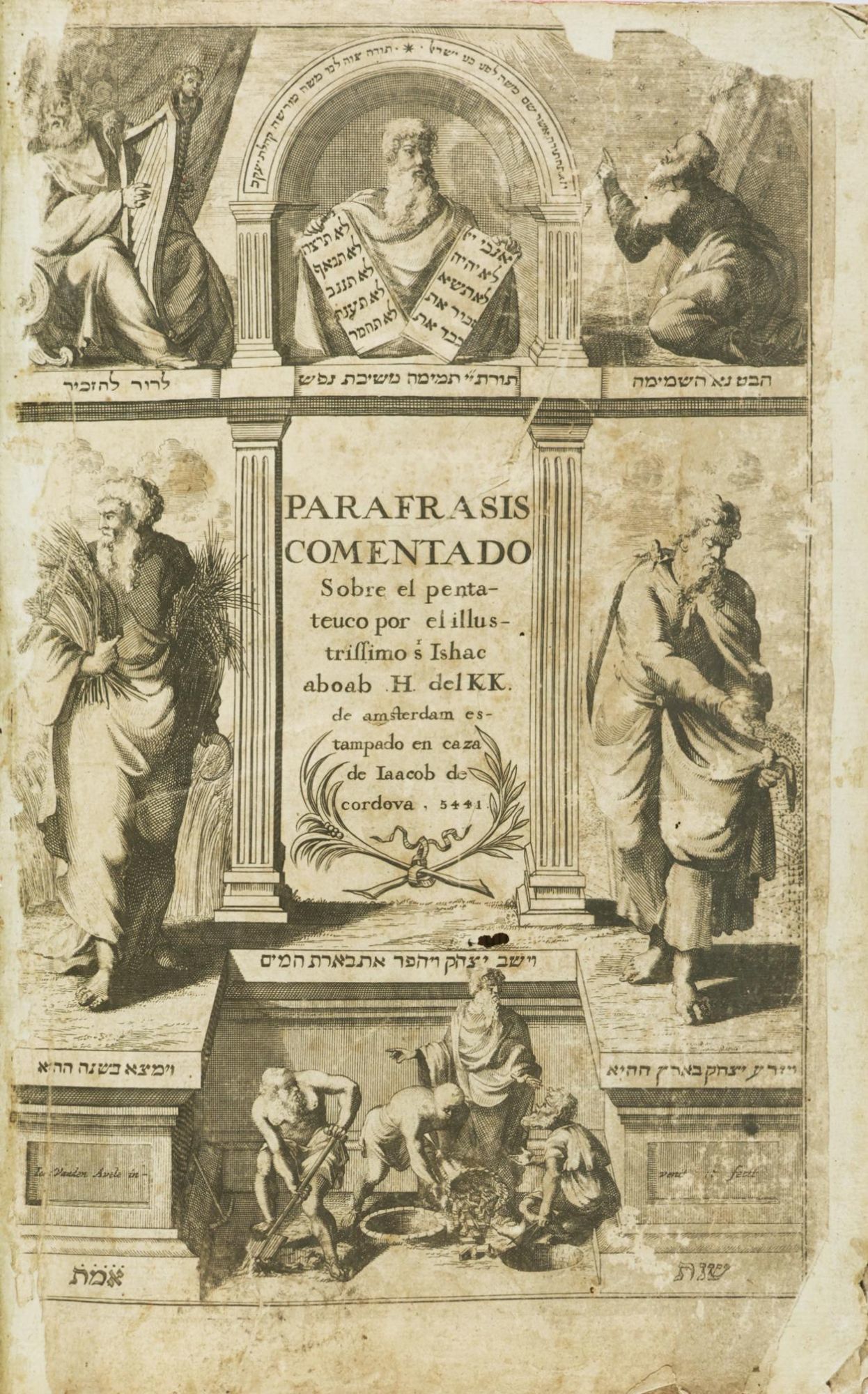
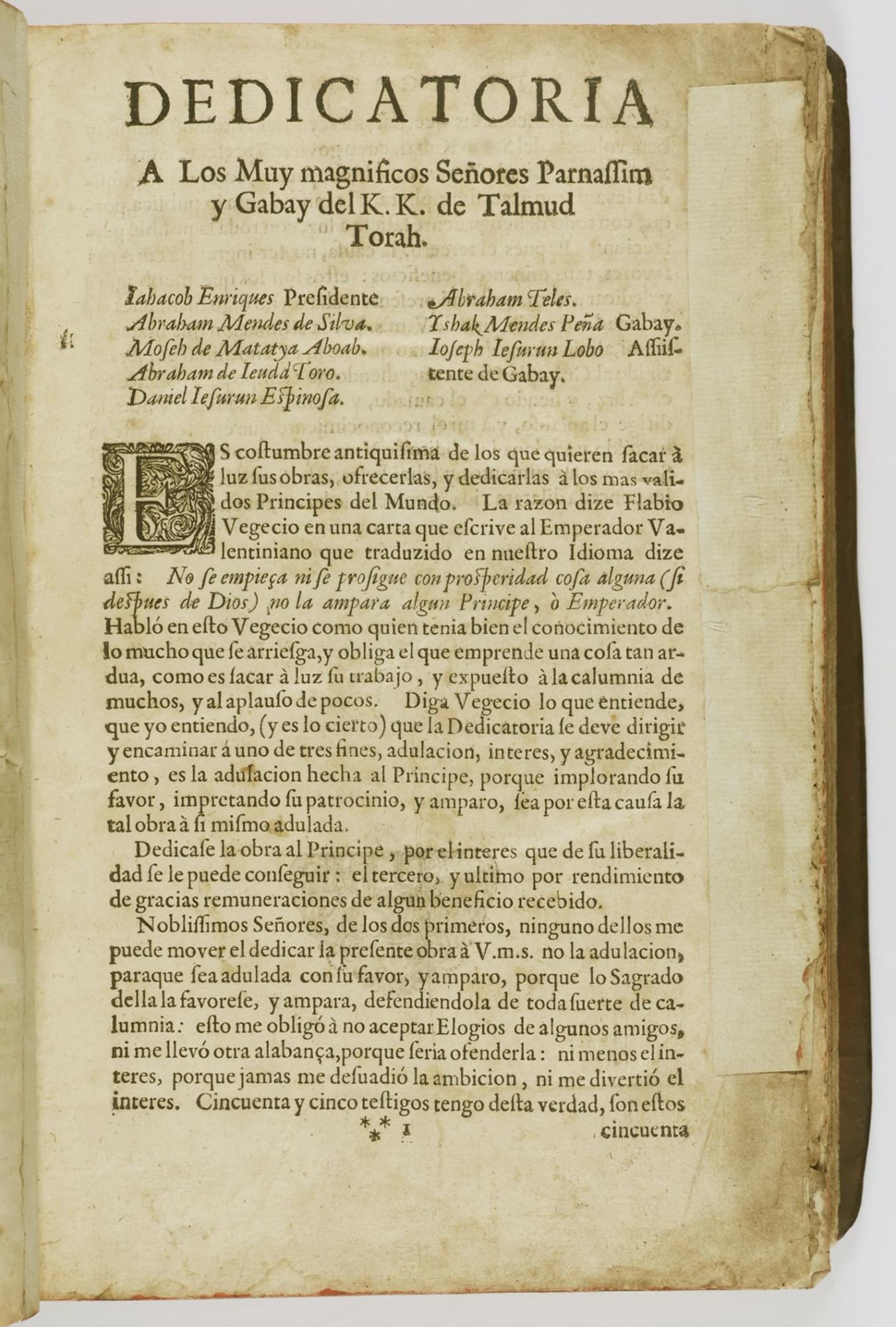
The engravings which surround the text on the title page by Jan van den Aveele (c. 1650 - 1727) depict a number of biblical scenes and figures, and contain some Hebrew text. The prologue contains approbations (including some Hebrew text) from three other prominent religious figures in the community: Jacob ben Aaron Sasportas (1610 – 1698), Immanuel Abenatar Melo and Selomoh de Oliveira.
Text throughout in Spanish.
Binding with some light rubbing to the extremities, and some period abrasions to the covers. Interior with some light water staining to the interior covers and free endpapers. Text pages throughout with some sporadic minor to light foxing and water stains, with a few small instances of worming or other holes. Title page with a small hole at the center, and a closed tear at the bottom. The initial 7 printed leaves have been repaired and/or reinforced to one degree or another mostly in the margins. In the case of the title page (laid down) this has resulted in some minor loss of image to the edges of the leaf, and some loss of text along the left margin of the prologue leaf and on p.1 and 3. Pages throughout on the whole in good shape. Binding in very good-, interior in good+ condition overall. About the author:
Isaac Aboab da Fonseca (1605-1693) was a leading Rabbi and scholar of the Portuguese Jewish community of Amsterdam in the 17th century. He was born in the Portuguese town of Castro Daire as Simão da Fonseca, and was a member of the large and prominent Aboab family which was comprised of many noted rabbis, scholars, physicians, and merchants over the centuries. He was born into a family of conversos, but still constant anti-Semitic persecution caused the family to immigrate to Amsterdam when Isaac was seven years old. There they reestablished their Jewish roots. From 1642-1654 he was appointed to be the head of the Jewish community in Recife, Brazil during the brief period of Dutch control. He served as Rabbi of the Kahal Zur Israel Synagogue, the first synagogue in the Americas. Upon the retaking of the colony by the Portuguese, Aboab came back to Amsterdam, and in 1656 he was one of several prominent religious leaders of the Portuguese-Jewish community of Amsterdam to excommunicate the famed philosopher Baruch Spinoza.
Reference: Darlow and Moule, #8481.
This work is a paraphrased translation of the Pentateuch (the Five Books of Moses) into Spanish, by Rabbi Isaac Aboab da Fonseca (1605-1693), seamlessly incorporating and utilizing past rabbinic commentary and midrash into the text. The previous commentaries referenced by Aboab throughout are usually attributed to the views of "sages" or "theologians" without specifically citing the individual source. The book was important for the ex-converso Sephardic Jewish community of Amsterdam as many of these Jews, who had in more recent years reconnected with there Jewish heritage after a period of more than one hundred years living as Catholics on the Iberian peninsula, could not read Hebrew. This publication is one of a large number of works of Judaica (including bibles and prayer books) published from the 16th - early 18th centuries which catered to that community. The author, a respected scholar and prominent member of the Sephardic community, was himself from a Portuguese Jewish family which had previously been forcibly converted to Christianity. The work is considered to be Aboab's magnum opus, and was the standard by which all other similar works of the period were judged.
The engravings which surround the text on the title page by Jan van den Aveele (c. 1650 - 1727) depict a number of biblical scenes and figures, and contain some Hebrew text. The prologue contains approbations (including some Hebrew text) from three other prominent religious figures in the community: Jacob ben Aaron Sasportas (1610 – 1698), Immanuel Abenatar Melo and Selomoh de Oliveira.
Text throughout in Spanish.
Binding with some light rubbing to the extremities, and some period abrasions to the covers. Interior with some light water staining to the interior covers and free endpapers. Text pages throughout with some sporadic minor to light foxing and water stains, with a few small instances of worming or other holes. Title page with a small hole at the center, and a closed tear at the bottom. The initial 7 printed leaves have been repaired and/or reinforced to one degree or another mostly in the margins. In the case of the title page (laid down) this has resulted in some minor loss of image to the edges of the leaf, and some loss of text along the left margin of the prologue leaf and on p.1 and 3. Pages throughout on the whole in good shape. Binding in very good-, interior in good+ condition overall. About the author:
Isaac Aboab da Fonseca (1605-1693) was a leading Rabbi and scholar of the Portuguese Jewish community of Amsterdam in the 17th century. He was born in the Portuguese town of Castro Daire as Simão da Fonseca, and was a member of the large and prominent Aboab family which was comprised of many noted rabbis, scholars, physicians, and merchants over the centuries. He was born into a family of conversos, but still constant anti-Semitic persecution caused the family to immigrate to Amsterdam when Isaac was seven years old. There they reestablished their Jewish roots. From 1642-1654 he was appointed to be the head of the Jewish community in Recife, Brazil during the brief period of Dutch control. He served as Rabbi of the Kahal Zur Israel Synagogue, the first synagogue in the Americas. Upon the retaking of the colony by the Portuguese, Aboab came back to Amsterdam, and in 1656 he was one of several prominent religious leaders of the Portuguese-Jewish community of Amsterdam to excommunicate the famed philosopher Baruch Spinoza.
Reference: Darlow and Moule, #8481.
Details
Title
Parafrasis Comentado Sobre el Pentateuco
Author
Aboab, Isaac da Fonseca; Jan van den Aveele (engraving)
Binding
Hardcover
Condition
Very Good
Publisher
Estampado en caza de Iaacob de Cordova: Amsterdam
Date
5441
Edition
First edition