

GWANRYONGSA SAJEOKG 觀龍寺事蹟 [History of Gwanryongsa Temple]
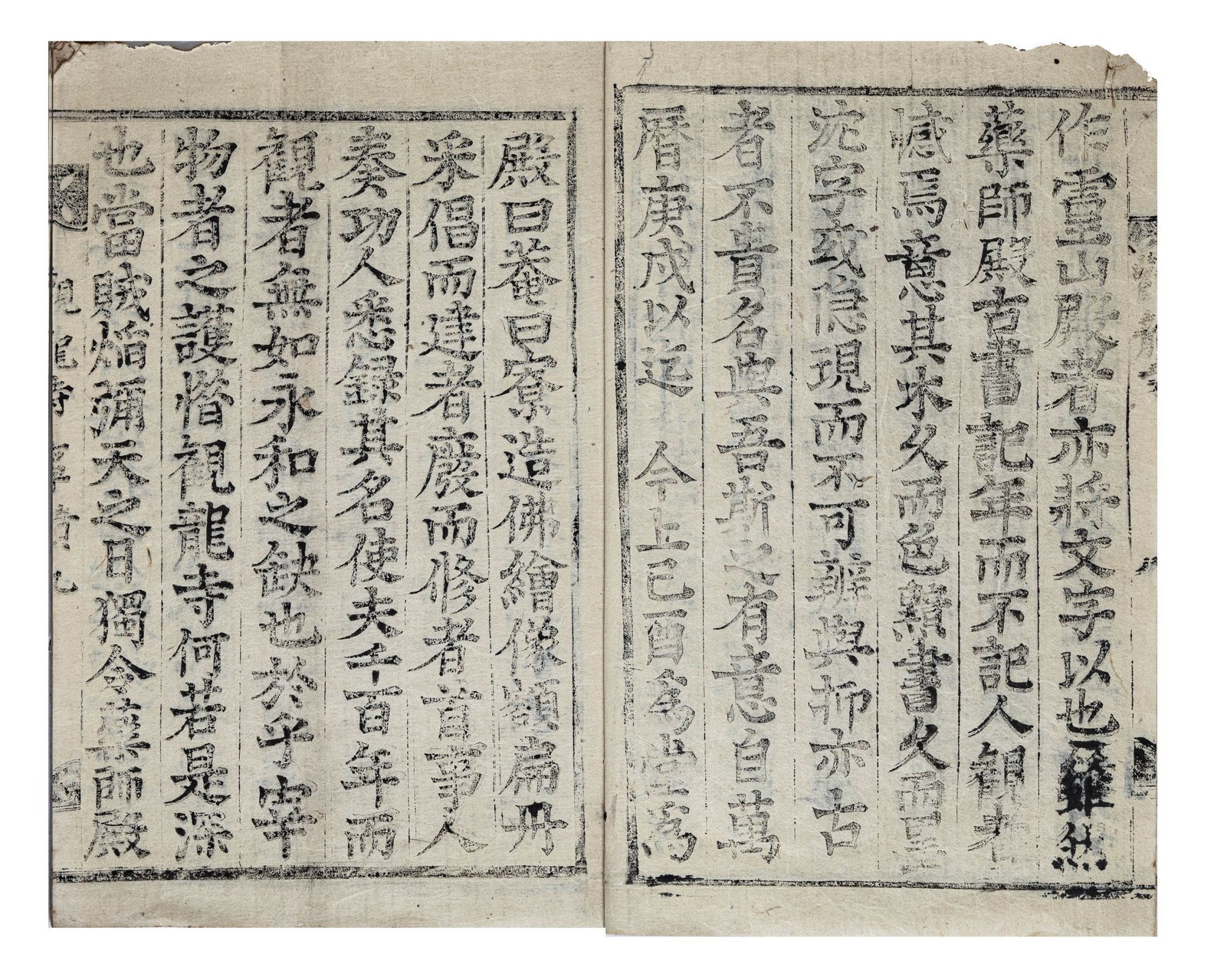
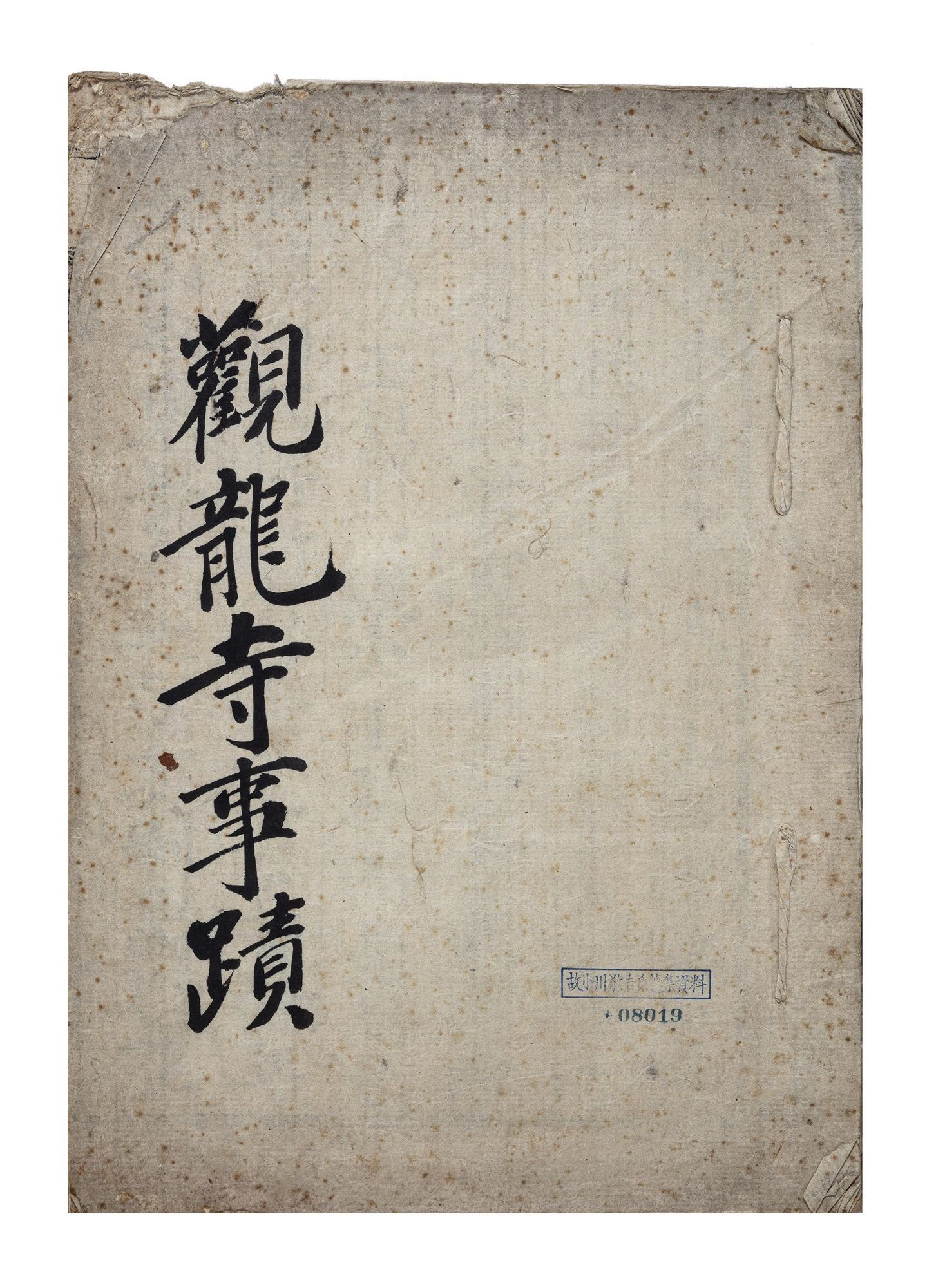
9; 6 folding leaves. Two parts in one. Small folio (365 x 256 mm.), orig. wrappers, orig. stitching. [Ch’angnyeŏng] 昌寧: [1734].
First edition, and rare, of the History of Guwanryongsa Temple, with a unique laid-in manuscript “Sangryangmun” composed on the occasion of the temple’s 1821 renovation.
“The History of the Changnyeong Gwagryongsa Temple records the entire history of the construction and renovation of the Gwanryongsa Temple…containing detailed descriptions of the origins and history of Gwanryongsa Temple, one of the eight major temples of Silla. The main text was written by Shin Yu-han 申維翰 (1681–?), the governor of Pyeonghae County, in 1733 at the request of the monk Myeonghak 明學 (c. 1650-after 1734), and the postscript [was] written by the monk Myeonghak in 1734, and an appendix list[s] the scriptures and artefacts stored in the temple’s halls and annexes”–Korea Heritage Service, Gyeongsangnam-do Provincial Cultural Property No. 183.
The name of the Gwanryongsa Temple, “Dragon-Beholding,” located in Ch’angnyeŏng, reportedly derived from the miraculous sight of a dragon’s ascent into the clouds upon the temple’s initial construction. According to this official History, much of the temple was destroyed during the Imjin Wars (1592-98). However, when a group of monks returned to its location in 1610, they discovered that the Hall of the Medicine Buddha (K. yaksajeon 藥師殿) remained virtually intact among the temple ruins, and they were able to find on its wooden beams the engraving 永和五年己酉, dating its first construction to the year 348 C.E., during the reign of the emperor Mu of the Eastern Jin (r. 344-61). The History narrates — with the inclusion of exact dates and names of the monks involved — the series of restorations undertaken over the 17th century, concluding with Shin Yu-han’s remark that its survival of the turmoil of war was like the hidden teachings of Confucius surviving the torches of the Qin empire. In his Postscript (dated 1734), Myeonghak begins by stating his longtime residency at the temple, then explains the process of printing Shin Yu-han’s History and provides a full description of the temple as it stood in his day.
Eleven of the woodblocks carved by Myeonghak, used to print our copy of the History, are still held at the Gwanryongsa Temple, where they have been registered as Gyeongsangnam-do Provincial Cultural Property no. 183 since December 1979.
Our copy includes, laid-in, a unique manuscript on two leaves (243 x 164 mm.) in the genre of “Sangryangmun” 上樑文, a traditional congratulatory text composed on the occasion of a house’s renovation. The text is written entirely in Literary Sinitic, using black ink on paper with a printed blue frame. It is dated using both the reign of the Korean King Sunjo (5th month of the 21st year) and the reign name of the Qing empire (Daoguang 1), both of which translate to the summer of 1821. The hall being renovated was none other than the Medicine Buddha Hall, which according to the “Sangryangmun” had been constructed/renovated four times: first in Yonghe 5 (348), second in Zhengde 2 (1507), third in Wanli 37 (1609), and finally in Daoguang 1 (1821). It is signed by Byeokmuk 璧默, followed by the names of a few monks who were likely involved in the renovation.
Early editions of the History of Gwanryongsa Temple are very rare; we have not been able to find another copy in WorldCat or within digitally catalogued Chinese or Japanese collections. Our copy bears the seal on the upper wrappers of Ogawa Keikichi 小川敬吉 (1880-1950), which reads 故小川敬吉氏蒐集資料. A Japanese architect who worked for the Japanese colonial government in Korea from 1916 to 1944, Ogawa was a leading figure in the investigation and preservation of many ancient architectural and archeological sites throughout Korea. His invaluable collection of rare materials on historical Korean architecture continues to stimulate scholarly research, public lectures, and museum exhibitions in East Asia to this day.
Fine copy.
First edition, and rare, of the History of Guwanryongsa Temple, with a unique laid-in manuscript “Sangryangmun” composed on the occasion of the temple’s 1821 renovation.
“The History of the Changnyeong Gwagryongsa Temple records the entire history of the construction and renovation of the Gwanryongsa Temple…containing detailed descriptions of the origins and history of Gwanryongsa Temple, one of the eight major temples of Silla. The main text was written by Shin Yu-han 申維翰 (1681–?), the governor of Pyeonghae County, in 1733 at the request of the monk Myeonghak 明學 (c. 1650-after 1734), and the postscript [was] written by the monk Myeonghak in 1734, and an appendix list[s] the scriptures and artefacts stored in the temple’s halls and annexes”–Korea Heritage Service, Gyeongsangnam-do Provincial Cultural Property No. 183.
The name of the Gwanryongsa Temple, “Dragon-Beholding,” located in Ch’angnyeŏng, reportedly derived from the miraculous sight of a dragon’s ascent into the clouds upon the temple’s initial construction. According to this official History, much of the temple was destroyed during the Imjin Wars (1592-98). However, when a group of monks returned to its location in 1610, they discovered that the Hall of the Medicine Buddha (K. yaksajeon 藥師殿) remained virtually intact among the temple ruins, and they were able to find on its wooden beams the engraving 永和五年己酉, dating its first construction to the year 348 C.E., during the reign of the emperor Mu of the Eastern Jin (r. 344-61). The History narrates — with the inclusion of exact dates and names of the monks involved — the series of restorations undertaken over the 17th century, concluding with Shin Yu-han’s remark that its survival of the turmoil of war was like the hidden teachings of Confucius surviving the torches of the Qin empire. In his Postscript (dated 1734), Myeonghak begins by stating his longtime residency at the temple, then explains the process of printing Shin Yu-han’s History and provides a full description of the temple as it stood in his day.
Eleven of the woodblocks carved by Myeonghak, used to print our copy of the History, are still held at the Gwanryongsa Temple, where they have been registered as Gyeongsangnam-do Provincial Cultural Property no. 183 since December 1979.
Our copy includes, laid-in, a unique manuscript on two leaves (243 x 164 mm.) in the genre of “Sangryangmun” 上樑文, a traditional congratulatory text composed on the occasion of a house’s renovation. The text is written entirely in Literary Sinitic, using black ink on paper with a printed blue frame. It is dated using both the reign of the Korean King Sunjo (5th month of the 21st year) and the reign name of the Qing empire (Daoguang 1), both of which translate to the summer of 1821. The hall being renovated was none other than the Medicine Buddha Hall, which according to the “Sangryangmun” had been constructed/renovated four times: first in Yonghe 5 (348), second in Zhengde 2 (1507), third in Wanli 37 (1609), and finally in Daoguang 1 (1821). It is signed by Byeokmuk 璧默, followed by the names of a few monks who were likely involved in the renovation.
Early editions of the History of Gwanryongsa Temple are very rare; we have not been able to find another copy in WorldCat or within digitally catalogued Chinese or Japanese collections. Our copy bears the seal on the upper wrappers of Ogawa Keikichi 小川敬吉 (1880-1950), which reads 故小川敬吉氏蒐集資料. A Japanese architect who worked for the Japanese colonial government in Korea from 1916 to 1944, Ogawa was a leading figure in the investigation and preservation of many ancient architectural and archeological sites throughout Korea. His invaluable collection of rare materials on historical Korean architecture continues to stimulate scholarly research, public lectures, and museum exhibitions in East Asia to this day.
Fine copy.
Details
Title
GWANRYONGSA SAJEOKG 觀龍寺事蹟 [History of Gwanryongsa Temple]
Author
GWANRYONGSA SAJEOKG
Condition
Unknown