

Manuscript archive of the organizer of the auction of the collections of the Osada family in Osaka
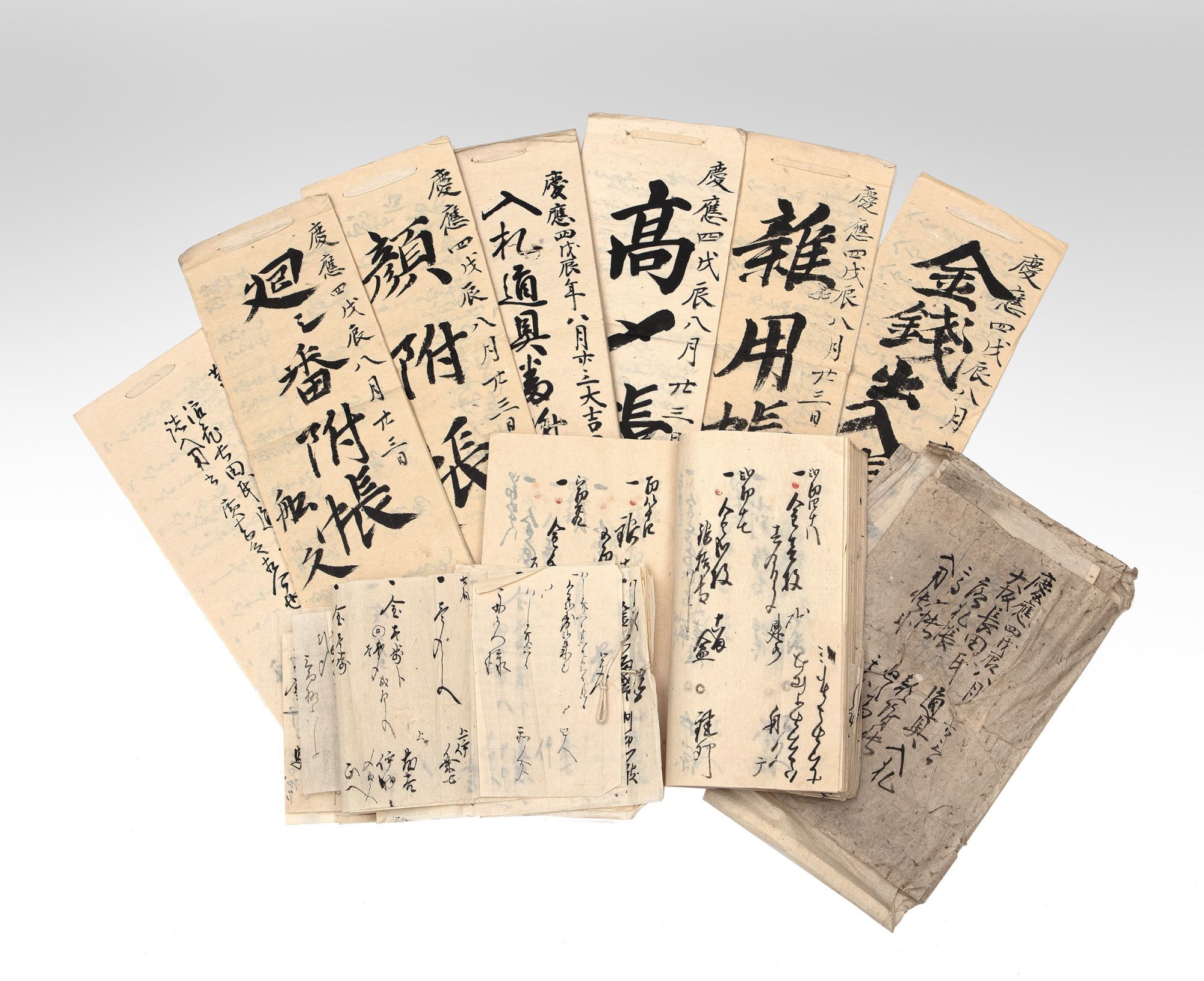
Osaka: 1868.
The Osada Sakubei merchant family in Osaka, one of the wealthiest of that great business city, was founded in 1626. Initially rice brokers, they soon expanded into the very lucrative business of providing loans to powerful feudal lords (daimyō). With the establishment of the Meiji Restoration in 1868 and the abolition of the domain system, the traditional function of Japanese merchant banks was transformed, and the Osada Sakubei, unable to adapt by finding other clients, went bankrupt in 1874, due to the high number of unpaid debts from the feudal domains.
As their business collapsed, the family’s first step to raise funds was to sell their collection of art and cultural items, which included tea ceremony tools, luxury furnishings, paintings, vertical scrolls, many notable porcelains, etc.
This collection of materials is related to the auction, which took place on 23 August 1868 (Keiō 4), considered an auspicious day by its organizer, Funaya Hisatarō 船屋久太郎 (also known as Funakyū 船久).
1. The wrapper for this archive is entitled on the upper side in manuscript “Osaka Osada shi dōgu nyūsatsu” 大阪長田氏道具入札 (“Auction for Mr. Osada’s Collection in Osaka”). The wrapper is charming, with the original flaps and string ties.
2. “Rakusatsu chō” 落札帳 (“Results & Buyers’ Names”). This manuscript contains the final prices for the lots, brief descriptions of the items, and buyers’ names. Each has the seal of approval. 89 folding leaves, 8vo (245 x 172 mm.), orig. self-wrappers, stitched as issued.
3. “Kaozuke chō” 顔付帳 (“Agenda of Preliminary Meetings”). The auctioneers’ staff had meetings on 21, 22, and 23 August, and this is the list of tasks and who was responsible. 4 folding leaves, oblong agenda format (125 x 345 mm.), orig. self-wrappers, stitched as issued.
4. “Nyūsatsu dōgu atetzuke chō” 入札道具当付帳 (“Items for Bidding, Gathered”). The inventory of the sale with lot numbers and object descriptions, followed by trade symbols, which we cannot decipher. 21 folding leaves, oblong agenda format (125 x 324 mm.), orig. self-wrappers, stitched as issued.
5. “Takajime chō” 高〆帳 (“Tally Book”). A fascinating document providing the names of the buyers and the sums of their purchases. 6 folding leaves, oblong agenda format (125 x 347 mm.), orig. self-wrappers, stitched as issued.
6. “Mawashi banzuke chō” 廻シ番付帳 (“Seating Arrangement & Final Bids Register”). The hierarchical seating arrangement is still observed at Japanese book auctions. 13 folding leaves, oblong agenda format (125 x 347 mm.), orig. self-wrappers, stitched as issued.
7. “Kinsen shutsunyū chō” 金銭出入帳 (“Receipts & Payments Account Book”). 4 folding leaves, oblong agenda format (125 x 347 mm.), orig. self-wrappers, stitched as issued.
8. “Zatsuyō chō” 雑用帳 (“Miscellaneous Memoranda”). 4 folding leaves, oblong agenda format (125 x 347 mm.), orig. self-wrappers, stitched as issued.
9. “…Sho nyūyō to kōkoku nado uchiawase” 諸入用と広告など打合せ (“Memoranda of Matters Related to Advertisements and Miscellaneous Subjects”). The expenses for advertising the sale. 4 folding leaves, oblong agenda format (123 x 325 mm.), orig. self-wrappers, orig. stitching.
10. A bundle of 14 sheets, tied at head with the original string, of invoices and receipts. Some appear with names, their seals, addresses, and company names.
Fine condition. Archives of this sort rarely survive.
The Osada Sakubei merchant family in Osaka, one of the wealthiest of that great business city, was founded in 1626. Initially rice brokers, they soon expanded into the very lucrative business of providing loans to powerful feudal lords (daimyō). With the establishment of the Meiji Restoration in 1868 and the abolition of the domain system, the traditional function of Japanese merchant banks was transformed, and the Osada Sakubei, unable to adapt by finding other clients, went bankrupt in 1874, due to the high number of unpaid debts from the feudal domains.
As their business collapsed, the family’s first step to raise funds was to sell their collection of art and cultural items, which included tea ceremony tools, luxury furnishings, paintings, vertical scrolls, many notable porcelains, etc.
This collection of materials is related to the auction, which took place on 23 August 1868 (Keiō 4), considered an auspicious day by its organizer, Funaya Hisatarō 船屋久太郎 (also known as Funakyū 船久).
1. The wrapper for this archive is entitled on the upper side in manuscript “Osaka Osada shi dōgu nyūsatsu” 大阪長田氏道具入札 (“Auction for Mr. Osada’s Collection in Osaka”). The wrapper is charming, with the original flaps and string ties.
2. “Rakusatsu chō” 落札帳 (“Results & Buyers’ Names”). This manuscript contains the final prices for the lots, brief descriptions of the items, and buyers’ names. Each has the seal of approval. 89 folding leaves, 8vo (245 x 172 mm.), orig. self-wrappers, stitched as issued.
3. “Kaozuke chō” 顔付帳 (“Agenda of Preliminary Meetings”). The auctioneers’ staff had meetings on 21, 22, and 23 August, and this is the list of tasks and who was responsible. 4 folding leaves, oblong agenda format (125 x 345 mm.), orig. self-wrappers, stitched as issued.
4. “Nyūsatsu dōgu atetzuke chō” 入札道具当付帳 (“Items for Bidding, Gathered”). The inventory of the sale with lot numbers and object descriptions, followed by trade symbols, which we cannot decipher. 21 folding leaves, oblong agenda format (125 x 324 mm.), orig. self-wrappers, stitched as issued.
5. “Takajime chō” 高〆帳 (“Tally Book”). A fascinating document providing the names of the buyers and the sums of their purchases. 6 folding leaves, oblong agenda format (125 x 347 mm.), orig. self-wrappers, stitched as issued.
6. “Mawashi banzuke chō” 廻シ番付帳 (“Seating Arrangement & Final Bids Register”). The hierarchical seating arrangement is still observed at Japanese book auctions. 13 folding leaves, oblong agenda format (125 x 347 mm.), orig. self-wrappers, stitched as issued.
7. “Kinsen shutsunyū chō” 金銭出入帳 (“Receipts & Payments Account Book”). 4 folding leaves, oblong agenda format (125 x 347 mm.), orig. self-wrappers, stitched as issued.
8. “Zatsuyō chō” 雑用帳 (“Miscellaneous Memoranda”). 4 folding leaves, oblong agenda format (125 x 347 mm.), orig. self-wrappers, stitched as issued.
9. “…Sho nyūyō to kōkoku nado uchiawase” 諸入用と広告など打合せ (“Memoranda of Matters Related to Advertisements and Miscellaneous Subjects”). The expenses for advertising the sale. 4 folding leaves, oblong agenda format (123 x 325 mm.), orig. self-wrappers, orig. stitching.
10. A bundle of 14 sheets, tied at head with the original string, of invoices and receipts. Some appear with names, their seals, addresses, and company names.
Fine condition. Archives of this sort rarely survive.
Details
Title
Manuscript archive of the organizer of the auction of the collections of the Osada family in Osaka
Author
KAJIMAYA OSADA SAKUBEI 加島屋長田作兵衛 AUCTION
Condition
Unknown