

[POST-INCUNABLE ~ 1508]. [Opus in evangelium Ioannis]. Opus insigne beati patris Cyrilli patriarche Alexandrini in euangelium Ioannis
![[POST-INCUNABLE ~ 1508]. [Opus in evangelium Ioann](https://d3525k1ryd2155.cloudfront.net/h/822/402/1701402822.0.x.0.jpg)

- Paris: Printed by Wolfgang Hopyl for himself, Jean Petit and Thielmann Kerver, 1508
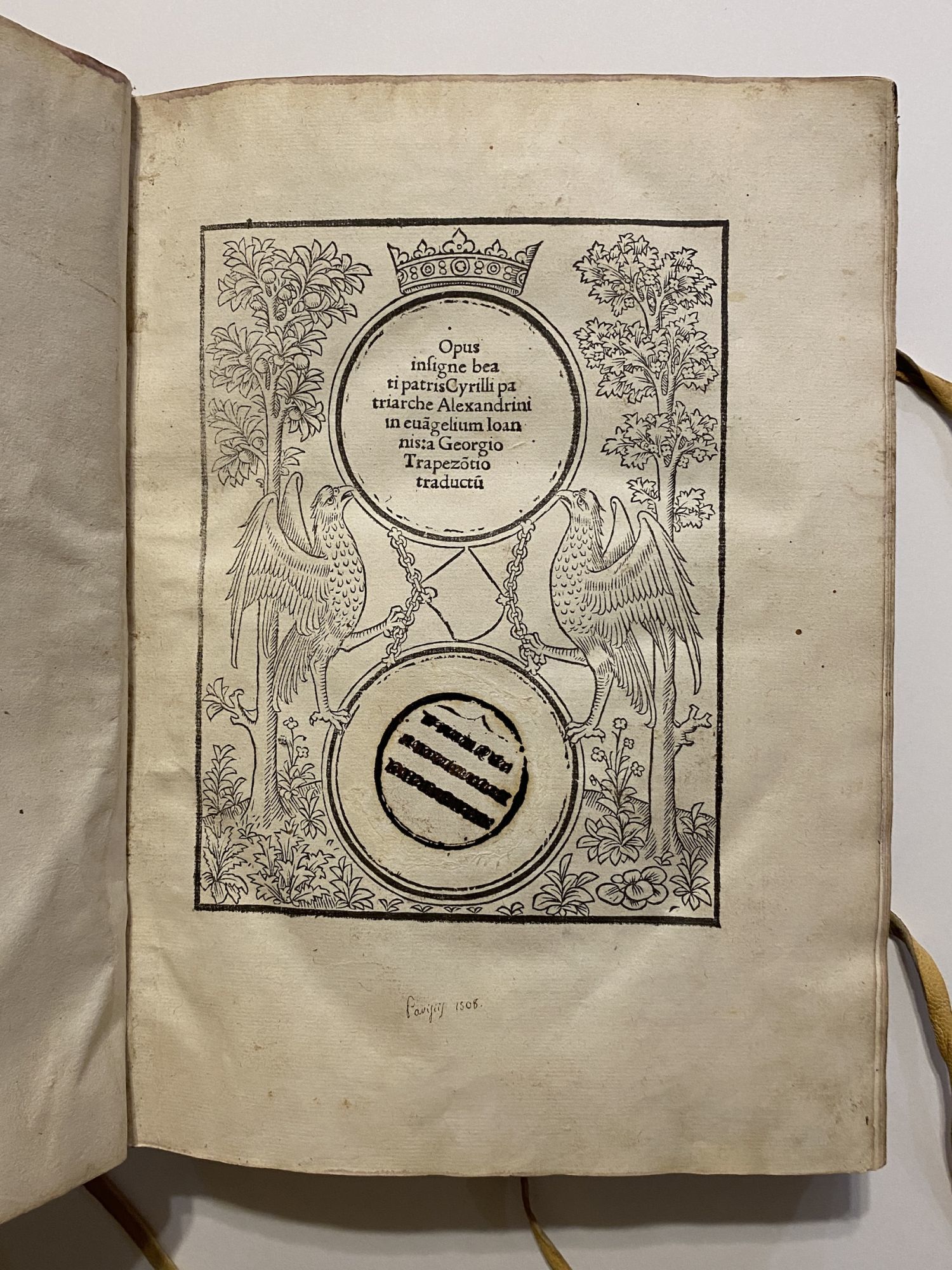
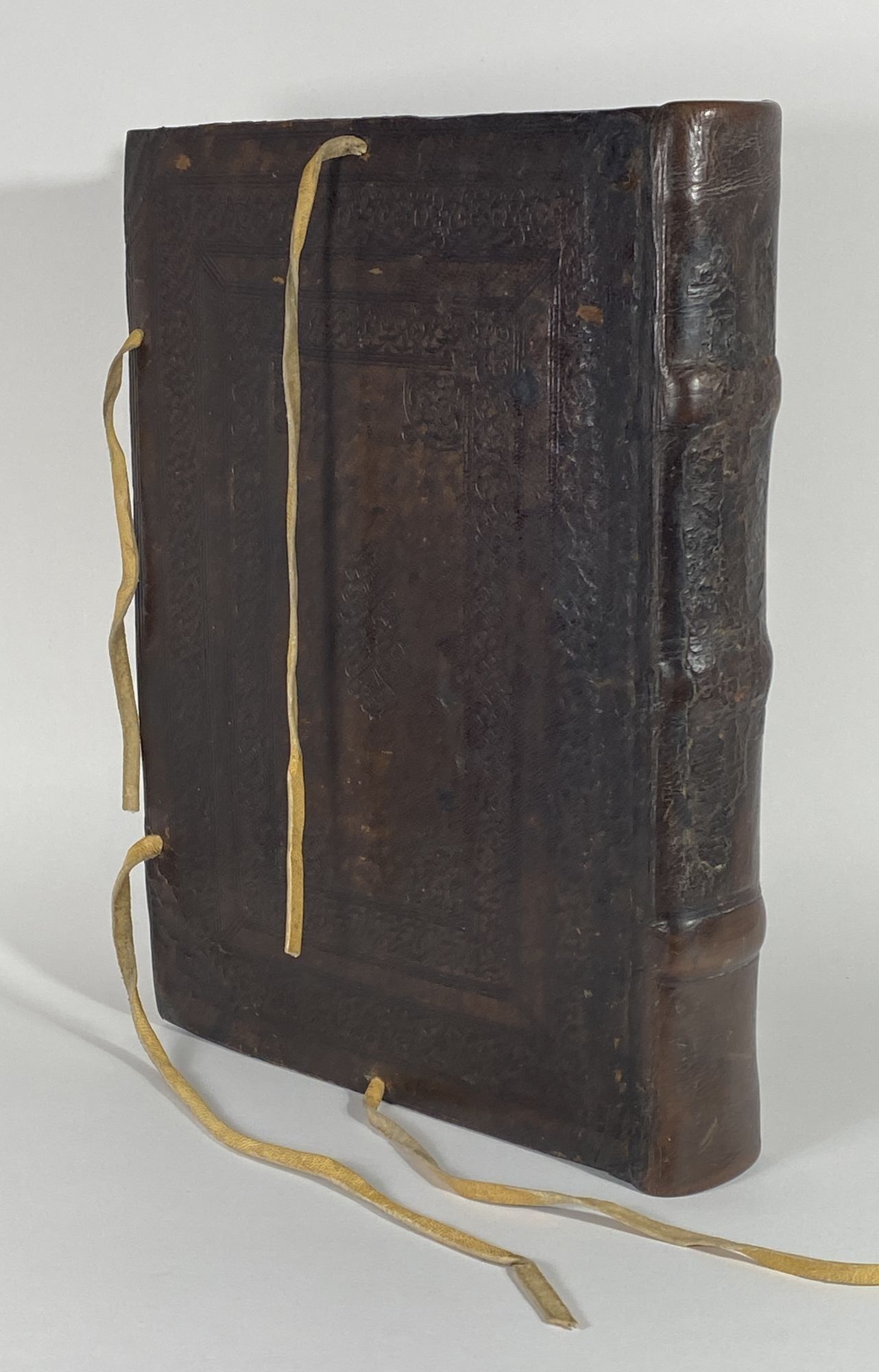
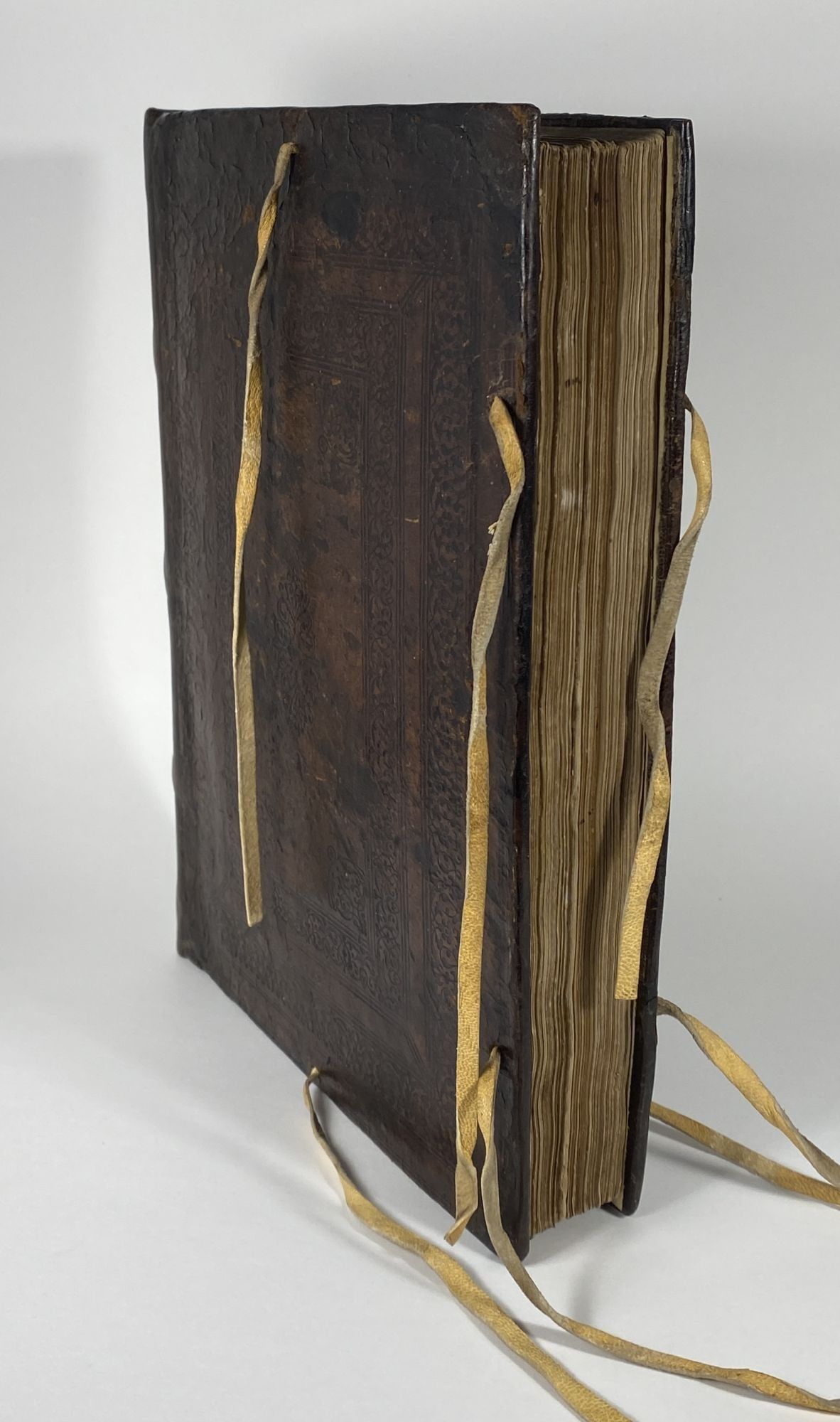
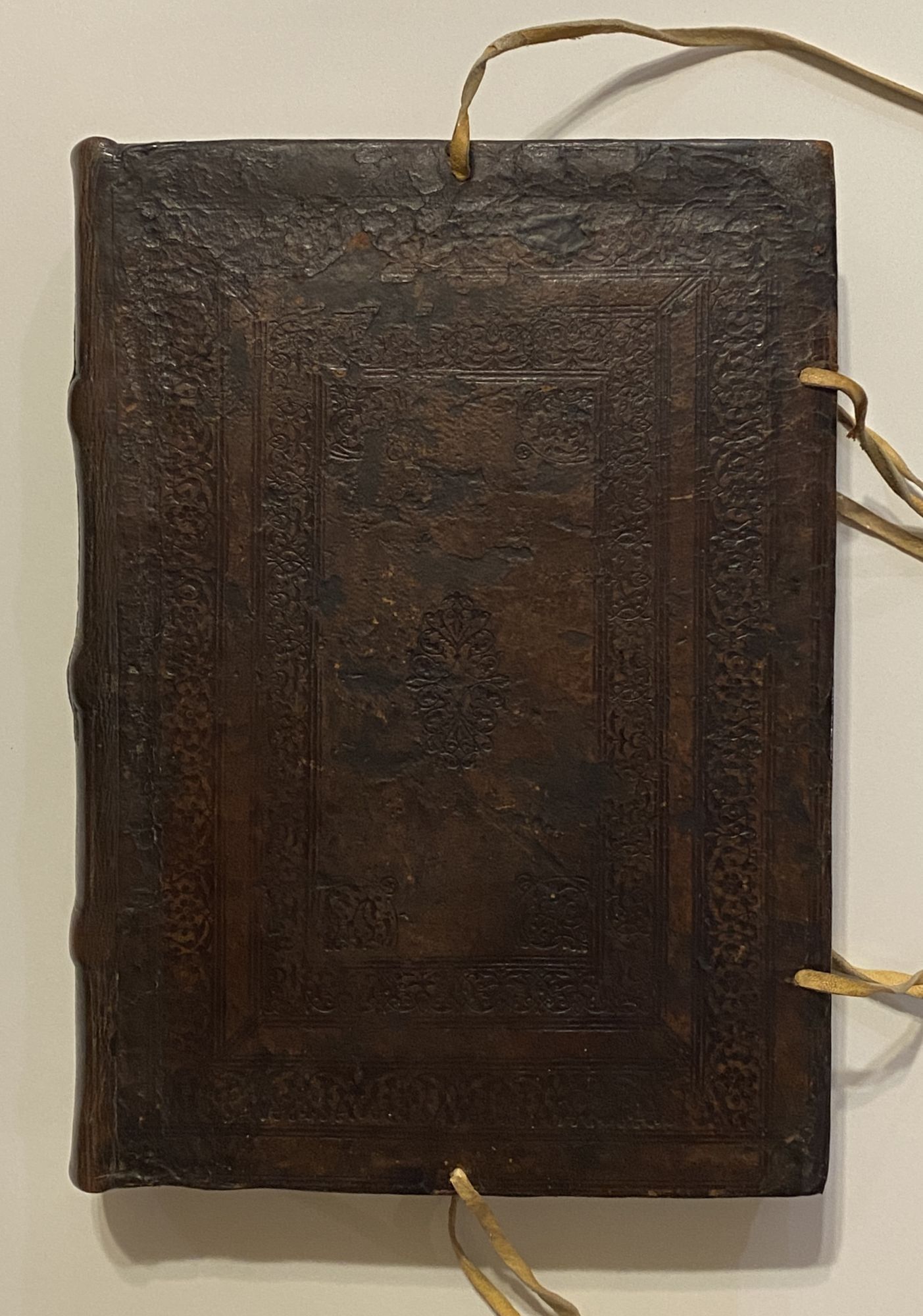
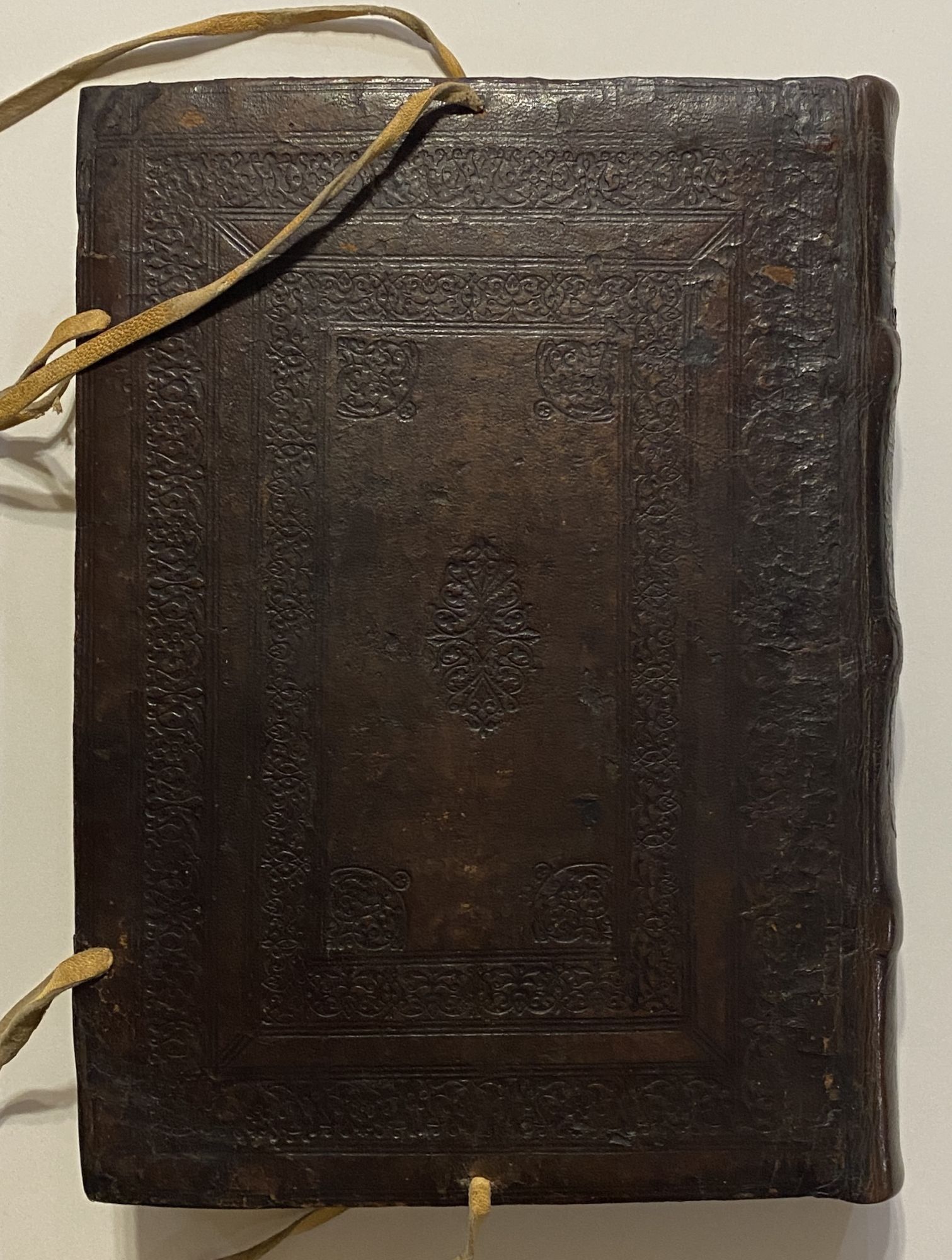
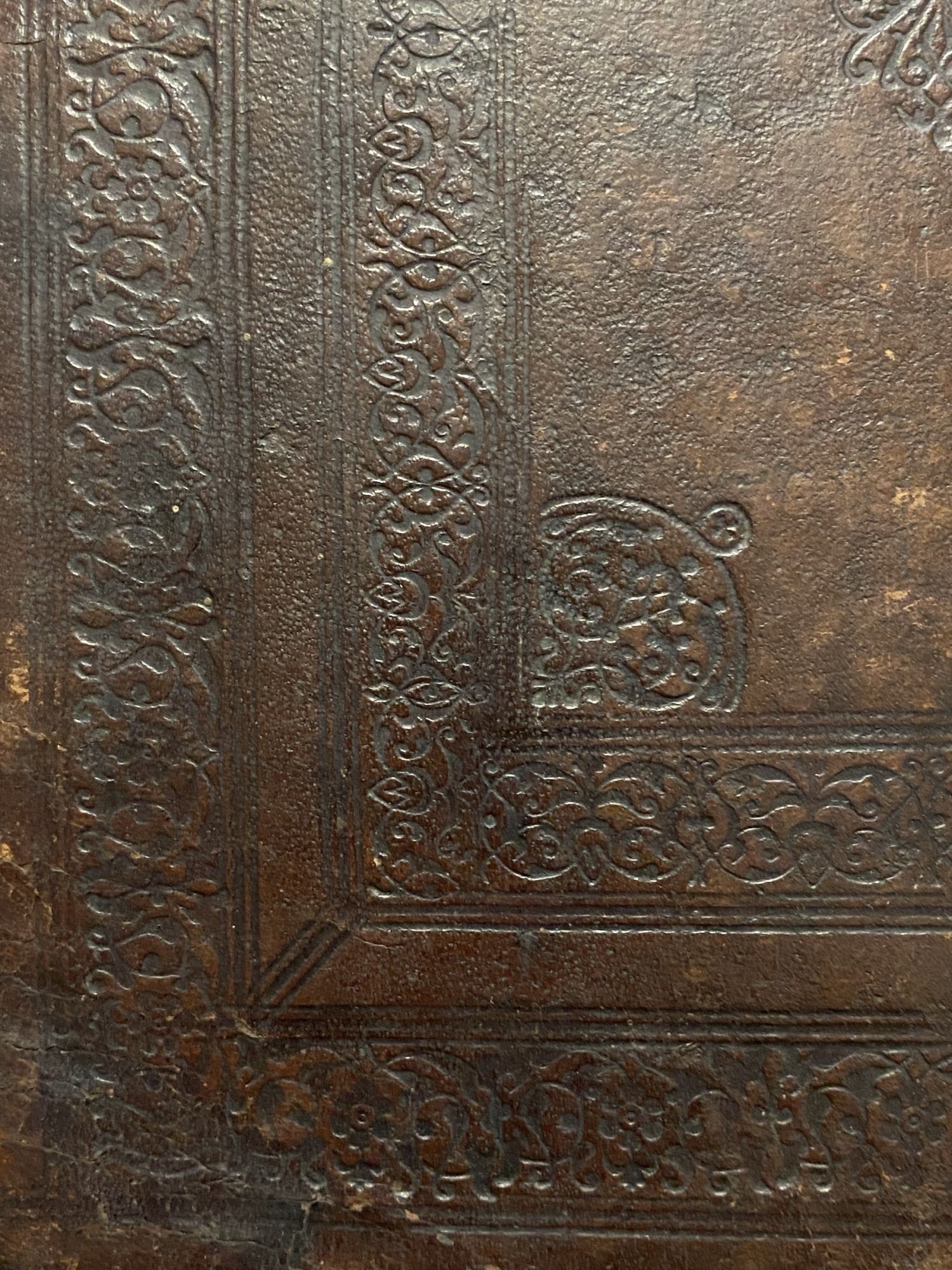
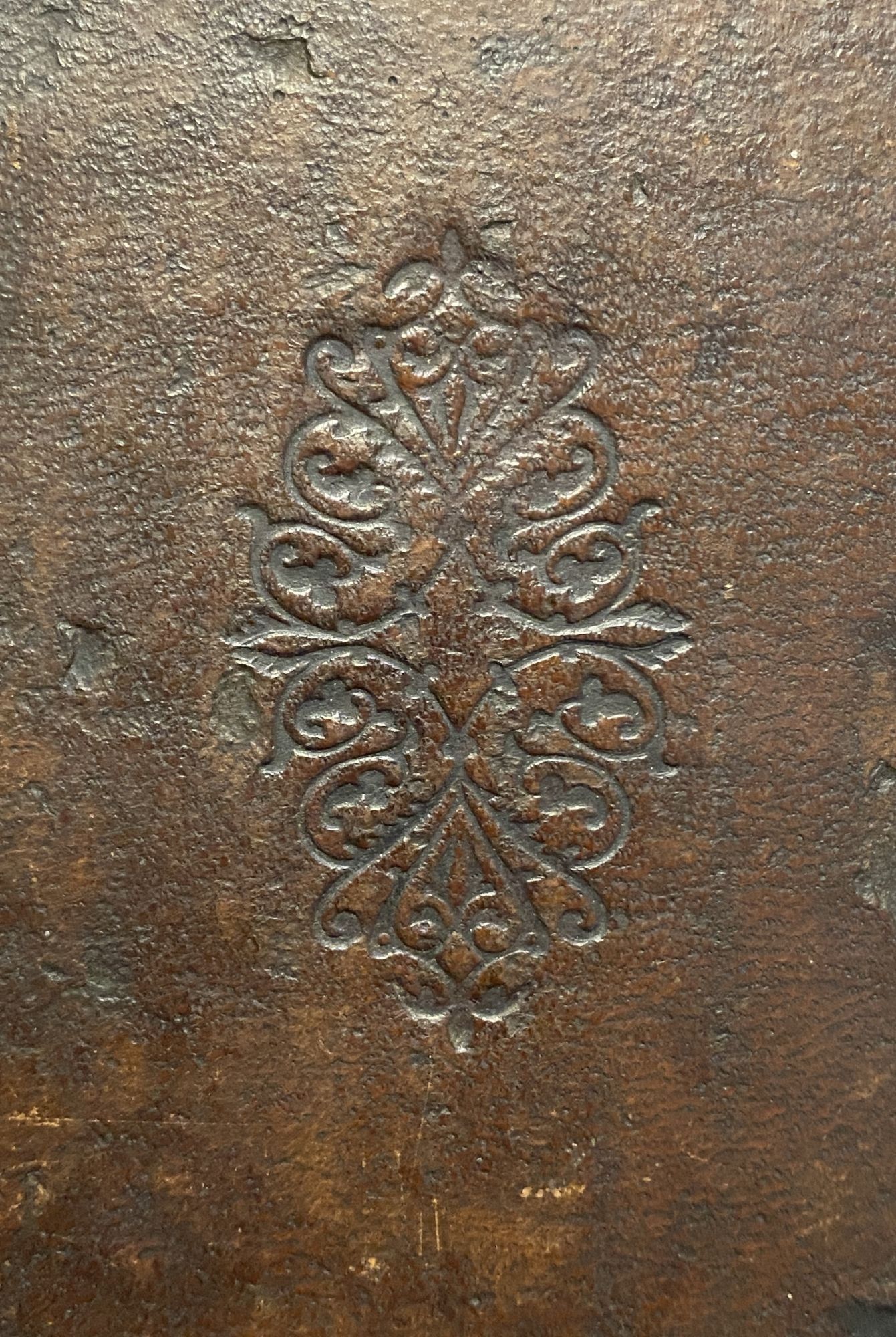
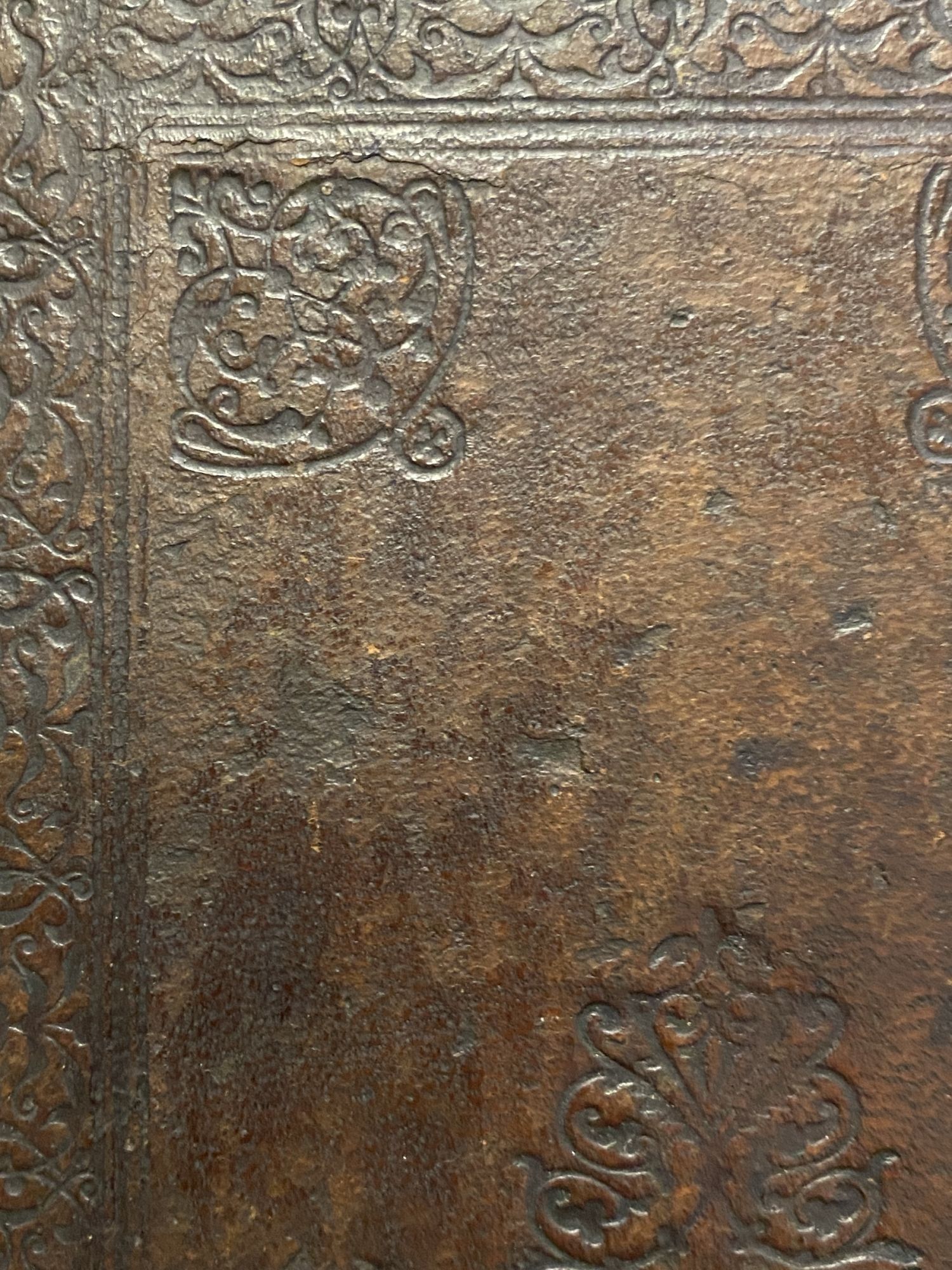
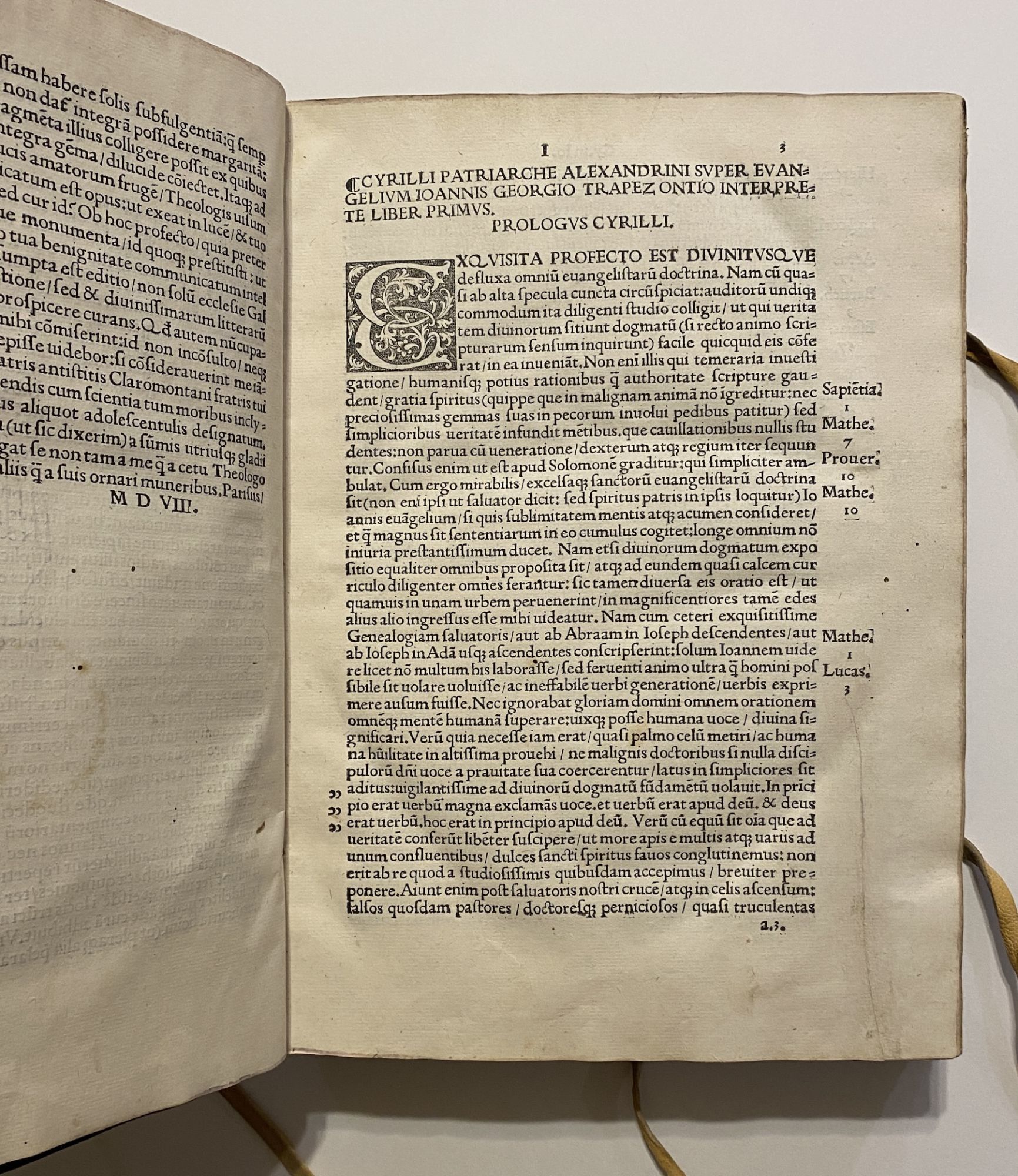
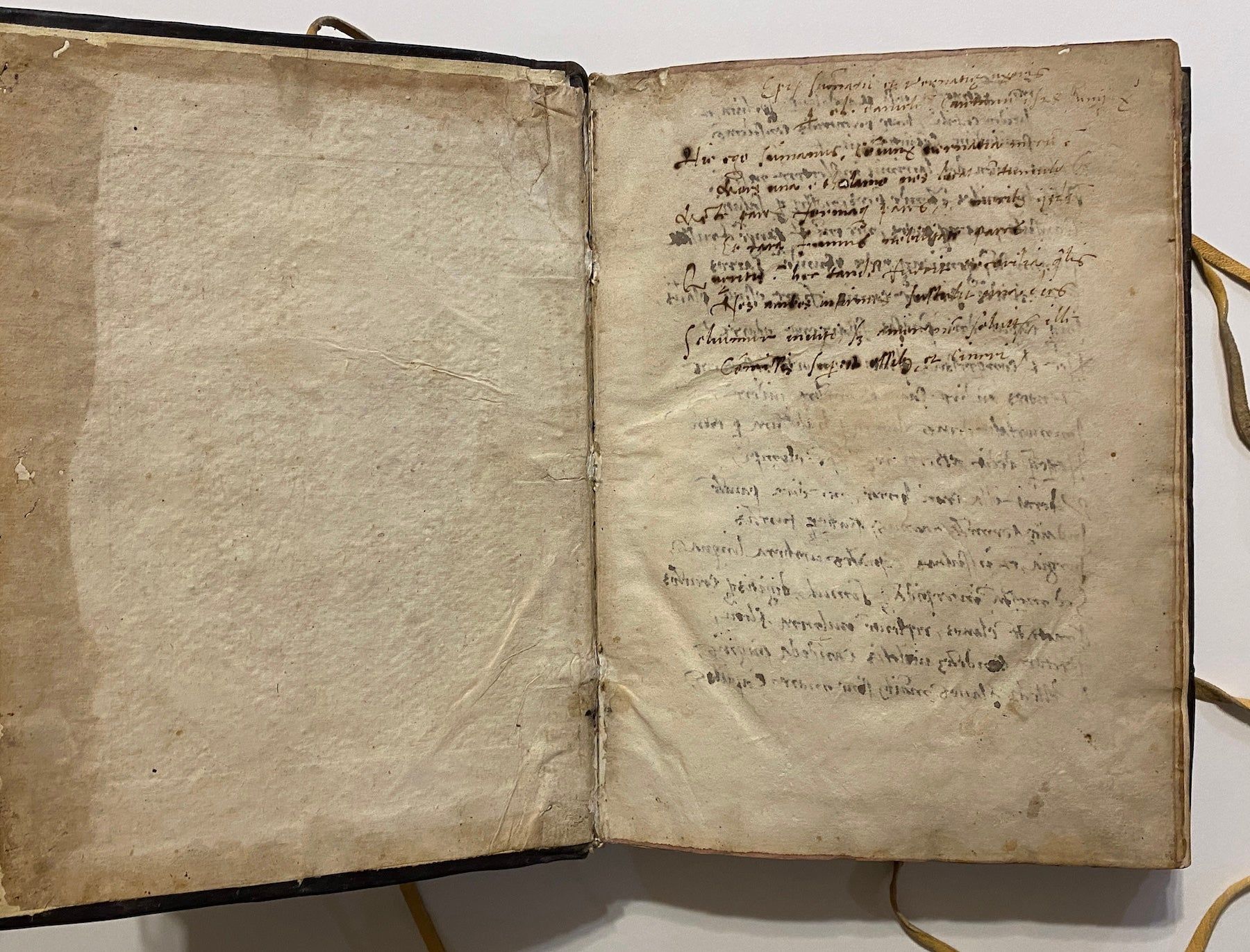
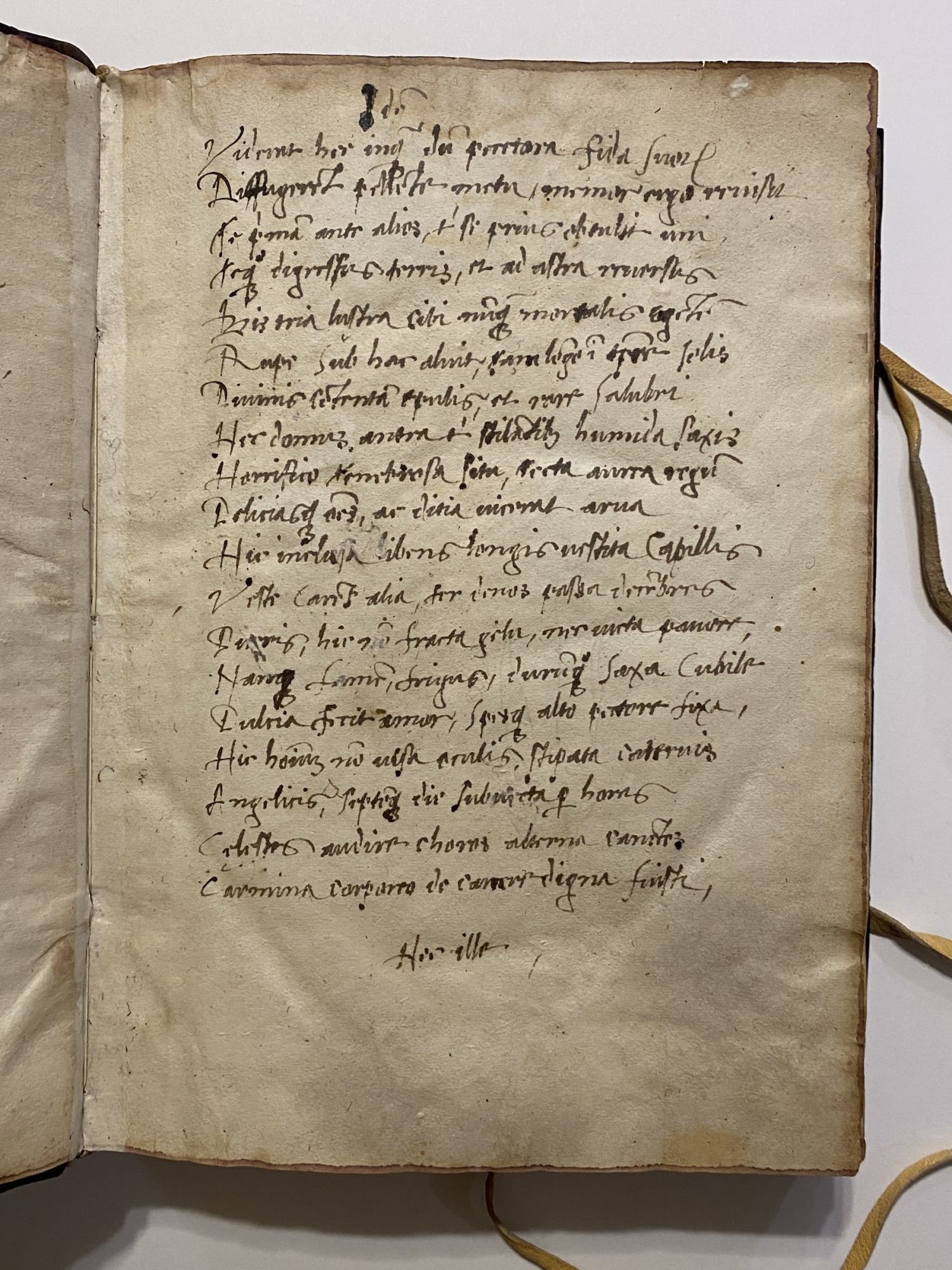
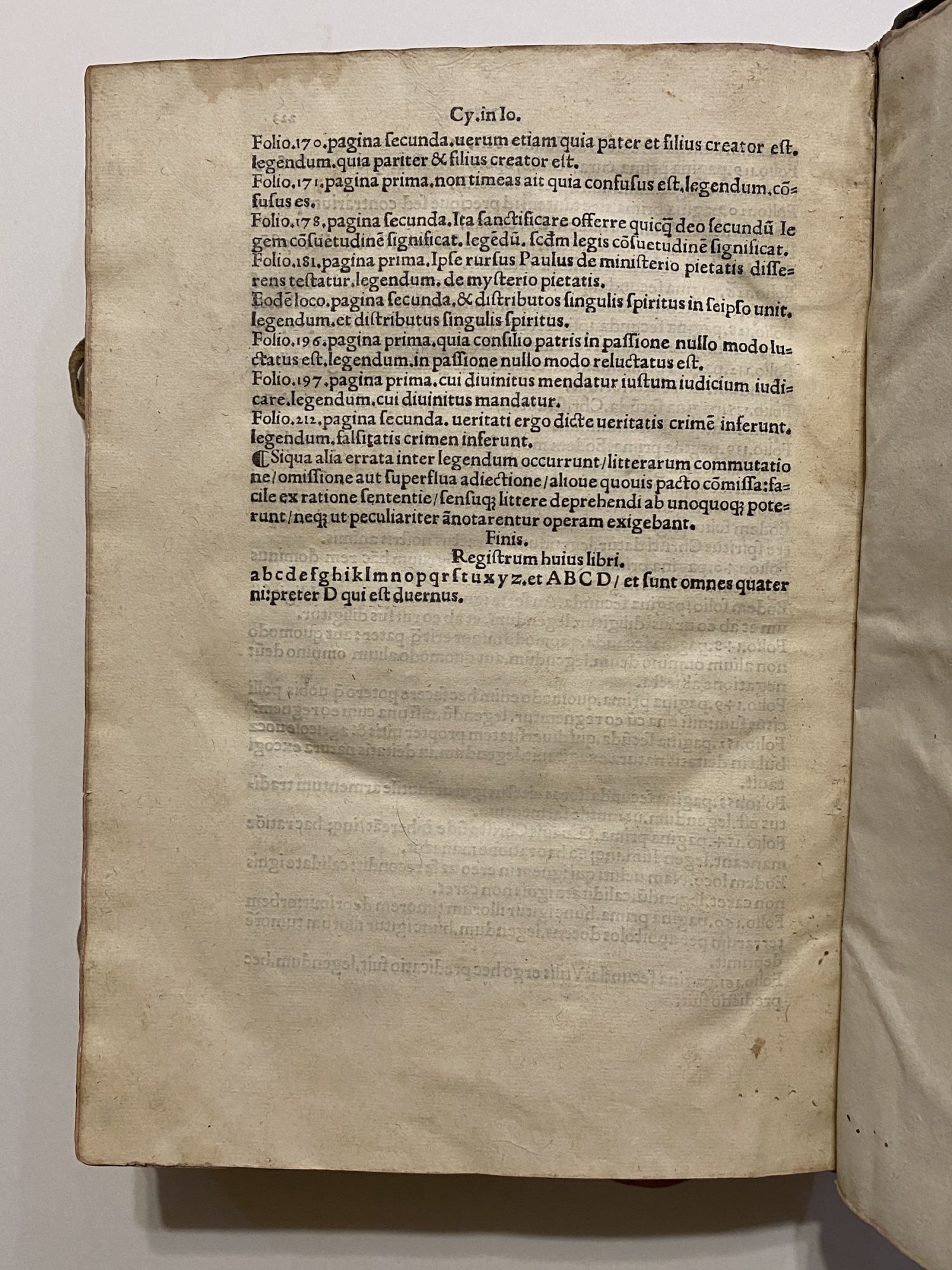
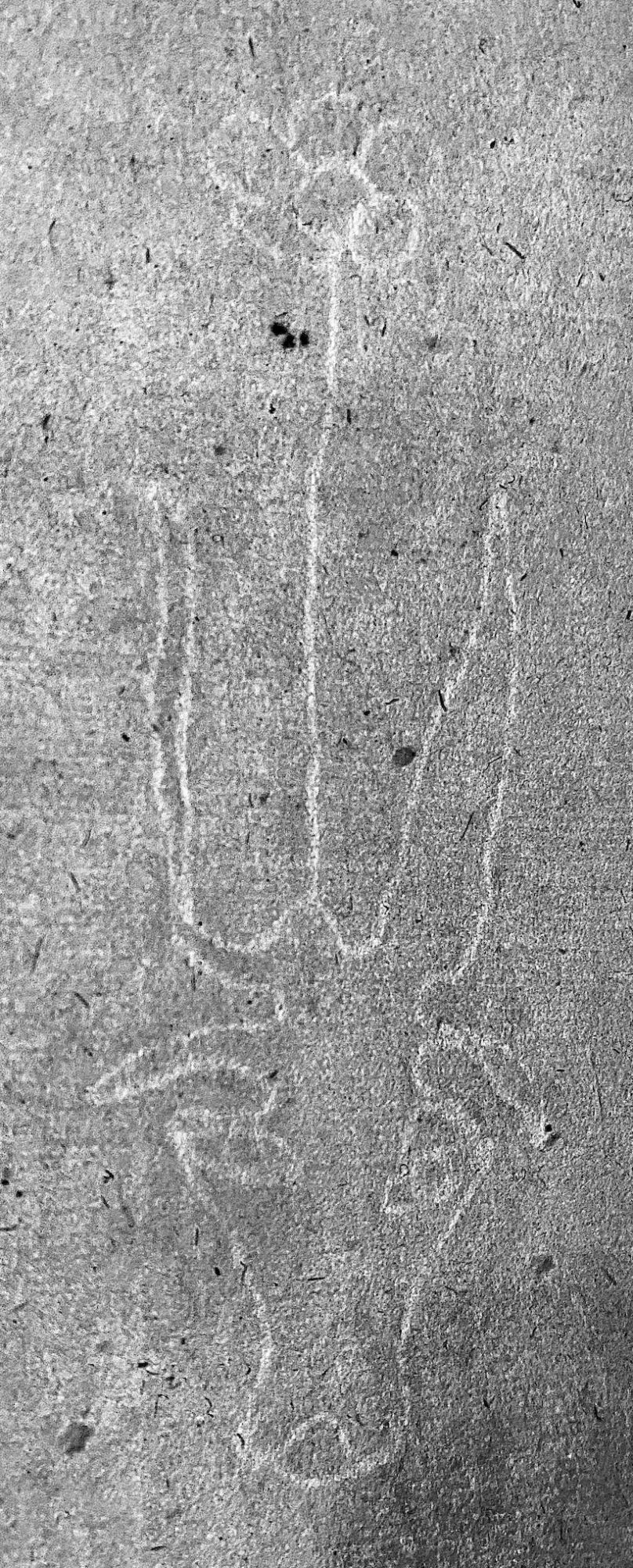
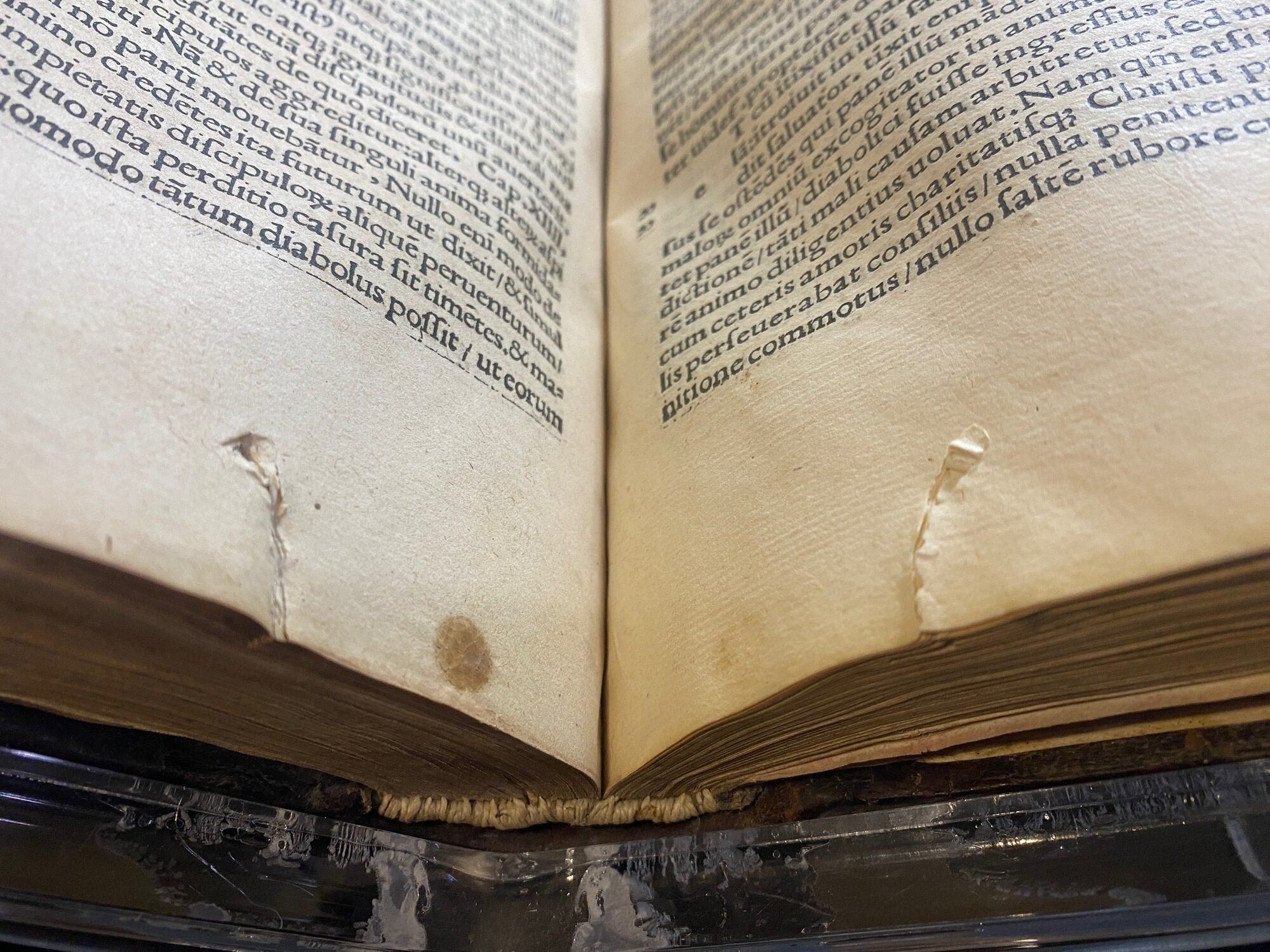
Paris: Printed by Wolfgang Hopyl for himself, Jean Petit and Thielmann Kerver, 1508. First Complete Edition. Very good. Folio. a-o8 p3 A10+1 B-G8 H10 q-z8 A-C8 D4, COMPLETE. Inconsistent foliation: 115, 64, 116-223 (i.e. 222) ff. With Wolfgang Hopyl's elegant title-page woodcut (Sylvestre, Marques typographiques 1066) depicting two eagles displayed, in their beaks a circle crowned with letterpress title in the center, in their claws a second circle (early ownership canceled, evidence of what may have been MS notes surrounding it), in the margins are fine renderings of trees and plants. Slight foxing or toning, occasional minor stains or wormholes in blank margins, inexplicable 2 cm. tears in lower blank margins of a number of consecutive leaves 55-126 (second numbering), none affecting text. Occasional marginal notes and notes of chapter parts. Contemporary Italian blind stamped leather, heavily restored (SEE IMAGES), modern smooth spine with portions of original spine laid down, four deerskin ties replacements, original pastedowns and endleaves retained (3 at the front and 3 at the back). The binding and annotations are INTRIGUING and the paper stock is VERY CRISP AND CLEAN. FIRST EDITION OF CYRIL'S COMMENTARY ON THE GOSPELS OF SAINT JOHN. OUR COPY WAS EXPORTED TO ITALY AT AN EARLY DATE WHERE IT WAS BOUND, POSSIBLY IN ROME, AND BEARS AN EXTREMELY INTRIGUING APOCALYPTIC POEM IN MANUSCRIPT AS WELL AS A MANUSCRIPT COPY OF A LITTLE KNOWN POEM BY PETRARCH.
The Apocalyptic Prophecy:
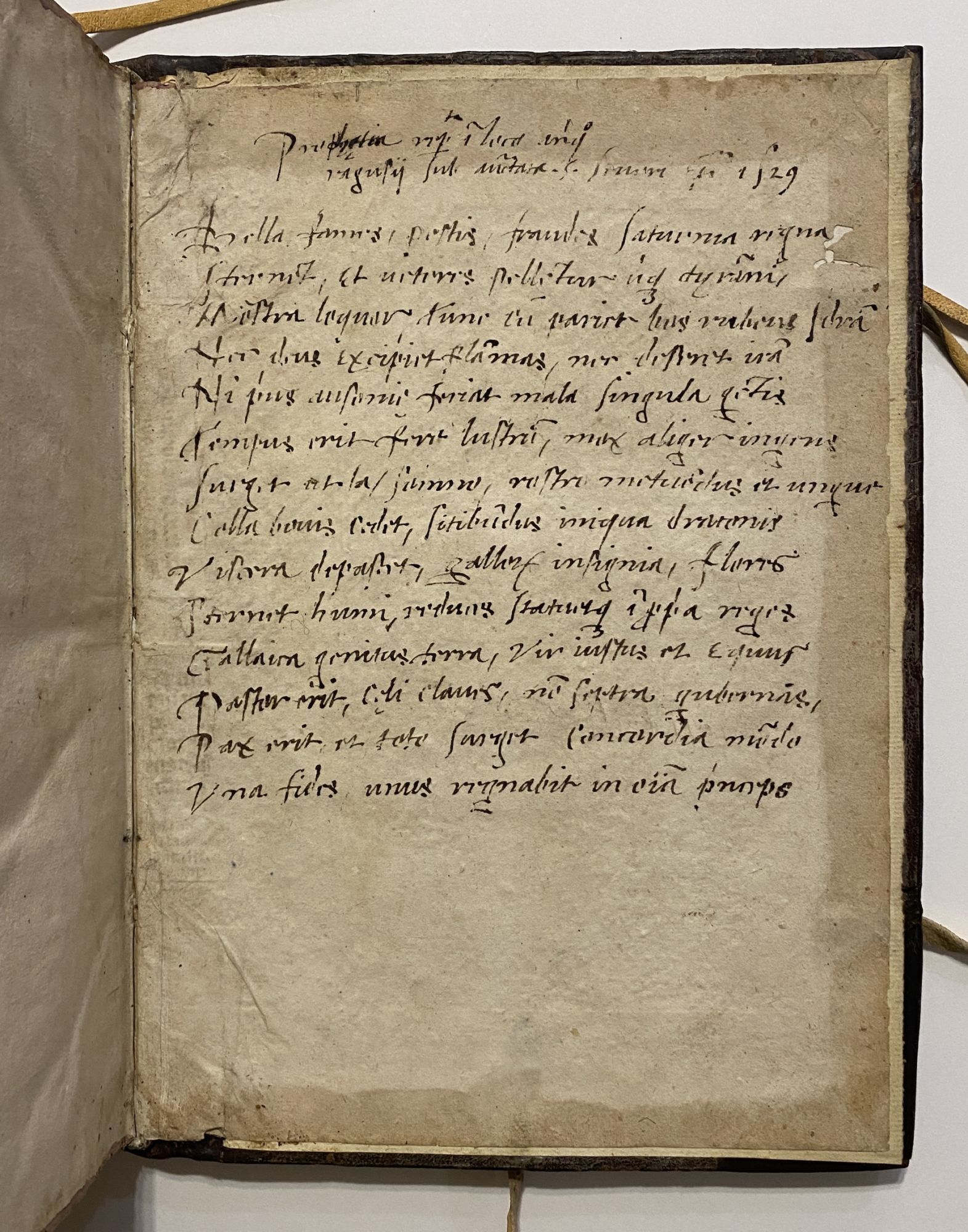
On the rear pastedown is following 14-line poem dated 1529:
"Bella, fames, pestis, fraudes Saturnia regna
Sternent, et veteres pellentur ubique tyranni.
Monstra loquor tunc cum pariet bos rubeus hydram,
Nec Deus extinguet flammas, nec deseret iram,
Ni prius Ausoniae feriant mala singula gentes.
[Poenae] Tempus erit prope lustrum. Mox aliger ingens
Surget et issomno, rostro metuendus et ungue.
Colla bovis caedet, sitibundus iniqui draconis
Viscera depascet. Gallorum insignia, flores
Sternet humi; reduces statuetque in propria reges.
Galatia genitus terra Vir Justus et aequus
Pastor erit coeli claves, non sceptra gubernans.
Pax erit: et toto surget Concordia Mundo.
Una fides, unus regnabit in omnia Princeps."
TRANSLATION: "War, famine, pestilence, and deceit shall prostrate the Saturnian (i.e. ancient Italian) kingdoms, and the old tyrants shall everywhere be expelled. A shepherd will hold the keys, not the one governing kingdoms. I speak of monsters! When the red cow shall give birth to the hydra, God will not extinguish the flames nor abandon his anger until all these calamities shall have stricken the people of Ausonia. This state of affairs shall last about five years. Then an enormous bird shall awaken as from a sleep, and with its terrible beak and claws shall cut off the neck of the ox, and shall feed on the entrails of the thirty wicked dragon. He shall spread the insignia and flowers of the Gauls on the ground and restore the legitimate kings. Born in the land of Galatia is a just and equitable man, he will lead as a shepherd with the keys of heaven, not govern with scepters. There will be peace, and harmony shall rise throughout the world. One faith, one ruler shall reign over all."
A number of variants of this extraordinary apocalyptic prophecy exist, and its authorship remains unconfirmed. Petrus Galatinus (Pietro Galatino) has been proposed, for which see Sharon Ann Leftley, Millenarian Thought in Renaissance Rome with Special Reference to Pietro Galatino (c. 1465- c. 1540) and Egidio da Viterbo (c. 1469-1532), Univ. Bristol thesis (1995). Jennifer Britnell mentions Boethius Severinus in conjunction with Galatinus, for which see "Jean Lemaire de Belges and Prophecy" in: Journal of the Warburg and Courtauld Institutes, 42:1, p. 160 & n. 86. A revisionist political version of the poem was published in "I futuri destini degli stati e delle nazioni, ovvero, Profezie e predizioni" (1860), pp. 135-136, and it is presumably this that appears (uncredited) in R. Gerald Culleton's The Reign of Antichrist (2009) no. 347.
The Petrarch Poem:
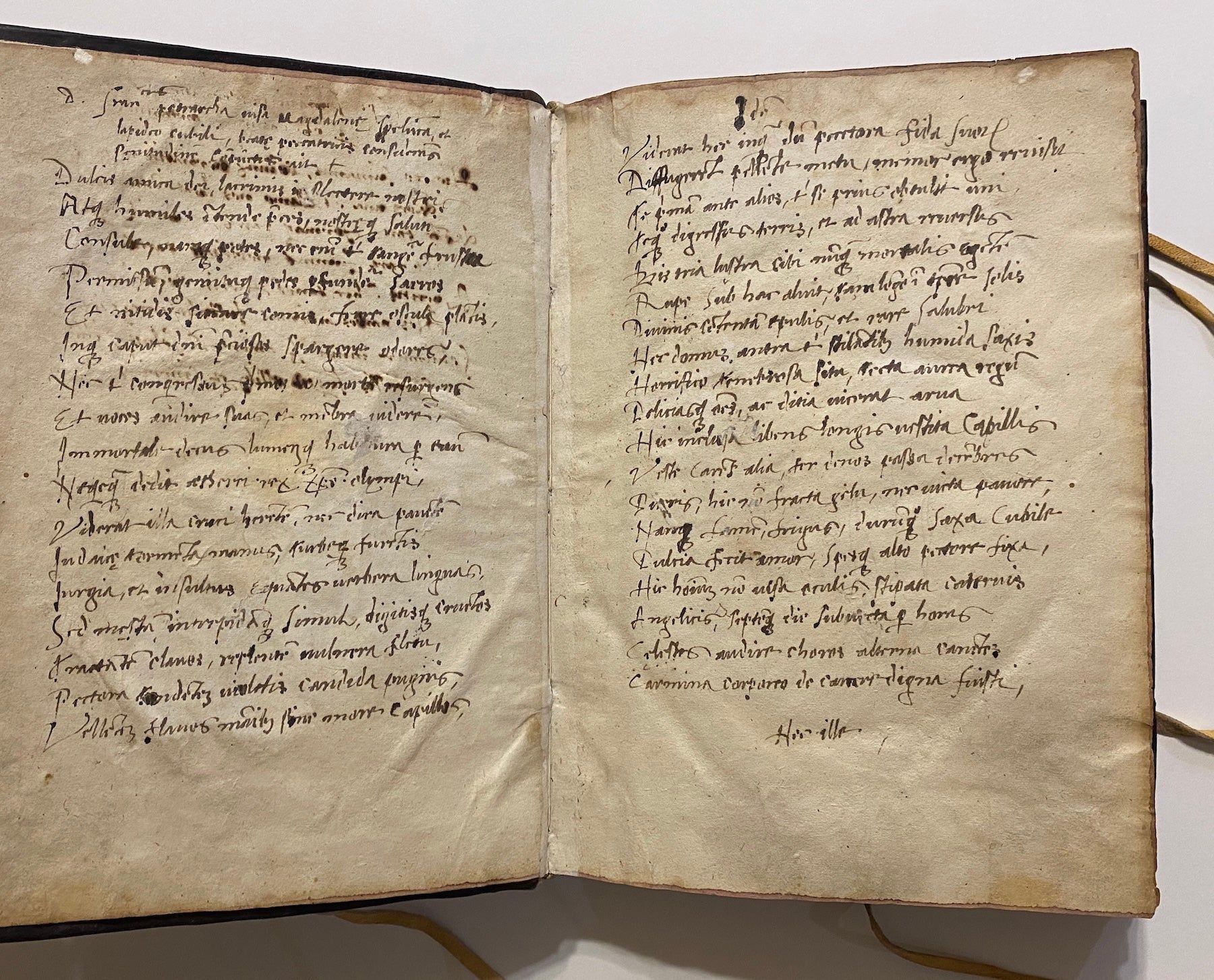
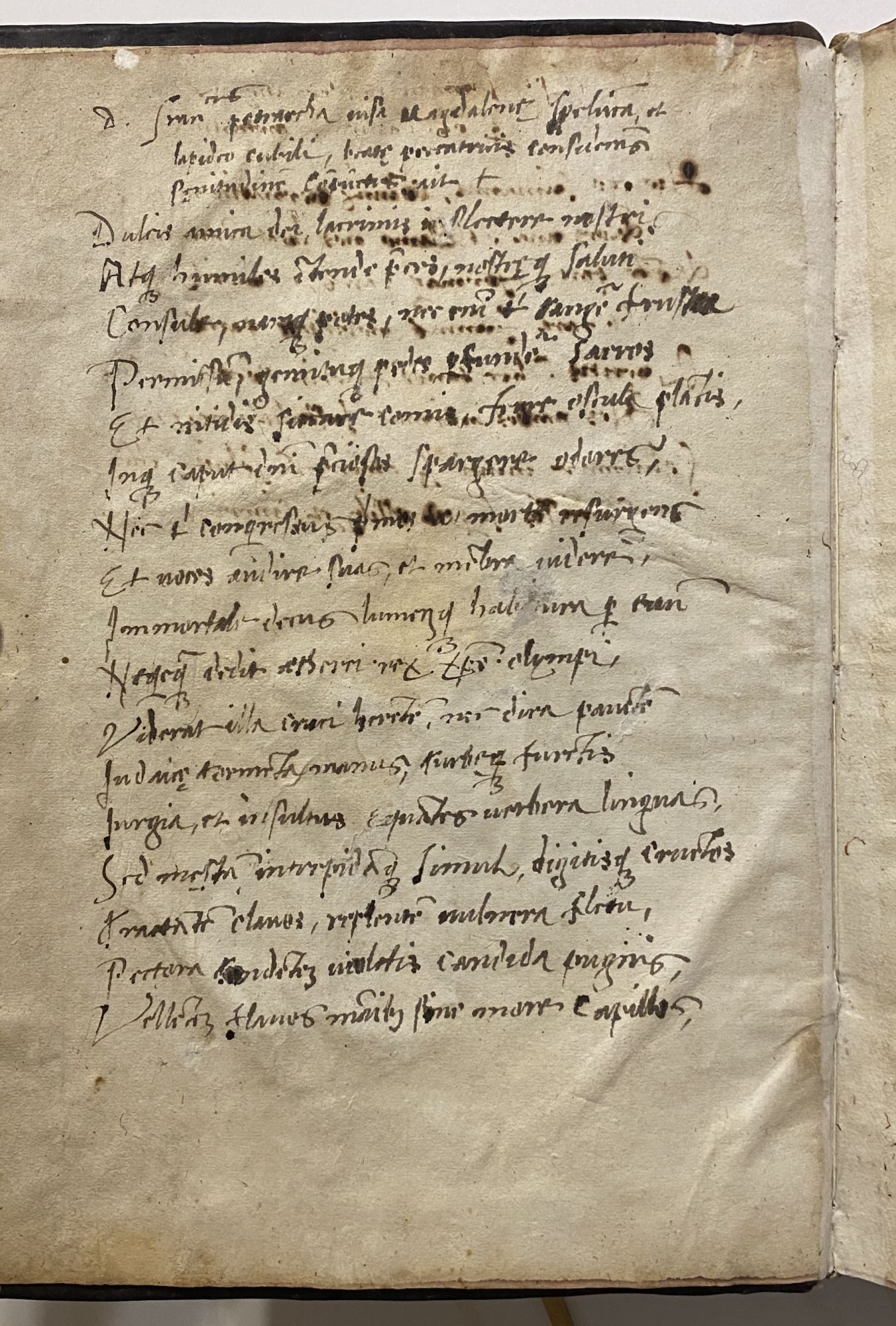
On the front binder's blanks are written, by the same hand as the preceding, two poems, the second and longer one being a copy of Francesco Petrarch's beautiful but little known 36-line "Dulcis amica Dei" (Petrarch Seniles XV, 15. 6) in hexameters, in praise of, and supplication to, Mary Magdalen:
"Dulcis amica dei lacrimis inflectere nostris
Atque humiles attende preces, nostræque saluti
Consule, namque potes. Nec enim tibi tangere frustra
Permissum, gemituque pedes perfundere sacros,
Et nitidis siccare comis, ferre oscula plantis,
Inque caput Domini pretiosos spargere odores" [etc.]
Petrarch had made a pilgrimage to the shrine of Mary Magdalene in Sainte Baume (near Marsailles) and wrote several Latin hymns in her honor. Petrarch here commences with a brief imprecation to Magdalen to "look kindly" on his tears. Michael Haag explains: "In a manner suggesting at once the spiritual and the carnal, Petrarch is calling on Mary Magdalene, who soaked the wounds of Jesus with her tears, to soak his own wounds with her tears also" (see The Quest for Mary Magdalene: History and Legend). Petrarch then reflects upon Mary Magdalene as a contemplative hermit in her cave, where her "hunger, cold and hard bed of stone were sweetened by her love and hope."
THE WATERMARKS: On three of the six binder's blanks appear a very distinctive Bull's Head with 5-leaf flower above, being a distorted version of Briquet 14950 which he recorded at Ferrara in 1505 and Constance in 1507.
THE BINDING: At least one tool on this binding is reproduced by De Marinis, i.a. the unmistakale corner ornaments which are shared on BAV R.I.II.1069 (Vipera, Rome 1517) and which De Marinis attributed to Rome.
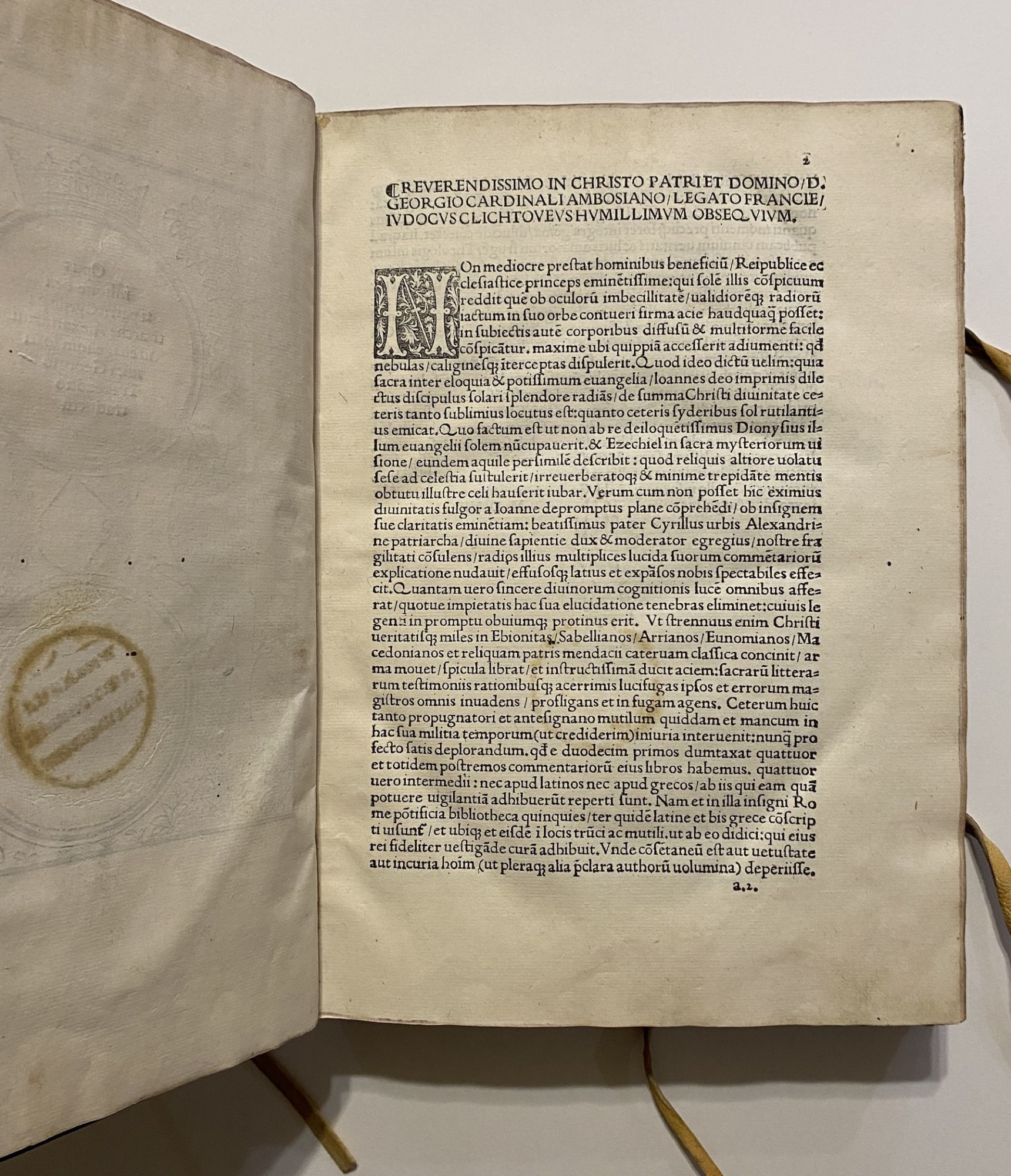
THE PUBLISHERS: Responsible for printing and publishing this book was a multinational consortium acting in Paris: Wolfgang Hopyl was from the Low Countries, Thielmann Kerver was German, and Jean Petit Parisian. Roger Chartier described the latter as "a capitalist who without question was at the head of the Paris book trade at the end of the 15th century and in the early 16th century. From 1493 to 1530 he published more than a thousand books, most of them of major importance, amounting to one tenth of the entire output of the Paris trade" (The Coming of the Book, p. 121). Our publishers engaged Judocus Clichtoveus (Josse van Clichtove) as the editor (who utilized the Latin translation by Georgio Trapezontio).
THE PRINTING TYPE: This was Wolfgang Hopyl's "English-bodied Roman" [r 98] which was apparently used here for the first time and was apparently proprietary to him. Records of his 1523 estate list an entry for "texte romyn," almost certainly the type used for printing this book according to Vervliet ("Early sixteenth-century Parisian Roman types" in: De Gulden Passer 83, 2005, p. 27 and fig. 10).
BIBLIOGRAPHICAL NOTE: Two so-called issues of this first edition exist; our copy belongs the second and obviously most complete issue, "with fresh material inserted" according to Adams. This so-called "fresh material" consists of an additional 64 (!) folios which literally constitute Books 5-8 of the total 12 books, thereby rendering ours the first complete edition of Cyril's Commentary on the Gospels of Saint John.
CATALOGUER'S NOTE: We believe that in this instance the term "issue" has been wrongly employed by bibliographers. "Issue" is a conscious publishing effort (i.e. issued on fine paper, special binding, etc.). Here, however, Hopyl's press made a series of colossal errors in which only Books 1-4 and 9-12 were printed and then sold. Was that intentional? We find it to be very unlikely.
RARITY ON THE MARKET. Rare Book Hub, which currently lists more than 15 million records in the Rare Book Transactions database, lists just three copies at auction in over a century:
1. Gonnelli Casa Daste 3/12/25 lot 340 (lacking fols. A2 and A7 [or p8?]; this copy is currently being offered on by a British dealer);
2. Bonhams 12/2/12 lot 1006 (Serendipity copy);
3. Sotheby's 12/5/1991 lot 95 (in a Sammelband of two other titles printed by Hopyl).
Ours is currently the only complete copy on the market.
§ Adams C-3177. Moreau, Inventaire chronologique 1508, no. 59. Index Aureliensis 149.143. Bibliographie des oeuvres de Josse Clicthove, Gand, 1888, pp. 401-402.
The Apocalyptic Prophecy:
On the rear pastedown is following 14-line poem dated 1529:
"Bella, fames, pestis, fraudes Saturnia regna
Sternent, et veteres pellentur ubique tyranni.
Monstra loquor tunc cum pariet bos rubeus hydram,
Nec Deus extinguet flammas, nec deseret iram,
Ni prius Ausoniae feriant mala singula gentes.
[Poenae] Tempus erit prope lustrum. Mox aliger ingens
Surget et issomno, rostro metuendus et ungue.
Colla bovis caedet, sitibundus iniqui draconis
Viscera depascet. Gallorum insignia, flores
Sternet humi; reduces statuetque in propria reges.
Galatia genitus terra Vir Justus et aequus
Pastor erit coeli claves, non sceptra gubernans.
Pax erit: et toto surget Concordia Mundo.
Una fides, unus regnabit in omnia Princeps."
TRANSLATION: "War, famine, pestilence, and deceit shall prostrate the Saturnian (i.e. ancient Italian) kingdoms, and the old tyrants shall everywhere be expelled. A shepherd will hold the keys, not the one governing kingdoms. I speak of monsters! When the red cow shall give birth to the hydra, God will not extinguish the flames nor abandon his anger until all these calamities shall have stricken the people of Ausonia. This state of affairs shall last about five years. Then an enormous bird shall awaken as from a sleep, and with its terrible beak and claws shall cut off the neck of the ox, and shall feed on the entrails of the thirty wicked dragon. He shall spread the insignia and flowers of the Gauls on the ground and restore the legitimate kings. Born in the land of Galatia is a just and equitable man, he will lead as a shepherd with the keys of heaven, not govern with scepters. There will be peace, and harmony shall rise throughout the world. One faith, one ruler shall reign over all."
A number of variants of this extraordinary apocalyptic prophecy exist, and its authorship remains unconfirmed. Petrus Galatinus (Pietro Galatino) has been proposed, for which see Sharon Ann Leftley, Millenarian Thought in Renaissance Rome with Special Reference to Pietro Galatino (c. 1465- c. 1540) and Egidio da Viterbo (c. 1469-1532), Univ. Bristol thesis (1995). Jennifer Britnell mentions Boethius Severinus in conjunction with Galatinus, for which see "Jean Lemaire de Belges and Prophecy" in: Journal of the Warburg and Courtauld Institutes, 42:1, p. 160 & n. 86. A revisionist political version of the poem was published in "I futuri destini degli stati e delle nazioni, ovvero, Profezie e predizioni" (1860), pp. 135-136, and it is presumably this that appears (uncredited) in R. Gerald Culleton's The Reign of Antichrist (2009) no. 347.
The Petrarch Poem:
On the front binder's blanks are written, by the same hand as the preceding, two poems, the second and longer one being a copy of Francesco Petrarch's beautiful but little known 36-line "Dulcis amica Dei" (Petrarch Seniles XV, 15. 6) in hexameters, in praise of, and supplication to, Mary Magdalen:
"Dulcis amica dei lacrimis inflectere nostris
Atque humiles attende preces, nostræque saluti
Consule, namque potes. Nec enim tibi tangere frustra
Permissum, gemituque pedes perfundere sacros,
Et nitidis siccare comis, ferre oscula plantis,
Inque caput Domini pretiosos spargere odores" [etc.]
Petrarch had made a pilgrimage to the shrine of Mary Magdalene in Sainte Baume (near Marsailles) and wrote several Latin hymns in her honor. Petrarch here commences with a brief imprecation to Magdalen to "look kindly" on his tears. Michael Haag explains: "In a manner suggesting at once the spiritual and the carnal, Petrarch is calling on Mary Magdalene, who soaked the wounds of Jesus with her tears, to soak his own wounds with her tears also" (see The Quest for Mary Magdalene: History and Legend). Petrarch then reflects upon Mary Magdalene as a contemplative hermit in her cave, where her "hunger, cold and hard bed of stone were sweetened by her love and hope."
THE WATERMARKS: On three of the six binder's blanks appear a very distinctive Bull's Head with 5-leaf flower above, being a distorted version of Briquet 14950 which he recorded at Ferrara in 1505 and Constance in 1507.
THE BINDING: At least one tool on this binding is reproduced by De Marinis, i.a. the unmistakale corner ornaments which are shared on BAV R.I.II.1069 (Vipera, Rome 1517) and which De Marinis attributed to Rome.
THE PUBLISHERS: Responsible for printing and publishing this book was a multinational consortium acting in Paris: Wolfgang Hopyl was from the Low Countries, Thielmann Kerver was German, and Jean Petit Parisian. Roger Chartier described the latter as "a capitalist who without question was at the head of the Paris book trade at the end of the 15th century and in the early 16th century. From 1493 to 1530 he published more than a thousand books, most of them of major importance, amounting to one tenth of the entire output of the Paris trade" (The Coming of the Book, p. 121). Our publishers engaged Judocus Clichtoveus (Josse van Clichtove) as the editor (who utilized the Latin translation by Georgio Trapezontio).
THE PRINTING TYPE: This was Wolfgang Hopyl's "English-bodied Roman" [r 98] which was apparently used here for the first time and was apparently proprietary to him. Records of his 1523 estate list an entry for "texte romyn," almost certainly the type used for printing this book according to Vervliet ("Early sixteenth-century Parisian Roman types" in: De Gulden Passer 83, 2005, p. 27 and fig. 10).
BIBLIOGRAPHICAL NOTE: Two so-called issues of this first edition exist; our copy belongs the second and obviously most complete issue, "with fresh material inserted" according to Adams. This so-called "fresh material" consists of an additional 64 (!) folios which literally constitute Books 5-8 of the total 12 books, thereby rendering ours the first complete edition of Cyril's Commentary on the Gospels of Saint John.
CATALOGUER'S NOTE: We believe that in this instance the term "issue" has been wrongly employed by bibliographers. "Issue" is a conscious publishing effort (i.e. issued on fine paper, special binding, etc.). Here, however, Hopyl's press made a series of colossal errors in which only Books 1-4 and 9-12 were printed and then sold. Was that intentional? We find it to be very unlikely.
RARITY ON THE MARKET. Rare Book Hub, which currently lists more than 15 million records in the Rare Book Transactions database, lists just three copies at auction in over a century:
1. Gonnelli Casa Daste 3/12/25 lot 340 (lacking fols. A2 and A7 [or p8?]; this copy is currently being offered on by a British dealer);
2. Bonhams 12/2/12 lot 1006 (Serendipity copy);
3. Sotheby's 12/5/1991 lot 95 (in a Sammelband of two other titles printed by Hopyl).
Ours is currently the only complete copy on the market.
§ Adams C-3177. Moreau, Inventaire chronologique 1508, no. 59. Index Aureliensis 149.143. Bibliographie des oeuvres de Josse Clicthove, Gand, 1888, pp. 401-402.
Details
Title
[POST-INCUNABLE ~ 1508]. [Opus in evangelium Ioannis]. Opus insigne beati patris Cyrilli patriarche Alexandrini in euangelium Ioannis
Author
Cyril, Archbishop of Alexandria, Saint (Cyrillus, Georgius)
Condition
Very Good
Publisher
Printed by Wolfgang Hopyl for himself, Jean Petit and Thielmann Kerver: Paris
Date
1508
Edition
First Complete Edition