

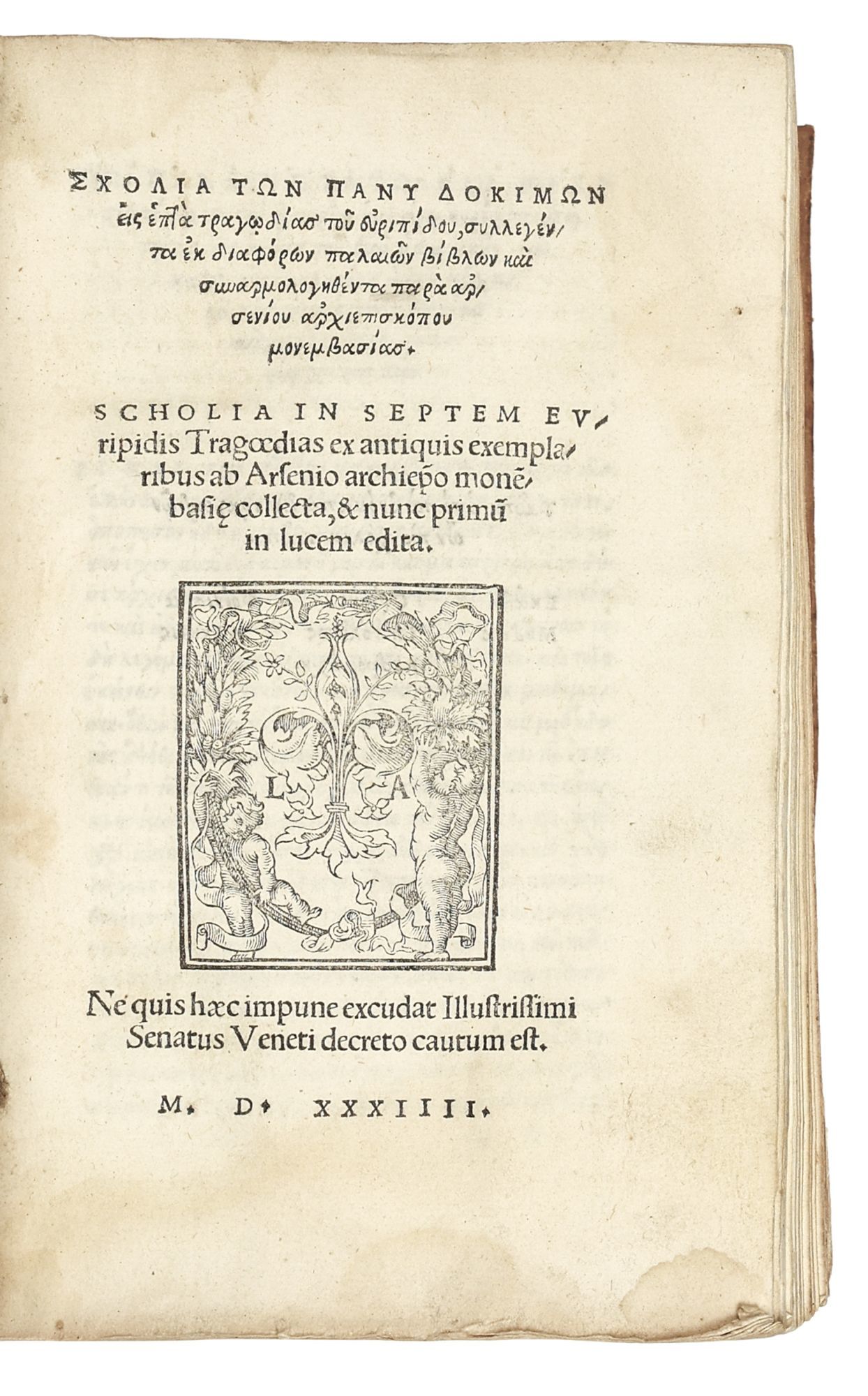
[Title in Greek and Latin] Scholia in septem Euripidis tragoedias ex antiquis exemplaribus ab Arsenio archiepiscopo Mombasiae collecta, & nunc primum in lucem edita. M. D. XXXIIII
![[Title in Greek and Latin] Scholia in septem Eurip](https://d3525k1ryd2155.cloudfront.net/h/439/655/1701655439.0.x.jpg)
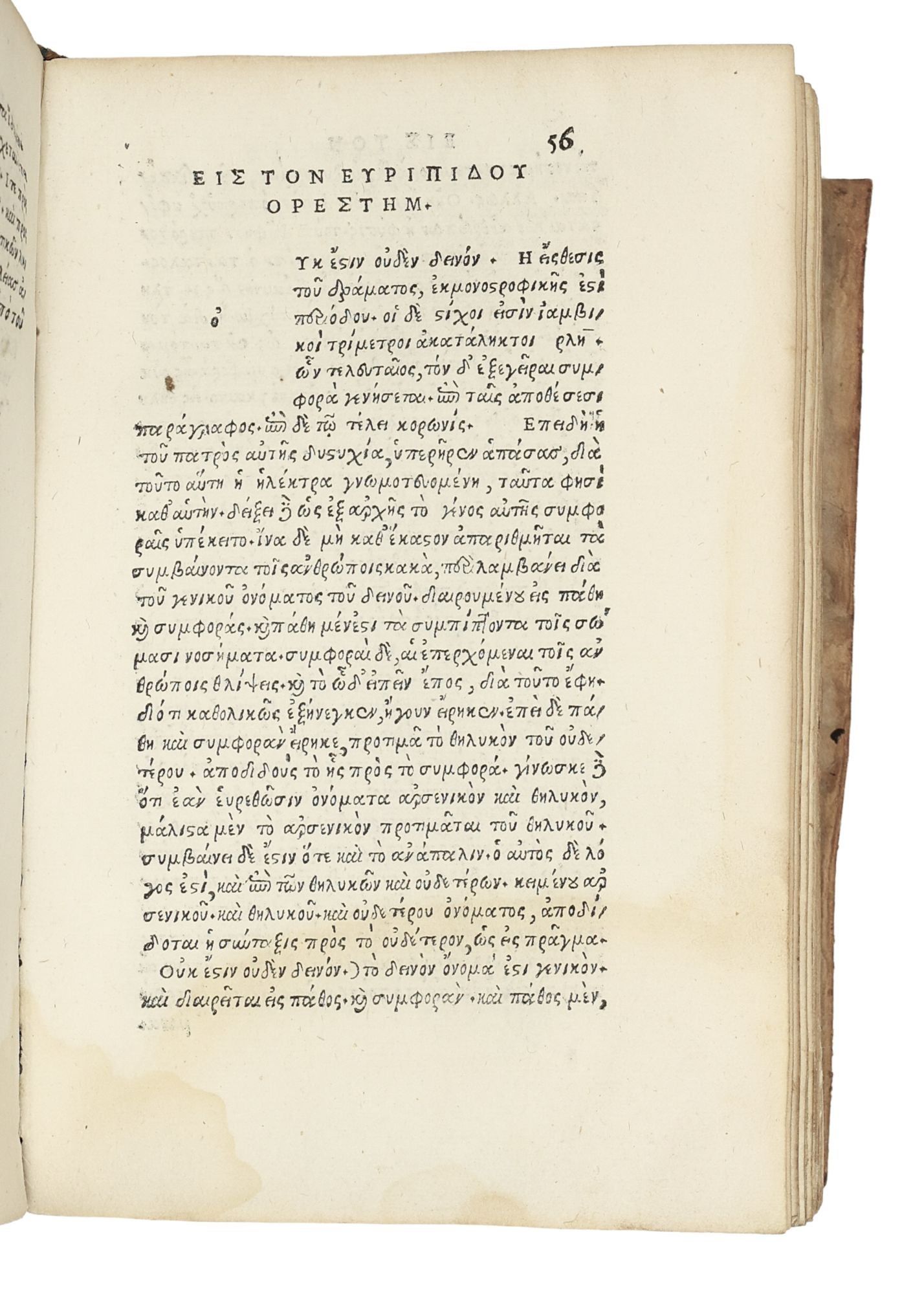
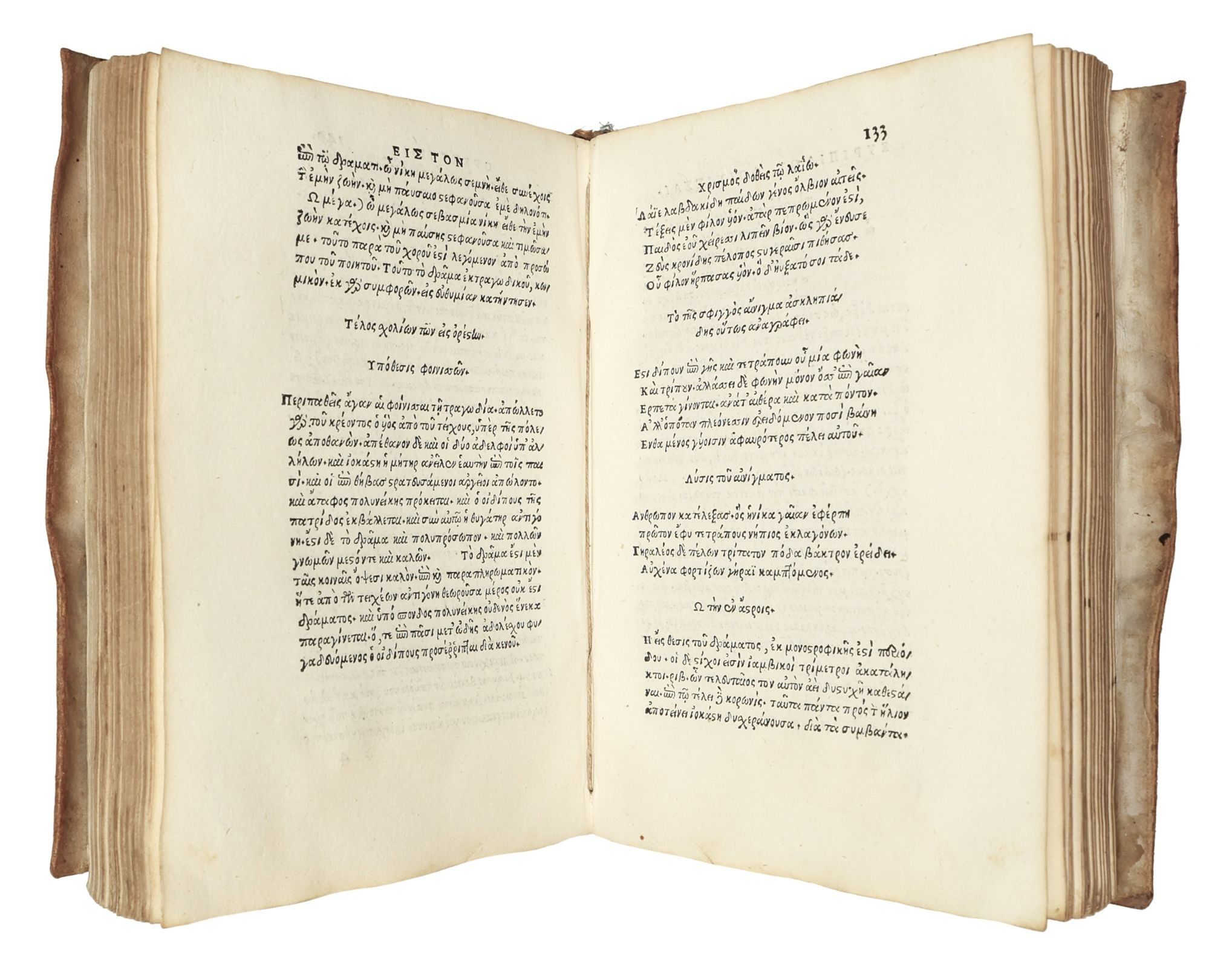
- Hardcover
- Venice: in officina Lucaeantonij Iuntae, 24 December, 1534
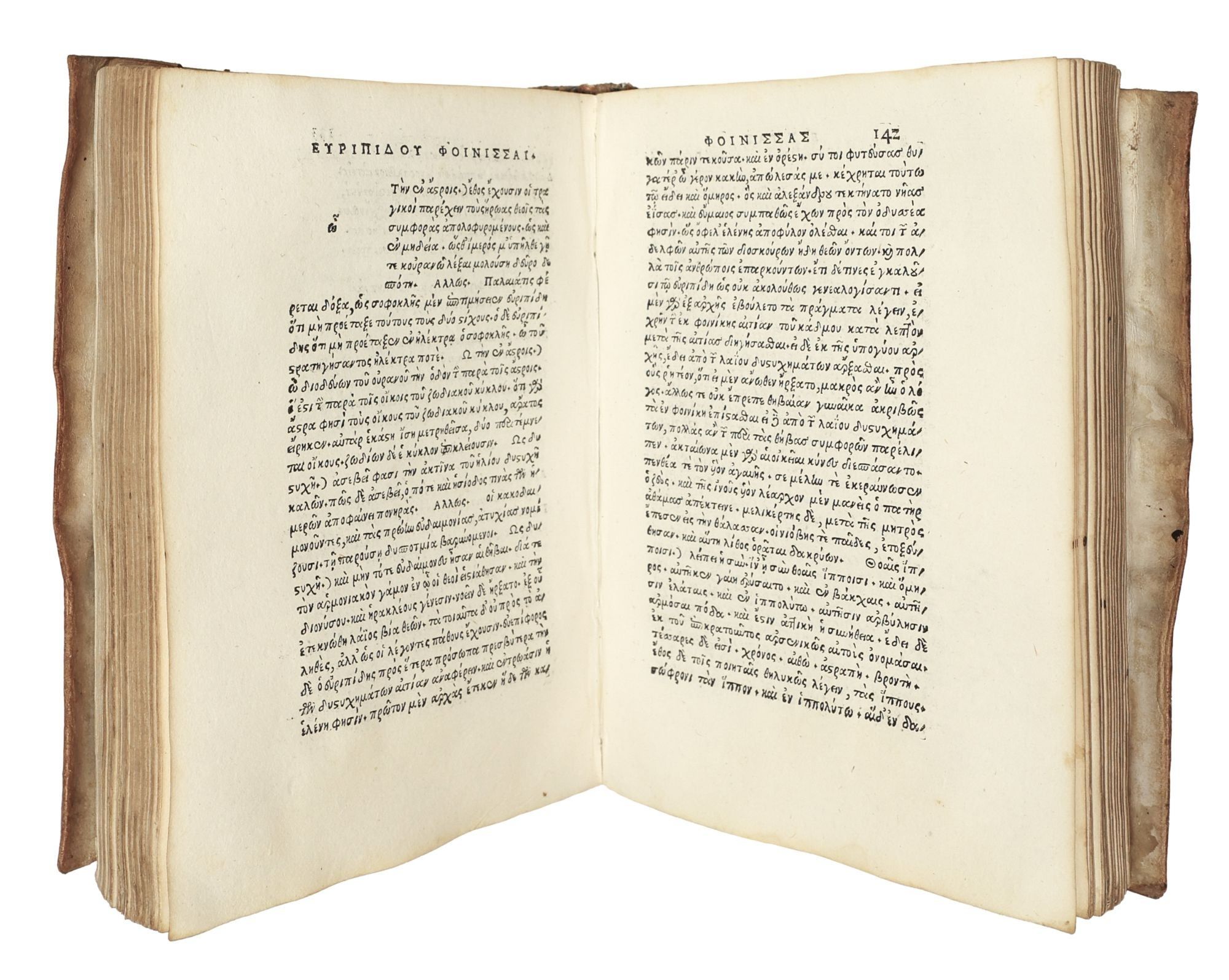
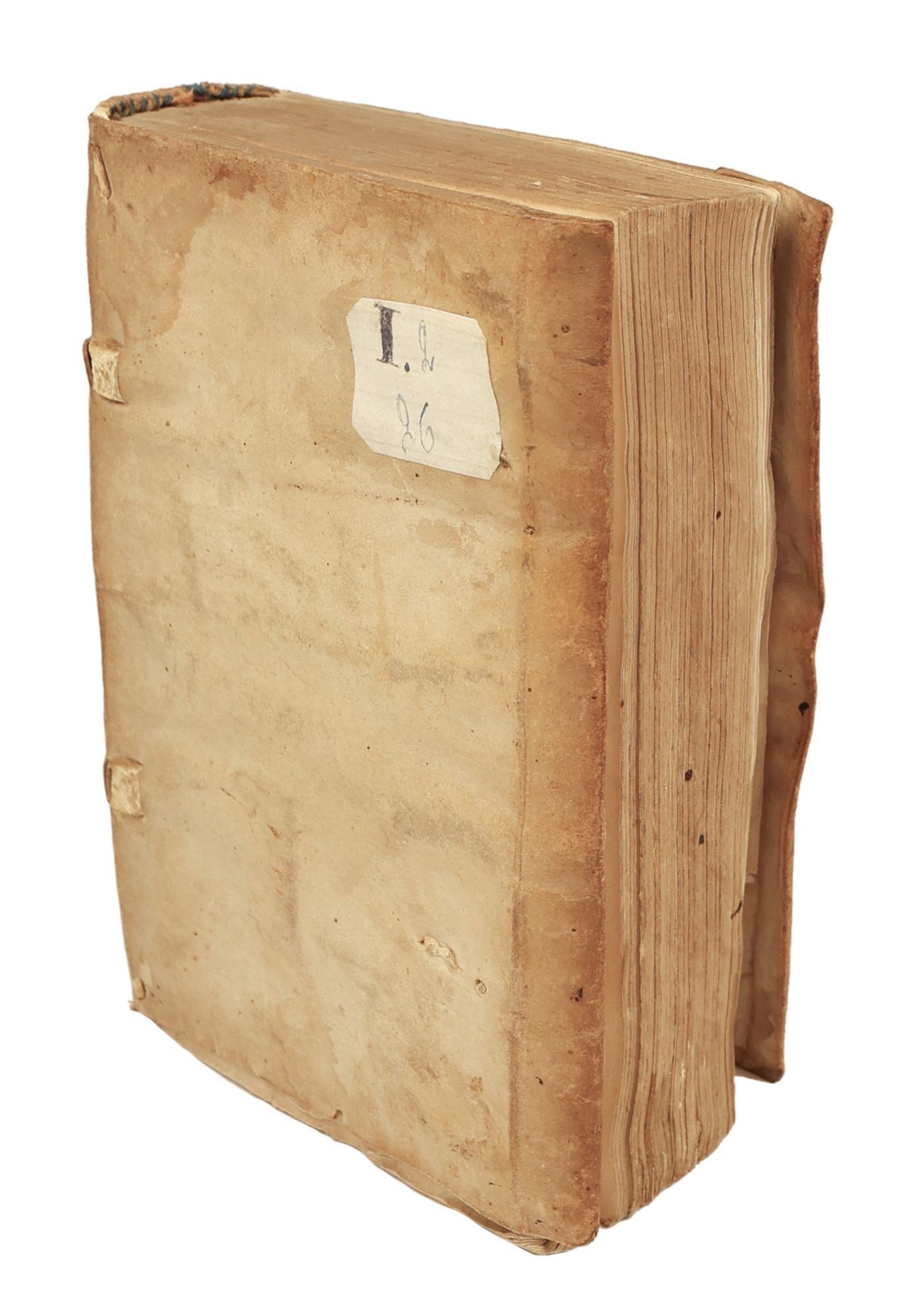
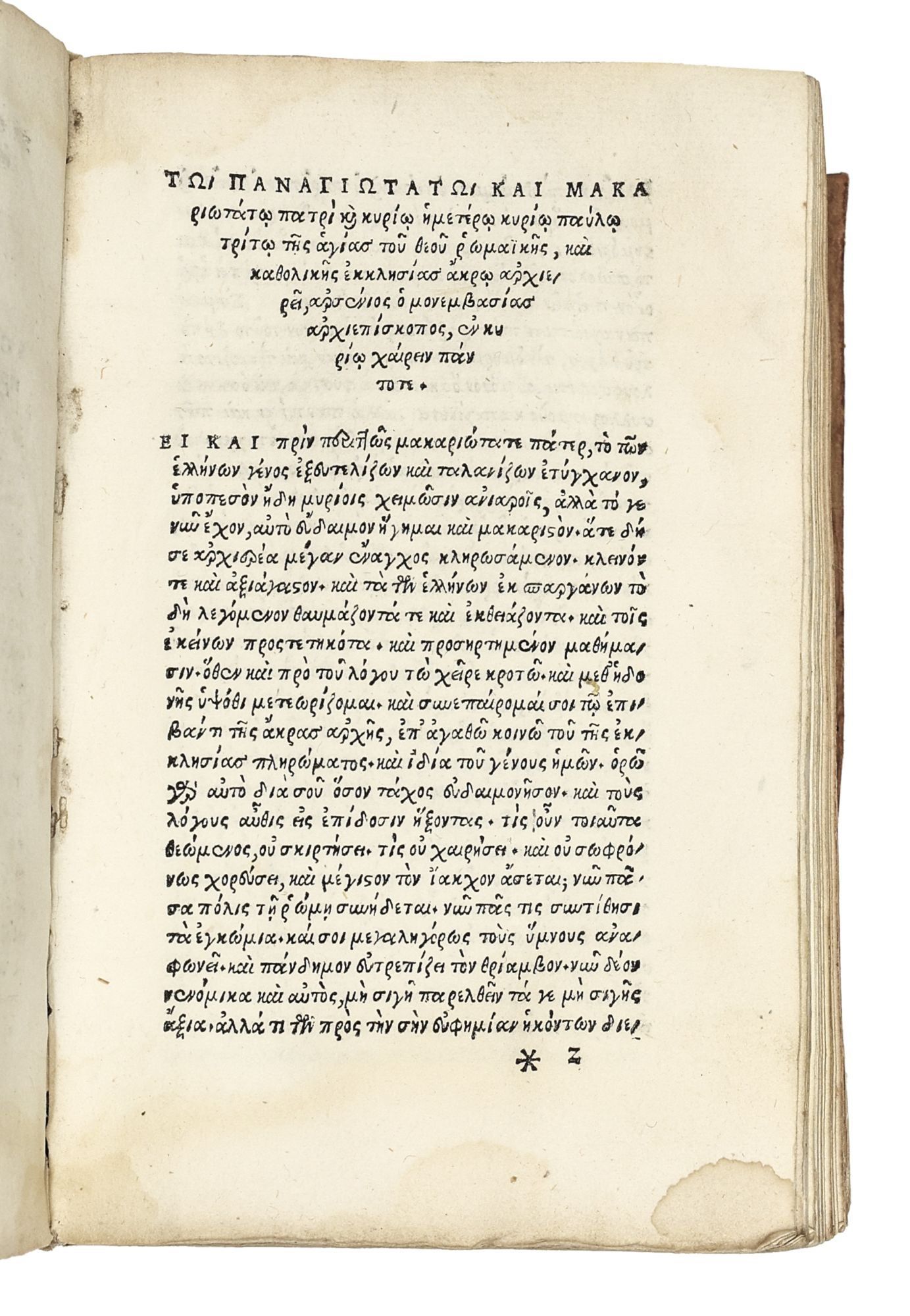
Venice: in officina Lucaeantonij Iuntae, 24 December, 1534. EDITIO PRINCEPS. Hardcover. Fine. Bound in contemporary limp vellum (vellum lightly worn and soiled, binding coming loose from text block at rear). Old library tickets on spine and upper cover. Internally fine with some very light damp-staining. Giunta lily device on title. A large copy, with about a dozen leaves uncut. Text in Greek. The type (20 lines=90 mm, Kallierges 2) was cut and used by the printer Zacharias Kallierges in his books of 1509. The font was sold to the Giunti and used by them from 1514/1515 through 1542. First printing, edited by the Greek scholar Aristobulus Apostolis of the ancient scholia on seven of Euripides' plays: Hecuba Ἑκάβη, Orestes Ὢρέστης, the Phoenician Women Φοίνισσαι, Medea Μήδεια, Hippolytus Ἰππόλυτος, Alcestis Ἀλκέστις, and Andromache Ἀνδρομάχη.
"This editio princeps is of fundamental significance for subsequent Euripidean scholarship… Arsenios, who certainly knew what to look for, drew his material from several sources, among them a manuscript from Bessarion's collection in Venice containing hitherto unused Byzantine scholia, a Planudean paraphrase of Euripides." (Geanakoplos p. 197). While the scholia were fundamental and were frequently reprinted over the centuries, only the first edition contains Aristobulus' unaltered text. "Thus wherever there is a need to be certain what Arsenios himself printed, it is necessary to check the original printing rather than rely on any of the reprints."(Mastronarde, Preliminary Studies on the Scholia to Euripides (2017), p. 2. Note.)
"A large collection of scholia on seven of the plays of Euripides (Rhesus and Troades were not yet included) was first compiled for publication in the 16th century by Aristobulus Apostolis (or Apostolius), an emigré scholar from Crete who often worked in Venice. Aristobulus is also known as Arsenius of Monemvasia (a small island just off the coast of southeastern Laconia), where he was archbishop for a time, and the latter is the name used on the title page of his edition, which was published in Venice in 1534, the year before his death… Arsenius drew upon more than one source for his collection, and it is likely that he sometimes produced his own combinations of pre-existing material or added phrases of his own to them."(Mastronarde, p. 1 ff.)
On the manuscripts used by Arsenios see. J. Cavarzeran, Scholia in Euripides Hippolytum, 2016, pp. 57ff. For Aresnios' biography, his editions, his differences with Aldus Manutius over financial matter, and with the orthodox church over the archbishopric of Monemvasia, see Geanokoplos, Byzantium and the Renaissance, 167-200; Biethenholz, Contemporaries of Erasmus, I 68f.
Arsenios Apostolis "is another Cretan deserving of more attention for his part in the transfer of Greek learning to the Western world. Son of Michael Apostolis, he is the most conspicuous example in the period of Greek literati who, after lengthy residence in Italy, returned to live in the East. As in the case of Musurus, his Western activities are closely bound up with the flowering of Greek studies in the three major centers of Italian humanism – Medici Florence, the Aldine milieu of Venice, and the papal court of Leonine Rome … Early on, Arsenios began to teach. A pupil of his at this time [around 1490] was certainly John Gregoropoulos, later to become a leading member of the Aldine circle.
"Among other students of Arsenios was very probably Gregoropoulos' good friend Marcus Musurus … [In 1492 Aresenios arrived in Florence where] Piero de' Medici became his patron. Arsenios, appropriately enough, now occupied himself with copying for Pietro the manuscripts Janus Lascaris had brought back from the East … Arsenios next appears in Venice, where we find him, in 1494, at work for the publishing firm of Aldus Manutius … Arsenios' name appears as an editor of one of Aldus' very first publications, the curious Greek poem Galeomyomachia … [he] certainly worked on other Aldine projects in this period .
"In October 1497 we find Arsenios in Crete … a short time later, at the end of 1498 or beginning of 1499, Arsenios' relationship with Aldus was broken off as a result of a differences between the two over a financial matter … He did not return to Aldus' employ. Rather we find him remaining in Crete where he was to reside for the next six or seven years, from the last part of 1497 to the end of 1504 … His activity in Crete during these years entailed, it would seem, mainly the copying of manuscripts and a certain amount of teaching."(Geanakoplos 167 f.).
Details
Title
[Title in Greek and Latin] Scholia in septem Euripidis tragoedias ex antiquis exemplaribus ab Arsenio archiepiscopo Mombasiae collecta, & nunc primum in lucem edita. M. D. XXXIIII
Author
Euripides (484-406 B.C.); Apostolis (also called "Arsenios"), Aristobulus, Bishop of Monemvasia (1468/9–1535)
Binding
Hardcover
Condition
Fine
Publisher
in officina Lucaeantonij Iuntae, 24 December: Venice
Date
1534
Edition
EDITIO PRINCEPS