

Latin Literature and Popular Culture El Coyote Archive Signed by José Mallorquí Documenting Californio Heroism 1946 to 1948

- SIGNED
- 1946
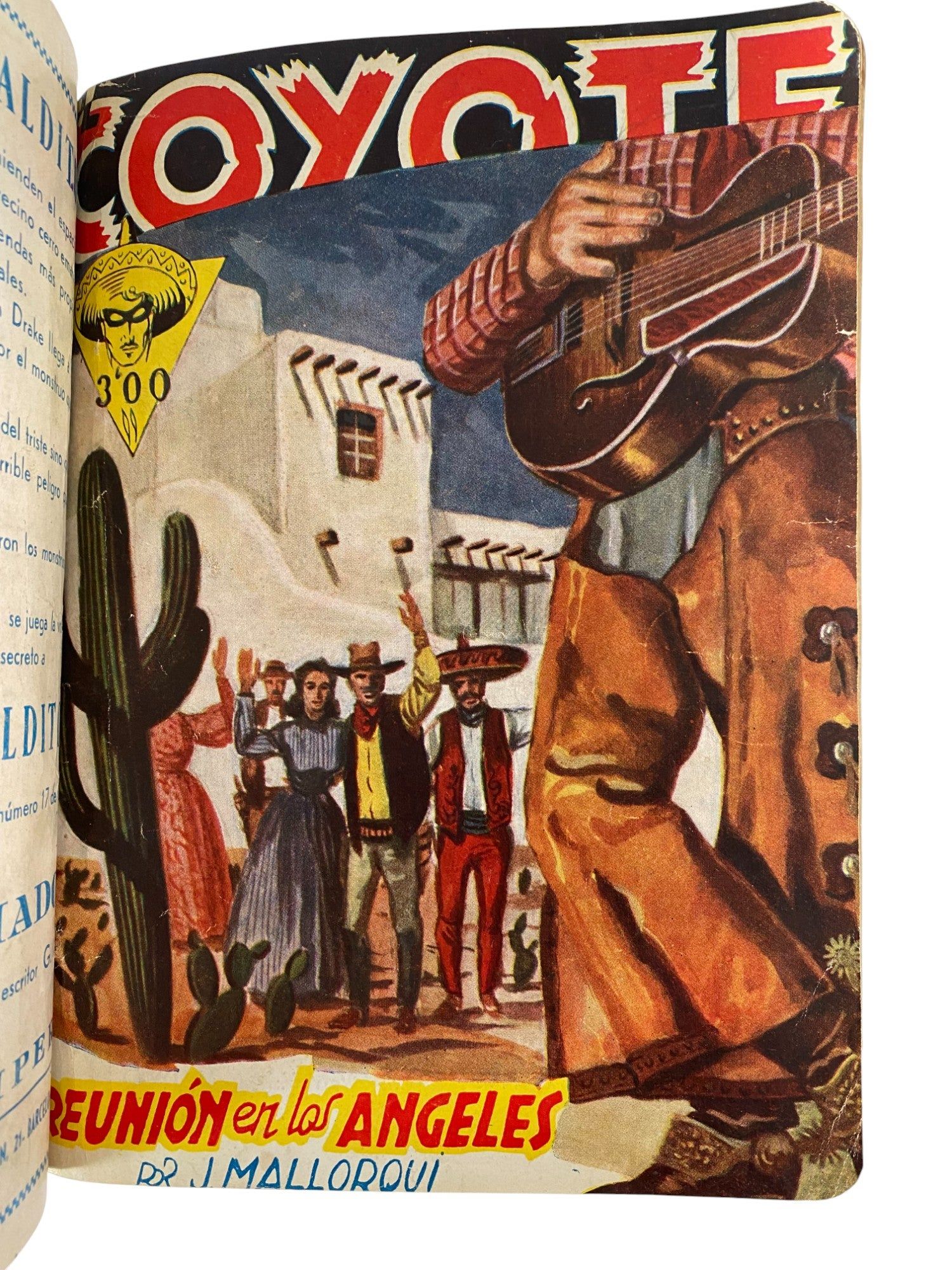
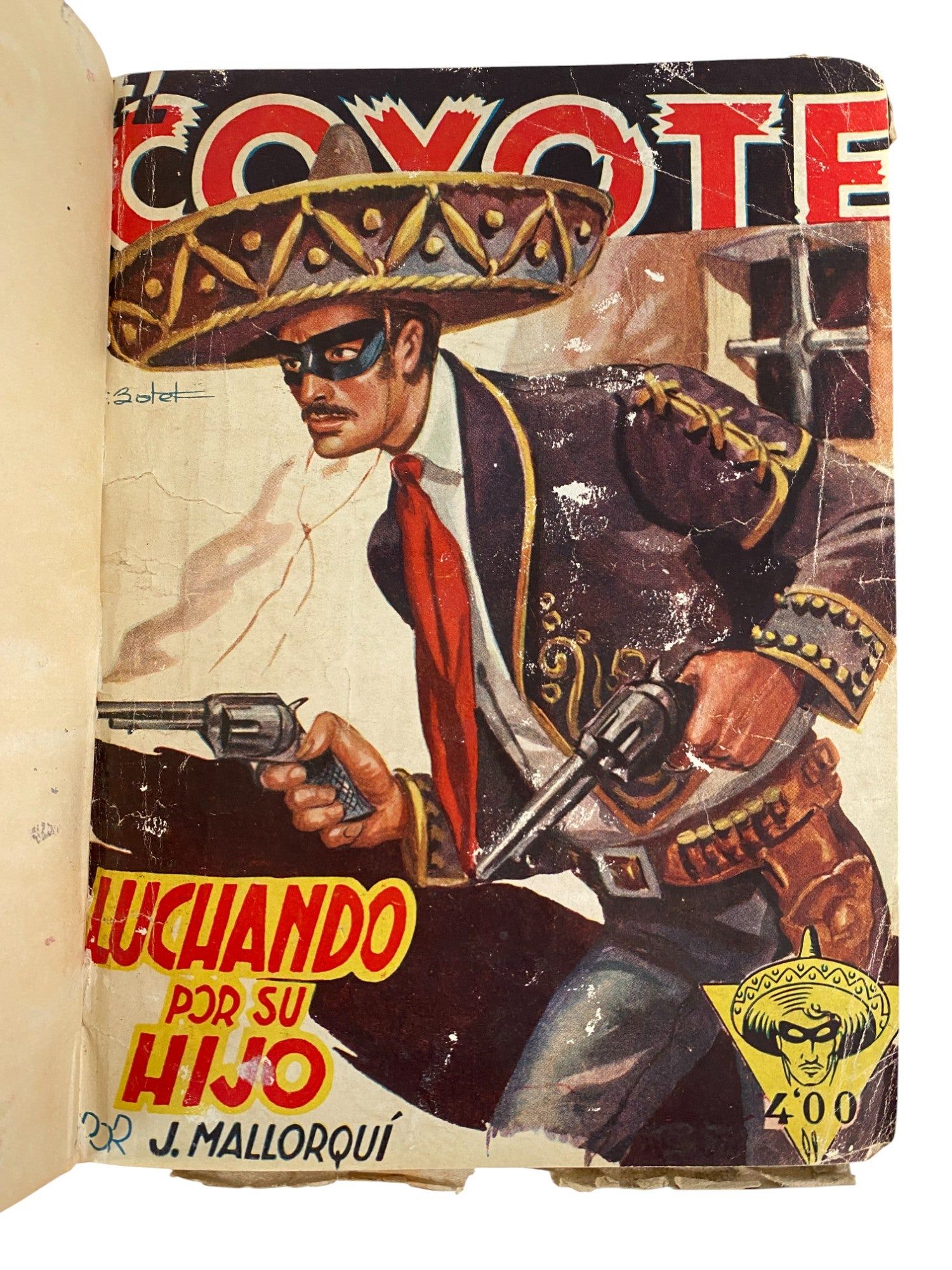
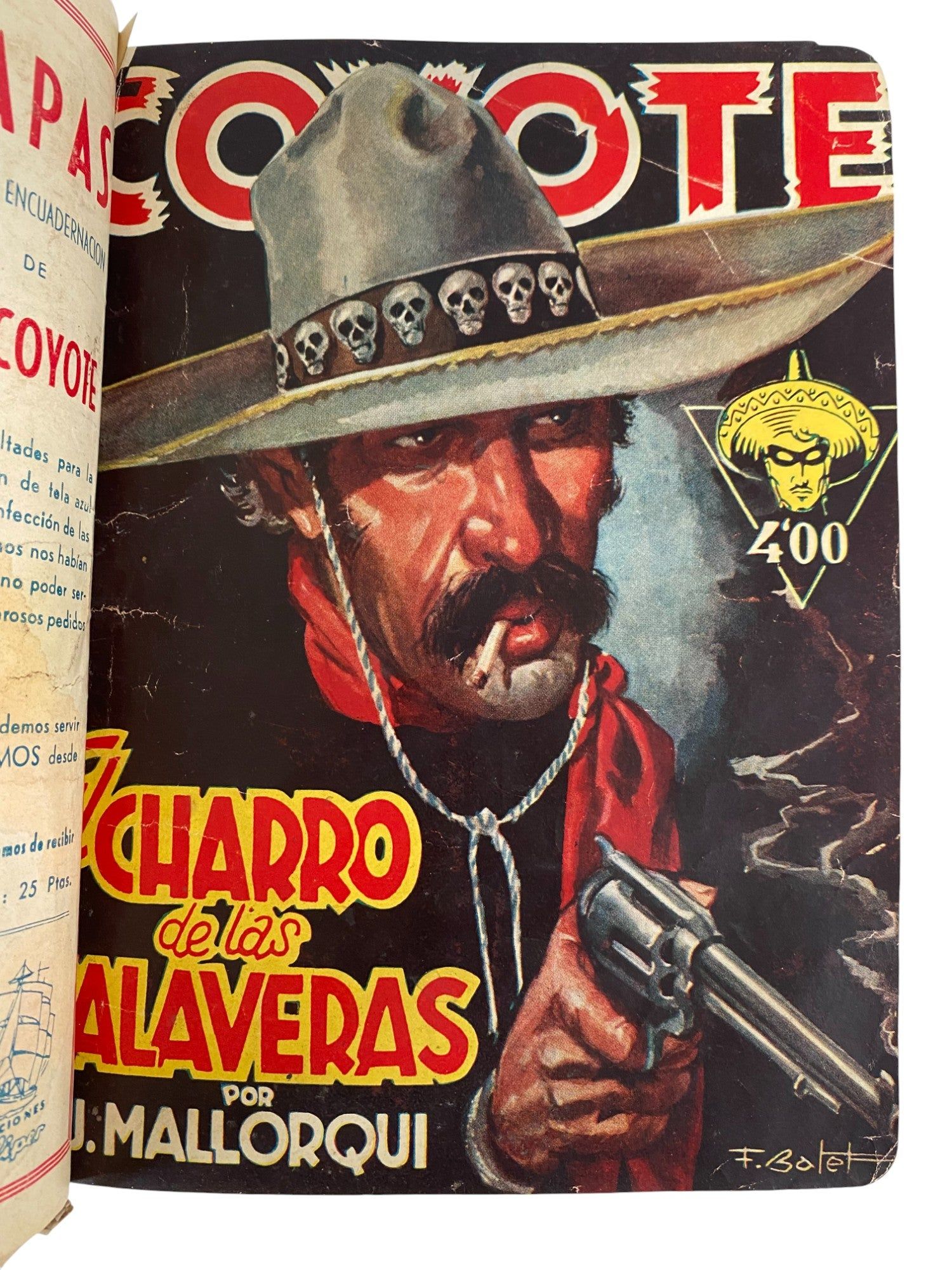
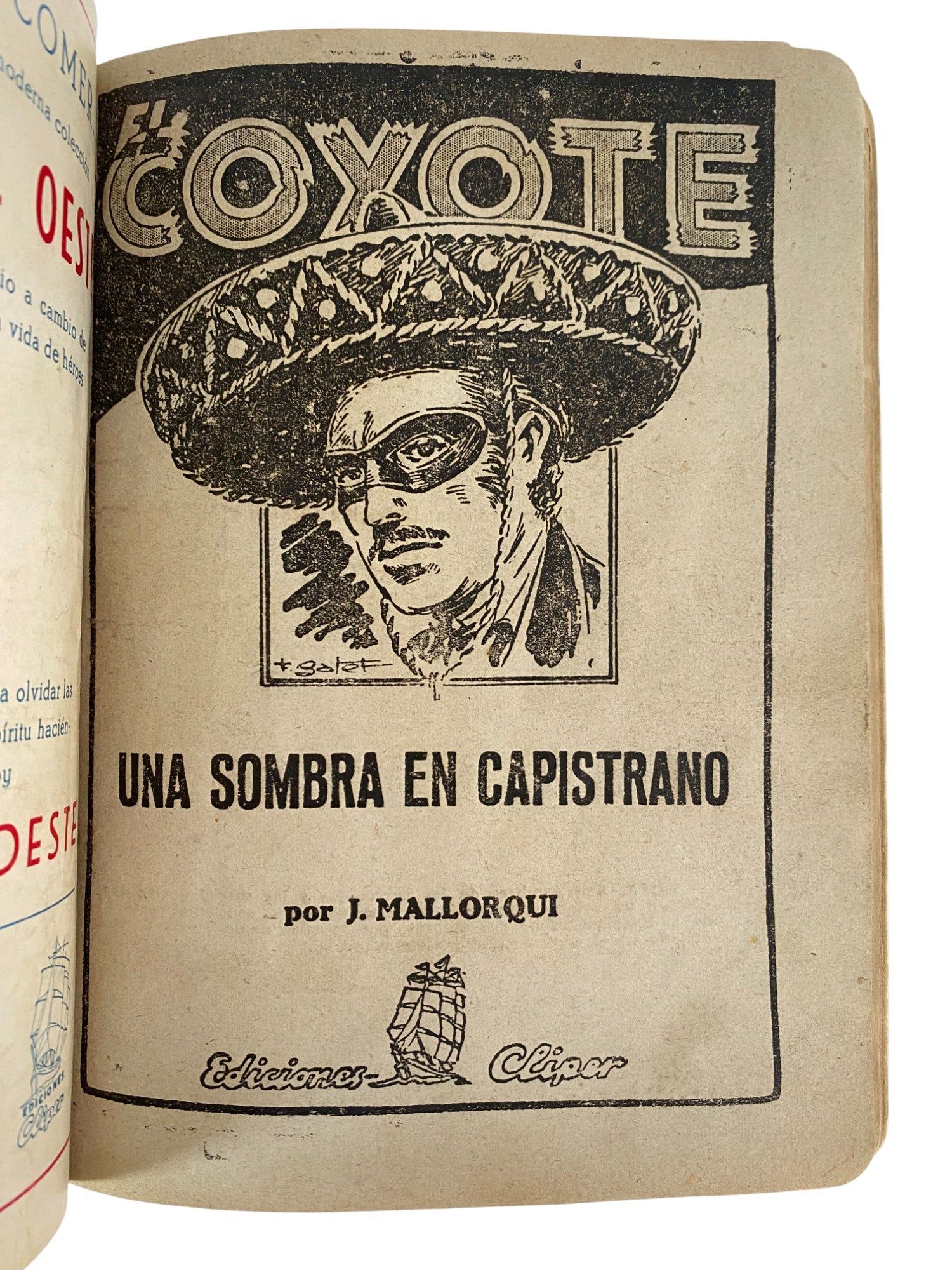
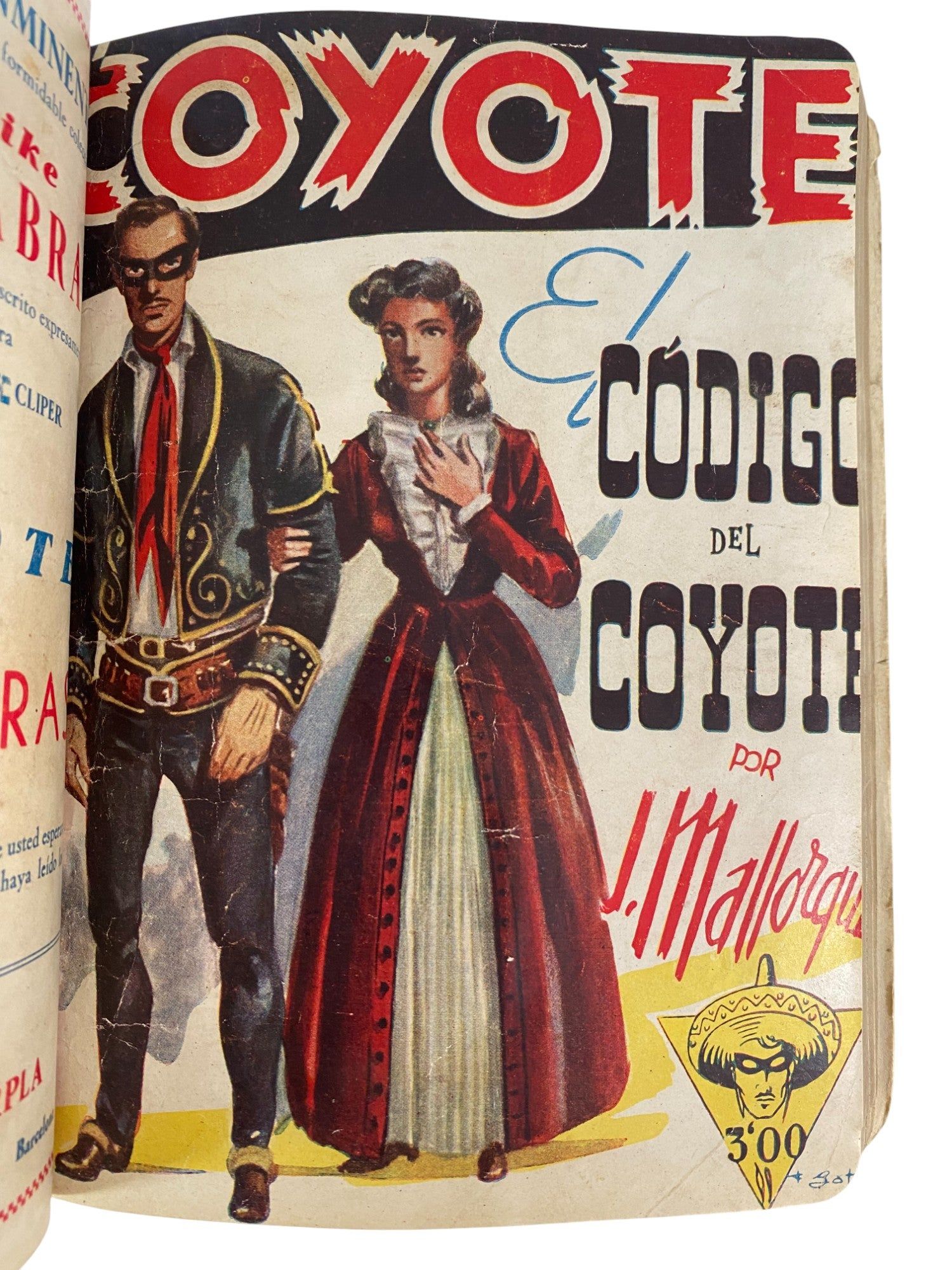
1946. Mallorquí, José. El Coyote. These mid-twentieth century Spanish-language pulp narratives document the adaptation of the Western genre within Hispanic literary traditions, centering a Californio protagonist navigating questions of land, class, and political authority in nineteenth-century Alta California. Published between 1946 and 1948, the series follows César de Echagüe, a landowner who assumes the masked identity of El Coyote to intervene in conflicts involving violence, inheritance disputes, and corruption. The narratives position El Coyote as both elite landholder and outlaw, engaging tensions tied to colonization, cross-border politics, and regional identity. The inclusion of a signed and inscribed issue by Mallorquí provides direct authorial association with a widely circulated series that reached audiences across Spain and Latin America, demonstrating the transnational scope of Spanish-language popular fiction during this period.
Mallorquí, José. El Coyote. Barcelona: Cliper, 1946-1948. Twelve issues bound in three volumes. Spanish language.
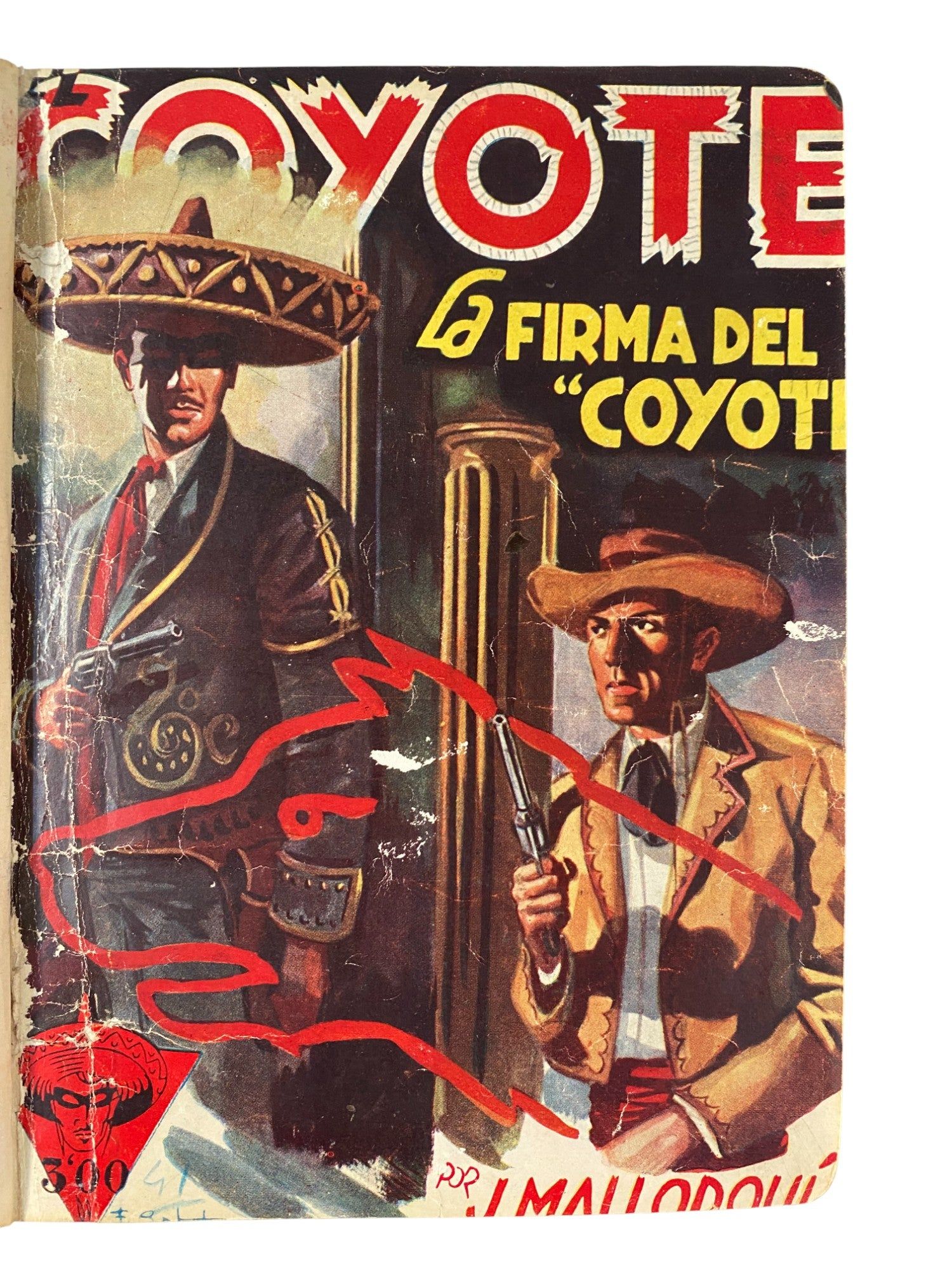
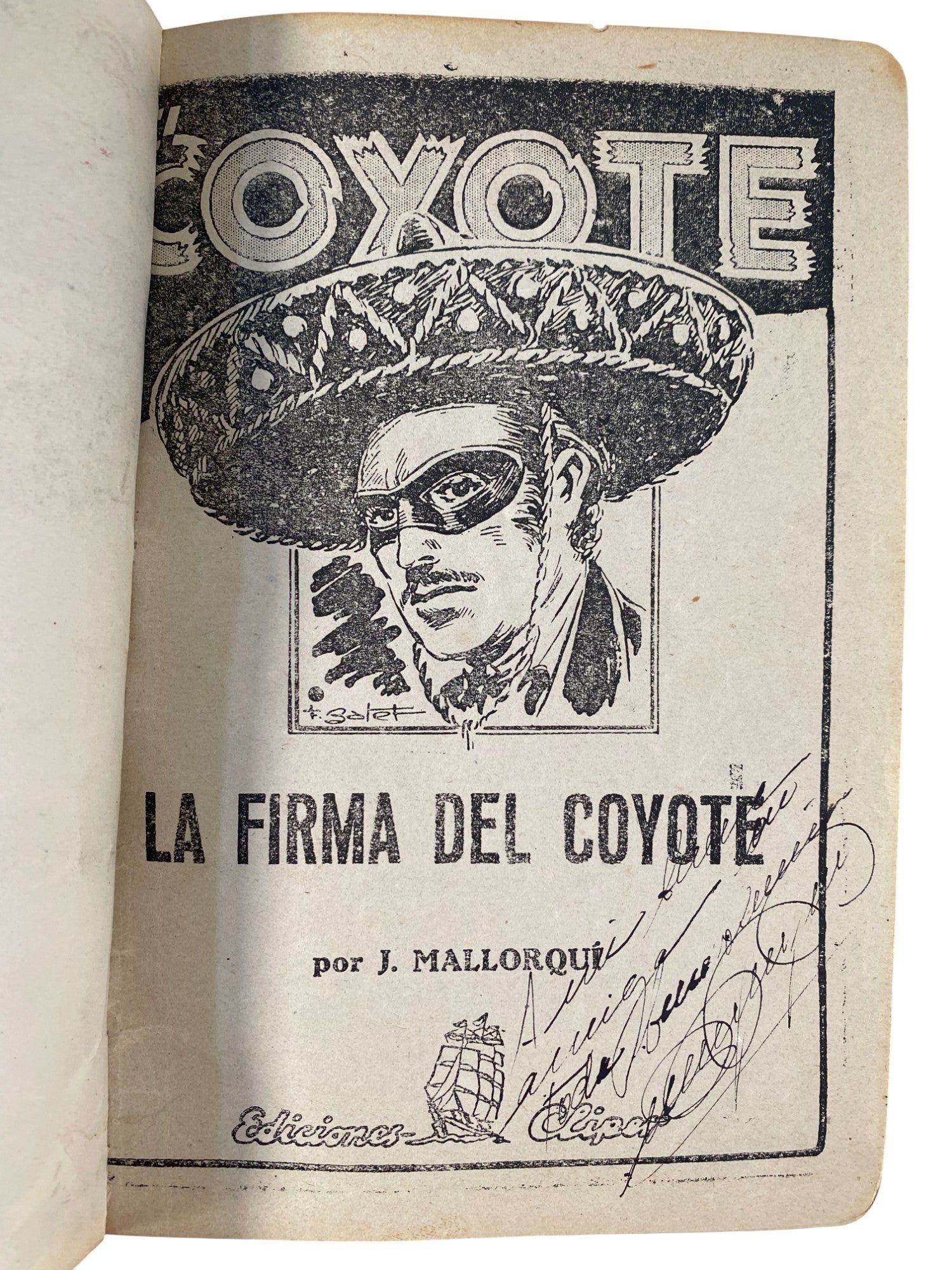
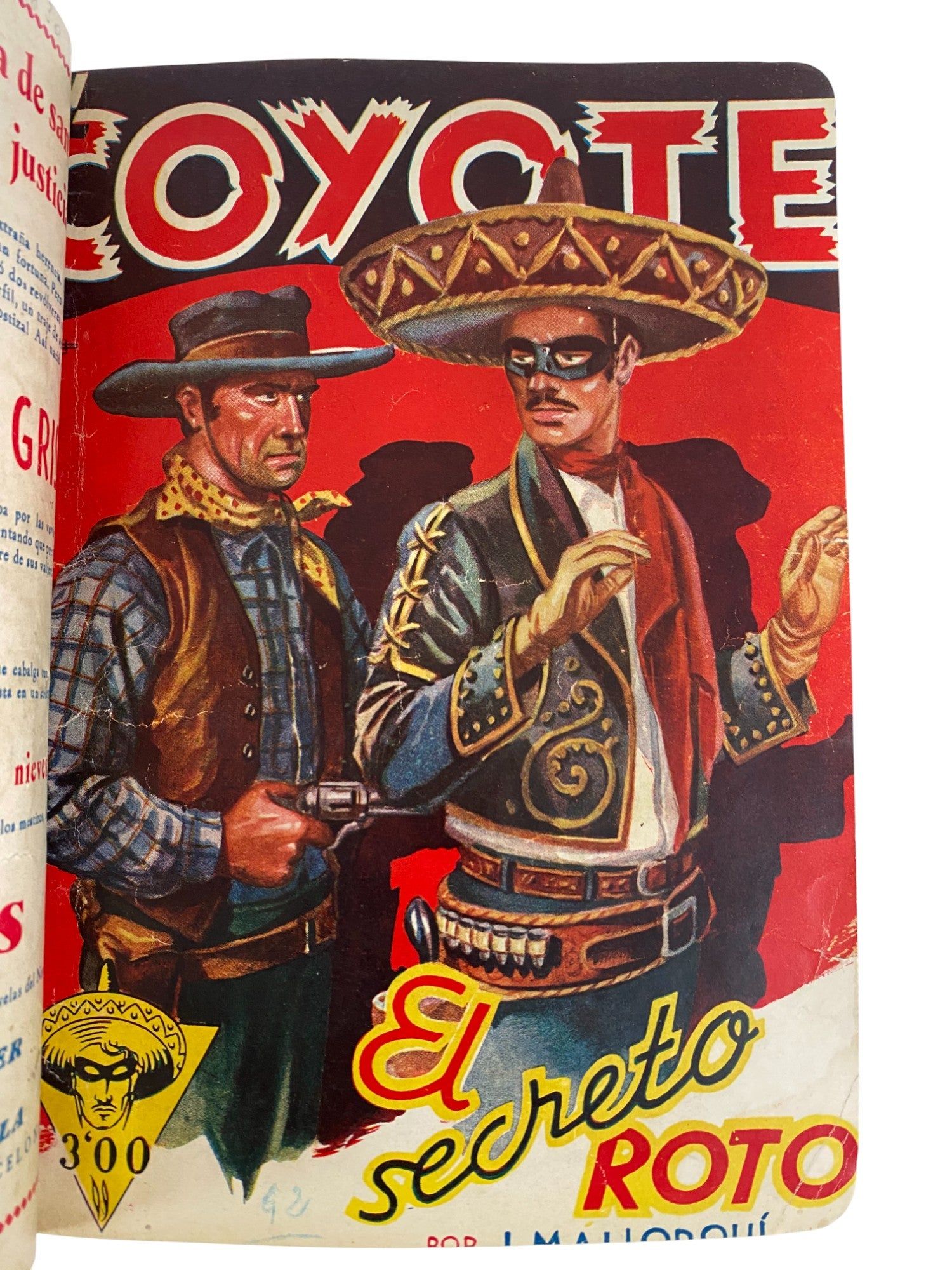
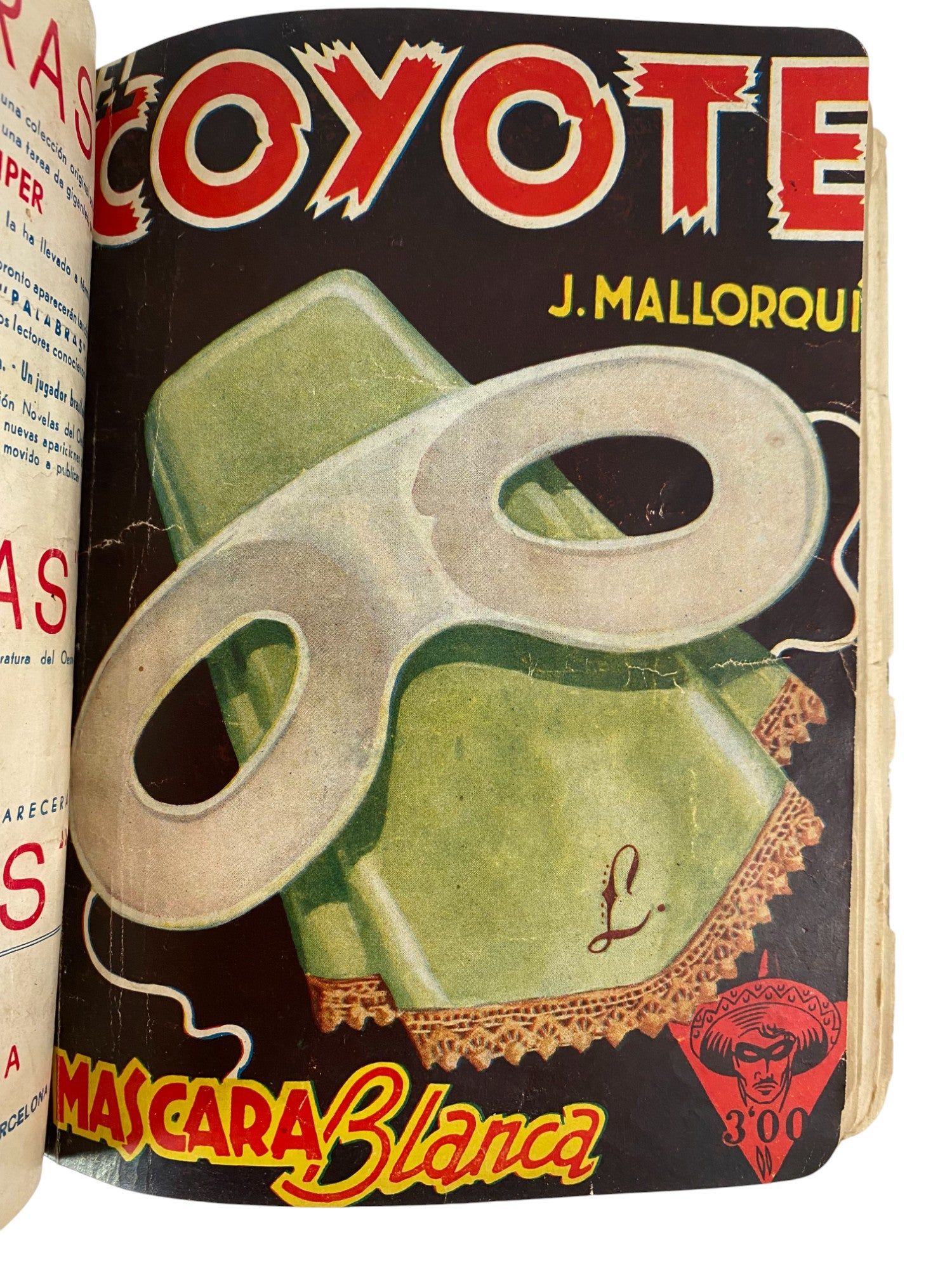
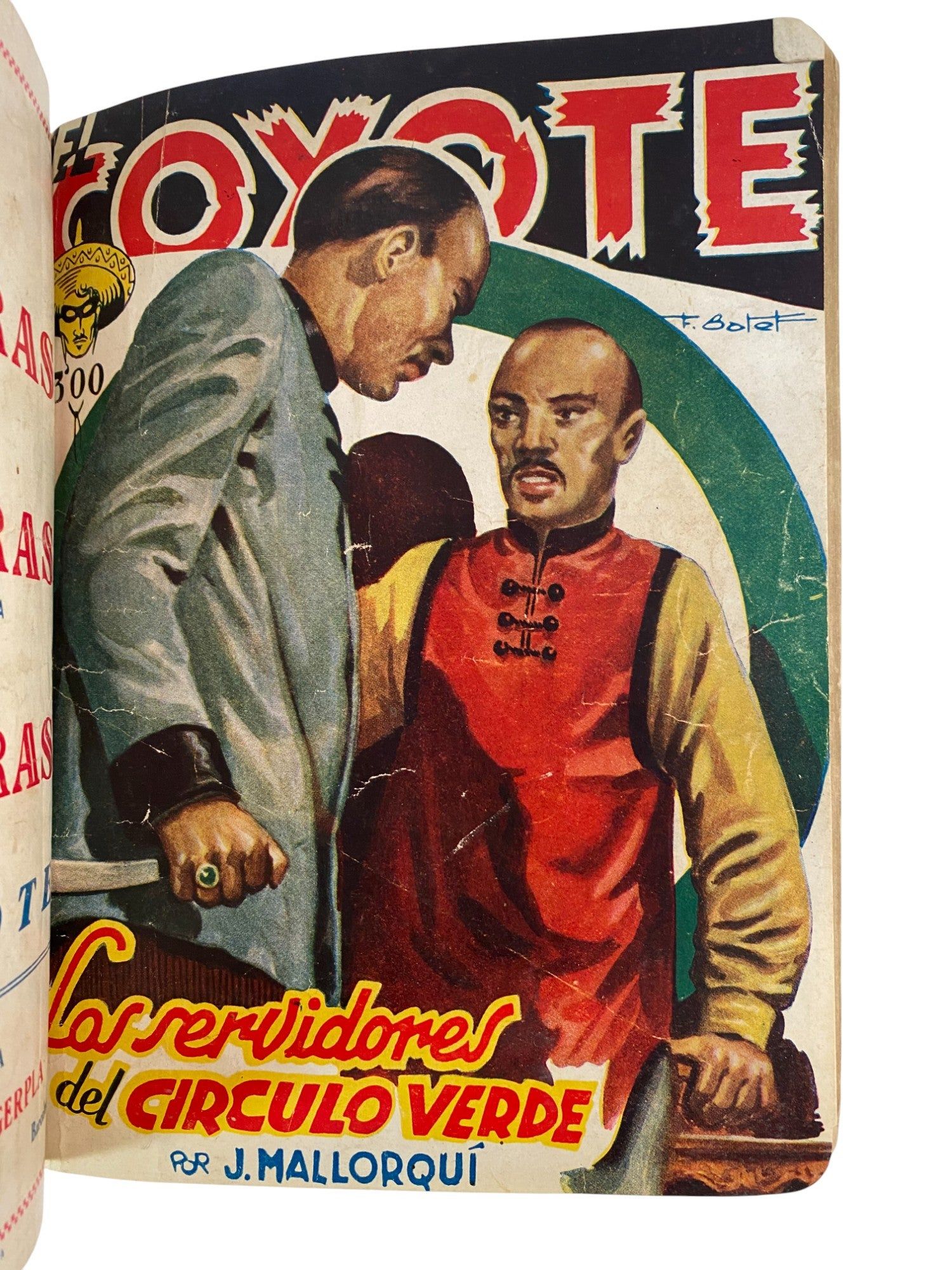
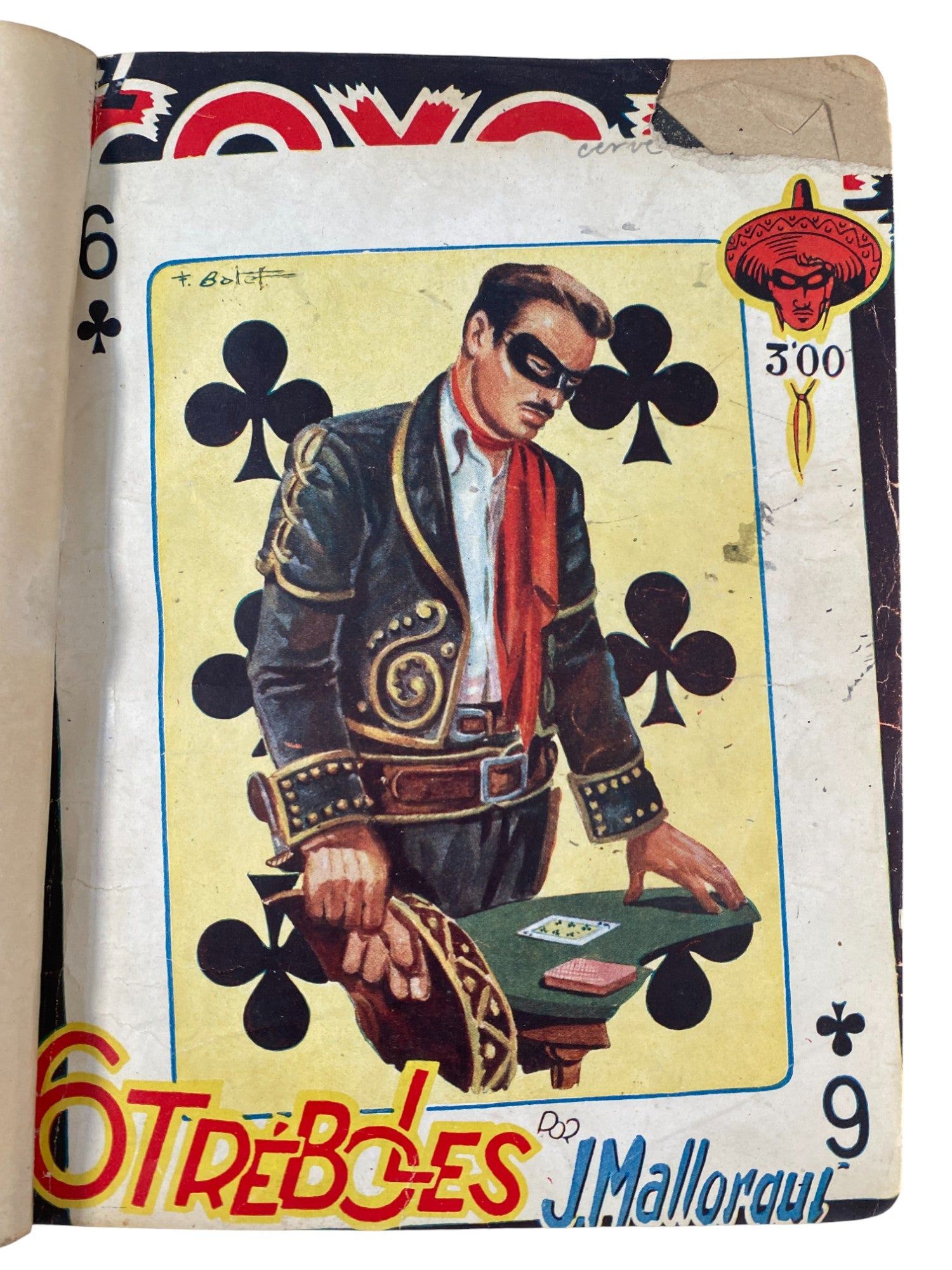
Archive includes: [1] No. 43 Una Sombra en Capistrano (1946); [2] No. 51 La Firma del Coyote (1947), signed and inscribed on title page "A mi [...] amigo con mejores deseos"; [3] No. 52 El Secreto Roto (1947); [4] No. 53 El Código del Coyote (1947); [5] No. 54 Máscara Blanca (1947); [6] No. 55 Los Servidores del Círculo Verde (1947); [7] No. 56 6 Tréboles (1947); [8] No. 57 Guadalupe (1947); [9] No. 58 El Rescate de Guadalupe (1947); [10] No. 59 Reunión en Los Angeles (1947); [11] No. 68 Luchando por su Hijo (1948); [12] No. 70 El Charro de las Calaveras (1948). Each issue issued with illustrated wrappers and interior title art, later bound into three volumes. Narrative content across the series includes inheritance disputes, cross-border political tensions involving Mexico and the United States, conflicts with criminal organizations, and recurring threats to César de Echagüe and his family. Several issues incorporate themes of political persecution, family lineage, and shifting allegiances within Californio society.
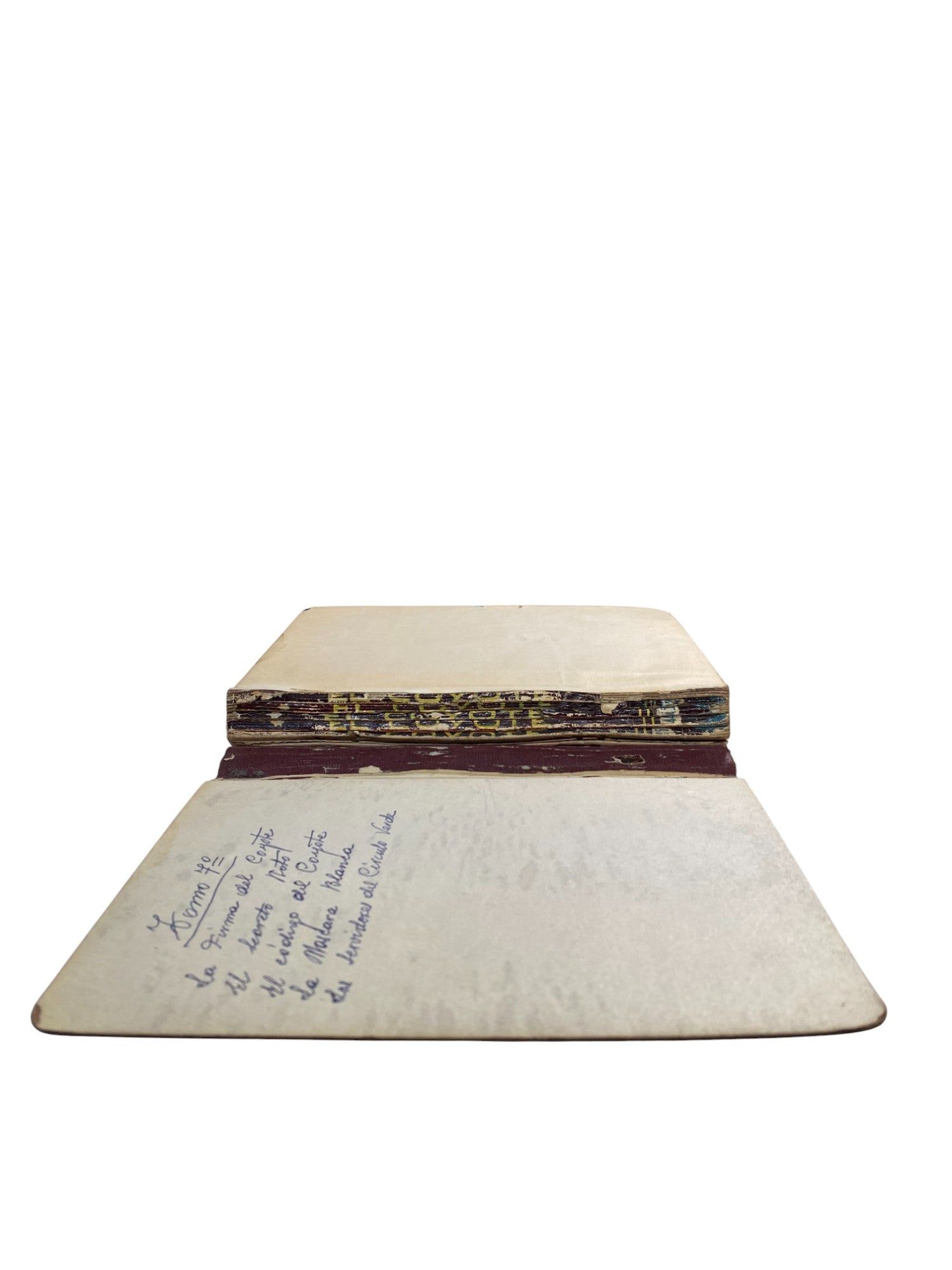
These works were produced during a period of expansion in mass-market pulp publishing, enabling serialized fiction to circulate widely among Spanish-speaking audiences in Europe and the Americas. The figure of El Coyote operates within this format as a reinterpretation of the Western hero, centering Californio identity and regional experience within a genre typically dominated by Anglo-American narratives. The archive reflects the cultural reach of Spanish-language popular fiction and its role in shaping narrative traditions tied to identity, resistance, and historical memory. Bound volumes retain original illustrated wrappers; toning, edgewear, and some chipping and creasing to individual issues; text blocks intact and legible; bindings worn with looseness at joints and spines; handwritten notations on front pastedowns; overall good condition.
Mallorquí, José. El Coyote. Barcelona: Cliper, 1946-1948. Twelve issues bound in three volumes. Spanish language.
Archive includes: [1] No. 43 Una Sombra en Capistrano (1946); [2] No. 51 La Firma del Coyote (1947), signed and inscribed on title page "A mi [...] amigo con mejores deseos"; [3] No. 52 El Secreto Roto (1947); [4] No. 53 El Código del Coyote (1947); [5] No. 54 Máscara Blanca (1947); [6] No. 55 Los Servidores del Círculo Verde (1947); [7] No. 56 6 Tréboles (1947); [8] No. 57 Guadalupe (1947); [9] No. 58 El Rescate de Guadalupe (1947); [10] No. 59 Reunión en Los Angeles (1947); [11] No. 68 Luchando por su Hijo (1948); [12] No. 70 El Charro de las Calaveras (1948). Each issue issued with illustrated wrappers and interior title art, later bound into three volumes. Narrative content across the series includes inheritance disputes, cross-border political tensions involving Mexico and the United States, conflicts with criminal organizations, and recurring threats to César de Echagüe and his family. Several issues incorporate themes of political persecution, family lineage, and shifting allegiances within Californio society.
These works were produced during a period of expansion in mass-market pulp publishing, enabling serialized fiction to circulate widely among Spanish-speaking audiences in Europe and the Americas. The figure of El Coyote operates within this format as a reinterpretation of the Western hero, centering Californio identity and regional experience within a genre typically dominated by Anglo-American narratives. The archive reflects the cultural reach of Spanish-language popular fiction and its role in shaping narrative traditions tied to identity, resistance, and historical memory. Bound volumes retain original illustrated wrappers; toning, edgewear, and some chipping and creasing to individual issues; text blocks intact and legible; bindings worn with looseness at joints and spines; handwritten notations on front pastedowns; overall good condition.
Details
Title
Latin Literature and Popular Culture El Coyote Archive Signed by José Mallorquí Documenting Californio Heroism 1946 to 1948
Author
El Coyote
Condition
Unknown
Date
1946