

Normentafeln zur Entwicklungsgeschichte der Wirbelthiere [Normal Plates of the Development of the Vertebrates].
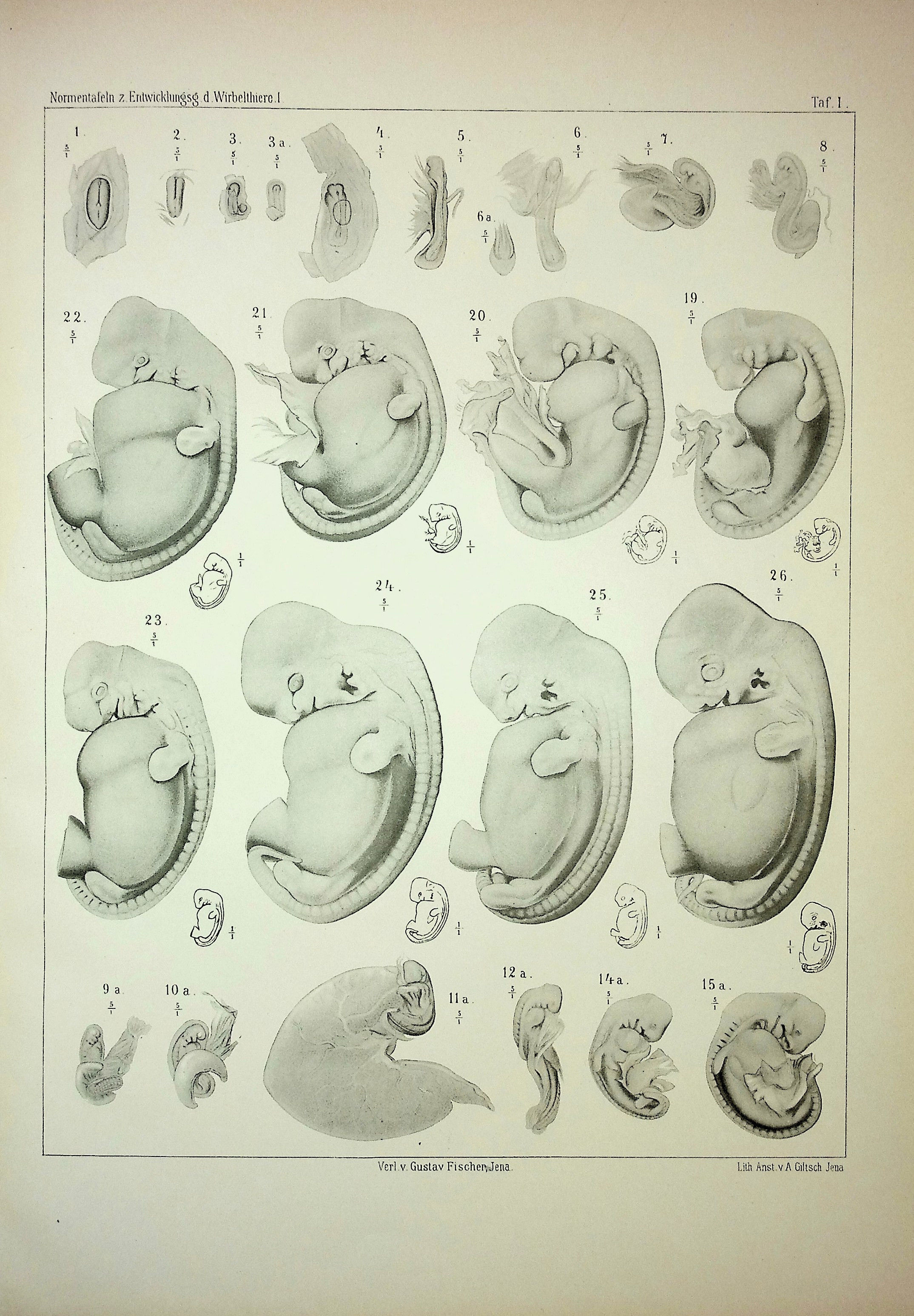
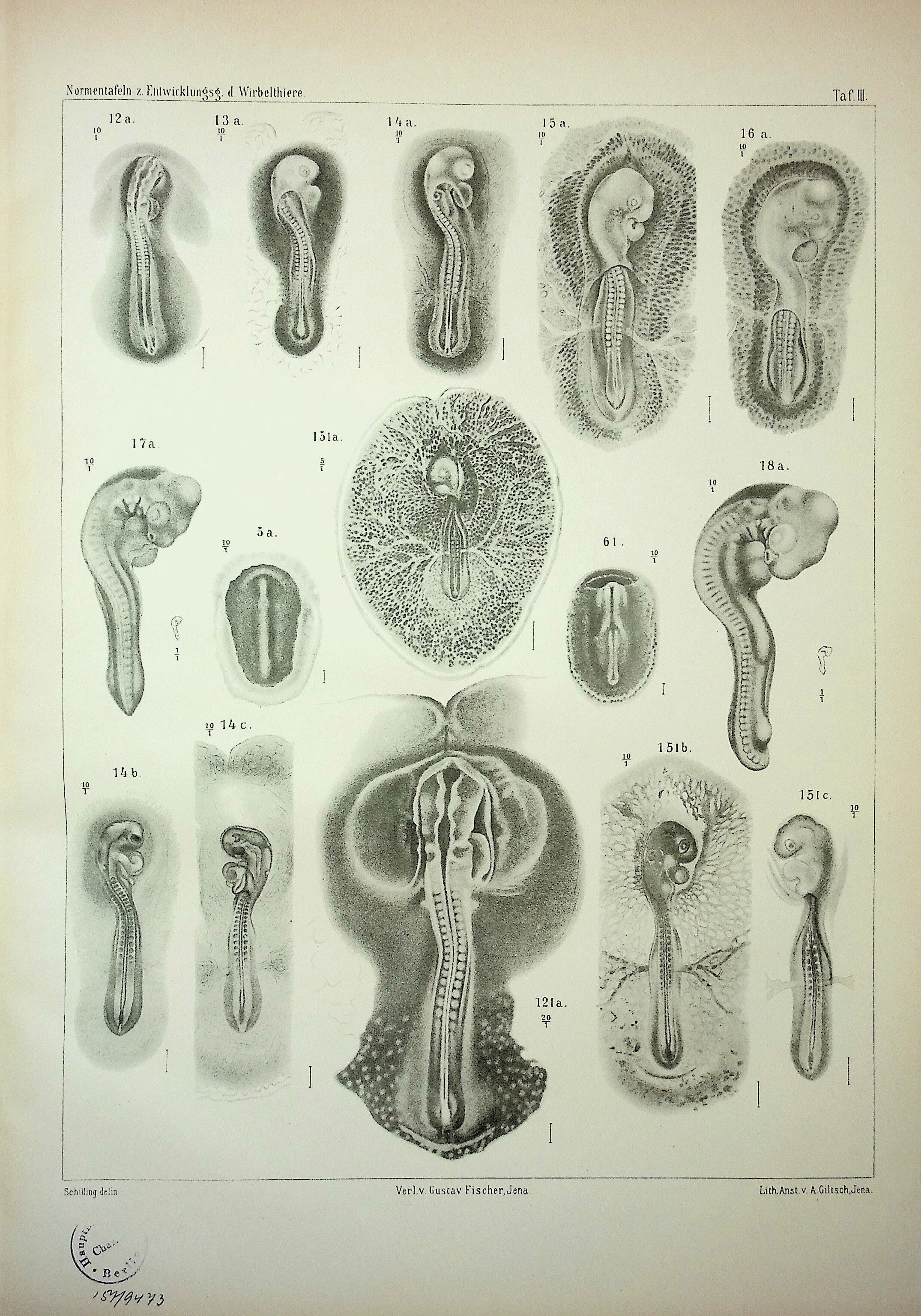
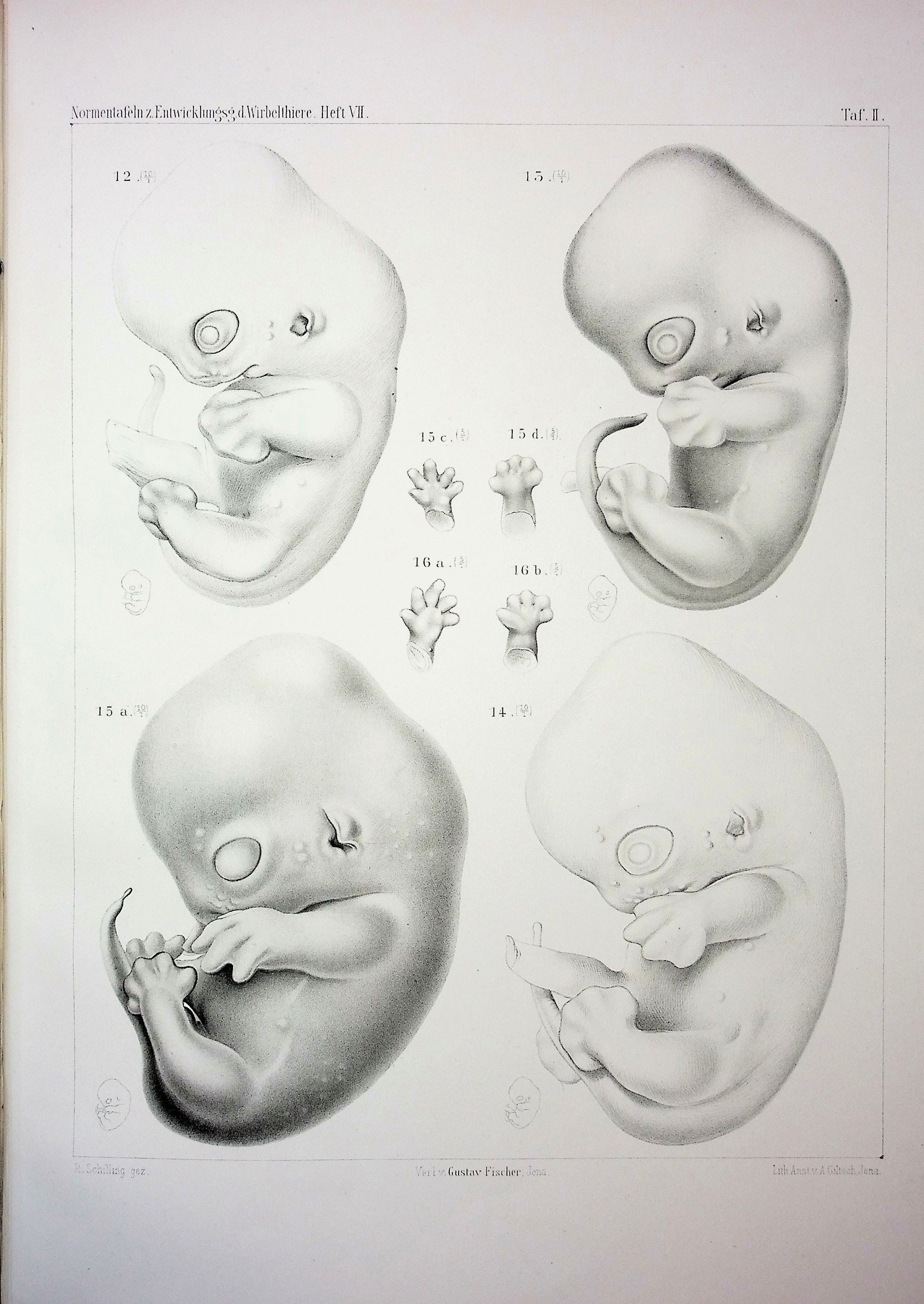
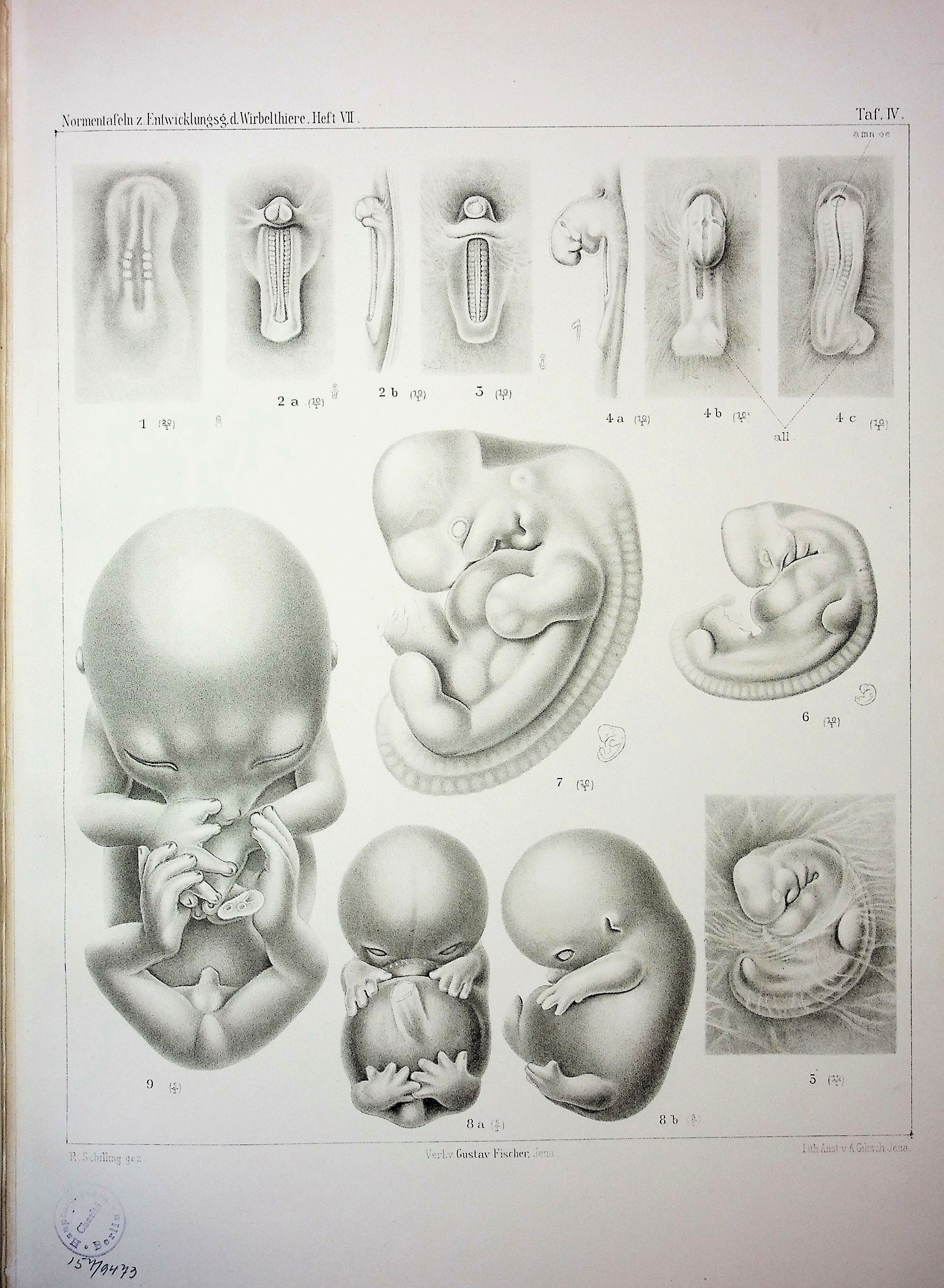
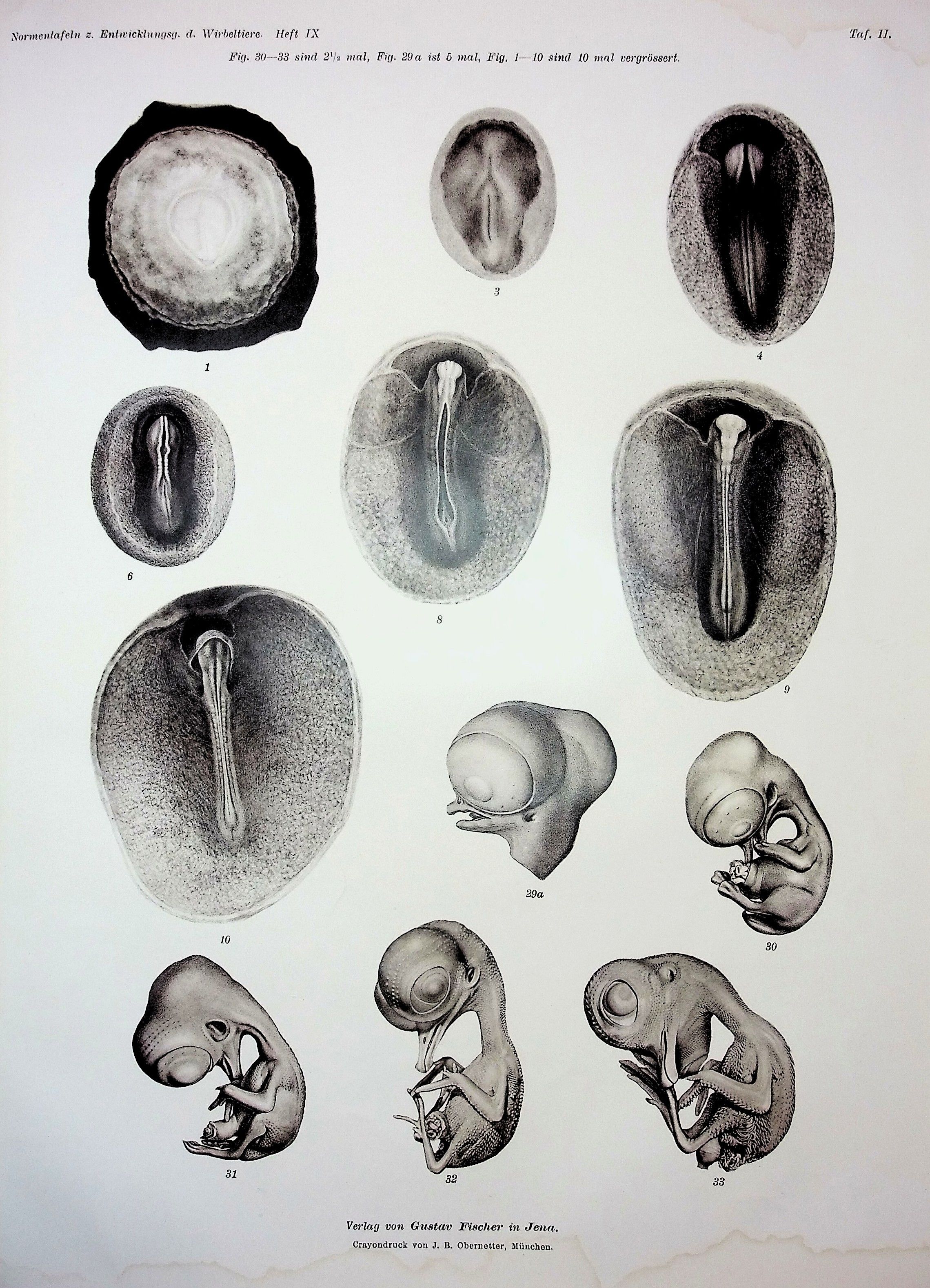
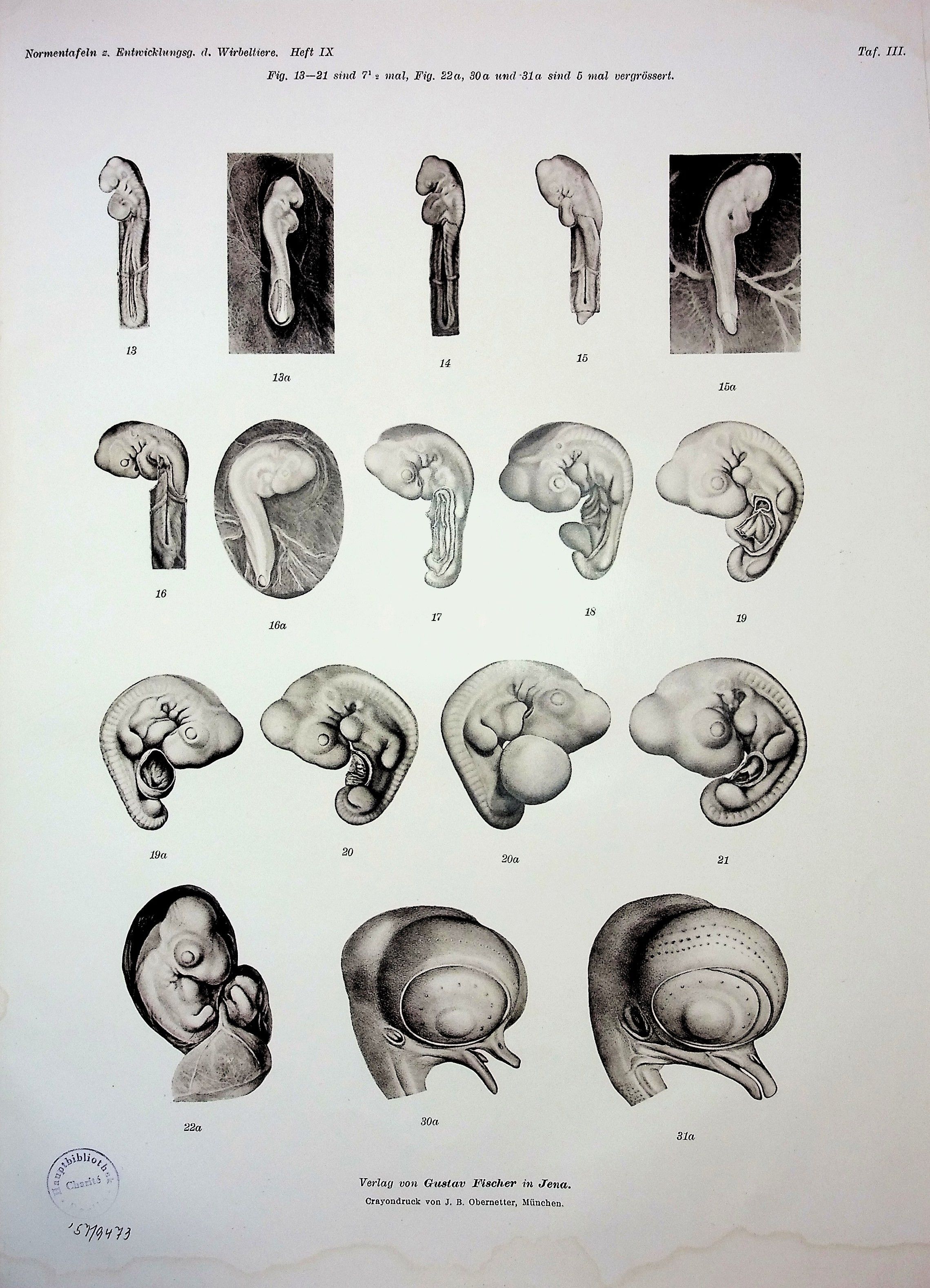
Vol I. Pig, Sus scrofa domesticus, Franz Keibel (1897); Vol. II. Chicken, Gallus domesticus, Franz Keibel, Karl Abraham (1900); Vol. V. Rabbit, Lepus cuniculus, Charles S. Minot, Ewing Taylor (1905); Vol. VII. 1907,Spectral tarsier, Tarsius spectrum, A. A
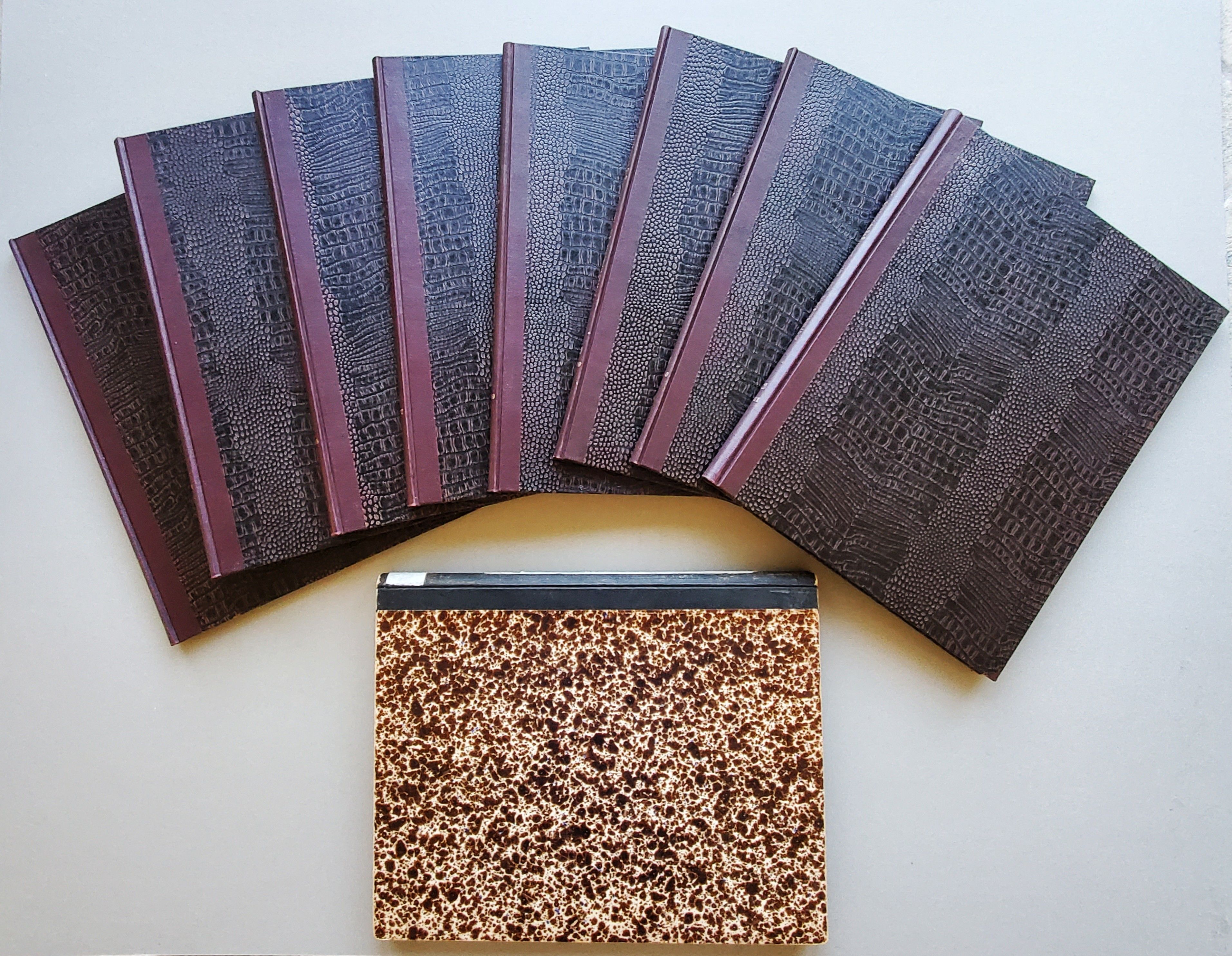
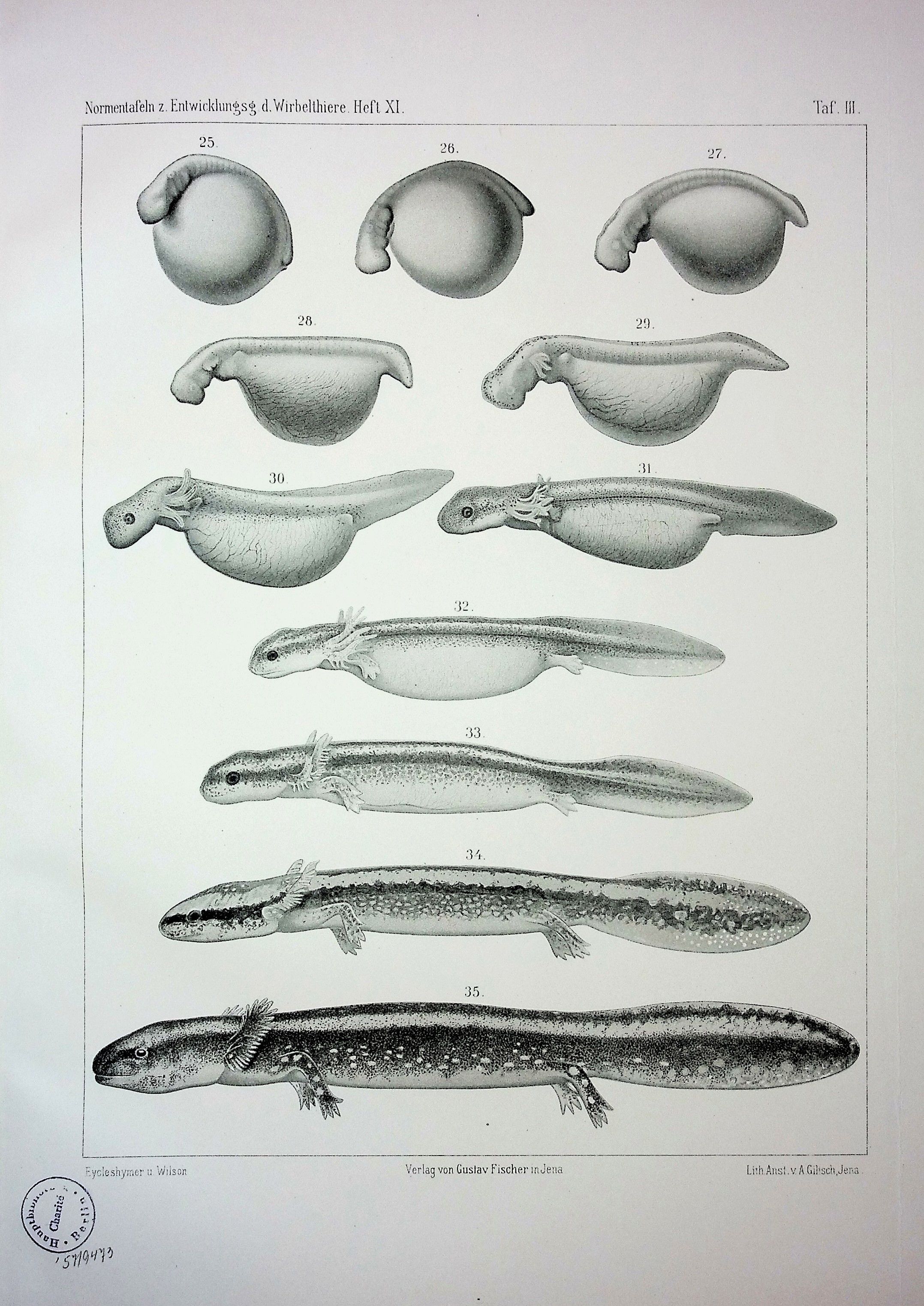
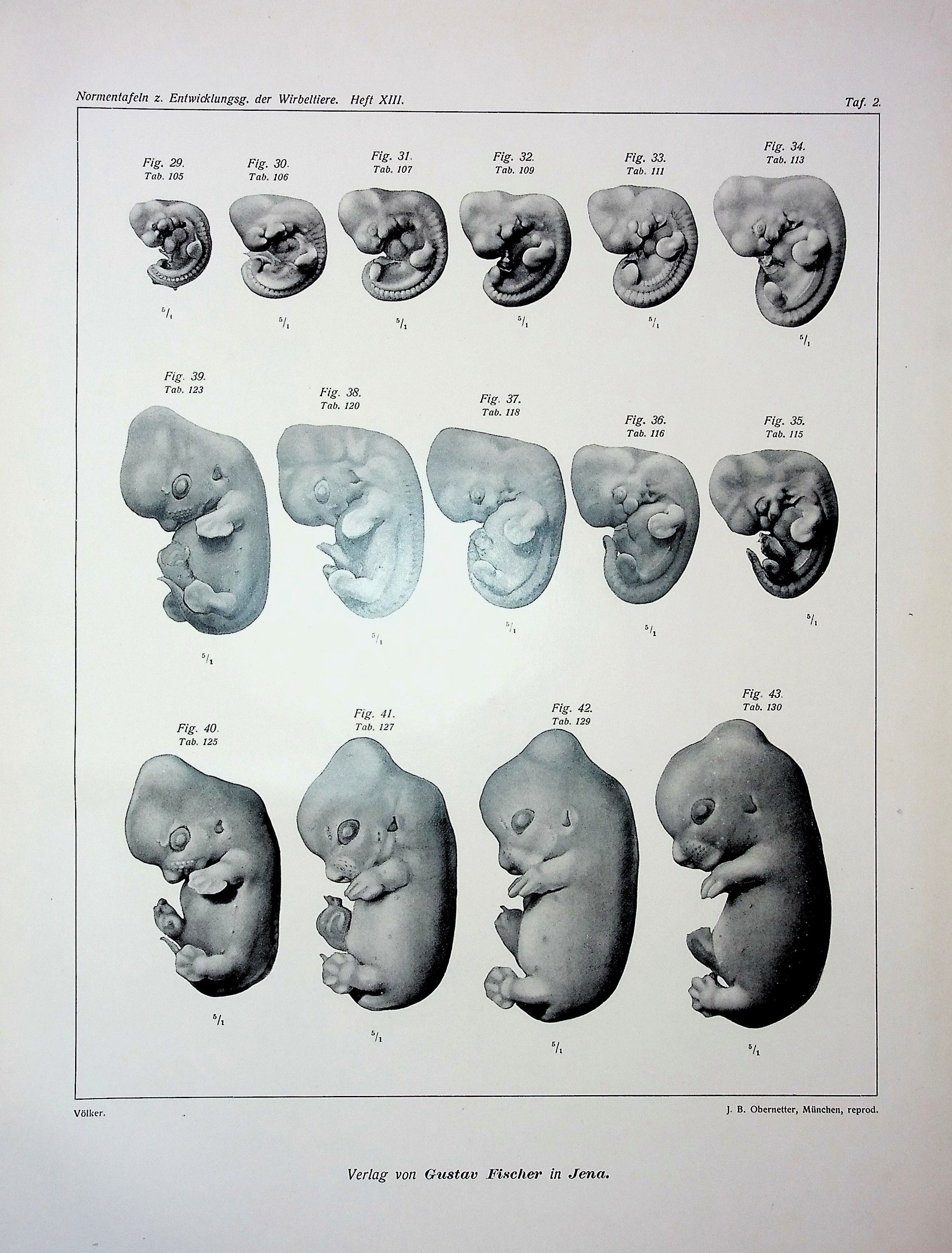
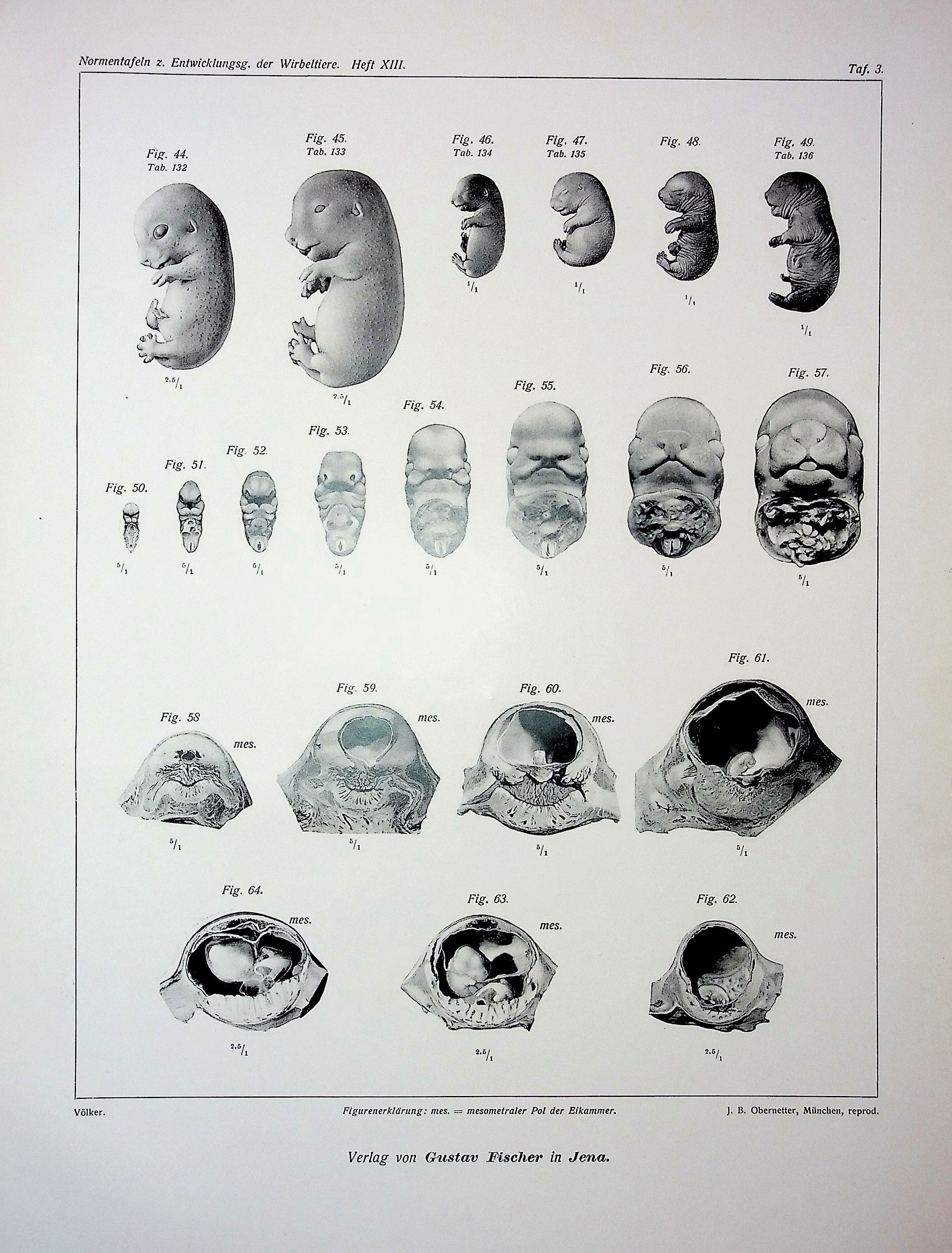
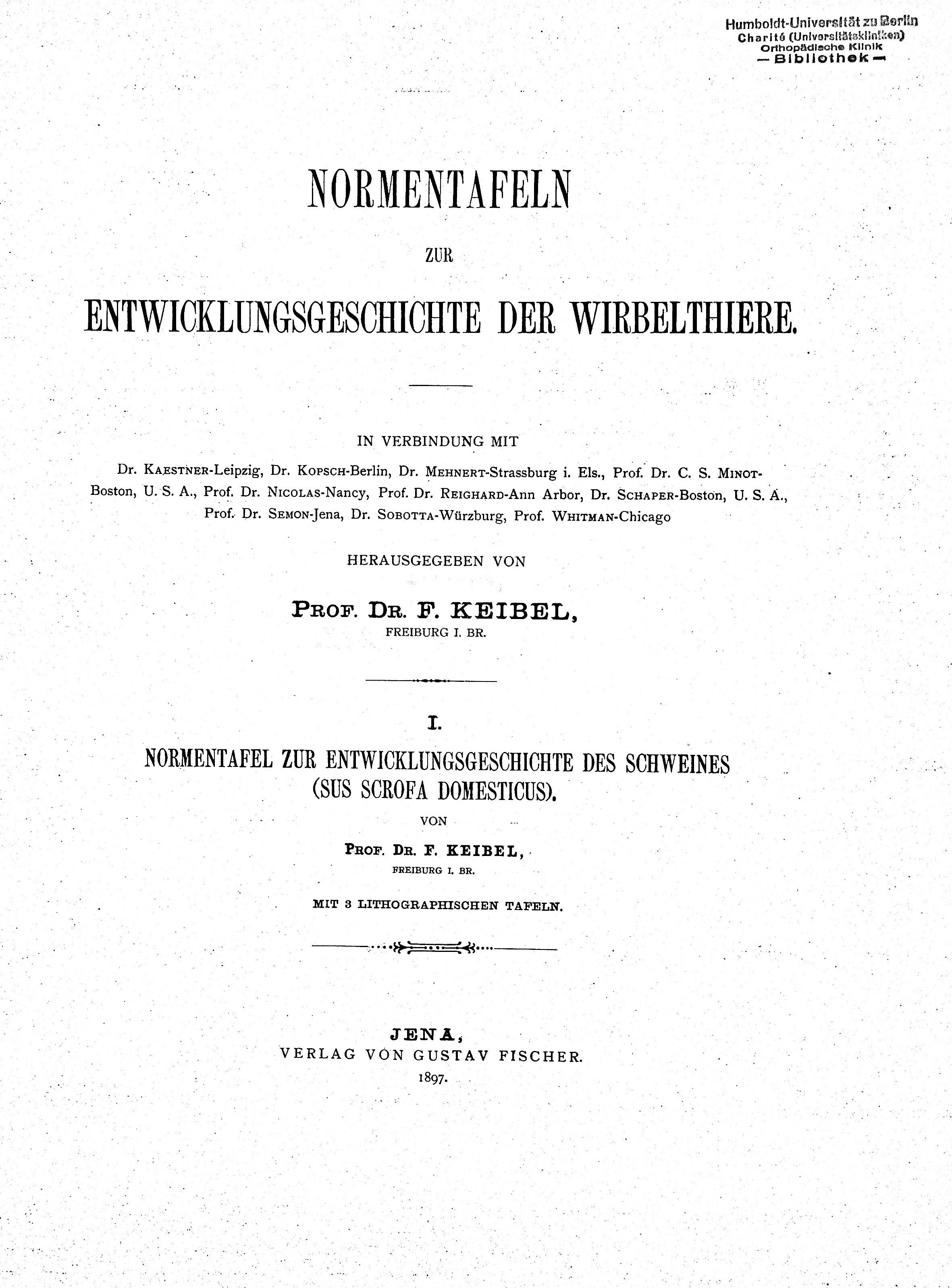
- cloth binding
- Jena: Verlag von Gustav Fischer, 1897, 1900, 1905, 1907, 1909, 19
Jena: Verlag von Gustav Fischer, 1897, 1900, 1905, 1907, 1909, 1909, 1910, 1911, 1912. First editions.
NINE FOLIO VOLUMES OF KEIBEL'S MONUMENTAL ENCYCLOPEDIA OF VERTEBRATE EMBRYOS, A TRIUMPH OF COMPARATIVE ANATOMY.
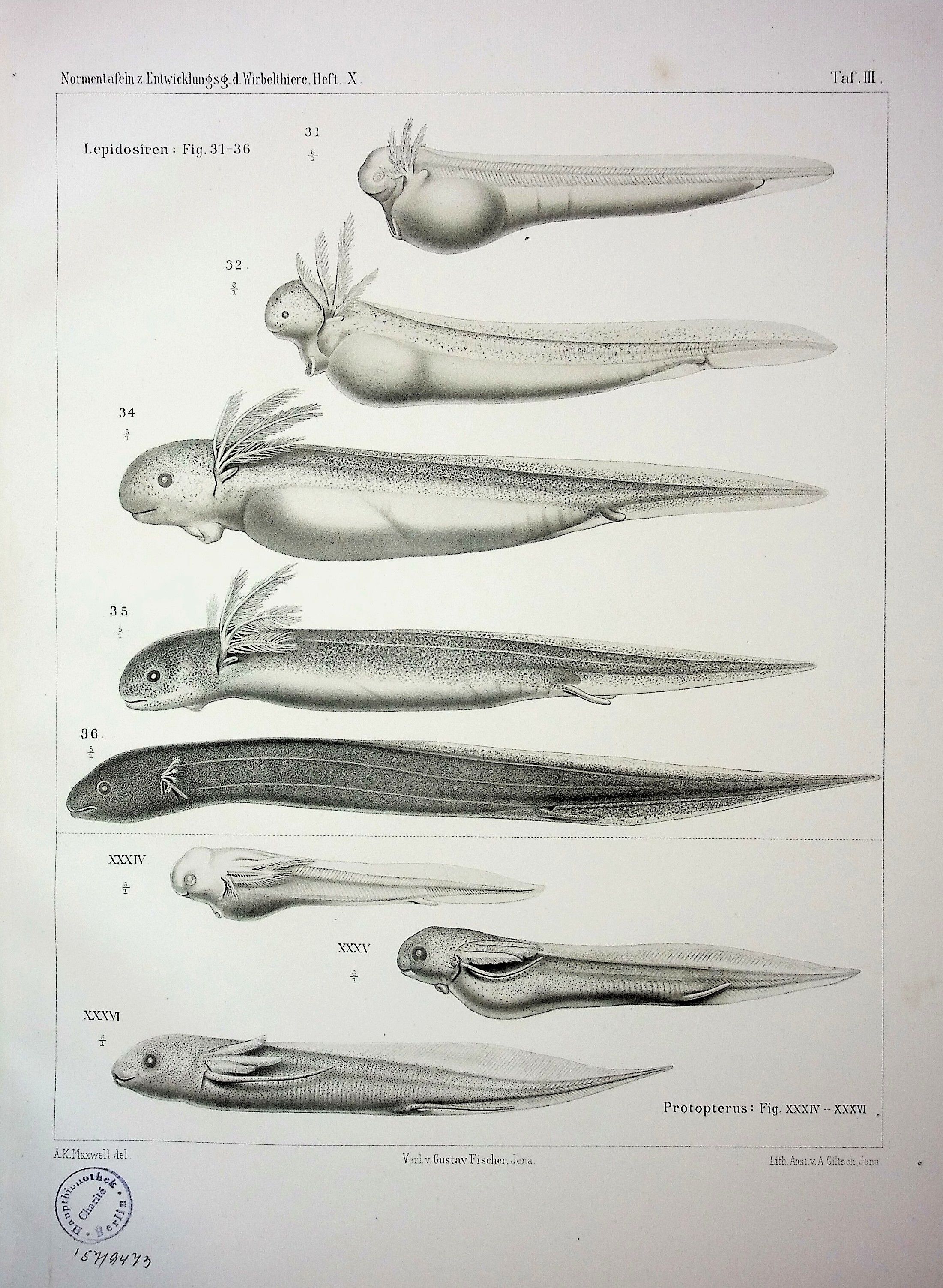
Published over a period of 41 years (1897-1938), Normentafeln zur Entwicklungsgeschichte der Wirbelthiere [Normal Plates of the Development of the Vertebrates] comprises 16 volumes, with the last two published posthumously. Offered here are 9 of the volumes including the landmark first volume all of which are very scarce today. The plates of 7 of the volumes (total 24) were produced by Adolf Giltsch, master lithographer from Jena who worked with Ernst Haeckel on his magnificent Kunstformen der Natur (1904). All volumes are in very good condition and appear to be unread. Hardcover 14 inches tall folio volumes, 8 volumes bound in brown cloth with alligator patterning, gilt titles to spines, small handstamp top corner of title page of "Humboldt-Universitat zu Berlin Charite (Universitatskliniken) Orthopadische Klinik Bibliothek," remaining volume in marbled paper-covered boards, cloth spine with residue of removed paper title labels, embossed seal and handstamp of Anatomisches Institut, Freiburg to title page.
Vol. I, [4], 114 pp (including 40-page table, 27-page bibliography), 3 lithographic plates by Adolf Giltsch. Vol. II, [2], 132 pp, (incl. 54-page table, 48-page bibliography), 3 lithographic plates by Giltsch. Vol V, [2], 98 pp (incl. 14-page table, 65-page bibliography), 3 lithographic plates by Giltsch. Vol. VII, [2], 76 pp (incl. 18-page table, 13-page bibliography), 4 lithographic plates by Giltsch. Vol. IX, [4], 58 pp (incl. 20-page table, 15-page bibliography), 3 crayon printed plates by Johann Baptist Obernetter, Munich. Vol. X, [4], 31 pp (incl. 14- page table, 5-page bibliography), 3 lithographic plates by Giltsch. Vol. XI, 50 pp (incl. 20-page table, 17-page bibliography), 3 lithographic plates by Giltsch. Vol. XII, [4], 140 pp (incl. 24-page table, 54-page bibliography, 26 figures in text), 4 lithographic plates by Giltsch. Vol. XIII, i-vi, 332 pp (inc. 48-page table, 54-page bibliography, 5 figures in text), 3 plates by Obernetter, Munich.
NICK HOPWOOD: A history of normal plates, tables and stages in vertebrate embryology (Int J Dev Biol. 2007 ; 51(1): 1–26) "Developmental biology is today unimaginable without the normal stages that define standard divisions of development. This history of normal stages, and the related normal plates and normal tables, shows how these standards have shaped and been shaped by disciplinary change in vertebrate embryology." The article highlights the Normal Plates of the Development of the Vertebrates edited by the German anatomist Franz Keibel (16 volumes, 1897–1938). These were a major response to problems in the relations between ontogeny and phylogeny that amounted in practical terms to a crisis in staging embryos, not just between, but (for some) also within species. Keibel's design adapted a plate by Wilhelm His and tables by Albert Oppel in order to go beyond the already controversial comparative plates of the Darwinist propagandist Ernst Haeckel. The project responded to local pressures, including intense concern with individual variation, but recruited internationally and mapped an embryological empire. The plates became standard laboratory tools and forged a network within which the Institut International d'Embryologie (today the International Society of Developmental Biologists) was founded in 1911. After World War I, experimentalists, led by Ross Harrison and Viktor Hamburger, and human embryologists, especially George Streeter at the Carnegie Department of Embryology, transformed Keibel's complex, bulky tomes to suit their own contrasting demands. In developmental biology after World War II, normal stages—reduced to a few journal pages—helped domesticate model organisms. Staging systems had emerged from discussions that questioned the very possibility of assigning an embryo to a stage. The historical issues resonate today as developmental biologists work to improve and extend stage series, to make results from different laboratories easier to compare and to take individual variation into account." FRANZ JULIUS KEIBEL (1861-1929) went to the University of Freiburg to study law but instead pursued medicine, first at the University of Berlin then at the University of Strasbourg. He finished his dissertation in 1887 on skulls with the anatomist and anthropologist Gustav Schwalbe and he became a prosector at the University of Freiburg in 1889 and in 1892 he became professor at University of Strasbourg. In the mid 1880s Keibel began creating normal plates of pig development: detailed drawings of embryos chronicling sequential stages of development. These allowed comparison of normal developmental processes of embryos from different species within a taxon. Keibel's plates were accompanied with tables that included descriptions of the internal anatomy. These were used to distinguish normal variations in the course of development from developmental abnormalities. Keibel used his plates to test the biogenetic law proposed by Ernst Haeckel, at the University of Jena in Jena. According to the biogenetic law, each stage in the embryological development of an animal corresponds to the adult form of one of that animal's evolutionary ancestors (ontogeny recapitulates phylogeny). Keibel, after he detailed the process of pig development in 1897, inferred from his results that the biogenetic law must be false because he failed to identify a fish stage in the ontogeny of the pig. Keibel's publication Normentafeln zur Entwicklungsgeschichte der Wirbelthiere (Normal Plates of the Development of the Vertebrates—9 volumes offered here) filled 16 volumes from 1897 to 1938. These landmark publications mapped, in an encyclopedic style, the development of different species of vertebrates. Keibel created this publication in collaboration with some other contemporary anatomists, including Karl Peter and Ambrosius Hubrecht, and he edited the volumes from 1897 to 1909. From 1910 through 1912 Keibel collaborated with one of Wilhelm His's students, Franklin Paine Mall, at Johns Hopkins University in Baltimore, Maryland. Together, they edited the two volumes of Manual of Human Embryology. In 1914 Keibel and Mall were funded by the Carnegie Institution of Washington to establish a department of human embryology in Baltimore, Maryland. Keibel and Mall's The Carnegie Institution of Washington Department of Embryology eventually became a center of embryological research that remained active into the twenty-first century. In 1917 Keibel secured a full academic chair at the University of Strasbourg, but when the French occupied the city, they forced Keibel to leave Strasbourg and the University. The French army allowed him only a small briefcase and confiscated all of his other belongings and scientific works. Keibel left Strasbourg in 1918 with his family and moved first to Munich, and then Heidelberg, Germany, where his daughter Susanna died. Keibel's scientific work slowed. Furthermore, many of the anatomists with whom Keibel collaborated lost their lives or their works during the war. Keibel moved to Königsberg in 1919, but while in Königsberg, his son committed suicide. In 1922, Keibel relocated again to become the director of the Anatomical Institute of the University of Berlin, where he remained until his death in 1929.
KARL ABRAHAM (1877 – 1925) was born in Bremen, Germany, and first studied embryology, resulting in his co-authorship of the second volume with Keibel in 1900. However, he soon developed an interest in psychoanalysis, and in 1907 Abraham had his first contact with Sigmund Freud, with whom he developed a lifetime relationship. He became an influential psychoanalyst, and a collaborator of Sigmund Freud, who called him his 'best pupil'.
CHARLES SEDGWICK MINOT (1852-1914) graduated from the Massachusetts Institute of Technology in 1872 and studied biology at Leipzig, Paris, and Würzburg. He was the James Stillman Professor of comparative anatomy and director of the anatomical laboratories at Harvard Medical School from 1880 until his death in 1914. His book on "Human Embryology" published in 1892 made him famous throughout the learned world.
OTTO GROSSER (1873-1951) studied medicine at the University of Vienna, where he received his doctorate with distinction in 1899. In embryology, he investigated the causes of malformations, the development of the intestine, the branchial intestine, and the respiratory organs. He studied the development of the trophoblast, the nutrition of embryos in viviparous animals, and published a classification of the placenta and the timing of fertility.
JULIUS TANDLER (1869-1936) attended the Gymnasium Wasagasse in the Vienna Alsergrund district. From 1910 he served as Professor of Anatomy at the University of Vienna; during World War I from 1914 to 1917 he was Dean of the Medical Faculty.
JOHN GRAHAM KERR (1869-1957) was a British embryologist and Member of Parliament. He is best known for his studies of the embryology of lungfishes. He was involved in ship camouflage in the First World War, and through his pupil Hugh B. Cott influenced military camouflage thinking in the Second World War also. Kerr interrupted his medical studies to join an Argentinian expedition to study the natural history of the Pilcomayo River. On his return, he studied natural sciences at Christ's College, Cambridge, graduating with first class honours in 1896. The Argentinian expedition had ended with the loss of most of the collections, but after graduating he mounted an expedition to the Gran Chaco, bringing home a large collection of material related to the South American lungfish, Lepidosiren paradoxa. He was President of the Royal Physical Society of Edinburgh and and elected a Fellow of the Royal Society in 1909.
ALBERT CHAUNCEY EYCLESHYMER (1867-1926) was director of anatomy department, 1903-13, acting dean College of Medicine, 1913, St. Louis university professor and head of department of anatomy since 1913 and dean of faculty since 1917, College Medicine, University Illinois, Chicago.
RICHARD E. SCAMMON (1883-1952) was an instructor in zoology and anatomy at the University of Kansas (1906-1907, 1910-1913) and Harvard University (1907-1910). Dr. Scammon accepted a position as professor of anatomy at the University of Minnesota in 1914. In 1930, Dr. Scammon left Minnesota to accept the position as professor and dean of the division of biological sciences at the University of Chicago, but returned to Minnesota in 1931 to become the first dean of Medical Sciences.
Details
Title
Normentafeln zur Entwicklungsgeschichte der Wirbelthiere [Normal Plates of the Development of the Vertebrates].
Author
Keibel, Franz
Binding
cloth binding
Condition
Unknown
Publisher
Verlag von Gustav Fischer: Jena
Date
1897, 1900, 1905, 1907, 1909, 19
Edition
First editions