

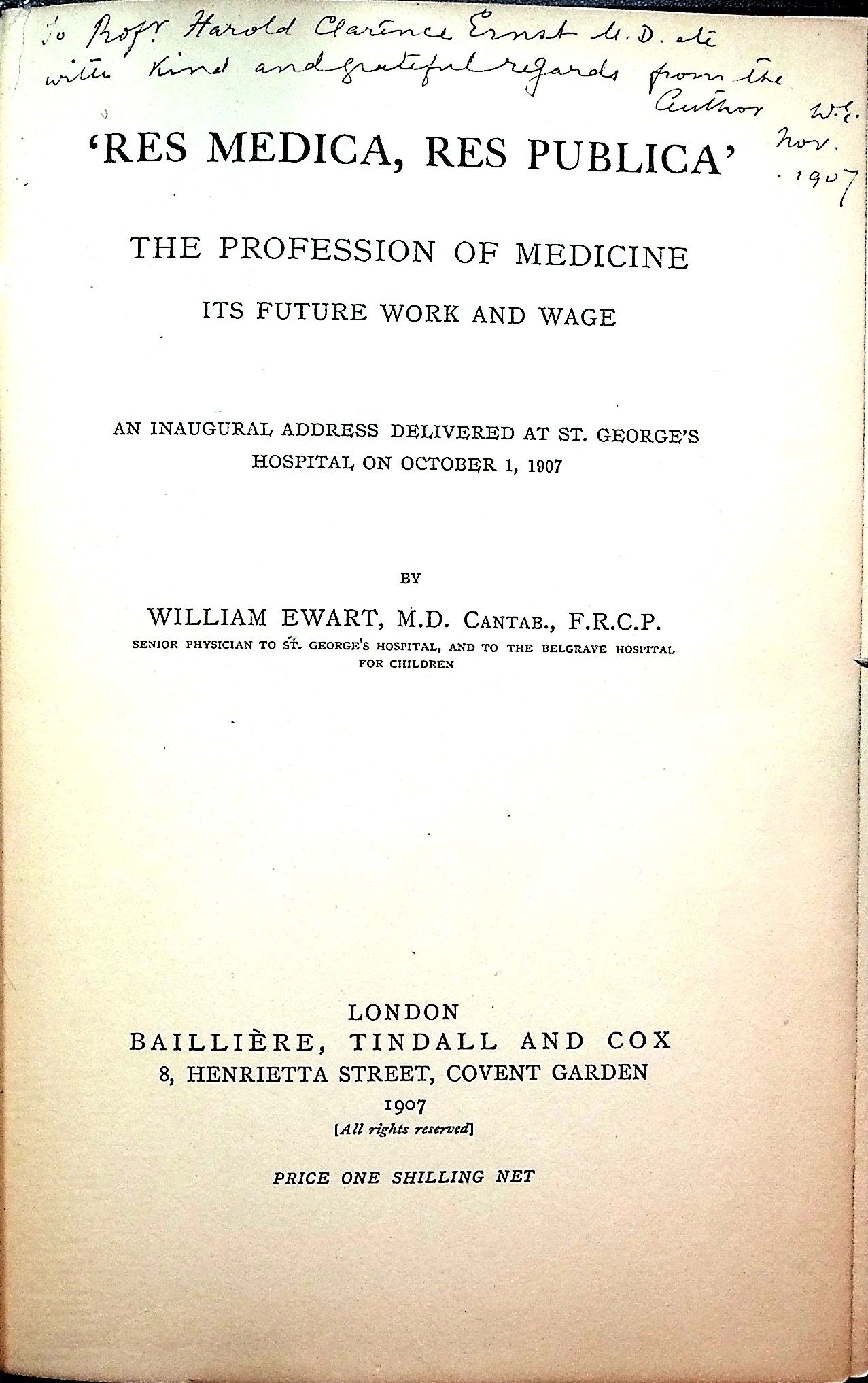
Res Medica, Res Publica. The Profession of Medicine, Its Future Work and Wage:
An Inaugural Address Delivered at St. George's Hospital on October 1, 1907
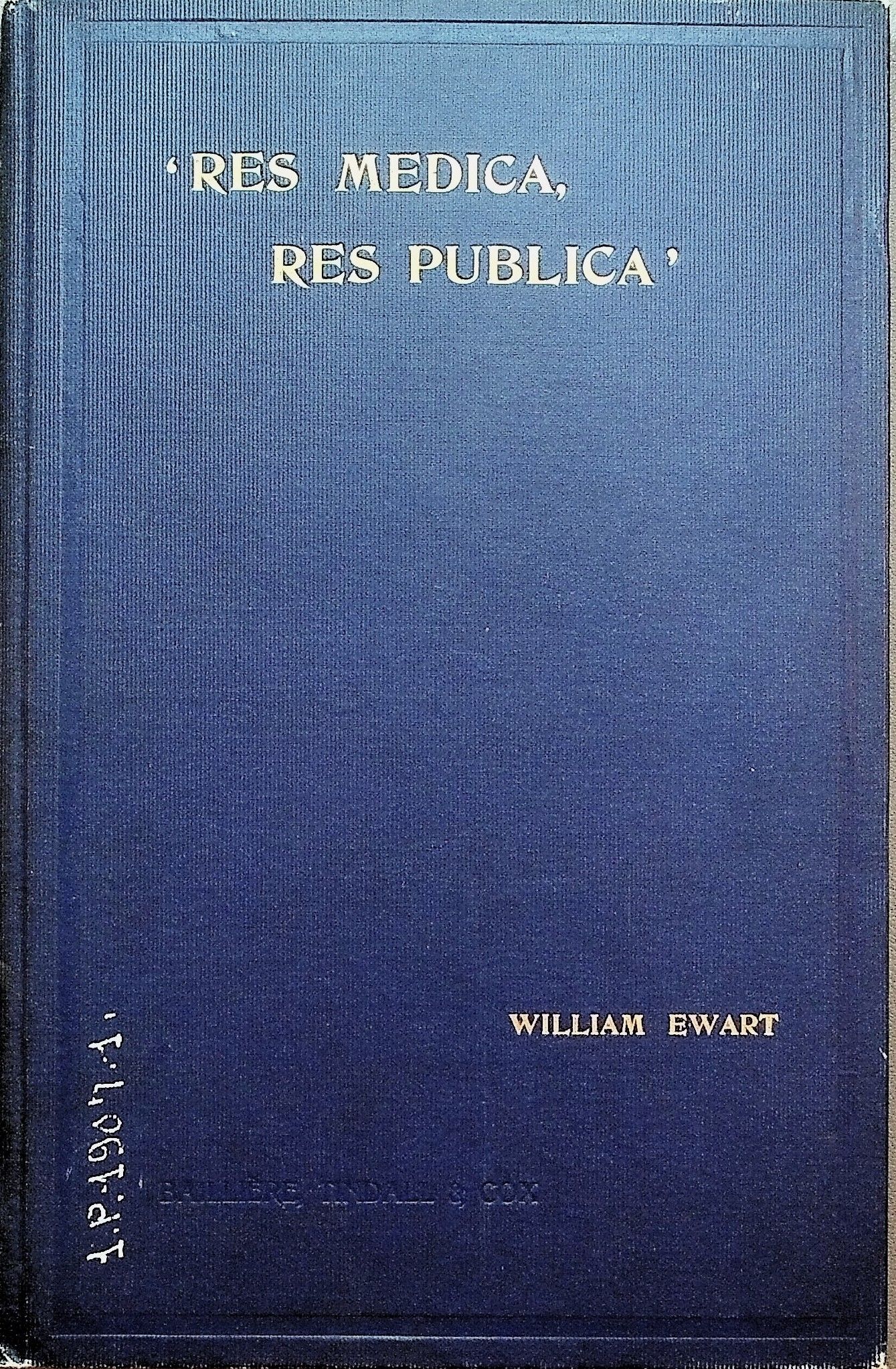
- SIGNED cloth binding
- London: Bailliere, Tindall and Cox, 1907
London: Bailliere, Tindall and Cox, 1907. First edition.
BRITISH PHYSICIAN'S CONCERN OF THE GROWTH OF MEDICAL "SPECIALISM" INCLUDES SIGNED AUTOGRAPH LETTER TO HARVARD COLLEAGUE.
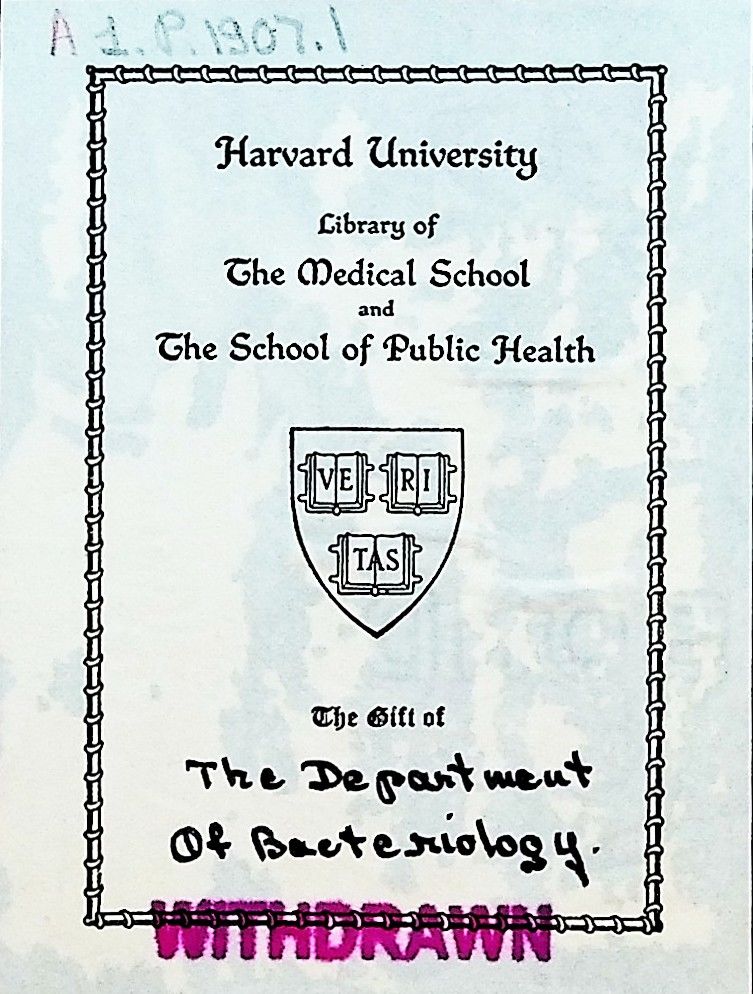
14x22 cm hardcover, blue cloth binding, gilt title to cover, Harvard Library bookplate to front paste-down, ALS tipped in front free endpaper, ink inscription top of title page, "To Profr. Harold Clarence Ernst M.D. etc with kind and grateful regards from the Author W.E. Nov 1907." 39 pp, residue from removal of library stickers to back paste-down. Perforated library stamp to front free endpaper, hinges starting, pages age-toned. Good+ in custom archival mylar cover.
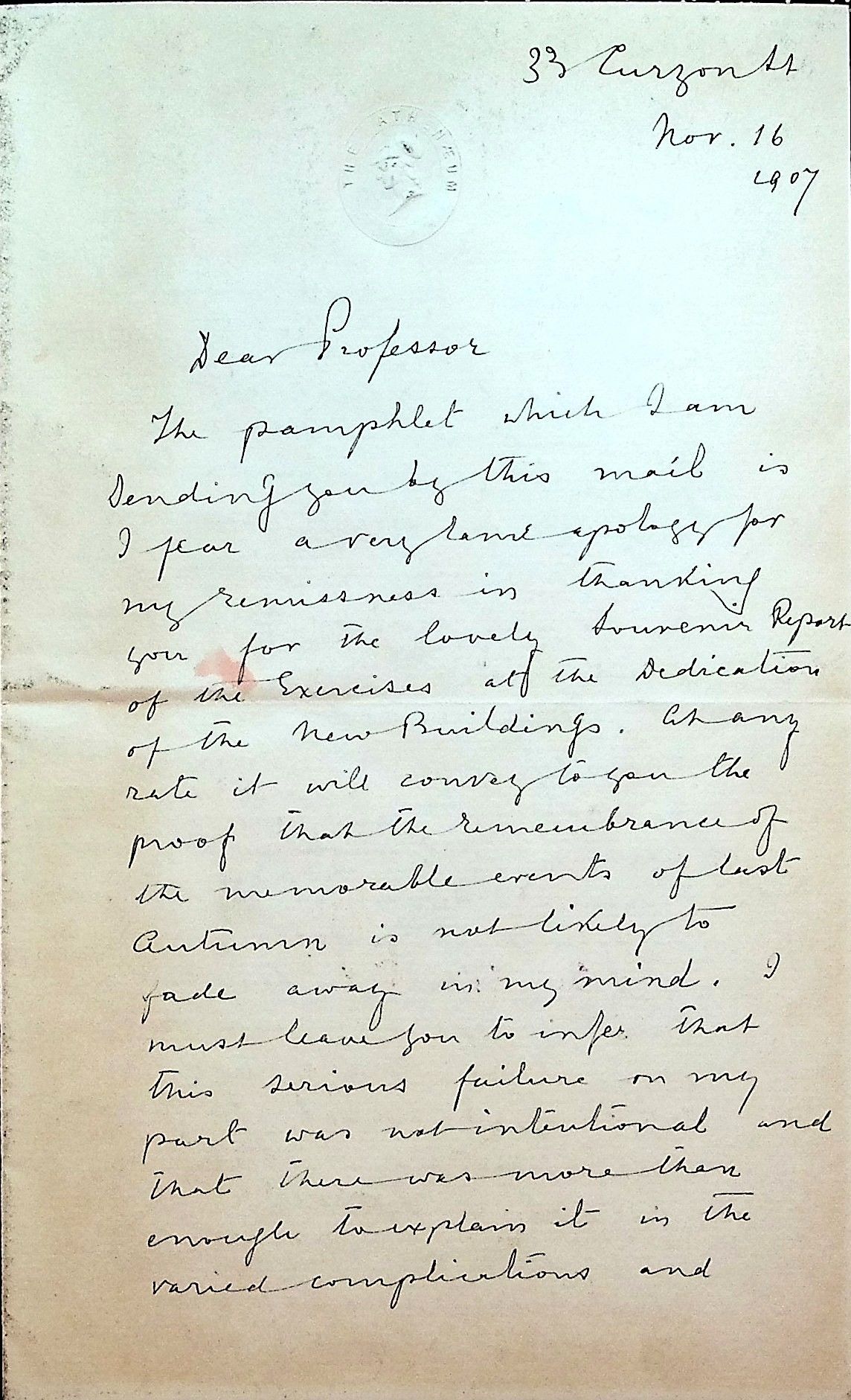
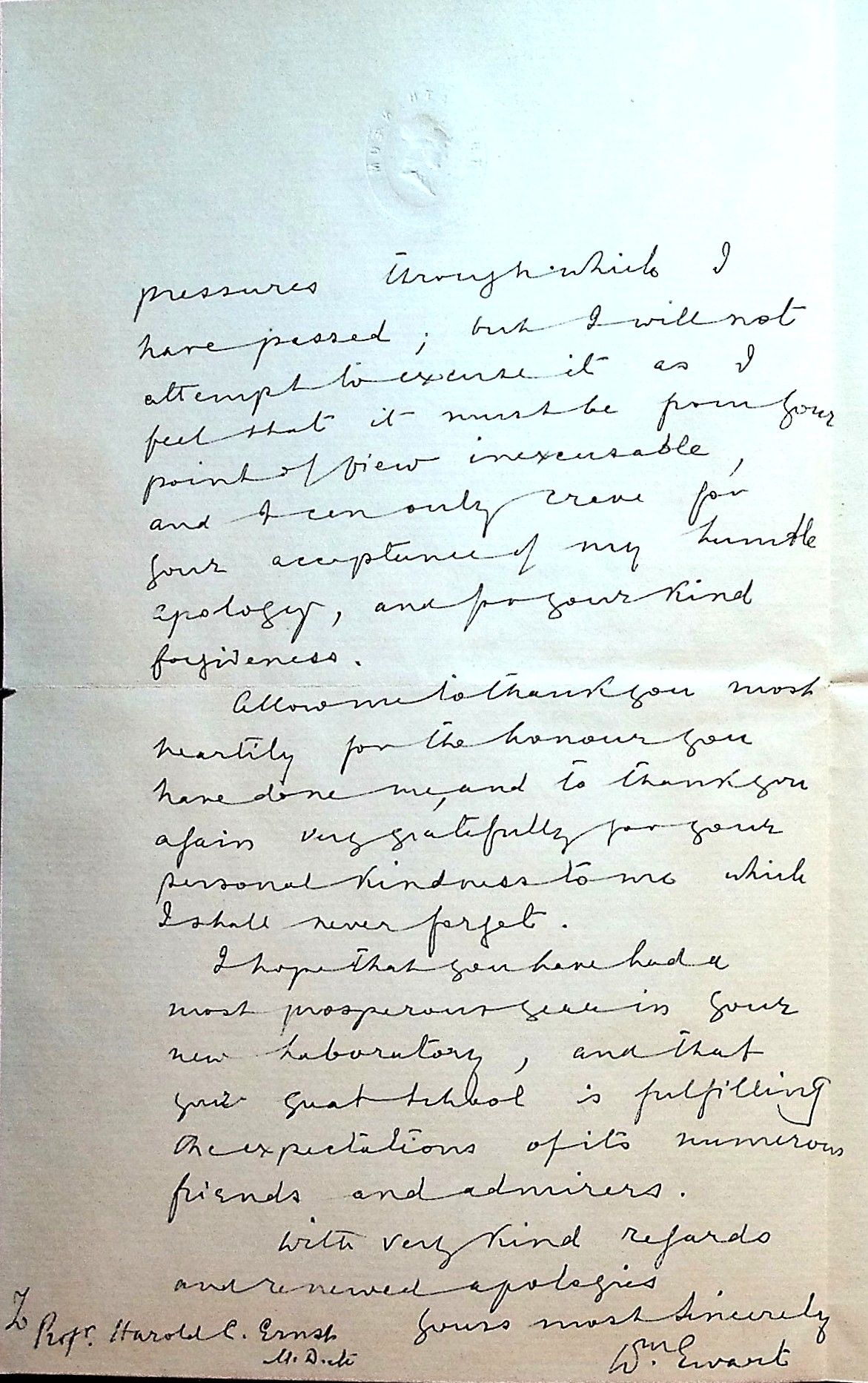
Single fold (with writing on 2 sides of one page) Autograph Letter Signed (ALS) tipped onto front free endpaper, Nov 16, 1907, transmitting this book (letter embossed with his club seal The Athenaeum atop first page) to Harvard Medical School Professor of Bacteriology Ernst. Ewart's address shares his views on the dwindling of the field of general practice and the growth of specialism (specialization) as both parts of an economic and professional crisis in British medicine. There is a brief discussion of the author's visit in the prior year to the inauguration of the "new Harvard Medical College" as an example of the high scientific standards now being expected of the medical profession. Ewart's letter to Ernst apologizes for not thanking him for a copy of the Souvenir Report of the Harvard dedication referred to in this publication. All in all, a nice association copy that underscores the growing professionalization of medicine and medical education at the turn-of-the-century. TEXT OF LETTER: "33 Curzon St., Nov. 16, 1907/ Dear Professor,/ The pamphlet which I am sending you by this mail is I fear a very lame apology for my remissness in thanking you for the lovely Souvenir Report of the Exercises at the Dedication of the New Buildings. At any rate it will convey to you the proof that the remembrance of the memorable events of last Autumn is not likely to fade away in my mind. I must leave you to infer that this serious failure on my part was not intentional and that there was more than enough to explain it in the varied complications and pressures through which I have passed; but I will not attempt to excuse it as I feel that it must be from your point of view inexcusable, and I can only crave for your acceptance of my humble apology, and for your kind forgiveness. Allow me to thank you most heartily for the honour you have done me and to thank you again very gratefully for your personal kindness to me which I shall never forget. I hope that you have had a most prosperous year in your new laboratory, and that your great school is fulfilling the expectations of its numerous friends and admirers. With very kind regards and renewed apologies. Yours most Sincerely, Wm. Ewart [To Profr. Harold C. Ernst M.D. etc].
WILLIAM EWART (1848 – 1929) was an English physician remembered for Ewart's sign. He studied medicine at St George's Hospital Medical School, and earned his M.B. in 1877 from Cambridge University. He worked at St George's Hospital and the Royal Brompton Hospital, becoming a Fellow of the Royal College of Physicians in 1881 and Doctor of Medicine in 1882. Whilst at the Brompton hospital he developed a significant interest in thoracic disease which, with climatological reports, was the principal subject of his writings. In his paper 1896 entitled "Practical aid in the diagnosis of pericardial effusion in connection with the question as to surgical treatment" described 12 signs of pericardial effusion, two of which bear his name: Ewart sign and Ewart sign II.
PROVENANCE: HAROLD CLARENCE ERNST (1856 - 1922) graduated with an M.D. from Harvard Medical School in 1880. There he was taught by William Sturgis Bigelow, who had studied with Louis Pasteur in Paris and introduced Ernst to the new field of bacteriology. In 1884, he received his master's degree in bacteriology from Harvard and joined the Harvard laboratory as a demonstrator of bacteriology, a position he held until 1889 when he was made instructor. In 1891, he was appointed assistant professor of bacteriology and in 1895 full professor, fundamentally shaping this nascent department until his death in 1922. In his time leading the department of bacteriology, Ernst persuaded the city of Boston to establish a bacteriological laboratory that achieved great advances in the detection and prevention of diphtheria, one of the first laboratories to do such work in the country. His work led to the widespread sterilization of milk for infant feeding, and he was the first to advise the use of dry sterilized surgical dressings.
Details
Title
Res Medica, Res Publica. The Profession of Medicine, Its Future Work and Wage:
Author
Ewart, William
Binding
cloth binding
Condition
Unknown
Publisher
Bailliere, Tindall and Cox: London
Date
1907
Edition
First edition