

Studies in the Evolution of Animals
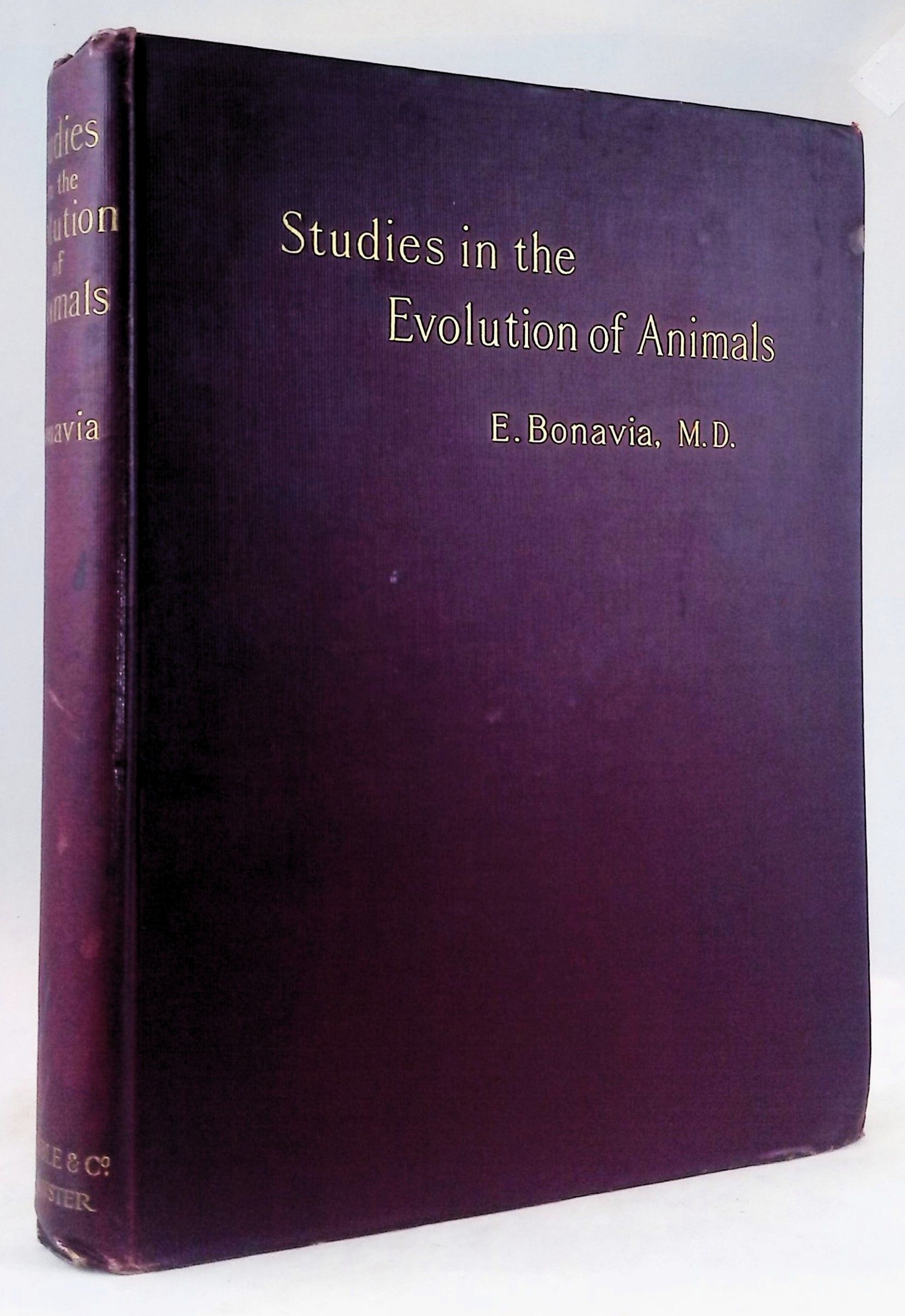
- Cloth binding
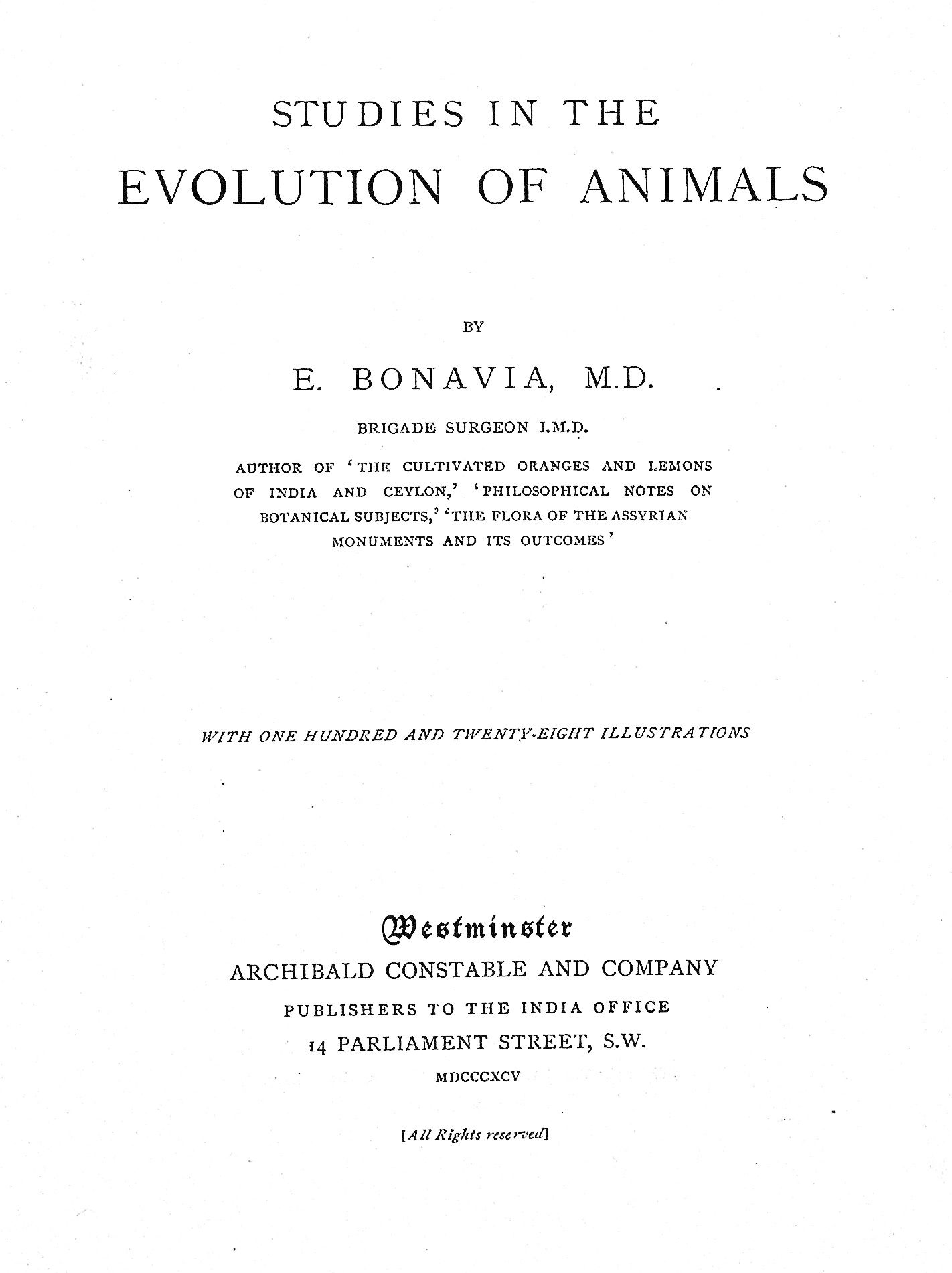
- Westminster: Archibald Constable and Co., 1895
Westminster: Archibald Constable and Co., 1895. First edition.
SCARCE EARLY BOOK ON EVOLUTIONARY ADAPTATION PUBLISHED JUST BEFORE KIPLING'S "HOW THE LEOPARD GOT HIS SPOTS".
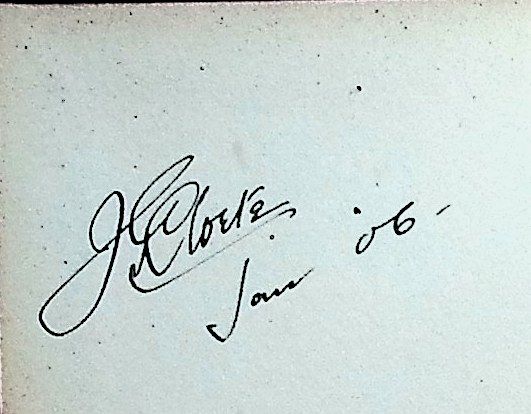
18x22.5 cm. Original dark red cloth, gilt title to cover and spine, top edge gilt, bookplate of Robert L Chevalier MD to front paste-down, ink signature of J Cloete Jan '06 versi front free endpaper, i-xxxiv, 362 pp, 128 figures, some full-page. Errata slip at p xvii. Light wear to corners and spine ends. Very good copy in custom archival mylar cover.
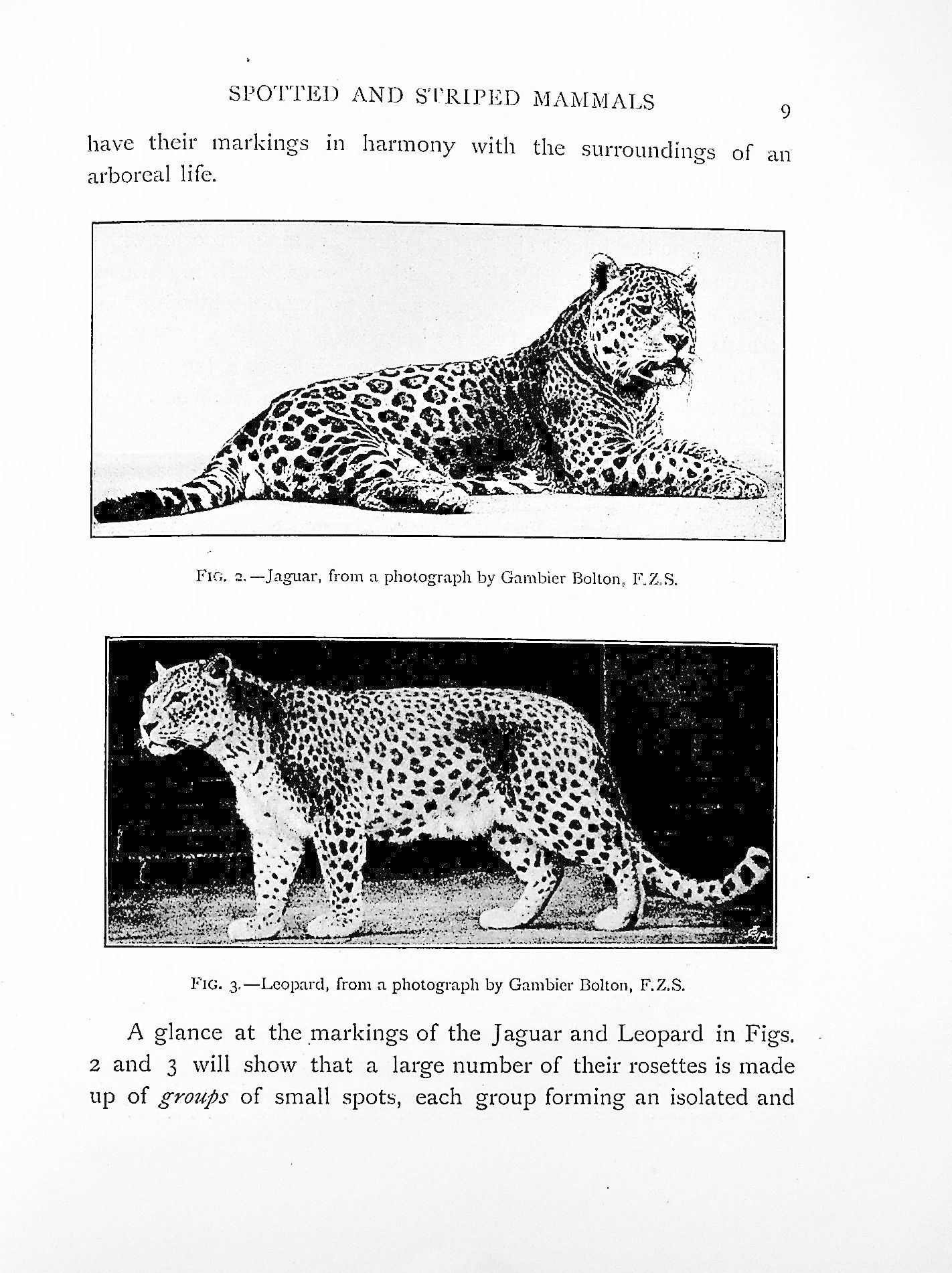
FROM THE PREFACE: "The genesis of these studies was the following Having completed the Flora of the Assyrian Monuments and its Outcomes, I was looking about for something to take up next as a subject of study. In the furriers' windows I was attracted by the Leopard and Tiger skins, which by degrees became objects of interesting study and speculation. Thinking over the rosettes of the Leopards, and more especially those of the Jaguar, and seeing spotted Horses constantly in the streets of London, some new ideas flashed across my mind regarding the origin of all this spotting and rosetting in mammals."
EMANUEL W. BONAVIA (1829 - 1908) was a Maltese surgeon in the Indian Medical Service who wrote on many aspects of natural history, economic botany, and pioneered horticultural research in Lucknow. He was the first superintendent of the Lucknow Provincial Museum and the founder of the Lucknow Horticultural Gardens. Emanuel studied medicine at the University of Malta and at the University of Edinburgh qualifying MRCS in 1857. He was commissioned Assistant Surgeon in the Indian Medical Service on 4 August 1857 and was promoted Surgeon Major in 1876 and Brigade Surgeon in 1885. Trained in medical botany, he came to take charge of the Lucknow garden in 1876. He wrote The Villager's Domestic Medicine (1885). He also wrote Studies in the Evolution of Animals (offered here) which examined such aspects as the evolution of spots and stripes in wild cats and the origins of other animal skin patterning. He corresponded with Charles Darwin, and naturalists in India such as Allan Octavian Hume to whom he sent bird specimens. He was one of the founders of the Lucknow museum (Oudh provincial museum), established in 1863.
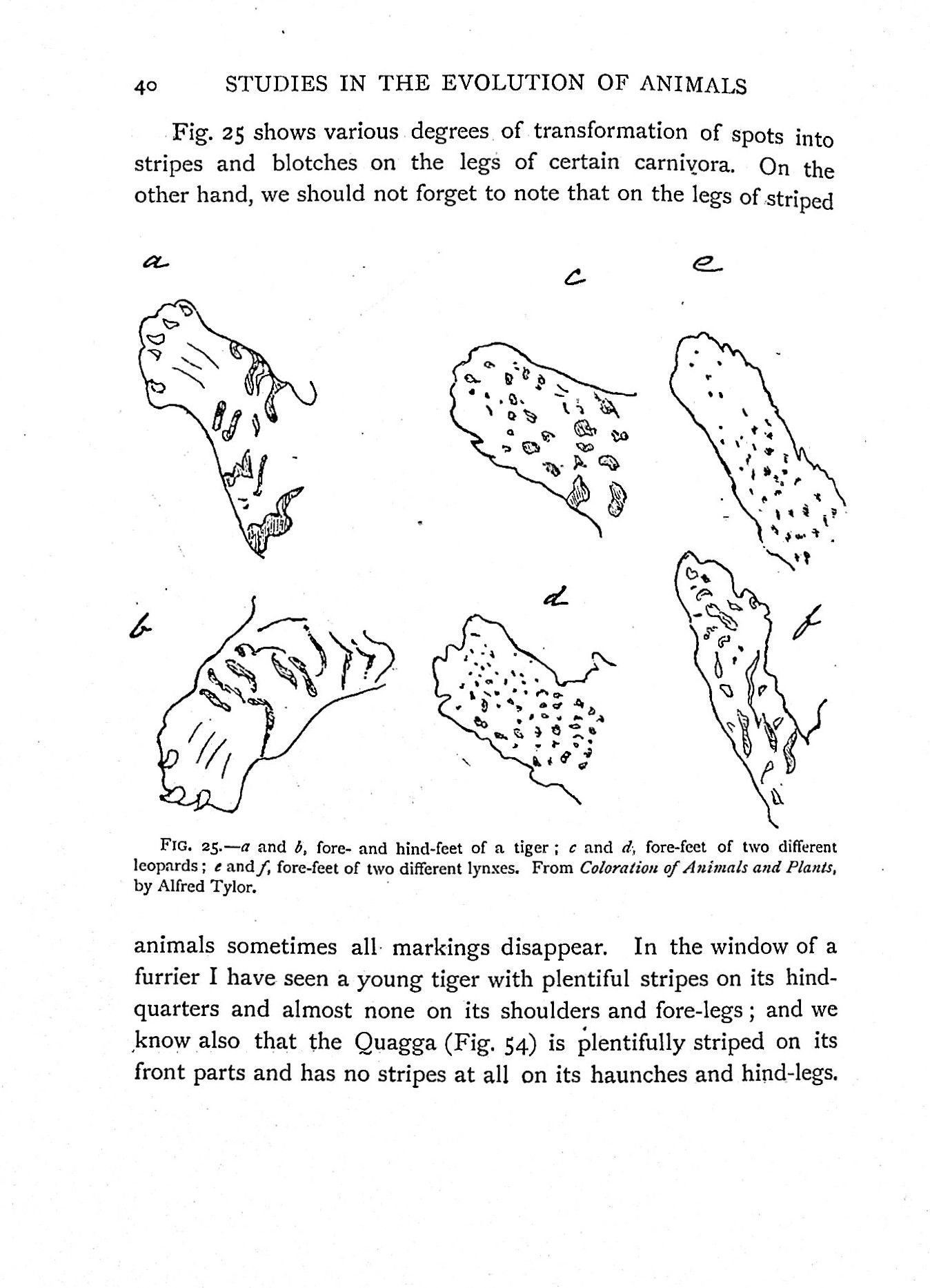
"Dr. Bonavia has been struck by the limited number of ornamental patterns seen on animals, and has tried to account for their origin. To do this, he has studied in detail the markings of mammals, and illustrated them by a number of admirable plates of skins, and portions of skins, with outline drawings showing varieties of the rosette pattern on dappled horses and cattle. His theory centres on the evolution of the 'rosette' pattern, He finds the origin of this complex ornament in an original carapace, composed of rosettes, supposed to have been worn by the ancestors of existing species, which has left its traces on the skin, just as the plates cf crocodile armour have corresponding marks upon the hide. As evidence he takes the carapace of the extinct glyptodonts, which had a complete carapace of bony rosettes, and concludes that the rosetted mammals are descended frcm 'extinct animals with a glyptodontoid carapace'. In the absence of any evidence given by the remains of fossil species that the rosetted cats were descended from creatures like a tortoise, we are deterred from following Dr. Bonavia any further in his ingenious course of reasoning. The connection between the horse and the rhinoceros, and the fact that the latter is covered with a semi-plated skin, makes the theory more tempting in the case of striped and dappled equine creatures than in that of the cats. But the evidence that markings on animals follow the lines of internal structure, seems too strong to be shaken on the evidence adduced by Dr. Banavia."-- REVIEW of Studies in the Evolution of Animals. By E. Bonavia, M.D. The Spectator 4 January 1896.
"Perhaps the most important critique of the use of just-so stories in evolutionary biology, and one of the most widely discussed articles in the discipline, is the wondrously titled 'The Spandrels of San Marco and the Panglossian Paradigm' by Stephen Jay Gould and Richard Lewontin (1979). In this article, the authors first describe the adaptationist programme (if perhaps an exaggerated version thereof) and address its pitfalls; then they show that the stories told by adaptationists lack criteria 'to identify proper explanations among the substantial set of pathways to any modern result' (p. 154), which is what makes their accounts 'just-so stories'; finally, they conclude by offering a partial typology of alternatives to the adaptationist programme, advocating for a pluralist view of science."--Marco Schito. The Dilemma of Just-So Stories in Scientific Research. Arcadia. https://www.byarcadia.org/post/the-dilemma-of-just-so-stories-in-scientific-research
Details
Title
Studies in the Evolution of Animals
Author
Bonavia, Emanuel
Binding
Cloth binding
Condition
Unknown
Publisher
Archibald Constable and Co.: Westminster
Date
1895
Edition
First edition