

Il dissoluto punito osia il Don Giovanni. Dramma giocoso in due atti. [Don Giovanni]
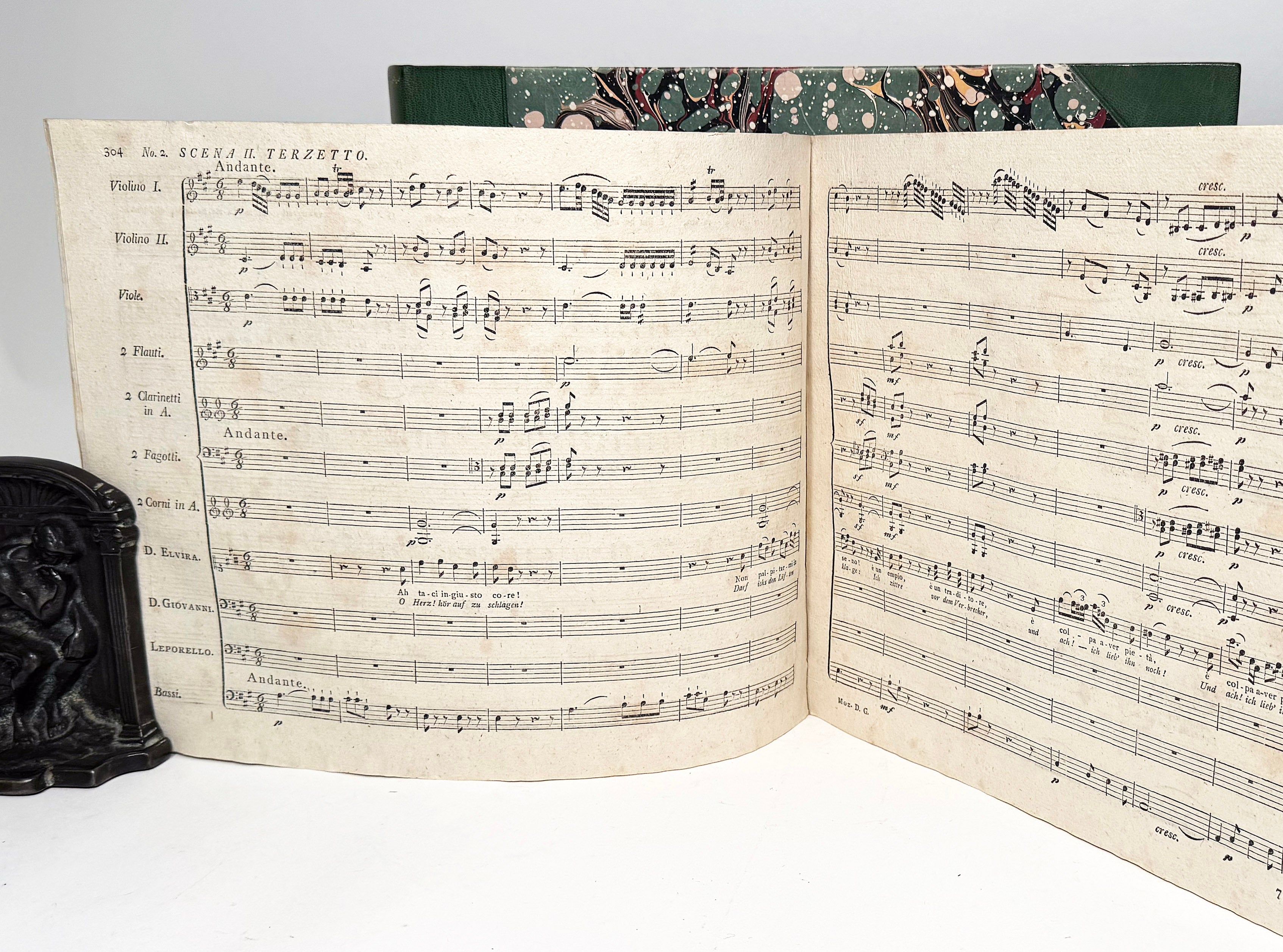
- original wrappers
- Leipzig: Breitkopf & Härtel, 1801
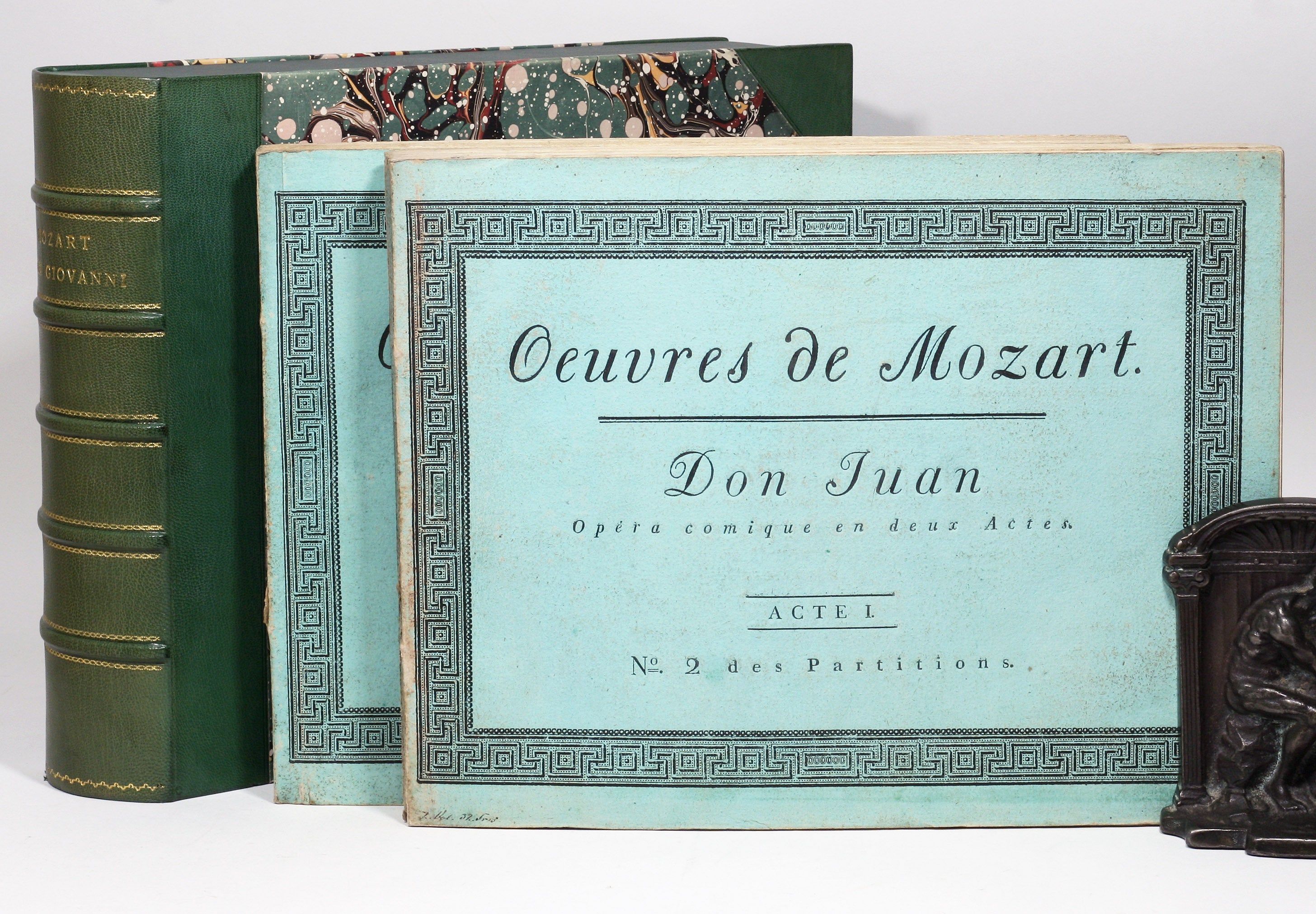
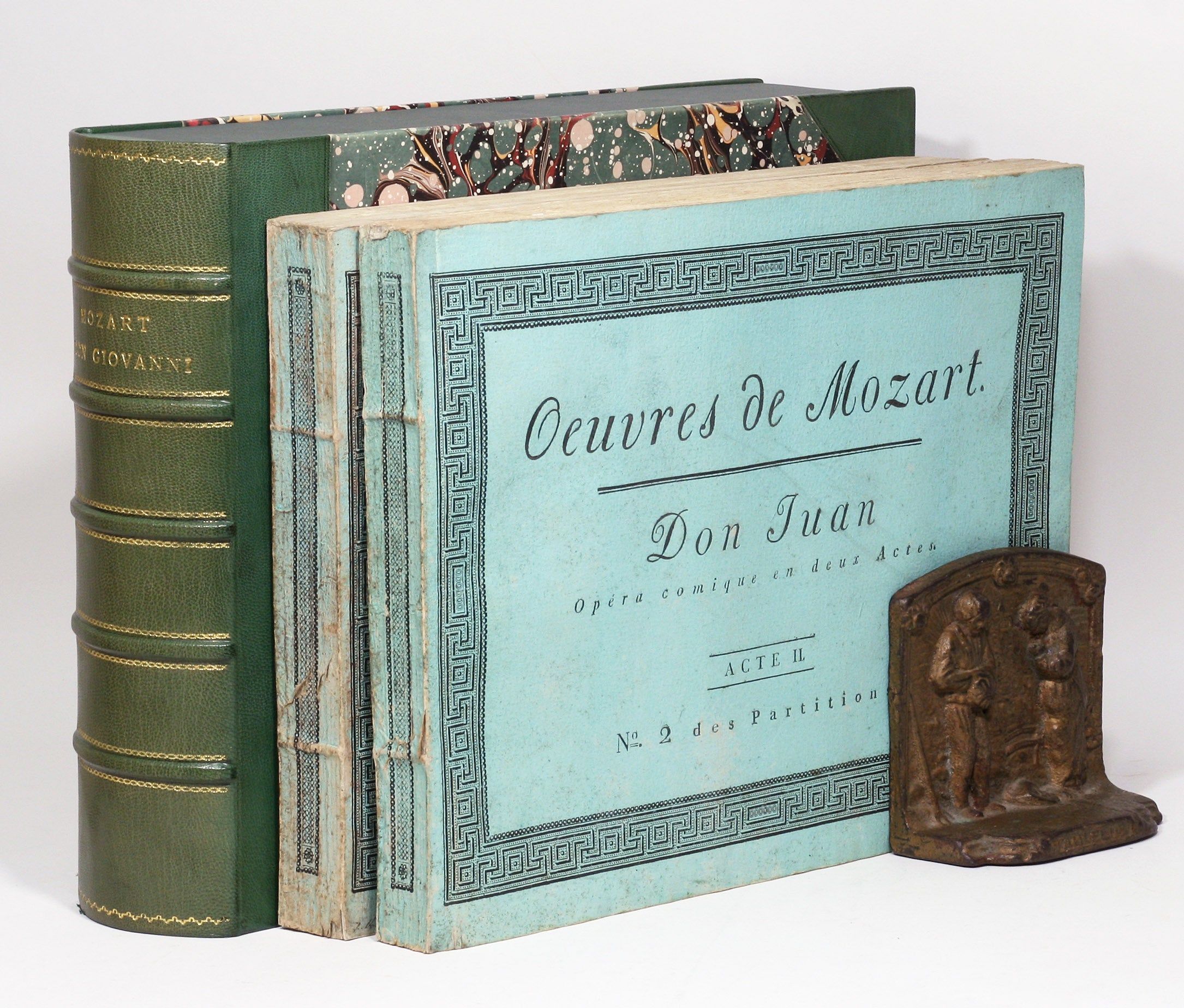
Leipzig: Breitkopf & Härtel, 1801. First edition. original wrappers. Very Good. THE ULTIMATE COPY OF THE FIRST EDITION – IN BEAUTIFUL ORIGINAL WRAPPERS WITH THE LEGENDARILY SCARCE LIBRETTO. A remarkable copy of the first edition of the full orchestral score — complete as issued with the German libretto — of Don Giovanni, Mozart’s greatest dramatic achievement and one of the most influential works in the history of Western music. Copies surviving in their original light blue wrappers are of the utmost rarity, and this example is extremely well-preserved.
“THE OPERA OF OPERAS” (HOFFMAN).
Commissioned following the triumph of Le nozze di Figaro in Prague (1786), Don Giovanni reunited Mozart with his brilliant librettist, Lorenzo da Ponte, who drew on the Spanish legend of Don Juan and its reinterpretations by Molière and others. Premiering in Prague on October 29, 1787, the opera was an immediate sensation, fusing tragedy and comedy in ways that astonished contemporary audiences. Mozart’s revised Vienna production of May 7, 1788, introduced new arias and tightened the finale, and it is this hybrid form—Prague with Vienna additions—that Breitkopf & Härtel immortalized in print.
After Mozart’s death in 1791, his widow Constanze struggled to secure publication of his manuscripts. Negotiations with Johann André, a friend of Mozart, faltered, and Breitkopf & Härtel, denied access to the manuscript, compiled their own edition from secondary sources. The resulting score, issued as part of their Oeuvres complètes, represents the first public availability of the work and a decisive moment in its reception.
THE CONTROVERSIAL LIBRETTO
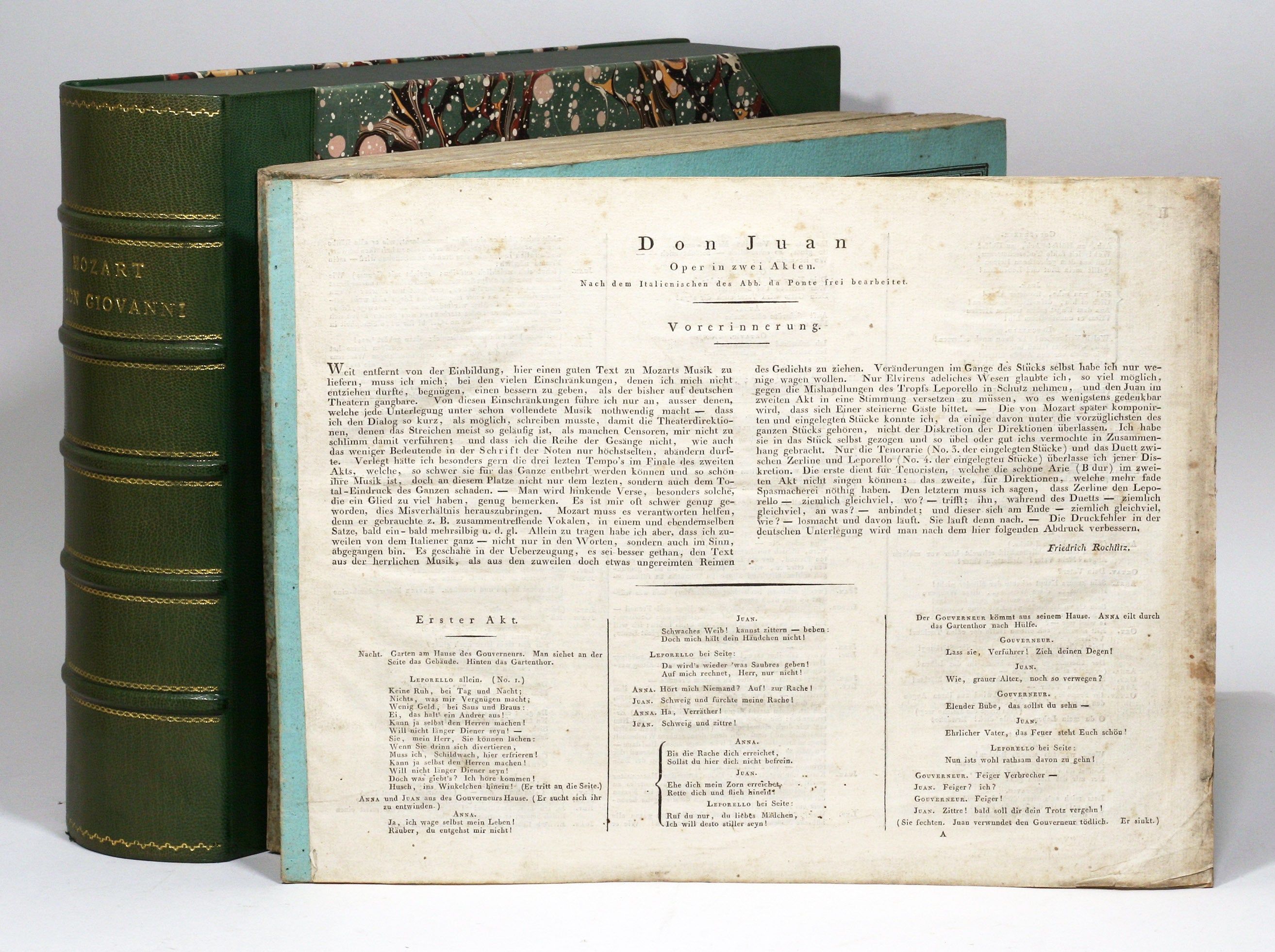
The accompanying German libretto, translated by Friedrich Rochlitz, has long been a subject of bibliographical debate. Some scholars have argued that it was added later to correct textual errors; others—most notably Haberkamp—have demonstrated that it was integral to the earliest issues, appearing in the publisher’s advertisements of December 1800 and noted on the verso of the title page. Surviving examples are exceedingly rare: none of the copies described by Haberkamp contained the libretto.
––––––––––
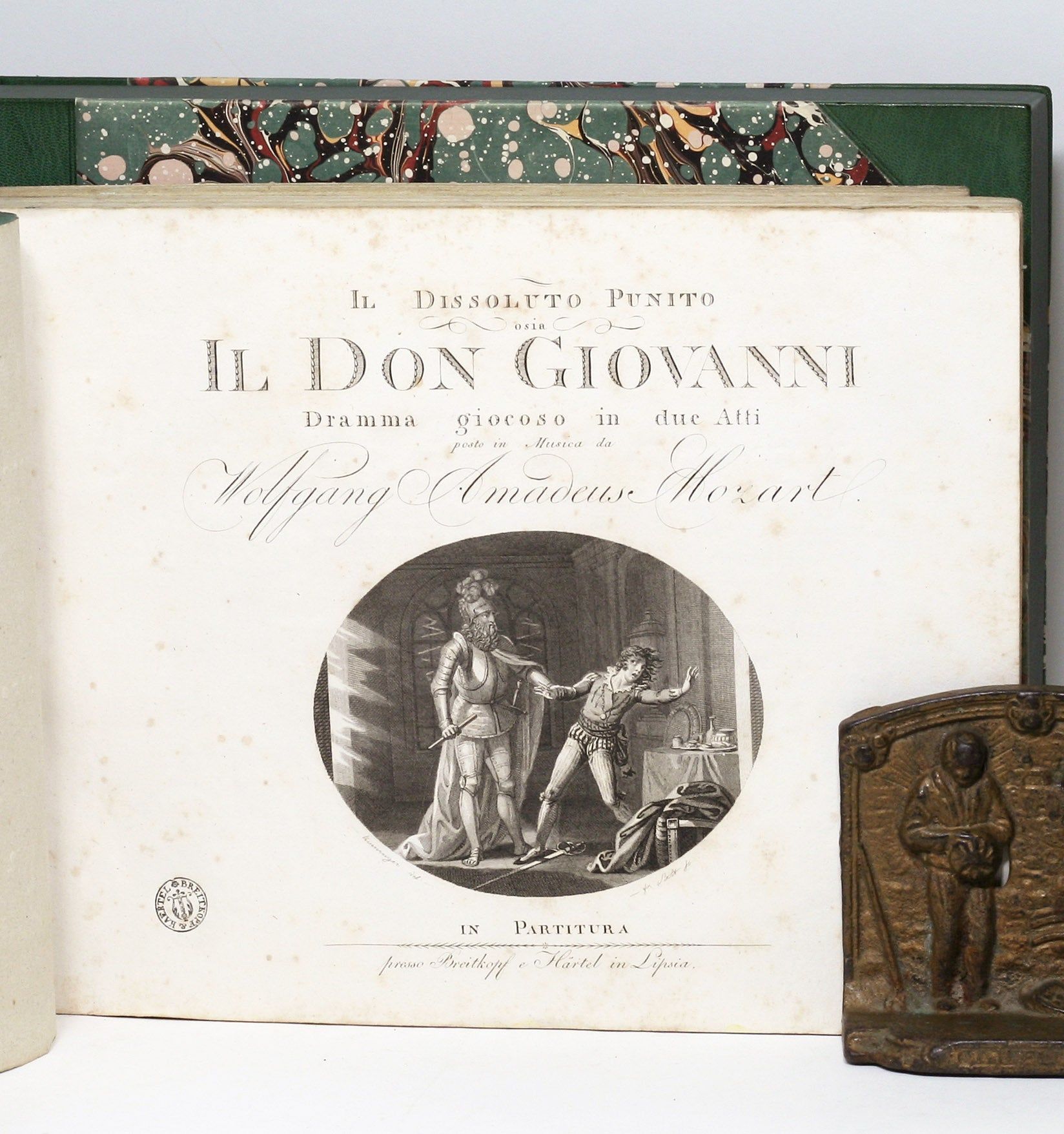
Il dissoluto punito osia il Don Giovanni. Dramma giocoso in due atti. [With the German libretto:] Friedrich Rochlitz (trans.), Don Juan. Oper in zwei Akten. Leipzig: Breitkopf & Härtel, [1801]. Two volumes, oblong folio. Engraved vignette by F. Bolt after Kinninger on Italian title page in Vol. I depicting the Commendatore seizing Don Giovanni by the arm. Score in original light blue wrappers printed in black; libretto with matching light blue paper backstrip. Housed in a custom green morocco box. Wrappers bright with some foxing and very minor wear; occasional foxing to text (but generally very clean).
References: Fuld p. 371; Haberkamp I, pp. 295–8; RISM M 4502; Ian Woodfield, The Vienna Don Giovanni (2010).
“THE OPERA OF OPERAS” (HOFFMAN).
Commissioned following the triumph of Le nozze di Figaro in Prague (1786), Don Giovanni reunited Mozart with his brilliant librettist, Lorenzo da Ponte, who drew on the Spanish legend of Don Juan and its reinterpretations by Molière and others. Premiering in Prague on October 29, 1787, the opera was an immediate sensation, fusing tragedy and comedy in ways that astonished contemporary audiences. Mozart’s revised Vienna production of May 7, 1788, introduced new arias and tightened the finale, and it is this hybrid form—Prague with Vienna additions—that Breitkopf & Härtel immortalized in print.
After Mozart’s death in 1791, his widow Constanze struggled to secure publication of his manuscripts. Negotiations with Johann André, a friend of Mozart, faltered, and Breitkopf & Härtel, denied access to the manuscript, compiled their own edition from secondary sources. The resulting score, issued as part of their Oeuvres complètes, represents the first public availability of the work and a decisive moment in its reception.
THE CONTROVERSIAL LIBRETTO
The accompanying German libretto, translated by Friedrich Rochlitz, has long been a subject of bibliographical debate. Some scholars have argued that it was added later to correct textual errors; others—most notably Haberkamp—have demonstrated that it was integral to the earliest issues, appearing in the publisher’s advertisements of December 1800 and noted on the verso of the title page. Surviving examples are exceedingly rare: none of the copies described by Haberkamp contained the libretto.
––––––––––
Il dissoluto punito osia il Don Giovanni. Dramma giocoso in due atti. [With the German libretto:] Friedrich Rochlitz (trans.), Don Juan. Oper in zwei Akten. Leipzig: Breitkopf & Härtel, [1801]. Two volumes, oblong folio. Engraved vignette by F. Bolt after Kinninger on Italian title page in Vol. I depicting the Commendatore seizing Don Giovanni by the arm. Score in original light blue wrappers printed in black; libretto with matching light blue paper backstrip. Housed in a custom green morocco box. Wrappers bright with some foxing and very minor wear; occasional foxing to text (but generally very clean).
References: Fuld p. 371; Haberkamp I, pp. 295–8; RISM M 4502; Ian Woodfield, The Vienna Don Giovanni (2010).
Details
Title
Il dissoluto punito osia il Don Giovanni. Dramma giocoso in due atti. [Don Giovanni]
Author
MOZART, WOLFGANG AMADEUS
Binding
original wrappers
Condition
Very Good
Publisher
Breitkopf & Härtel: Leipzig
Date
1801
Edition
First edition