

Flown Fabric from the Curtiss NC-4 Flying Boat
- SIGNED Fabric
- [Washington, D.C.]: Smithsonian Institution, 1919
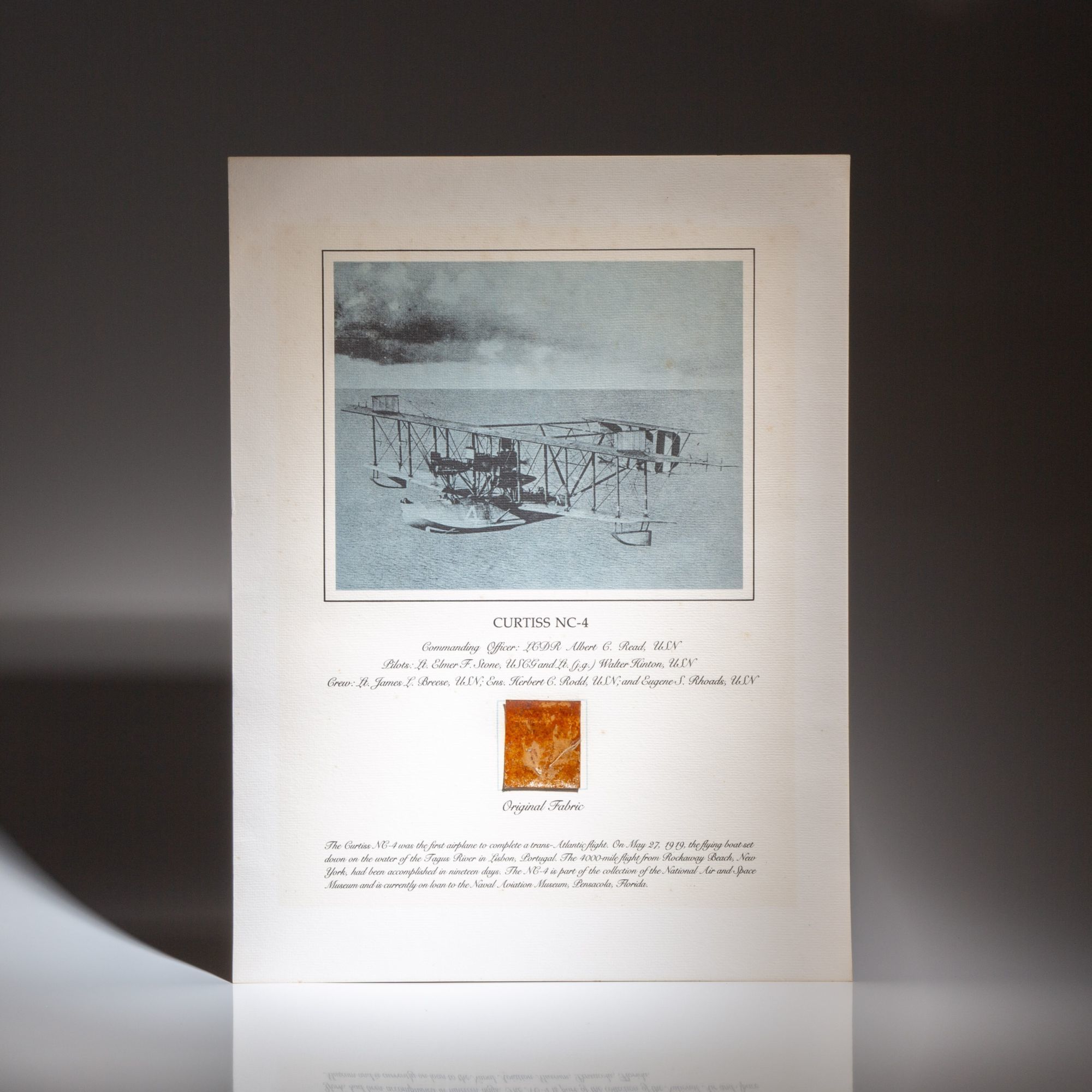
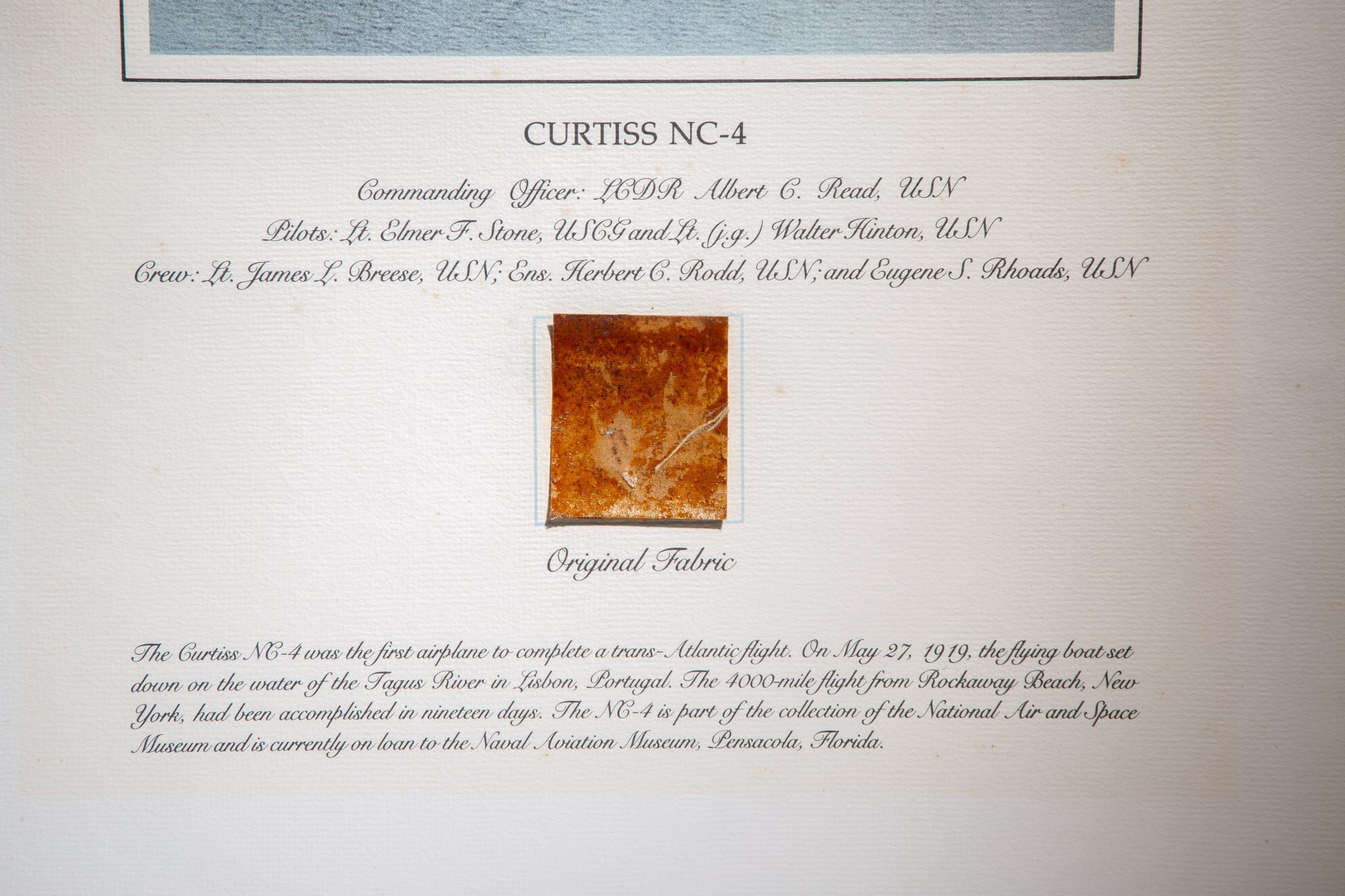
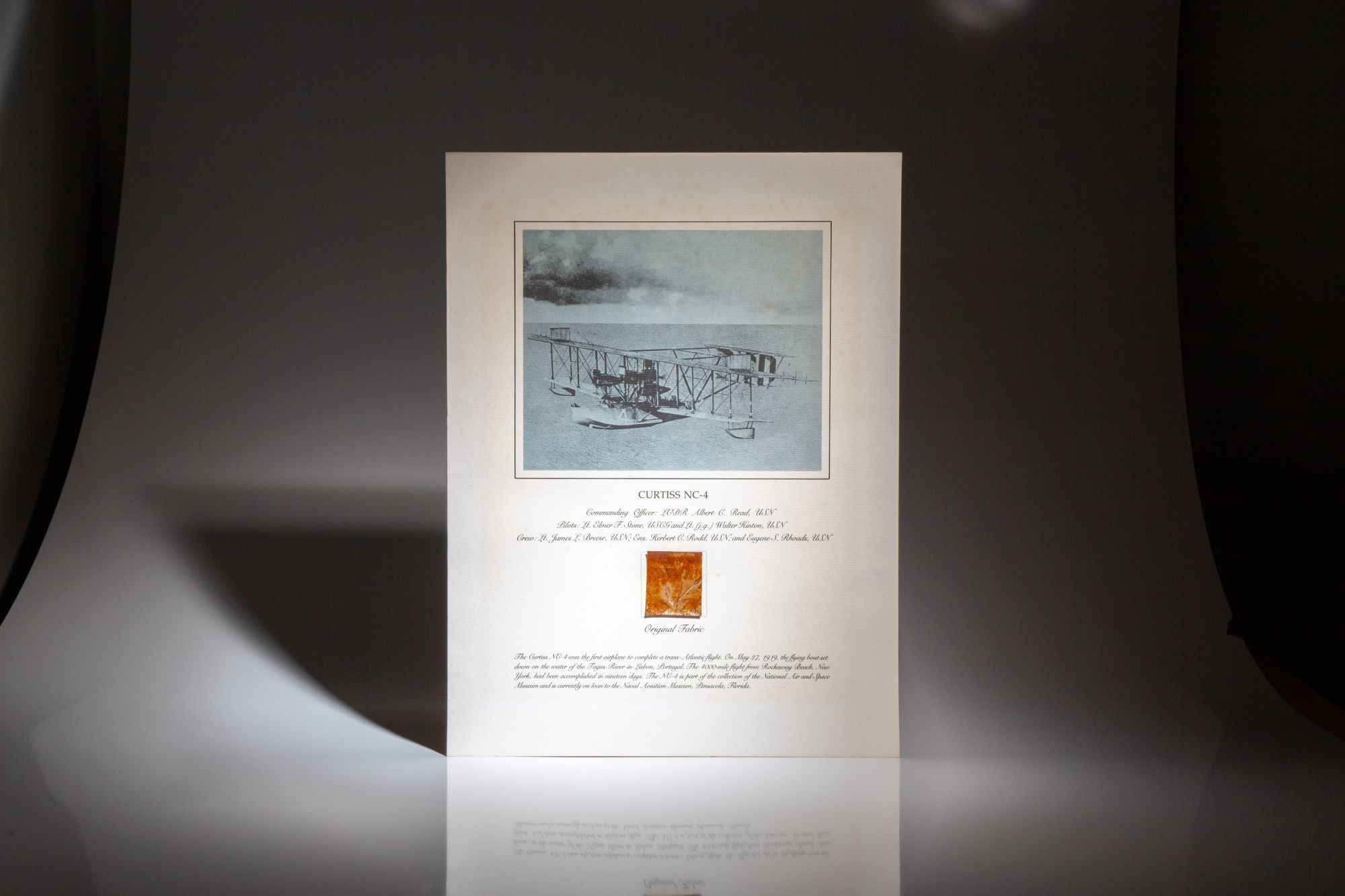
[Washington, D.C.]: Smithsonian Institution, 1919. Fabric Sample. Fabric. Very good. A piece of fabric from the Curtiss NC-4 Flying Boat, which made the first transatlantic flight on May 27, 1919. This relic was produced by the Smithsonian's National Air and Space Museum, which restored the aircraft on the 50th Anniversary of the fli. Document measures 13" x 20", fabric sample measures 2" x 2". Held in archival sleeve. Light offsetting where previously framed. The Smithsonian revised its policies after this production and no longer offers pieces of restored relics for public sale. The Curtiss NC-4 flying boat, built by the Curtiss Aeroplane and Motor Company for the U.S. Navy during World War I, became the first aircraft to cross the Atlantic Ocean in May 1919. Part of the Navy-Curtiss series of large multi-engine seaplanes designed for long-range flight, the NC-4 had four engines and a wingspan of over 120 feet. Alongside NC-1 and NC-3, it departed from Rockaway, New York, stopping in Newfoundland and the Azores; while the other aircraft were forced to withdraw, NC-4, commanded by Lieutenant Commander Albert C. Read and a crew of five, completed the 3,925-mile journey, landing in Lisbon on May 27, 1919. Though taking 23 days with stops for refueling and repairs, the flight proved the feasibility of transoceanic aviation. The NC-4 is now preserved at the National Naval Aviation Museum in Pensacola, Florida.
Details
Title
Flown Fabric from the Curtiss NC-4 Flying Boat
Author
[Curtiss NC-4 Flying Boat]
Binding
Fabric
Condition
Very Good
Publisher
Smithsonian Institution: [Washington, D.C.]
Date
1919
Edition
Fabric Sample