

EVENINGS OF A WORKING MAN, BEING THE OCCUPATION OF HIS SCANTY LEISURE
- London: T. C. Newby, 1844
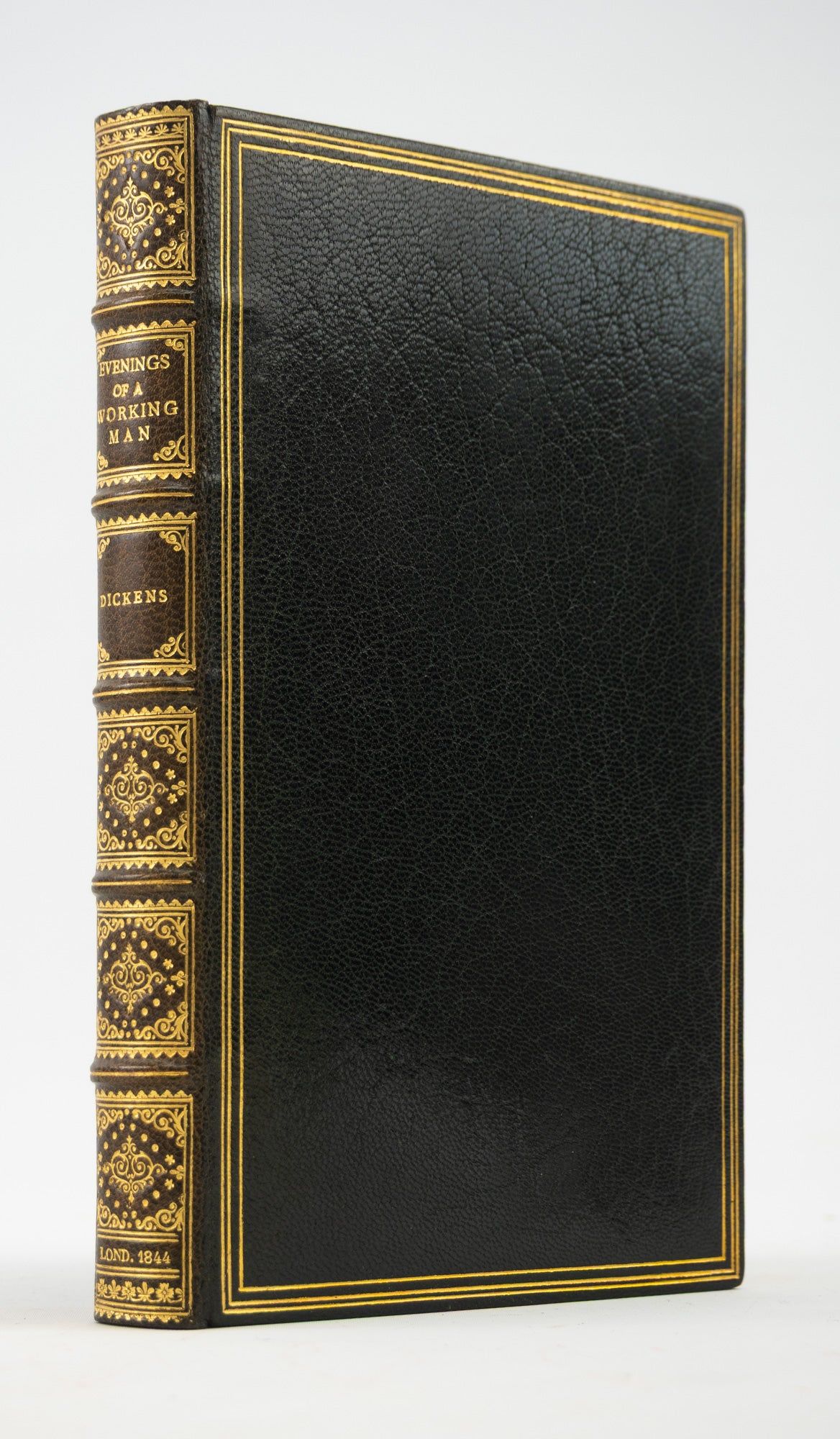
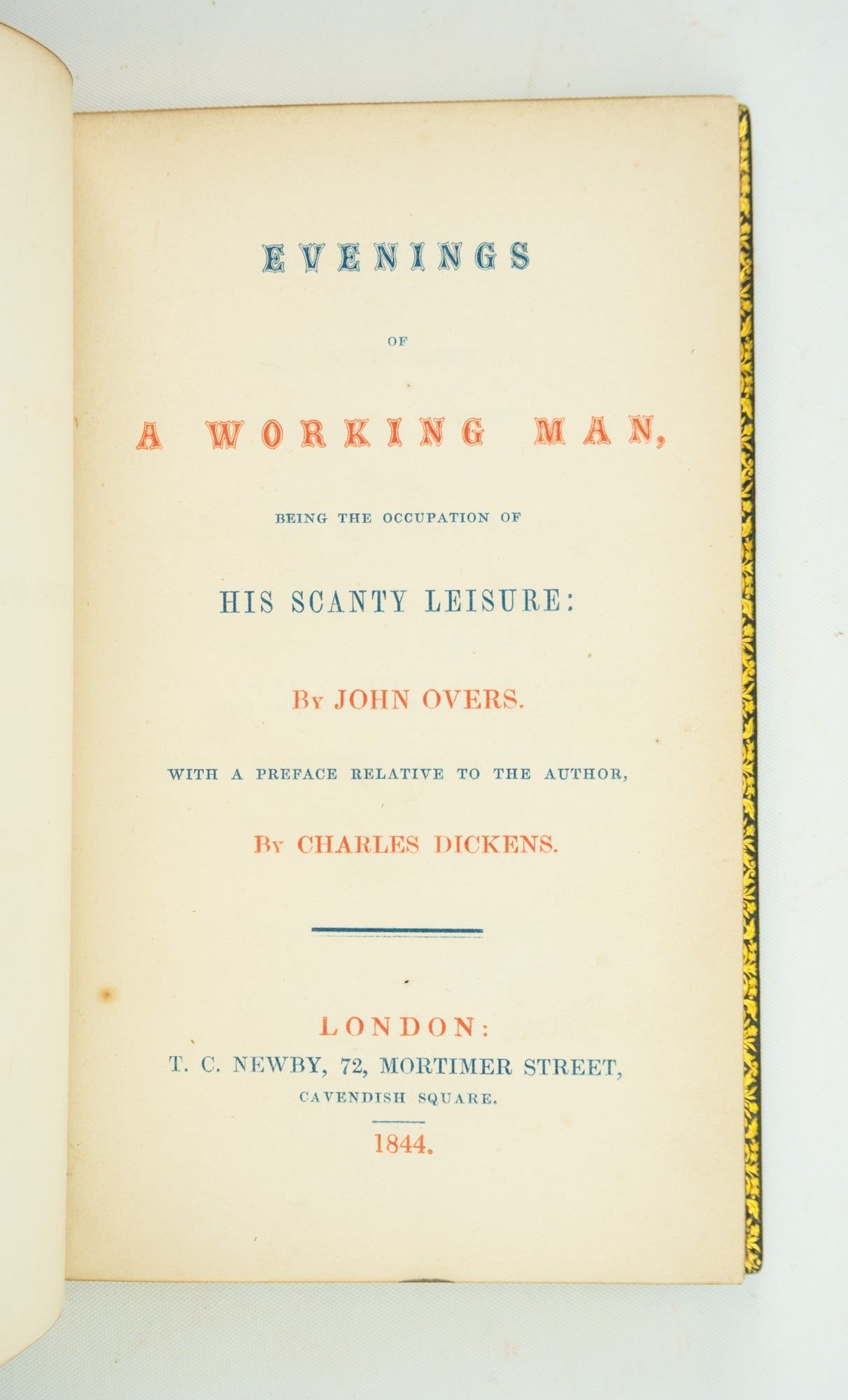
London: T. C. Newby, 1844. FIRST EDITION. 170 x 102 mm. (6 3/4 x 4"). 1 p.l., xiii, [3], 205, [1] pp., [1] leaf (ads).Preface by Charles Dickens.
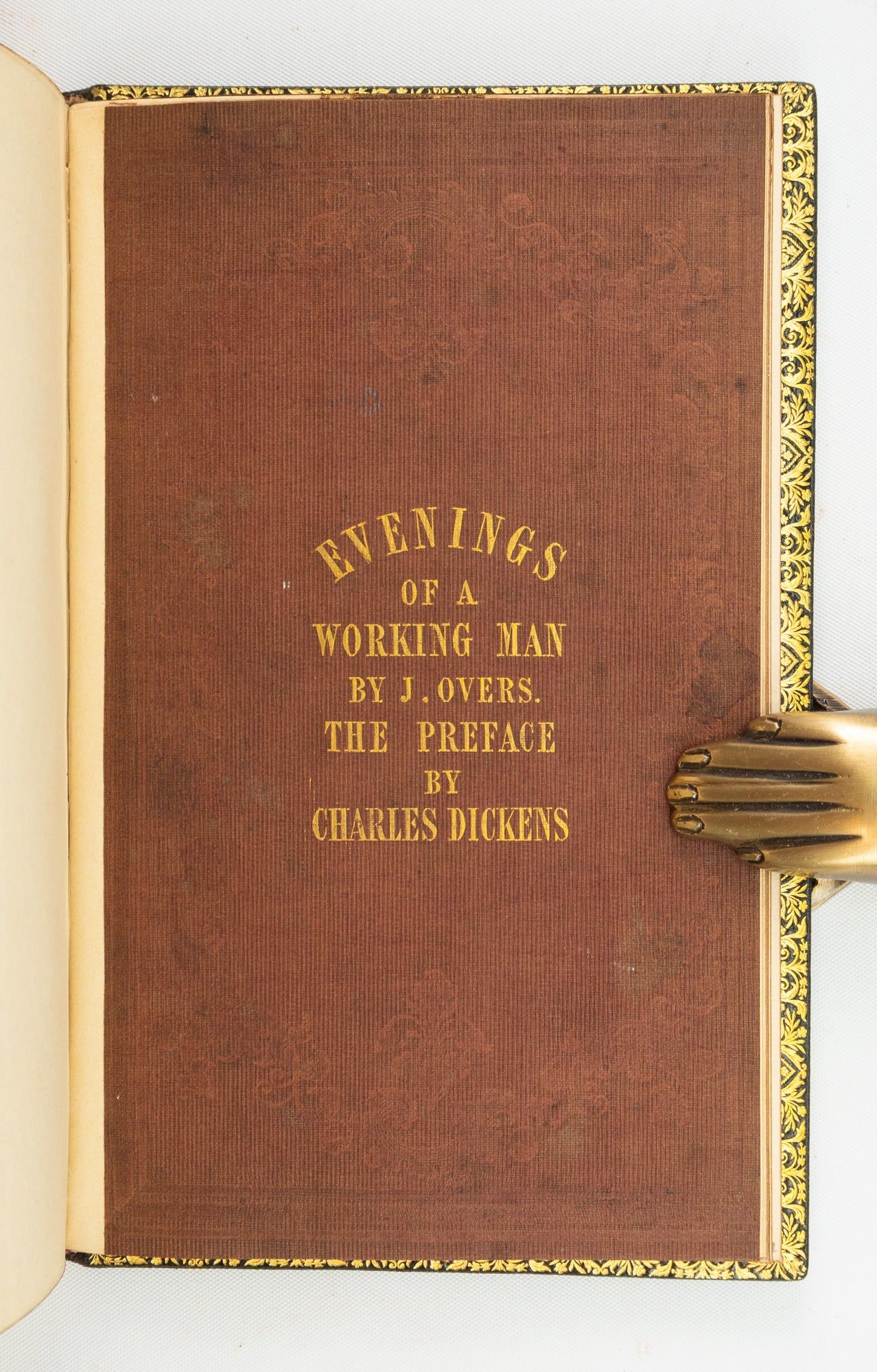
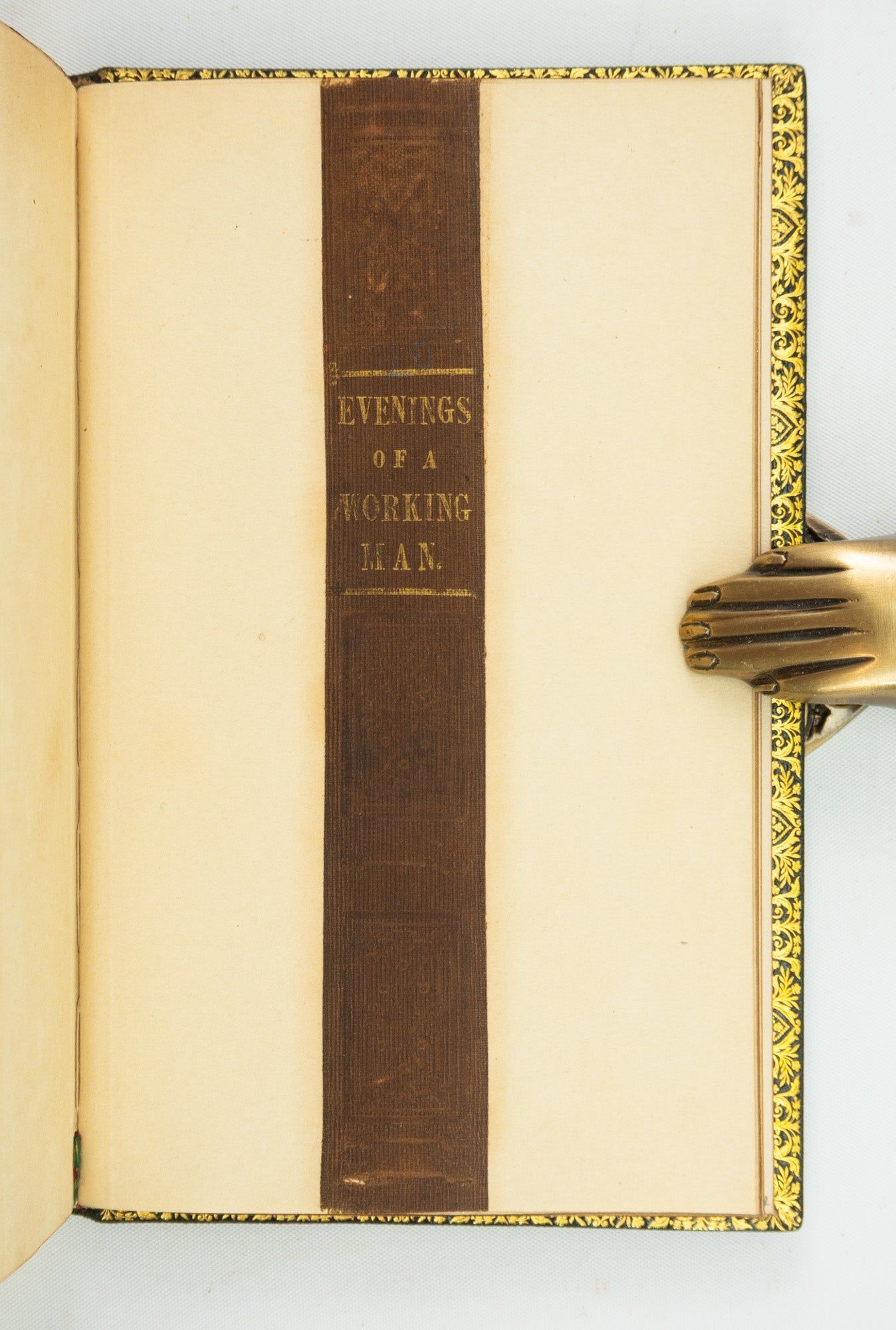
VERY PLEASING GREEN CRUSHED MOROCCO BY RIVIERE & SONS (stamp-signed on front turn-in), covers framed with gilt rules, densely tooled cornerpieces with floral sprigs on a stippled ground, raised bands, spine panels lavishly gilt with a starburst of floral tools emanating from a central medallion, all on a stippled ground, gilt lettering, turn-ins gilt ruled with floral garlands at the corners, all edges gilt, original tan cloth wrappers bound in at rear. Title page printed in blue and red. Eckel, pp. 146-47; Podeschi B-121. Sheila M. Smith, "John Overs to Charles Dickens: A Working-Man's Letter and Its Implications," Victorian Studies 18, no. 2 (1974): 195–217. Spine just slightly sunned (though hard to tell because of the heavy gilt), a few trivial spots internally, but A VERY FINE COPY in quite a pretty binding.
This attractively bound volume of a working class poet's verse and prose represents one of Dickens' charitable efforts in the spirit of social reform. A carpenter by trade, John Overs (1808-44) had become acquainted with Dickens in 1839, when he submitted poetry for publication in "Bentley's Miscellany," then under Dickens' editorship. Over the next several years, Dickens became a literary mentor and something of a friend to Overs, providing writing advice, lending books, and helping Overs to secure a position at Drury Lane Theatre when his tuberculosis became too severe to continue his work as a carpenter. Literary scholar Sheila M. Smith has suggested that Overs may have served as an influence for "The Chimes," Dickens' penultimate Christmas book; she writes that Overs "was neither a political agitator nor a trade unionist. . . yet he was bitter and exulting in the idea of social revolution. A working man of this kind, goaded to such feelings, would have aroused Dickens's sympathy at a period when the novelist was experiencing his most violent indignation about his country's poor." To whatever degree that sympathy proved a literary inspiration for Dickens, it directly led to the publication of the present work. When it was clear by the spring of 1844 that Overs would not survive his illness, Dickens suggested to him that he publish a collection of his writings to help provide for his family after his passing. And so the present anthology was published only months before Overs' death on September 28, 1844, with the proceeds from the book (along with an additional charitable collection taken up by the publisher) allowing his widow to make a living by opening a small milliner's shop..
VERY PLEASING GREEN CRUSHED MOROCCO BY RIVIERE & SONS (stamp-signed on front turn-in), covers framed with gilt rules, densely tooled cornerpieces with floral sprigs on a stippled ground, raised bands, spine panels lavishly gilt with a starburst of floral tools emanating from a central medallion, all on a stippled ground, gilt lettering, turn-ins gilt ruled with floral garlands at the corners, all edges gilt, original tan cloth wrappers bound in at rear. Title page printed in blue and red. Eckel, pp. 146-47; Podeschi B-121. Sheila M. Smith, "John Overs to Charles Dickens: A Working-Man's Letter and Its Implications," Victorian Studies 18, no. 2 (1974): 195–217. Spine just slightly sunned (though hard to tell because of the heavy gilt), a few trivial spots internally, but A VERY FINE COPY in quite a pretty binding.
This attractively bound volume of a working class poet's verse and prose represents one of Dickens' charitable efforts in the spirit of social reform. A carpenter by trade, John Overs (1808-44) had become acquainted with Dickens in 1839, when he submitted poetry for publication in "Bentley's Miscellany," then under Dickens' editorship. Over the next several years, Dickens became a literary mentor and something of a friend to Overs, providing writing advice, lending books, and helping Overs to secure a position at Drury Lane Theatre when his tuberculosis became too severe to continue his work as a carpenter. Literary scholar Sheila M. Smith has suggested that Overs may have served as an influence for "The Chimes," Dickens' penultimate Christmas book; she writes that Overs "was neither a political agitator nor a trade unionist. . . yet he was bitter and exulting in the idea of social revolution. A working man of this kind, goaded to such feelings, would have aroused Dickens's sympathy at a period when the novelist was experiencing his most violent indignation about his country's poor." To whatever degree that sympathy proved a literary inspiration for Dickens, it directly led to the publication of the present work. When it was clear by the spring of 1844 that Overs would not survive his illness, Dickens suggested to him that he publish a collection of his writings to help provide for his family after his passing. And so the present anthology was published only months before Overs' death on September 28, 1844, with the proceeds from the book (along with an additional charitable collection taken up by the publisher) allowing his widow to make a living by opening a small milliner's shop..
Details
Title
EVENINGS OF A WORKING MAN, BEING THE OCCUPATION OF HIS SCANTY LEISURE
Author
(BINDINGS - RIVIERE). (DICKENS, CHARLES). OVERS, JOHN
Condition
Unknown
Publisher
T. C. Newby: London
Date
1844
Edition
FIRST EDITION