

Early 1820s British Commonplace Book -- 18th Cent. and Romantic Verse, Inscribed "To William Stokes, from a Friend
- SIGNED
- England , 1822
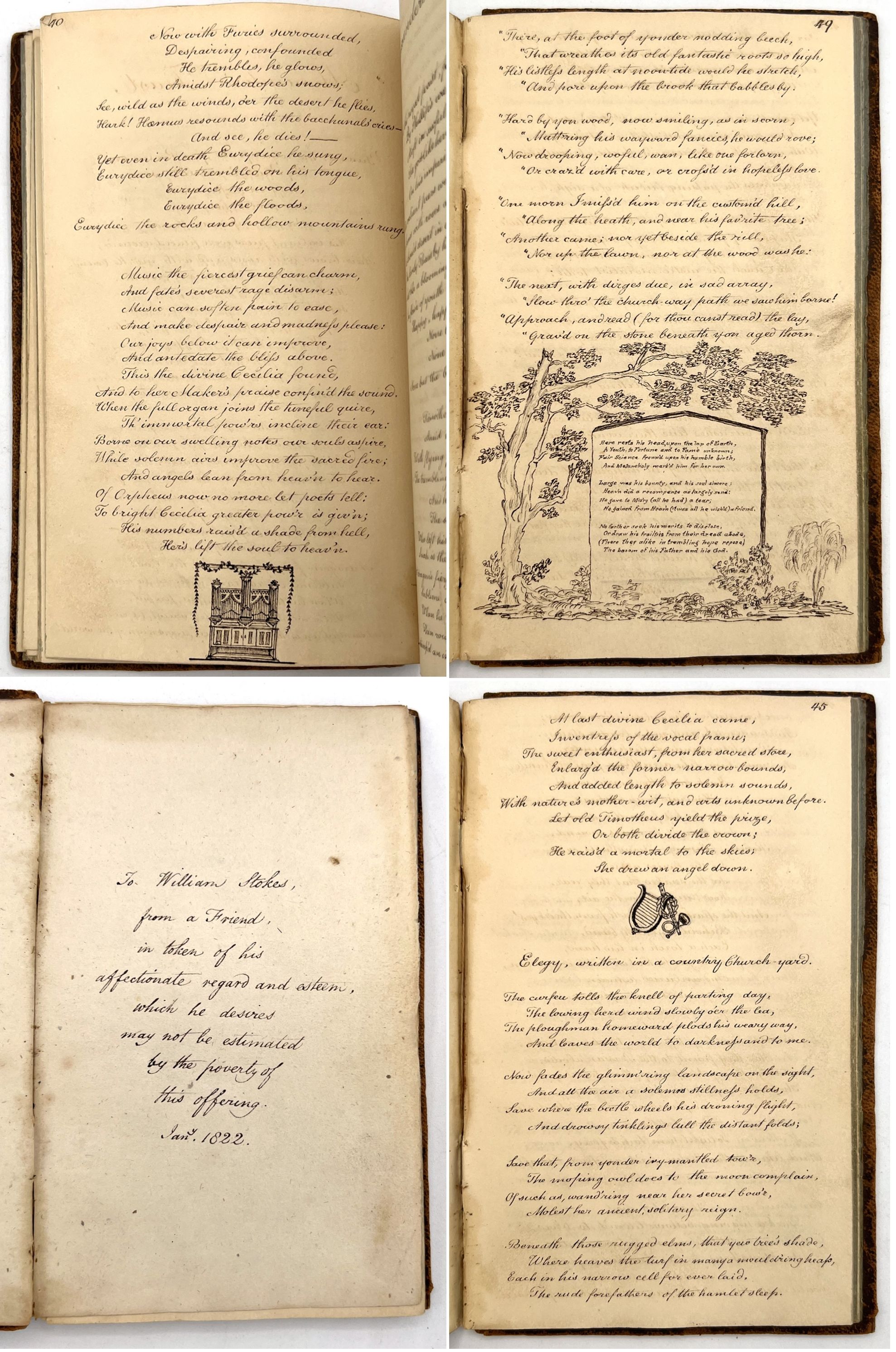
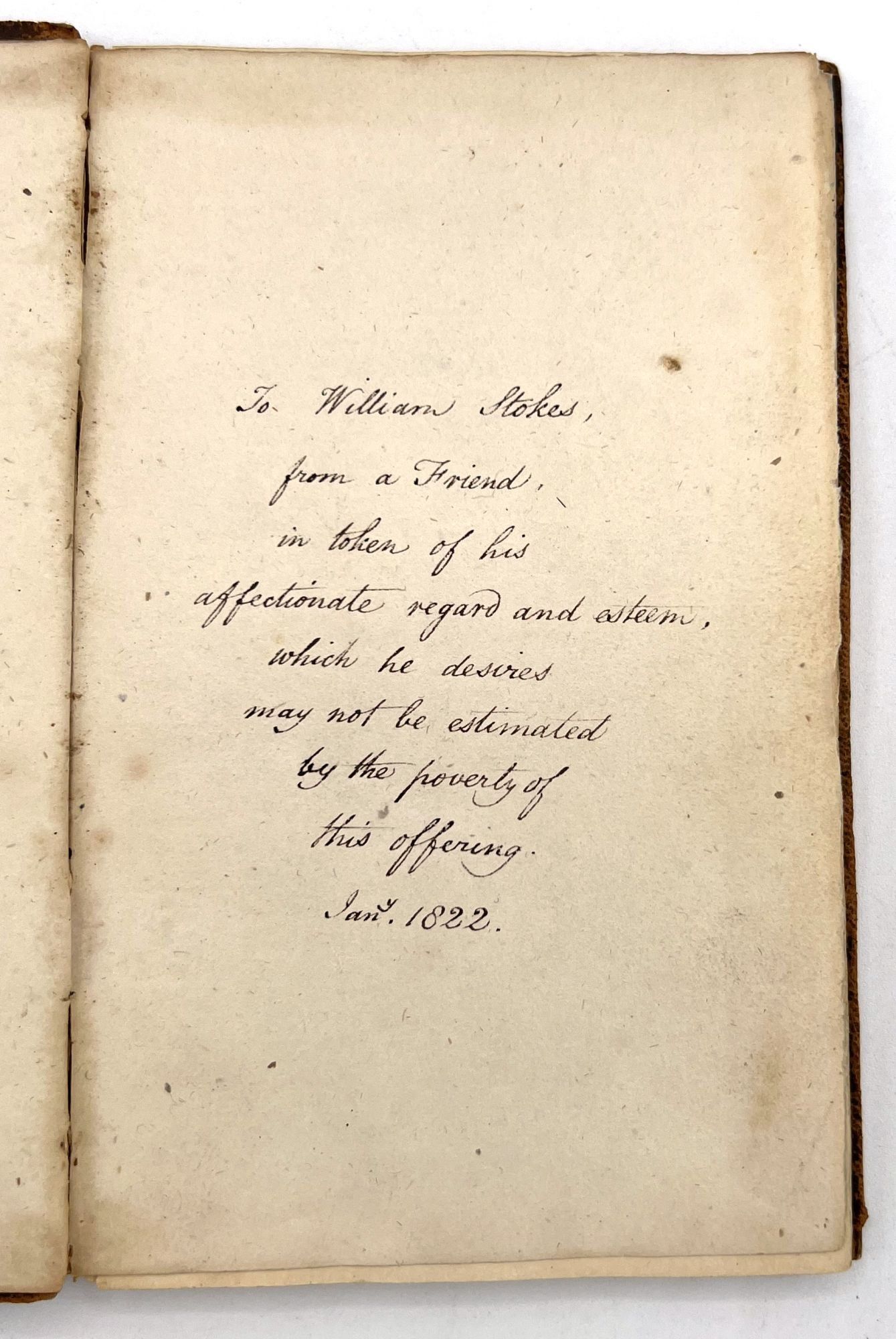
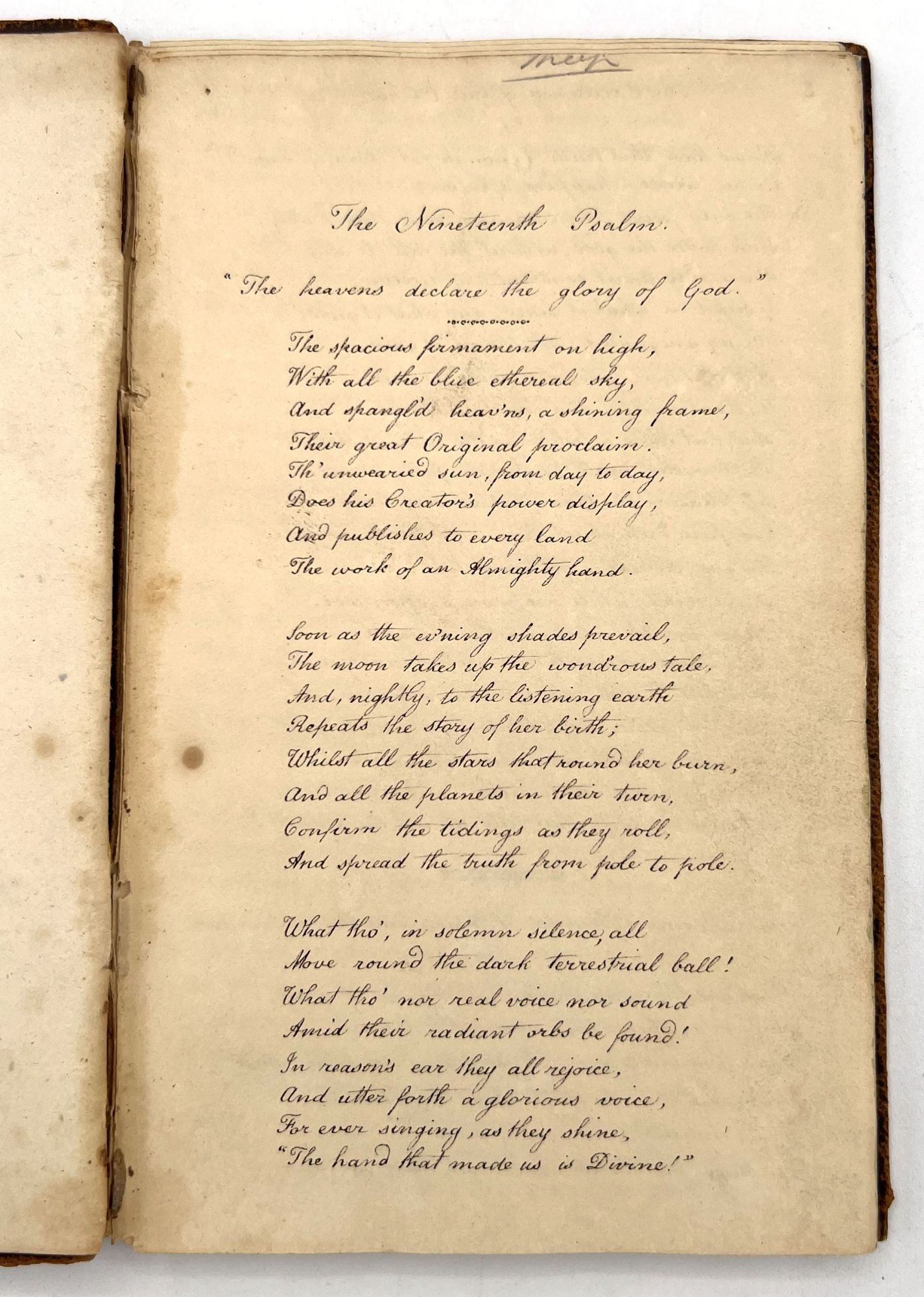
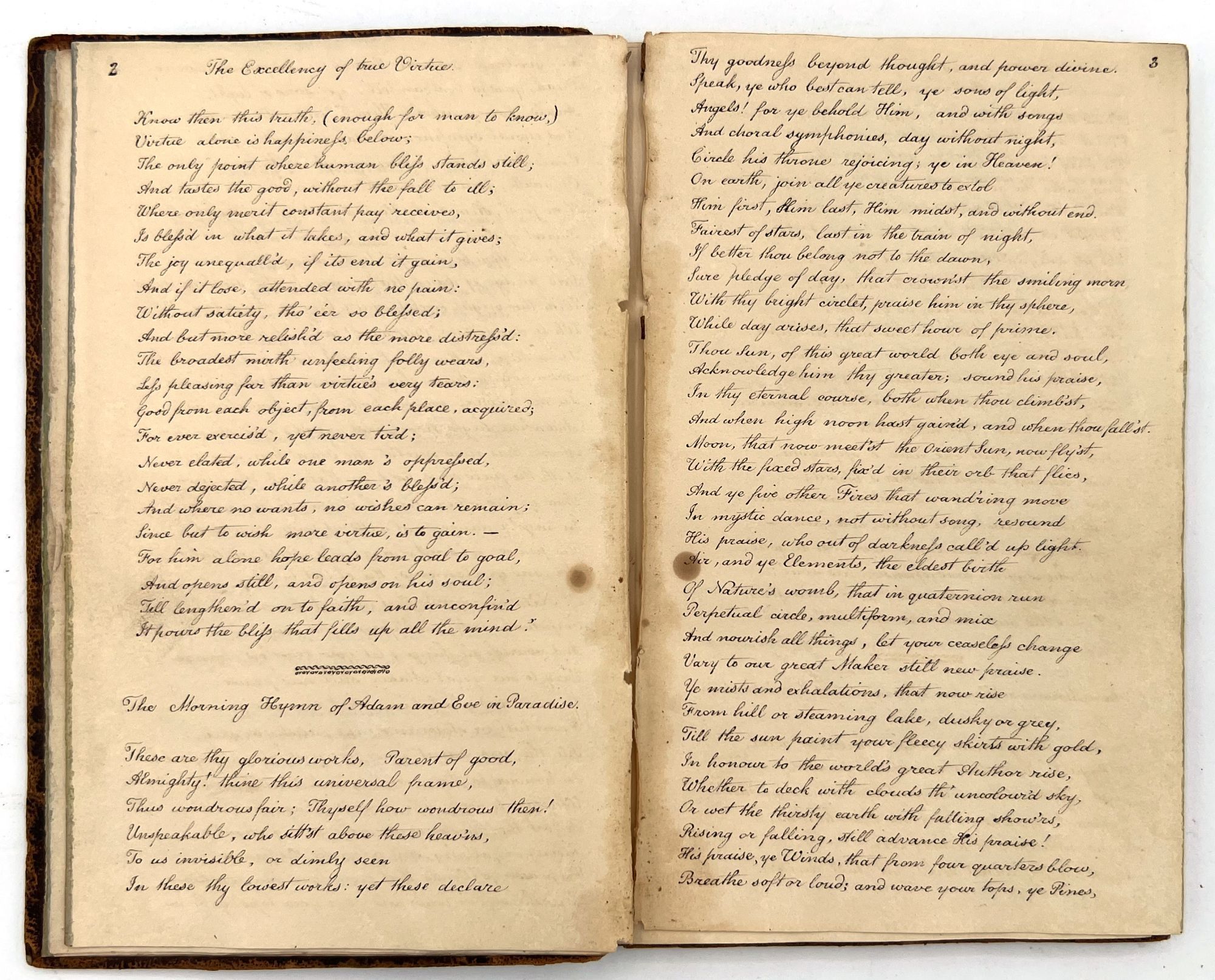
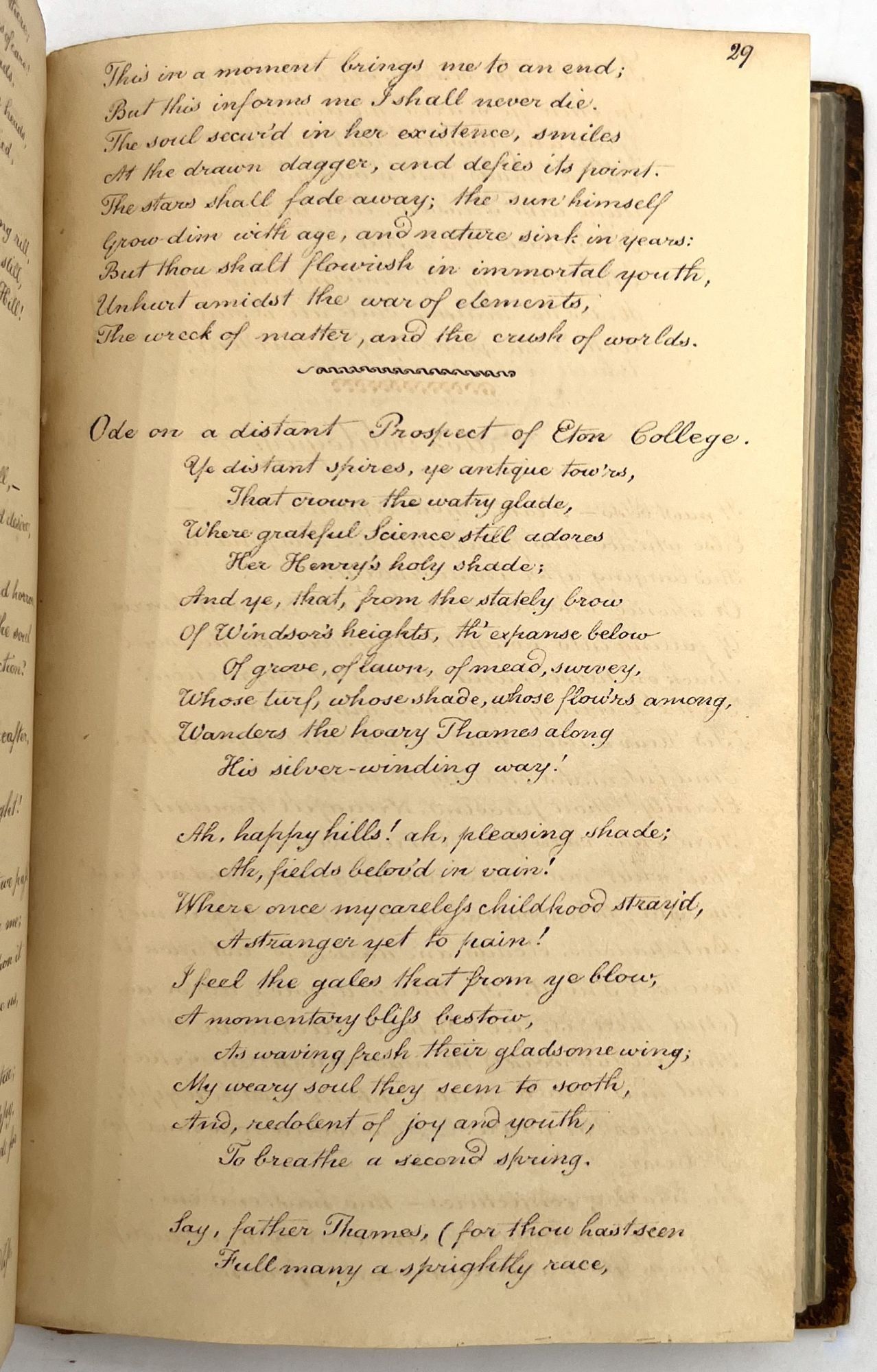
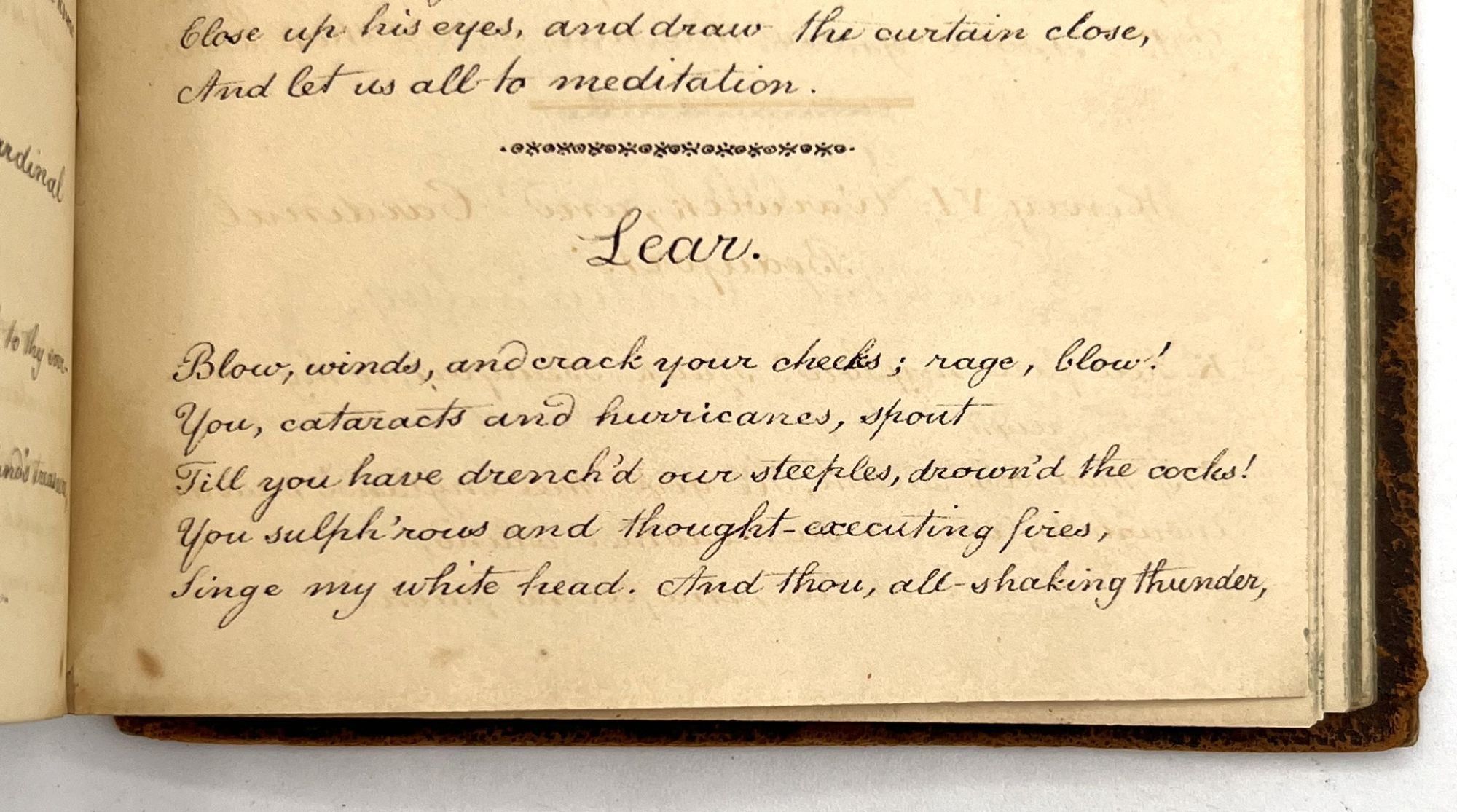
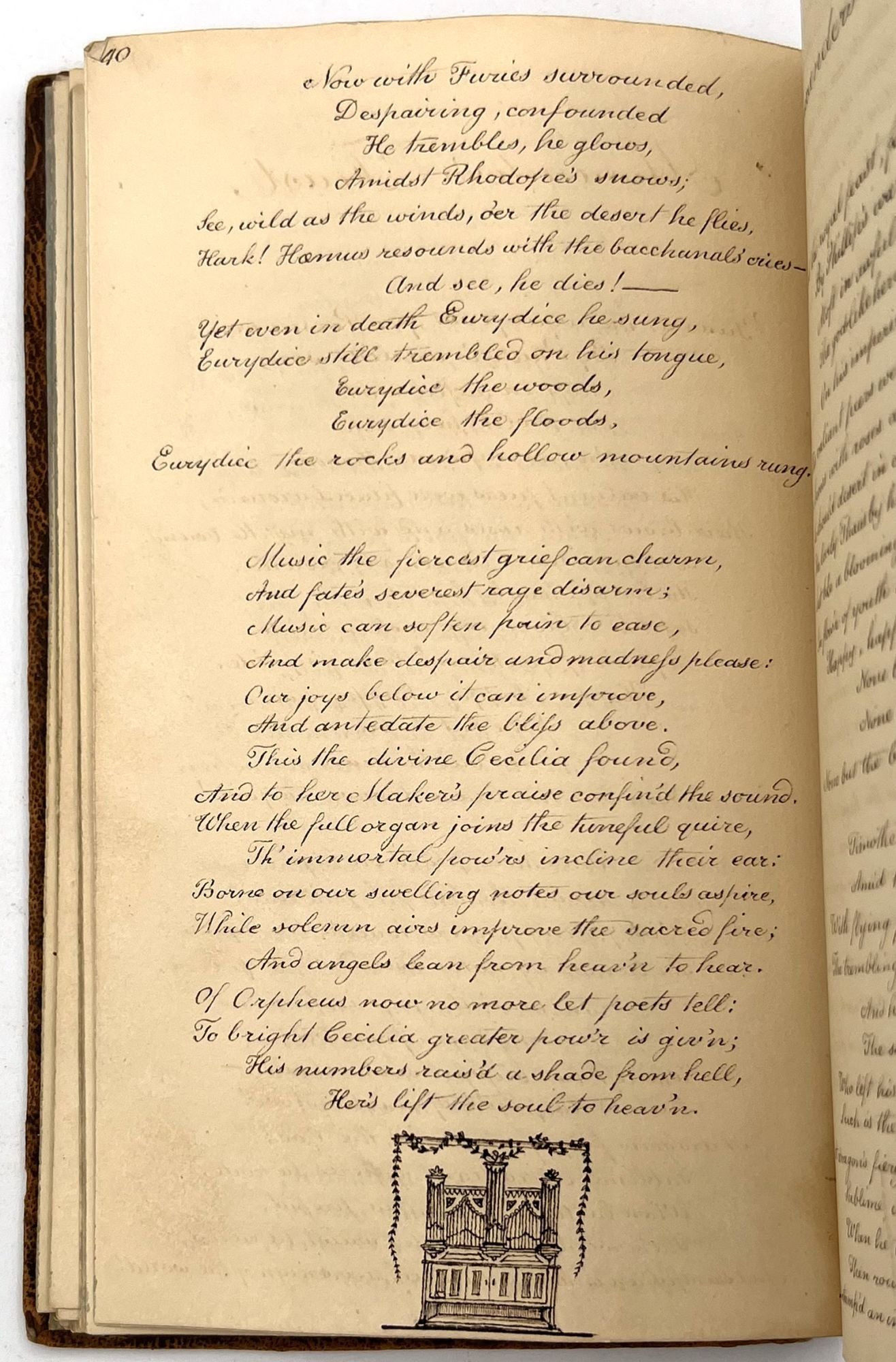
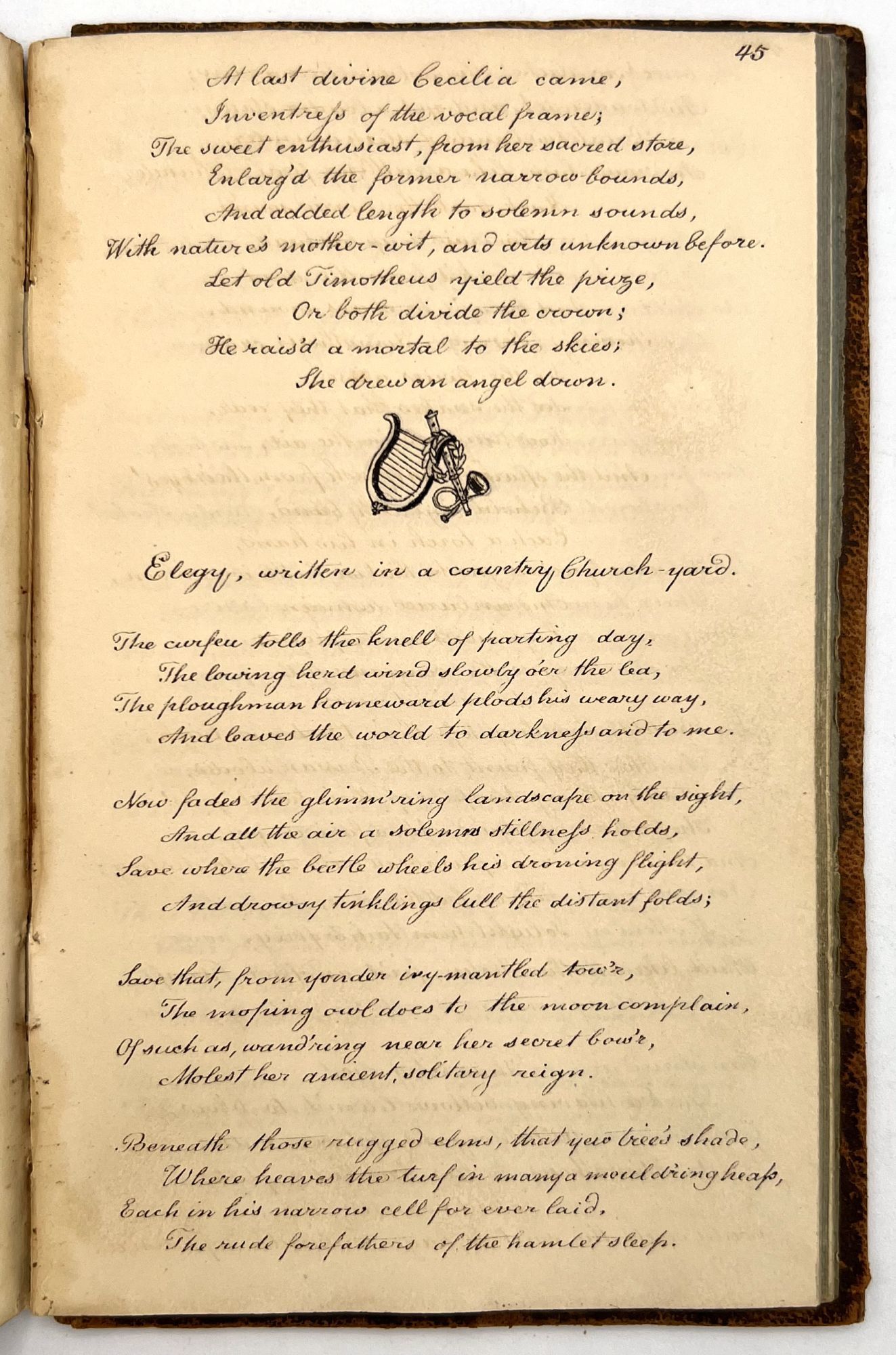
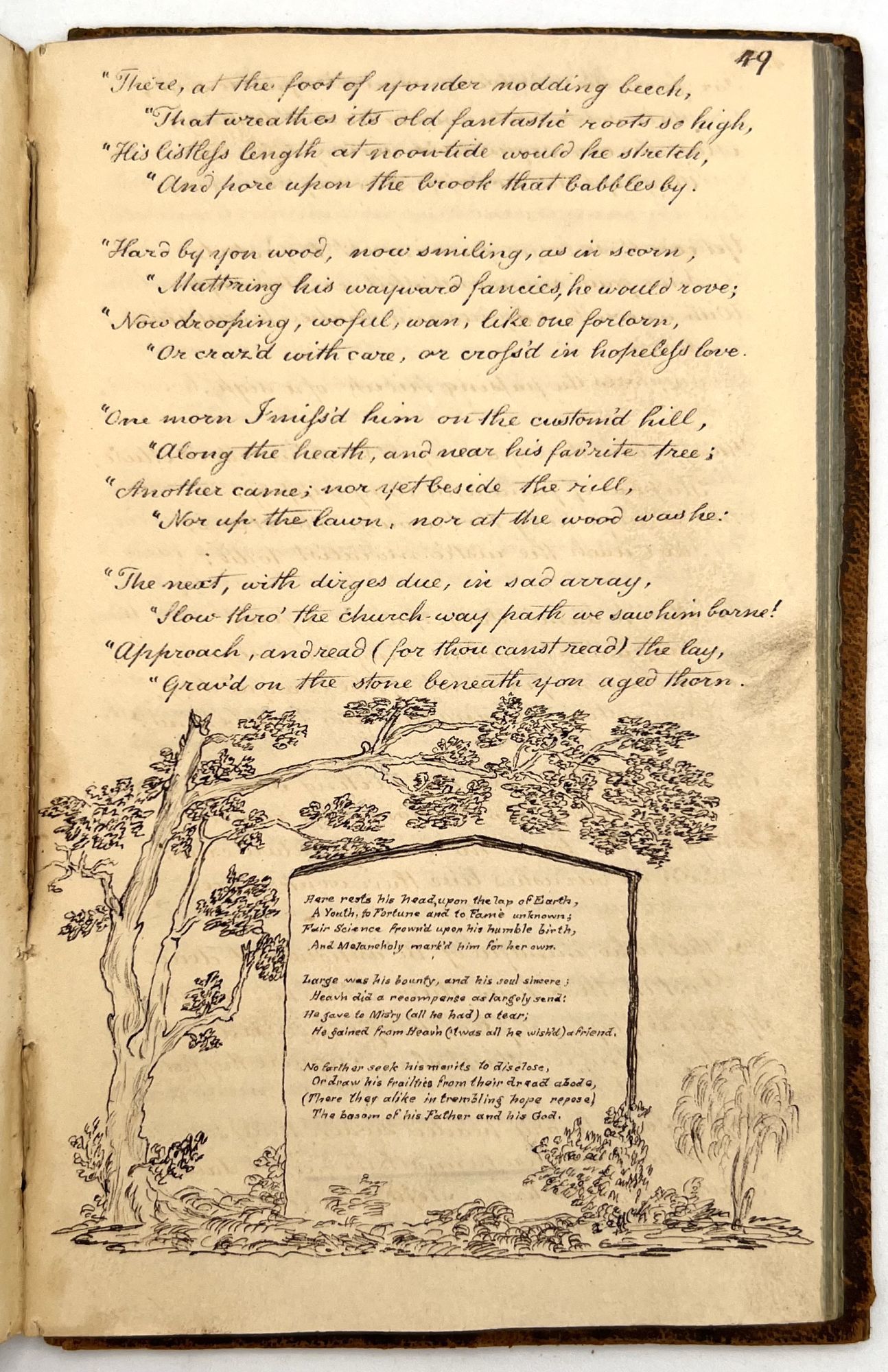
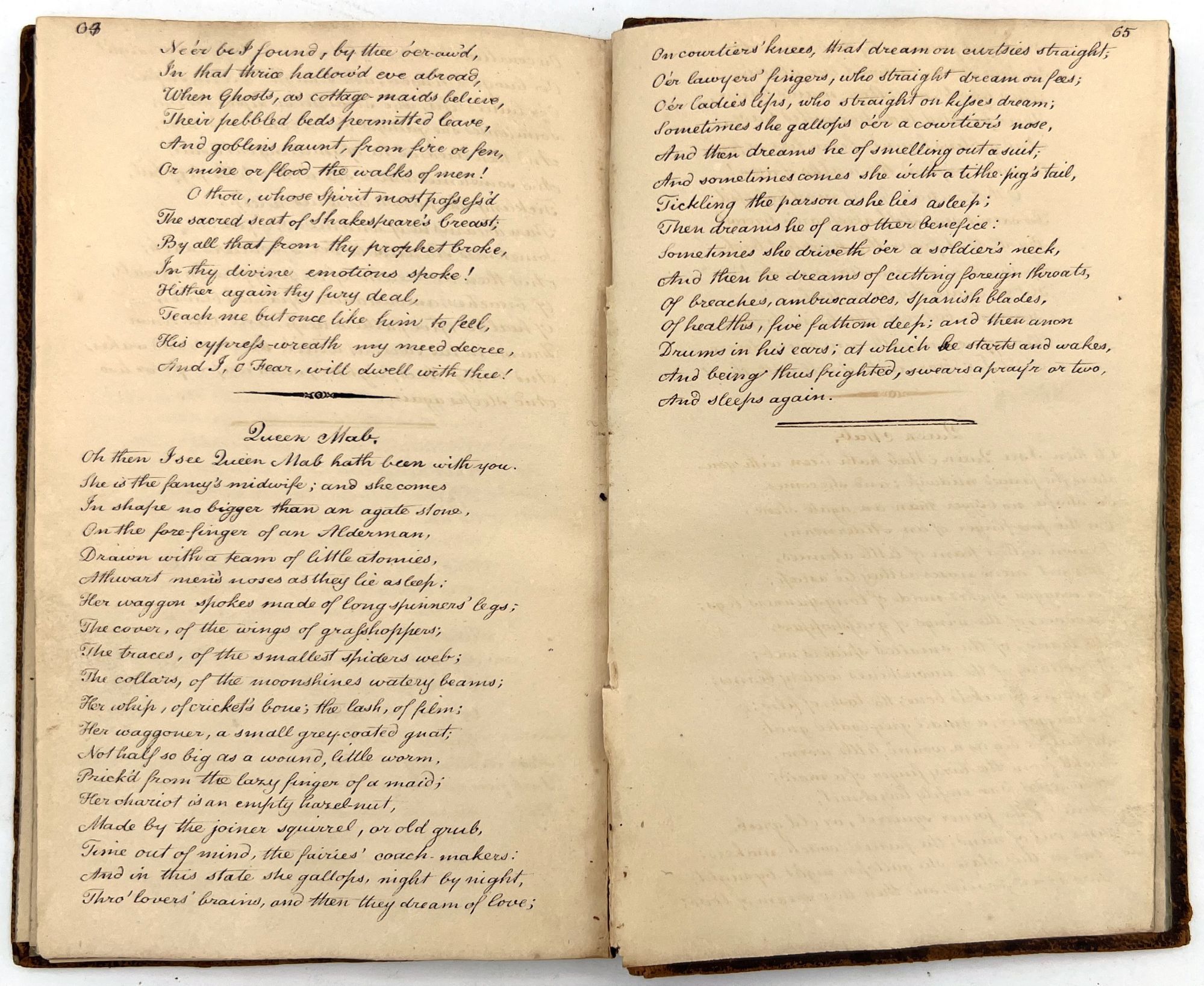
England, 1822. Fair to good. Joints/hinges cracked, extremities chipped/worn, some dust soiling, staining from adhesive used under pastedowns. May be missing a leaf or two after dedication page.. A book of poetry neatly transcribed in ink and inscribed "To William Stokes, from a Friend, in token of his affectionate regard and esteem, which he desires may not be estimated by the poverty of this offering. Jany. 1822." Notable for the sheer volume of manuscript poetry included-- every leaf is filled-- as well as for a couple of small but finely wrought pen and ink drawings (a lyre, a church organ). There is also a large drawing that spans about a third of a page (p.49) that depicts a headstone against a rustic wooded backdrop. Inside the headstone are micro calligraphy lines quoted from Thomas Gray's "Elegy Written in a Country Churchyard". The majority of the rest of the contents appear like in tone and thought, and have been clearly carefully chosen by the creator. Together, the excerpts combine to form a rather pensive mood, with definite Romantic themes. Some other titles include: "The Nineteenth Psalm"; "The Excellency of True Virtue", from Alexander Pope's "An Essay on Man"; "The Morning Hymn of Adam and Eve in Paradise", from Book V of John Milton's Paradise Lost; "L'Allegro", by John Milton; "Il' Penseroso", by John Milton; "Edwin and Emma", by David Mallet; "Celadon and Amelia", by Thomson(?); "The Present Condition of Man Vindicated", from Pope's "Essay on Man"; "Elegy to a young Nobleman leaving the University" by William Mason; "Ode on a distant Prospect of Eton College" by Thomas Gray; and Mercutio's "Queen Mab" speech from Romeo and Juliet. Single vol. (7.25". by 4.5"), hand paginated manuscript, pp. 65, [2], in original sheep with spine gilt in compartments. May be missing a leaf or two after dedication page, but otherwise appears complete (pagination is complete). The dedicatee could perhaps be an eighteen-year old William Stokes (1804-1878), a prominent Irish physician best know today for his work promoting clinical work in forming diagnoses, shaping modern medical practice.
Details
Title
Early 1820s British Commonplace Book -- 18th Cent. and Romantic Verse, Inscribed "To William Stokes, from a Friend
Condition
Good
Publisher
England
Date
1822