

An Appeal in Favor of that Class of Americans Called Africans
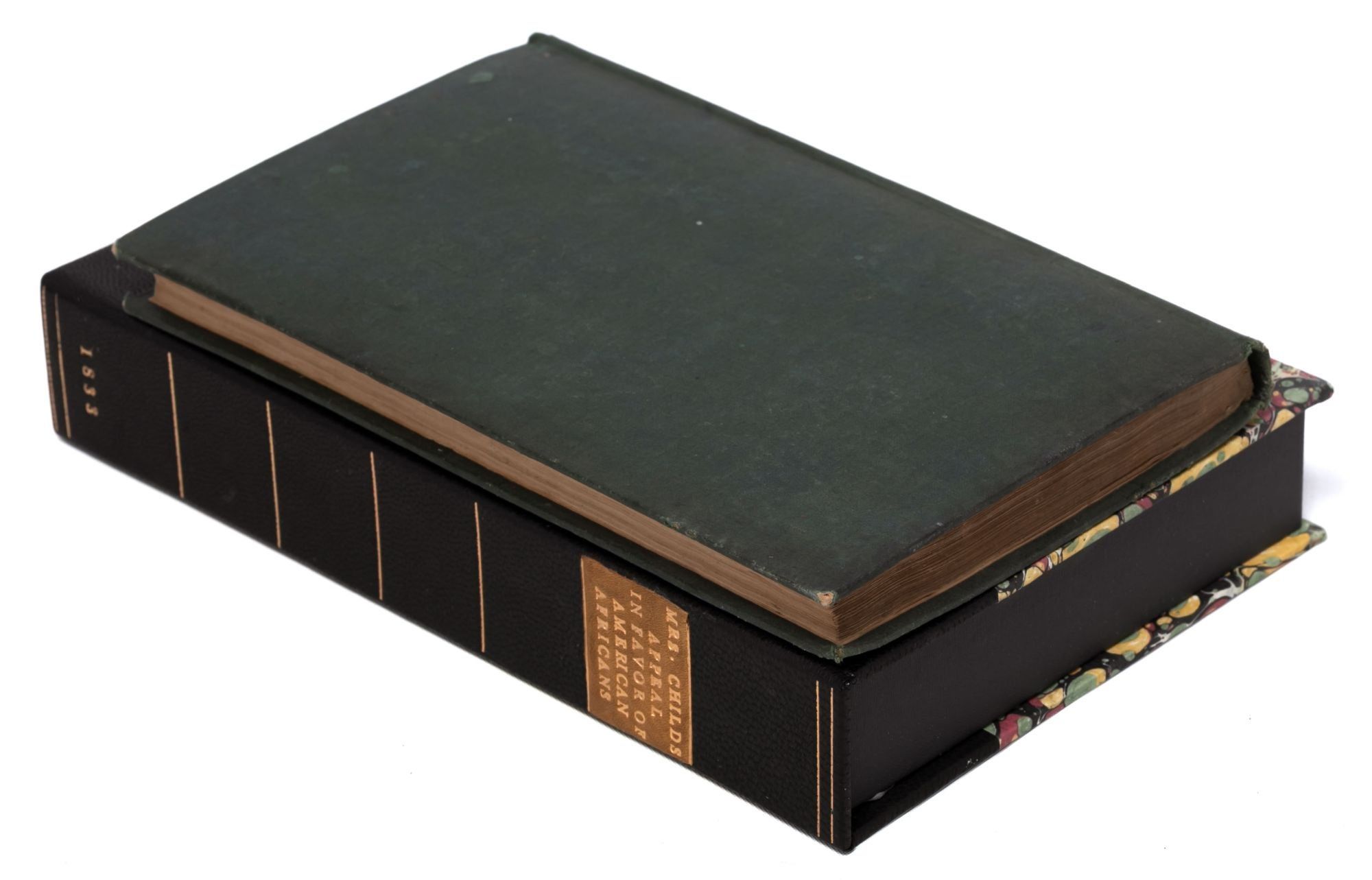
- Boston: Allen & Ticknor, 1833
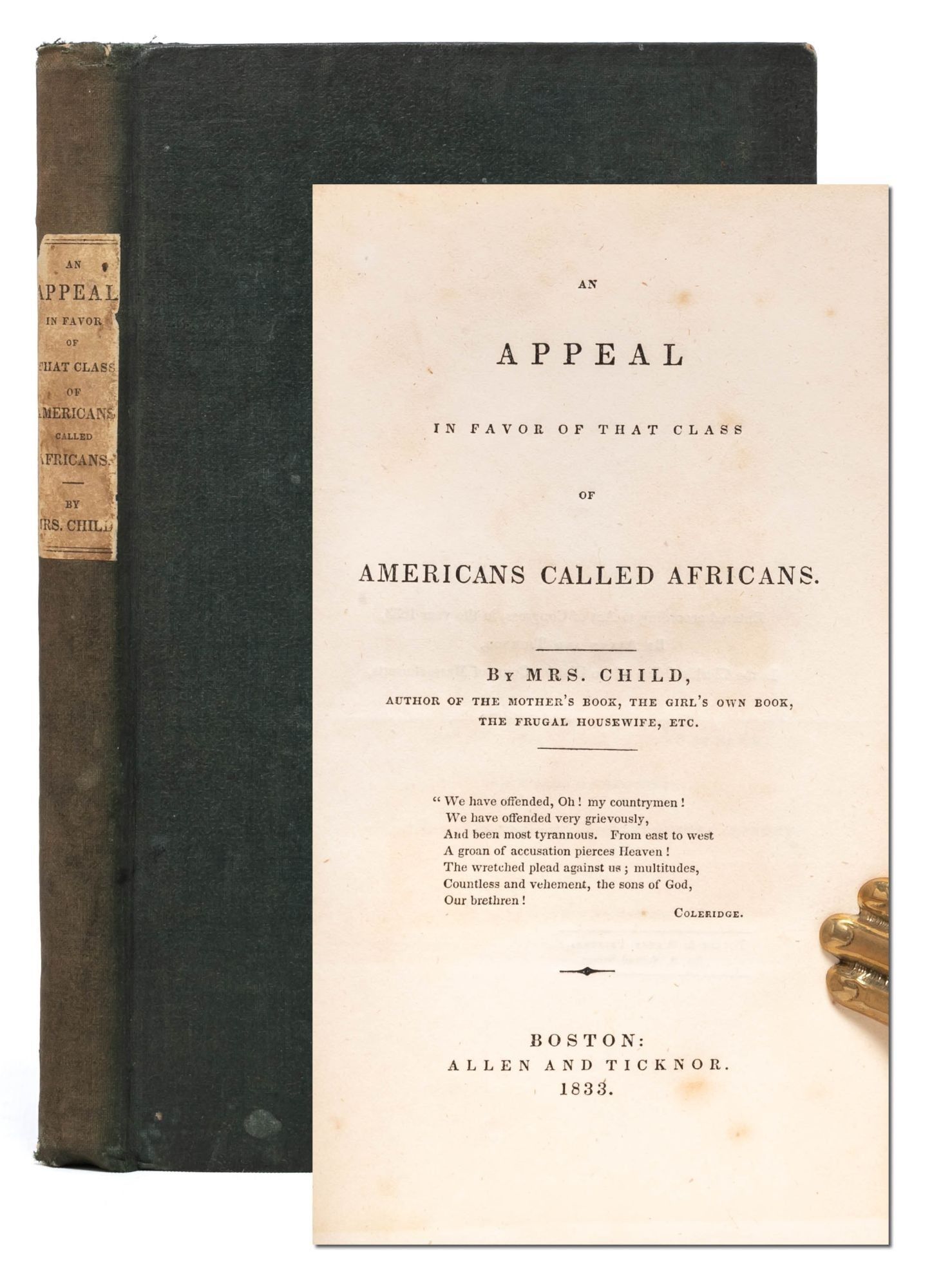
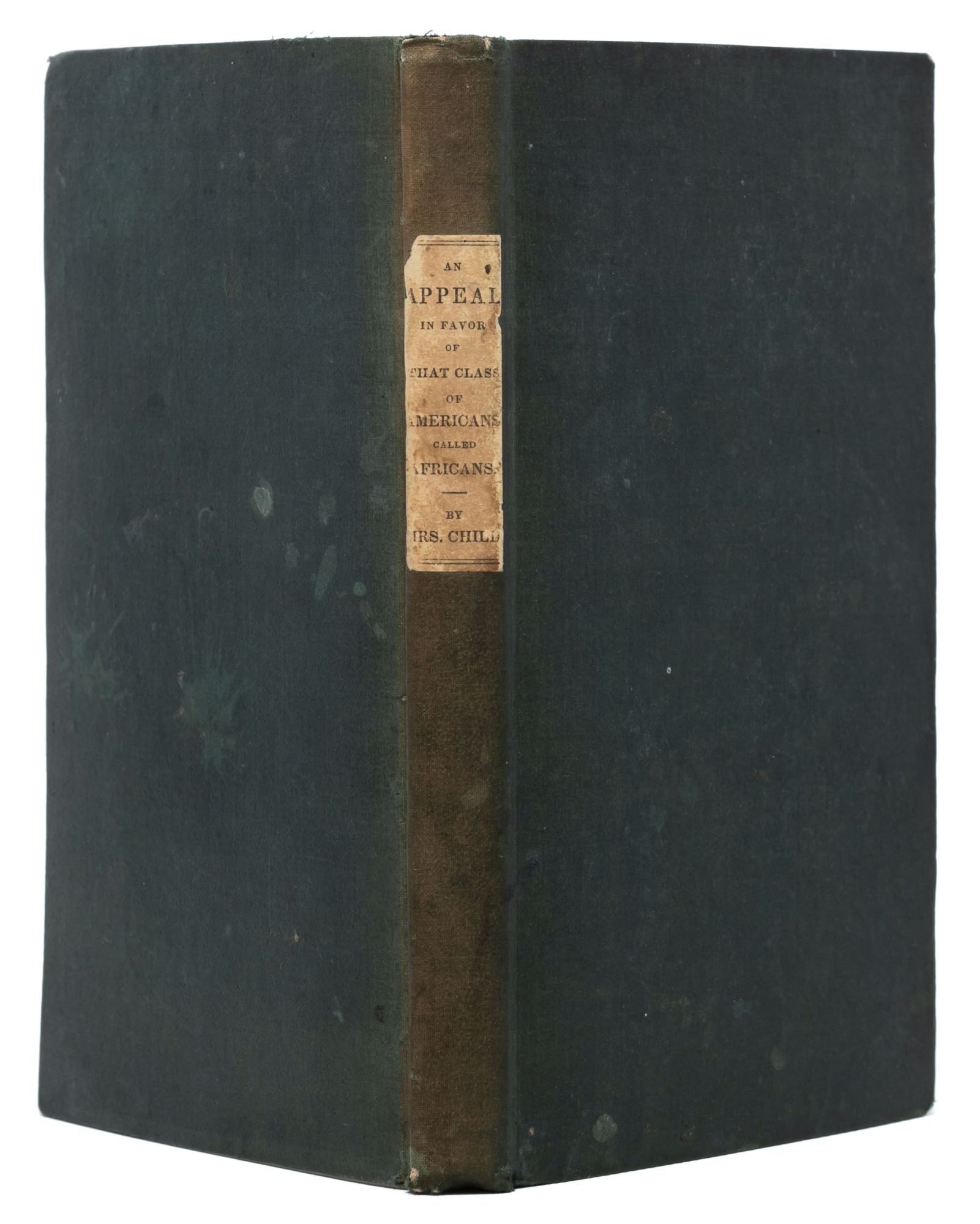
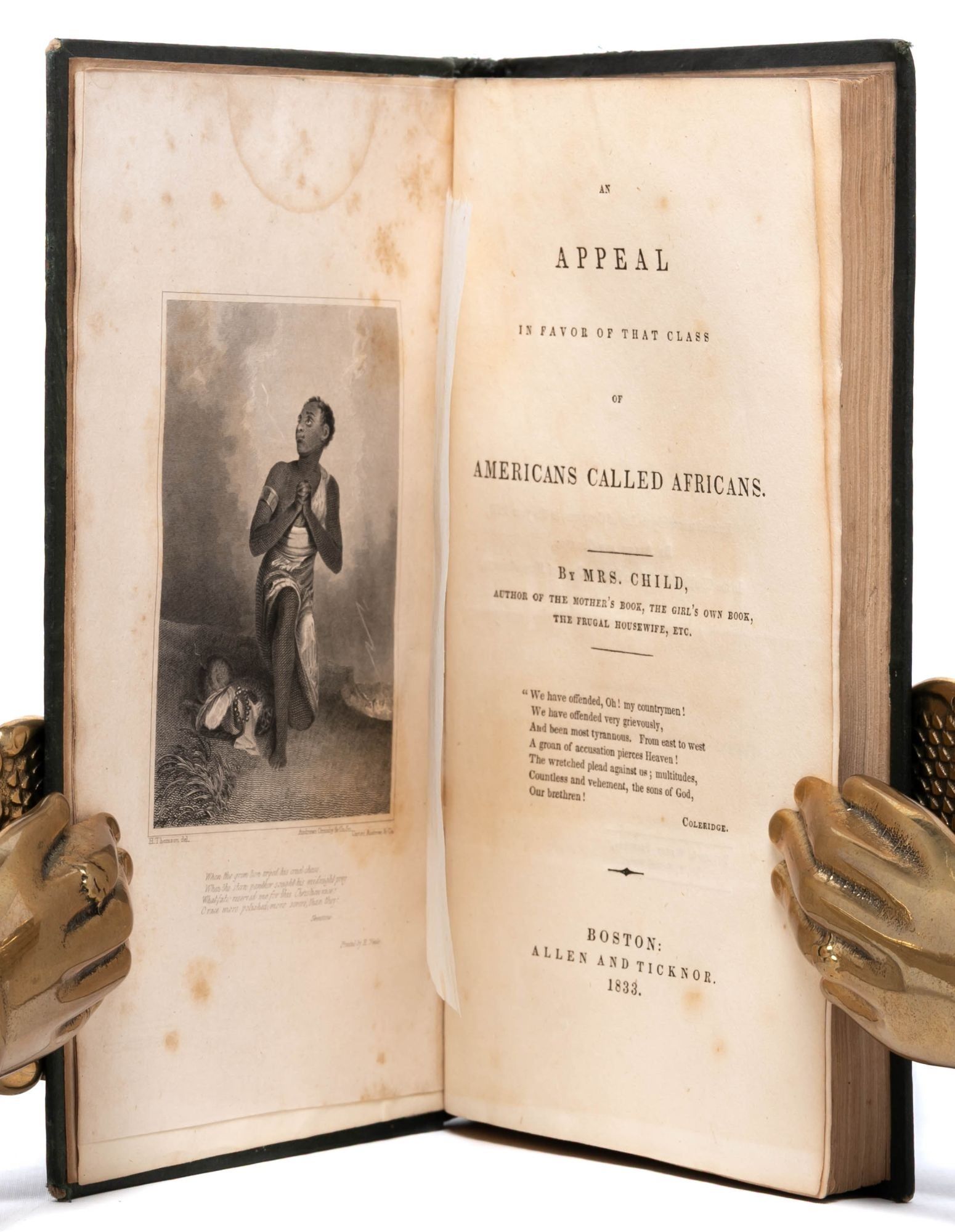
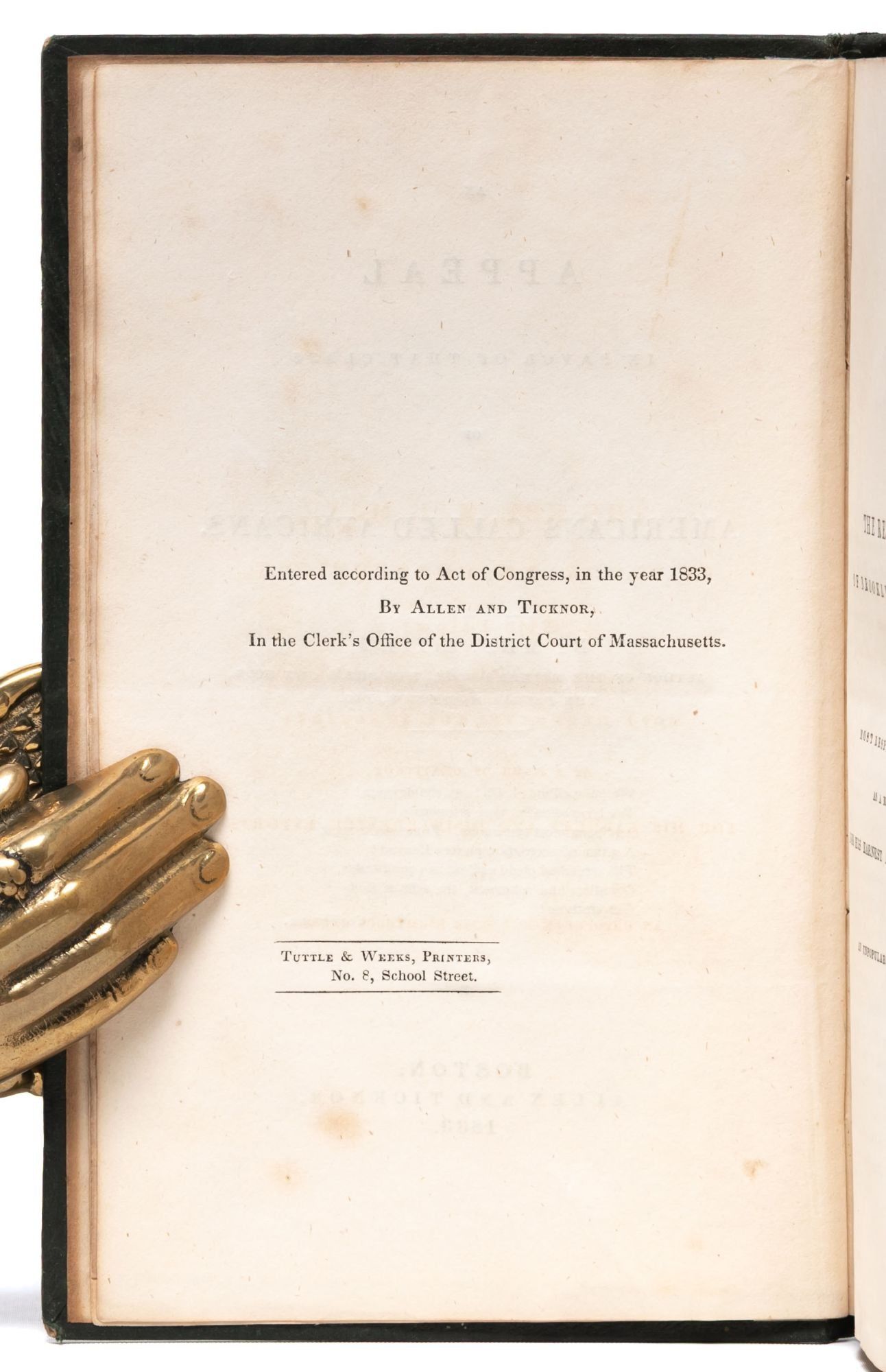
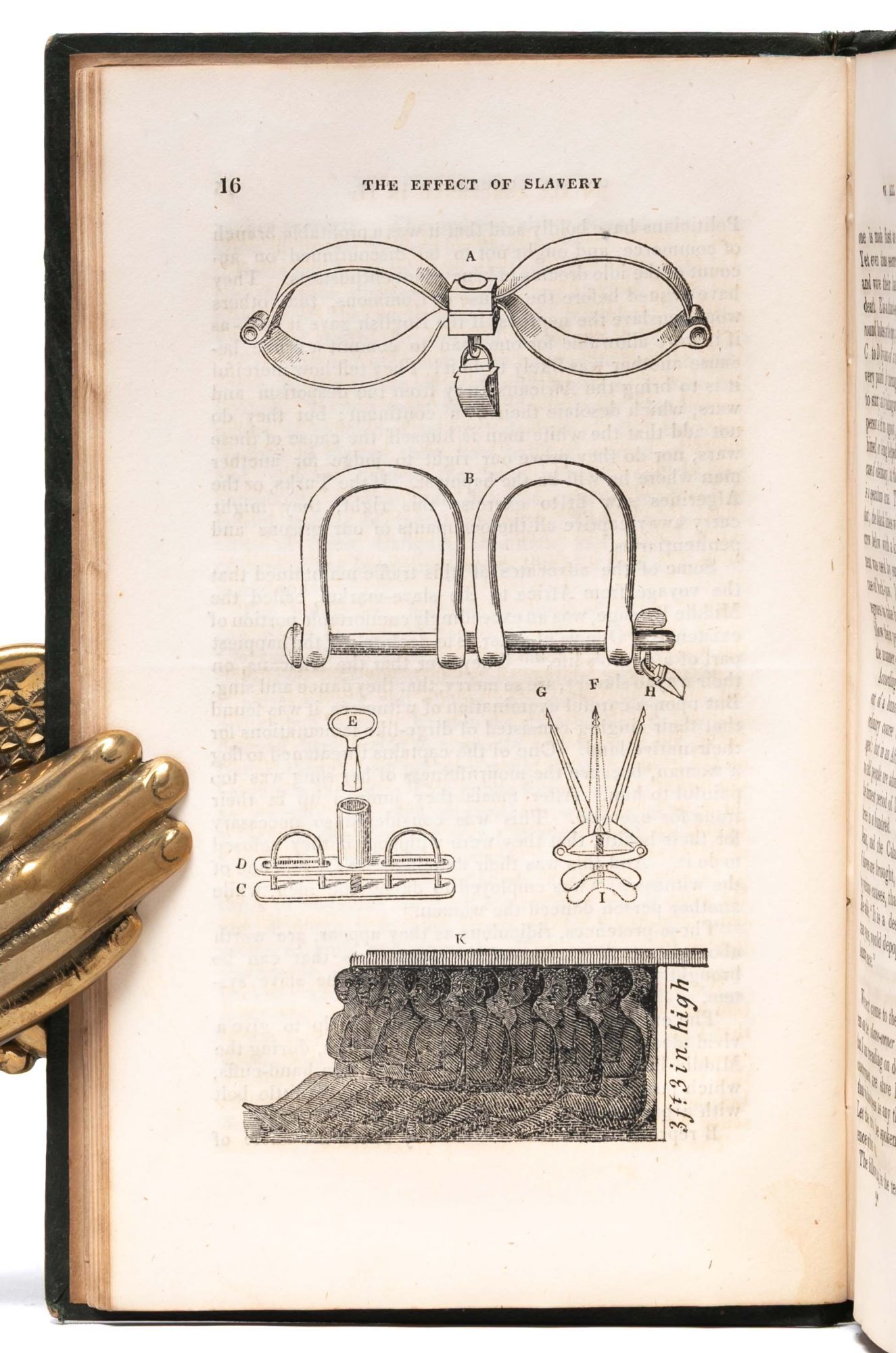
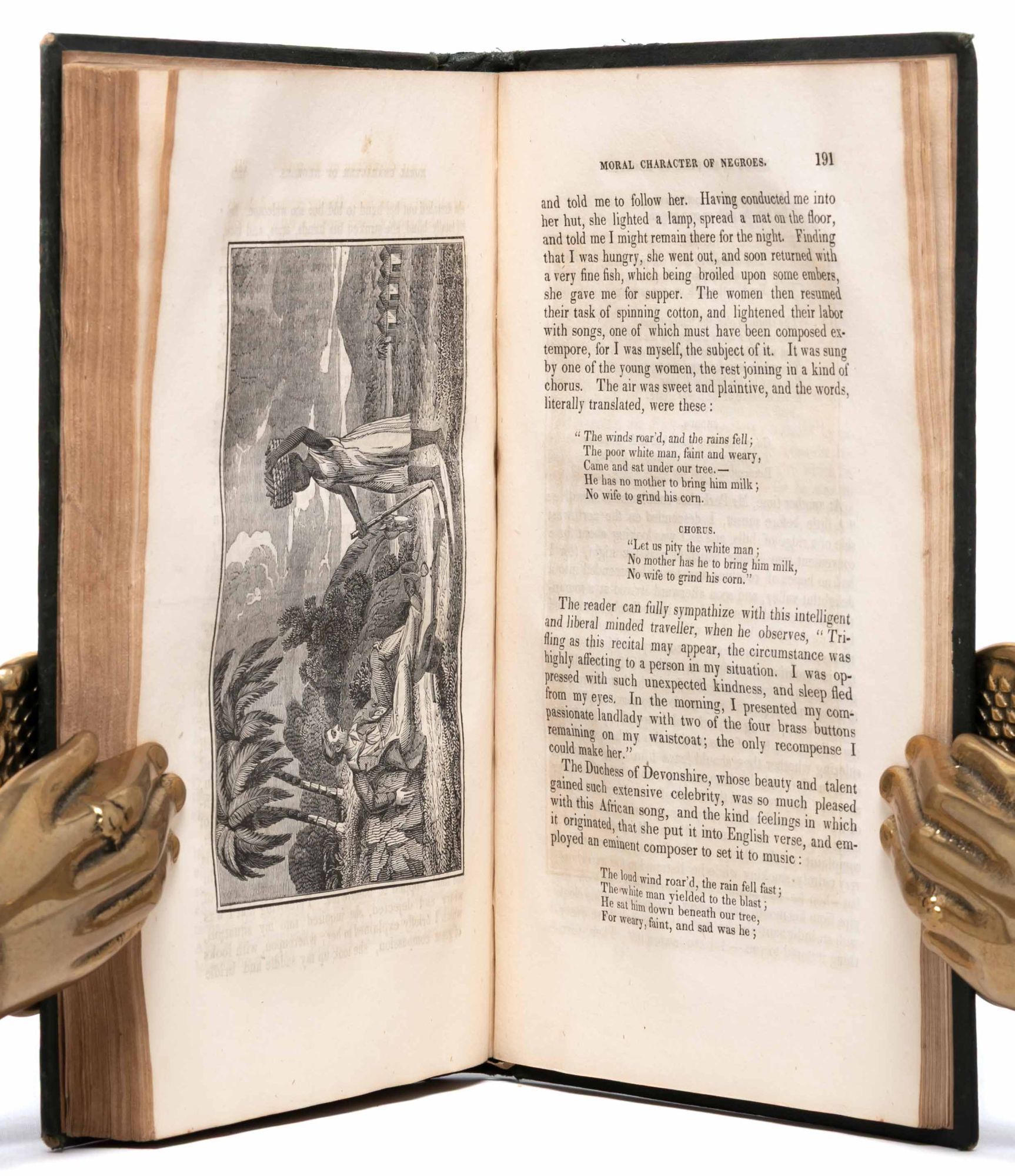
Boston: Allen & Ticknor, 1833. First edition. Near Fine. An excellent, Near Fine copy. Publisher's cloth retaining the delicate paper label to spine. Measuring 110 x 185 mm and collating [6], 232 pp. Complete aside from the tipped-in errata leaf that is often missing. With the iconic frontispiece of an enslaved woman, kneeling in prayer, from an 1827 painting by Henry Thomson (retaining the original tissue guard); and two full-page illustrations (a diagram of manacles and an illustration of Mungo Park in West Africa). Textblock is firm and tight despite slight lean to spine. Some sunning to spine and a bit of wear to edges of spine label. A remarkably clean copy overall, with just a bit of toning to endpapers and foxing to frontispiece. Housed in an attractive quarter leather clamshell case. A lovely example of one of the cornerstone works of the abolitionist movement, in which Child exposes the violence of hereditary chattel slavery in the South as well as the violence of systemic racism in the North.
"When Lydia Maria Child issued her Appeal in Favor of that Class of Americans Called Africans, she had been enjoying dizzying popularity for almost a decade. Child had burst upon the literary scene at the age of twenty-two, with her novel Hobomok, whose double violation of the taboos against miscegenation and divorce had simultaneously scandalized and titillated her contemporaries...North American Review ranked her highest among women writers of the day, and the most prestigious publishers vied for her favor" (Karcher). This work of overt social activism made sense for a writer with an elevated platform. She now had the ability to voice her views about the stories of women and of enslaved people being intertwined, with both groups defined by white men "in terms of ownership" whose positions within "economic transaction reveal the perversion of paternity into the profits of bondage" and the denial of human dignity (Sanchez-Eppler).
Within the work, Child forces her readers to confront the horrors of the Middle Passage and the ongoing violence of hereditary chattel slavery; but she does not only take the South to task. The North, too, participates in systemic racism; and she argues that equality can only come by ending anti-miscegenation laws; eliminating the segregation of public spaces such as churches, schools, theaters, and transportation; providing equal access to education and employment; and addressing all levels of racist attitudes. Outrage among white readers was loud and widespread, and some predicted the end of Child's career. The Boston Athenaeum revoked her library card to prevent future research; additionally, "her Boston benefactors, scared off by their association with a newly born radical abandoned her, and family and friends who did not share her abolitionists stance avoided her" (Bergren). Yet her work sparked among activists a new dialogue about abolition and white supremacy; and it drew a number of influential people including Charles Sumner and Wendell Phillips to a cause that would continue to build strength. "From this point on, Child's career was defined by her participation in the anti-slavery movement" (Bergren).
BAL 3116. Ticknor & Fields One Hundred 7. Sabin 12711. Near Fine.
"When Lydia Maria Child issued her Appeal in Favor of that Class of Americans Called Africans, she had been enjoying dizzying popularity for almost a decade. Child had burst upon the literary scene at the age of twenty-two, with her novel Hobomok, whose double violation of the taboos against miscegenation and divorce had simultaneously scandalized and titillated her contemporaries...North American Review ranked her highest among women writers of the day, and the most prestigious publishers vied for her favor" (Karcher). This work of overt social activism made sense for a writer with an elevated platform. She now had the ability to voice her views about the stories of women and of enslaved people being intertwined, with both groups defined by white men "in terms of ownership" whose positions within "economic transaction reveal the perversion of paternity into the profits of bondage" and the denial of human dignity (Sanchez-Eppler).
Within the work, Child forces her readers to confront the horrors of the Middle Passage and the ongoing violence of hereditary chattel slavery; but she does not only take the South to task. The North, too, participates in systemic racism; and she argues that equality can only come by ending anti-miscegenation laws; eliminating the segregation of public spaces such as churches, schools, theaters, and transportation; providing equal access to education and employment; and addressing all levels of racist attitudes. Outrage among white readers was loud and widespread, and some predicted the end of Child's career. The Boston Athenaeum revoked her library card to prevent future research; additionally, "her Boston benefactors, scared off by their association with a newly born radical abandoned her, and family and friends who did not share her abolitionists stance avoided her" (Bergren). Yet her work sparked among activists a new dialogue about abolition and white supremacy; and it drew a number of influential people including Charles Sumner and Wendell Phillips to a cause that would continue to build strength. "From this point on, Child's career was defined by her participation in the anti-slavery movement" (Bergren).
BAL 3116. Ticknor & Fields One Hundred 7. Sabin 12711. Near Fine.
Details
Title
An Appeal in Favor of that Class of Americans Called Africans
Author
Child, Lydia Maria
Condition
Near Fine
Publisher
Allen & Ticknor: Boston
Date
1833
Edition
First edition