

Immediate, Not Gradual Abolition; or, an Inquiry Into the Shortest, Safest, and Most Effectual Means of Getting Rid of West Indian Slavery
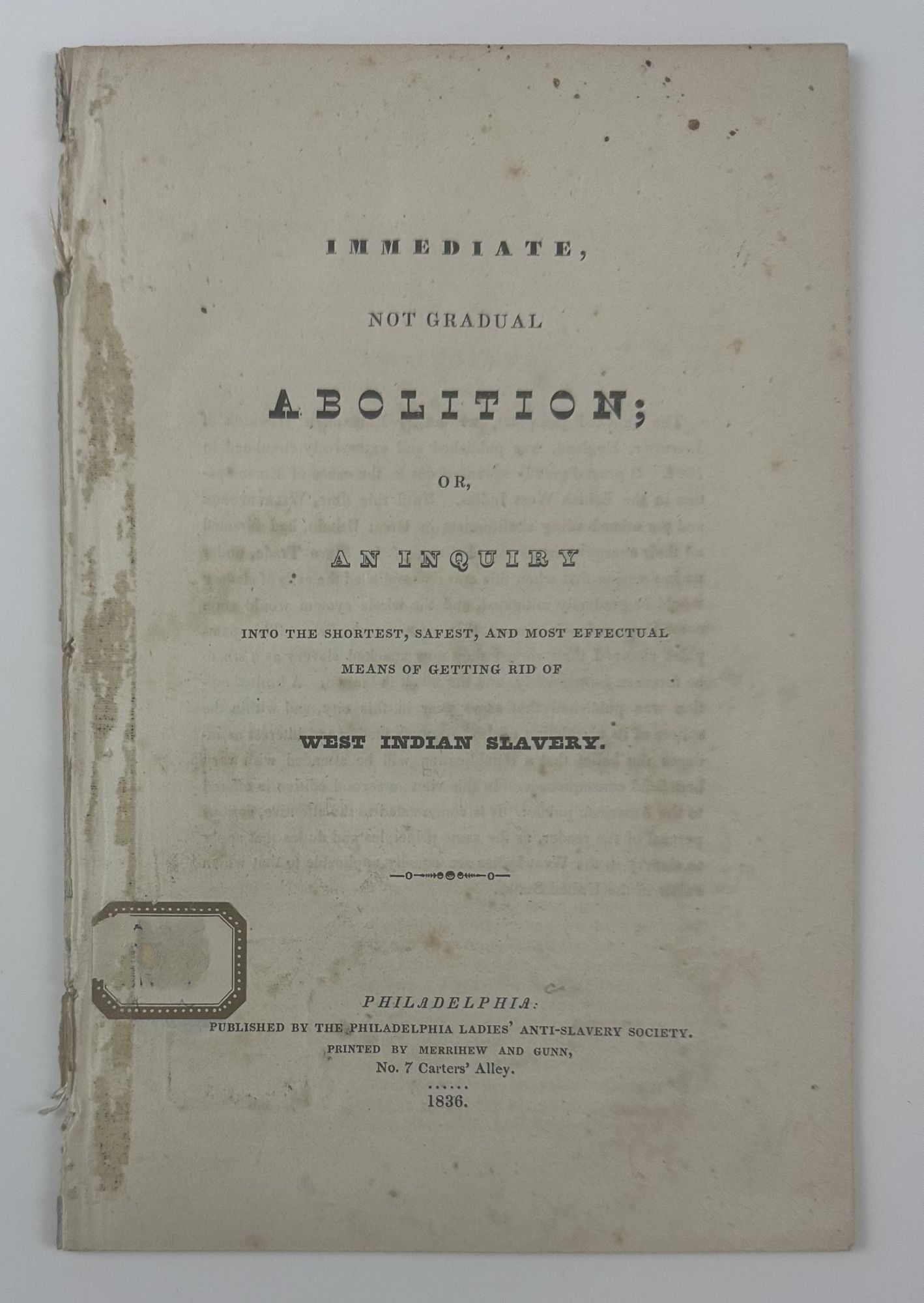
- Philadelphia: Published by the Philadelphia Ladies' Anti-Slavery Society. Printed by Merrihew and Gunn, 1836
Philadelphia: Published by the Philadelphia Ladies' Anti-Slavery Society. Printed by Merrihew and Gunn, 1836. Good.. 24pp. Disbound. Ex-Vermont State Library, with embossed blindstamp and remnants of shelf label on title page and small numbered ink stamp on first page of text. Remnants of original wrappers along outer gutters, mostly minor foxing throughout. A rare Philadelphia edition of an early abolitionist tract by Elizabeth Heyrick, an English Quaker. The work was first published in Great Britain in 1824 and reprinted several times in both England and the United States. The present work is just the second edition published in Philadelphia and the only edition sponsored by the Philadelphia Ladies' Anti-Slavery Society, which formed in 1833. The Philadelphia Ladies' Anti-Slavery Society was created in the same year as the American Anti-Slavery Society by a group of Pennsylvania women, both White and Black, including Lucretia Mott. The organization is credited with being among the first and only racially integrated abolitionist societies in antebellum America. Heyrick's work was essentially focused on immediate and total abolition at a time when most abolitionists hoped the end of the slave trade would result in a gradual end to the peculiar institution. Heyrick's central argument calls for a boycott of West Indian sugar as a way to force a faster end to "the hydra-headed monster of slavery."
Interestingly, the present work includes a one-page introduction not present in other editions, written expressly by someone in the PLASS. The introduction emphasized the impact of the work upon initial publication, noting that "it proved greatly advantageous to the cause of Emancipation in the British West Indies." It also claims the work was so influential to the general cause of abolition that it convinced no less than William Wilberforce "and other leading abolitionists" to transition as "gradualists" to those calling for an end to slavery "immediately." The conclusion of the introduction continues to praise the work's impact: "It is commended to the attentive, serious perusal of the reader, as the same principles and duties that apply to slavery in the West Indies are equally applicable to that which exists in the United States.
Interestingly, the present work includes a one-page introduction not present in other editions, written expressly by someone in the PLASS. The introduction emphasized the impact of the work upon initial publication, noting that "it proved greatly advantageous to the cause of Emancipation in the British West Indies." It also claims the work was so influential to the general cause of abolition that it convinced no less than William Wilberforce "and other leading abolitionists" to transition as "gradualists" to those calling for an end to slavery "immediately." The conclusion of the introduction continues to praise the work's impact: "It is commended to the attentive, serious perusal of the reader, as the same principles and duties that apply to slavery in the West Indies are equally applicable to that which exists in the United States.
Details
Title
Immediate, Not Gradual Abolition; or, an Inquiry Into the Shortest, Safest, and Most Effectual Means of Getting Rid of West Indian Slavery
Author
[Abolition]: [Philadelphia Ladies' Anti-Slavery Society]: [Heyrick, Elizabeth]
Condition
Good
Publisher
Published by the Philadelphia Ladies' Anti-Slavery Society. Printed by Merrihew and Gunn: Philadelphia
Date
1836