

Joining the Navy or Abroad With Uncle Sam
- Washington DC: The Sudwarth Company, 1911
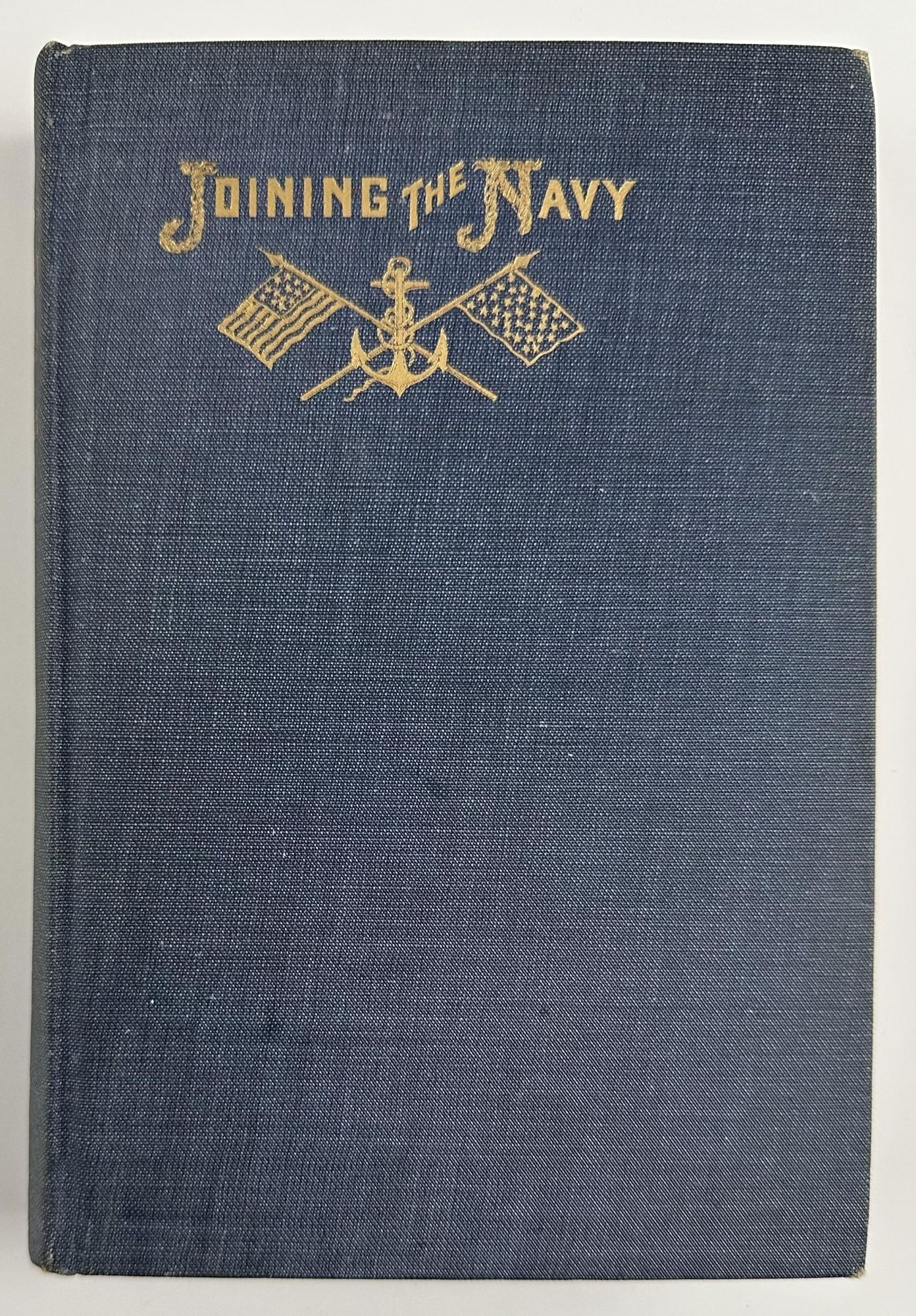
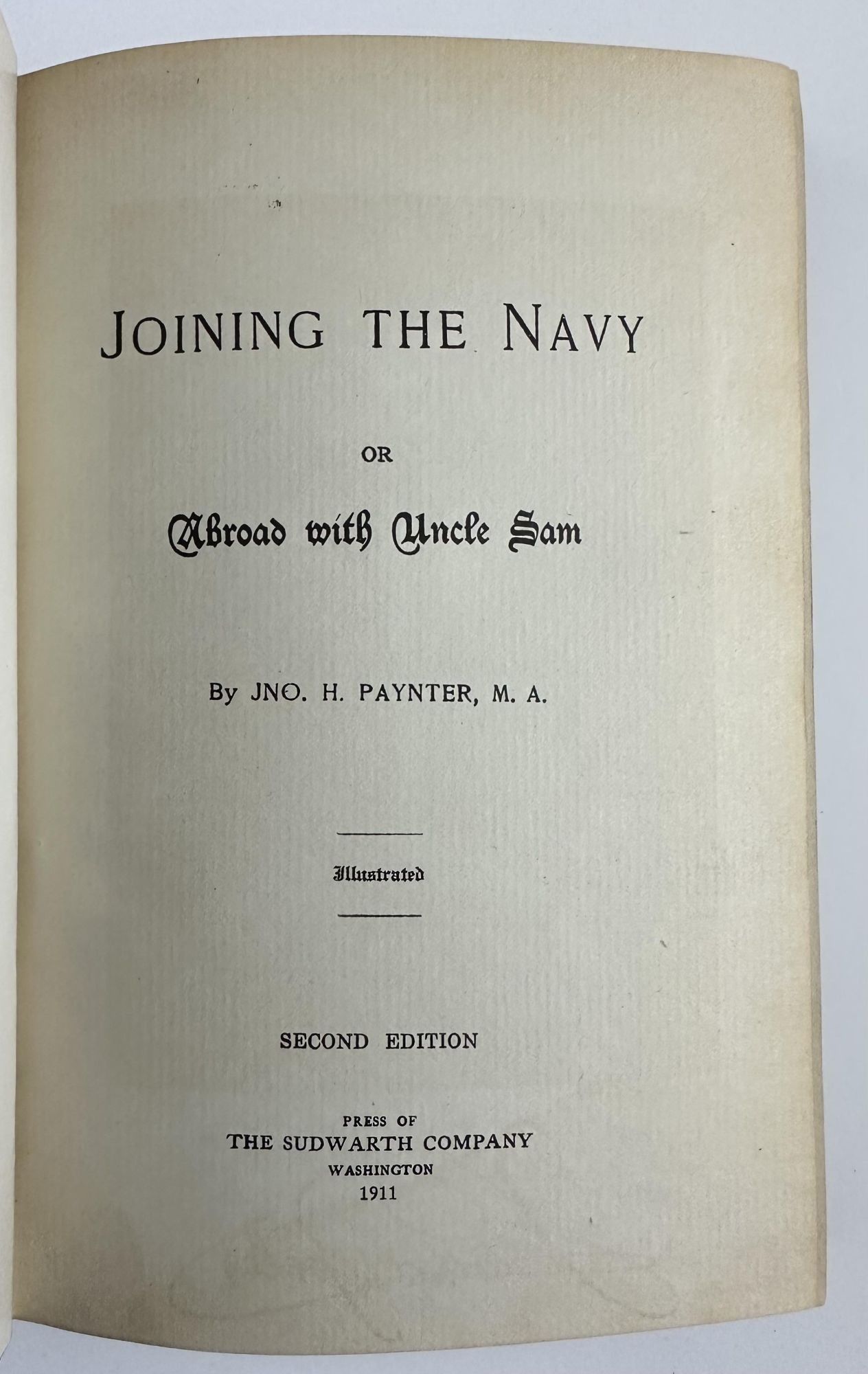
Washington DC: The Sudwarth Company, 1911. Near fine.. 298pp., plus photographic portrait frontispiece and seven plates. Original blue cloth stamped in gilt on spine and front cover. Some wear to spine gilt, minor edge wear and light rubbing, corners lightly bumped. Same small ownership ink stamp belonging to John Milton Rand to each pastedown, same owner's signature to front pastedown. Otherwise internally clean. The scarce second edition, harder to find than the first edition, of John Henry Paynter's memoir of service as a steward and cabin boy aboard the U.S.S. Ossipee on a cruise to Asia in 1884. Paynter was born in Newcastle, Delaware, and includes some "personal history of the author" in the first chapter here. After graduating from Lincoln University in 1883, he was set to begin the study of medicine at Howard University when he suffered partial loss of his eyesight. He chose instead to set out with the Navy as a cabin boy, one of the few positions available to African Americans in that branch of the service. Following his naval adventures, Paynter got a job at the post office, where he remained for the next thirty-nine years.
In the present work, Paynter visited the Azores, Gibraltar, Spain, the African Coast, Egypt, Ceylon, Singapore, and Japan before spending five months or more in China, which is described in Chapters XII ("A Winter in China") and XIII ("Foo Chow and Shanghai") at pages 207-242. The Ossipee stopped in Zanzibar, the Comoro Islands, Mozambique, Madagascar, South Africa, and Barbados on the way back to the United States. In the latter port-of-call, Paynter writes a particularly interesting passage on "The Barbadian and the American Negro," which reads in part: "So far as I am able to judge from what I see of them here, and know of them in the States, the features of character which distinguish the Barbadian from the American negro are his spirit of self-dependence and a just and absolute faith in the equality of his manhood, which is shown on all occasions, whether business or social, by a manner at once easy, graceful, and natural. The reason for this difference may probably be found in the fact that there is scarcely a person living on the island who was old enough at the time of the general emancipation in 1834 to remember anything of the debasing effects of a system out of which manhood must inevitably come, bruised, bleeding, and subdued."
Paynter's account may be the only published memoir by an African American serviceman in the United States Navy during the latter part of the 19th century. The second edition is of particular interest for the one-page Foreword by W.E.B. DuBois, which only appears in this edition. DuBois praises Paynter for his "unique point of view" and states that because of "the sweet-tempered simplicity of his narrative, the book can be read with unusual enjoyment." DuBois also states that works like Paynter's are important because "the black helper and leader" in tales of the U.S. Navy are often "studiously forgotten." He ends by recommending "a sympathetic reading" of the work. In Paynter's own Preface, he invokes legendary authors of sea tales such as James Fenimore Cooper, Richard Dana, and Herman Melville in the hopes that his own work will "be instrumental in leading some of the youths of our race to cultivate a desire for that broad experience which depends so much on travel."
Work, p.477 (first ed.).
In the present work, Paynter visited the Azores, Gibraltar, Spain, the African Coast, Egypt, Ceylon, Singapore, and Japan before spending five months or more in China, which is described in Chapters XII ("A Winter in China") and XIII ("Foo Chow and Shanghai") at pages 207-242. The Ossipee stopped in Zanzibar, the Comoro Islands, Mozambique, Madagascar, South Africa, and Barbados on the way back to the United States. In the latter port-of-call, Paynter writes a particularly interesting passage on "The Barbadian and the American Negro," which reads in part: "So far as I am able to judge from what I see of them here, and know of them in the States, the features of character which distinguish the Barbadian from the American negro are his spirit of self-dependence and a just and absolute faith in the equality of his manhood, which is shown on all occasions, whether business or social, by a manner at once easy, graceful, and natural. The reason for this difference may probably be found in the fact that there is scarcely a person living on the island who was old enough at the time of the general emancipation in 1834 to remember anything of the debasing effects of a system out of which manhood must inevitably come, bruised, bleeding, and subdued."
Paynter's account may be the only published memoir by an African American serviceman in the United States Navy during the latter part of the 19th century. The second edition is of particular interest for the one-page Foreword by W.E.B. DuBois, which only appears in this edition. DuBois praises Paynter for his "unique point of view" and states that because of "the sweet-tempered simplicity of his narrative, the book can be read with unusual enjoyment." DuBois also states that works like Paynter's are important because "the black helper and leader" in tales of the U.S. Navy are often "studiously forgotten." He ends by recommending "a sympathetic reading" of the work. In Paynter's own Preface, he invokes legendary authors of sea tales such as James Fenimore Cooper, Richard Dana, and Herman Melville in the hopes that his own work will "be instrumental in leading some of the youths of our race to cultivate a desire for that broad experience which depends so much on travel."
Work, p.477 (first ed.).
Details
Title
Joining the Navy or Abroad With Uncle Sam
Author
[African Americana]: Paynter, John Henry
Condition
Near Fine
Publisher
The Sudwarth Company: Washington DC
Date
1911