

Washington Secretary David Humphreys' 1802 Anti-Slavery Poem dedicated to Prince Regent of Portugal
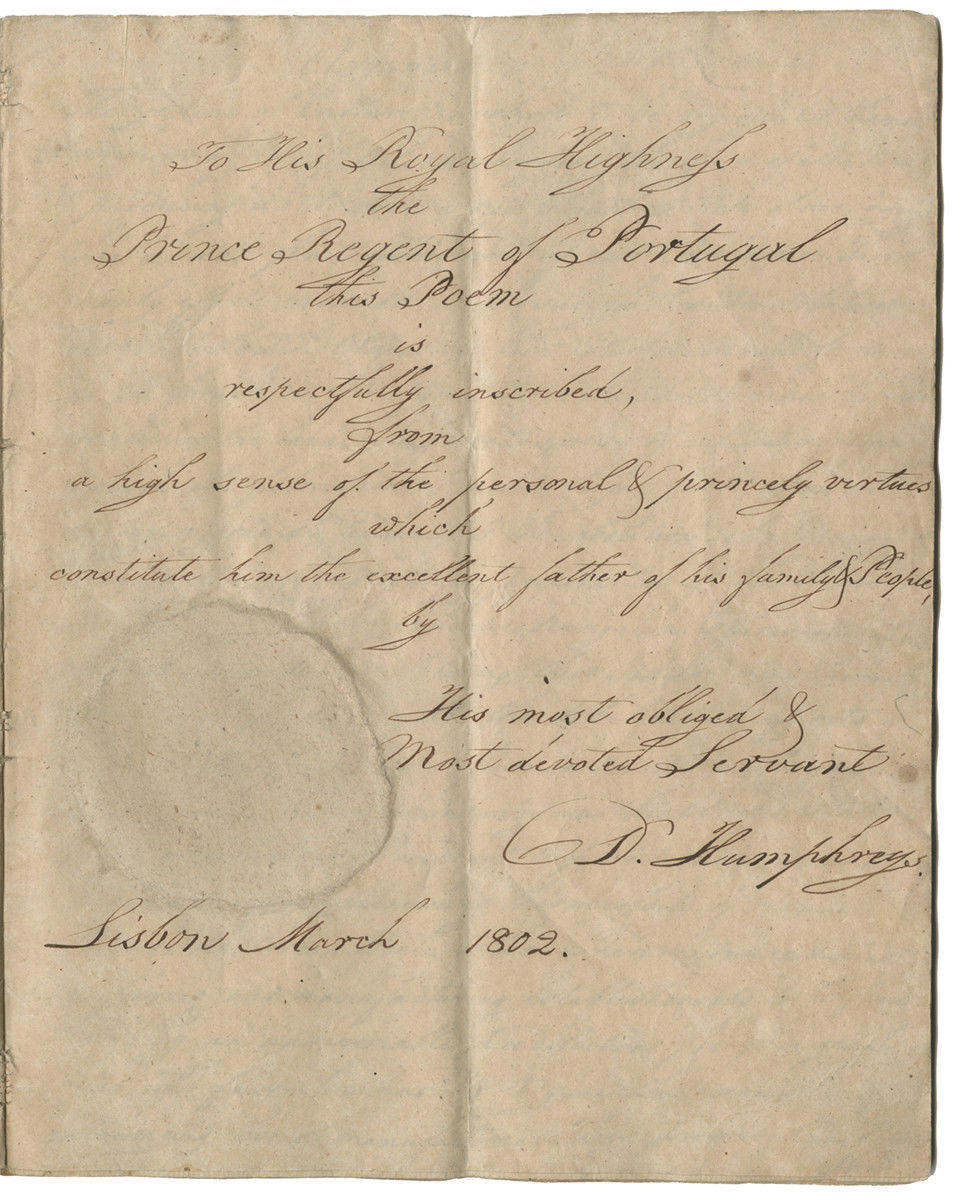
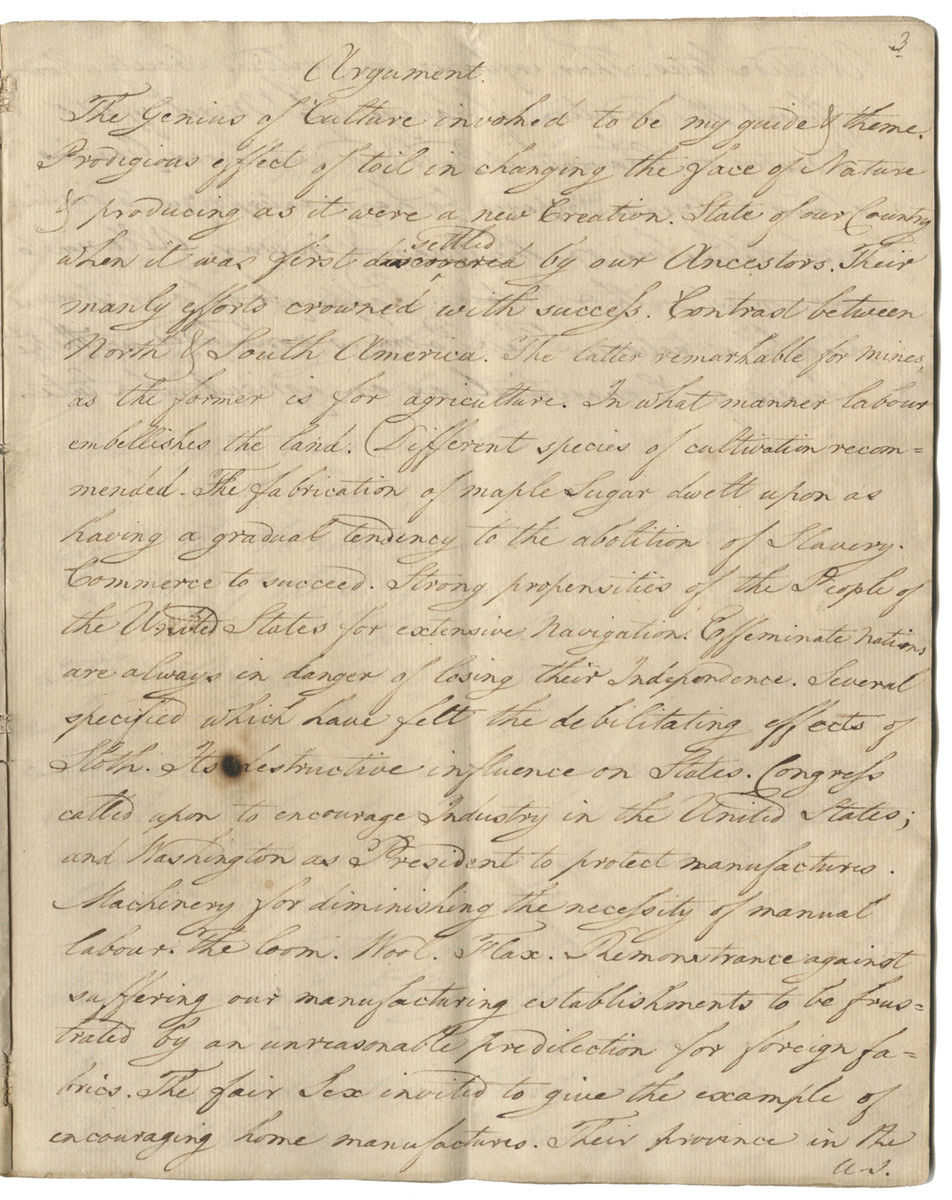
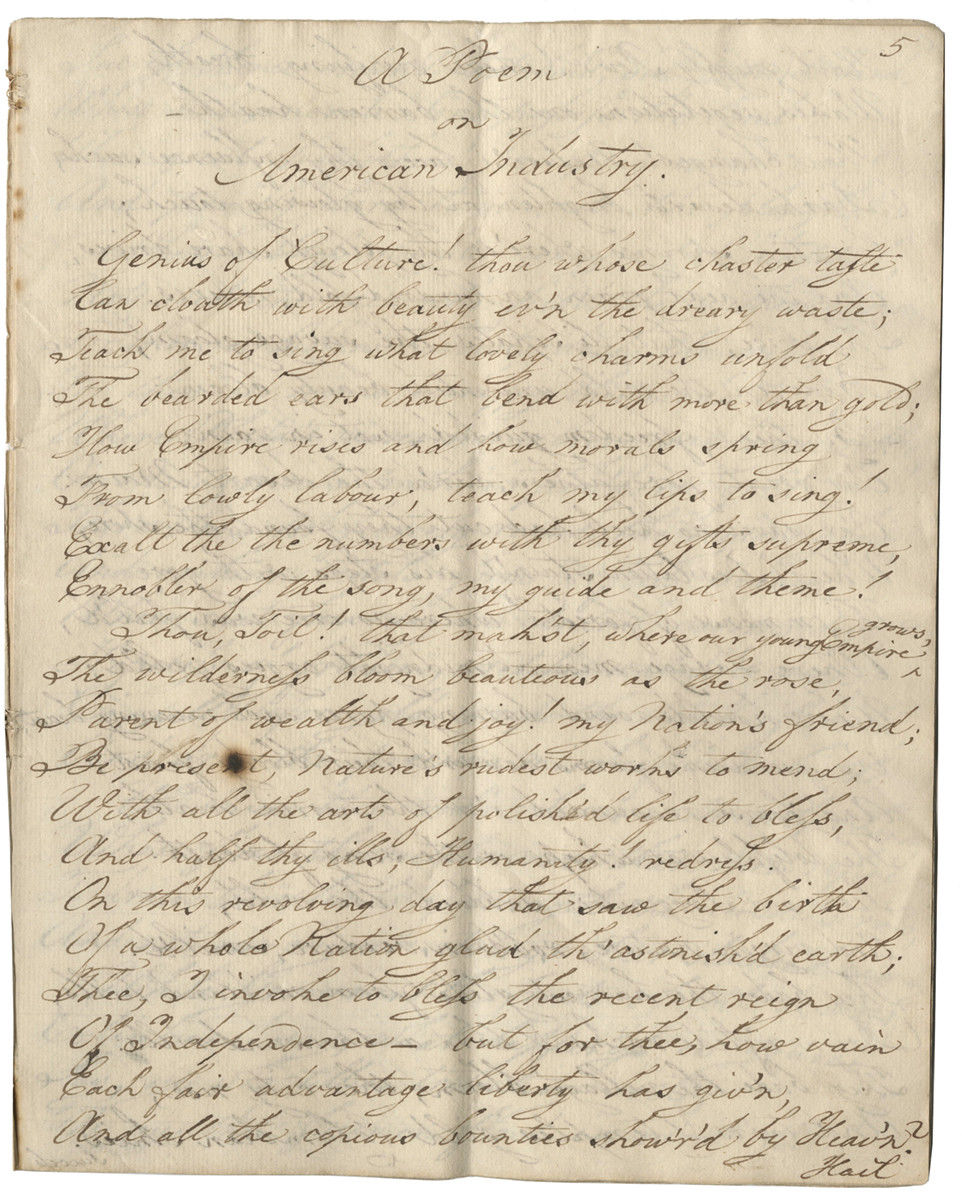
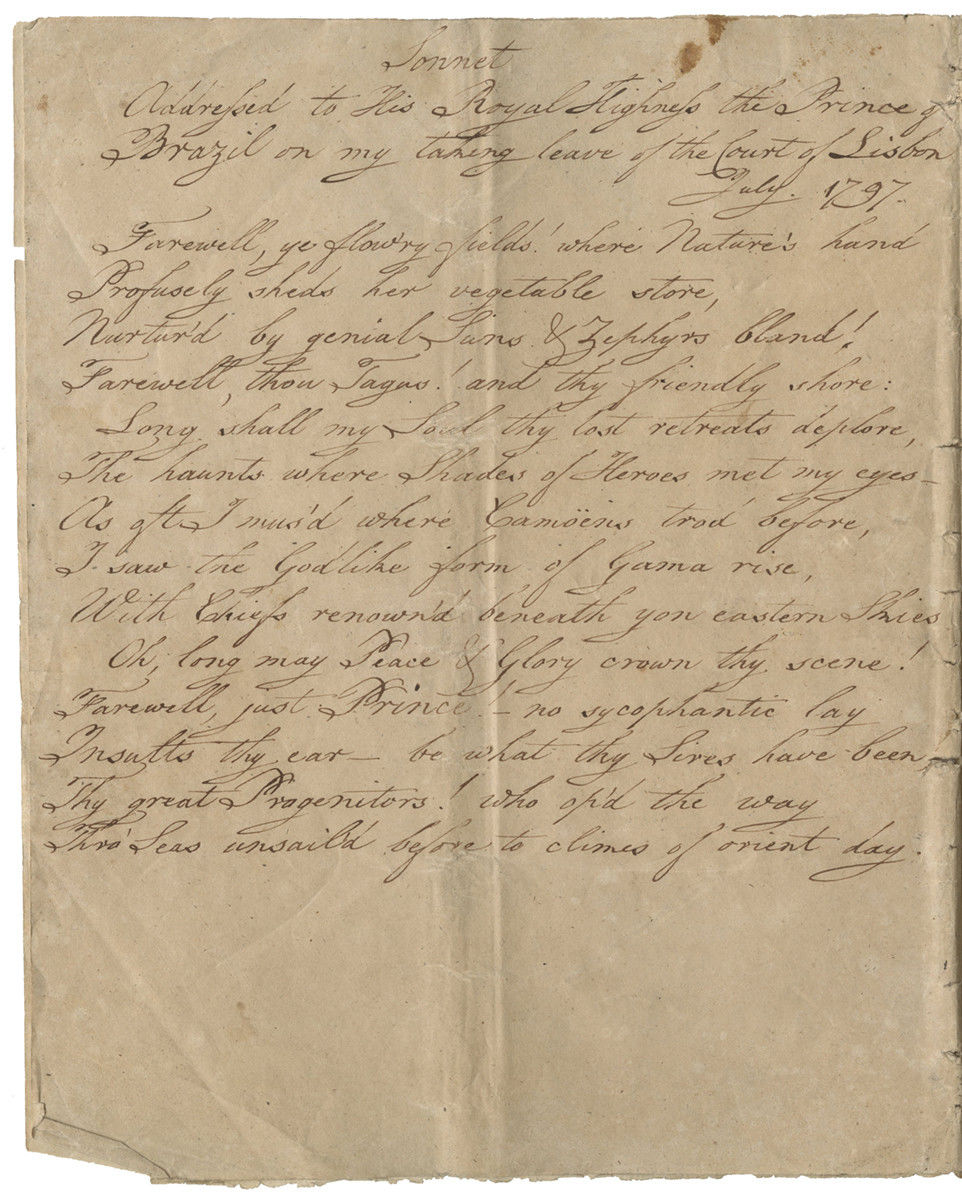
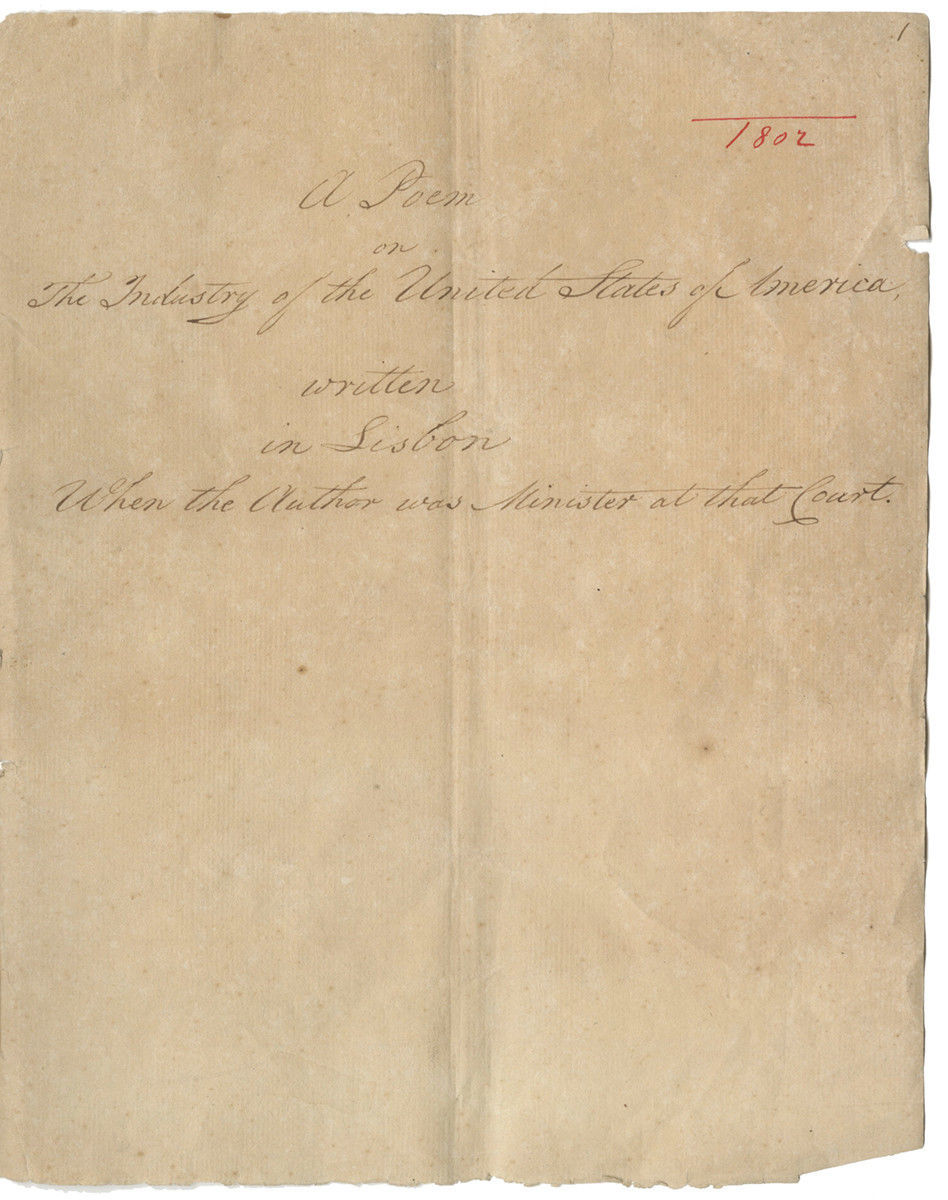
- Lisbon, Portugal , 1802
David Humphreys served as an aide-de-camp to General George Washington during the Revolutionary War, and they kept up a voluminous correspondence after the war. After serving as ambassador to Portugal and then Spain, Humphreys imported a herd of merino sheep from Spain and founded the woolen industry in the United States.
Humphreys' poem criticizes the institution of slavery that causes human suffering for American luxuries; praises the benefits of America's industrial capabilities, including wool; and the importance of education for American progress.
Humphreys inscribed this copy to Prince Regent Dom João Maria José Francisco Xavier de Paula Luís António Domingos Rafael (1767-1826). From 1799, Prince John took the reins of government from his mother, Queen Dona Maria I (1734-1816), who had developed clinical depression. From 1816 until his death a decade later, he was King John VI of the United Kingdom of Portugal, Brazil, and the Algarves. After the recognition of Brazil's independence, he was the titular Emperor of Brazil and King of Portugal.
DAVID HUMPHREYS. Autograph Manuscript Signed, "A Poem on American Industry," March 1802, Lisbon, Portugal. 32 pp.
Excerpts[1]
"Oh, could my song impressive horror bring,
Of conscious guilt th' insufferable sting;
From eyes untaught to weep the tear should start,
And mercy melt the long obdur'd of heart.
See naked negroes rear the sugar'd reeds!
Behold! Their flesh beneath their driver bleeds!
And hear their heart-heav'd groans! then say, how good,
How sweet, the dainties drugg'd with human blood!"
"Thou, slavery, (maledictions blast thy name!)
Fell scourge of mortals, reason's foulest shame!
Fly, fiend infernal! To thy Stygean shore,
And let thy deeds defile my song no more."
"Oh, might my guidance from the downs of Spain,
Lead a white flock across the western main;
Fam'd like the bark that bore the Argonaut,
Should be the vessel with the burden fraught!
Clad in the raiment my Merinos yield,
Like Cincinnatus fed from my own field;
Far from ambition, grandeur, care and strife,
In sweet fruition of domestic life;
There would I pass with friends, beneath my trees,
What rests from public life, in letter'd ease."
"From industry the sinews strength acquire,
The limbs expand, the bosom feels new fire.
Unwearied industry pervades the whole,
Nor lends more force to body than to soul.
Hence character is form'd, and hence proceeds
Th' enlivening heat that fires to daring deeds:
Then animation bids the spirit warm,
Soar in the whirlwind and enjoy the storm.
For our brave tars what clime too warm, too cold,
What toil too hardy, or what task too bold?
O'er storm-vex'd waves our vent'rous vessels roll,
Round artic isles or near th' antarctic pole;
Nor fear their crews the fell tornado's ire,
Wrapp'd in a deluge of Caribbean fire.
The wonders of the deep they see, while tost
From earth's warm girdle to the climes of frost:
Full soon to bid the battle's thunder roar,
And guard with wooden walls their native shore."
"Such sober habits industry prepares,
And order guarantees for freedom's heirs.
Say, in what state, so imbib'd the youth
Th' eternal principles of right and truth?
Where education such instruction spread?
Where on the mind such influence morals shed?
Where modesty with charms so fair appear'd?
So honour'd age, and virtue so rever'd?"
David Humphreys (1752-1818) was born in Connecticut and graduated from Yale in 1771. After graduating, he became the principal of a public school and then a private tutor. In 1776, he enlisted in the Continental Army in the 2nd Connecticut regiment. He wrote the first American sonnet, entitled "Addressed to my Friends at Yale College, on my Leaving Them to Join the Army." He served on the staffs of several generals, and in 1780, he became George Washington's aide-de-camp with the rank of colonel. He became a confidant and advisor to the general, and they became lifelong friends. After the Battle of Yorktown in 1781, Washington tasked Humphreys and another aide to deliver the surrendered British colors and his report on the battle to Congress. He was one of two aides who accompanied Washington when he resigned his commission to the Continental Congress. In 1785, he wrote "A Poem on the Happiness of America," which went through ten editions between 1786 and 1804. "With great pleasure I received the intimation of your spending the winter under this Roof," Washington wrote to Humphreys in 1787. "The invitation was not less sincere, than the reception will be cordial. The only stipulations I shall contend for are, that in all things you shall do as you please?I will do the same; and that no ceremony may be used or any restraint be imposed on any one." In May 1791, President George Washington appointed Humphreys as the first U.S. ambassador to Portugal. In 1797, President John Adams appointed Humphreys as the second U.S. ambassador to Spain. After his terms as ambassador, he introduced a herd of merino sheep from Spain into the United States in 1802. He established the first successful woolen mill factory in the United States. As a poet and author, he was one of the "Hartford Wits" and was elected a Fellow of the American Academy of Arts and Sciences in 1804 and a Fellow of the Royal Society of London in June 1807. His play The Yankey in England (1814) was influential in establishing the stage character of the Yankee.
Provenance: This manuscript descended in the Humphreys family until approximately 40 years ago, when the present seller, a now elderly art dealer in Vermont, acquired it.
[1]>David Humphreys, "A Poem on the Industry of the United States of America,"in Vernon Louis Parrington, ed., The Connecticut Wits (Hamden, CT: Archon Books, 1963), 385-405.
Details
Title
Washington Secretary David Humphreys' 1802 Anti-Slavery Poem dedicated to Prince Regent of Portugal
Author
DAVID HUMPHREYS
Condition
Unknown
Publisher
Lisbon, Portugal
Date
1802
Pages
32