

Cold War Aerospace Engineering and Spacecraft Recovery in NASA Technical Note on Ocean Landings, 1967
- 1967
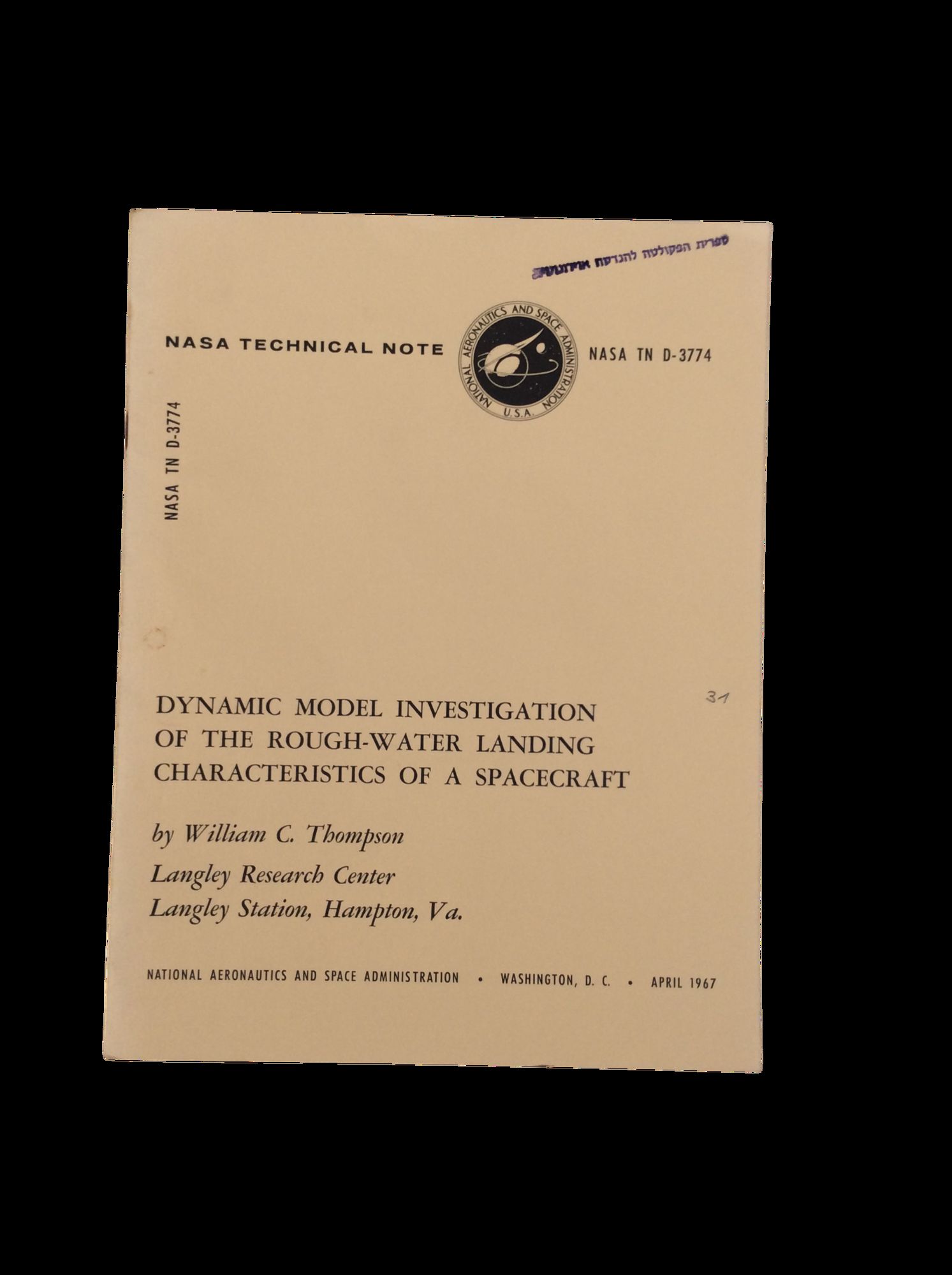
1967. Thompson, William C. Dynamic Model Investigation of the Rough-Water Landing Characteristics of a Spacecraft (1967), a NASA Technical Note documenting the system of spacecraft recovery and safety engineering in early U.S. crewed spaceflight. The material documents the system of ocean landing analysis and recovery protocols through scaled experimental modeling, revealing how NASA engineers evaluated the physical forces acting on spacecraft during splashdown. The report demonstrates the process by which data from controlled simulations informed design tolerances, crew safety thresholds, and operational procedures, providing primary-source evidence for the study of aerospace engineering, Cold War science, and human spaceflight systems.
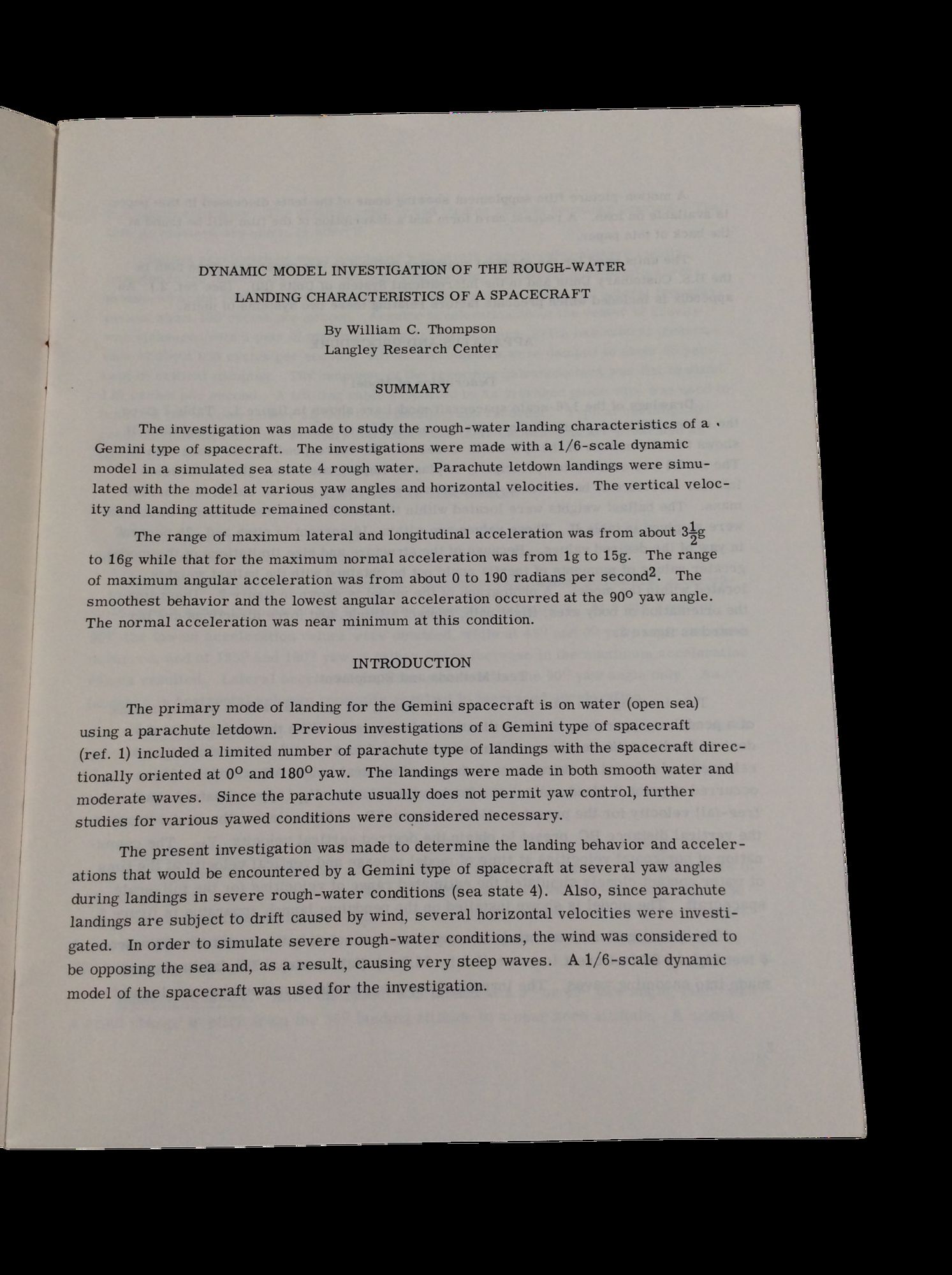
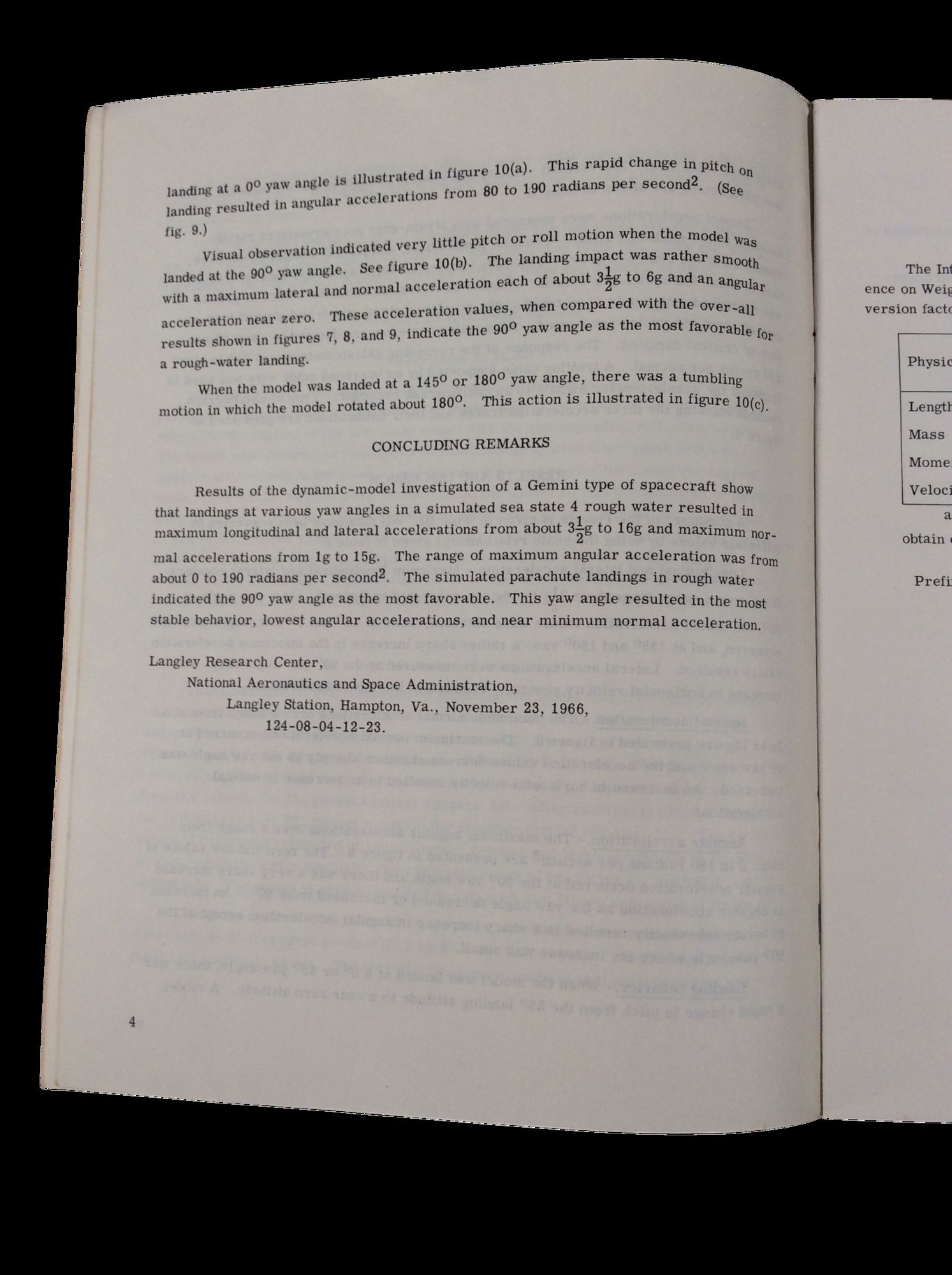
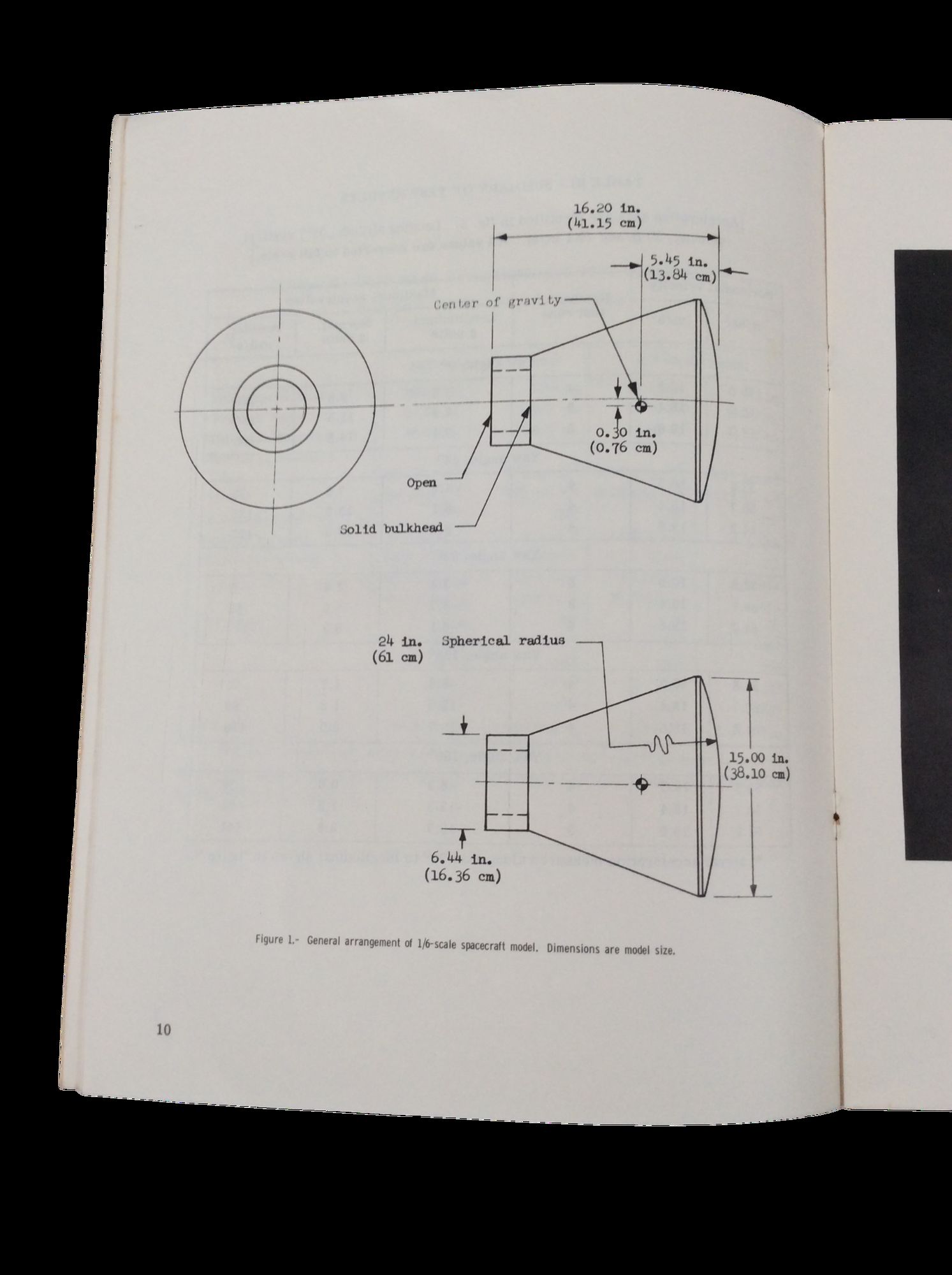
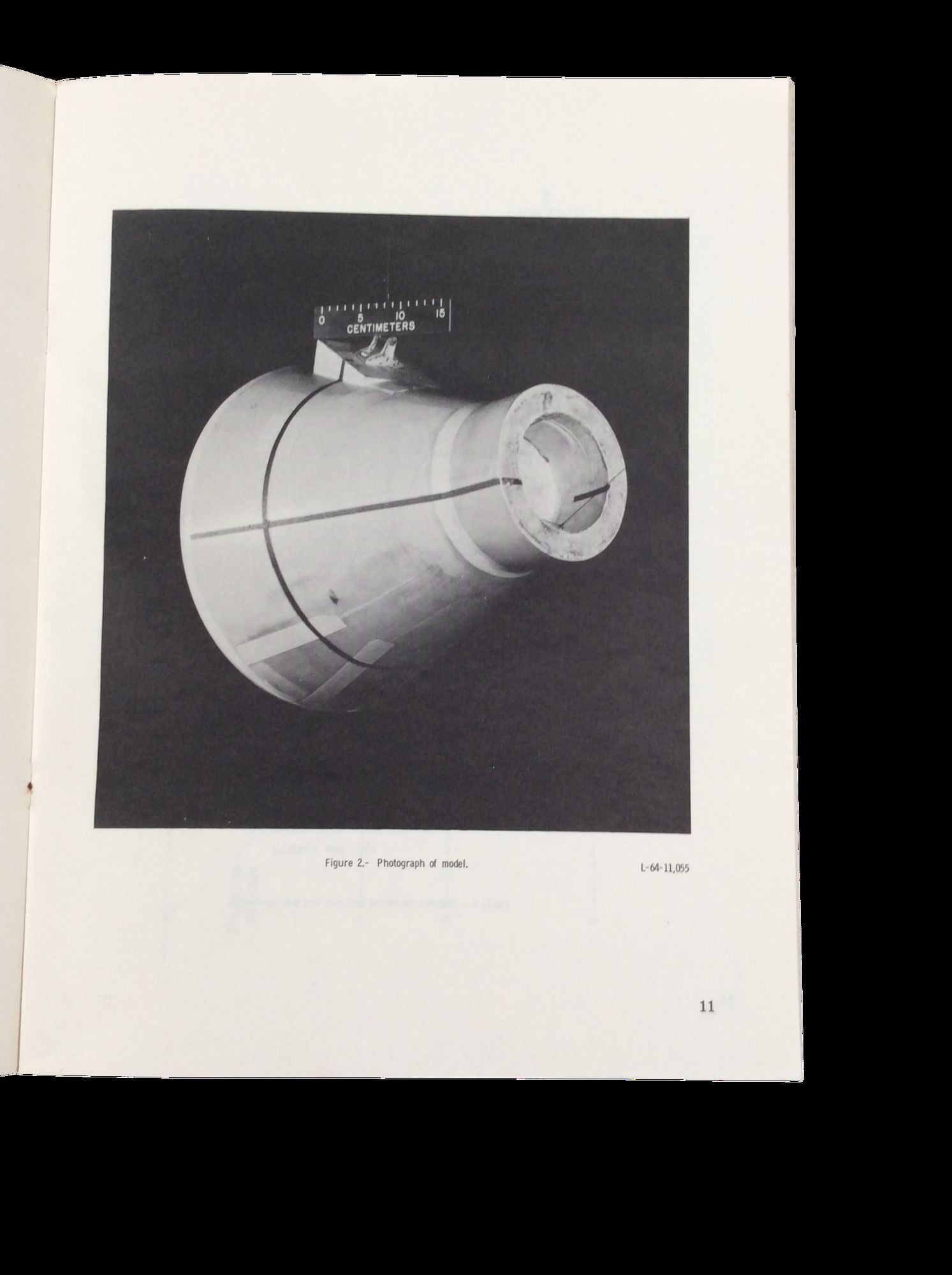
Thompson, William C. Dynamic Model Investigation of the Rough-Water Landing Characteristics of a Spacecraft. Washington, D.C.: National Aeronautics and Space Administration, April 1967. NASA Technical Note NASA TN D-3774. First edition. Quarto, approximately 20 or more pages. Staple-bound in original printed wrappers. The report presents experimental results from a 1/6-scale spacecraft model subjected to simulated rough-water conditions corresponding to Sea State 4. The study measures longitudinal, lateral, and normal accelerations, as well as angular motion during parachute-assisted splashdown at varying yaw angles. Diagrams illustrate the scaled model with dimensional specifications, while photographic plates document the testing apparatus and procedures. Tables present quantified results, including acceleration ranges and comparative data across test conditions. The text includes detailed analysis of spacecraft orientation at impact, with emphasis on stability and force distribution during landing sequences.
Issued during the Gemini program and preceding Apollo missions, this report illustrates how NASA addressed the engineering challenges of ocean recovery following earlier incidents that exposed risks in splashdown operations. The findings demonstrate how specific configurations, particularly orientation at impact, influenced stability and crew survivability, shaping spacecraft design and mission planning. The publication supports research into aerospace engineering systems, experimental modeling, and the development of recovery protocols in early space exploration. Light toning to wrappers and pages with minor edge wear; binding secure and contents clear; overall very good condition. A focused technical document reflecting the engineering processes underlying safe human spaceflight during the Cold War era.
Thompson, William C. Dynamic Model Investigation of the Rough-Water Landing Characteristics of a Spacecraft. Washington, D.C.: National Aeronautics and Space Administration, April 1967. NASA Technical Note NASA TN D-3774. First edition. Quarto, approximately 20 or more pages. Staple-bound in original printed wrappers. The report presents experimental results from a 1/6-scale spacecraft model subjected to simulated rough-water conditions corresponding to Sea State 4. The study measures longitudinal, lateral, and normal accelerations, as well as angular motion during parachute-assisted splashdown at varying yaw angles. Diagrams illustrate the scaled model with dimensional specifications, while photographic plates document the testing apparatus and procedures. Tables present quantified results, including acceleration ranges and comparative data across test conditions. The text includes detailed analysis of spacecraft orientation at impact, with emphasis on stability and force distribution during landing sequences.
Issued during the Gemini program and preceding Apollo missions, this report illustrates how NASA addressed the engineering challenges of ocean recovery following earlier incidents that exposed risks in splashdown operations. The findings demonstrate how specific configurations, particularly orientation at impact, influenced stability and crew survivability, shaping spacecraft design and mission planning. The publication supports research into aerospace engineering systems, experimental modeling, and the development of recovery protocols in early space exploration. Light toning to wrappers and pages with minor edge wear; binding secure and contents clear; overall very good condition. A focused technical document reflecting the engineering processes underlying safe human spaceflight during the Cold War era.
Details
Title
Cold War Aerospace Engineering and Spacecraft Recovery in NASA Technical Note on Ocean Landings, 1967
Author
William Thompson
Condition
Unknown
Date
1967