

1838 – A letter from a manufacturer in Maryland to his father, a farmer in New Hampshire, breathlessly reporting that a Congressional Committee had voted in favor of expelling one Congressman for the killing of another in a duel
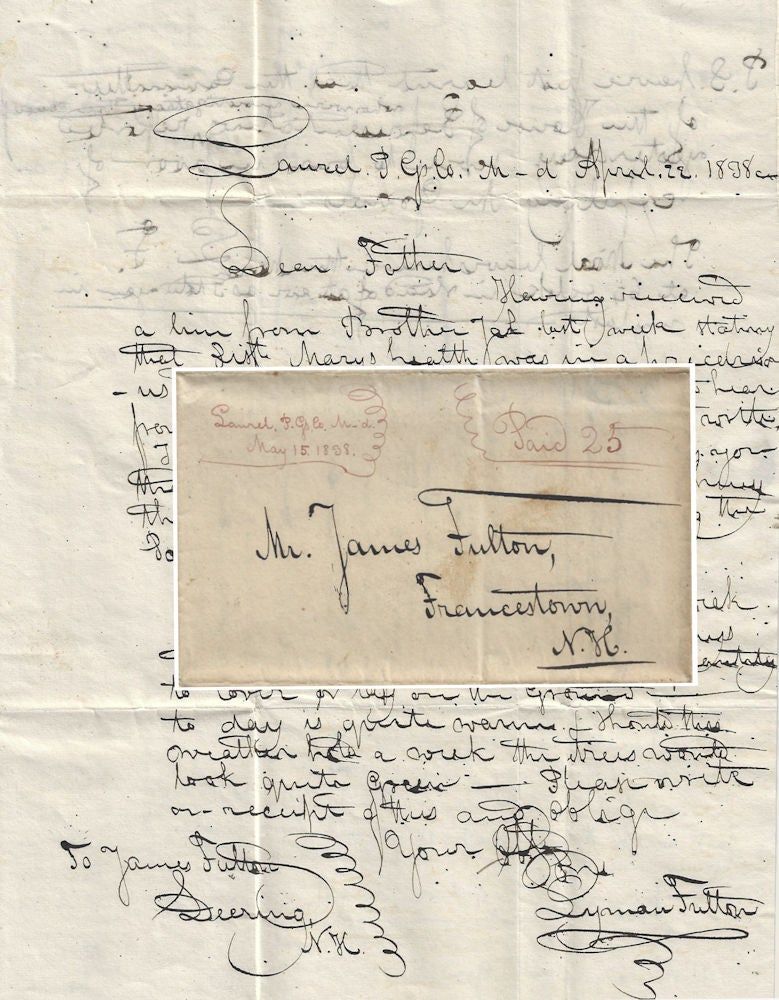
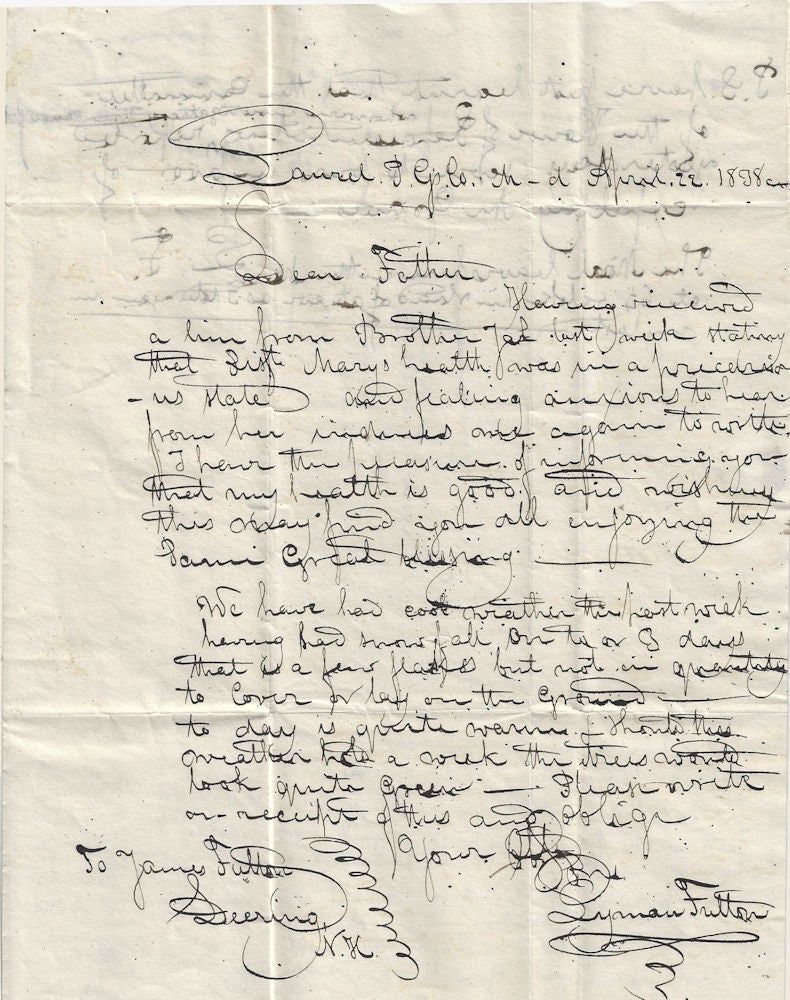
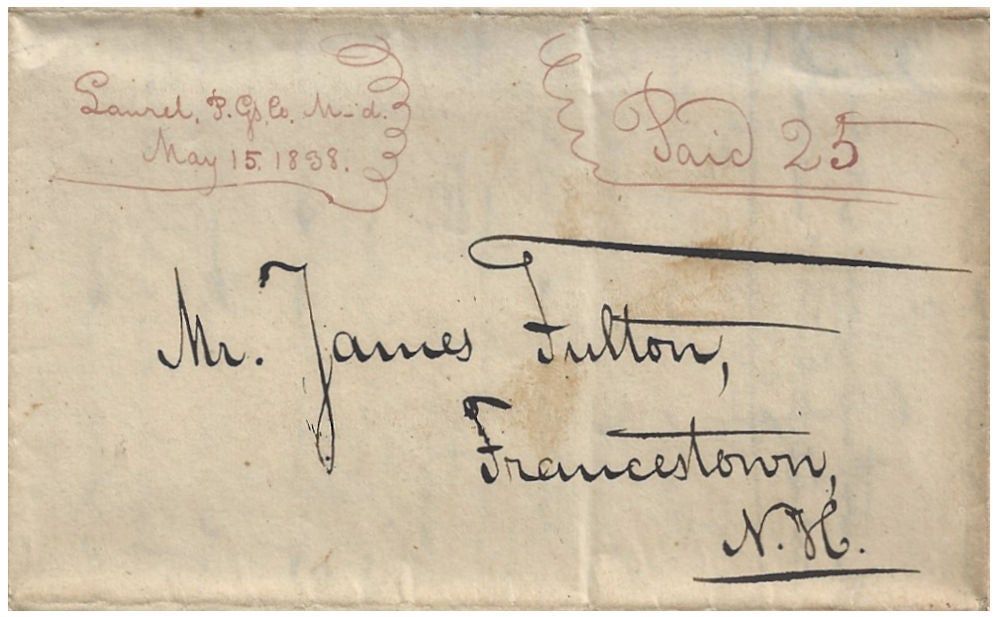
- Envelope or Cover
- Laurel, Maryland , 1838
In this letter, Lyman reports that his sister Mary’s “health was in a precarious state,” however, more importantly, just before mailing the letter, he scrawled a postscript that reads
“I have just learnt that the Committee of the House of Representatives who were investigating the cause of the late duel, reported yesterday seven to four in favor of expelling Mr. Graves. . ..”
. The roots of the Jonathan Cilley - William Graves duel sprang from arguments between the Whigs and the Democrats over President Andrew Jackson’s refusal to renew the contract of the Second U. S. Bank. Cilley vociferously defended Jackson, while Whig newspaperman, James Watson Webb, a notorious instigator, was just as vocal in his denunciations. Webb’s exhortations inflamed a Virginia congressman, Henry A. Wise. Cilley who was known for his unsupported character-attacks, accused Wise of using Native and African-American women for sexual gratification. In turn, Wise called for a major investigation, accusing Cilley of corruption, after which Cilley accused Webb of bribery on the floor of the House without a scintilla of evidence. Webb next convinced another Whig, Congressman William Graves, to deliver a note to Cilley demanding that he rescind the accusation and admit to his own corruption.When Cilley refused to accept the letter, Graves became incensed and challenged him to a duel. Since dueling was illegal in Washington, the two men met on 24 February 1838 at the Bladensburg Dueling Ground in Maryland, about 15 miles from Laurel. Each brought several seconds, physicians, and friends, all congressmen. The duel was fought with long guns. The men separated and at the count of four, both fired and missed. As was customary, the men moved a little closer to take their second shots. Again, both missed. Although Cilley was ready to quit the duel, Graves insisted it continue, and the men moved closer still. With their third shot, Cilley fell dead while Graves remained untouched.
Northern, Christian, and Democratic newspapers exploded with rage, accusing Graves of murder. Cilley’s allies immediately began hounding Graves calling for his expulsion from Congress. Although the efforts continued for months, the furor eventually subsided, and despite the committee vote cited in this letter, Graves retained his seat. A year later, Congress passed a law forbidding dueling challenges to be issued or accepted in Washington, as well as making the killing an opponent in a duel tantamount to murder.
(For more information, see Seboe’s “The Last Fatal Duel in Congress: Jonathan Cilley vs. William Graves” available on line at the Boundary Stones website.)
At the time of listing, no similar letters are for sale in the trade, however it appears that at least six have appeared at auction, and OCLC identifies four held in institutional collections.
.Details
Title
1838 – A letter from a manufacturer in Maryland to his father, a farmer in New Hampshire, breathlessly reporting that a Congressional Committee had voted in favor of expelling one Congressman for the killing of another in a duel
Author
Lyman Fulton
Binding
Envelope or Cover
Condition
Very Good
Publisher
Laurel, Maryland
Date
1838