

THE ORIGIN OF THE SERIF: BRUSH WRITING & ROMAN LETTERS. [with] A BRUSH-WRITTEN ALPHABET OF 23 LETTERS
- Davenport, Iowa: Catfish Press, 1968
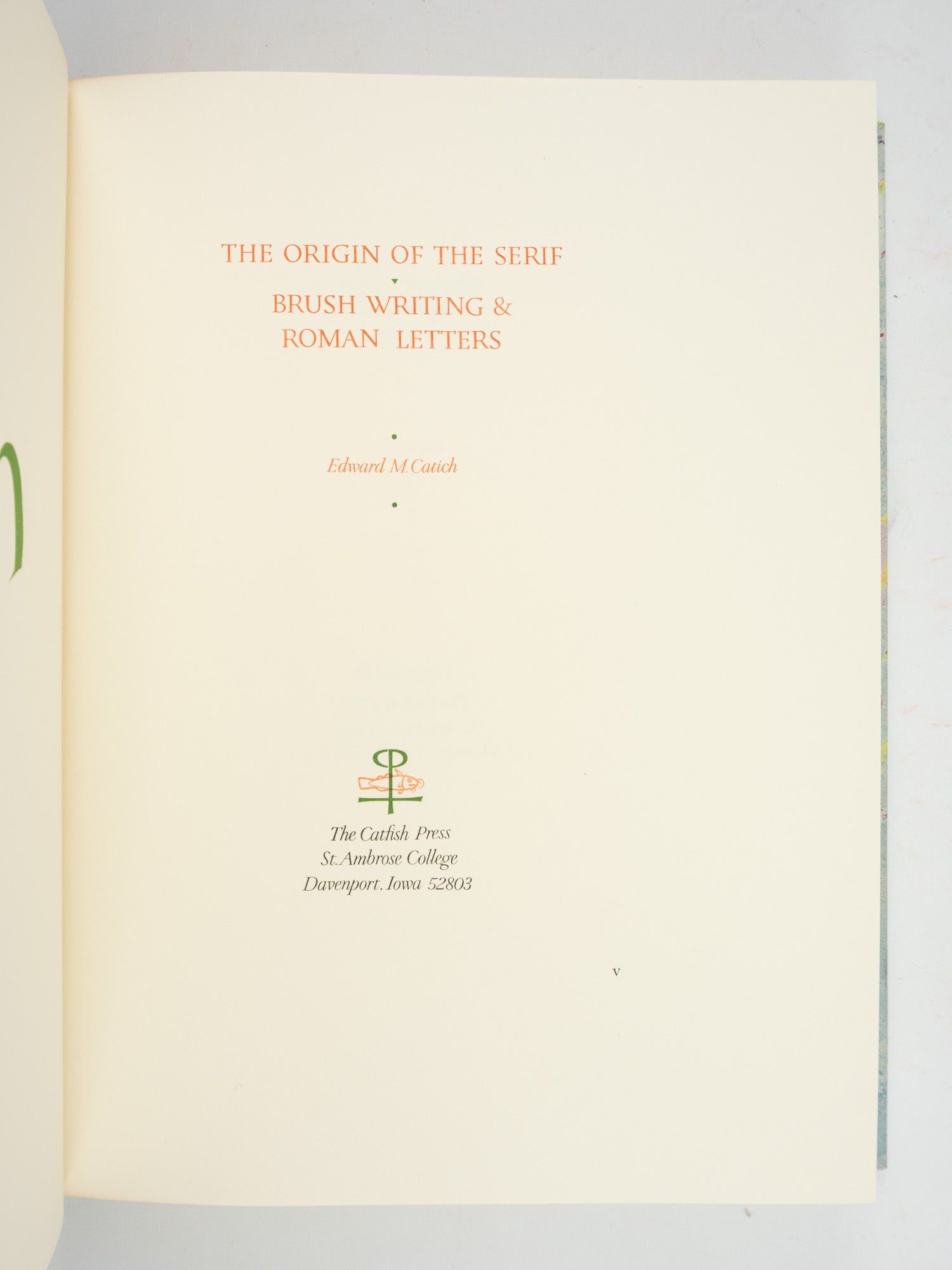
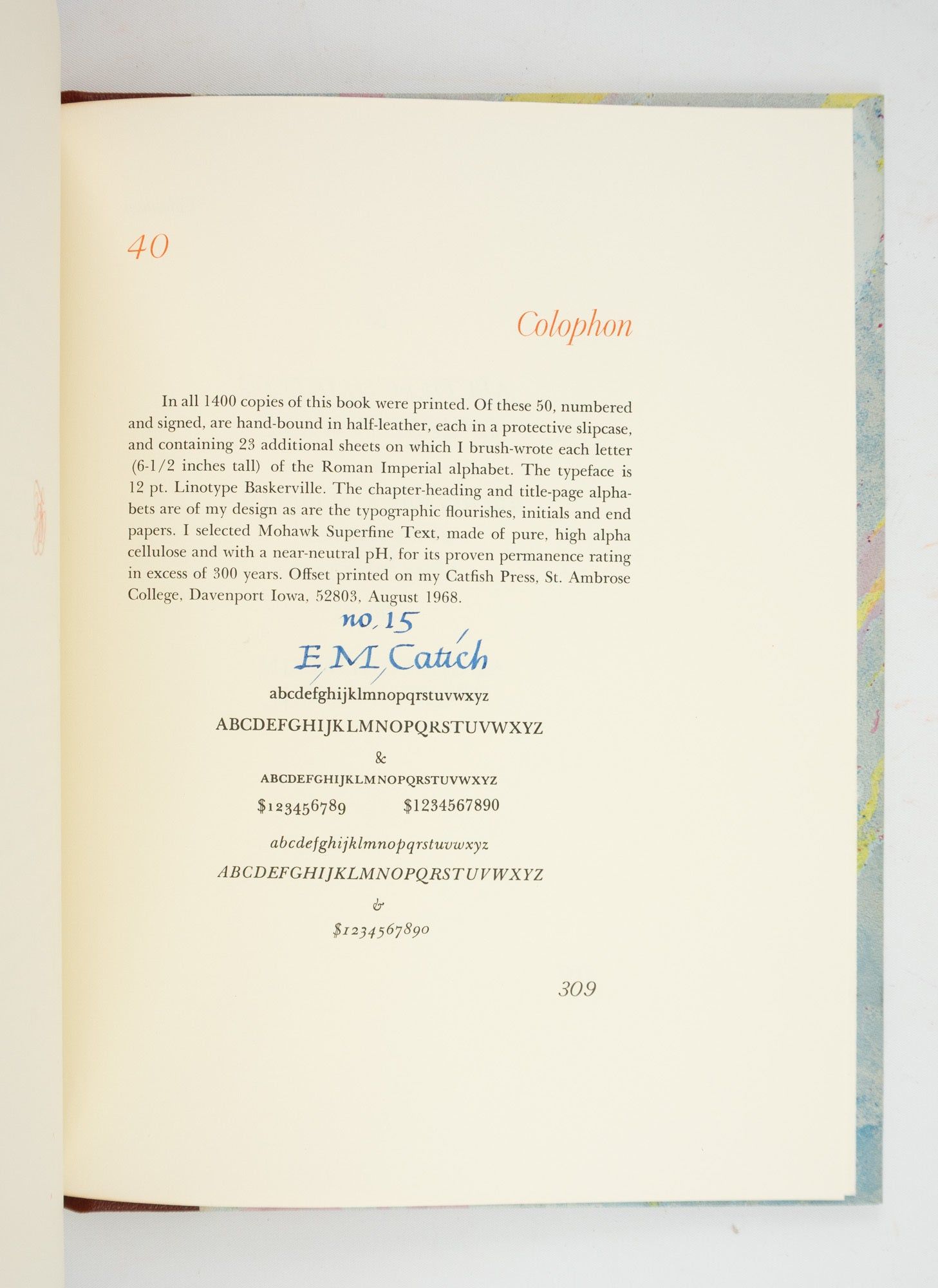
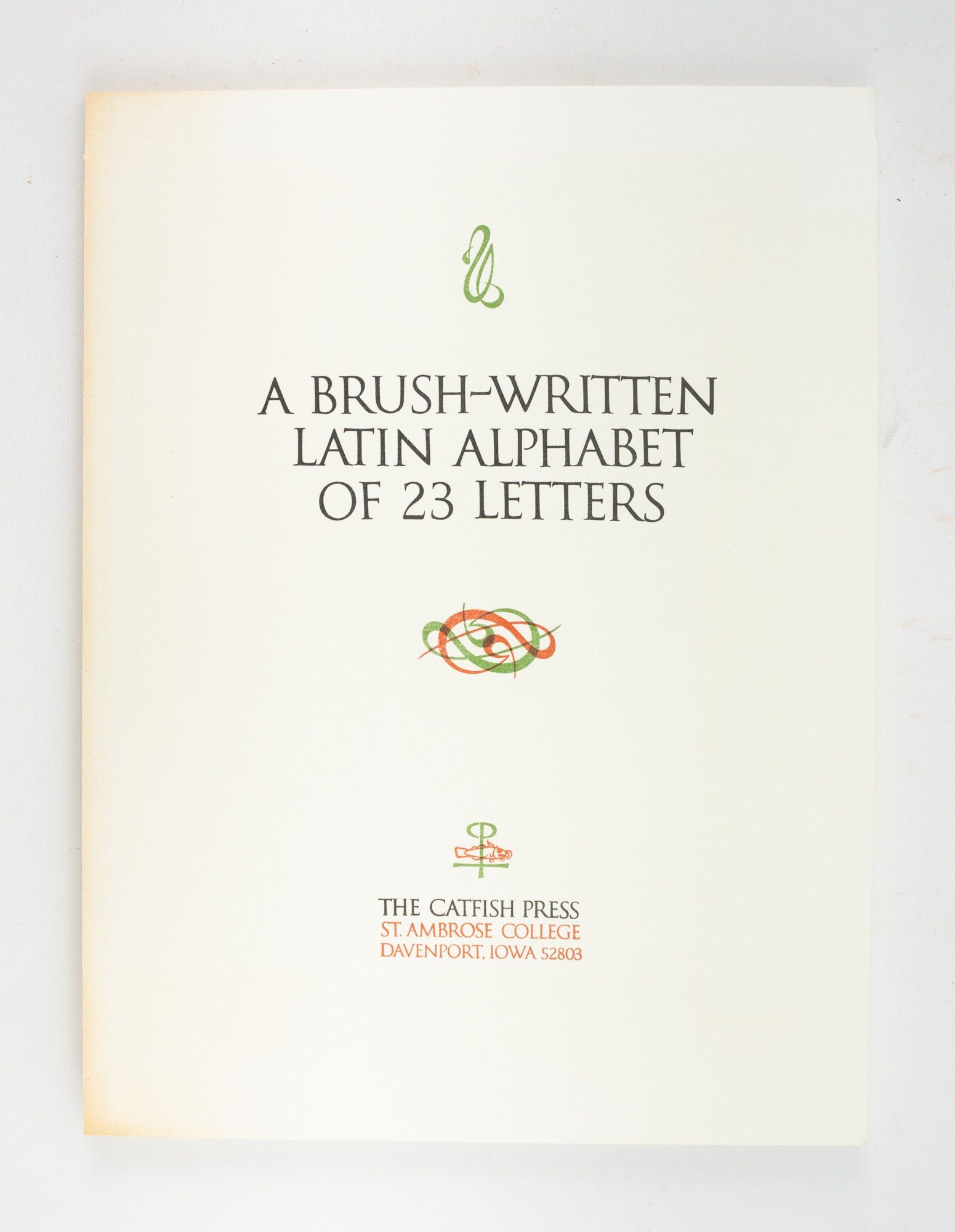
Davenport, Iowa: Catfish Press, 1968. FIRST EDITION. No. 15 OF 50 COPIES specially bound, SIGNED by the author, and with a portfolio of brush-written letters (from a total edition of 1,400). 283 x 216 mm. (11 1/8 x 8 1/2"). xi, [i], 310 pp., [1] leaf; [7] printed leaves. Two volumes..
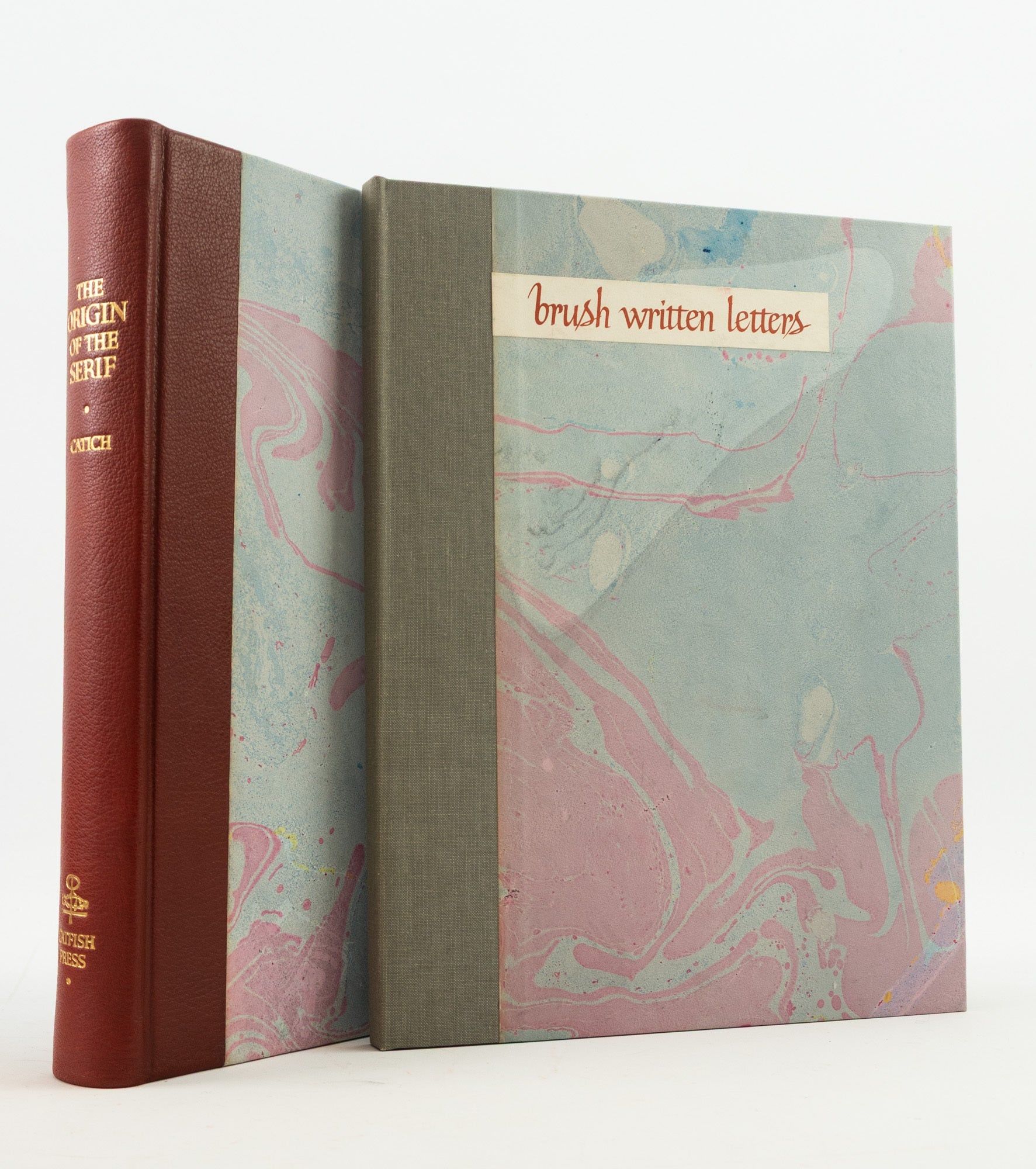
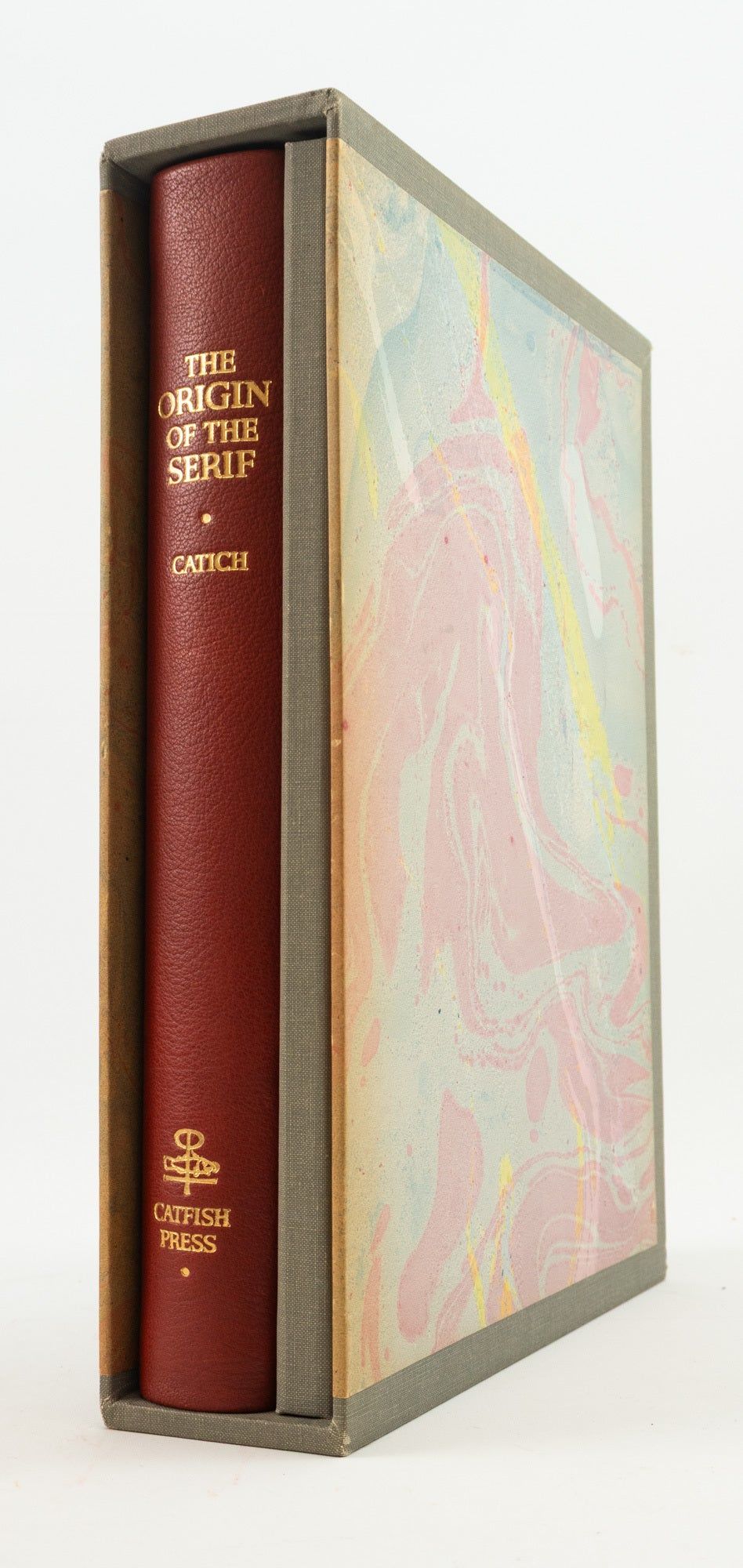
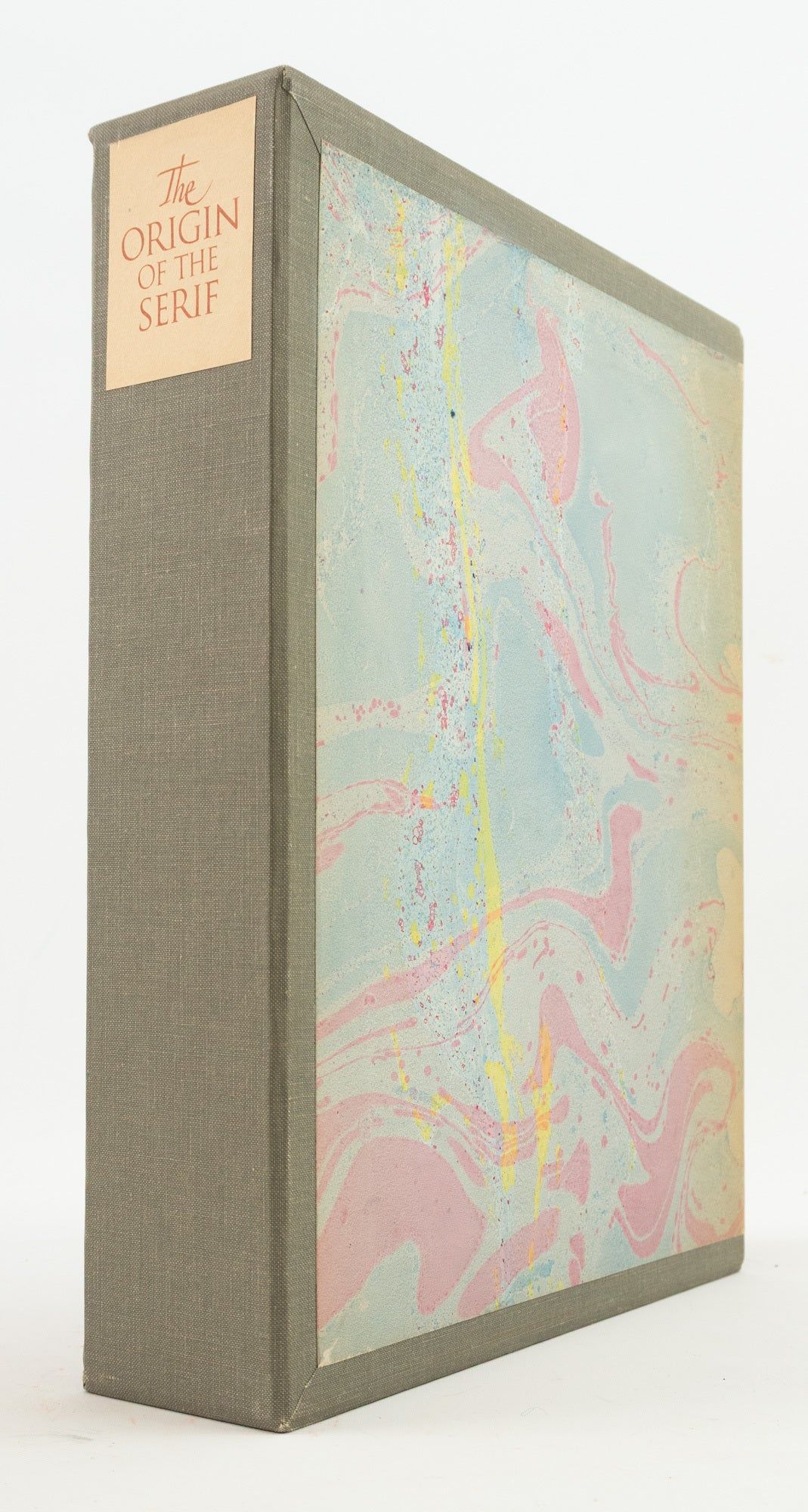
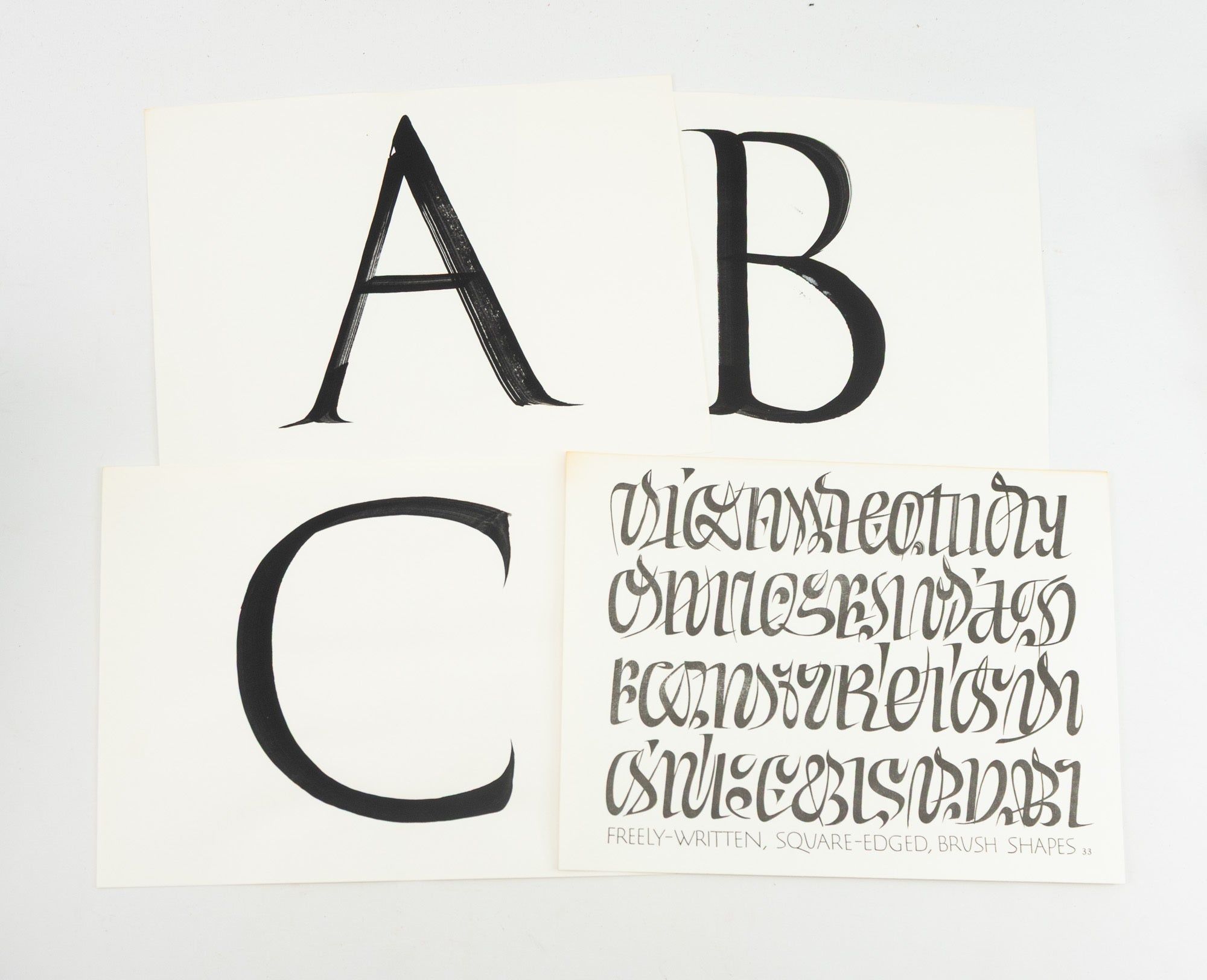
Publisher's marbled blue boards, text volume backed with reddish-brown leather, gilt lettering on spine, portfolio backed in gray cloth, paper label on upper cover. Housed together in a (slightly toned) matching slipcase with paper label on spine. With typographic illustrations throughout the text volume, and with four pages of printed brush-drawn letters and 23 SHEETS OF LETTERS BRUSH-DRAWN BY CATICH in the portfolio. In near-mint condition.
In very fine condition, this is a signed deluxe copy of a ground-breaking work on the roman alphabet by the American Catholic priest, artist, and calligraphy expert Father Edward Catich (1906-79). Lettering was important for the author from an early age, as he was apprenticed to a sign writer as a young orphan, and practiced that trade for several years before earning a master's degree in art and moving to Rome to study for the priesthood. While in Rome, where he also studied paleography, he made a thorough study of the letter forms incised on Trajan's Column. In the 19th century, a theory emerged suggesting that the letters for such inscriptions had first been painted on with a brush before being engraved in the stone. Using the expertise he had gained as a union sign-writer, Catich developed the widely accepted thesis that the letters of the imperial Roman inscriptions owed their shape and characteristic serifs, not to the exigencies of the chisel or other stonecutting tools, but to the use of a flat brush to paint the letters on the stone. The present work is the fullest development of that thesis, which led to Father Catich's being recognized as one of the world's foremost experts on the origins and history of the roman alphabet. Our book was not only written, but also printed, by Catich at his Catfish press, partly in type of his own design. The deluxe edition includes a full Roman alphabet of letters written out by hand by Catich; he writes in the introduction that they are intended "for study and for encouraging others in the use of the chisel-shaped brush." It is important, he tells us, that such a brush does not die out, since ignorance of it "severely limits our western creative letter-making potential." The attractive portfolio of original calligraphy rounds out this set, looking both back to the Roman tradition and forward to the future of the art so dear to Catich. Our special signed, limited edition is uncommonly seen on the market..
Publisher's marbled blue boards, text volume backed with reddish-brown leather, gilt lettering on spine, portfolio backed in gray cloth, paper label on upper cover. Housed together in a (slightly toned) matching slipcase with paper label on spine. With typographic illustrations throughout the text volume, and with four pages of printed brush-drawn letters and 23 SHEETS OF LETTERS BRUSH-DRAWN BY CATICH in the portfolio. In near-mint condition.
In very fine condition, this is a signed deluxe copy of a ground-breaking work on the roman alphabet by the American Catholic priest, artist, and calligraphy expert Father Edward Catich (1906-79). Lettering was important for the author from an early age, as he was apprenticed to a sign writer as a young orphan, and practiced that trade for several years before earning a master's degree in art and moving to Rome to study for the priesthood. While in Rome, where he also studied paleography, he made a thorough study of the letter forms incised on Trajan's Column. In the 19th century, a theory emerged suggesting that the letters for such inscriptions had first been painted on with a brush before being engraved in the stone. Using the expertise he had gained as a union sign-writer, Catich developed the widely accepted thesis that the letters of the imperial Roman inscriptions owed their shape and characteristic serifs, not to the exigencies of the chisel or other stonecutting tools, but to the use of a flat brush to paint the letters on the stone. The present work is the fullest development of that thesis, which led to Father Catich's being recognized as one of the world's foremost experts on the origins and history of the roman alphabet. Our book was not only written, but also printed, by Catich at his Catfish press, partly in type of his own design. The deluxe edition includes a full Roman alphabet of letters written out by hand by Catich; he writes in the introduction that they are intended "for study and for encouraging others in the use of the chisel-shaped brush." It is important, he tells us, that such a brush does not die out, since ignorance of it "severely limits our western creative letter-making potential." The attractive portfolio of original calligraphy rounds out this set, looking both back to the Roman tradition and forward to the future of the art so dear to Catich. Our special signed, limited edition is uncommonly seen on the market..
Details
Title
THE ORIGIN OF THE SERIF: BRUSH WRITING & ROMAN LETTERS. [with] A BRUSH-WRITTEN ALPHABET OF 23 LETTERS
Author
(CATFISH PRESS). (CALLIGRAPHY). CATICH, EDWARD M.
Condition
Unknown
Publisher
Catfish Press: Davenport, Iowa
Date
1968
Edition
FIRST EDITION. No. 15 OF 50 COPIES specially bound, SIGNED by th