

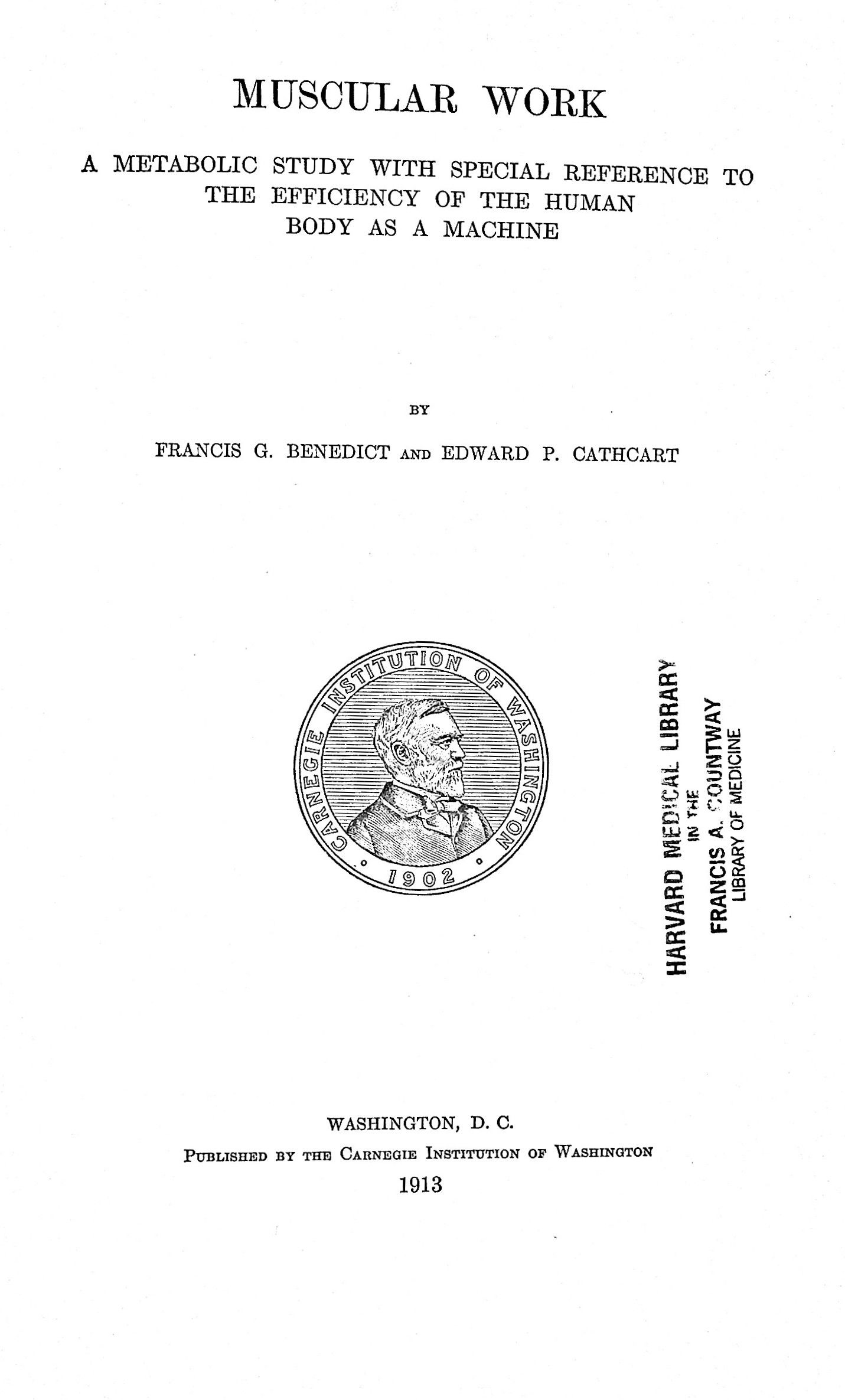
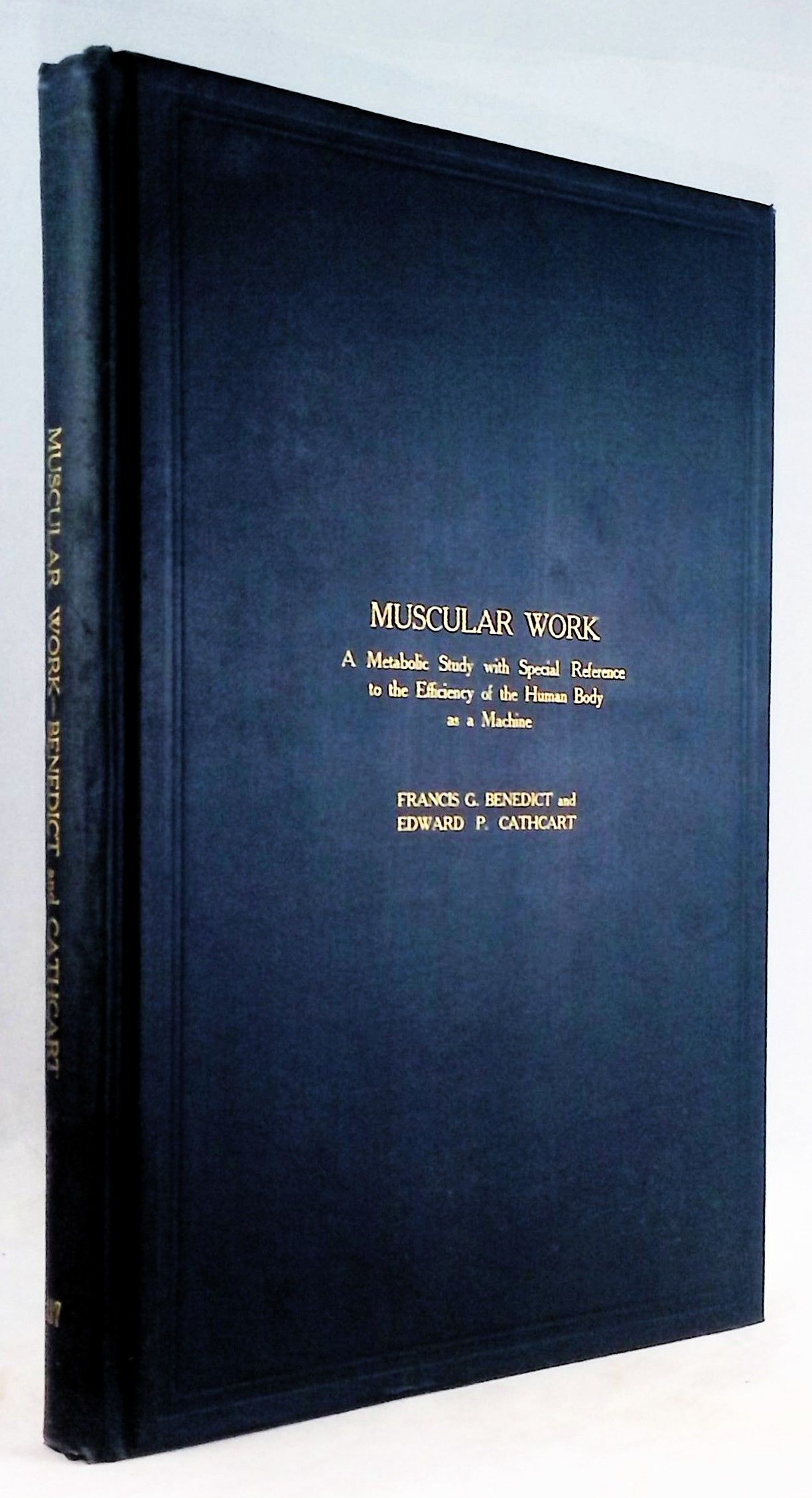
Muscular Work. A Metabolic Study with Special Reference to the Efficiency of the Human Body as a Machine
- Cloth binding
- Washington DC: Carnegie Institutution, 1913
Washington DC: Carnegie Institutution, 1913. First edition.
DEFINITIVE STUDY OF HUMAN MUSCULAR WORK EFFICIENCY PREFACED BY HISTORICAL REVIEW.
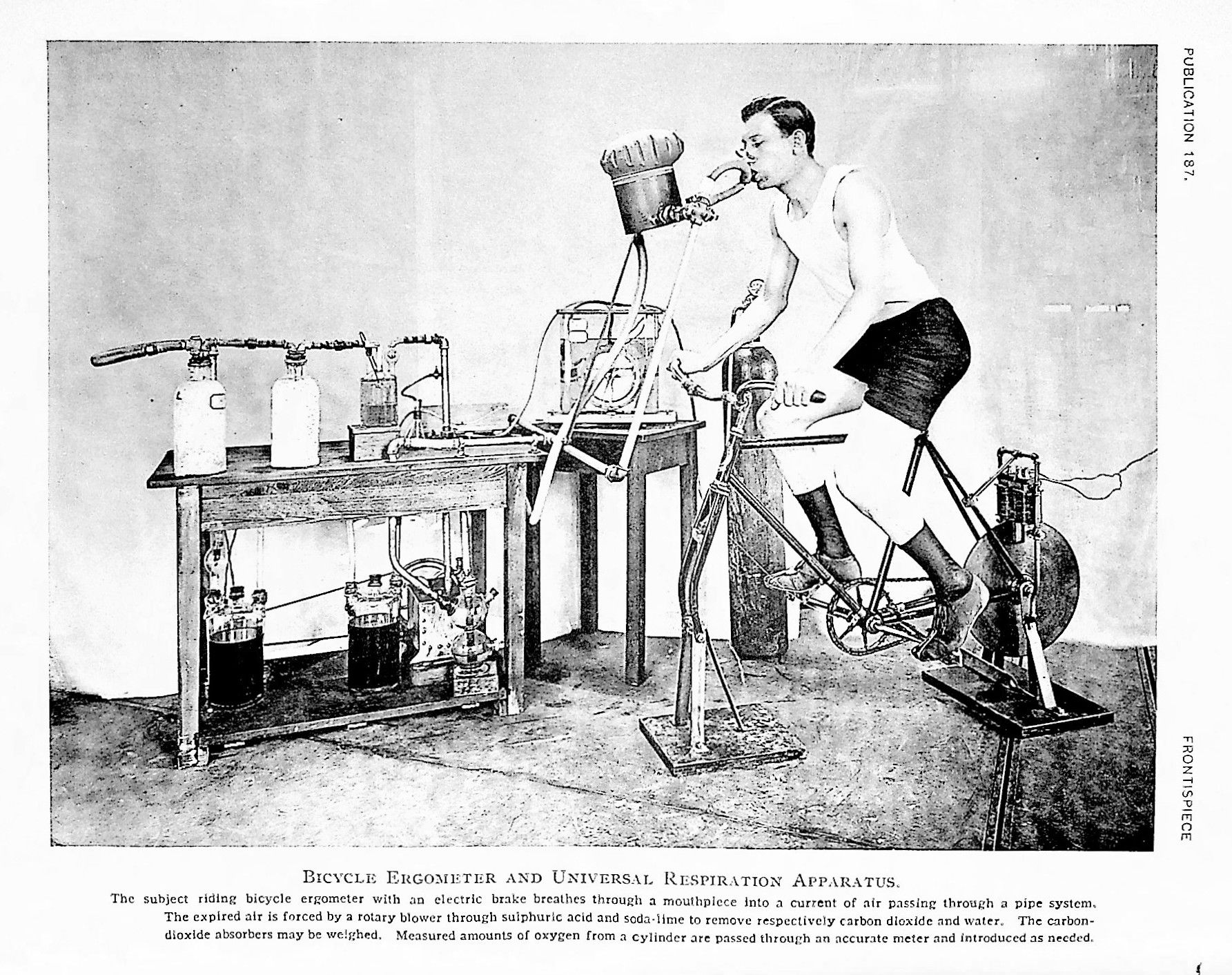
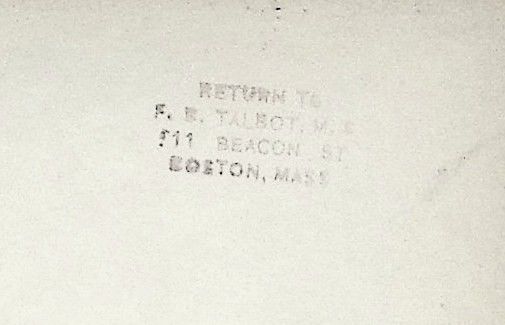
17.5x26 cm hardcover, green cloth binding, gilt title to cover and spine, bookplate of Boston Medical Library ("WITHDRAWN" handstamp) to front paste-down, library handstamp to title page, library card pocket to rear paste-down. Handstamp to front free endpaper, "Return to F. B. Talbot MD, 511 Beacon St, Boston, Mass". Frontispiece photograph of bicycle ergometer and universal respiration apparatus. i-vi, [2], 176 pp, 137 tables, list of publications of the Nutrition Laboratory. Text clean and unmarked, no external library marks. Very good minus in custom archival mylar cover.
FRANCIS GANO BENEDICT (1870 - 1957) was an American chemist, physiologist, and nutritionist who developed a calorimeter and a spirometer used to determine oxygen consumption and measure metabolic rate. Born in Milwaukee, Wisconsin, Benedict attended Harvard University, earning his bachelor's degree in 1893 and his master's degree in 1894. He earned his Ph.D., magna cum laude, at Heidelberg University in 1895. William Welch and John Shaw Billings were impressed with Benedict's early publications on animal heat and metabolism, and they conviced the Carnegie Foundation trustees to establish a nutrition laboratory under Benedict's direction. The result was the Boston Nutrition Laboratory, where Benedict remained until his retirement (1907-1937)." (DSB 1.610/1). His early and influential association with the Carnegie Institution of Washington enabled him to furnish his laboratory with expensive precise equipment, and to publish lengthy monographs.
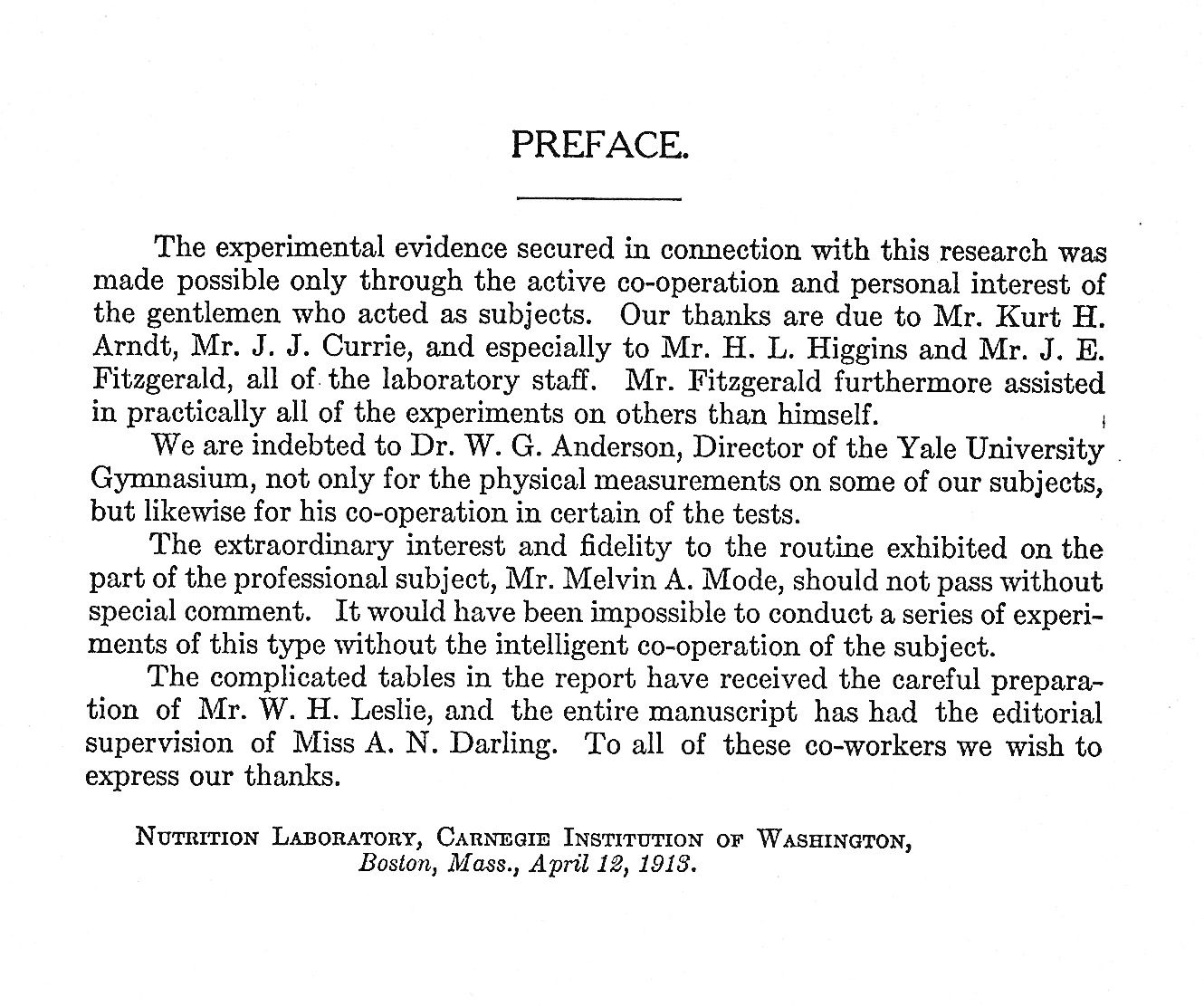
EDWARD PROVAN CATHCART (1877-1954) was a Scottish physician and physiologist of international fame. The Cathcart Chair in Biochemistry at the University of Glasgow is named after him. Together with John Boyd Orr he published influential papers on protein metabolism in humans. The Cathcart Committee (named after him) was critical to the Scottish input to the foundation of the National Health Service after World War II.
GARRISON-MORTON No. 657.
PROVENANCE: COPY OF FRITZ BRADLEY TALBOT (1878-1964 ) received his MD from Harvard in 1905 and 5 years later became Chief of the Children's Medical Service. He was a pioneer in describing the underlying causes and consequences of "failure to thrive" in infancy and early childhood, quantifying the energy requirements of growing children (BMR) by measuring the expired carbon dioxide (measurements/reference standards that are quite close to those in use today). He co-authored a landmark paper with Benedict (Studies in the Respiratory Exchange in Infants, American Journal of Diseases of Children, 1914).
Details
Title
Muscular Work. A Metabolic Study with Special Reference to the Efficiency of the Human Body as a Machine
Author
Benedict, Francis G. and Cathcart, Edward P.
Binding
Cloth binding
Condition
Unknown
Publisher
Carnegie Institutution: Washington DC
Date
1913
Edition
First edition