

The Influence of Inanition on Metabolism, TOGETHER WITH A Study of Prolonged Fasting, TOGETHER WITH Human Vitality and Efficiency Under Prolonged Restricted Diet
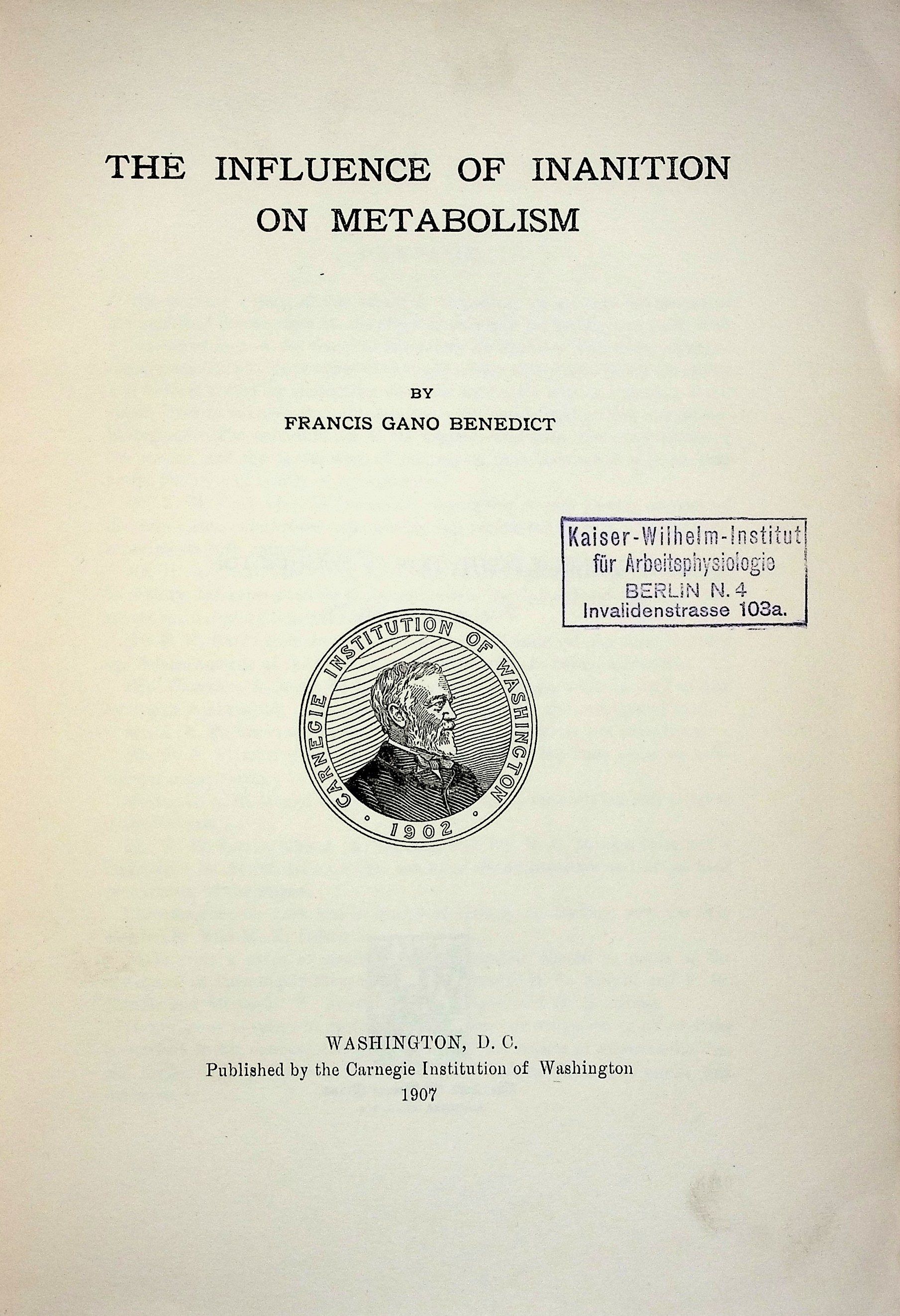
- Printed paper covers, Cloth binding
- Washington: Carnegie Institution of Washington, 1907, 1915, 1919
Washington: Carnegie Institution of Washington, 1907, 1915, 1919. First editions.
REPORTED IN 3 MASSIVE VOLUMES: EARLY 20TH CENTURY CLINICAL STUDIES OF PROLONGED FASTING LED BY FRANCIS BENEDICT AND HIS FAMOUS BOSTON NUTRITION LABORATORY.
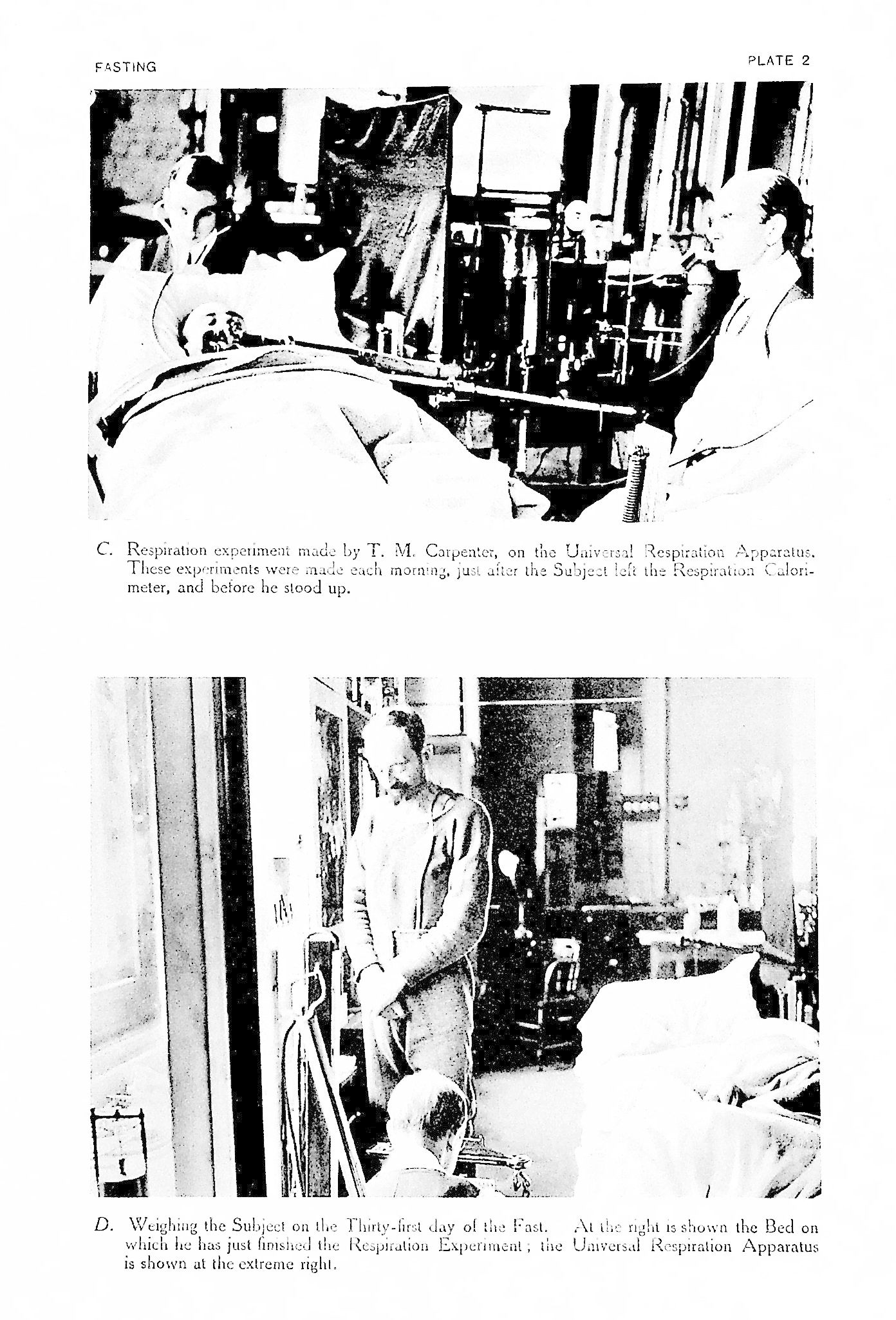
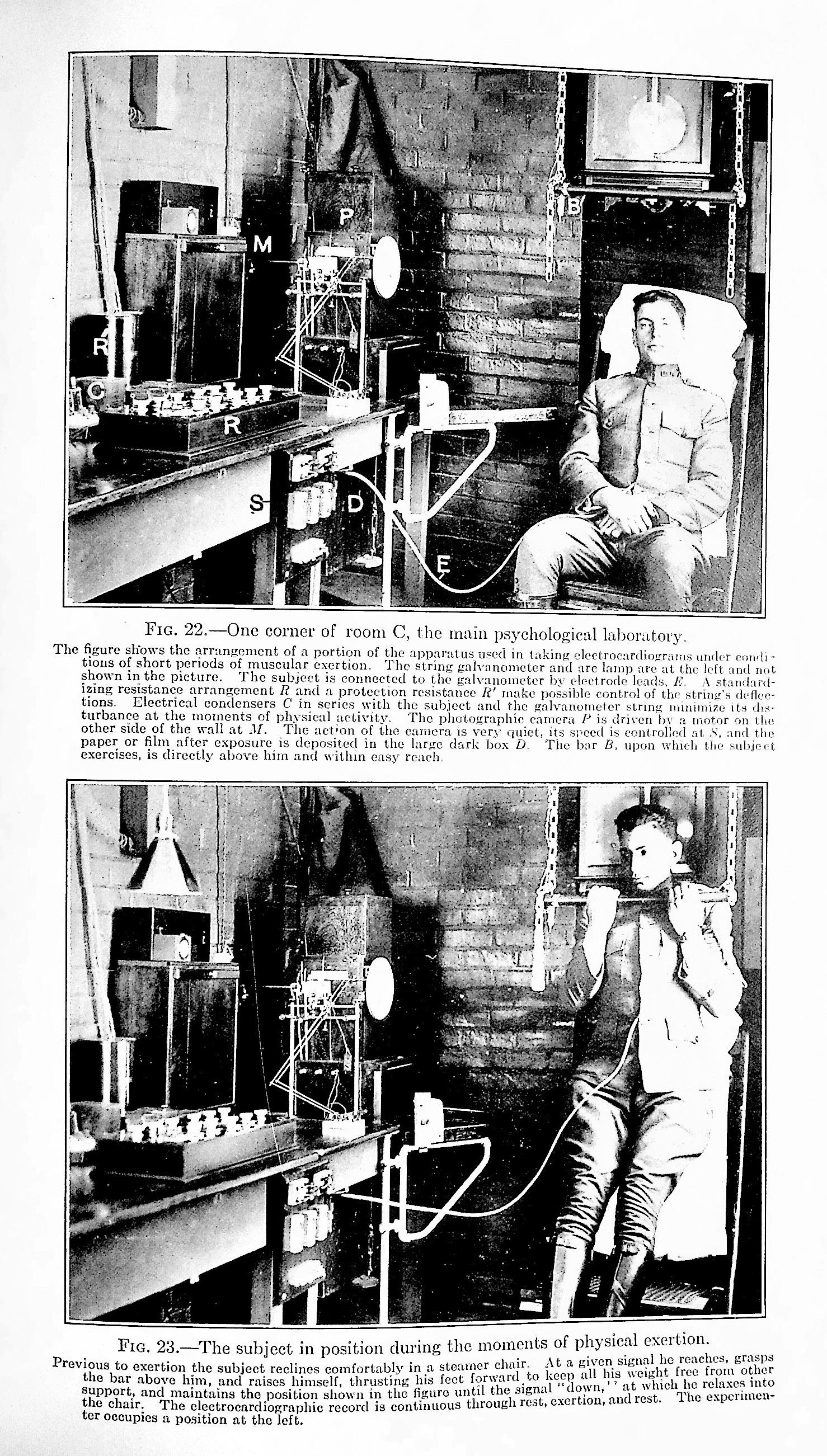
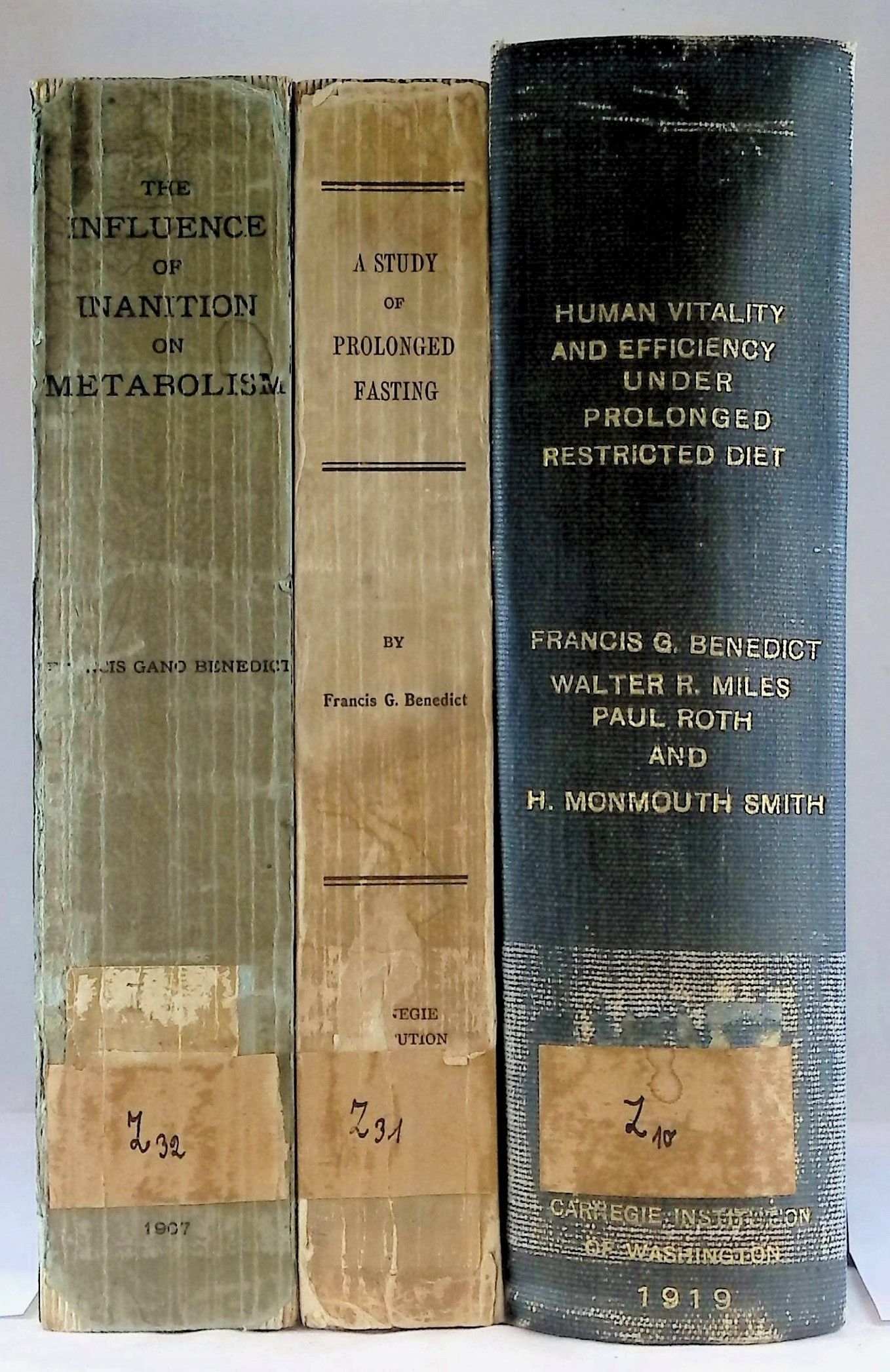
Three volumes 10 inches tall, together 6 inches thick, the first two in original paper wrappers with printed title to cover and spine, the third bound in blue buckrum with gilt title to spine: 1) The Influence of Inanition on Metabolism (1907), v, 542 pp, 258 tables; 2) A Study of Prolonged Fasting (1915), 416 pp, 66 tables (including large folding table), 5 plates, 47 figures in text; 3) Human Vitality and Efficiency Under Prolonged Restricted Diet (1919), frontispiece photograph of Diet and Control Squads and Investigators, International Young Men's Christian Association College, Springfield, Massachusetts, January 11, 1918, xi, 701 pp, 123 figures in text, folding chart. Handstamp of the Kaiser-Wilhelm Institute to cover of Vols. 1 and 2. Vol. 3 with Kaiser William Institute Handstamp to preliminary pages and title page, also with embossed seal of Nutrition Laboratory, Caarnegie Institution of Washington. Paper library label to bottom spine of each volume. Wrappers of Vols 1 and 2 soiled and browned, 1 inch perished corner of Vol 1. Bindings tight, texts and plates unmarked, overall good+. In custom archival mylar covers.
GARRISON-MORTON Nos. 1027 (Vol. 1) and 11015 (Vol. 2).
FRANCIS GANO BENEDICT (1870 - 1957) was an American chemist, physiologist, and nutritionist who developed a calorimeter and a spirometer used to determine oxygen consumption and measure metabolic rate. Born in Milwaukee, Wisconsin, Benedict attended Harvard University, earning his bachelor's degree in 1893 and his master's degree in 1894. He earned his Ph.D., magna cum laude, at Heidelberg University in 1895.The Influence of Inanition on Metabolism (1907) is a report of subjects studied during short fasting periods in the chemical laboratory of Wesleyan University, Middletown, Connecticut. William Welch and John Shaw Billings were impressed with Benedict's early publications on animal heat and metabolism, and they conviced the Carnegie Foundation trustees to establish a nutrition laboratory under Benedict's direction. The result was the Boston Nutrition Laboratory, where Benedict remained until his retirement (1907-1937)." (DSB 1.610/1).
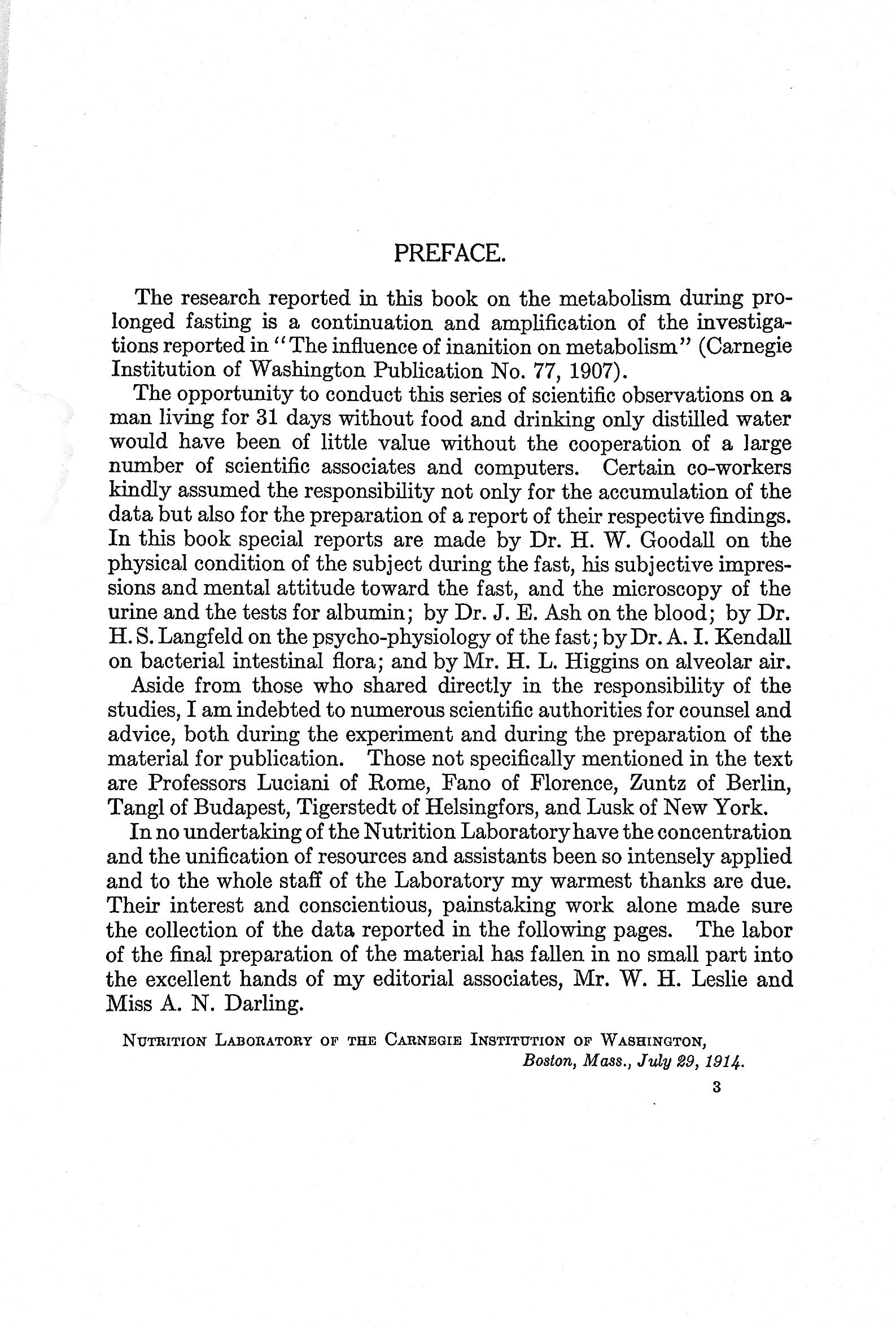
His early and influential association with the Carnegie Institution of Washington enabled him to furnish his laboratory with expensive precise equipment, and to publish lengthy monographs. In A Study of Prolonged Fasting (1915), the Boston Nutrition Laboratory was employed to extend the observations of the previous report. The subject of study was to be a presumably healthy volunteer from Malta, Mr. A. Levanzin, who subected himself to a 31-day fast. Included in the report are his autobiographical notes. Meticulous data were collected, including vital signs, respiratory mechanics, calorimetry, psychologic testing, and blood, urine and fecal analyses. News of these studies reached the public, prompting Benedict to publish a brief notice in Science, May 31, 1912, in which he stated, "Newspapers and magazines, actuated only by the sensational element, have used every means to secure advance statements, and in some instances have issued "faked" statements, regardmg this experiment. The results will be presented only in the publications of the Carnegie Institution of Washington or in the regularly accredited scientific journals, and any prior statements purporting to be made by me or signed by the subject, A. levanzin, are to be disregarded." The third monograph, Human Vitality and Efficiency Under Prolonged Restricted Diet (1919) was prompted by global food deprivation during World War I. The subjects for study were male students from the International Young Men's Christian Association College in Springfield, Massachusetts. The published report was reviewed in JAMA, Nov 15, 1919: The Question of Low Protein Diets, "Benedict and his collaborators at the Carnegie Nutrition Laboratory in Boston conducted an elaborate investigation on human vitality and efficiency under prolonged restricted diet. result of the diminished food intake with a resulting decrease in body weight, amounting to more than 10 per cent., there was no pronounced decrease in physical endurance or capacity for work. The depression in the total metabolism was the most prominent feature in the research, particuIarly as it was accompanied by a depression in other rates. The changes were accompanied by a large loss of nitrogen from the body, amounting to 175 grams or more per person. Benedict argues that this loss is the most probable cause for the lowering of the plane of metabolism; for the withdrawal of a large amount of nitrogenous material from the fluids bathing the tissue cells is conceived by him to remove a potent stimulus to cellular activity.
Details
Title
The Influence of Inanition on Metabolism, TOGETHER WITH A Study of Prolonged Fasting, TOGETHER WITH Human Vitality and Efficiency Under Prolonged Restricted Diet
Author
Benedict, Francis G., Miles, Walter R., Roth, Paul and Smith, H. Monmouth
Binding
Printed paper covers, Cloth binding
Condition
Unknown
Publisher
Carnegie Institution of Washington: Washington
Date
1907, 1915, 1919
Edition
First editions