

Villette (in 3 vols.)
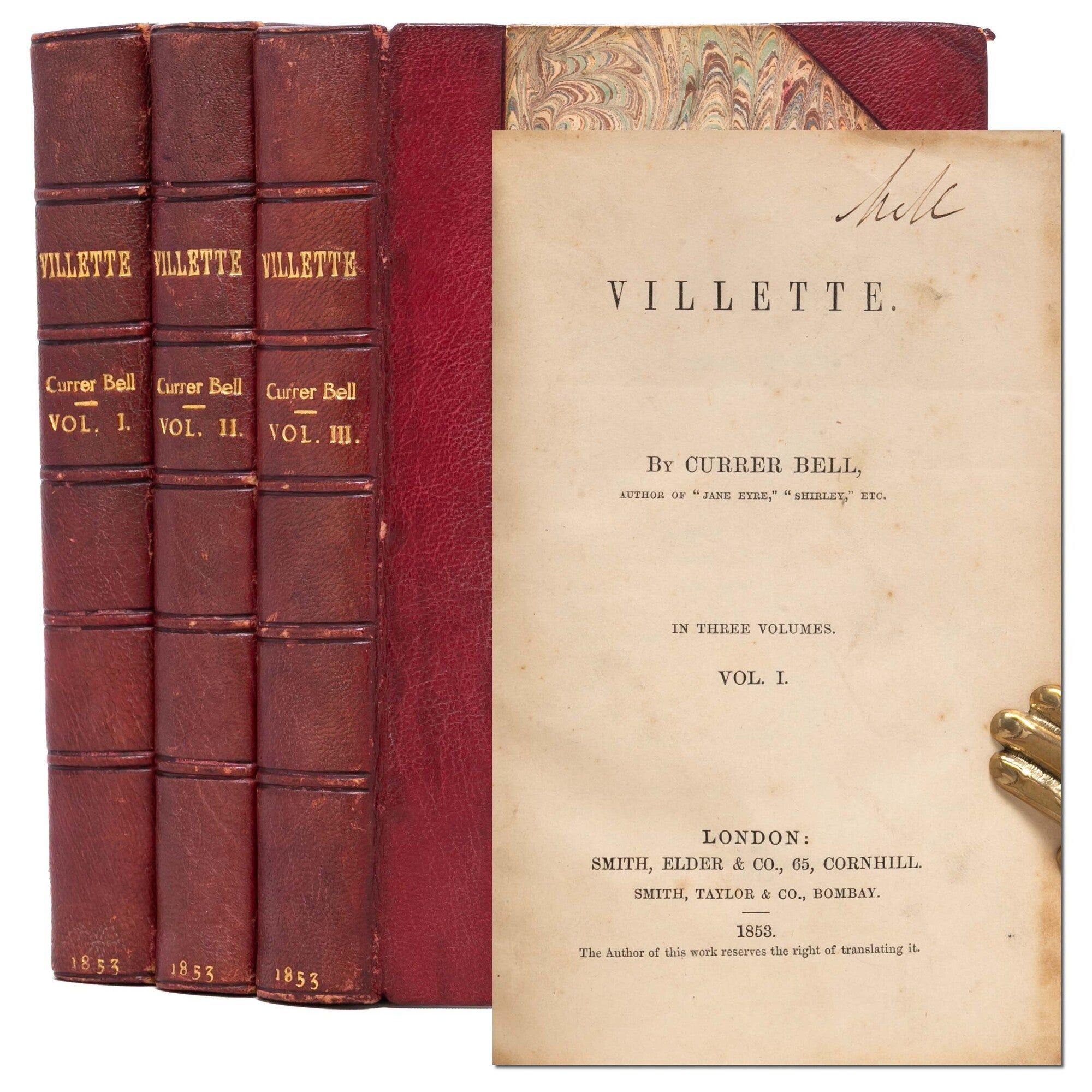
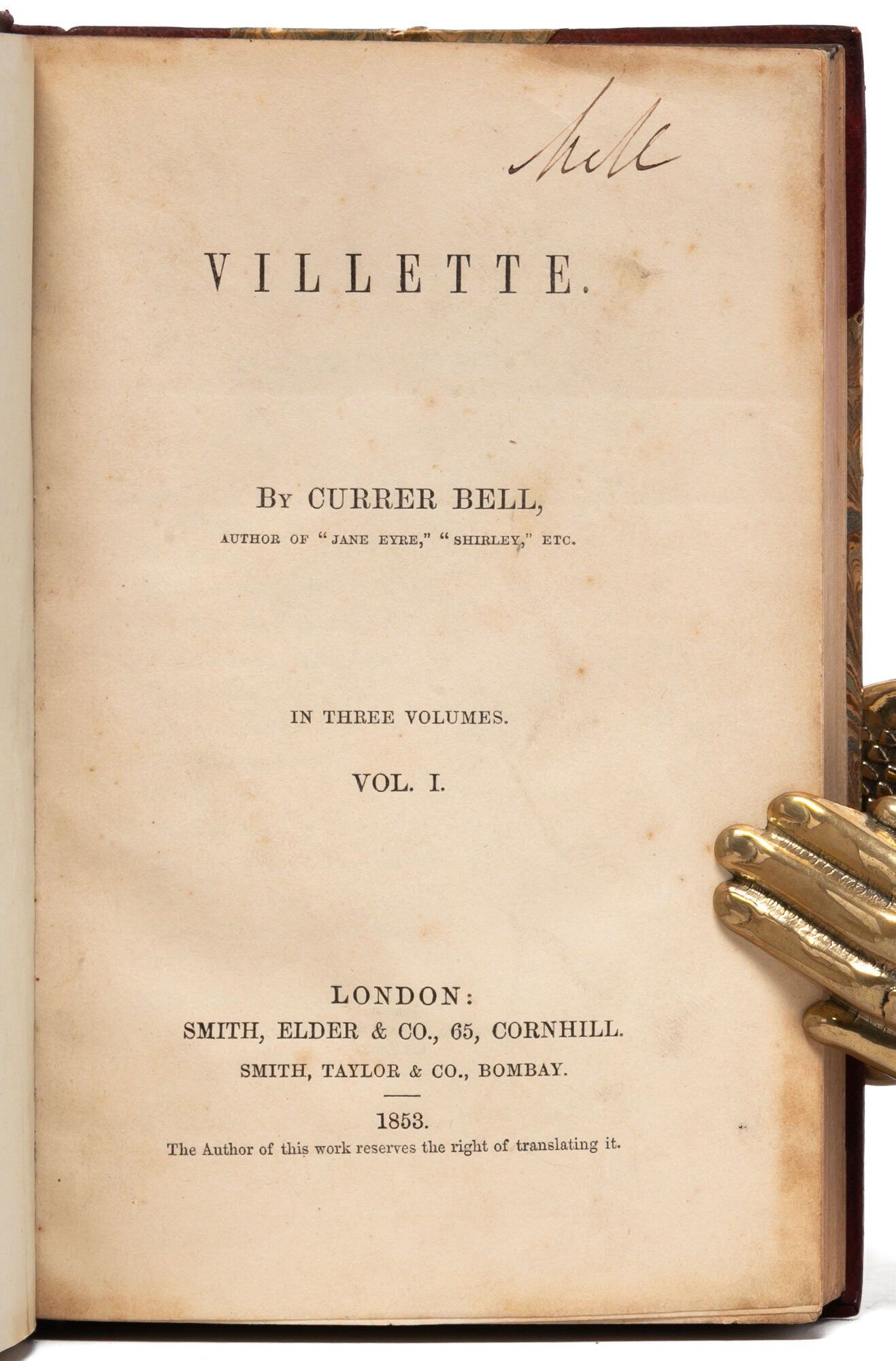
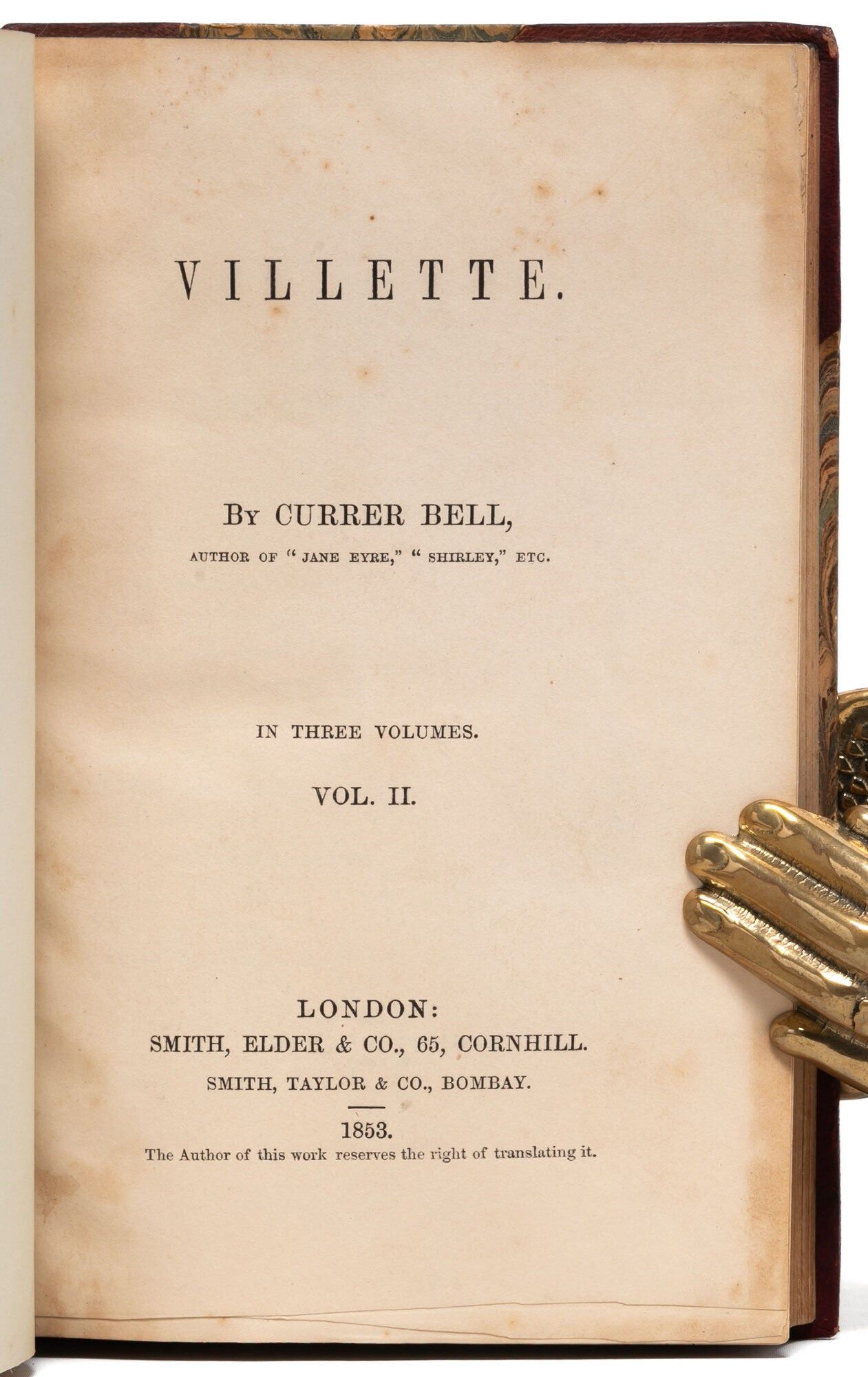
- London: Smith, Elder, & Co, 1853
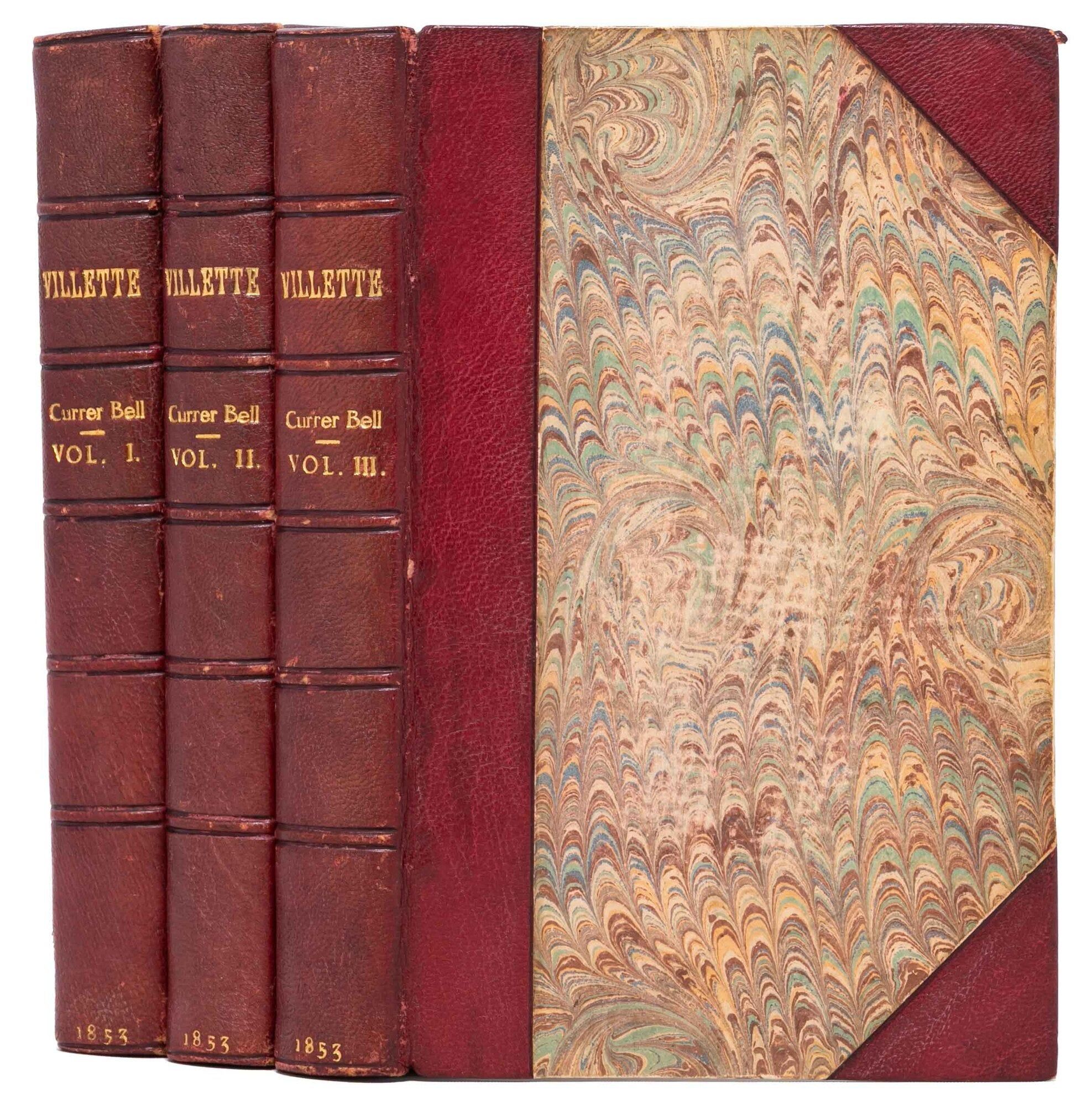
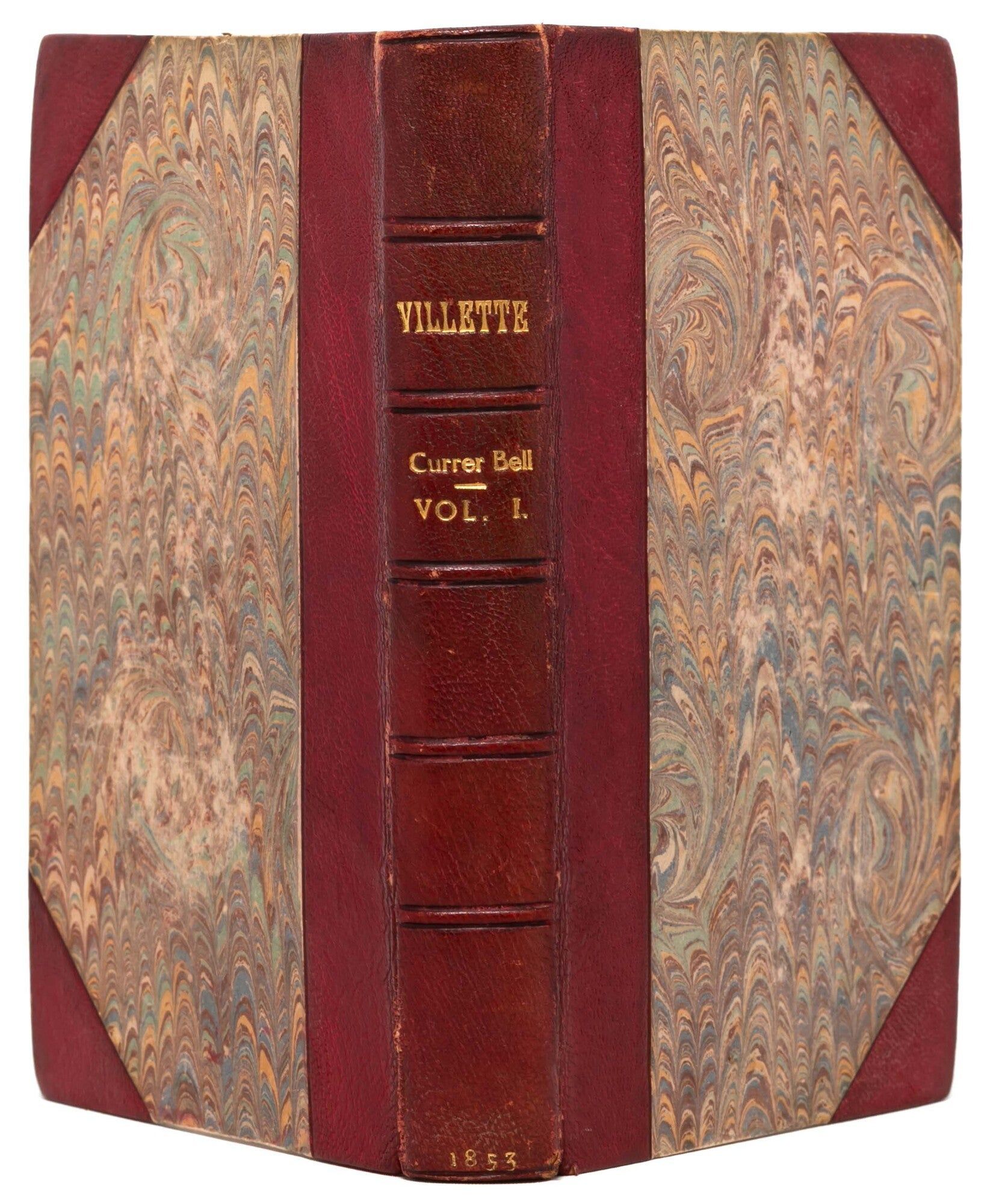
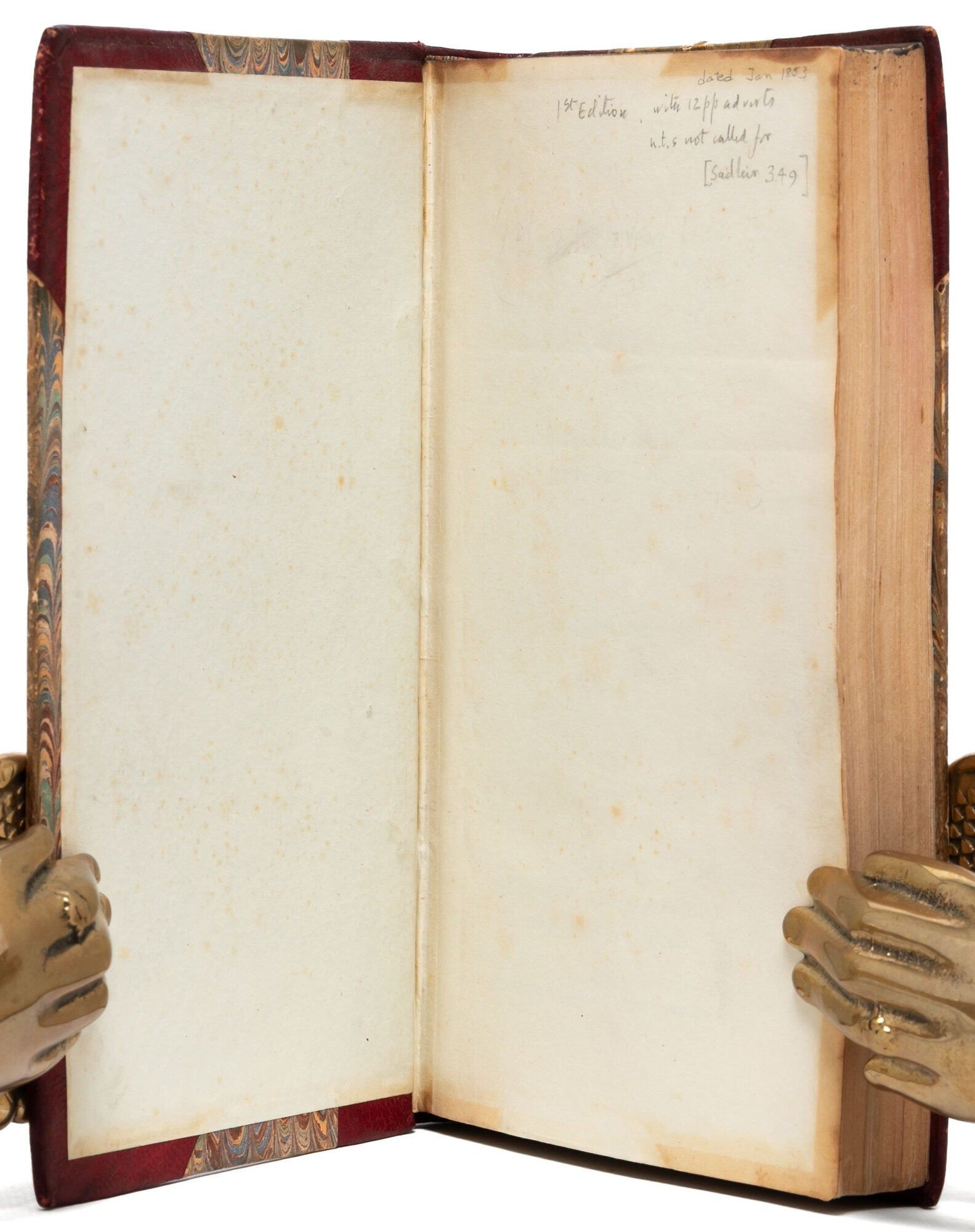
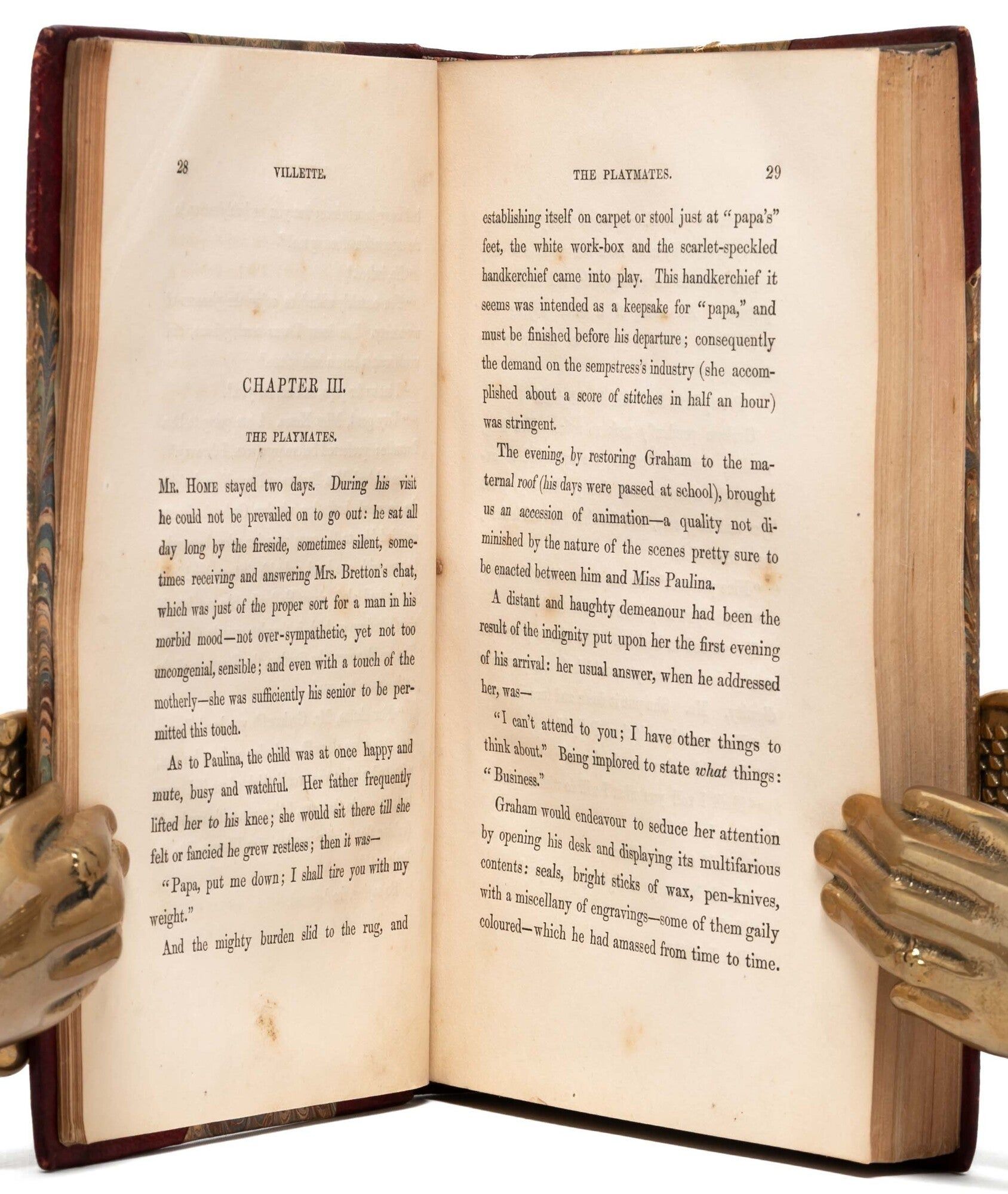
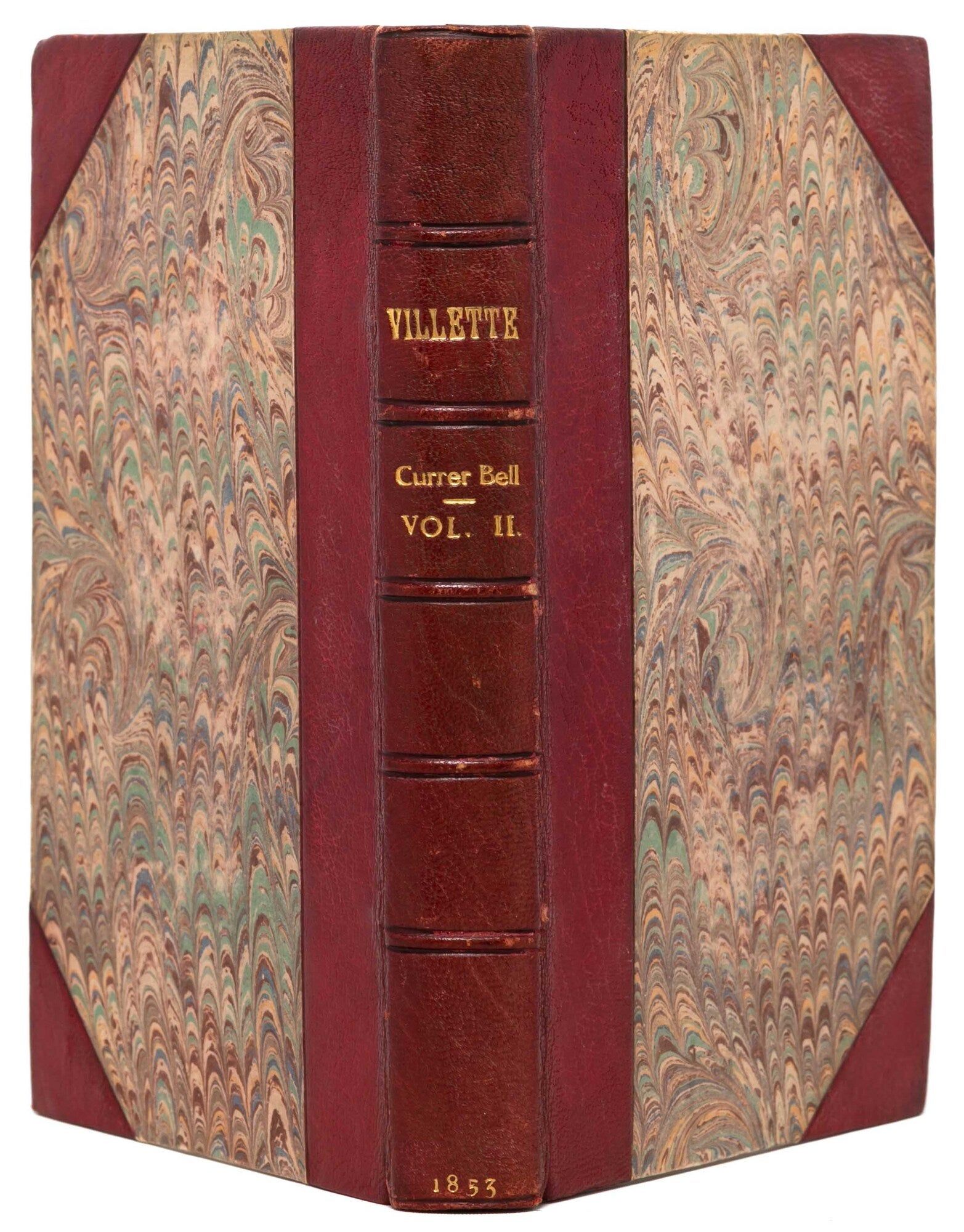
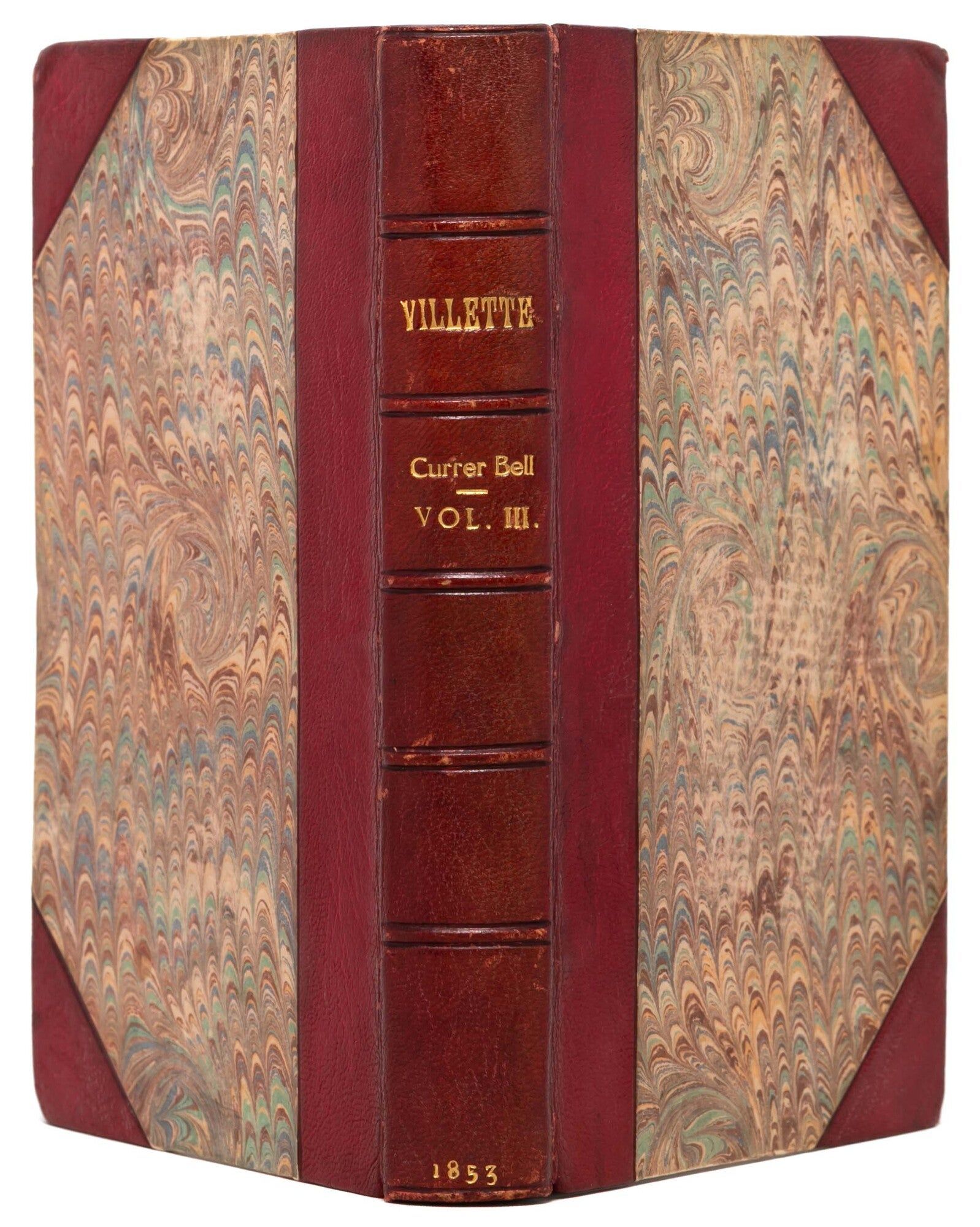
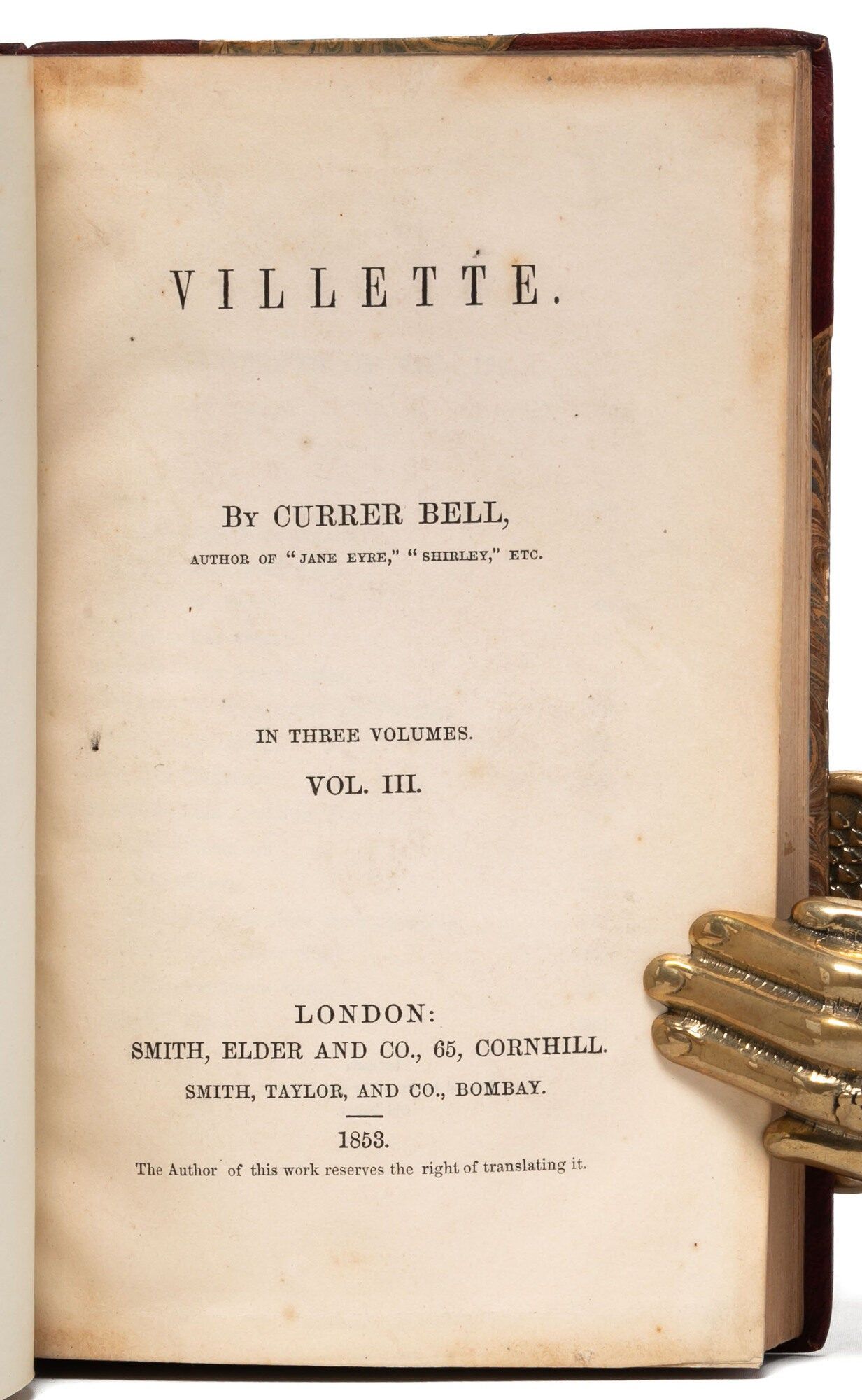
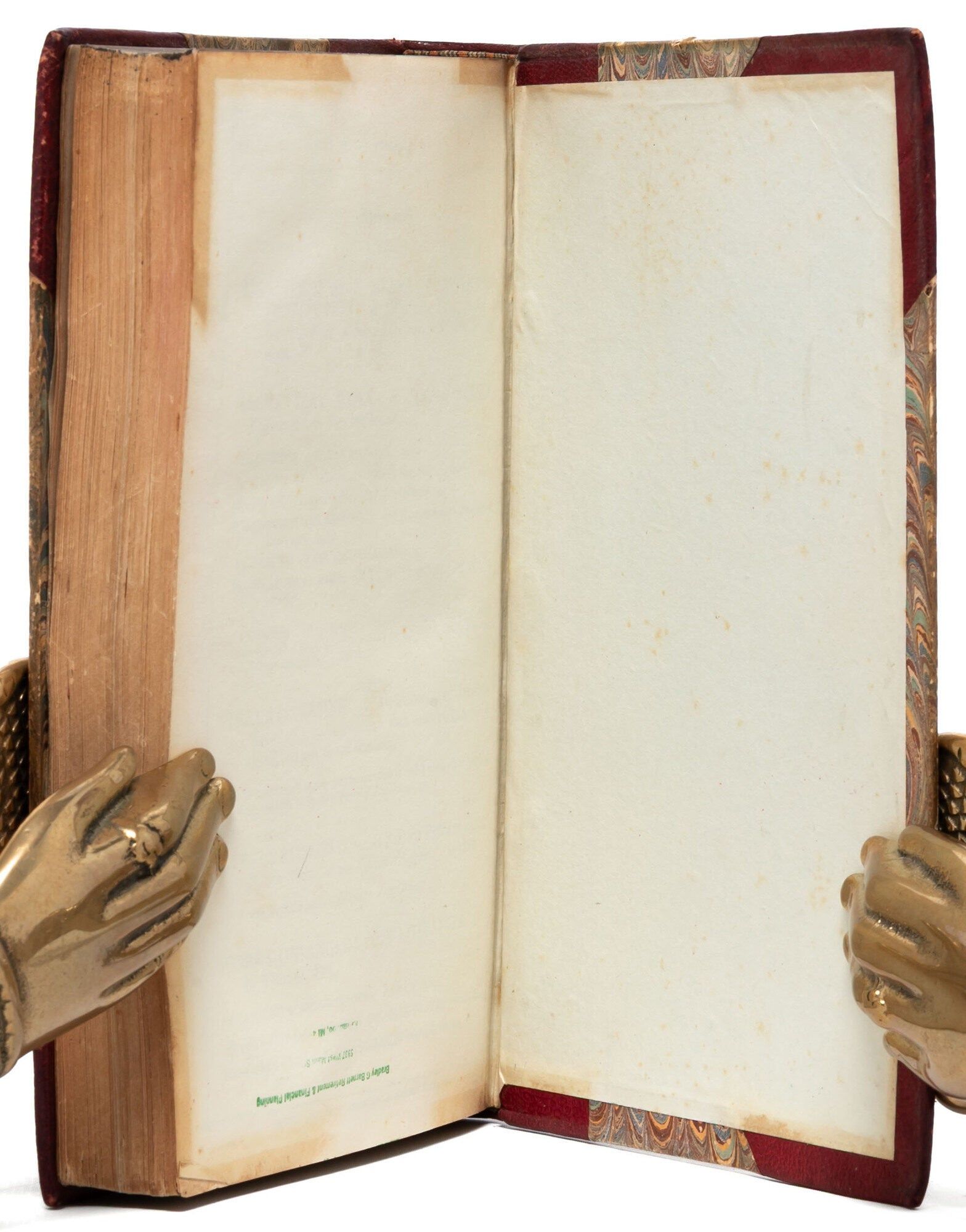
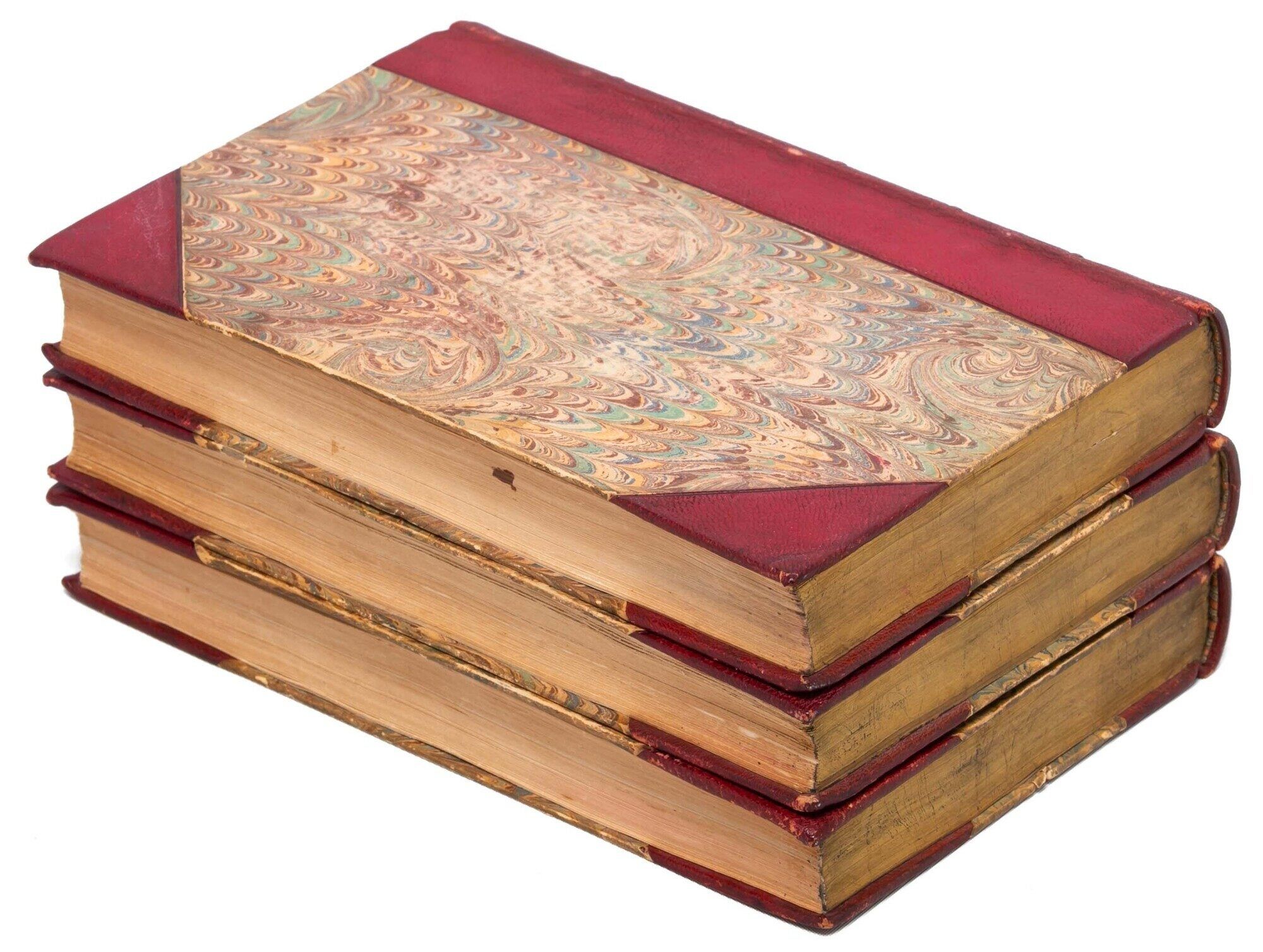
London: Smith, Elder, & Co, 1853. First edition. Near Fine. With the publisher's catalogue dated January 1853 at the end of volume one. A Very Good+ copy, a clean and appealing set overall. Three volumes, octavo (121 x 191 mm). Collating complete except for the half-titles: [4], 324, [12 pp., publisher's catalogue]; [4], 319, [1]; [2], 350, [2] pp. Attractively bound in late nineteenth-century half red morocco over marbled boards. Top edge gilt. Minor edgewear. Some light occasional foxing and a few dusty finger marks. Leaf O2 in volume one with a small amateur tape repair to margin (not touching text). Small modern ink ownership stamp to lower pastedown of each volume.
Published under the pseudonym Currer Bell, Villette was Charlotte Brontë's third and final novel released during her lifetime, following Shirley (1848) and her massively influential debut Jane Eyre (1847). Villette, a masterpiece in its own right, "powerfully portrays a woman struggling to reconcile love, jealousy, and a fierce desire for independence. Having fled a harrowing past in England, Lucy Snowe begins a new life teaching at a boarding school in the great capital of a foreign country. There, as she tries to achieve independence from both outer necessity and inward grief, she finds that her feelings for a worldly doctor and a dictatorial professor threaten her hard-won self possession...Brontë's last novel was written in the wake of her grief at the death of her siblings. It has a dramatic force comparable to that of her other masterpiece, Jane Eyre, as well as a striking modernity of psychological insight and a revolutionary understanding of human loneliness" (Vintage). Since its publication, Villette has inspired a broad range of writers, from George Eliot to Kazuo Ishiguro; in the Common Reader, Virginia Woolf called it Brontë's "finest novel" and praised the emotional depth and poetry of the writing (p. 224).
Sadleir 394. Near Fine.
Published under the pseudonym Currer Bell, Villette was Charlotte Brontë's third and final novel released during her lifetime, following Shirley (1848) and her massively influential debut Jane Eyre (1847). Villette, a masterpiece in its own right, "powerfully portrays a woman struggling to reconcile love, jealousy, and a fierce desire for independence. Having fled a harrowing past in England, Lucy Snowe begins a new life teaching at a boarding school in the great capital of a foreign country. There, as she tries to achieve independence from both outer necessity and inward grief, she finds that her feelings for a worldly doctor and a dictatorial professor threaten her hard-won self possession...Brontë's last novel was written in the wake of her grief at the death of her siblings. It has a dramatic force comparable to that of her other masterpiece, Jane Eyre, as well as a striking modernity of psychological insight and a revolutionary understanding of human loneliness" (Vintage). Since its publication, Villette has inspired a broad range of writers, from George Eliot to Kazuo Ishiguro; in the Common Reader, Virginia Woolf called it Brontë's "finest novel" and praised the emotional depth and poetry of the writing (p. 224).
Sadleir 394. Near Fine.
Details
Title
Villette (in 3 vols.)
Author
[Brontë, Charlotte] Currer Bell
Condition
Near Fine
Publisher
Smith, Elder, & Co: London
Date
1853
Edition
First edition