

[MANUSCRIPT LEAF ON VELLUM, EXTRACTED FROM A BINDING - ITALY, EARLY 14TH CENTURY]. Corpus Juris Civilis [Liber II]




- Italy , 1325
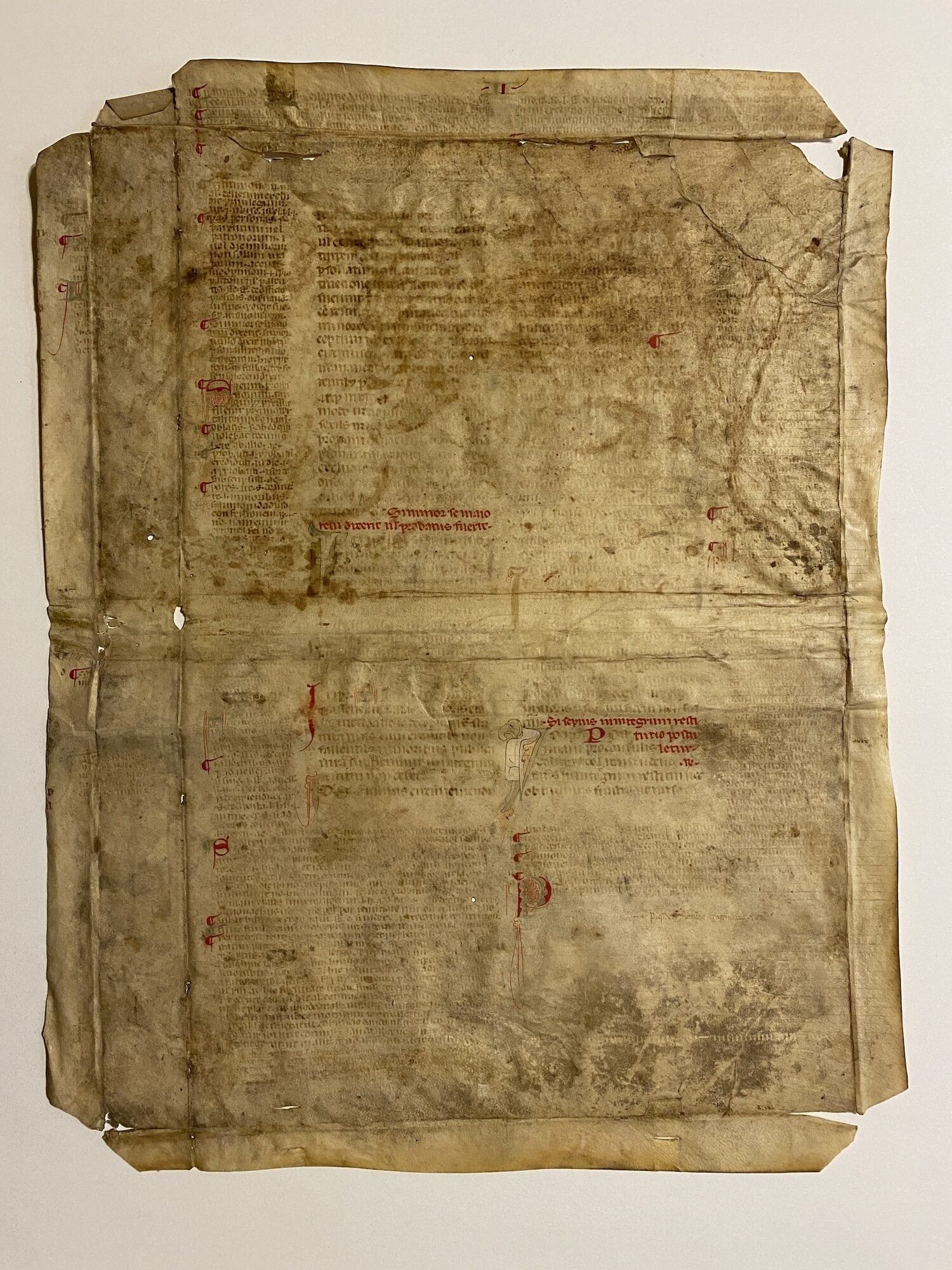
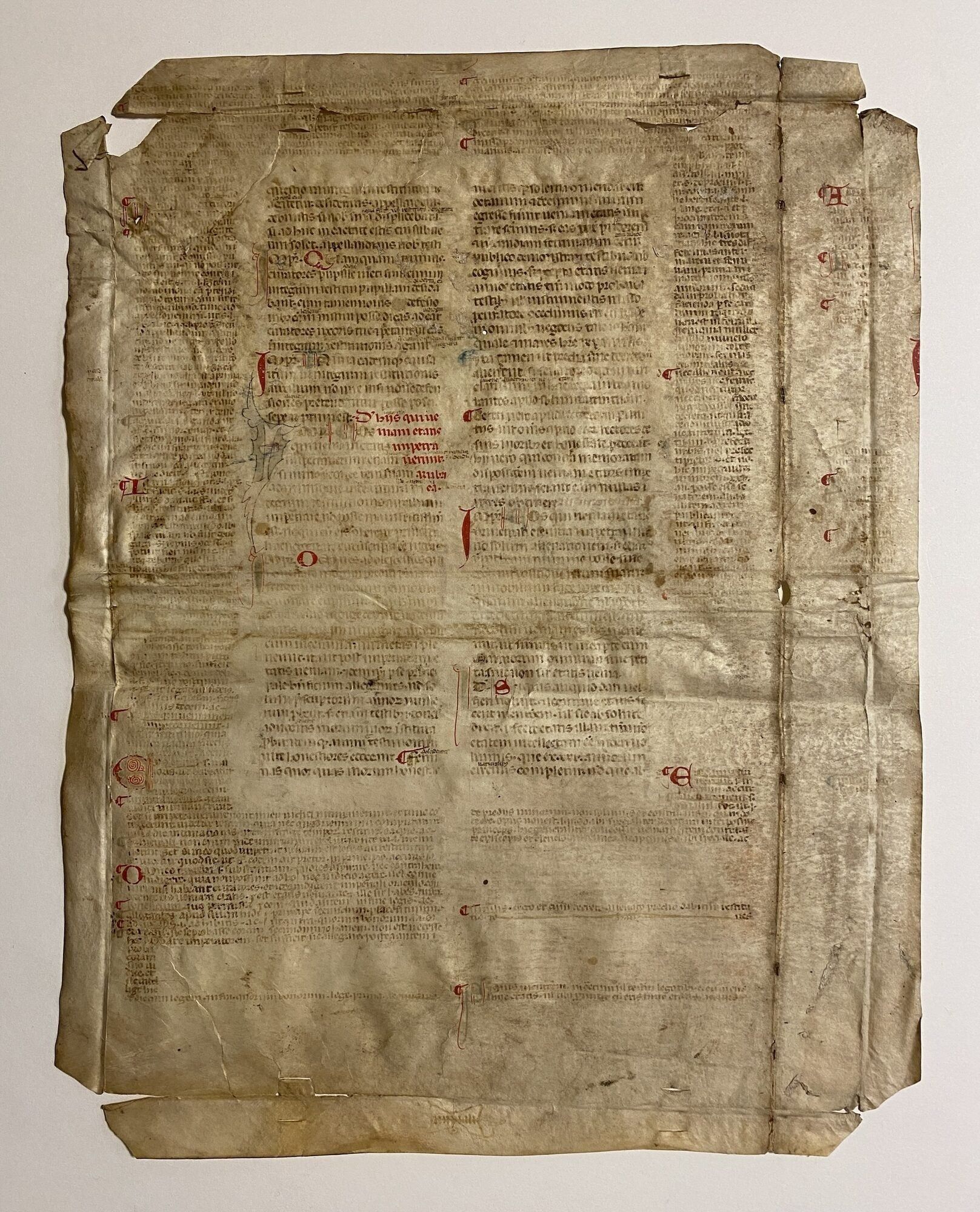
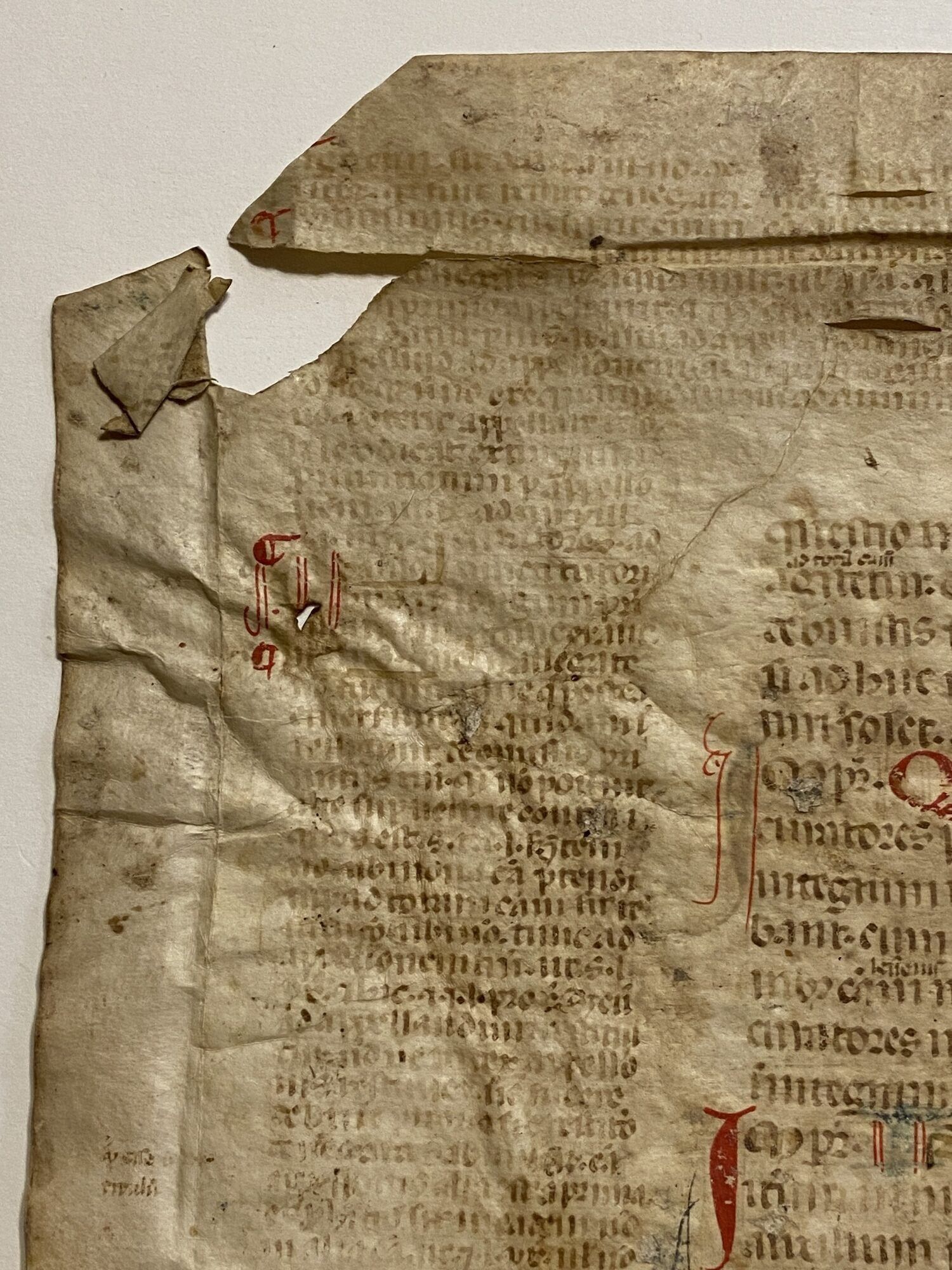
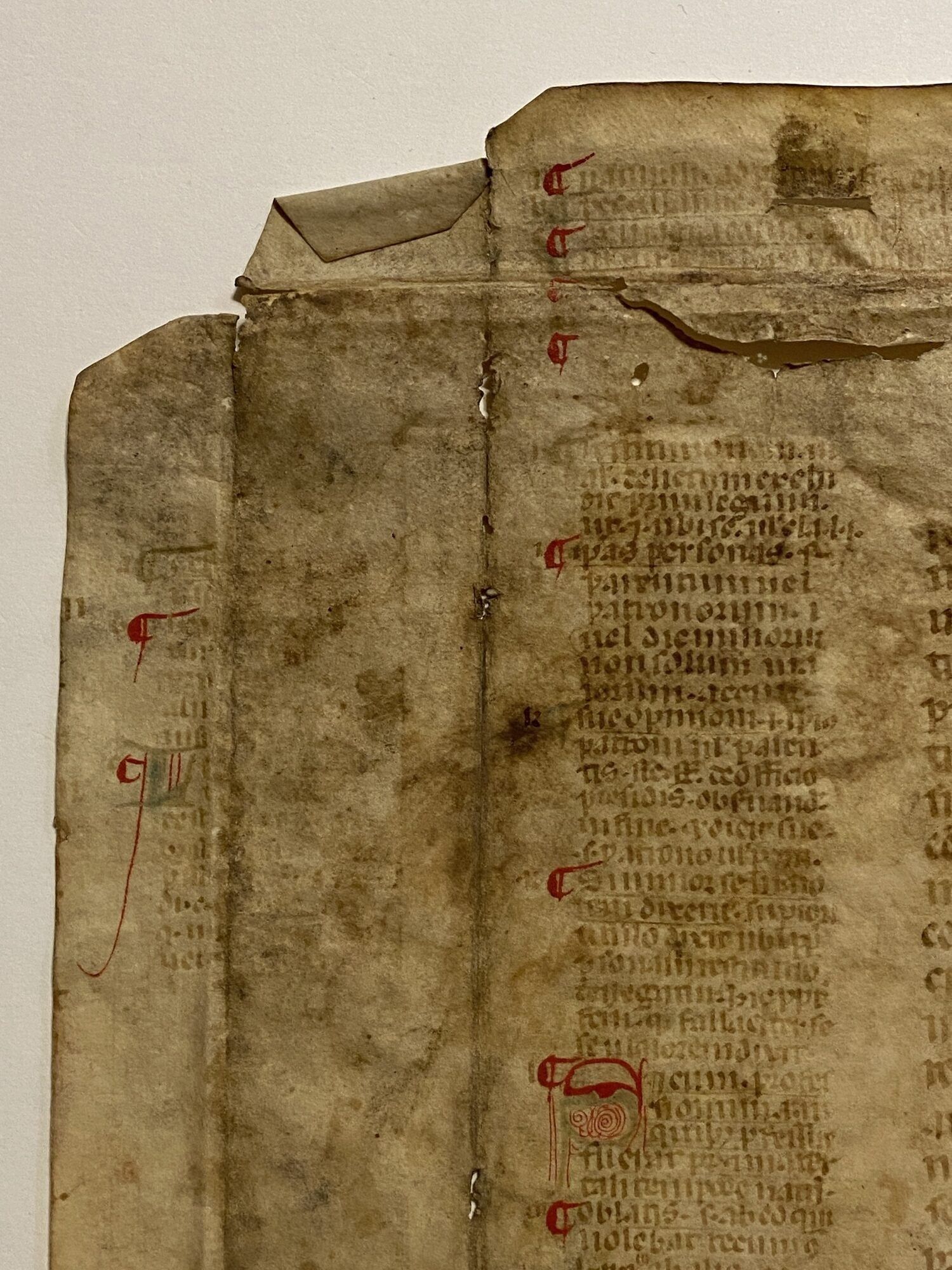
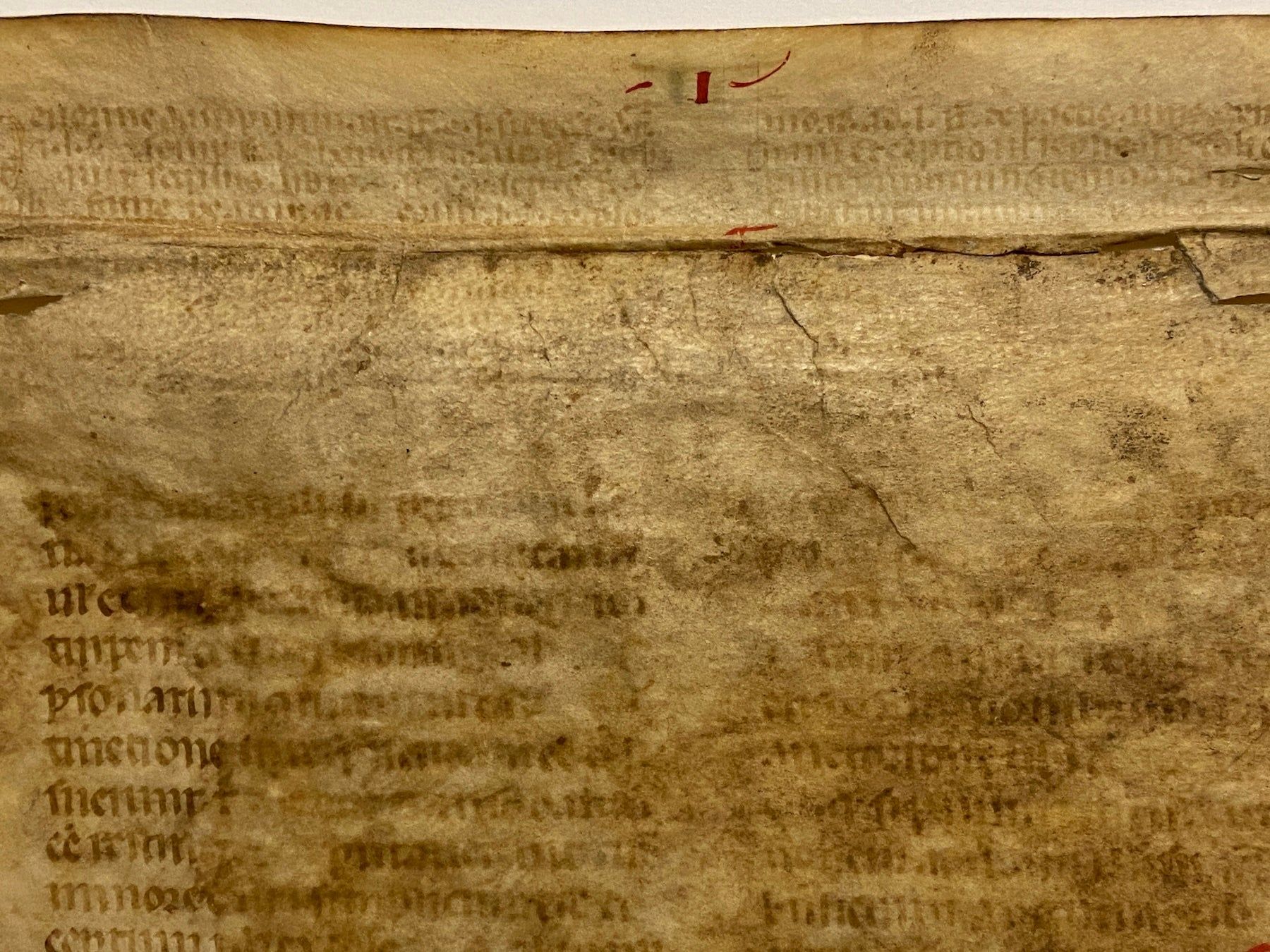
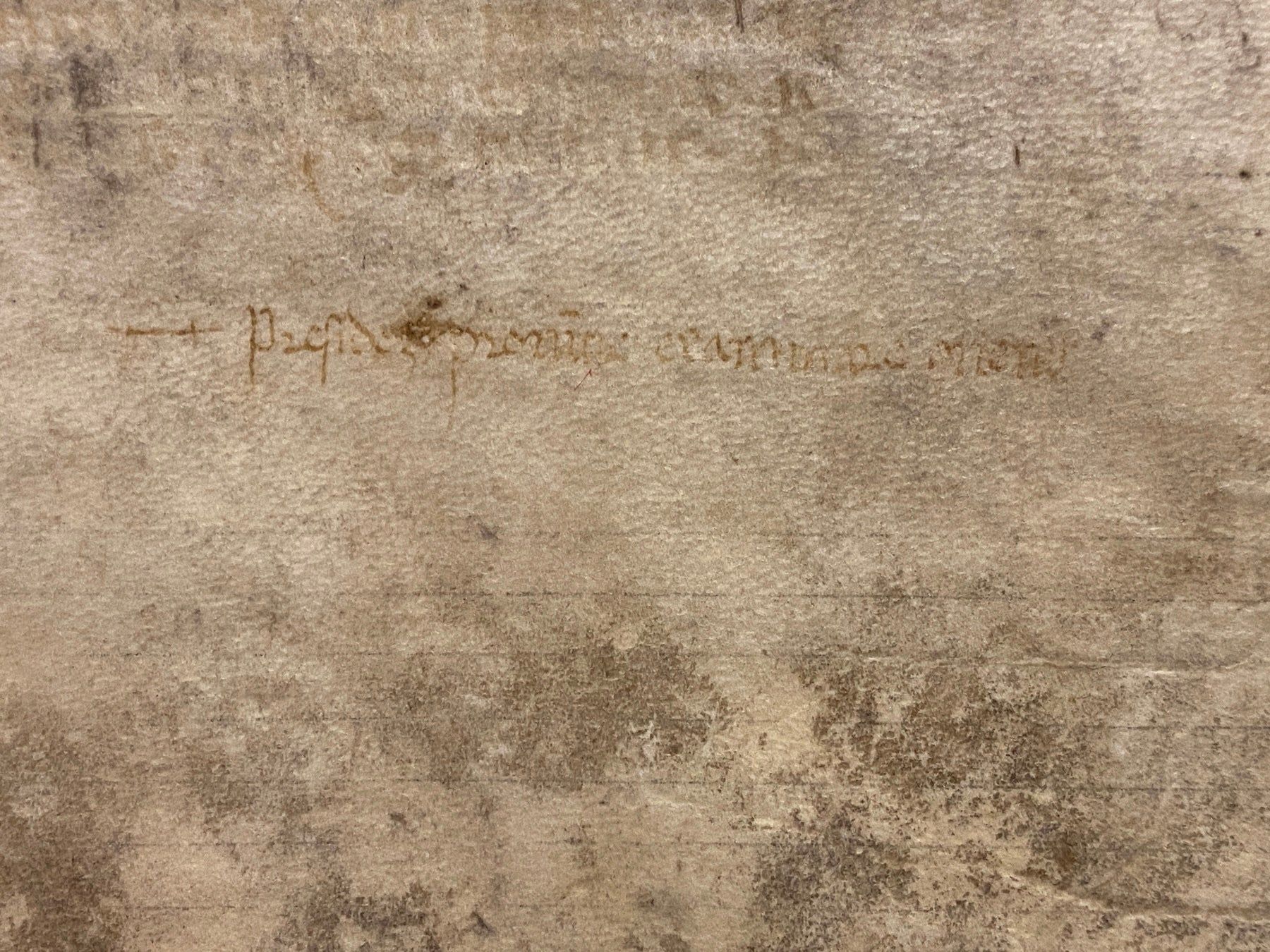
Italy, 1325. Good. Manuscript on vellum, large folio (450 x 345 mm), main text 42-lines, extensive glosses, written in black (faded and almost completely illegible). Extracted from a bookbinding, very worn. SPECIMINA PALEOGRAPHICA, AN EXCELLENT MANUSCRIPT LEAF FOR TEACHING. OUR MANUSCRIPT IS PARTIALLY UNFINISHED, THUS PROVIDING VALUABLE EVIDENCE OF MANUSCRIPT PRODUCTION AND MIS-EN-PAGE.
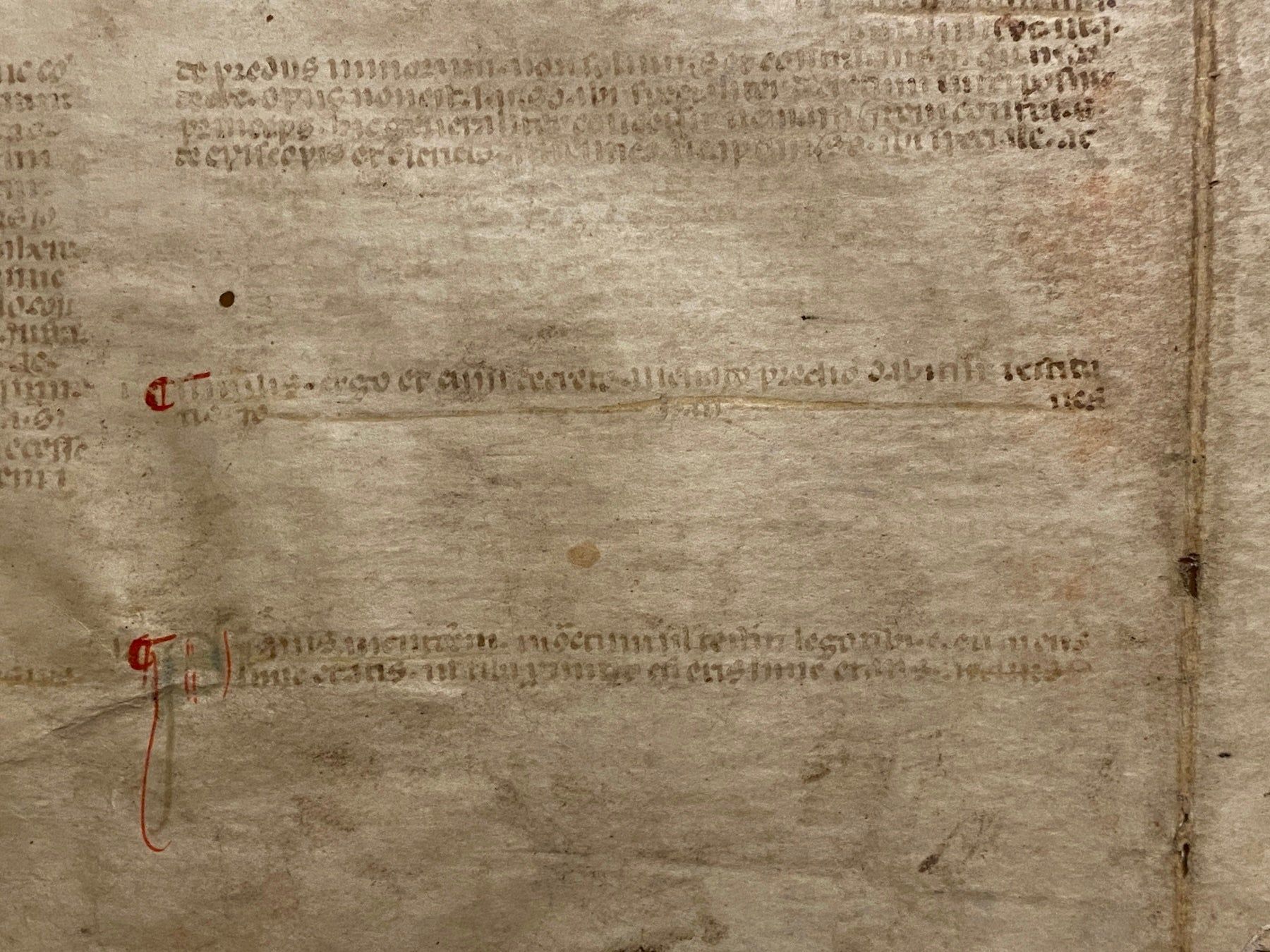
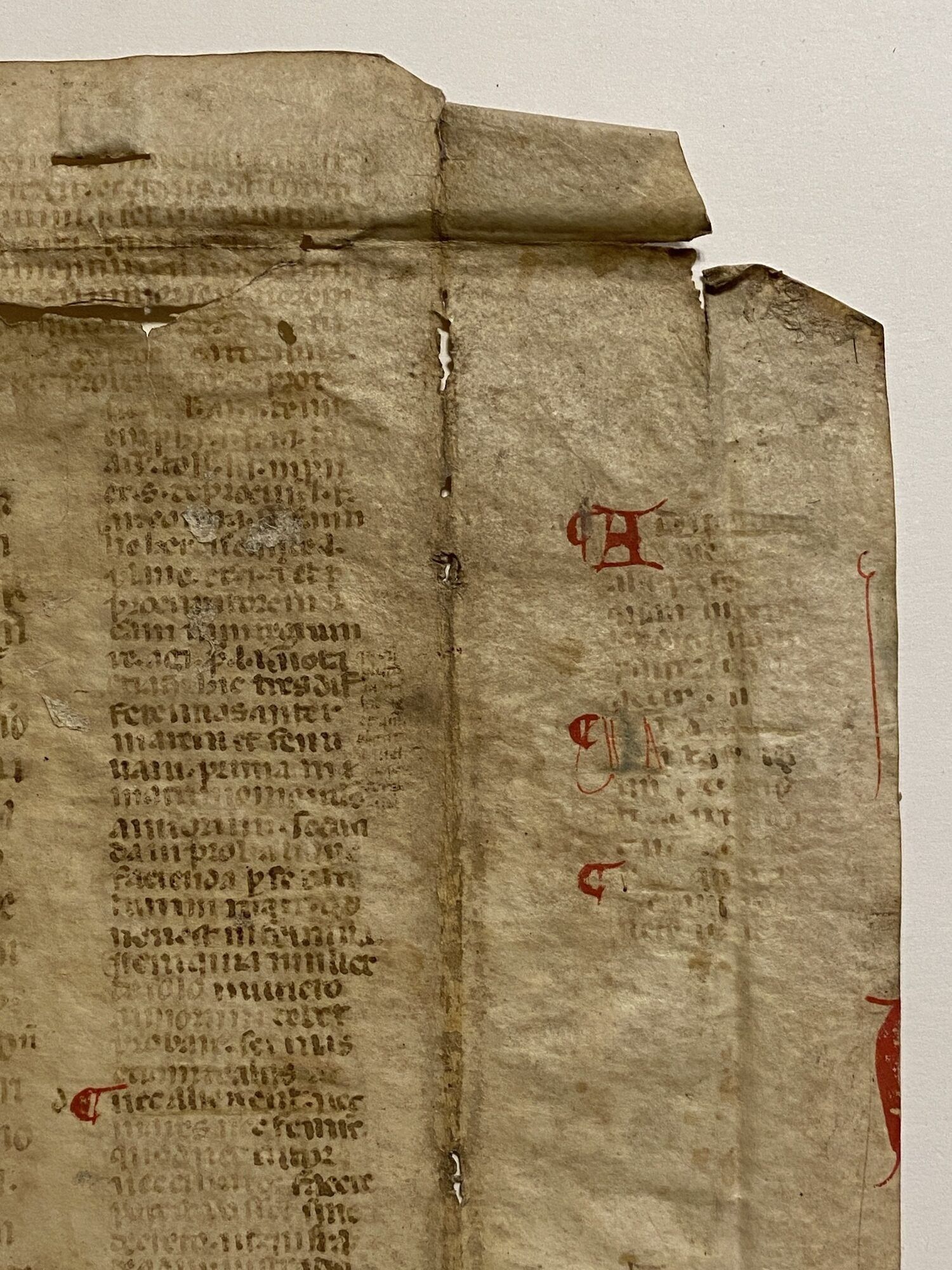
Mise-en-page refers to the strategic layout and design of the page, encompassing ruling, margins, columns, and the placement of text, initials, and decoration, acting as the blueprint for the scribe and artist to create a functional, aesthetically pleasing book, with significant developments seen in adapting layouts for commentaries (like glosses, as here) and the shift from multi-column to single-column formats over time. Our scribe clearly followed an exemplar, as is attested by the red rubrics at the bottom of the verso after which there are only blank spaces. Furthermore, one the outer right margin of the recto can be seen the scribe's horizontal rulings in plummet.
The text of this large, tantalizing and extremely challenging leaf, which was extracted from a bookbinding, contains three chapters from Book II of the Codex of Justinian, or the Corpus juris civilis. The Corpus juris civilis is the modern name for a collection of fundamental works in jurisprudence, issued from 529 to 534 by order of Justinian I, Eastern Roman Emperor. Shortly after Justinian became emperor in 527, he decided the Empire's legal system needed organization and consolidation. Early in his reign, Justinian appointed an official, Tribonian, to oversee this task. The project as a whole became known as Corpus juris civilis, or the Justinian Code.
"The Codex of Justinian is, together with the Digest, the core of the great Byzantine compilation of Roman law called the Corpus Iuris Civilis. The Codex gathers legal proclamations issued by Roman Emperors from the second to the sixth centuries C.E. Its influence on subsequent legal development in the medieval and early modern world has been almost incalculable." (Simon Corcoran et al., The Codex of Justinian, vol. 2, Cambridge University Press, 2016).
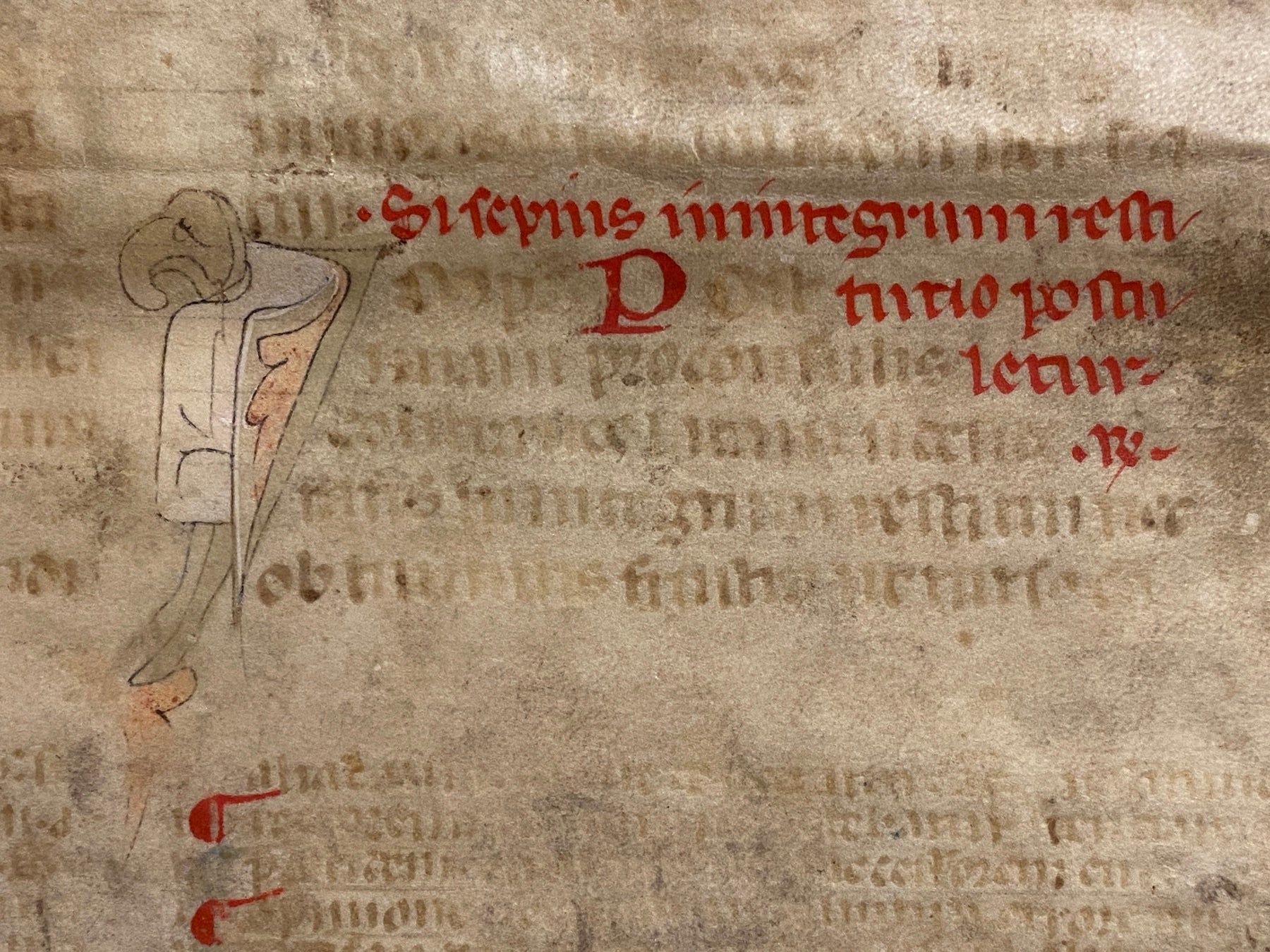
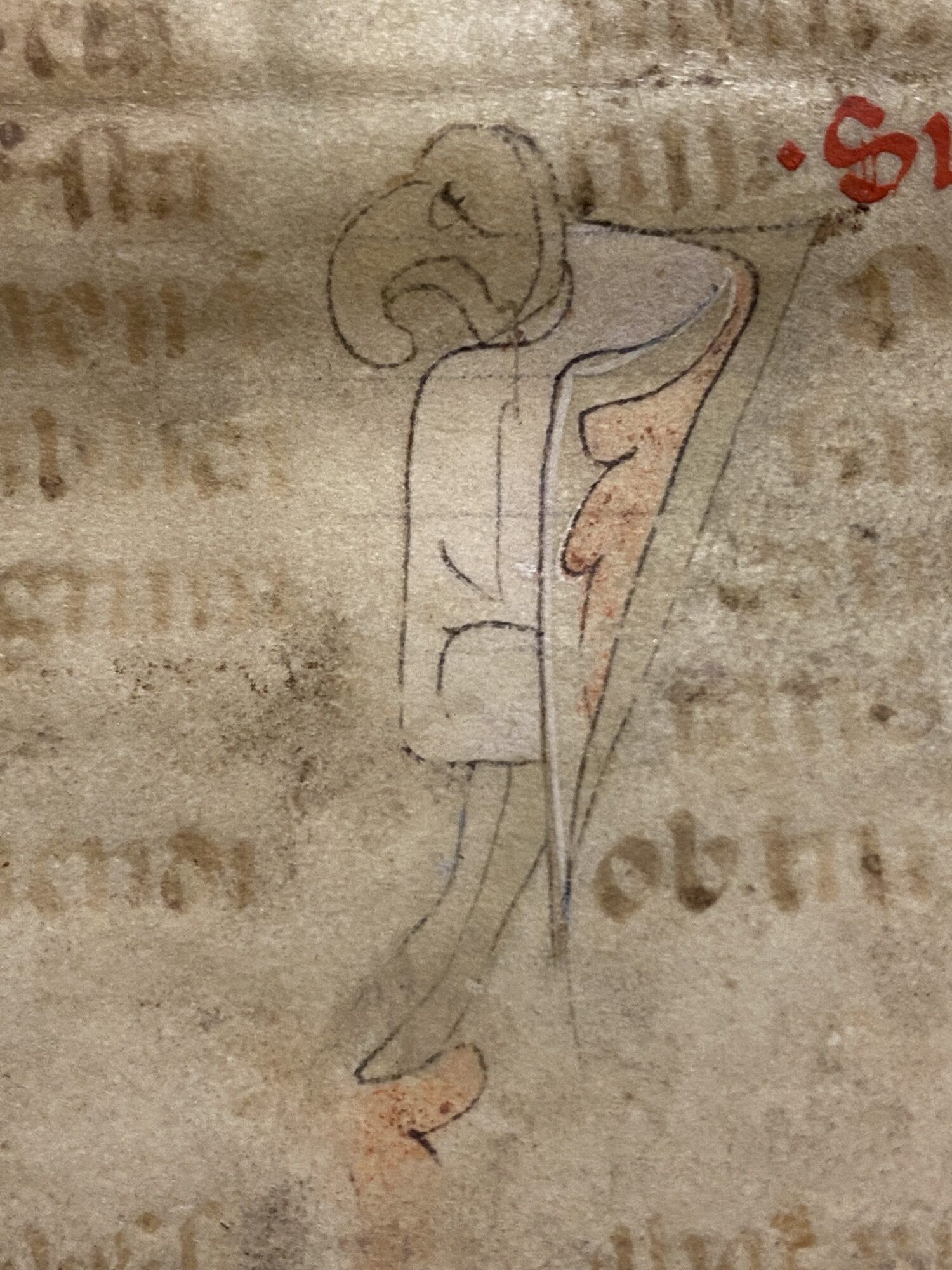
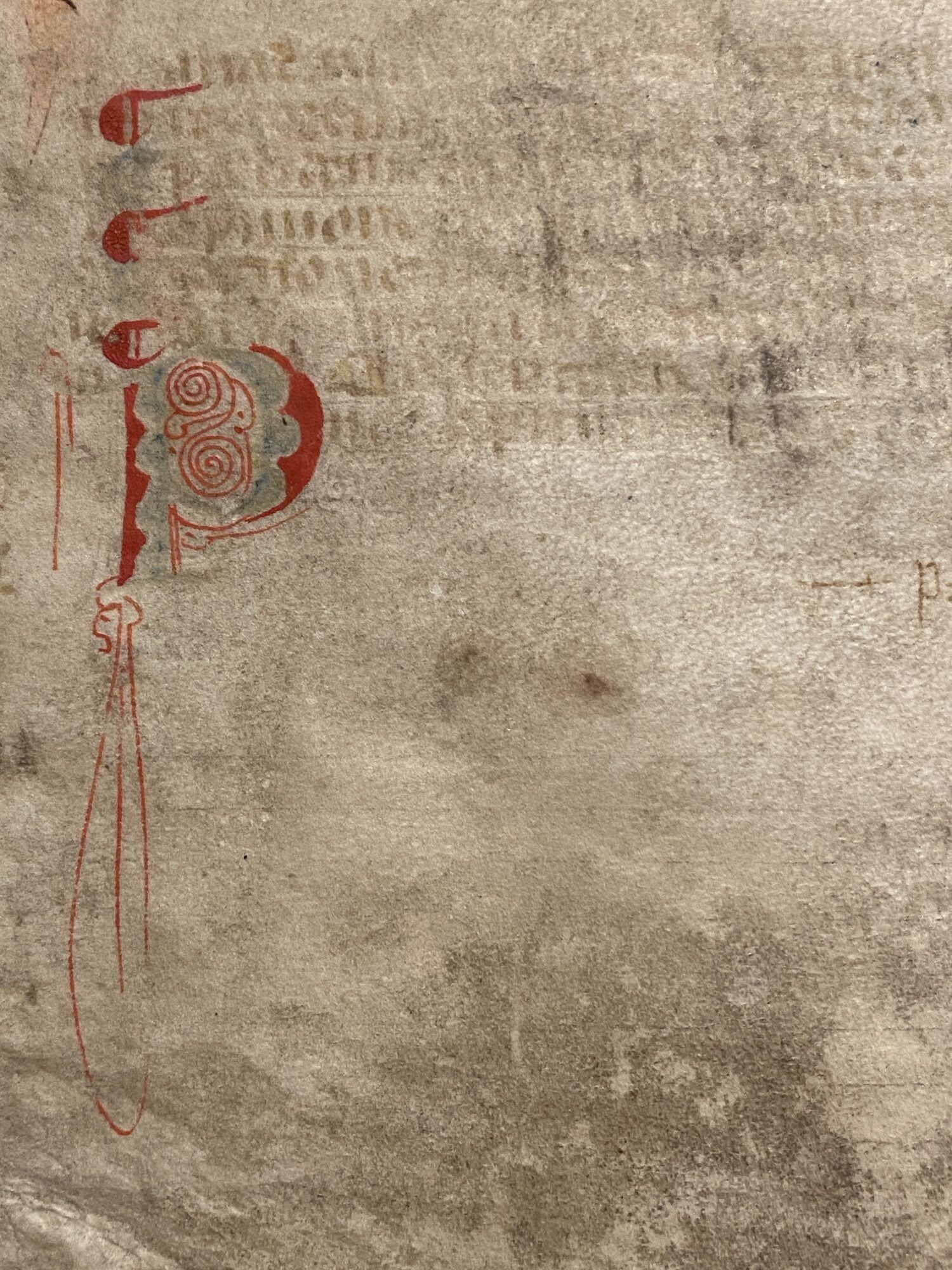
We were delighted to find an excellent and whimsical drollerie mischeviously placed at the beginning of Lib. II, Tit. 44.
THE TEXT:
Liber II, Tit. 43 (CJ 2.43): Si minor se majorem dixerit vel probatus fuerit ("Where a minor alleges that he is of age"); This title deals with the legal consequences for a minor (specifically someone under 25 years old) who misrepresents themselves as an adult (major) to enter into a contract or transaction.
Liber II, Tit. (44 CJ 2.44): Si saepius in integrum restitutio postuletur ("When complete restitution is demanded more than once"), with Gloss: Imperator aurel ("Eos, qui veniam aetatis impetraverunt" etc.; Imperator Constantinus ("Omnes adulescentes). Refers to the limitations on re-litigating a case after a restoration of rights has already been granted, a principle within Roman civil law concerning restitutio in integrum.
Liber II, Tit. 45 (CJ 2.45): De his qui veniam aetatis impetraverunt ("Concerning those who obtain a grant of age" "or "the privilege of full majority"). Established that individuals who received this privilege could manage their own affairs and enter into contracts as if they were of full age (25), effectively ending their need for a curator.
Mise-en-page refers to the strategic layout and design of the page, encompassing ruling, margins, columns, and the placement of text, initials, and decoration, acting as the blueprint for the scribe and artist to create a functional, aesthetically pleasing book, with significant developments seen in adapting layouts for commentaries (like glosses, as here) and the shift from multi-column to single-column formats over time. Our scribe clearly followed an exemplar, as is attested by the red rubrics at the bottom of the verso after which there are only blank spaces. Furthermore, one the outer right margin of the recto can be seen the scribe's horizontal rulings in plummet.
The text of this large, tantalizing and extremely challenging leaf, which was extracted from a bookbinding, contains three chapters from Book II of the Codex of Justinian, or the Corpus juris civilis. The Corpus juris civilis is the modern name for a collection of fundamental works in jurisprudence, issued from 529 to 534 by order of Justinian I, Eastern Roman Emperor. Shortly after Justinian became emperor in 527, he decided the Empire's legal system needed organization and consolidation. Early in his reign, Justinian appointed an official, Tribonian, to oversee this task. The project as a whole became known as Corpus juris civilis, or the Justinian Code.
"The Codex of Justinian is, together with the Digest, the core of the great Byzantine compilation of Roman law called the Corpus Iuris Civilis. The Codex gathers legal proclamations issued by Roman Emperors from the second to the sixth centuries C.E. Its influence on subsequent legal development in the medieval and early modern world has been almost incalculable." (Simon Corcoran et al., The Codex of Justinian, vol. 2, Cambridge University Press, 2016).
We were delighted to find an excellent and whimsical drollerie mischeviously placed at the beginning of Lib. II, Tit. 44.
THE TEXT:
Liber II, Tit. 43 (CJ 2.43): Si minor se majorem dixerit vel probatus fuerit ("Where a minor alleges that he is of age"); This title deals with the legal consequences for a minor (specifically someone under 25 years old) who misrepresents themselves as an adult (major) to enter into a contract or transaction.
Liber II, Tit. (44 CJ 2.44): Si saepius in integrum restitutio postuletur ("When complete restitution is demanded more than once"), with Gloss: Imperator aurel ("Eos, qui veniam aetatis impetraverunt" etc.; Imperator Constantinus ("Omnes adulescentes). Refers to the limitations on re-litigating a case after a restoration of rights has already been granted, a principle within Roman civil law concerning restitutio in integrum.
Liber II, Tit. 45 (CJ 2.45): De his qui veniam aetatis impetraverunt ("Concerning those who obtain a grant of age" "or "the privilege of full majority"). Established that individuals who received this privilege could manage their own affairs and enter into contracts as if they were of full age (25), effectively ending their need for a curator.
Details
Title
[MANUSCRIPT LEAF ON VELLUM, EXTRACTED FROM A BINDING - ITALY, EARLY 14TH CENTURY]. Corpus Juris Civilis [Liber II]
Author
Justinian
Condition
Good
Publisher
Italy
Date
1325