

Ch’ugye kasŭng 秋溪家乘 [Family Records of Ch’ugye]
![Ch’ugye kasŭng 秋溪家乘 [Family Records of Ch’ugye]](https://d3525k1ryd2155.cloudfront.net/h/838/460/1731460838.0.x.jpg)
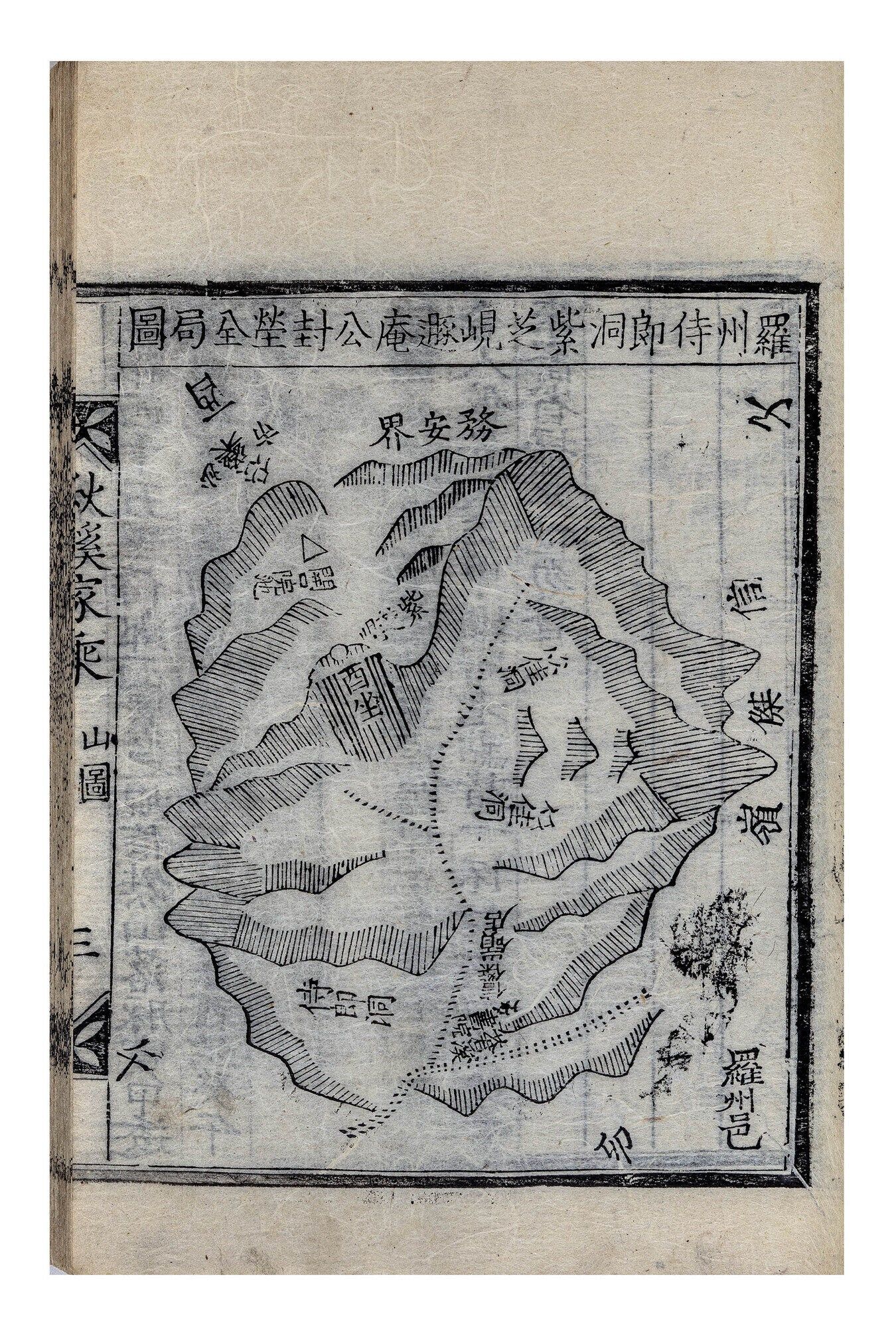
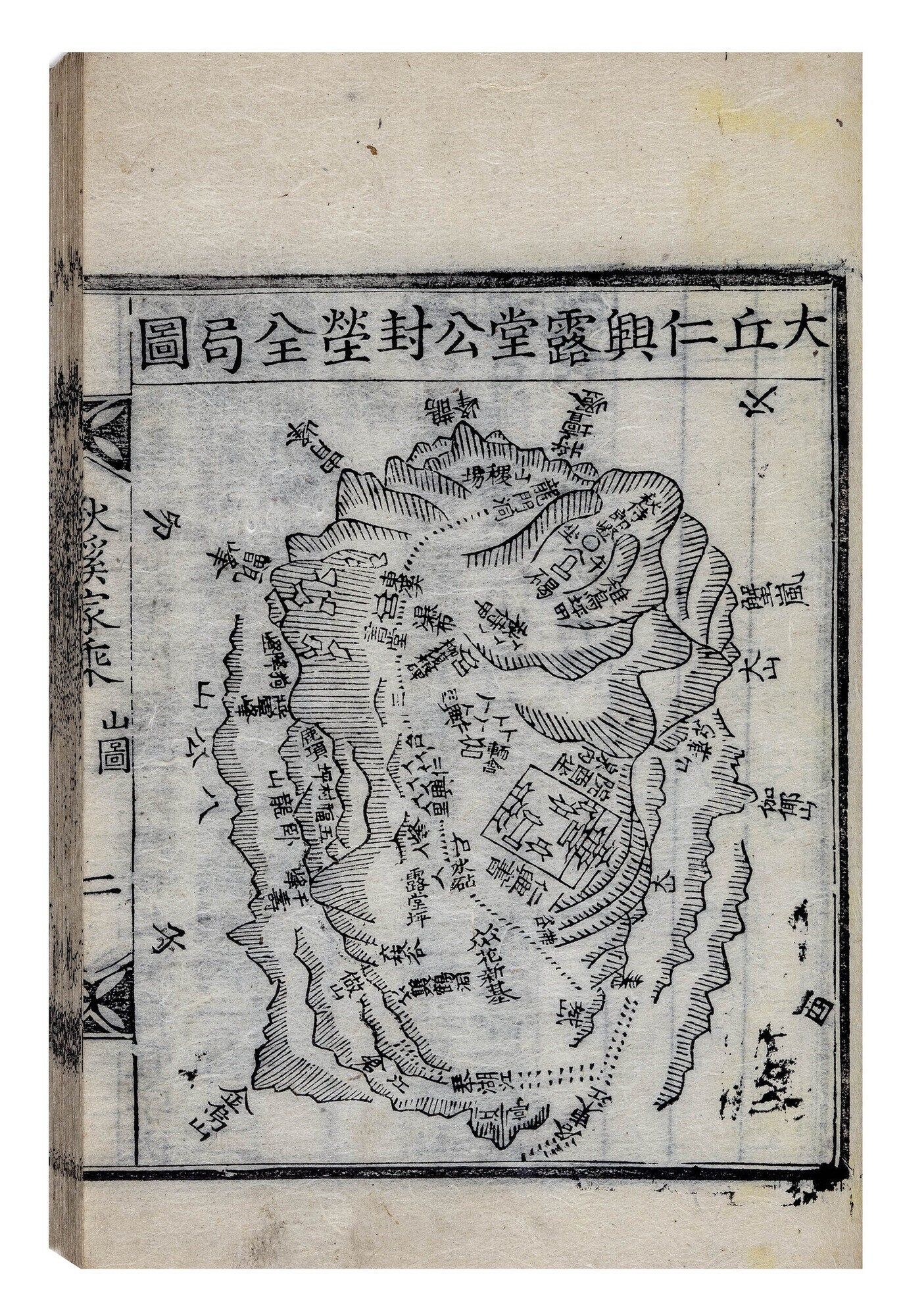
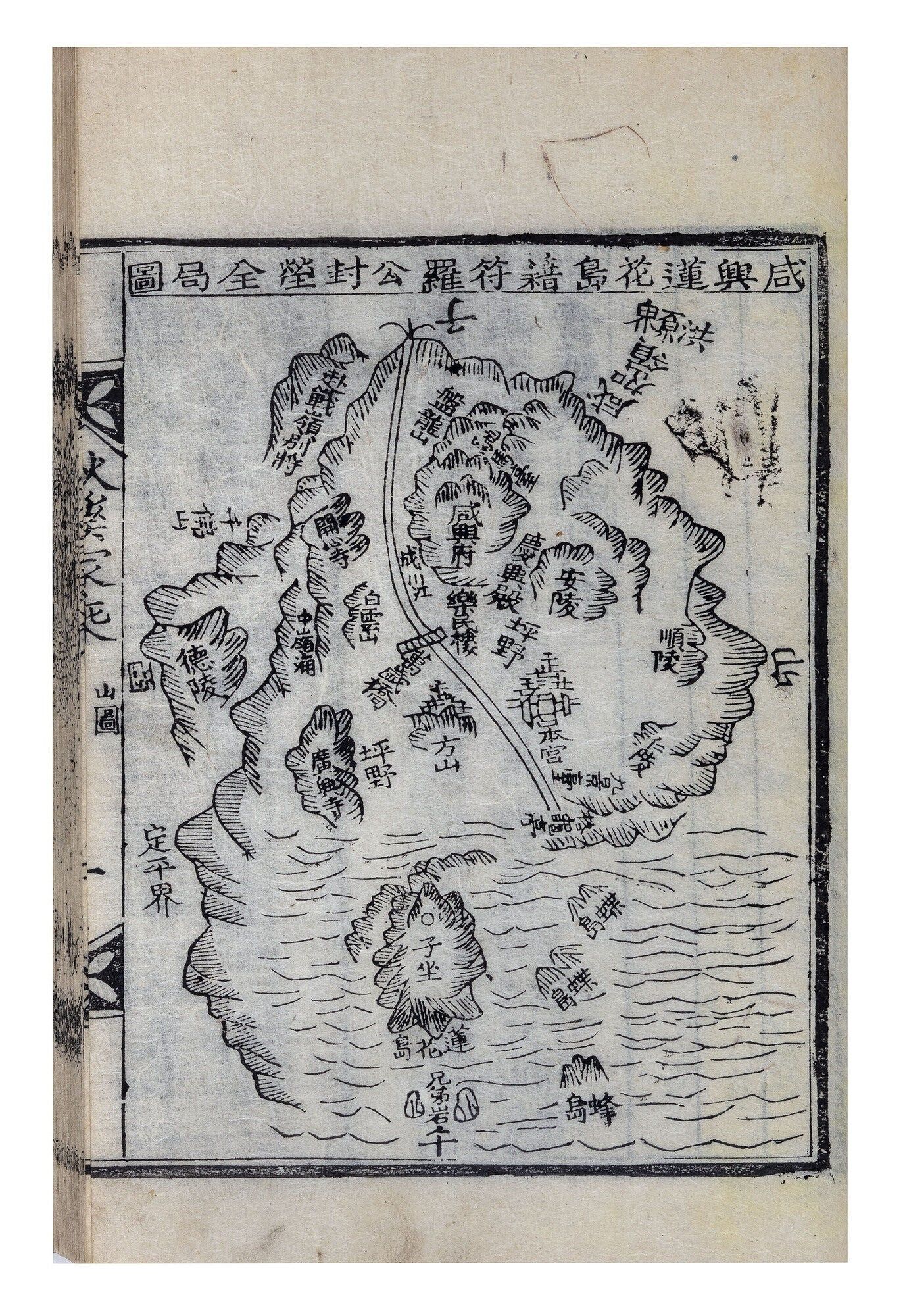
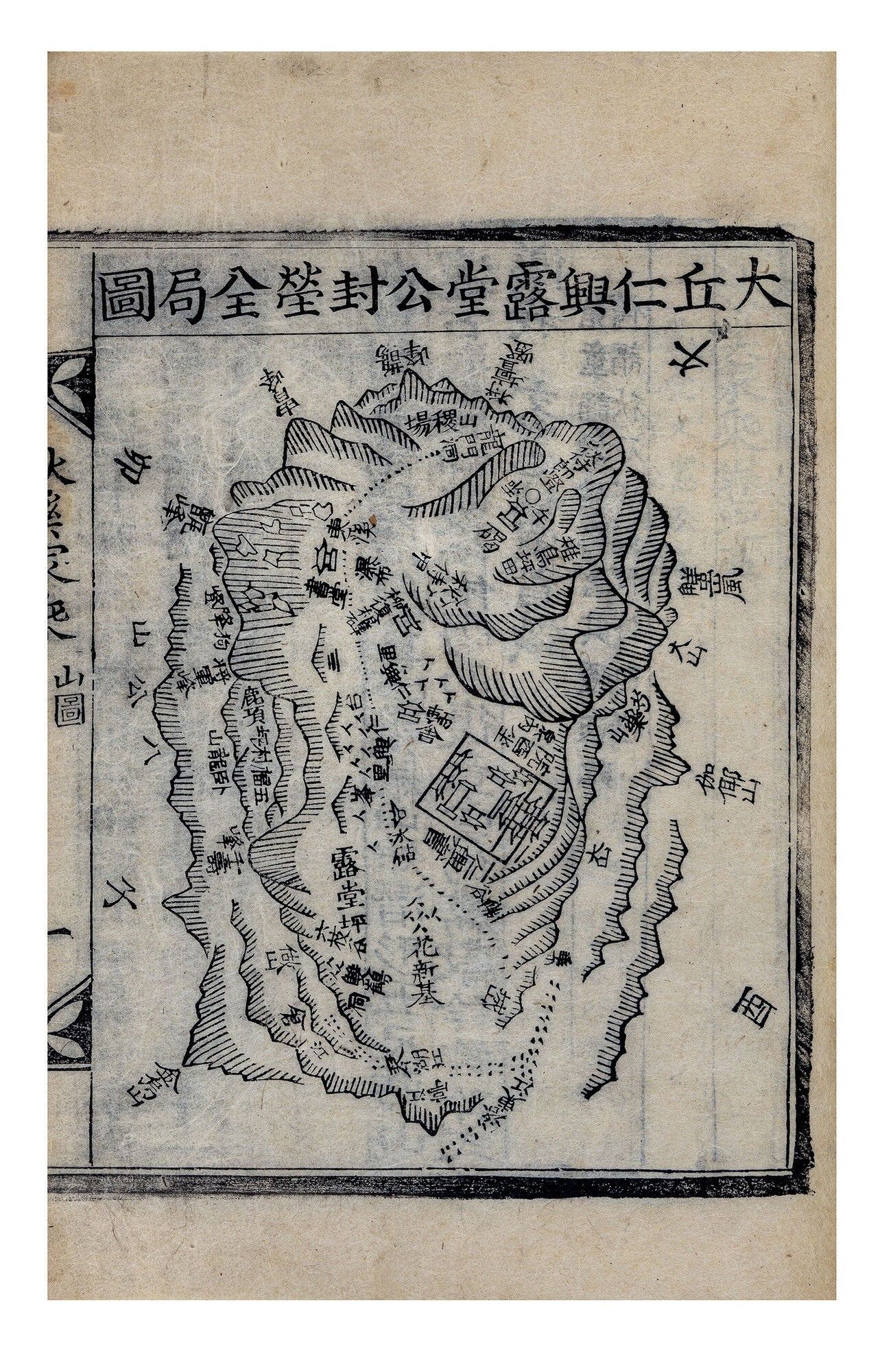
23, 2, 2, 4, 3, 3, 22, 24, 12; 38, 28, 16; 15, 1, 20, 9 folding leaves. Five full-page woodblock maps. Woodblock-printed. Five kwŏn in three volumes. Small folio (384 x 202 mm.), orig. semi-stiff patterned wrappers, with handwritten titles on upper covers, old stitching. Daegu: Inhŭngjaesa, 1869.
First edition of this famous biography of the 13th-century Korean scholar Ch’u Chŏk 秋適 (1246-1317), which establishes him as the author of the famous Myŏngsim pogam 明心寶鑑 [Ch. Mingxin baojian; The Precious Mirror for Enlightening the Mind], the first book ever translated from Literary Chinese into a Western language. Compiled by Ch’u’s 20th descendant, Ch’u Se-mun, our book includes records of his descendants and the establishment of the family shrine.
Ever since the 1869 publication of the Inhŭngjaesa edition of the Precious Mirror for Enlightening the Mind and this accompanying Family Records of Ch’ugye, Korean (and some foreign) scholarship has held that the progenitor of the Ch’u lineage, the Goryeo scholar-official Ch’u Chŏk, compiled the Precious Mirror, one of the most widespread and influential pedagogical primers in East Asia history. Immensely popular in China, Japan, Korea, and Vietnam alike, the Precious Mirror is a syncretic collection of educational aphorisms organized by theme, and the first book written in Literary Sinitic to be translated into a European language (by Friar Juan Cobo in Manila, ca. 1590). According to the Family Records, the Precious Mirror was created by Ch’u Chŏk — whose grandfather, Ch’u Yŏp 秋饁, came to Korea from Song China in the 12th century — while he was serving as a royal academician during the time of King Ch’ungnyŏl (r. 1274-98). The placename Ch’ugye refers to the land granted to Ch’u Chŏk, located in present-day Yongin City, Gyeonggi province.
According to the Prefaces and Postscripts of the work (authored not only by Ch’u descendants but also by eminent Korean scholars of the time), sometime around 1853, the descendants of the Ch’u clan rediscovered their ancestral tomb — lost for centuries in the aftermath of war — and began to collectively re-establish their ancestral records, leading to the compilation of the Family Records as well as the 1866 erection of the Inhŭng Academy, a family shrine located in present-day Daegu, where the woodblocks of this book were carved. Maps of the Inhŭng Academy and its environs, as well as the lands granted to the Ch’u ancestors, are included, as are detailed accounts of notable figures within the Ch’u lineage and documents related to the establishment of the Inhŭng Academy.
Prefaces in Vol. 1: by Yi Min-dŏk 李敏德 dated 1866, by Sin Sŏk-hŭi 申錫禧 (1808-73) dated 1864, by Kim Pyŏng-hak 金炳學 (1821-79) dated 1869, by Yi Wŏn-jo 李源祚 (1792-1871) dated 1867, and by Pak Pong-ha 朴鳳夏 dated 1867. Postscripts at the end of Vol. 2”: by Yi Man-ik 李晩翊 dated 1869, by Cho Un-han 趙雲漢 dated 1869, and by Ch’u Se-mun dated 1868. Prefaces in Vol. 3: by Kim Sŏk-mo 金錫模 dated 1866, by Ch’u Chong-gong 秋鍾恭 dated 1857, by Cho Kŭk-sŭng 曺克承 (1824-99) dated 1869, by Ch’u Man-gu 秋晚九 dated 1857, by Ch’u Sang-U 秋尚佑 dated 1866, and by Ch’u Se-mun dated 1857. The colophon reads 當宁己巳新刊藏板于大丘仁興齋舍 (1869).
Scholarly consensus on the authorship of the Myŏngsim pogam remains to be established, as 20th-century scholarship has suggested that it was compiled by Fan Liben 范立本 in the late 14th century.
Our copy is in excellent condition, with very minor staining in the final volume. While the Inhŭngjaesa edition of the Myŏngsim pogam, published at the same time as the Family Records, is quite common in collections worldwide, extant copies of the Family Records are very rare, even within East Asia. We find only one copy in WorldCat, held by Columbia University (847710970), lacking the fifth kwŏn.
First edition of this famous biography of the 13th-century Korean scholar Ch’u Chŏk 秋適 (1246-1317), which establishes him as the author of the famous Myŏngsim pogam 明心寶鑑 [Ch. Mingxin baojian; The Precious Mirror for Enlightening the Mind], the first book ever translated from Literary Chinese into a Western language. Compiled by Ch’u’s 20th descendant, Ch’u Se-mun, our book includes records of his descendants and the establishment of the family shrine.
Ever since the 1869 publication of the Inhŭngjaesa edition of the Precious Mirror for Enlightening the Mind and this accompanying Family Records of Ch’ugye, Korean (and some foreign) scholarship has held that the progenitor of the Ch’u lineage, the Goryeo scholar-official Ch’u Chŏk, compiled the Precious Mirror, one of the most widespread and influential pedagogical primers in East Asia history. Immensely popular in China, Japan, Korea, and Vietnam alike, the Precious Mirror is a syncretic collection of educational aphorisms organized by theme, and the first book written in Literary Sinitic to be translated into a European language (by Friar Juan Cobo in Manila, ca. 1590). According to the Family Records, the Precious Mirror was created by Ch’u Chŏk — whose grandfather, Ch’u Yŏp 秋饁, came to Korea from Song China in the 12th century — while he was serving as a royal academician during the time of King Ch’ungnyŏl (r. 1274-98). The placename Ch’ugye refers to the land granted to Ch’u Chŏk, located in present-day Yongin City, Gyeonggi province.
According to the Prefaces and Postscripts of the work (authored not only by Ch’u descendants but also by eminent Korean scholars of the time), sometime around 1853, the descendants of the Ch’u clan rediscovered their ancestral tomb — lost for centuries in the aftermath of war — and began to collectively re-establish their ancestral records, leading to the compilation of the Family Records as well as the 1866 erection of the Inhŭng Academy, a family shrine located in present-day Daegu, where the woodblocks of this book were carved. Maps of the Inhŭng Academy and its environs, as well as the lands granted to the Ch’u ancestors, are included, as are detailed accounts of notable figures within the Ch’u lineage and documents related to the establishment of the Inhŭng Academy.
Prefaces in Vol. 1: by Yi Min-dŏk 李敏德 dated 1866, by Sin Sŏk-hŭi 申錫禧 (1808-73) dated 1864, by Kim Pyŏng-hak 金炳學 (1821-79) dated 1869, by Yi Wŏn-jo 李源祚 (1792-1871) dated 1867, and by Pak Pong-ha 朴鳳夏 dated 1867. Postscripts at the end of Vol. 2”: by Yi Man-ik 李晩翊 dated 1869, by Cho Un-han 趙雲漢 dated 1869, and by Ch’u Se-mun dated 1868. Prefaces in Vol. 3: by Kim Sŏk-mo 金錫模 dated 1866, by Ch’u Chong-gong 秋鍾恭 dated 1857, by Cho Kŭk-sŭng 曺克承 (1824-99) dated 1869, by Ch’u Man-gu 秋晚九 dated 1857, by Ch’u Sang-U 秋尚佑 dated 1866, and by Ch’u Se-mun dated 1857. The colophon reads 當宁己巳新刊藏板于大丘仁興齋舍 (1869).
Scholarly consensus on the authorship of the Myŏngsim pogam remains to be established, as 20th-century scholarship has suggested that it was compiled by Fan Liben 范立本 in the late 14th century.
Our copy is in excellent condition, with very minor staining in the final volume. While the Inhŭngjaesa edition of the Myŏngsim pogam, published at the same time as the Family Records, is quite common in collections worldwide, extant copies of the Family Records are very rare, even within East Asia. We find only one copy in WorldCat, held by Columbia University (847710970), lacking the fifth kwŏn.
Details
Title
Ch’ugye kasŭng 秋溪家乘 [Family Records of Ch’ugye]
Author
CH’U, Se-mun 秋世文
Condition
Unknown