

Camilla: A Picture of Youth
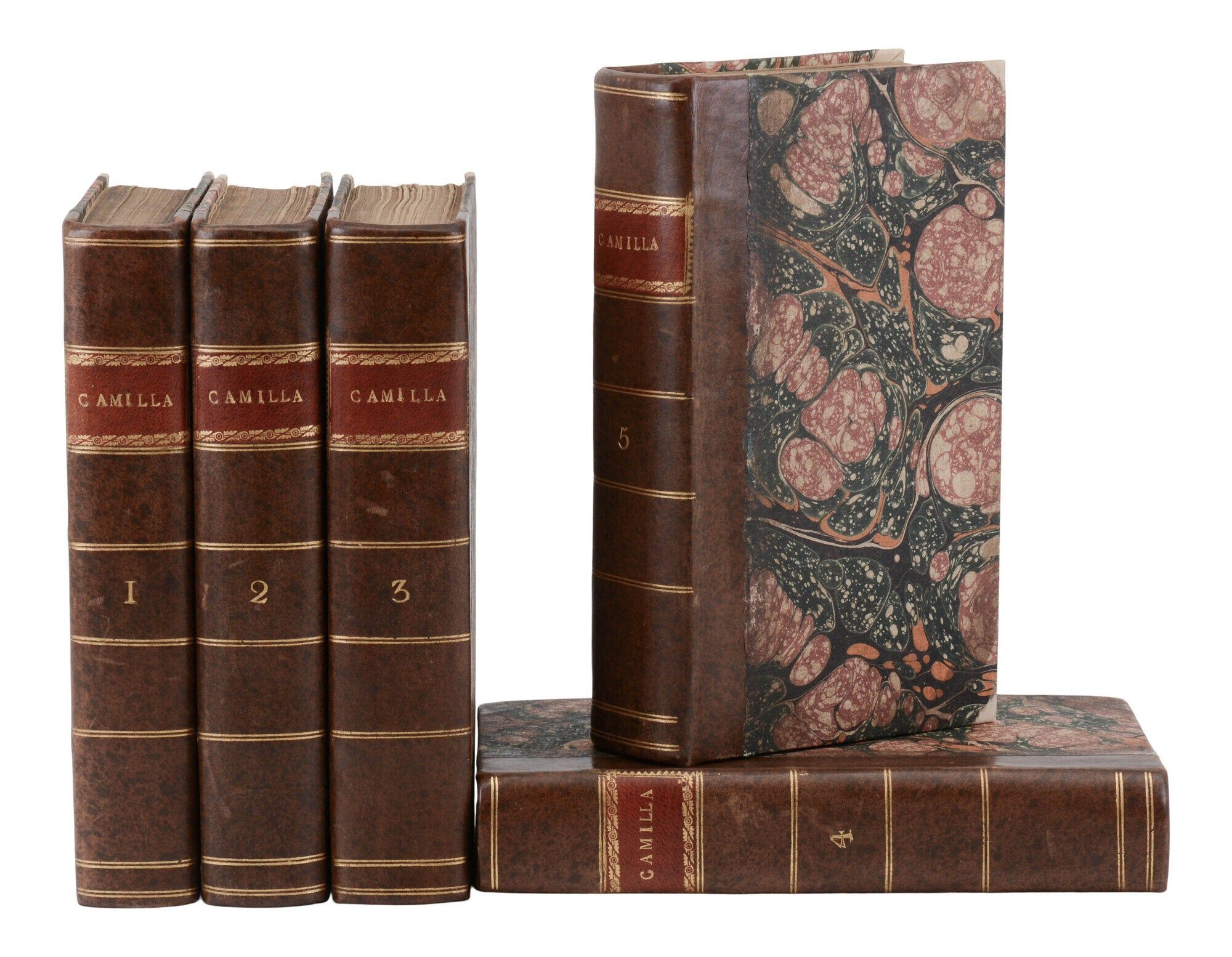
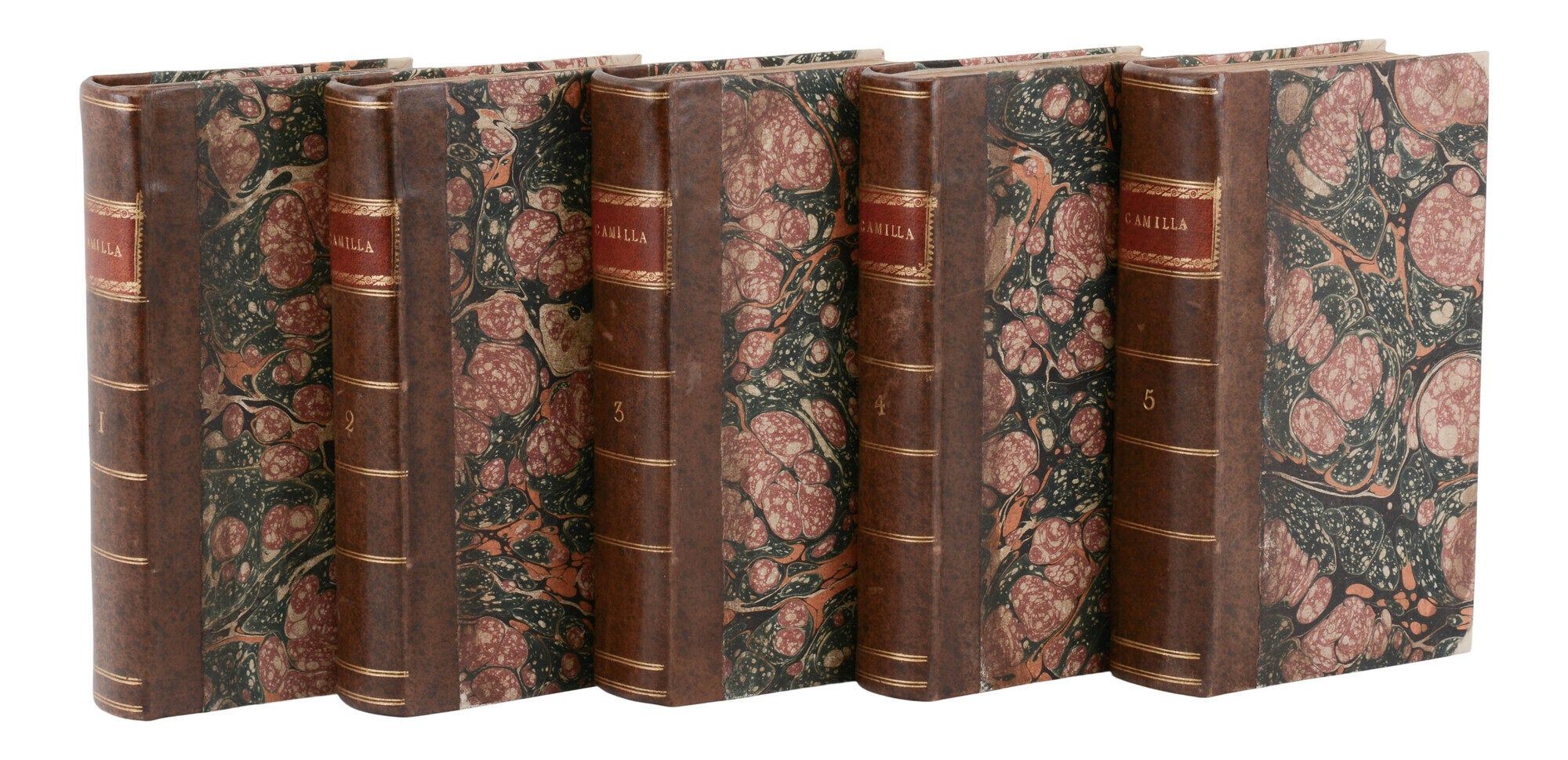
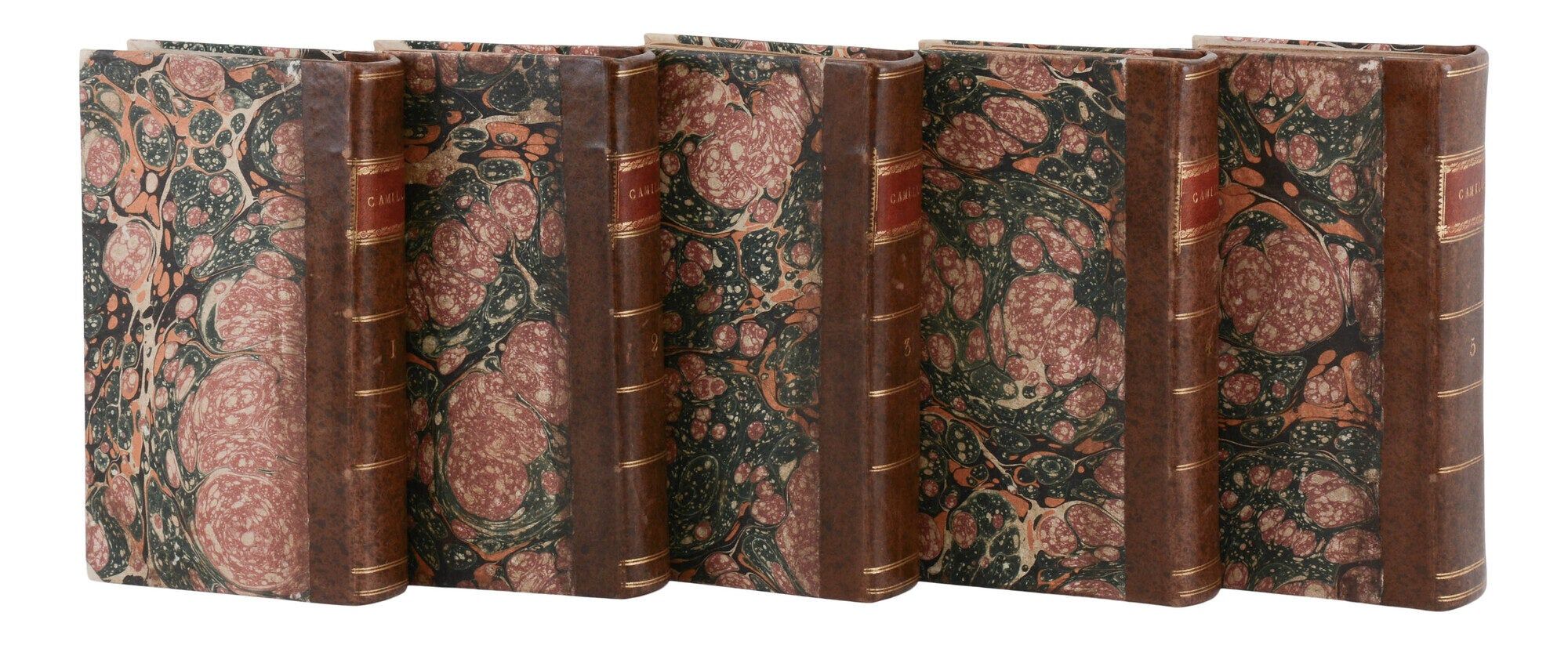
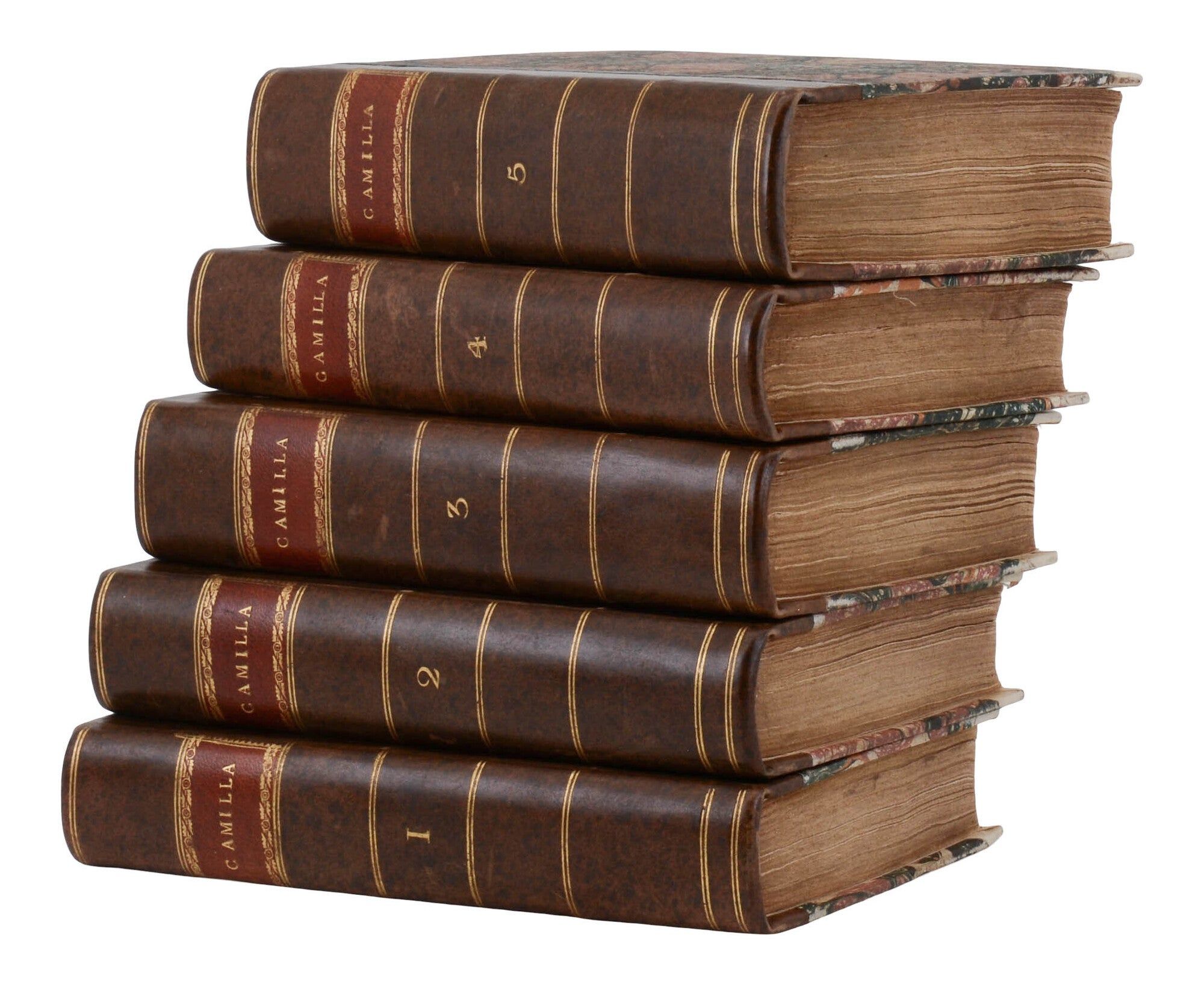
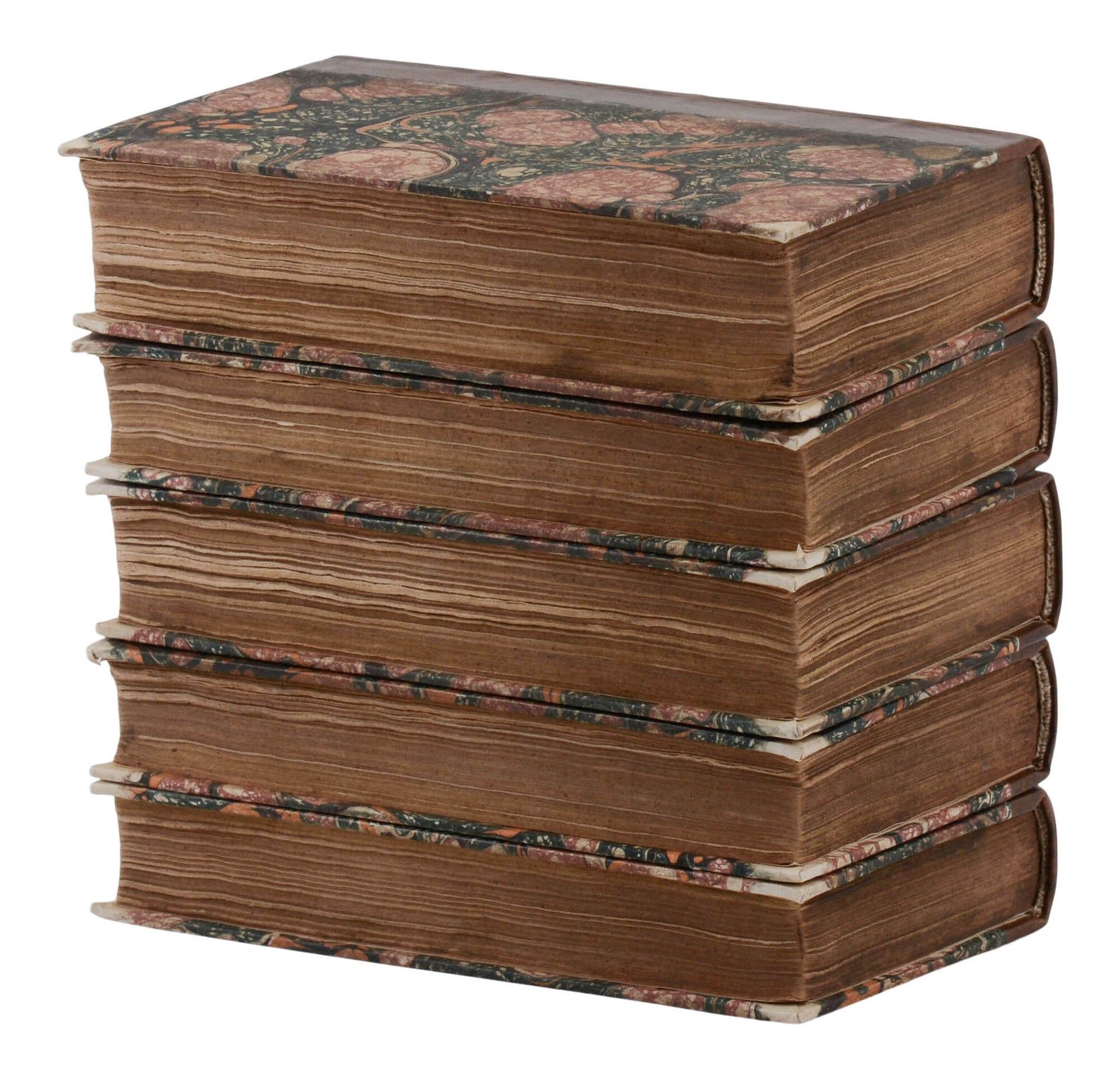
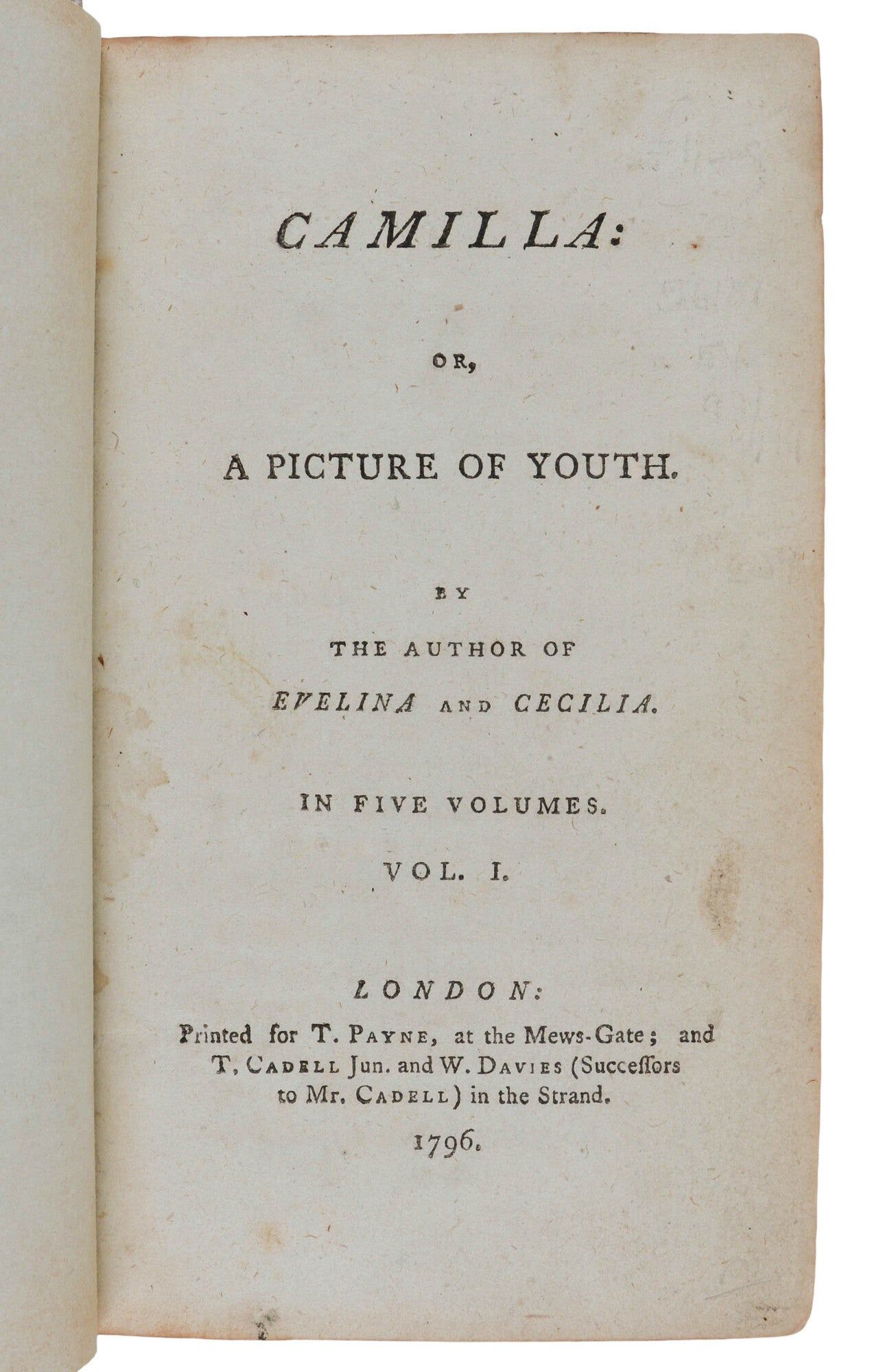
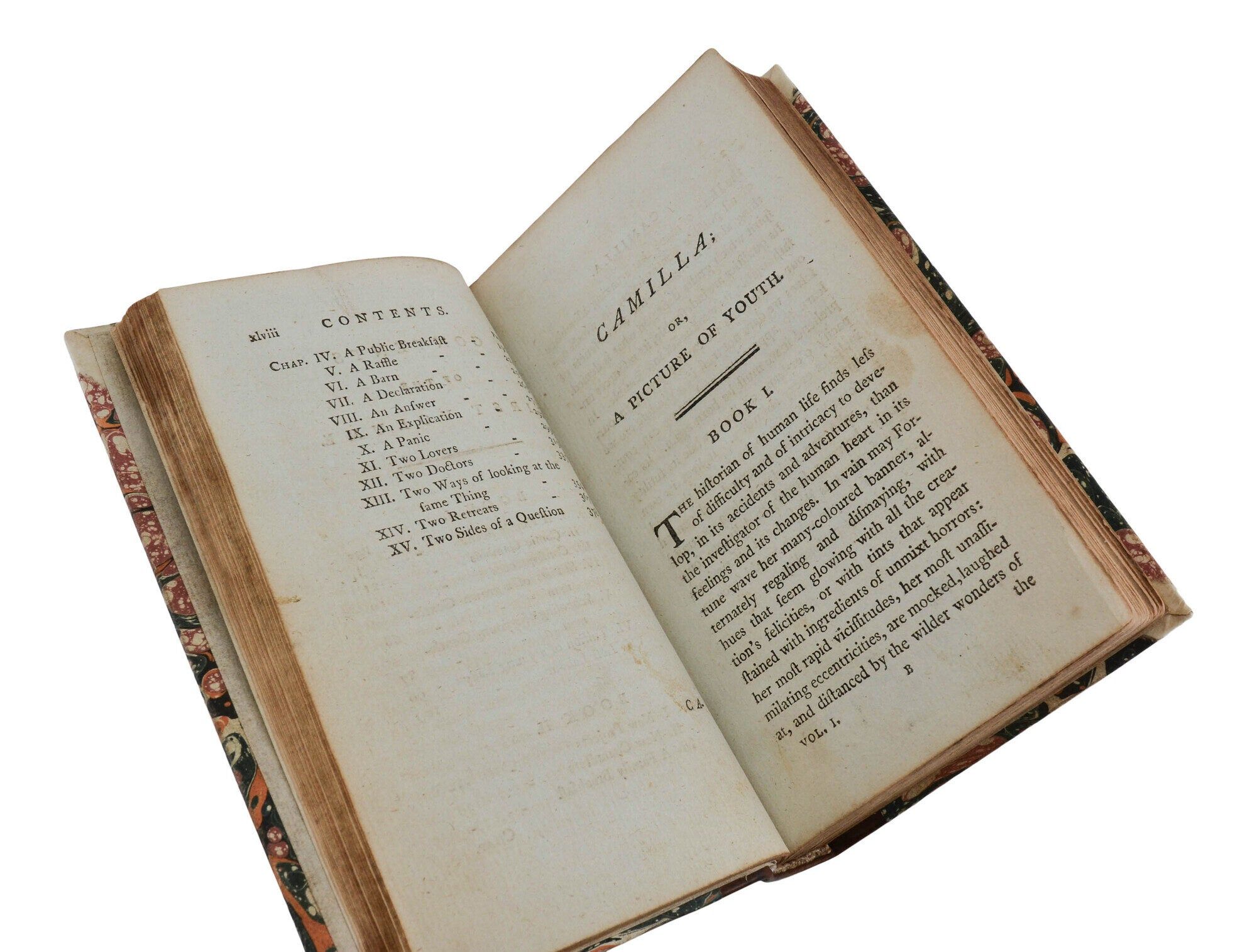
- London: Printed for T. Payne, at the Mews-Gate; and T. Cadell Jun. and W. Davies (Successors to Mr. Cadell) in the Strand, 1796
Frances Burney began her third novel while serving as Keeper of the Robes to Queen Charlotte and finished it several years later, after she had extricated herself from court life and met the love of her life. That love was the aristocratic French refugee Alexandre d’Arblay – well-bred, kind, and intelligent, but penniless. With only Burney’s royal pension to sustain the newlyweds and their infant son, they decided to publish Camilla partly by subscription in order to cover the printing costs in advance. “This is,” wrote Burney to a friend, “in many – many ways unpleasant and unpalatable to us both; but the real chance of real use and benefit to our little darling overcomes all scruples, and, therefore, to work we go!”
Their hopes were realized. The five-decker Bildungsroman sold an astonishing 3,500 copies in three months, and the d’Arblays built a pretty little house called Camilla Cottage on the proceeds. The book was dedicated by permission to the Queen, whom Burney still loved sincerely, and the authoress journeyed to Windsor to present the first copy to Her Majesty: “I presented my little – yet not small – offering, upon one knee, placing them, as she directed, upon a table by her side, and expressing, as well as I could, my devoted gratitude for her invariable goodness to me.”
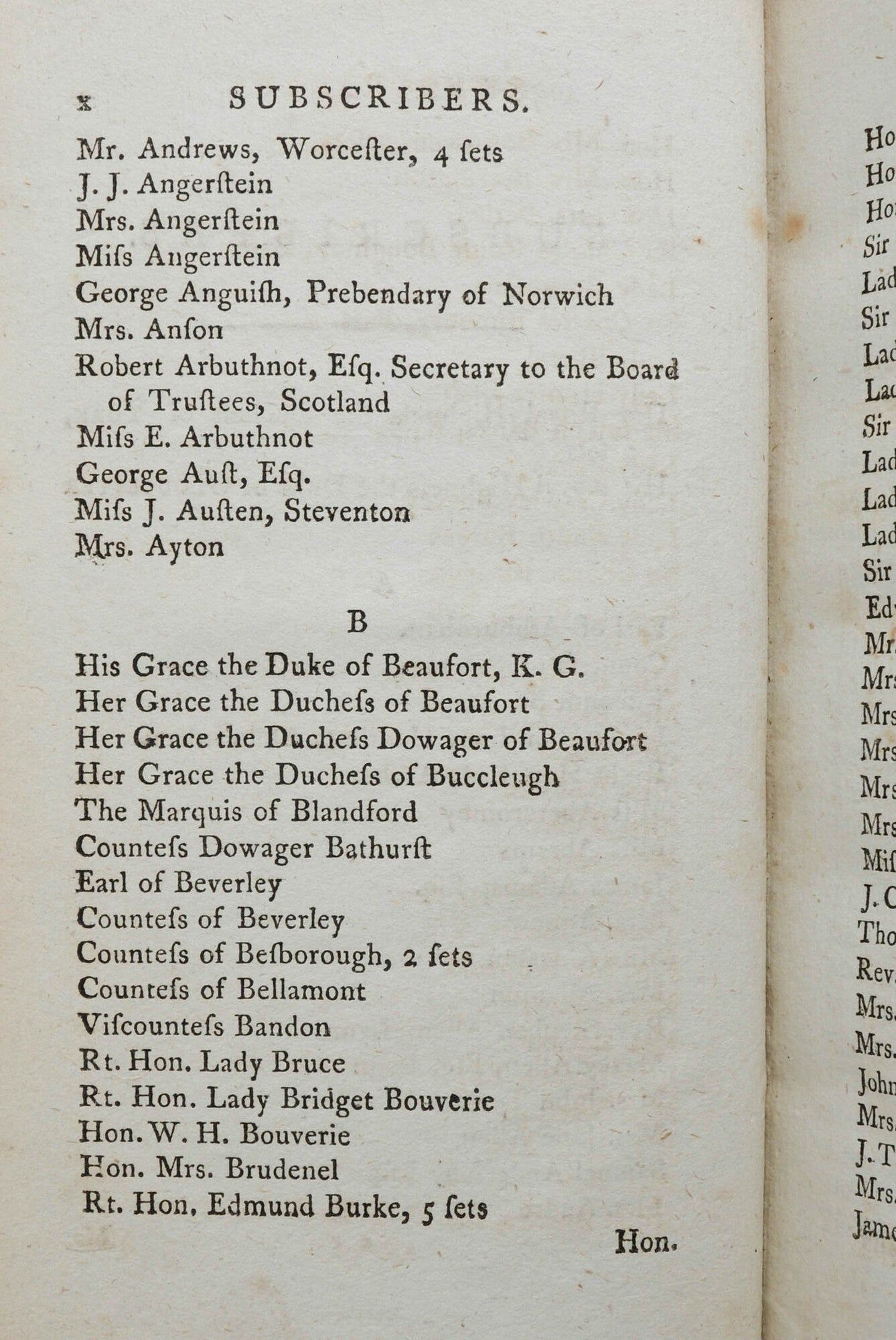
The lengthy subscription list is headed by the Duchess of York and Duke of Gloucester, quite a coup for the author, but a different name stands out to the modern reader: J. Austen. It is the only time Jane Austen's name appeared in print during her lifetime, since her novels were published anonymously. She admired Burney’s work and was willing to contribute the significant sum of one guinea to get one of the first copies of Camilla, perhaps advised on its impending publication by her godfather, who was Burney's friend and neighbor. The title of Pride and Prejudice is taken from the closing pages of Burney’s second novel Cecilia, and both Cecilia and Camilla are named in Northanger Abbey as “work in which the greatest powers of the mind are displayed, in which the most thorough knowledge of human nature, the happiest delineation of its varieties, the liveliest effusions of wit and humour, are conveyed to the world in the best-chosen language.” There can be no greater compliment.
Details
Title
Camilla: A Picture of Youth
Author
Burney, Frances; [Frances d'Arblay]
Condition
Near Fine
Publisher
Printed for T. Payne, at the Mews-Gate; and T. Cadell Jun. and W. Davies (Successors to Mr. Cadell) in the Strand: London
Date
1796
Edition
First Edition